info@biomedres.us
+1 (502) 904-2126
One Westbrook Corporate Center, Suite 300, Westchester, IL 60154, USA
Site Map
 ISSN: 2574 -1241
ISSN: 2574 -1241
ISSN: 2574 -1241
Received: March 10, 2025; Published: March 28, 2025
*Corresponding author: Töysa T, Licentiate of Medicine, Specialty General Practice, Finland
DOI: 10.26717/BJSTR.2025.61.009561
This article presents estimated CHD and total mortality (TOT) data from 1951–69 and methods of their estimation via old, published figures together with new verified data. CHD and TOT data for 1969–2000 and CVD data for 1971-2000 were obtained from Statistics Finland. Distribution of CVD, CHD and “Other (than CHD) CVD’s” is represented from 1971–2000. Chapter Discussions presents observations and theories on the causality and protection on CHD development. Possibly the answer can be condensed: the best protection against CHD is “the normal function of healthy cells”. The role of the changes in the 1950’s need further re-thinking. One aim of this paper is to work as a supplement to earlier published article concerning CHD and the North Karelia Project, with one revision.
Keywords: Age-standardized, Mortality, CHD, CVD, All causes (TOT), 1951–2000, Finland
Abbreviations: CHD: Coronary Heart Disease; CVD: Cardiovascular Disease(s) (here with exclusion alcohol related); F: Female; M: Male; Other CVD´s: [Other CVD´s]: CVD minus CHD: other groups than CHD in CVD; TOT: Age-standardized death rate, aged 35-64 (or 15-64) (1/100 000); Δ: difference; μ: mean.
Inspired by the studies and interventions of the North Karelia Project [1] and missing of official data on age-adjusted CHD and TOT (total) (mortality) in 1951–68, this paper tries to define (again) CHD and TOT in 1951–68 with old, published data given in figures and to evaluate the limits of their accuracy, and revise the deviations, after [2]. One aim of this article is to work even as a supplement (with critique) to article “CHD Mortality in Finland and the Province of North Karelia - changes around 1972 - the Start of the North Karelia Project” [2].
Data of age-adjusted CHD mortality, 1/100,000 of humans, aged 35–64 are attained for 1951-69 [3], where they are given in Fig.1 (“Kuvio 1.”) on logarithmic scale. By females (F) the values (cases/ 100,000) were between 50 and 150, by males (M) between 300 and 600. First the figure was cut to two parts (and magnified, as other visual data) and by females measured distance from 50 to 150 (representing cases/100, 000) as millimeters (Y.150 = 103.5 mm) as well as annual number of cases (Y.a).
Millimeters from measurements on [3] are transformed to mortality by equations presented in Tables 1& 2. The attained CHD values are first labeled by “raw”, as CHD.raw
Figure 1
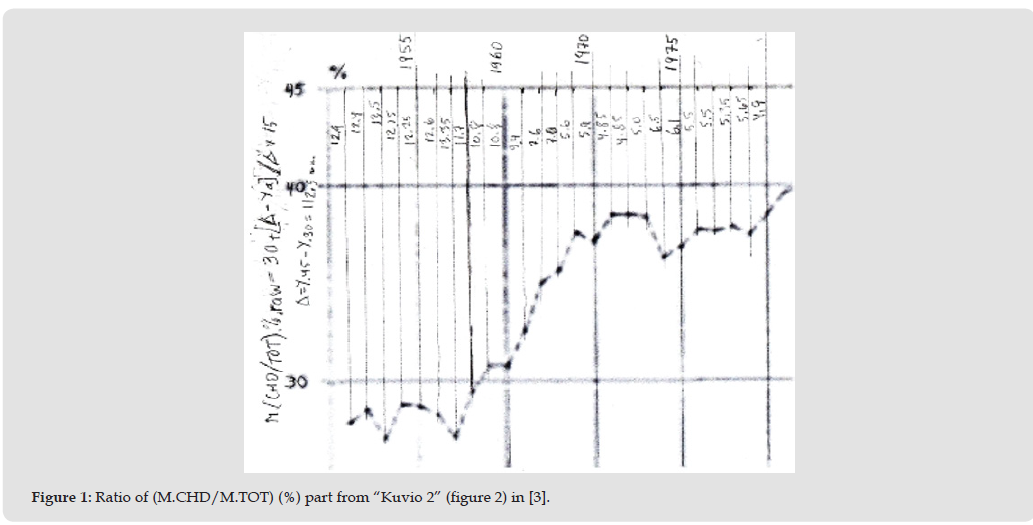
Table 1: Table 1. F.CHD estimation by data from Figure 1.

Table 2: M.CHD estimation by data from Figure 1.

Total mortality (TOT) was obtained via ratio (CHD/TOT) in Figure 2 (“Kuvio 2.”) in [3] and then by multiplying CHD (1/100,000) by 1/ (CHD/TOT) for 1951-75 [3]. [TOT is possible to obtain by measuring from [3], (as earlier in my earlier papers). Small, non-accurate, pictures of [4] do not contain data on CHD, but it is in English and contains historical data on the medical surveys.] Accurate CHD and TOT and CHD/TOT data were obtained for 1969–2000 from Statistics Finland (StatF) [5]. For reducing the bias of CHD.raw in 1951–68, corrections were made by the mean CHD.ratios (separately by males and females): (CHD.StaF/CHD.raw) from 1969–75: CHD.raw’s were multiplied by the means of the ratios (CHD.raw/CHD.StatF) (by males 0.973 +/- 0.004 and females 0.983 +/- 0.004) (Table 3). Measured female (CHD/TOT).raw values (originally on linear scale) were adjusted for 1951–68 by the mean (linear) differences of [StatF;(CHD/ TOT)] in 1969–75 (Table 3). M.(CHD/TOT).%.raw.(*) is attained by first measuring downwards the distance (Δ) from the line of 45 % to 30 %, 112.5 mm from (“Kuvio 2”) (figure 2 in [3]). Then were measured annual distances (Y.a’s) from the line of 45 %. Equation for annual M.(CHD/TOT).%.raw was attained by equation:
30 + (Δ - Y.a)/Δ x 15.
Differences between means of (CHD/TOT).StatF and (CHD/TOT). raw in 1969–75 were by males -0.21 +/- 0.04 and by females -0.02 +/- 0.05 percentage points . Next numbers for 1951-68 were revised by data in Table 3: CHD.raw values were multiplied by (0.973 by males and 0.983 by females). (CHD/TOT).raw values were added with -0.21 by males and - 0.02 by females, i.e. reduced by respective absolute values. TOT values for 1951–68 have been attained after adjustments the data in Table 4 by multiplying: TOT (1/100,000) = CHD (1/100,000) (adjusted) x 100 x 1/(CHD/TOT) (%) (adjusted).
Figure 2

Table 3: Measures for reducing bias in estimations, before corrections.

Table 4 shows the revised female and male CHD and TOT data by 3-year means (3ym) and represents these numbers as percentages of their values in 1972. Figures 2.a and 2.b present age-adjusted CHD and TOT (mortality), 1/100,000, of Finnish people, aged 35-64 and by percentages of their values in 1972 (3-year means), levels of CHD in 1952, 1959 and 1972 and the lowest level of CHD in 1952-60, levels of TOT in 1972, 1959 and 1972 on linear (2.a) and logarithmic (2.b) scale.
Table 4: Age-adjusted CHD and Total Mortality of Finnish Males and Females, aged 35-64 yrs, 1/100,000 by 3-yr means and their percentages of 1972 values.

Figures 2.a and 2.b show the development of M.CHD and M.TOT with marks on special time points (exact determination is not reliable because of the method in the attainment of the data before 1969). Since 1952 M.TOT decreased in 1952–59 and respectively M.CHD in 1952–57. After that they began to increase and exceeded their lowest values of the 1950’s: M.TOT in 1959–73 and M.CHD in 1957–83. M.TOT did not exceed its start value, but M.CHD exceeded it in 1960– 1980. The second decrease of M.CHD began in 1967 and M.TOT in 1968. M.CHD complied with M.TOT rather well between 1965 and 1983, including some deviations, largest in 1974–83. Since 1983 decline of M.TOT was slowing, especially in 1983–85 and TOT and CHD diverged. Acceleration in M.CHD reduction is seen at about 1985. CHD increase from its minimum to the top occurred faster [in 10 years (1957–67)] than its declining [in about 16 years (1967–83)] to the level of 1957.
The most dramatic CHD change (increase) is seen in 1959–64, when M.TOT and M.CHD increased simultaneously. Remarkable is the rather high compliance between CHD and TOT in 1965–83 (with a small divergence in 1974–77). After 1983 M.TOT and M.CHD diverged. In 1983–85 is seen a retardation in F.TOT. In 1985 the speed of M.CHD reduction increased abruptly. Female CHD and TOT (mortality) by percentages of their values in 1972 (3-year means, 3.a on linear, 3.b on logarithmic scale). F.CHD did not exceed its 1952 value during this survey period. In Fig.3 (a &b) F.CHD and F.TOT decreased highly similarly in 1952–57. F.CHD increased in 1958–63. In the same period F.TOT did not increase but showed retardation in 1959–62. CHD complied well with TOT in 1963–79, including a period of divergence and convergence in 1968–72. After 1979 F.CHD and F.TOT diverged. In 1985–87 F.CHD deviated upwards, F.TOT in 1985– 89. In 1996–99 CHD decrease retarded. F.TOT and F.CHD were at their highest in 1952. After 1958 F.CHD was at its highest in 1963, F.TOT did not elevate above its value in 1958. Most radical changes are seen in F.CHD in period 1958–62, which includes a retardation period of F.TOT. Small un-expected deviations are elevations of F.CHD in 1985- 87 and F.TOT in 1985–88. (Figures 3a & 3b)
Figure 3

Most radical change in human CHD occurred between 1958 and 1962: coincidental increase in female and male CHD. Remarkable is the convergence of female and male CHD in 1952–1970, 1984–86 and 1996-99, as well as their divergence in 1974-77.
Figure 4
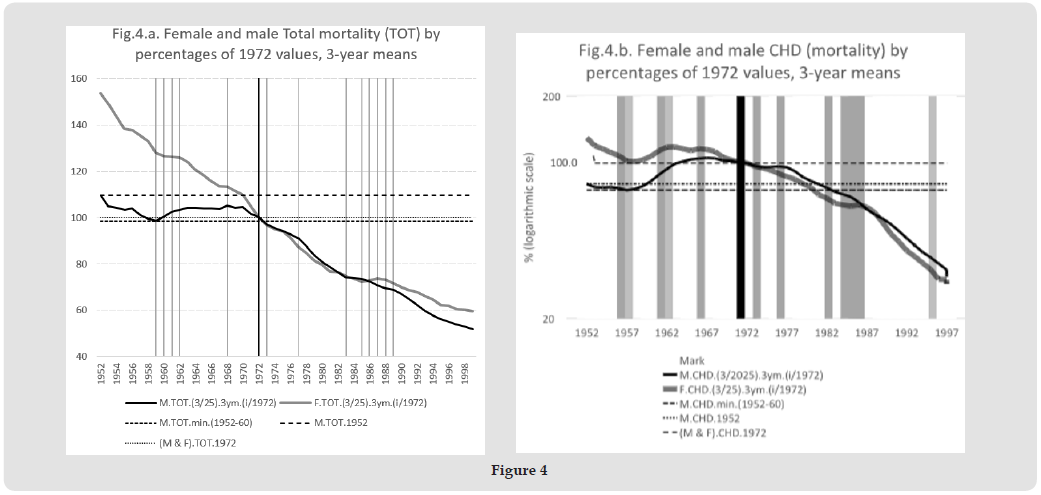
F.TOT decreased in 1952-86, showing retardation in 1959–62. It formed an elevation between 1985 and 1989. M.TOT decreased in 1952–59 and after that increased unevenly until 1968 and declined below its 1959 level in 1973. F.TOT complied well with M.TOT in 1972–86. M.TOT declined unevenly, formed small angles in 1977, 1983, 1985, 1989 and 1993.
Figure 5
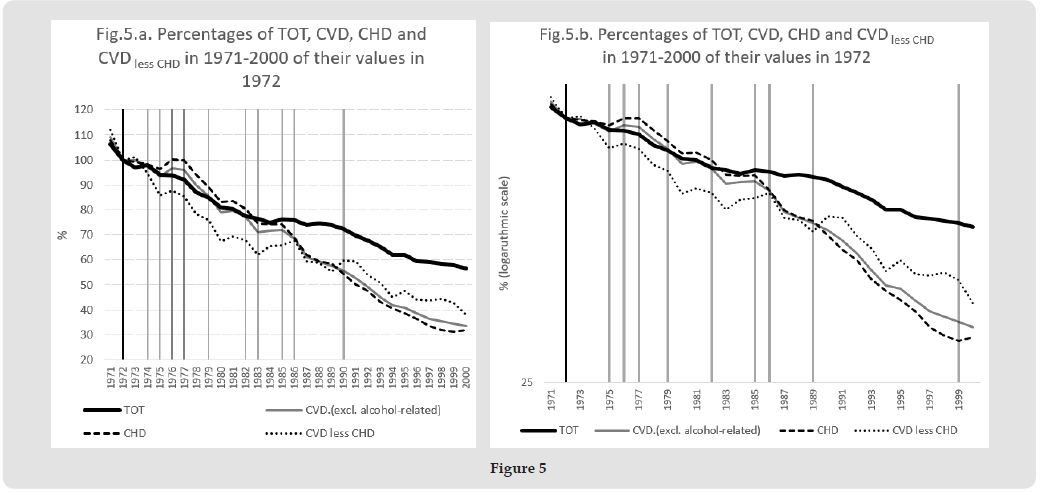
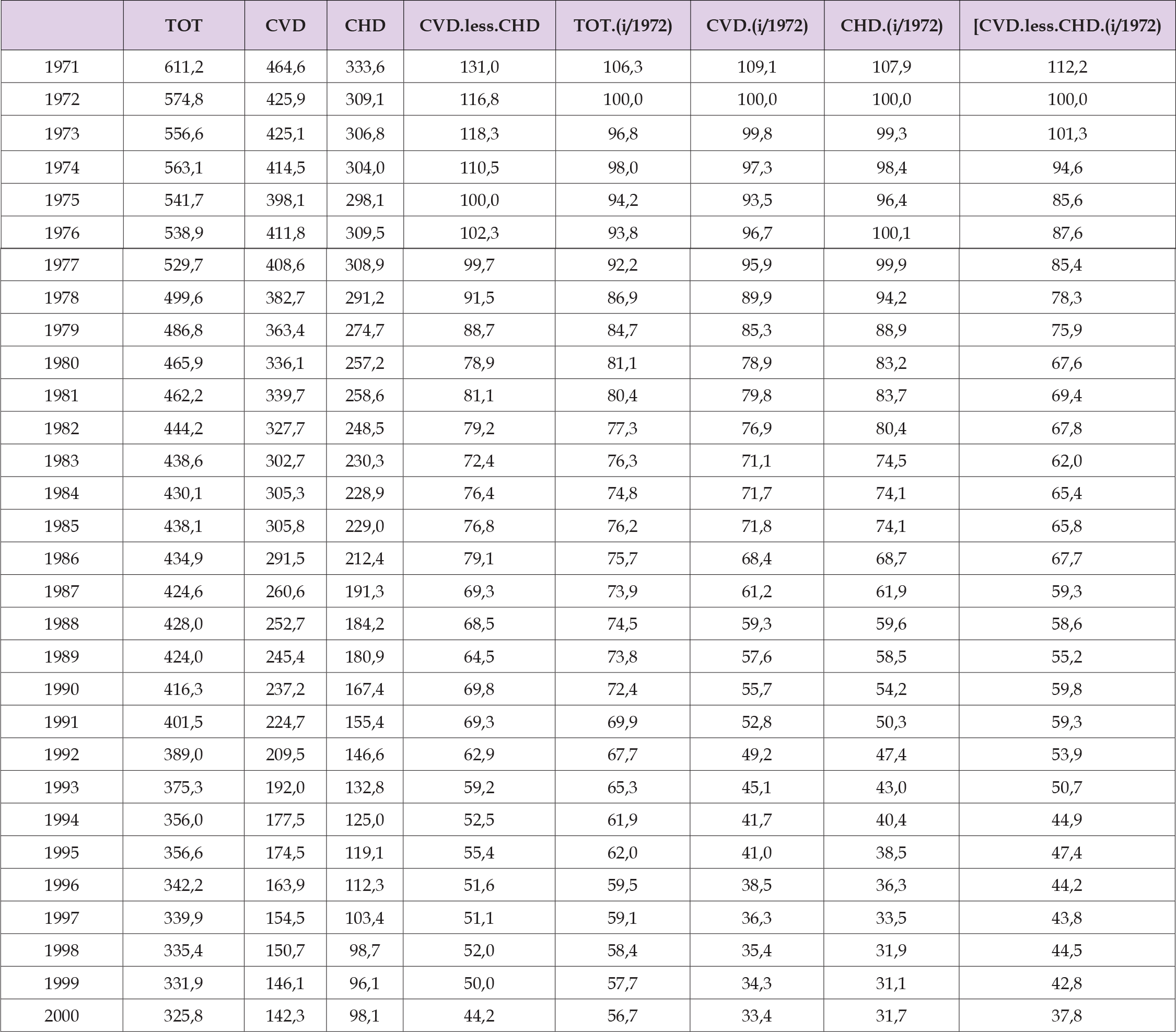
Data in figures 6.a (linear scale) and 6.b (logarithmic scale) are from Statistics Finland’s free-of-charge statistical databases, including Causes of death in 1971-2023 and Age-standardized death rate, aged 15-64 (1/100000) [6]. The selected variables are shown in Table 5. condensed to four factors: 1. TOT, CVD, CHD and [Other CVD’s]. (Table 6). Age-standardized death rate, of Finnish whole population, aged 15-64, (1/100 by given values and as percentages to annual values in 1972. Fig.6 shows development of annual age-standardized mortality from TOT, CVD, CHD and [Other CVD´s] in Finnish population (1/100,000), aged 15-64 in 1971–2000 [6], given even by percentages of their values in 1972. Fig.6.a resembles Fig.2.a with CHD elevation in 1976–77, but this deviation is shorter, because Fig.6.a shows annual variation. CHD was higher to TOT in 1974-82, (c.f. Fig.2: in 1982 CHD achieved its level in 1957) but in 1983–2000 TOT was higher to CHD (as in Fig.2). In 1974–85 CHD was higher CVD, in 1986– 89 equal, in 1990–2000 CVD was higher to CHD. In 1985 CHD and CVD turned abruptly downwards. “Other. CVD´s” showed higher variation than other partners and declined faster in 1974–83, but slower after 1989. In 1983–86 the represented CVD parameters converged and declined similarly until 1986, when Other. CVD’s separated from them. In 1986–2000 CVD and CHD decreased about similarly until 2000, faster than TOT. The most rapid CVD and CHD decrease is seen in 1985–87.
Figures 6.a and 6.b show the most radical changes in CHD mortality between 1958 and 1962. The second radical change was the abrupt increase in steepness of CHD and CVD curve in 1985–87.
Figure 6
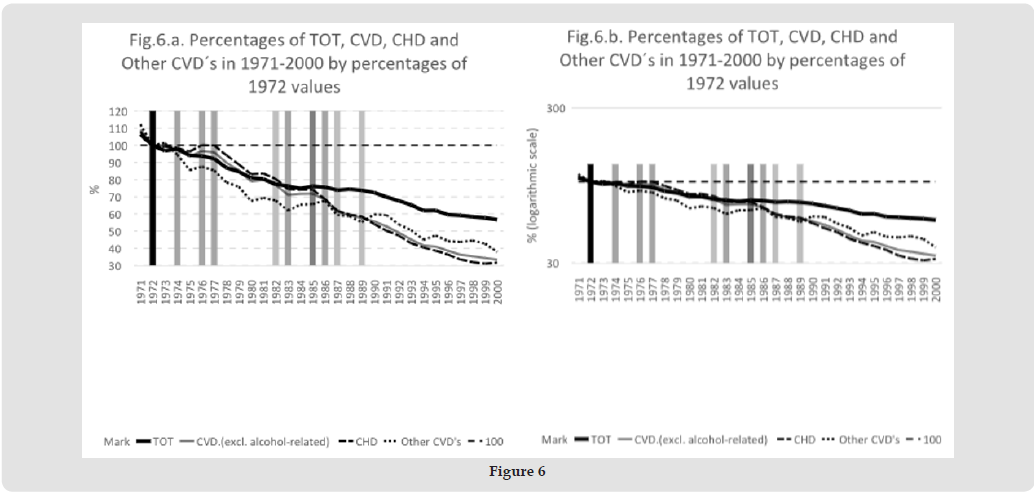
Table 5: Annual Age-standardized death rate, aged 15-64 (1/100 000) in 1971–2000.

Table 6: Age-standardized death rate, of Finnish whole population, aged 15-64, (1/100 000) by given values and as percentages of annual values of 1972.
Speeding of CHD decline in 1985 could be explained by coronary surgeries [7] and factors, which could have worked via mineral composition of foodstuffs [8-11] or food quality and behavioral factors [11]. CHD increase in 1976–77 by males could be partially explained with tobacco withdrawal [11], because the respective change by women was very restricted. Changes in cropland input and output of minerals (including silicon) has been changed in 1950–2023 [8-10] which have changed their proportions in foodstuffs. High total rates of fertilizers and relatively high rates of potassium and phosphate fertilizers (compared to 2000–2020) could possibly explain the female CHD and TOT mortality in the 1980’s [9,10]. Harvesting and post-harvesting procedures have had effects on grain quality [11]. After that the dilution of grain minerals (and other nutrients) by milling and addition of sugar have had great effect on the availability of protective nutrients [12].
“Atherosclerosis is a major etiology of cardiovascular disease that causes considerable mortality. Oxidized low-density lipoprotein (ox- LDL) is a fundamental attributor to atherosclerosis” [13]. Increase in selenium supply possibly explained the decline of CHD in the 1950’s [14]. Almost immediate statistical response of CHD mortality to PUFA’s (in 3 population groups) seemed “not likely’ (causal, because of the lack of delay) ([4], p.42), c.f. the Peason correlation of PUFA’s with rural male CHD was -0.07 and the poor response in the 1970’s to the dietary changes was explained by the delay [3]. (the simultaneity was in common with Mg/Ca variation in fertilization) [12]. The CHD increase and its relative increase to TOT after 1972 ([1], Fig.2, Fig.6), could be partially explained by polyunsaturated fatty acids (PUFA´s): refined PUFA´s without additional antioxidants, which can cause excess need of antioxidant supply [e. g. vitamin E and/or selenium, phytosterols, oxysterols, and squalene (possibly silicon)] [15]. Unstable grain fats (rancid after milling) (PUFA´s) can cause vascular lesions in the capillaries and in small muscular vessels of the myocardium, based on a large, partially experimental study on pigs [16]. The abrupt decrease in CHD and CVD mortality in 1985 is temporally associated with selenium fertilization, which began in the autumn of 1984 ([8], Fig.2, Fig.6). Possibly the excellent results with soybean oil [17] were based more on its protective substances, trace components, e.g. phytosterols [18], which could have been preserved better from becoming rancid in skimmed milk than in table spreads or by heating in pots or in oven.
The role of magnesium is understood by data in [12] and by the studies of Jeppesen on tissue-Mg association with myocardial infarct [19] and current reference range for serum Mg: 0.71-0.94 mmol/L [20], c.f. the textbook from the 1960’s: 0.9–1.25 mmol/L [21]. Discussion on Mg determination and higher value for the lower range limit is suggested in [22]. Deficiency of pyridoxin (vitamin B6) is known to produce hyperlipemia and formation of atheromas in monkeys indistinguishable from those found in human arteries [23]. Muscles, small arterioles and capillaries can respond to dietary changes faster than arteries, because an estimate for the human biological half-time of Mg is 1,000 hours (Avioli & Berman, 1966 (1948) in [22]).
The role of CHD in the group of CVD and TOT, based on the same data of Statistics Finland [6] as in figures 6.a and 6.b. In 1972–86 CVD composed 73 %, CHD 55 % and Other CVD´s 19 % of TOT, which explains higher variation of Other CVD´s.
The revision of the CHD data (Table 4, above) produces changes to (Table 2) in [1]: The revised data showed that the male CHD in 1967 was not 511, but 507.4 (0.7 % lower). Other annual CHD values were, by integers, as given. Both, female and male, CHD changes were higher before 1972 (in 1967–71) than after (in 1973–77). Their mean difference before 1972 was 8.2 % and after 5.7 %. The decline before 1972 was 2.5 percentage points, about 30% (NOT 34%) higher than after 1972 (Table 8). In value of 30.5 the next decimal is not reliable [Explanations: Δ: difference; μ: mean]. The deviations in [1] are so small that the figures on mortality are acceptable.
I am very grateful to late Professor Osmo Hänninen and late veterinary surgeon Seppo Haaranen for several discussions and to late professor Pentti Halonen for his lectures on Myocardial Infarct.


 Abstract
 PDF
PDF






























