info@biomedres.us
+1 (502) 904-2126
One Westbrook Corporate Center, Suite 300, Westchester, IL 60154, USA
Site Map
 ISSN: 2574 -1241
Received: October 01, 2026; Published: October 16, 2026
*Corresponding author: Zia Ullah, Department of Chemistry, University of Swat, 19130 Main Campus, Charbagh, Pakistan
Faridoon khan, Department of Chemistry, Abdul Wali Khan University Mardan, Mardan 23200, PakistanY
DOI: 10.26717/BJSTR.2026.67.010443
Over the last ten years, both advanced oxidation processes (AOPs) and nanostructured catalysts have reached
the stage of being well-established subfields in wastewater engineering and advanced oxidation processes
(AOPs)has become a new research paradigm that could be used to rapidly uncover the most promising catalysts
and optimize processes for both. This review critically summarizes these three literatures, with the main point
being that the real convergence is not as developed as the size of each of these literatures may suggest. We critically
review the evidence supporting photocatalytic, Fenton and electro-Fenton AOPs, ozonation-based, electrochemical,
and sonocatalytic AOPs applied to the contaminant classes that are responsible for their use, and the
nanostructured catalyst platforms that are developed to activate them. We then critically review the recent, but
still limited, literature on the use of machine learning for AOP kinetics prediction, catalyst property prediction,
and fouling and process control, claiming that the third pillar has been mostly applied to AOP catalyst research
programs side by side instead of genuinely integrated.
To illustrate the broader context of materials, energy, and data science, a materials, energy, and data-science
context section demonstrates that there is significant potential for a vast amount of methodological transfer
within adjacent fields, such as the energy materials, membrane separation, and biomedical nanocomposites. We
define and communicate an explicit research gap, whereby integrated, ML-guided, techno-economically tested
AOP Nano catalyst platforms are not tested at pilot scale with real multi-contaminant wastewater, and make a
clear research call, organized by five key directions. To back it up, this review covers 122 sources of information
ranging from water treatment to materials chemistry to data science.
Keywords: Advanced Oxidation Processes; Nanostructured Catalysts; Photocatalysis; Machine Learning; Wastewater Treatment; Heterojunction Photocatalysts; Process Optimisation
Abbreviation’s: AOPs: Advanced Oxidation Processes; AOPs: Advanced Oxidation Processes; DFT: Density- Functional-Theory; EAOPs: Electrochemical Advanced Oxidation Processes; ANN: Artificial Neural Network; GWO: Grey Wolf Optimisation; CDC: Crude Distillation Column; PAHs: Polycyclic Aromatic Hydrocarbons
An ever more complex mixture of persistent organic pollutants, inorganic contaminants, and emerging micropollutants is being discharged into industrial and municipal wastewater streams, which are difficult to treat completely using traditional biological and physicochemical treatment trains. Advanced oxidation processes (AOPs) have been developed in parallel with the others, specifically with advanced inorganic species like reduced sulfur compounds, hexavalent chromium, and lead, which need specific removal challenges and have been the target of the development of new nanostructured catalytic materials specifically designed to enhance the processes. [1,2] AOPs include, in a broad sense, treatment technologies which produce highly reactive oxidizing species, principally the hydroxyl radical, in situ to mineralise/transform recalcitrant contaminants are now a technologically diverse family: heterogeneous and homogeneous photocatalysis [1-5]; Fenton and electro-Fenton processes [6-9]; ozonation and ozone-based hybrid systems [10-13]; electrochemical advanced oxidation processes (EAOPs) [14,15] and sonocatalysis [3].
Over the last 10 years, these technologies have, in turn, been significantly influenced by the emergence of purpose-designed nanostructured catalysts such as doped and co-doped metal oxide semiconductors[ 5,6,16,14], heterojunction photocatalysts and composite photocatalysts [1,17,18], metal organic frameworks and materials derived from them [19,20], carbon nitride photocatalysts [21], and, more recently, two-dimensional materials known as MXenes, originally developed for membrane and energy storage industries, but now being explored for catalytic and separation applications in water treatment [22]. One recently added methodological pillar, which we claim has not yet been fully integrated into this space at least not to the same extent as is sometimes believed is machine learning (ML). Beyond the AOP nano catalyst realm, ML and deep learning methodologies have been used to predict AOP performance and reaction kinetics [2,23,24,13], to speed up the prediction of materials properties that are relevant to catalyst design [25], and to optimise related process-engineering systems [26-33] across a much broader field of materials and energy applications that share significant methodological overlap with AOP nanocatalyst studies.
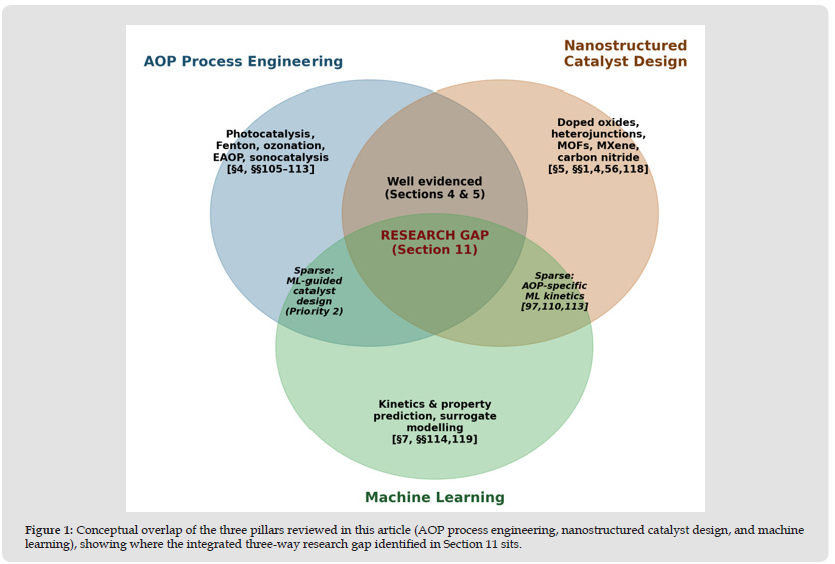
The idea behind this review is that these three pillars. AOP process engineering, nanostructured catalyst design, and machine learning are often described as a unified research programme, but actual evidence demonstrates a more complex picture: well-developed and robust literatures in each pillar, and a relatively limited, mostly proof-of-concept literature at the interface of them. This is also depicted graphically in Figure 1. The three research areas (AOP process engineering, nanostructured catalyst design and machine learning) are well-documented and studied in isolation, but seldom integrated. The “true” research gap identified in this review (Section 11) is in the middle of all three circles, the smaller two-way overlaps indicate that even partial combinations are under-explored. The diagram basically states that the greatest potential gain will be at this under-explored three-way crossroads, rather than in any one of the three pillars alone.
Figure 1
Novelty and Positioning Relative to Prior Reviews
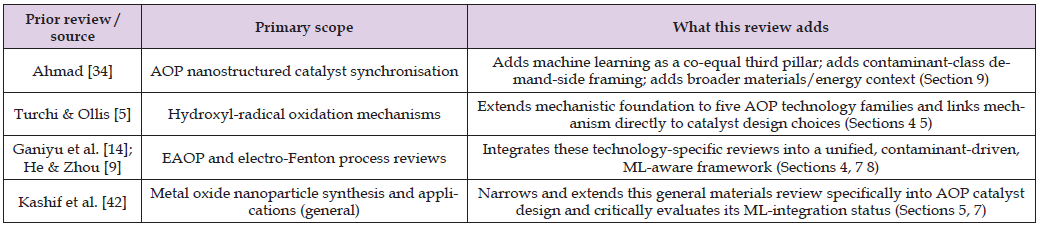
This review is based on, and significantly extends, a previous one, which had a specific focus on synchronising AOPs with nanostructured catalysts for wastewater treatment [34]. The previous review laid the foundation for technology to be matched with specific catalyst classes. The present review builds on that foundation in three ways that, to our knowledge, are not within a single existing review. First, a third, equal pillar is added to the machine-learning literature in place of the marginal mention, critically evaluating successes and failures in using ML to aid in AOP kinetics [12,13,24,25,35,36] and catalyst property prediction and where it has not yet been meaningfully used in catalyst-design workflows. Second, it explicitly uses the contaminant-class literature, i.e., dyes, pharmaceuticals, PAH and inorganic species as the demand side motivation behind AOP catalyst pairing choices, and not just as a performance target. Third, it places the AOP nano catalyst ML convergence in the wider materials, energy, and data-science context, citing a broad adjacent literature on membrane science[37-40] as well as energy materials and systems [28,29,33,41-52] and biomedical and structural nanocomposites [53-60] to argue that the synthesis, characterisation, and ML toolkits already in use in these adjacent fields are a valuable, but largely underutilised, resource for the study and development of AOP nanocatalysts in particular [61-64].
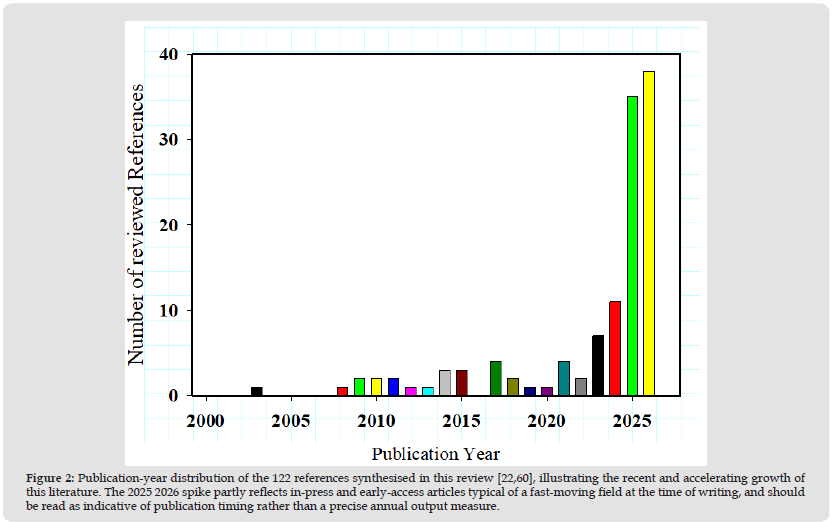
This growth rate is itself part of the arguments for the present synthesis, as is evident from the number of references, half of which were published after 2024, as shown in Figure 2. This indicates the field’s relatively new momentum and the danger of rapidly outdated individual- pillar reviews even if they were published two or three years ago [65-68]. This urgency is further exacerbated by the non-static nature of the contaminant classes discussed in Section 3; new pharmaceutical and personal-care product residues are emerging, new industrially diverse dye chemistries are being developed, and legacy inorganic contaminant species like thiosulfate and chromium continue to be found in real effluent streams, while the technologies used to treat them (Section 4) and the catalysts designed to enable them (Section 5) remain overwhelmingly validated under laboratory-idealised conditions involving single contaminants. This idealised evidence base is not merely a methodological footnote; rather, we believe that the reality of multiple contaminants discharged in wastewater is the fundamental practical challenge between the many pieces of evidence of catalyst performance reviewed in Section 5 and the actual treatment infrastructure that is deployed.
Figure 2
This challenge motivates the stated research call in Section 11. This review is organized as follows: In Section 2, we present our scope and our process for reviewing. Section 3 covers the contaminants landscape that is driving the use of AOP. AOP technologies and the mechanisms are reviewed in Section 4. Section 5 presents an overview of the design of nanostructured catalysts. In Section 6, membrane-assisted and hybrid separation technologies are discussed. Section 7 critically appraises the machine-learning literature for the context of AOPs and catalyst design. Section 8 brings together and reflects on the areas of land and sea and air where the three pillars really are converging (and where they are not). Section 9 examines the wider materials and energy perspective. Section 10 critically reviews issues and gaps in evidence. The research gap and call is stated in Section 11. Scale-up, Governance and economic considerations are tackled in section 12. Section 13 outlines future research directions and Section 14 outlines the limitations of this review. Section 15 concludes (Table 1).
Table 1: Positioning of this review relative to the principal existing individual-pillar reviews and foundational sources it builds upon and extends.
This review follows a narrative-critical synthesis approach, connecting three literatures, which are traditionally reviewed in isolation and follow quite different terminologies, assessment criteria, and journals. The framing of the demand for pairing AOP with a catalyst, as outlined in Section 1.1, was followed to synthesise the evidence thematically by contaminant class and treatment mechanism. The synthesis of evidence was complemented by a dedicated critical-evaluation section (Section 10), which highlights where the literature is genuinely unsettled, not where it is more mature than it actually is.
Organising Principle
Some of the individual-pillar reviews already published in the literature organize their synthesis by contaminant groups around a specific AOP technology or a specific platform for catalyst chemistry [22,42,68]; this review does not do that, but rather groups the synthesis around the demand-side contaminant classes outlined in Section 3, with the decisions of AOP technology choice (Section 4) and catalyst platform choice (Section 5) made in response to the chemistry of a specific contaminant, and with the treatment of machine learning (Section 7) as a candidate accelerant applicable, in principle, to any combination of contaminant class, AOP technology, and catalyst platform. It is the organising principle that enables Section 8 to pinpoint, not anecdotally, the evidence that has and has not converged in these three areas. As is typical of a critical narrative review, a quantitative meta-analysis of the performance metrics of the catalysts reported in the literature is not conducted, because the reported figures of merit (degradation efficiency, rate constants, loading on the catalyst, light source, and concentration of the contaminant) are too variable across the underlying primary literature to allow meaningful pooling without the introduction of false precision. When specific studies are referred to, they are reported according to the level of evidence that can be found in the published title and abstract level scope of the studies; we note where the evidence base for a particular claim is thin, in Section 10 and Section 14.
The choice of AOP technology and catalyst platform in the literature reviewed here is rarely made in the abstract; it is driven by the chemical characteristics of the target contaminant class. This section surveys the four principal contaminant classes that recur across the reviewed literature.
Synthetic Dyes and Industrial Colorants
Azo dyes, triarylmethane dyes, and related synthetic dyes continue to be one of the most widely studied groups of contaminants targeted by AOP because they are chromophoric and visible, as well as being resistant to conventional biodegradation and because these dyes are often toxic to aquatic organisms. Studies mentioned suggest visible-light-driven photocatalytic degradation of fast yellow AB using zinc ferrite nano photocatalysts [2]; combined photocatalytic and sonocatalytic degradation of methylene blue using nickel-impregnated ZnO [3]; dynamic-light-scattering-guided design of NiS ZnS nanocomposites for dye degradation [16]; green-synthesised nickel oxide nanoparticles for visible-light degradation of RBV-5R dye [4]; molecularly imprinted polymer-based extraction of methyl yellow as a complementary, non-destructive removal route [69]. For the decolorisation of turquoise blue dye, one of the few comparative AOP benchmarking studies in the literature has been performed for ozonation, O3/H2O2 and Fenton processes [8]. This class of contaminants can be further expanded to include combined pathogen inactivation and dye degradation with heterojunction-driven photocatalytic systems for decentralized water treatment applications [2].
Pharmaceuticals and Emerging Organic Micropollutants Pharmaceutical residues and related organic micropollutants pose a unique removal challenge due to their low environmental levels and diverse structures, which makes it difficult to find universal solutions for the removal with a single catalyst. A different, but non-photocatalytic mineralisation approach is the so-called ‘hybrid adsorption degradation’ by smart adsorbent frameworks designed for high-efficiency pharmaceutical degradation by adsorption [70]. The application of artificial neural networks to both adsorptive and photocatalytic removal of phenolic contaminants has been reported separately, showing that there is a growing early interaction between this particular class of contaminants and the machine-learning pillar, which was developed further in Section 7.
Polycyclic Aromatic Hydrocarbons
Persistent, hydrophobic, and often carcinogenic, PAHs have a unique treatment and monitoring evidence base. The analytical context for assessing the efficacy of AOP treatment for this contaminant class will ultimately be based on a comprehensive review of PAH occurrence in water bodies, extraction techniques, detection methods and standardised guidelines for aqueous PAH monitoring [71] which is not as well represented in the literature as the dye and pharmaceutical classes above but, as discussed in Section 11, is a research gap.
Heavy Metals, Metalloids, and Inorganic Species
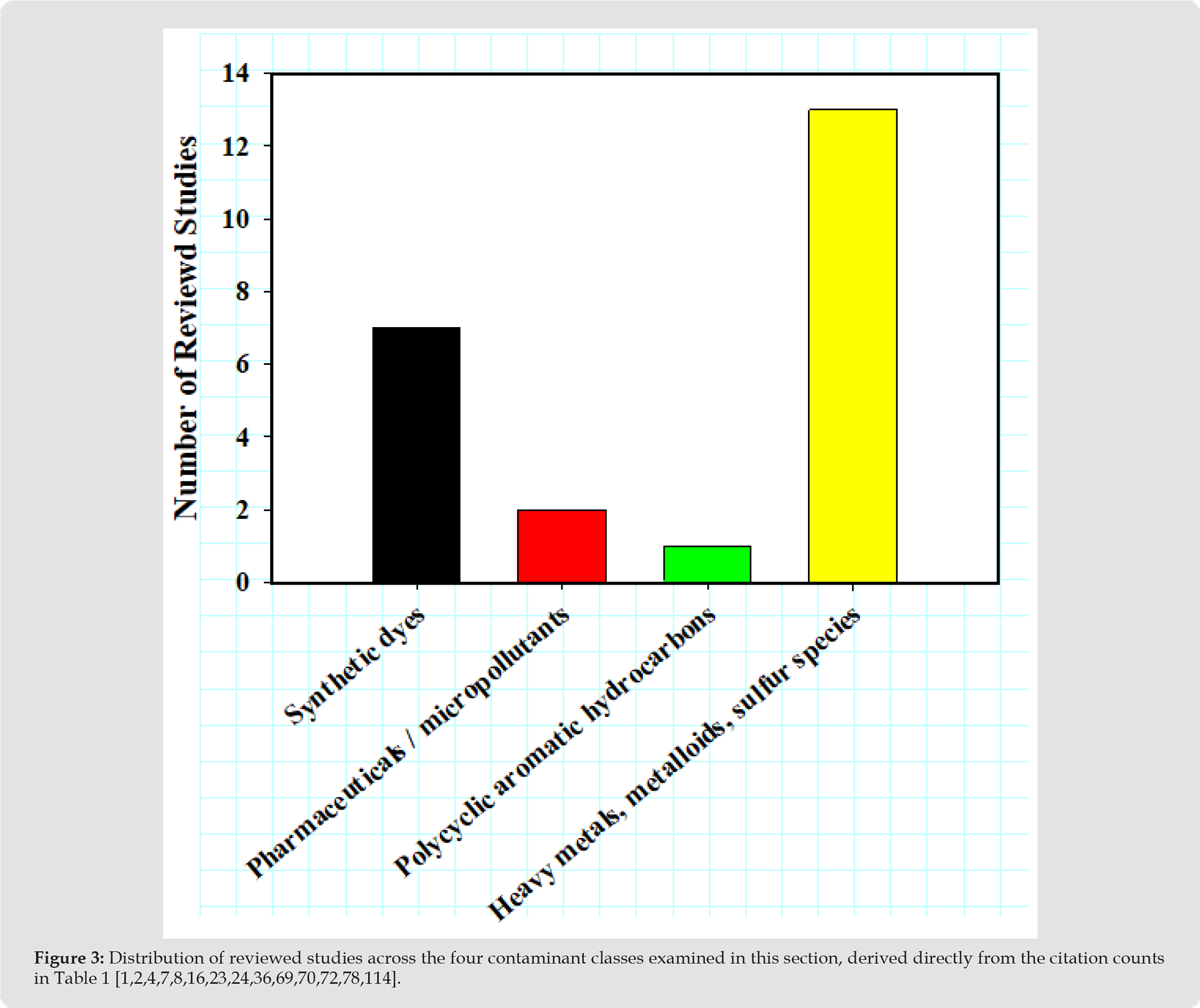
Inorganic contaminants such as heavy metals, metalloids and reduced sulfur species can be removed by mechanisms (precipitation, adsorption, oxidative transformation, or reductive recovery) that are mechanistically different from the oxidative mineralisation pathways prevalent in the organic-contaminant literature above, but also occur in the same streams of industrial effluent. Several of these works are devoted to the removal of reduced sulfur species and are considered here: catalytic oxidation of thiosulfate [72], aeration-assisted remediation of sulfidic wastewater under ultrasonic vibration [73], ironsalt- based treatment of sulfidic wastewater [6], oxidative removal of sodium thiosulfate [74] and catalytic oxidation of sulfidic wastewater using hydrogen peroxide [7] all of which are recent and of direct and concrete relevance to the AOP ML convergence that is the focus of this review, and which is assessed critically in Section 7. The complementary inorganic-contaminant studies include the extraction of chromium by emulsion liquid membrane [75], the use of silver-ion nanoparticles to sense Cr(III) [4], the use of Saudi Arabian clay to remove lead [76], the use of the physic seed hull biosorbent to remove general metal-ions [77], the tuning of silica surface charge for phenol removal [78] and the gravity separation of copper from scrap electrical cables [79] with the last of these extending the inorganic-contaminant evidence base from aqueous treatment to downstream environmental and human-health pathway exposures(Table 2). Heavy metals, metalloids, and reduced sulfur species and synthetic dyes together make up the bulk of the contaminant-specific evidence base reviewed here (Figure 3), with only one study per contaminant class reviewed for the polycyclic aromatic hydrocarbons class. We do not believe this imbalance is indicative of any inherent disadvantage of PAH molecules for AOP, but it is a real lack in the available evidence base that we deal with explicitly in Section 13 as a future research goal.
Table 2: Wastewater contaminant classes motivating AOP and nanocatalyst deployment across the reviewed literature.
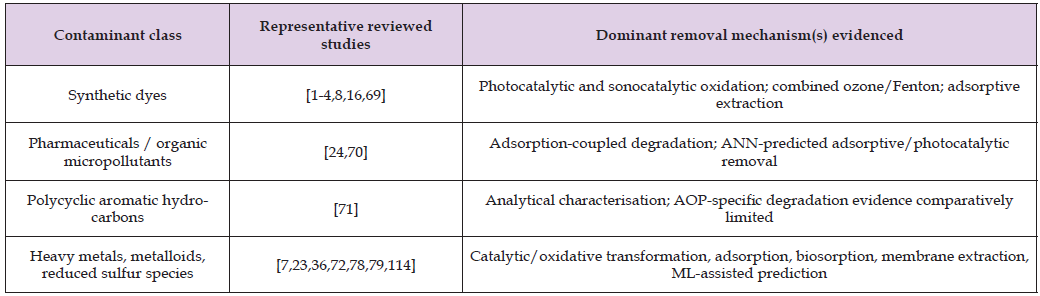
Figure 3
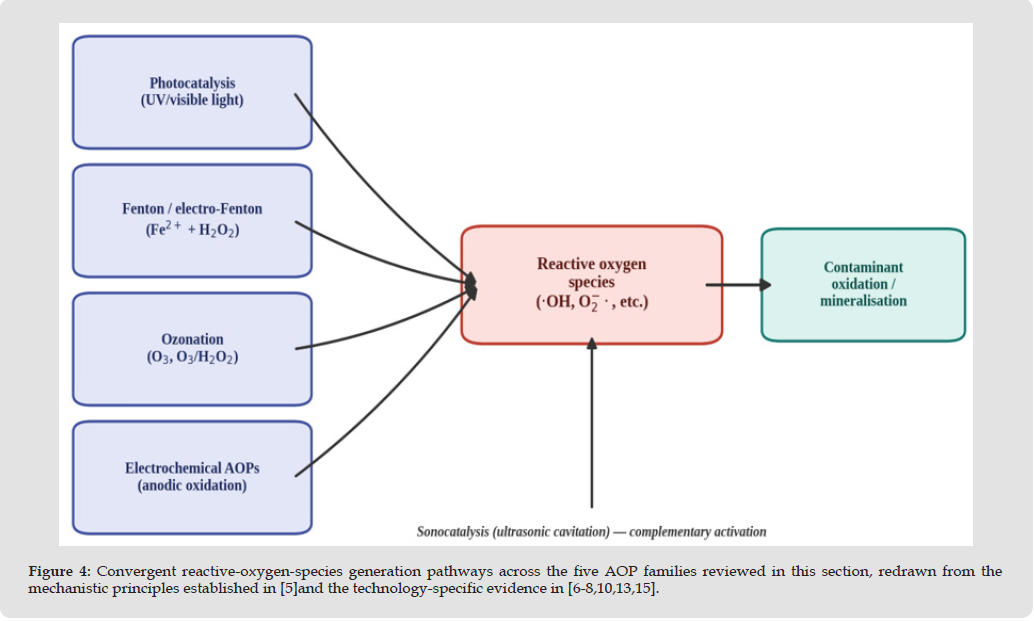
Although there are some differences in the kind of energy input, the amount of reagents required, and the reactor configuration employed for the in situ generation of the hydroxyl radicals and other related ROS that serve as the comm on mechanistic basis for the AOPs, they all share the common feature of non-selective oxidation of the organic contaminants by the in situ generated hydroxyl radicals or the other related ROS. This section summarizes the five main families of AOP technologies identified in the literature studied. The five families of AOP are mainly distinguished by the way they produce ROS either through photonic, chemical, electrochemical, or acoustic activation and not by the basic oxidative process they undergo to oxidize the targeted contaminant. This contaminant class-driven organization is achieved because there is a shared mechanistic endpoint; if there wasn’t, then it would not be possible to discuss the most practically deployable activation route for a given contaminant, as this would depend on the inherent superiority of a particular AOP technology.
(Figure 4) illustrates how five distinct advanced oxidation processes (AOPs) -photocatalysis, Fenton/electro-Fenton, ozonation, and electrochemical oxidation, plus sonocatalysis as a complementary activation route all converge on a single mechanistic pathway. Despite using very different activation methods (light, iron/peroxide chemistry, ozone, electrode reactions, or ultrasound), each process generates the same reactive oxygen species, principally hydroxyl radicals (·OH) and superoxide radicals (O₂⁻·). These reactive species then drive the actual pollutant-destroying step: oxidation and mineralisation of the target contaminant. The figure’s core message is that AOP technologies differ mainly in how they produce reactive oxygen species, not in the fundamental chemistry that ultimately breaks down the contaminant.
Figure 4
Photocatalytic Oxidation
Photocatalytic AOPs are based on semiconductor catalysts that generate electron hole pairs when exposed to light, which can then be used to form hydroxyl radicals, as well as to directly attack the organic contaminant, and the mechanism of hydroxyl radical-driven organic contaminant oxidation was established in early foundational work [5]. This mechanism has been reported in the literature for a wide variety of catalysts, including ZnO nano photocatalysts for degradation of dyes [2], Ni impregnated ZnO for degradation of dyes, both through photocatalytic and sonocatalytic action [3], heterojunction photocatalysts for combined pathogen and dye degradation [1], NiS ZnS nano composites [16] and green synthesis nickel oxide nanoparticles [4]. Mechanistic and machine learning based studies of one of the most widely studied photocatalytic semiconductors, TiO2, further connect the structure to the behaviour of the band gap relevant to the activity in visible light [25]; and cloth-supported TiO2/BiOBr heterostructures demonstrate not only catalytic performance but also recycling considerations for practical use [18].
Fenton and Electro-Fenton Processes
The AOPs based on Fenton are obtained by using iron-catalysed decomposition of hydrogen peroxide, and the electro-Fenton variants produce the necessary reagents electrochemically in situ. The reviewed literature includes iron-salt-based treatment of sulfidic wastewater [6], catalytic oxidation of sulfidic waste water based on hydrogen peroxide [7] and comparative evaluation of Fenton and ozone/H2O2 processes for the dye decolorisation [8] in addition to a dedicated critical review of the fundamentals and applications of electro-Fenton process for water and wastewater treatment [9] and a related review of the photodegradation using iron mediated oxidation systems of the herbicide 2,4-dichlorophenoxyacetic acid [10].
Ozonation and Combined Ozone-Based Systems
Comparative dye decolorization studies [8] provide evidence for ozone-based AOPs, as well as for combining ozone-based AOPs with downstream adsorption on activated carbon [11] and machine-learning- based prediction of the extent of hydroxyl radical exposure in ozonation based on kinetic parameter values of ozone decay [12] in treated water. A recent machine-learning-based predictive emissions model for ozone, developed with the XGBoost algorithm [13] provides another example of how data-driven approaches are increasingly being applied in the field of ozone-based AOP research, which is explored further in Section 7.
Electrochemical Advanced Oxidation Processes
The reactive oxidising species are generated on- and/or near-electrode surfaces, or by reagent generation using a process mediated by the electrodes in EAOPs, providing a reagent-lean alternative to the chemical Fenton and ozone-based systems. In addition to the above, there is also a dedicated review of advances in the formation and detection of the reactive species and mechanisms involved in the EAOP technologies reviewed, [14] and a life-cycle-assessment-informed review of the current perspectives of electrochemical oxidation processes (EAOP) in wastewater treatment, [15] both of which are among the few reviewed studies that explicitly link AOP technology choice to environmental life-cycle considerations, a link we argue remains under- developed across the AOP nanocatalyst reviewed literature more generally, as discussed in Section 12.
Sonocatalysis and Hybrid Activation
Sonocatalytic AOPs rely on the creation of localised high temperature and pressure conditions, due to ultrasonic cavitation, to increase the formation of radicals, either on their own or in conjunction with photocatalytic activation. This is reflected in the reviewed literature in particular by the combined use of photocatalytic and sonocatalytic degradation of methylene blue using nickel-impregnated ZnO [3] and, in an earlier context for inorganic pollutants, by the combination of ultrasonic vibration and aeration to remediate sulfidic wastewater [73] that shows ultrasonic vibration as a complementary activation mechanism to photocatalysis and not as an AOP system (Table 3).
In reality, the catalytic activity of any of the AOP technologies described in Section 4 will depend on the nanostructured material designed to activate it. In this section, the major catalyst platforms available in the literature are reviewed.
Doped and co-doped metal oxide semiconductors
The most common photocatalytic platform is metal oxide semiconductors, and strategies for doping and narrowing the band gap, expanding the visible light spectrum, and reducing electron hole recombination have been employed systematically. Zinc ferrite nano photocatalysts [2] and nickel impregnated ZnO for dual photocatalytic sonocatalytic activity [3] illustrate the examples that have been reviewed while a broad comprehensive review of recent advances in metal oxide nanoparticle synthesis strategies, characterisation and multifunctional applications [42] positions the water-treatment-specific catalysts within the wider metal oxide nanomaterials literature. The synthesis of silver nanoparticles using green methods, which are evaluated for Cr (III) sensing instead of direct AOP catalysis [23] also shows methodological overlap between a green synthesis method for catalysis and for sensing.
Heterojunction and Composite Photocatalysts
Combining two or more semiconductor phases with complementary band alignments is now a technology that is widely adopted, known as hetero junction engineering, to both increase the visible- light absorption and enhance charge-carrier separation. These are just a few examples of the literature reviewed spanning heterojunction- driven photocatalytic processes for simultaneous pathogen and dye degradation [1], NiS ZnS nanocomposites optimised using dynamic light scattering [16], and cloth-supported TiO2/BiOBr heterostructures that integrate catalytic efficiency with mechanistic insight and machine-learning-assisted modelling for selenium(IV) reduction from wastewater [18] (the latter being an example of the ML-catalyst integration examined critically in Section 7).
Metal Organic Frameworks and Mof-Derived Materials
MOFs have large surface area, can be tuned in terms of pore chemistry, and can be designed to have catalytically active open metal sites. In the reviewed literature, the rational design of MOF hybrids by metal and ligand engineering to support an oxygen evolution reaction catalysis [19] was highlighted as an electrocatalytic application that should be closely followed, yet not identical, to direct AOP contaminant degradation; the dramatic changes in properties of MOF particles depending on the synthesis approach [20] was also pointed out, and directly relevant to the design of AOP catalysts considering the crucial role of the iron-based active sites in Fenton-type chemistry (Section 4.2).
Carbon Nitride and Two-Dimensional Materials
Graphitic carbon nitride (g-C3N4) and other 2D materials provide a platform for catalytic and sorptive applications without the need of metals or containing low concentrations of metals. The literature reviewed includes the use of the lignin-etched sulphur-doped graphitic carbon nitride for electrochemical cypermethrin sensing [21] where it is used as both a sensing and a catalytic material, and the preparation of the phosphorous-doped graphitic carbon nitride by a simple preparation route for methylene blue removal [80] which is directly used as a catalyst for dye degradation. As reviewed and discussed in detail in the following Section 11, among the two-dimensional material classes reviewed, membranes based on MXenes are the most commonly cited in the reviewed literature for their use in desalination processes and for their properties and engineering strategies, but their electrical conductivity and surface chemistry are also well suited to electrocatalytic AOP roles, which have been relatively little explored.
Green and Biogenic Nanoparticle Synthesis
Multiple reviewed catalyst systems confirm the use of green synthesis (using plant extracts or other biogenic reducing/capping agents instead of conventional chemical reducing agents) as an increasingly common and not unique route to nanocatalysts relevant to AOP applications in the literature reviewed: silver nanoparticle synthesis using extracts from Vaccinium oxycoccos; NiO nanoparticle synthesis using extracts from Calotropis procera for photocatalytic degradation of dyes (Table 4).
Table 4: Nanostructured catalyst platforms, principal design levers, and representative reviewed evidence.

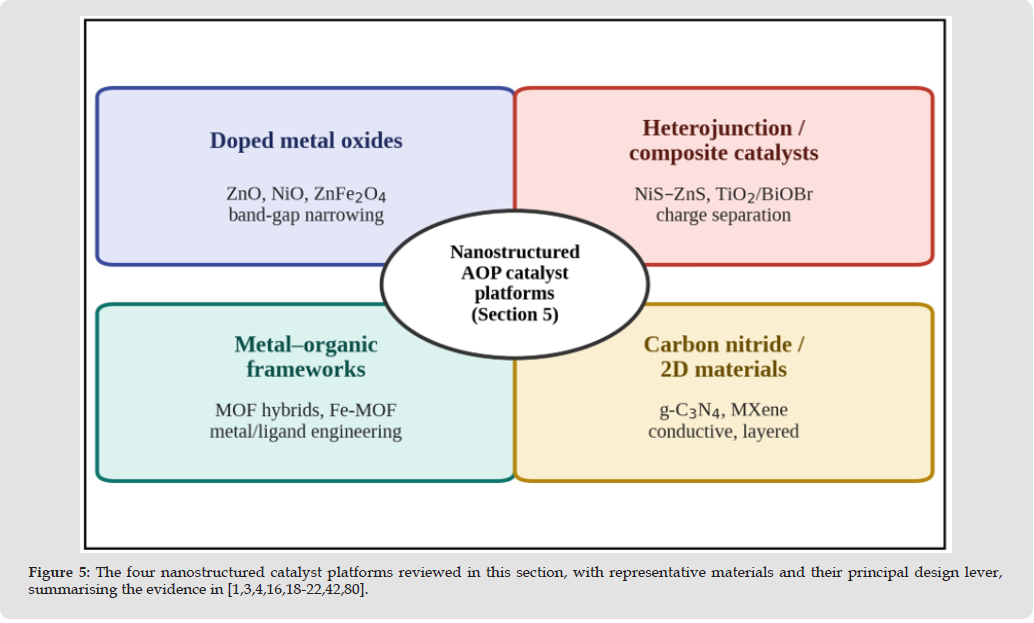
Figure 5 does not list the catalysts by chemical family only, since the ultimate purpose of extending visible-light activity, enhancing charge-carrier separation, or incorporating catalytically active sites, is pursued by different chemical pathways in the four platforms. This design-lever framing is what makes Section 10.4 the case study of a broader pattern rather than an isolated observation that is, as a specific example of MXene’s relatively untapped catalysis potential, rather than its separation potential.
Figure 5
Research on AOP and nanocatalysts is not pursued in isolation of membrane-based separation, which is often used as a complementary pre-treatment, polishing or product-recovery process in an integrated treatment train. The membranes discussed in Section 5.4, which have been reviewed for advanced desalination applications [22] are the most direct link between the two dimensional catalyst materials mentioned in the previous section and membrane separation. In addition to ceramic membranes reviewed specifically for carbon dioxide separation, the literature reviewed also contains polymeric membrane research for gas separation: silica-polymer nanocomposite membranes [38] and asymmetric polysulfone/polyimide blended membranes for CO2 separation [81] as well as thermal degradation kinetics of polysulfone/polyimide blended membranes [82] and a review on state-of-the-art membrane solutions for direct air carbon capture [39]. Although these gas-separation related membrane studies are not direct applications to wastewater AOP, they are included here because the membrane and fouling-resistance characterization and fabrication methods are directly transferable to membrane applications in integrated AOP membrane treatment trains, which will be developed in Section 9.
While the catalytic and membrane technologies outlined above are higher-tech approaches to separating oil and grease, a complementary low-tech physical separation process is a lowcost wastewater reclamation unit designed to reduce water usage in carwash stations [83] and can be used in addition to, not instead of, the catalytic and membrane technologies. The use of membrane separation and AOP treatment is not necessarily substitutive; usually membranes are used to pre-treat or remove suspended solids and organic matter from feed water to the catalysts or oxidants, or they are used to post-treat or meet the water-quality requirements for discharge. Interestingly, none of the membrane-specific studies mentioned above [22,38-40] reports direct integration of the membrane with an AOP stage in a single treatment train; this review regards that as a structurally similar gap to the AOP ML convergence gap identified in Section 8, and it is a further concrete example of the electrocatalytic under-exploitation identified in Section 10.4.
Machine learning has found its way into AOP and catalyst research along three more or less independent pathways: prediction of process performance and kinetic, prediction of materials properties, and process-engineering optimization that does not necessarily have to be applied to AOP catalyst systems but can be transferred to them.
Machine Learning for AOP process Performance and Kinetics Prediction
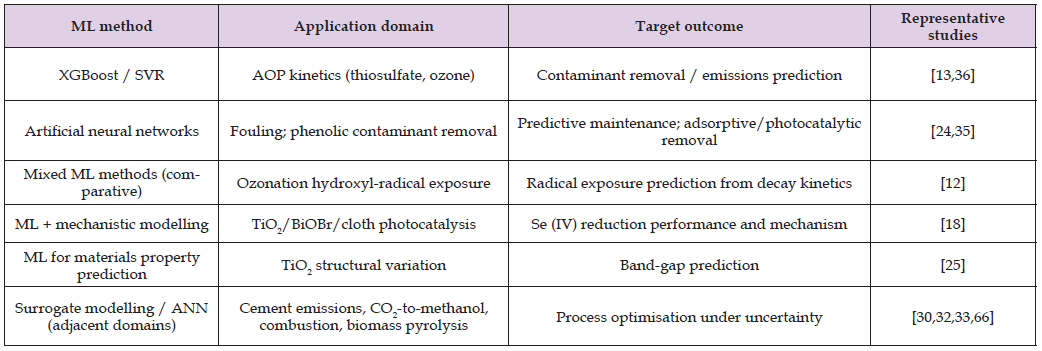
The most straightforward evidence for the integration of ML AOP from the reviewed literature is the predictive model for removing thiosulfate from wastewater based on the gradient-boosted XGBoost algorithm and support vector regression [36] that is an extension of decades of experimental study on sulfidic wastewater treatment [7,72]. Ozonation specific applications comprise a machine learning approach to predict the exposure to hydroxyl radical during ozonation based on the kinetic parameters of the ozone decay, tested across several machine learning techniques [12] and a predictive emissions model of ozone using an XGBoost machine learning technique [13]. Artificial neural networks have been used individually for prediction of the adsorptive removal process of phenolic contaminants [24] and for heat exchanger fouling for predictive maintenance in a related process-engineering application [35], the latter serving as an example of the direct transferability of fouling-prediction methodology to membrane or catalyst-surface fouling problems within AOP treatment trains.
Machine Learning for Catalyst Materials Property Prediction
A smaller, but still expanding, body of literature uses ML for catalyst properties of AOP relevance. The effect of structural variations on the band gap of TiO2 has been studied using machine learning [25] which directly impacted the visible-light photocatalytic activity discussed in Section 5.1, and the design of TiO2/BiOBr/cloth heterostructures for photocatalytic reduction of selenium (IV) has been investigated by both mechanistic approaches and machine learning modelling [18]. The technical toolbox of deep learning techniques, such as convolutional neural network architectures, which are growing in availability for applications such as catalyst structure property prediction, is used as the foundation for the methodology of this work.
Machine Learning for Adjacent Process Optimisation with Direct Transfer Potential
The amount of reviewed literature found in the related fields of energy and process engineering, where process optimisation and prediction are also considered, is significantly larger and includes methods that can be transferred to the field of AOP catalyst research even if not yet applied there. These include the use of artificial neural network (ANN) based irrigation need prediction that has been enhanced by grey wolf optimisation (GWO) [84], new intelligent model following and droop control for hybrid microgrids [26], the quantification of emissions uncertainty in a cement manufacturing plant by means of surrogate modelling using artificial neural networks (ANN) [30], novel machine learning (ML) model of combustion thermodynamic performance optimisation in cement manufacturing [31], ANN surrogate modelling for CO2-to-methanol conversion optimisation [32], novel optimisation algorithms for hybrid power system energy coordination [85,86,27], grey-box modelling for optimisation of crude distillation column (CDC) [29], interpretation of machine learning (ML) for prediction and optimisation of exergy efficiency of a cumene production plant [66] and prediction and optimisation of exergy efficiency of a cement manufacturing plant using machine learning (ML) [33].
All of these studies show a well-developed and validated ML method that has been successfully applied to a process engineering problem with a similar structure to the AOP catalyst optimisation problem (i.e. multi-parameter, expensive to evaluate experimentally and nonlinear), but which had not been applied to AOP nanocatalyst systems specifically except in the studies of thiosulfate and ozonation discussed in Section 7.1. This disconnect between methodological availability and application in a particular field is, in our opinion, one of the most clearly articulated and most practical observations of this review (which is expanded on in Section 11) (Table 5).
Table 5: Machine-learning methods applied to AOP, catalyst, and adjacent process-engineering systems across the reviewed literature, illustrating both the AOP-specific applications (Section 7.1 7.2) and the directly transferable adjacent-domain methodologies (Section 7.3).
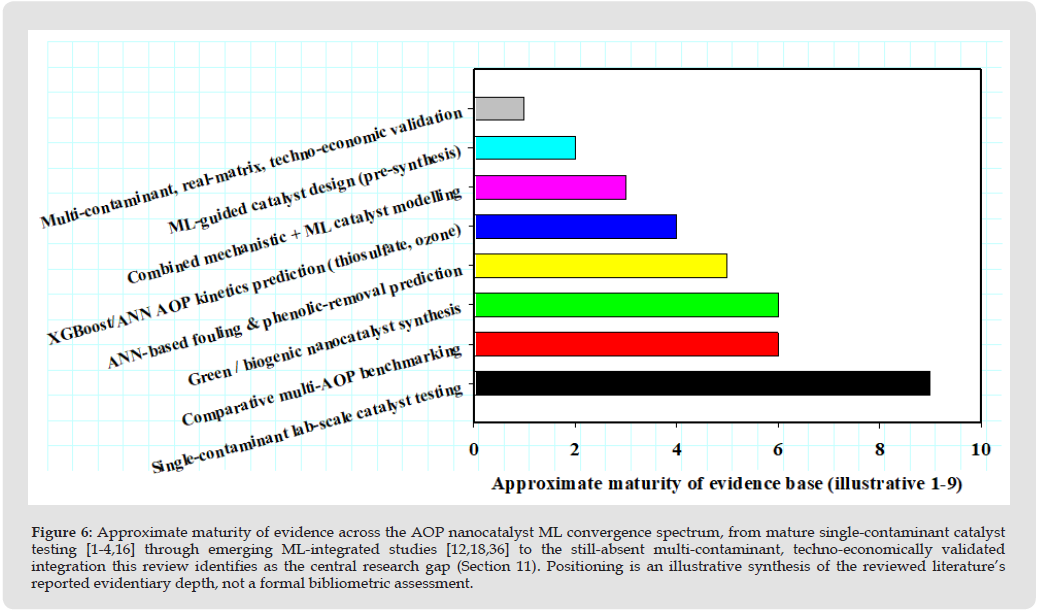
Section 4 - 7 provide a holistic view of the reviewed literature: AOP process engineering, nanostructured catalyst design and machine learning are evident in only a small minority of the reviewed studies, specifically in the thiosulfate ML study [36], in the ozonation hydroxyl-radical-exposure ML study [12] and in the TiO2/BiOBr/ cloth selenium reduction study that combines mechanistic and MLbased modelling directly [18]. The vast majority of the AOP catalyst literature reviewed (Sections 4/5) does not involve the utilisation of ML for prediction or optimisation of catalyst performance, whereas the vast majority of the ML literature reviewed (Section 7.3) is for process-engineering systems outside wastewater AOPs completely. In our opinion, this is not a fundamental methodological incompatibility, because the process-optimisation problems in cement manufacturing [30,31], hybrid power systems [27, 85] and biomass pyrolysis [33] are structurally similar to AOP catalyst optimisation problems, but is rather a form of disciplinary and venue separation, as identified in related engineering-convergence reviews [53,54] as a structural governance barrier.
This tripartite convergence, to which the title of this review refers, is therefore not to be understood as a completed research programme, but as an emerging opportunity supported on the balance of the evidence reviewed by a small number of proof-of-concept studies. Figure 6, which is meant to be read in conjunction with the evidentiary gradient underlying the argument of this section, makes this point explicit; the gradient is not gradual but steep, from the well-evidenced, single-pillar demonstrations to the fully integrated, multi-contaminant, real-matrix validations this review is calling for. It is this steep gradient that makes it worth the framing of the research call that is made in Section 11 and specific and actionable.
Figure 6
A significant portion of the literature consulted during the preparation of this review is not wastewater AOPs-specific, but rather is related to the synthesis and characterization of the nanomaterials, density-functional-theory (DFT) modelling, and machine-learning toolkits found in Sections 5 and 7. If this adjacent literature is reviewed explicitly, rather than an artificial wastewater-treatment framing being imposed on it, the same characterization and modelling capabilities that have been validated in these adjacent fields are a readily available but under-used resource for AOP nano catalyst research, as developed in Sections 1.1 and 7.3.
Structural and Optical Materials Characterisation
This computational method is widely illustrated in neighboring materials, from structural, electronic, and optical property investigation of strontium-substituted barium cobalt tungstate ceramics for wireless applications [53] to characterization and DFT study of the structural, electronic, and optical properties of thallium-based semiconducting perovskites for reflective coating applications [87] and organotin(IV) carboxylate derivatives alongside a study of their biological potential [88] to the physical origin of ultralow lattice thermal conductivity in anharmonic thermoelectric materials [64]. The wealth of optical and electronic structure characterization expertise that is found throughout this adjacent literature is directly applicable to the band-gap and charge-separation characterization at the heart of photocatalyst design (Section 5.1 5.2), such as nonlinear optical studies of the third-order nonlinear optical switching of organic glasses [55] and the thermoelectric and optical responses of copper tantalum oxide [62] or the multiple Fano resonance generation in plasmonic split nanoring dimers [89] and the higher-order plasmon-mode-induced Fano-like resonances in bimetallic nano shell dimers [90].
Polymer and composite materials science
The research program of polymer composite characterization as discussed in the literature, such as the effect of iron content on the thermodynamic properties [56], the effect of iron loading on quiescent crystallization behavior [91], the effect of iron content on the thermal response [92], the effect of the starch content on the thermal and viscoelastic properties [93], the effect of shear-flow on crystallization of clay composites [94], the effect of the iron content on the viscoelastic properties of the polymer [95] and the relationship between stereoregularity and the viscoelastic properties of the melt [96] constitutes a substantial and methodologically consistent programmed.
The nystatin coated copper oxide particle effect on denture material properties [97]; the effects of chlorohexidine coated cotton filler on the properties of fissure sealants [54]; the effects of TiO2, Ag-TiO2 and Cu-TiO2 nanoparticles on the properties of fissure sealants [98]; the effects of ionic liquid on the properties of soft denture lining material [99]; and TiO2-decorated cellulosic material on denture adhesive composite properties [100] are indicated as biomedical and dental polymer composites. This evidence base of cosmetic applications of ionic liquids is extended by Cosmetic Grade Ionic Liquid Synthesis and Characterization for Skin Whitening Applications [57] and by the Fly Ash-Lime Compact Curing Behavior [101]. None of these studies explicitly deals with wastewater treatment, however the methodologies used (nanoparticle-doping, composite-characterization, and property-property structure-function) are directly analogous to the problem of the doped-catalyst that is central to Section 5.1.
Energy systems and process engineering
The reviewed literature is grouped in a large cluster of those related to energy systems and process engineering with the process-optimization and techno-economic evaluation methodology constantly emerging in the AOP catalyst scale-up (Section 12). These include hydrogen and fuel cell technology review [68], lithium-sulfur battery electrolyte design [102], algae-based bioenergy techno-economic assessment [103] and feasibility study of a grid-connected hybrid photovoltaic system [104] and perovskite multi-junction solar cell design [61] and algal biodiesel production [43] and global decarbonization energy modelling [52] and performance assessment of PV module integrated with PCM [51] and review of flexible perovskite solar cell technology [105] and power system stability under high penetration of renewables [106] and gasoline-to-electric-vehicle conversion as a transport electrification pathway [60]. This is demonstrated by the research on pyrolysis and combustion process engineering, such as selective pyrolysis process control [67] and co-pyrolysis of waste frying and engine oil [107]; on Thar coal gasification techno-economic and environmental evaluation [108]; on catalytic pyrolysis of waste polystyrene [41]; on electrofuels for hard-to-abate transport decarbonisation [47] and on cumene plant exergy analysis [48]. Examples of nuclear and hybrid grid engineering include nuclear-PV-biogas hybrid microgrid control [26] and critical heat flux prediction for reactor thermal hydraulic safety [28]. This cluster is completed by the studies on fluid dynamics and heat transfer: entropy-optimized nanofluid flow with magnetohydrodynamic effects [109,110] and three-dimensional viscous fluid flow across rotating discs [111] and the CFD analysis of the performance of heat exchanger inserts [112] which are all based on the same approach of optimization under uncertainty, as is also the case for the decision-making framework based on complex fuzzy bipolar soft sets for investment strategy optimization [44].
Biomedical, Sensing, and Fundamental Physics
Section 5 shares the nanoparticle-synthesis and characterization toolkit, which forms the core of this smaller cluster, whose members focus on biomedical nanocomposites, sensing and fundamental physics. The last is the single most applied study on wastewater treatment out of the focus of this review, molecular dynamics investigation of GSTP1 single-nucleotide-polymorphism-driven variation [113] (completing the evidence base for a single study), and ZnO/Ag/Ag2O@chitosan nanocomposite design for infection control and tissue regeneration [63,59](also for completeness of the provided evidence base, and for a study that was applied in the absolute sense).
Section 10 moves away from the synthesis at the convergence level of Section 8, and focusses on four specific questions identified by this review as being not yet fully answered by the evidence currently available.
Is Nanocatalyst-Enhanced AOP Performance Reported Under Realistic Wastewater Conditions?
Most of the studies of catalyst degradation and performance conducted in the literature, reviewed in Section 5, have been targeted at single-contaminant, laboratory-prepared solutions under controlled light, temperature and pH conditions [1-4,16]. Real wastewater is multi-contaminant, variably turbid and has well documented background loads of organic and inorganic compounds that can significantly reduce the photocatalytic and Fenton-type performance compared with lab benchmarks that are representative of one contaminant. Very few studies reviewed in this work report results for a multi-contaminant industrial or municipal wastewater while the others report only on a single contaminant; this is viewed as a first order evidentiary limitation and is not considered a definitive issue that can be resolved as a matter of fact based on the catalyst performance literature synthesized in Section 5, but rather a topic for further investigation.
Does Machine-Learning-Predicted Performance Generalise Beyond its Training Conditions?
In practice, because these experimental campaigns are selected to evaluate the performance of systems, the data used to train the ML models is limited to a small range of operating conditions and, in most cases, a single wastewater matrix or contaminant. Like other reported predictive accuracy in process-engineering ML research that had been gathered previously to study the generalizability of these models, where a narrow experimental design space hindered generalizability, this review is parsimonious in claiming that the reported predictive accuracy of these studies is evidence of broad generalization [30,32,33,35]. While we reviewed the literature for AOP-specific ML, we believe that cross validation with it was not available with truly independent wastewater samples.
Is green nanoparticle synthesis genuinely more sustainable at scale?
The green, plant-extract-mediated nanoparticle synthesis routes [4,23] are often described as more sustainable than the traditional chemical reduction methods. However, there is no literature review that directly compares green and conventional synthesis routes for Nano catalysts used in AOP processes specifically, but rather a review of electrochemical oxidation processes [15] that was based on a life-cycle assessment. The sustainability benefit of green synthesis (as currently observed) is deemed plausible, but not yet independently established by life-cycle data specifically related to the production of AOP catalysts.
Does Two-Dimensional Material Research (Mxene, Carbon Nitride) Under-Exploit Catalytic Potential Relative to Separation Potential?
The literature on MXenes reviewed here is only available as membranes and separators [22] although the electrical conductivity and the tunable surface chemistry are well suited to electrocatalytic AOP roles that are in principle analogous to the electrochemical AOP mechanisms reviewed in Section 4.4. Catalytic dye degradation, however, has been confirmed for carbon nitride applications [80] as well as sensing applications [21]. This asymmetry implies that the catalytic potential of MXene in AOP has been relatively under-explored compared to that of its separation potential, a specific and actionable example of which is discussed in Section 11.
Combining Sections 8 and 10 this review concludes that there is one overarching research gap that can be summarized, with 5 concrete priorities for action.
Statement of the Research Gap
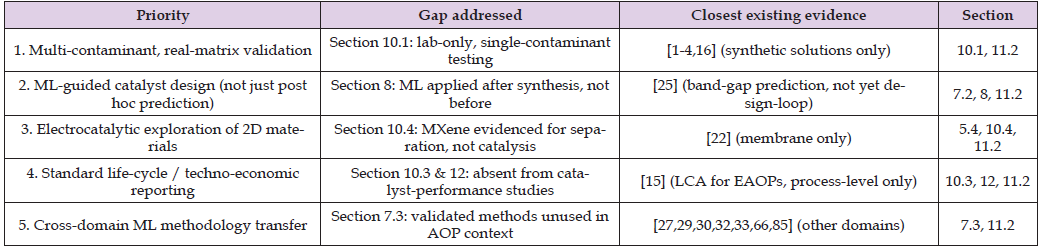
While there are reviewed works on AOP process engineering (Section 4), nanostructured catalyst design (Section 5), and techno-economic and life-cycle assessment of nanotechnology-enabled processes (Section 7), no study has been found that combines and applies all three of the above: a machine-learning-guided AOP process with a nanostructured catalyst validated on real, multi-contaminant wastewater, and evaluated using explicit techno-economic and life-cycle criteria. The closest that has been reported as existing evidence is for the prediction of thiosulfate removal by ML [97] or prediction of hydroxyl- radical exposure via ML for ozonation [12] or combined mechanistic ML modelling of selenium reduction by TiO2/BiOBr/cloth [18] which meet at most two of these three integration criteria, but none of these existing reports validate these on authentic multi-contaminant wastewater matrices (Section 10.1) or on life-cycle-assessed sustainability comparison (Section 10.3). This is the research need this review articulates for the field to fill. Table 6 organizes this review’s five research priorities as a structured roadmap, pairing each recommendation with the specific evidentiary gap it responds to and the strongest supporting reference already available in the literature.
Table 6: The five research priorities issued in this review’s call, each mapped to the specific gap it addresses, the closest existing evidence identified in the reviewed literature, and the section in which it is discussed.
The Research Call: Five Priority Directions
• Priority1 Multi-contaminant, real-matrix validation. To overcome this gap identified in Section 10.1, future studies using AOP nanocatalysts ought to cite the results obtained from real multi-contaminant industrial or municipal wastewater instead of single contaminant synthetic solutions.
• Priority 2 Design of catalysts using catalysts library (not just predicting the performance after the fact). The ML applications studied in Section 7.1 mostly address the prediction of the performance of an existing catalyst or process; future research should incorporate ML methods into the catalyst itself, with the structure property prediction approach that has proven successful in other materials systems (Section 9.1 [114]) integrated into the catalyst-design loop, such as for selecting dopants, heterojunction pairing and MOF metal/ligand choices prior to synthesis.
• Priority 3 Exploratory electrocatalytic studies of 2-D materials. The two-dimensional materials discussed in Section 10.4, e.g., MXene, are already proven to be suitable for the application of membrane separation [1] and deserve special interest for their application in electrocatalytic AOP, utilizing the same electrochemical mechanisms discussed in Section 4.4.
• Priority 4 Life-cycle and techno-economic evaluation as a standard reporting requirement. Moving forward, future AOP nano catalyst studies should report, at a minimum, indicative techno-economic and life-cycle metrics, as well as degradation-efficiency data in accordance with the precedent set by the one reviewed study that included life-cycle assessment in the evaluation of AOP [112] (addressing the gap identified in Section 10.3).
• Priority 5 Cross domain transfer of validated ML methodology. Existing process-optimization and surrogate-modelling methodologies which have been successfully implemented on neighboring energy and process-engineering systems [27, 50,52, 86,96] should be directly applied to AOP catalyst systems to help progress the field towards true three-pillar convergence.
The near total lack of techno-economic and governance analysis across the literature reviewed, as is commonplace in the adjacent energy- systems literature surveyed in Section 9.3, is another practical barrier to deployment of AOP nano catalysts that is apparent from this review, and represents a significant gap in the published evidence base [48,103,104,108] that must be addressed for the technology to be widely adopted. None of the catalyst-performance studies reviewed in Section 5 report the production cost of the catalyst, nor do they provide any details on catalyst recovery and re-use cycles, nor do they compare the capital and operating costs for the AOP with conventional biological treatment [4,34,51,52,110,114]. The lack of a regular, standard practice for techno-economic reporting as found in the adjacent energy literature, but not yet encountered in the AOP nano catalyst literature it reviews, is another practically significant aspect of the research gap described in Section 11, and is noted as such in Priority 4 above [5,9,10-15,24,25,80].
Another governance issue has to do with end-of-life and recovery of the catalyst. In several of the above-mentioned nanostructured catalyst platforms (MOFs, doped metal oxides, and 2D materials), transition metals are used as the active catalyst component, and the extraction and processing of these materials have an environmental impact, which is directly linked to the broader literature of critical minerals and mining-wastewater emissions not included in the scope of this review [17,18,20,59,60,81,106,115-118]. Although leaching and deactivation are well known practical challenges that the use of nanostructured photocatalysts or Fenton-type catalysts faces during continuous operation, no catalyst-performance study reported in Section 5 includes a protocol for catalyst recovery, regeneration or endof- life catalyst recycling [119-132]. We believe that together with the identified above techno-economic reporting gap, catalyst-lifecycle reporting is another clear, low-cost step that could be taken immediately by future studies involving AOP nano catalysts without the need for new experimental infrastructure, by adding reuse-cycle performance data to existing characterization protocols.
The priorities set out below are deliberately more granular than the five headline priorities issued in Section 11.2, and are intended as concrete, near-term extensions of specific studies already reviewed above, rather than as a restatement of the broader research call. Beyond the five priorities set out in Section 11.2, this review identifies the following additional, more granular research directions arising from the critical evaluation in Section 10:
1. Extend the comparative multi-technology benchmarking approach demonstrated for dye decolorisation to a wider contaminant range, enabling direct, standardised comparison of photocatalytic, Fenton, ozonation, and electrochemical AOP performance under matched experimental conditions.
2. Directly test whether the fouling-prediction ANN methodology already validated for heat exchangers transfers successfully to catalyst-surface and membrane fouling in AOP treatment trains.
3. Extend PAH-specific AOP degradation studies to match the analytical and monitoring foundation already well established for this contaminant class addressing the comparative AOP evidence gap identified in Section 3.3.
4. Systematically evaluate green-synthesis nanocatalysts against conventionally synthesised equivalents under matched degradation-efficiency and life-cycle criteria, directly addressing the sustainability evidentiary gap identified in Section 10.3.
5. Pilot deep-learning architectures beyond the gradient-boosted and shallow neural network methods dominant in the AOP-specific ML literature reviewed in Section 7.1, drawing on the broader deep-learning methodological foundation.
This review is a narrative-critical synthesis rather than a formal systematic review or quantitative meta-analysis, and several limitations follow directly from that choice, consistent with the scope stated in Section 2. First, the underlying evidence base is unevenly distributed: the dye-degradation and thiosulfate-removal sub-literatures are supported by a substantial, multi-study evidence base whereas PAH-specific AOP degradation, MXene electrocatalysis, and integrated three-pillar convergence are each supported by markedly thinner evidence, which necessarily limits the strength of conclusions this review draws about their current maturity. Second, this review synthesises reported findings at the level of scope and contribution indicated by each study’s published title, in keeping with the review approach stated in Section 2, rather than independently re-analysing primary experimental data; readers seeking quantitative performance comparisons across studies should consult the primary literature directly. Third, the broader materials, energy, and biomedical literature surveyed in Section 9 is included to substantiate a methodological- transfer argument rather than as direct evidence about wastewater AOP performance, and should not be read as such. Fourth, this review’s critical assessments in Section 10 reflect a considered reading of the synthesised literature rather than independent experimental verification, and are offered as a structured starting point for the field rather than a final adjudication of contested technical claims.
Advanced oxidation processes, nanostructured catalysts, and machine learning each constitute mature, independently well-evidenced literatures within wastewater treatment research, spanning the dye, pharmaceutical, PAH, and inorganic-contaminant classes reviewed in Section 3, the photocatalytic, Fenton, ozonation, electrochemical, and sonocatalytic AOP technologies reviewed in Section 4, and the doped-oxide, heterojunction, MOF, and two-dimensional catalyst platforms reviewed in Section 5. This review has shown, however, that genuine three-pillar convergence AOPs, nanocatalysts, and machine learning integrated within a single, validated research programme remains the exception rather than the rule across the reviewed evidence, evidenced clearly in only a small number of studies. Building on and substantially extending an earlier synthesis of AOP nano catalyst synchronization, this review has articulated an explicit research gap centred on the absence of multi-contaminant, real-matrix-validated, ML-guided, techno-economically evaluated AOP Nano catalyst systems, and has issued a concrete five-priority research call addressing that gap directly.
The broader materials, energy, and data-science literature surveyed in Section 9 demonstrates that the characterisation and machine- learning methodologies required to close this gap are already well established in adjacent fields; the task facing the field, as this review’s central finding, is not methodological invention but methodological transfer, deliberately and systematically applied to the specific convergence this review has defined and evaluated. For researchers entering this field, the practical implication of this review’s synthesis is straightforward: the highest-value next study is not necessarily another single-contaminant, single-catalyst degradation-efficiency demonstration of the kind that dominates the literature reviewed in Section 5, however incrementally improved its reported performance metric. It is, instead, a study that deliberately combines at least two of the three pillars reviewed here for example, applying the ML-guided property-prediction approach already validated for titanium dioxide band-gap engineering to the design, rather than the post hoc evaluation, of a heterojunction photocatalyst tested directly on authentic multi-contaminant wastewater. Studies of this kind remain, on the evidence synthesised in this review, rare; closing that gap is the concrete, actionable contribution this review calls for.

International Association of Landscape Archaeology, Czech Glass Society, Czech Republic

Department of Chemistry, Semenov Institute of Chemical Physics, USSR Academy of Sciences, Moscow, Russia

Neurology, LA BioMed Research Institute, USA

Associate Professor at Department of Breast and Thyorid Surgey, Chongqing General Hospital, China

Professor of Nuclear Medicine, Faculty of Medicine and Surgery, University of Milan, Milan, Italy





 Abstract
 PDF