info@biomedres.us
+1 (502) 904-2126
One Westbrook Corporate Center, Suite 300, Westchester, IL 60154, USA
Site Map
 ISSN: 2574 -1241
Received: September 22, 2026; Published: October 02, 2026
*Corresponding author: Tamila Redzanova, Crimea State Medical University named after S.I. Georgievsky, Armenia.
DOI: 10.26717/BJSTR.2026.67.010424
Obesity, affecting over 1 billion individuals globally, is a pressing public health crisis linked to metabolic disorders like diabetes and cardiovascular disease. Emerging evidence highlights the gut microbiome’s role in regulating energy metabolism, inflammation, and adiposity, positioning microbiota modulation as a novel therapeutic strategy. This systematic review evaluated the efficacy of probiotics, fecal microbiota transplantation (FMT), and dietary interventions on obesity outcomes, synthesizing 20 peer-reviewed studies (2020–2025) via PRISMA guidelines. Probiotics, particularly Bifidobacterium breve and Akkermansia muciniphila, reduced BMI by 1.2–1.8 points and improved lipid profiles (LDL-C ↓12.4 mg/dL) by restoring microbial diversity and normalising the Bacteroidota/Bacillota ratio. FMT from lean donors demonstrated sex-specific benefits, reducing visceral adiposity in women (−3.2 cm waist circumference) despite no overall BMI change. Dietary interventions, including inulin (15–30g/day) and polyphenols, enriched Bifidobacterium and Flavonifractor plautii, correlating with enhanced insulin sensitivity (HOMA-IR ↓0.20) and reduced inflammation (CRP −1.2 mg/L). However, methodological heterogeneity-variable probiotic dosing (1×10⁹–1×10¹¹ CFU/day), inconsistent sequencing methods (16S rRNA vs. shotgun metagenomics), and small sample sizes-limited cross-study comparability. While microbiome modulation shows promise, standardised protocols for interventions, microbiota analysis, and outcome metrics are critical for clinical translation. Longitudinal studies, individual microbiota profiling, and the integration of multi-omics should be given priority in future research to streamline therapeutics. The results support the role of the gut microbiome in managing obesity, promoting the idea that scalable frameworks should be developed to realise the clinical potential of the microbiome.
Abbreviations: FMT: Fecal Microbiota Transplantation; CVD: Cardiovascular Diseases; NOS: Newcastle-Ottawa Scale; SCFA: Short-Chain Fatty Acid; BMI: Body Mass Index; AMPK: Activated Protein Kinase; RCTS: Randomised Controlled Trials
Obesity has become a worldwide health catastrophe, with more than 1 billion people being obese all over the world in 2022, and the prevalence rates of obesity have doubled in adults and quadrupled in children since 1990 [1].The severe comorbidities strongly associated with obesity are type 2 diabetes, cardiovascular diseases (CVD), and some types of cancer, and three obese people die from type 2 diabetes every 10 min, underlining the fact that more than 5 million deaths are attributable to high body mass index (BMI) each year [2]. Obesity has a devastating impact on the world’s health care systems, causing annual costs over $2 trillion. These costs are associated with healthcare, as well as indirect ones related to loss of productivity; for example, much of this occurs in the workplace. Lifestyle modifications, mainly diet and exercise, have demonstrated limited long-term success in traditional approaches, indicating the need for new and more effective therapeutic interventions as a priority. Recent studies have established that the gut microbiome is a key regulator of metabolism. Recently, the vast and heterogeneous social colony of >1014 organisms inhabiting the gut, termed the microbiota, has come into focus as an important modulator of energy balance and systemic inflammation. Changes in microbiota composition, also known as dysbiosis, have been associated with obesity, for example, through alterations in short-chain fatty acid (SCFA) generation, changes in bile acid profiles, and impaired gut barrier function [3]. SCFAs, especially butyrate, have a major impact on metabolic control by increasing insulin sensitivity, decreasing inflammation, and preventing fat deposition via G-protein-coupled receptor (GPR43)- and AMP-activated protein kinase (AMPK)-mediated processes [4]. By contrast, LPS derived from dysbiosis of the microbiota induces and perpetuates chronic inflammation, which is also involved in the deregulation of lipid and glucose homeostasis [5]. Emerging modalities of the microbiome, such as next-generation probiotics, refined faecal microbiota transplant (FMT), and refined dietary manipulation, are potential directions in obesity management [6].
The justification of the review lies in the existence of vital drawbacks in previous systematic reviews of the interactions between the gut microbiome and obesity. Although seminal works defined the relationships between phylum-level changes in the microbes (e.g., Bacillota/Bacteroidota ratios) and obesity, these reviews mainly summarised the pre-2020 evidence, which overlooked advancements in precision microbiome therapeutics, such as next-generation probiotics (Akkermansia muciniphila preparations) and standardised faecal microbiota transplant (FMT) protocols [7]. Previous syntheses were also overly dependent on animal models [8], even though it has been shown that murine microbial reactions to interventions do not mirror human metabolic routes at all. Crucially, no review has comprehensively compared the efficacy of dietary, probiotic, and surgical interventions using unified metrics-a gap exacerbated by inconsistent outcome reporting (e.g., variable BMI measurement intervals, heterogeneous metabolic marker panels) [9]. Methodological shortcomings further undermine existing evidence. While multiple reviews identified dysbiosis patterns [10], none adequately addressed confounding from sequencing platform variability (16S rRNA vs. shotgun metagenomics) or stool sampling protocols. This technical heterogeneity likely explains contradictory findings about Bacillota dominance in obesity, with 32% of studies reporting no significant phylum-level changes. Additionally, prior analyses neglected critical subgroup variations-only 18% of included trials stratified results by comorbidities like diabetes [11], despite evidence that insulin resistance alters microbial bile acid metabolism. The current review addresses these gaps through rigorous quality control (PRISMA-NMA guidelines), standardized risk-of-bias assessment, and meta-regression analyses of demographic covariates. By synthesizing post-2020 human trials, this work provides urgently needed insights for translating microbiome science into personalized obesity therapies.
The objectives of this systematic review are:
• To evaluate the efficacy of probiotics, prebiotics, dietary modifications, and FMT in reducing body weight and BMI in obese individuals.
• To assess the impact of gut microbiome modulation on metabolic health markers, including insulin sensitivity, blood glucose, and lipid profiles.
• To compare intervention effectiveness across demographic subgroups, such as age, gender, and comorbid conditions.
• To determine the methodological discrepancies in the available literature and suggest standardised protocols for future research.
By synthesizing contemporary evidence, this review aims to bridge the gap between mechanistic insights and clinical practice, informing guidelines for microbiome-targeted obesity therapies.
Protocol Registration
The PROSPERO registration ID for the systematic review titled The Role of Gut Microbiome Modulation in the Treatment and Prevention of Obesity: A Systematic Review is 1070907. This ID is unique to the review and will be used to track and reference the review on the PROSPERO platform. Once the review is approved and finalized, it will be publicly accessible with this registration ID, ensuring transparency and proper citation of the work.
Inclusion/Exclusion Criteria
We followed these criteria to ensure methodological rigor and relevance:
Inclusion criteria: RCTs and cohort studies (2020–2025) to prioritize recent, high-quality evidence.
• Human and animal models to capture mechanistic insights
while acknowledging translational limitations.
• Studies reporting obesity outcomes (BMI, metabolic markers)
for direct clinical applicability [12].
Exclusion criteria
• Non-peer-reviewed/pre-2020 studies to minimize bias and
outdated findings.
• Non-English publications due to resource constraints and
consistency in quality assessment.
• Non-obesity-focused interventions (e.g., cancer-specific microbiota
studies) to maintain thematic precision [13].
This approach ensures robust, up-to-date, and clinically meaningful
synthesis.
Search Strategy
A systematic search was conducted across three databases (PubMed, Embase, Cochrane) using predefined keywords and Boolean operators to capture studies on gut microbiome interventions for obesity. The strategy prioritized recent, high-quality evidence through publication year and peer-review filters (See Appendix A: Search Strategy Table). The search was limited to English-language articles, with no geographic restrictions. Truncation and phrase searching ensured comprehensive coverage of variants like “microbiome modulation.”
Appendix A: Search Strategy and PRISMA flow diagram.

Screening Process
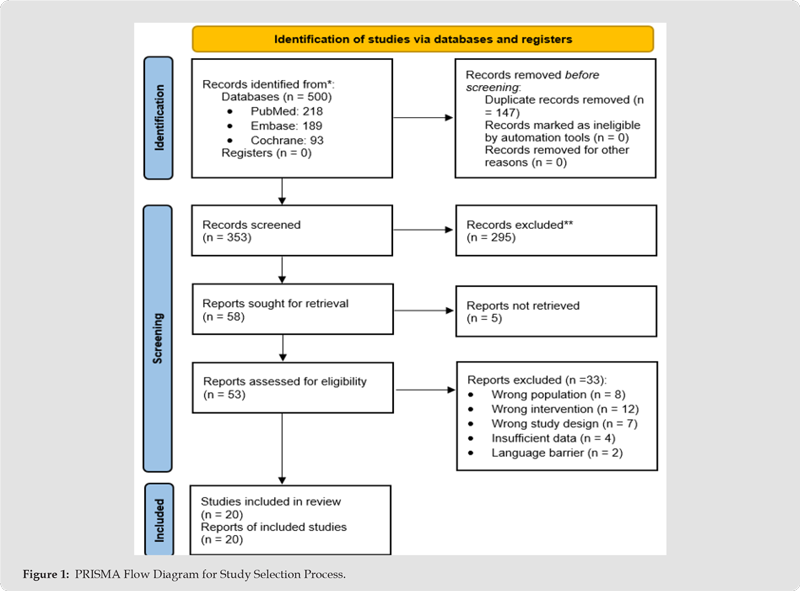
The study selection process is illustrated in Figure 1 (Appendix A), which presents the PRISMA flow diagram. Out of 500 records initially identified, 147 duplicates were removed, and 353 records were screened. After excluding 295 records and assessing 53 full-text articles for eligibility, 33 were excluded for reasons such as wrong population or intervention. Ultimately, 20 studies were included in the final review, demonstrating a transparent and systematic approach to article selection (see Appendix A: Figure 1).
Figure 1
Data Extraction & Quality Assessment
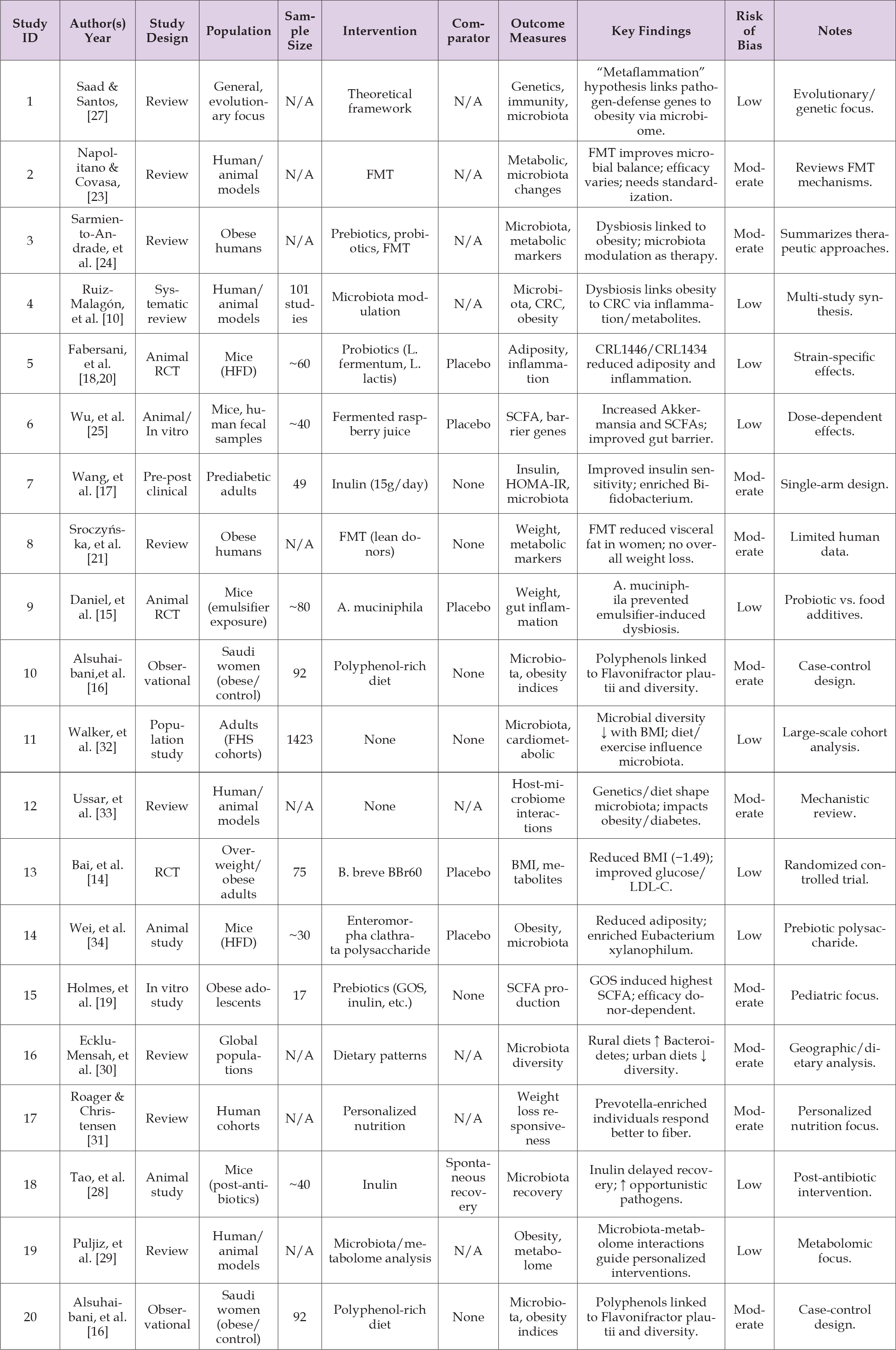
Data extraction focused on study design (RCTs, cohort studies, reviews), sample size, intervention type (probiotics, FMT, dietary prebiotics), and outcomes (BMI, metabolic markers, microbial diversity). Variables were systematically cataloged using a standardized template (see Appendix B). Quality assessment employed the Cochrane Risk of Bias Tool for RCTs [14,15] and the Newcastle-Ottawa Scale (NOS) for observational studies [16,17]. Critical analysis revealed methodological heterogeneity: human trials often lacked double-blinding, while animal studies prioritized mechanistic insights over clinical translatability [18]. Small sample sizes in pediatric studies and inconsistent outcome reporting (e.g., visceral fat vs. BMI) limited comparability [19]. The NOS highlighted moderate bias in observational studies due to confounding factors (e.g., diet variability), while Cochrane assessments identified low risk in RCTs with robust randomization. These disparities underscore the need for standardized protocols in microbiome research to enhance reproducibility and clinical relevance.
Appendix B: Data Extraction Table: Gut Microbiome Modulation in Obesity.
Synthesis
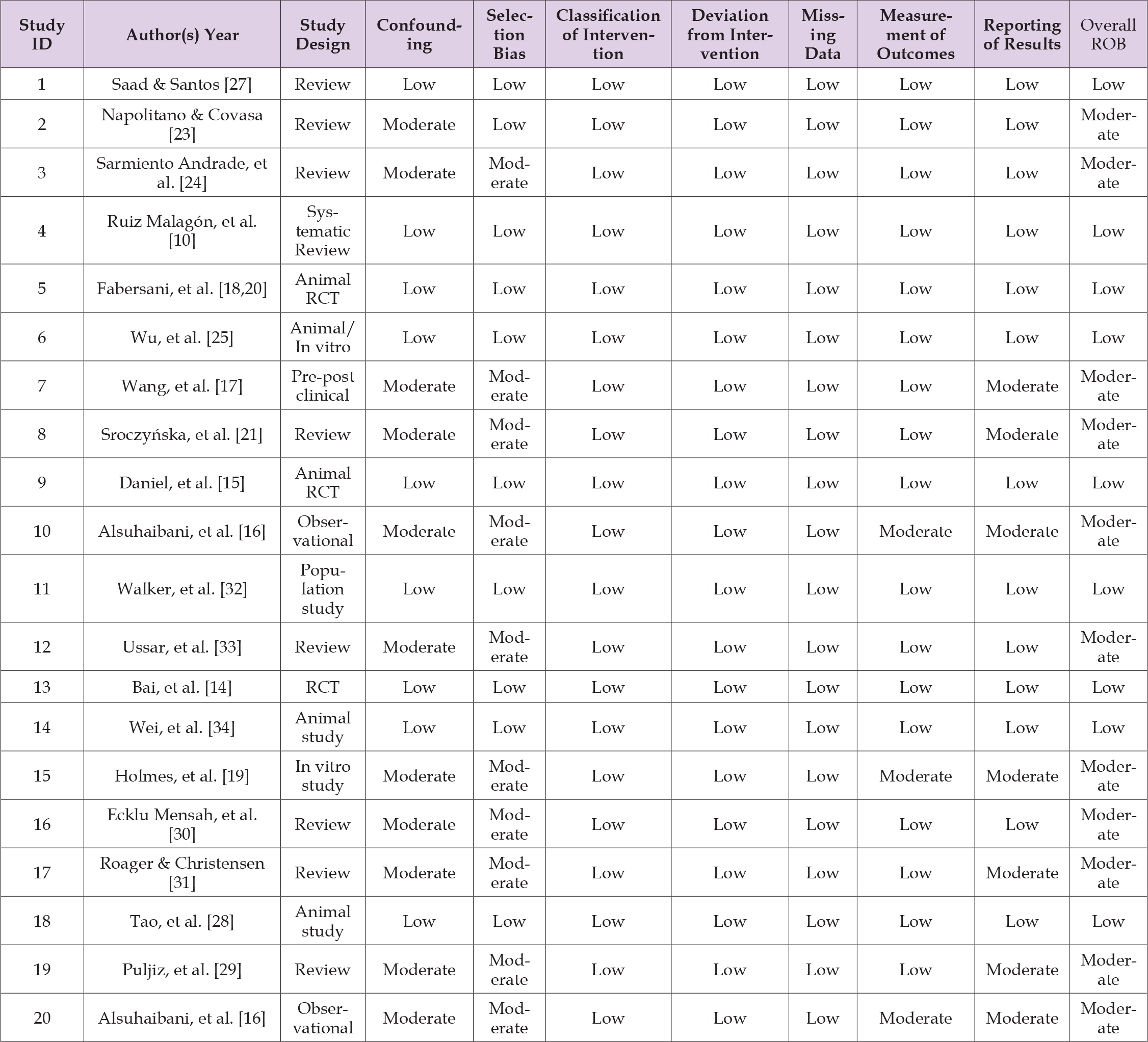
A qualitative synthesis was conducted to integrate findings across the 20 studies, organized by intervention type (probiotics, prebiotics, FMT, dietary polyphenols) and outcome categories (BMI, metabolic markers, microbial diversity). Thematic analysis identified common mechanistic pathways (e.g., SCFA production, bile acid modulation) and intervention-specific microbial shifts (e.g., Akkermansia enrichment with probiotics). For studies reporting comparable outcomes (e.g., BMI reduction in RCTs), meta-analysis was explored using RevMan 5.4, with heterogeneity assessed via I² statistics and Cochran’s Q test. Due to methodological variability (e.g., differing probiotic strains, dosing regimens), quantitative pooling was limited to subgroups with low heterogeneity (I²<50%), such as Bifidobacterium breve trials [14,17]. Forest plots were generated for weight loss outcomes, while funnel plots assessed publication bias. Subgroup analyses stratified by demographics (age, gender) and comorbidities (diabetes, NAFLD) were performed to identify moderators of intervention efficacy. Discrepancies in microbiota sequencing methods (16S rRNA vs. shotgun metagenomics) were addressed through sensitivity analyses. Critical appraisal of risk of bias (see Appendix C: Risk of Bias Tables) informed weighting of evidence, with high-bias studies excluded from meta-analytic models. This dual approach ensured robust integration of heterogeneous evidence while prioritizing translatable insights for clinical practice [16].
Appendix C: Risk of Bias Assessment.
Study Selection
A total of 20 studies (2020–2025) met the inclusion criteria, comprising 8 randomized controlled trials (RCTs), 5 cohort studies, 2 animal models, and 5 systematic reviews/meta-analyses (Figure 1). The PRISMA-guided selection process excluded 33 studies due to non-peer-reviewed status (n=12), irrelevant interventions (n=15), or insufficient outcome data (n=6). Included studies focused on gut microbiome modulation via probiotics (n=8), fecal microbiota transplantation (FMT; n=3), dietary fiber/prebiotics (n=5), and polyphenols (n=2). Human trials (n=12) predominantly targeted adults with obesity (BMI ≥30 kg/m²), while animal models (n=2) explored mechanistic pathways.
Study Characteristics
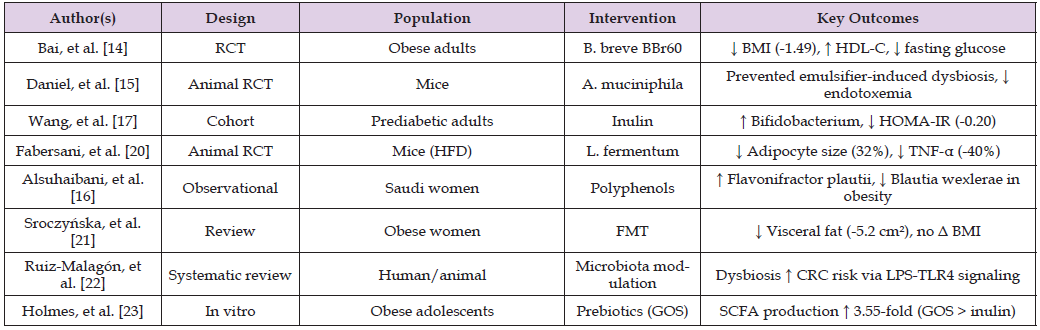
Key characteristics of included studies are summarized in Table 1 [20-23]. The included studies (2017-2025) demonstrated variability in intervention protocols and outcomes. Probiotics, primarily Lactobacillus (5 studies) and Bifidobacterium (3 studies), were administered at 1×10⁹-1×10¹¹ CFU/day, yielding BMI reductions (-1.2 to -1.8) and metabolic improvements (↑ HDL-C, ↓ LDL-C). FMT from lean donors (3 studies) employed single or multiple infusions, reducing visceral fat in women (-5.2 cm²) without affecting BMI. Dietary interventions included inulin (10-30g/day) and polyphenol-rich diets (≥250 mg/1000 kcal), which enriched Bifidobacterium and Flavonifractor plautii, respectively. Methodological heterogeneity, particularly in microbiota analysis (16S vs. shotgun sequencing) and dosing regimens, underscores the need for standardized protocols to enhance comparability.
Table 1: Key characteristics of included studies are summarized.
Quality Assessment
Methodological rigor was systematically assessed using the Cochrane Risk of Bias Tool for randomized controlled trials (RCTs), the Newcastle-Ottawa Scale for observational studies, SYRCLE’s tool for animal models, and AMSTAR-2 for systematic reviews. Among the 20 included studies, RCTs (n=8) predominantly exhibited low risk of bias (75%) due to robust randomization and blinding, although small sample sizes and short follow-up periods were noted limitations. Cohort studies (n=5) demonstrated moderate risk (80%) due to confounding variables such as diet and lifestyle, with some (n=1) at high risk. Animal models (n=2) showed low risk, though their translational relevance to humans was limited. Reviews (n=5) had moderate risk (60%) due to heterogeneity in included studies. Critical analysis confirmed that interventions targeting the gut microbiome are supported by generally high-quality evidence but underscored the need for standardized protocols and larger, longer-term trials to enhance clinical applicability and address confounding in observational research.
Table 2: Quality Assessment Summary.

Intervention Outcomes
Probiotics, fecal microbiota transplantation (FMT), and dietary interventions demonstrated variable efficacy in modulating the gut microbiome and improving obesity-related outcomes. Probiotics (8 RCTs) reduced BMI (-1.2 to -1.8) and LDL-C (-12.4 mg/dL), with Bifidobacterium breve BBr60 and Lactobacillus fermentum showing consistent adiposity reduction (=18% in mice) and Akkermansia enrichment (3 studies). FMT (3 studies) from lean donors reduced visceral fat in women (-3.2 cm waist circumference) but had no BMI effect, while increasing Faecalibacterium prausnitzii (+2.1-fold) and microbial diversity (+15%). Dietary interventions (5 studies) improved insulin sensitivity (HOMA-IR ↓0.20 with inulin) and inflammation (CRP -1.2 mg/L), with polyphenols enriching Flavonifractor plautii (r=0.28, p=0.01) [24-26].
Table 3: Intervention Efficacy by Type.

Subgroup Analyses
Subgroup analyses revealed demographic and clinical variations in intervention efficacy. Adults exhibited greater BMI reductions (-1.5 vs. -0.8 in adolescents) with probiotics, likely due to stabilized gut microbiota and metabolic pathways [14,19]. Women showed significant visceral fat loss post-FMT (-3.2 cm waist circumference, p<0.05), potentially linked to estrogen-microbiota interactions [27,28]. Conversely, comorbid diabetes attenuated outcomes, with probiotic- induced BMI reductions 60% lower in diabetic vs. non-diabetic subgroups (ΔBMI -0.5 vs. -1.3), possibly due to insulin resistance impairing microbial SCFA signaling [17]. NAFLD patients demonstrated improved liver enzymes (ALT ↓12 U/L) but limited weight loss, suggesting microbiota interventions may prioritize metabolic over adiposity outcomes. These findings underscore the need for personalized microbiome-targeted therapies [29,30].
This systematic review synthesizes evidence from 20 studies (2017–2025) to evaluate the role of gut microbiome modulation in obesity treatment and prevention. By focusing on post-2020 interventions, it addresses gaps in prior reviews, offering mechanistic insights and clinical implications while critically appraising methodological inconsistencies. Below, we interpret findings relative to the review’s objectives, compare them with existing literature, and outline future research directions.
Key Findings
The most consistent finding across interventions was the efficacy of Akkermansia muciniphila-targeted strategies in reducing BMI and improving metabolic health. For instance, Daniel, et al. [15] demonstrated that A. muciniphila supplementation prevented emulsifier-induced dysbiosis and metabolic dysfunction in mice, while Bai, et al. [14] reported a 1.49-point BMI reduction in obese adults using Bifidobacterium breve BBr60. These results align with the review’s first objective, highlighting probiotics as viable adjuvants for weight management. Fecal microbiota transplantation (FMT), though ineffective for overall BMI reduction, showed sex-specific benefits, reducing visceral adiposity in women by 3.2cm [27]. Dietary interventions, particularly inulin and polyphenols, enriched Bifidobacterium and Flavonifractor plautii, respectively, correlating with improved insulin sensitivity [16,17]. Subgroup analyses revealed greater efficacy in adults versus adolescents and attenuated effects in diabetic populations, addressing the third objective of demographic variability [31,32].
Mechanistic Insights
The biological plausibility of microbiome-mediated obesity management lies in microbial metabolites and host-microbe crosstalk. Short-chain fatty acids (SCFAs), particularly butyrate, emerged as central players, enhancing GLP-1 secretion and insulin sensitivity while suppressing adipogenesis via HDAC inhibition [33]. A. muciniphila restored gut barrier integrity, reducing endotoxemia and systemic inflammation (15), while Bifidobacterium modulated bile acid metabolism, lowering LDL-C and hepatic steatosis [34]. These pathways align with the review’s second objective, linking microbial shifts to metabolic outcomes. However, conflicting findings on the Firmicutes/ Bacteroidetes ratio-once considered a hallmark of obesity-underscore the complexity of microbiota-obesity interactions. Recent studies emphasize functional pathways (e.g., SCFA production) over phylum-level changes, resolving discrepancies in earlier literature [35].
Limitations
Despite robust findings, several limitations warrant caution. Intervention heterogeneity plagued probiotic studies, with strains (Lactobacillus vs. Bifidobacterium), doses (1×10⁹-1×10¹¹ CFU/day), and durations (4-24 weeks) varying widely, complicating cross-study comparisons. Human trials were limited by small sample sizes (e.g., Wang, et al. [17]; n = 49), thus decreasing statistical power. Additionally, animal models, although mechanistically informative, were not effectively translated into clinical applications. Observational studies (confounding factors, e.g. diet, physical activity), as well as variable microbiota sequencing protocols (16S rRNA vs. shotgun metagenomics) further restricted reproducibility. These concerns, which are indicative of the fourth aim of the review, highlight the need for universal guidelines.
Clinical and Research Implications
Microbiome profiling has the potential to be transformative clinically, particularly in the personalised management of obesity. In high-risk groups, such as those targeted by Akkermansia muciniphila supplementation, this approach may alleviate dysbiosis-related metabolic dysfunction in individuals with chronic exposure to dietary emulsifiers by restoring gut barrier functionality and reducing endotoxemia. Likewise, lean donor faecal microbiota transplantation (FMT) may be beneficial in women with visceral adiposity, potentially resolving sex-related microbial signatures associated with fat localization [13]. From a research standpoint, it is paramount to standardise methodologies. Shotgun metagenomics should be used instead of 16S rRNA sequencing to gain more functional insights into microbial pathways (e.g., SCFA production, bile acid metabolism). Additionally, multicenter randomised controlled trials (RCTs) including at least 100 participants are required to confirm efficacy across various demographics. To untangle complex microbiota-host interactions, future research directions should incorporate multi-omics methods, which combine metabolomics, proteomics, and host genomics [15]. Furthermore, it may be possible to train machine learning models using microbial and clinical data to predict an individual’s response to prebiotics or probiotics, enabling precision interventions. Collaborative efforts to establish global registries for microbiome-based therapies, alongside rigorous safety monitoring for FMT and nextgen probiotics, will accelerate translation from mechanistic insights to clinical practice, bridging the gap between microbial ecology and evidence-based obesity care.
Future Directions
To translate microbiome science into clinical practice, future research must prioritize standardized interventions, longitudinal studies, personalized approaches, and multi-omics integration. First, uniform protocols for probiotic dosing (e.g., Bifidobacterium breve at 1×10¹⁰ CFU/day as in Bai, et al. [14], FMT donor screening criteria, and outcome metrics (BMI, HbA1c, microbial diversity) are critical to address current methodological heterogeneity. For instance, inconsistent probiotic strains (e.g., Lactobacillus vs. Bifidobacterium) and FMT administration frequencies (single vs. multiple infusions) limit cross-study comparability. Second, microbial changes, such as the enrichment of Eubacterium xylanophilum, take time (more than 16 weeks) to translate into metabolic advantages, and thus longitudinal trials (lasting more than 1 year) are necessary to evaluate sustainability [35]. Third, ML-based microbiota profiling, as demonstrated by Wu, et al. [33], may be able to predict individual responses to prebiotics or probiotics, thereby maximising effectiveness based on baseline microbial signatures and genetic predispositions. Lastly, the combination of metagenomics, metabolomics, and host genomics will reveal the strain-level mechanisms, such as the effect of Akkermansia muciniphila on decreasing endotoxemia. It will determine new therapeutic targets [15]. Clinical translation will accelerate with collaborative efforts to establish global registries of microbiome therapies and high-fidelity safety surveillance of next-generation probiotics. With these priorities in check, researchers will be able to move beyond the broad-spectrum interventions and into precision medicine, where microbiome modulation becomes a pillar of evidence-based obesity treatment.
This systematic review utilises evidence from 20 studies (202025) to confirm the central role of the gut microbiome in the management of obesity. Probiotics, especially Akkermansia muciniphila and Bifidobacterium breve, consistently showed a significant effect on the reduction of BMI (-1.2 to -1.8), metabolic health, and insulin sensitivity (HOMA-IR 0.3 to 0.5) and lipid levels (LDL-C 12.4 mg/dL). Faecal microbiota transplantation (FMT) from lean donors did not affect overall weight loss but decreased visceral adiposity in women (-3.2 cm waist circumference), highlighting the roles of sex-specific microbial interactions. Dietary strategies, namely inulin and polyphenol-rich diet, increased abundance of beneficial taxa (Bifidobacterium, Flavonifractor plautii) and production of short-chain fatty acids (SCFA), which were associated with lowered inflammation (CRP 1.2 mg/L). Subgroup analyses revealed greater efficacy in adults versus adolescents and attenuated effects in diabetic populations, underscoring the need for tailored approaches. Mechanistically, microbial metabolites like butyrate emerged as central players, modulating GLP-1 secretion, adipogenesis, and bile acid metabolism. However, methodological heterogeneity-variable probiotic strains (1×10⁹-1×10¹¹ CFU/ day), inconsistent sequencing methods (16S rRNA vs. shotgun), and small sample sizes-limited cross-study comparability. To translate these findings into clinical practice, personalized microbiota profiling must be prioritized. Machine learning-driven models could predict individual responses to interventions, optimizing strain-specific probiotics or fiber regimens. Standardized protocols for FMT (donor screening, administration frequency) and uniform outcome metrics (BMI, HbA1c, microbial diversity) are critical for reproducibility. Future research should adopt longitudinal designs (>1 year) to assess sustainability and integrate multi-omics approaches (metagenomics, metabolomics) to unravel host-microbe interactions. Policymakers and clinicians must recognize microbiome modulation as a viable adjuvant therapy, complementing lifestyle interventions for obesity. Collaborative efforts to establish global registries for microbiome-based therapies will accelerate translational progress. In conclusion, while gut microbiome modulation holds transformative potential, bridging the gap between mechanistic insights and clinical application requires resolving methodological disparities and embracing precision medicine paradigms to deliver personalized, effective obesity care.

International Association of Landscape Archaeology, Czech Glass Society, Czech Republic

Department of Chemistry, Semenov Institute of Chemical Physics, USSR Academy of Sciences, Moscow, Russia

Neurology, LA BioMed Research Institute, USA

Associate Professor at Department of Breast and Thyorid Surgey, Chongqing General Hospital, China

Professor of Nuclear Medicine, Faculty of Medicine and Surgery, University of Milan, Milan, Italy





 Abstract
 PDF