info@biomedres.us
+1 (502) 904-2126
One Westbrook Corporate Center, Suite 300, Westchester, IL 60154, USA
Site Map
 ISSN: 2574 -1241
Received: September 10, 2026; Published: September 29, 2026
*Corresponding author: Loso Judijanto, IPOSS Jakarta, Indonesia
DOI: 10.26717/BJSTR.2026.66.010409
Palm olein has long been used in infant formula to approximate the palmitic acid content of human milk, yet
matching fatty-acid quantity does not reproduce human-milk triacylglycerol stereochemistry. In human milk,
palmitate is preferentially esterified at the sn-2 position, whereas conventional vegetable-oil blends frequently
position palmitate at sn-1 and sn-3. Pancreatic and gastrointestinal lipolysis can therefore release more free
palmitic acid from conventional formulas, facilitating formation of poorly soluble calcium–fatty-acid soaps and
potentially influencing lipid and calcium absorption, stool physiology, intestinal ecology, and skeletal mineralization.
This critical qualitative literature review reassesses the palm-olein controversy in light of studies published
predominantly during 2020-2026. Contemporary evidence indicates that increasing sn-2 palmitate consistently
reduces fecal palmitate soaps and, in several studies, fecal calcium loss. However, effects on stool consistency,
gastrointestinal tolerance, growth, microbiota, and bone outcomes are less uniform. Importantly, modern formulas
increasingly incorporate structured lipids, dairy fat, milk-fat-globule-membrane components, phospholipid-
coated lipid droplets, prebiotics, probiotics, and human-milk-oligosaccharide analogues.
These innovations can modify physiological responses independently of palm olein. Emerging microbiome and
metabolomic studies further suggest links among palmitate stereochemistry, fecal soaps, Bifidobacterium, intestinal
pH, and microbial metabolism. The evidence therefore supports replacing a binary “palm-containing versus
palm-free” framework with structure-based assessment of the complete formula lipid matrix.
Keywords: Palm Olein; Infant Formula; Palmitic Acid; Sn-2 Palmitate; Opo; Triacylglycerol; Calcium Soap; Fat Absorption; Gut Microbiota; Bone Mineralization
Human milk provides infants not only with macronutrients and micronutrients but also with a highly organized biological matrix in which the molecular form, spatial organization, and physical presentation of nutrients can affect digestion and metabolism. Lipids are particularly important because they provide a substantial proportion of dietary energy during early infancy while also delivering essential fatty acids, long-chain polyunsaturated fatty acids, fat-soluble vitamins, cholesterol, phospholipids, sphingolipids, and numerous signaling molecules. Modern lipidomics has shown that the lipid fraction of human milk contains a much greater diversity of molecular species than can be described by a conventional fatty-acid composition table (Hewelt Belka, et al. [1-6]). Palmitic acid is central to the debate over how closely infant formula should reproduce human-milk lipids. It is an abundant saturated fatty acid in human milk, and palm oil or its liquid fraction, palm olein, has consequently been incorporated into many vegetable-oil blends used in infant formulas. The rationale appears straightforward: if human milk contains substantial palmitic acid, formula should contain a comparable quantity. The nutritional controversy arises because the biological behavior of palmitic acid is influenced not only by its concentration but also by its position on the glycerol backbone of triacylglycerol.
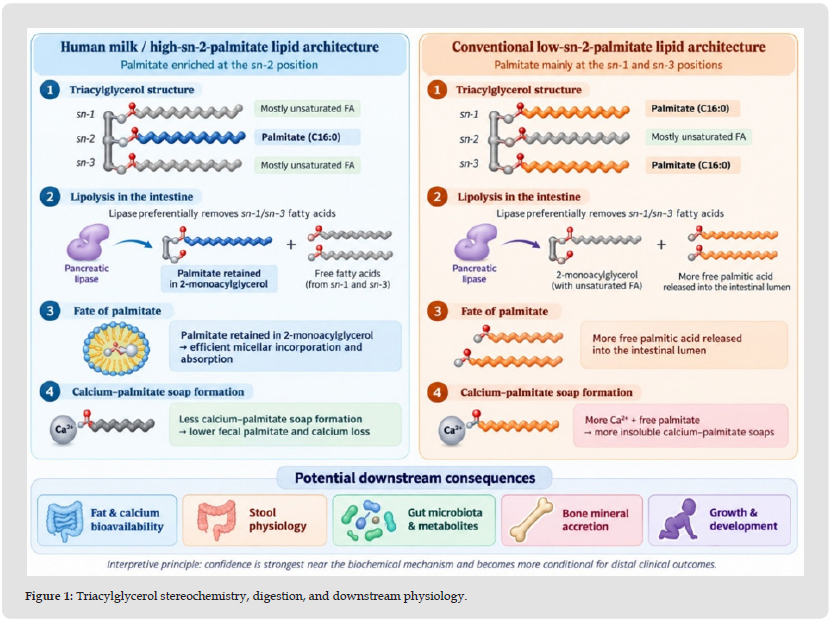
A large proportion of human-milk palmitate is esterified at the stereospecific sn-2 position, whereas vegetable oils used in conventional formulas frequently place a greater proportion at the outer sn-1 and sn-3 positions (Padial Jaudenes, et al. [7-9]). This distinction matters because gastrointestinal lipases hydrolyze triacylglycerols in a position-dependent manner. Preferential hydrolysis at sn-1 and sn-3 produces free fatty acids and a 2-monoacylglycerol. When palmitate is preserved at sn-2, it remains incorporated in a relatively well-absorbed monoacylglycerol. When it occupies sn-1 or sn-3, digestion releases free palmitic acid, which has relatively poor aqueous solubility and can interact with luminal calcium to form insoluble calcium– palmitate soaps. The resulting soaps can increase fecal fatty-acid loss and simultaneously remove calcium from the absorbable pool (He, et al. [8,10,11]). The classical palm-olein controversy was therefore built around a plausible mechanistic sequence: palm olein provides palmitic acid predominantly in positions that promote liberation of free palmitate; free palmitate can form calcium soaps; calcium soaps can reduce apparent fat and calcium absorption; and increased soap formation may contribute to firmer stools and possibly lower skeletal mineral accretion. Earlier metabolic-balance studies formed the basis of this argument.
A contemporary review published in 2020 concluded that palmoil/ palm-olein-containing formulas could differ from non-palm formulations in fat, palmitate, docosahexaenoic acid and calcium absorption, as well as some stool, growth, and bone-related outcomes (Padial Jaudenes [8]). A subsequent scoping review, however, emphasized extensive heterogeneity among trials, formulations, doses, comparators, outcomes, and study designs, making simple ingredient- level generalizations problematic (Smith [9]). The controversy requires renewed analysis because infant-formula technology has changed substantially. Structured lipids enriched in sn-2 palmitate, including 1,3-dioleoyl-2-palmitoylglycerol (OPO), are increasingly used to reproduce one important structural property of human-milk triacylglycerols. Dairy fat can also increase the proportion of palmitate at sn-2 compared with many conventional vegetable-oil blends. At the same time, manufacturers increasingly modify lipid-droplet size and interfacial composition and add milk-fat-globule-membrane (MFGM) ingredients, phospholipids, prebiotics, probiotics, and human-milk-oligosaccharide analogues (Ambrożej, et al. [12-16]). These developments have two major implications. First, physiological observations made with older formulas cannot automatically be attributed to all contemporary formulas containing palm olein.
Second, comparing a palm-containing formula with a palm-free formula without controlling for sn-2 palmitate, dairy fat, calcium concentration, protein system, prebiotics, HMOs, and lipid-droplet architecture risks attributing a matrix effect to a single ingredient. A further reason for reconsidering the subject is the rapid growth of developmental microbiome research. Recent clinical and multi-omics studies have begun to connect formula lipid structure with fecal fatty-acid soaps, Bifidobacterium, stool pH, microbial metabolic pathways, and fecal lipidomics. In 2025, an observational study in Japanese infants reported an inverse association between fecal saponified palmitate and Bifidobacterium occupancy and proposed a pathway from low sn-2 formula through increased palmitate soap to reduced bifidobacterial abundance and higher fecal pH (Ito [17]). Shotgun metagenomic work also suggests that sn-2-palmitate-enriched formula can generate selected microbial functional characteristics closer to those of breastfed infants than conventional vegetable-oil formula (Wang [18]). The objective of this review is therefore not to determine whether palm olein is categorically “good” or “bad.” Instead, it critically evaluates how triacylglycerol stereochemistry, gastrointestinal digestion, calcium-soap formation, fat and mineral availability, stool physiology, gut microbial ecology, skeletal development, and modern formula technologies interact. The central argument is that contemporary evaluation should move from ingredient-based classification toward structure-based and matrix-based assessment.
Human-Milk Fat is more than A Fatty-Acid Mixture
Triacylglycerols account for the great majority of human-milk lipids, but the lipid fraction also contains glycerophospholipids, sphingolipids, cholesterol, glycolipids, and other compounds that contribute to cellular development, membrane formation, neural development, signaling, and intestinal function. Comparative lipidomic investigations consistently demonstrate that commercial infant formulas differ from human milk not merely in quantities of individual fatty acids but also in specific TAG species, phospholipid profiles, sphingomyelin concentrations, and other lipid classes (Hewelt Belka, et al. [2,5-7,19]). Recent compositional benchmarking also shows that infant formulas can remain substantially different from human milk in glyceride architecture and bioactive lipid profiles even when their overall fatty-acid composition appears similar (Q Liu, et al. [22,36]). Human milk also varies geographically, temporally, and between mothers. A global systematic review and meta-analysis involving a large body of milk-composition studies found substantial heterogeneity in total fat and individual fatty acids according to lactation stage and geographical setting (Z Zhang, et al. [3,20]). Consequently, “human-milk composition” is not a single immutable formulation target. Nevertheless, certain organizational principles-including characteristic positional distributions of saturated and unsaturated fatty acids-appear sufficiently consistent to have physiological relevance.
At the molecular level, human milk is particularly notable for preferential esterification of palmitic acid at the sn-2 position. This configuration frequently creates TAG structures in which palmitate occupies the central position and unsaturated fatty acids occupy the outer positions, with OPO representing an important example. This arrangement differs from many plant oils, even when total palmitic-acid concentrations are broadly comparable. Reviews of human-milk fat substitutes consequently emphasize that successful “humanization” of formula lipids should consider both fatty-acid composition and regiospecific distribution (X Jiang, et al, [7,11]).
Palm olein: Composition does not Equal Structure
Palm olein is useful in formula manufacturing because it supplies palmitic acid and has favorable technological properties. Its inclusion may allow a formula fat blend to approach the percentage of palmitate found in human milk. The problem is that fatty-acid matching does not reproduce stereochemical positioning. The historical palm-olein controversy is therefore better understood as a positional- lipid controversy than as a simple controversy about botanical origin. The clinical literature mapped by Smith [9] illustrates why this distinction is important. Trials have compared formulas containing different percentages of palm olein, palm oil, structured lipids, dairy fat, or alternative vegetable-oil blends. Some studies simultaneously changed other ingredients, making palm olein both an exposure and a marker for broader differences in formula design. A binary label such as “palm oil formula” therefore provides insufficient chemical information for mechanistic interpretation.
Developmental Physiology of Infant Lipid Digestion
Infant digestion differs from adult digestion. During early infancy, pancreatic enzyme output and bile-salt physiology remain developmentally immature, while gastric lipase, pancreatic lipase-related protein 2, bile-salt-stimulated lipase, and other mechanisms contribute substantially to lipid digestion. The physical interface between lipid droplets and the aqueous digestive environment also influences enzyme access (He, et al. [10,13]). The positional specificity of hydrolysis is central to the palm-olein mechanism. When lipases remove fatty acids from the external sn-1 and sn-3 positions, the remaining sn-2 monoacylglycerol can be efficiently incorporated into mixed micelles and absorbed. A palmitate molecule occupying sn-2 is therefore metabolically presented differently from a palmitate molecule released as a free saturated fatty acid. In vitro digestion studies reinforce the importance of the entire lipid structure. Liu [21] compared human milk and formulas containing different fat sources and found differences in free-fatty-acid release, TAG disappearance, monoacylglycerol formation, and lipid profiles during simulated infant digestion. These differences were influenced not only by fatty-acid composition but also by MFGM- or phospholipid-enriched components. These findings align with broader compositional analyses showing that the source and arrangement of lipids influence how closely formula glycerides resemble the molecular organization of human milk (Q Liu [22]).
Calcium-Soap Formation as the Central Biochemical Mechanism
Free long-chain saturated fatty acids have low solubility under intestinal conditions. Free palmitate can associate with divalent calcium ions to produce insoluble calcium–fatty-acid salts. This process simultaneously changes the fate of both lipid and calcium: the fatty acid becomes less bioavailable, while calcium incorporated into insoluble complexes is no longer readily available for absorption. He [10] emphasized that soap formation depends on several interacting factors, including fatty-acid saturation and chain length, luminal pH, cation availability, and bile salts. Consequently, sn-position is mechanistically important but not the only determinant. Formula mineral composition can influence the same pathway, as can the quantity of palmitate and the presence of other fatty acids. This complexity is clinically important because it explains why the biochemical outcome—fecal palmitate soap—may be more reproducible than symptoms such as stool hardness. Calcium-soap concentration represents a relatively proximal consequence of lipid digestion, whereas stool consistency is a downstream phenotype affected by water content, nondigestible carbohydrates, microbial fermentation, protein, intestinal motility, and numerous other formula components.
Review Design
This article was developed as a critical qualitative literature review, rather than a systematic literature review or meta-analysis. Its objective was interpretive synthesis: to integrate mechanistic, nutritional, clinical, microbiological, and technological evidence into a coherent explanation of how palm olein and palmitate stereochemistry may influence infant physiology. Because the design was qualitative, the review did not use PRISMA methodology and did not claim exhaustive identification of every eligible study. Instead, literature was selected iteratively to address predetermined conceptual domains and to identify evidence capable of confirming, modifying, or challenging the proposed mechanistic pathway.
Literature Identification
Priority was given to peer-reviewed journal articles published from January 2020 through 2026. Literature was identified through targeted searches of PubMed/MEDLINE and journal/publisher databases, supplemented by citation tracing from relevant contemporary reviews and clinical trials. Search concepts included combinations of palm olein, palm oil, infant formula, palmitic acid, sn-2 palmitate, beta- palmitate, OPO, triacylglycerol stereochemistry, lipid digestion, fat absorption, calcium absorption, fatty acid soap, stool consistency, gut microbiota, microbiome, milk fat globule membrane, human milk oligosaccharides, bone mineral content, and infant growth. The formal bibliography was restricted to literature from 2020 onward to emphasize the current evidence base. Findings from historical metabolic studies were considered principally through recent reviews rather than reproducing a predominantly pre-2020 reference framework.
Evidence Domains and Critical Appraisal
Evidence was organized into six interconnected domains:
1) Human-milk lipid structure and infant-formula lipid composition;
2) Digestion and calcium-soap formation;
3) Fecal lipid, mineral, and stool outcomes;
4) Gut microbiota and metabolomic outcomes;
5) Bone and growth outcomes; and
6) Formula technologies capable of modifying the relationship
between palm olein and physiology.
This thematic organization allowed proximal biochemical evidence
to be interpreted separately from more distal clinical outcomes,
reducing the risk of treating mechanistic plausibility and demonstrated
clinical benefit as equivalent forms of evidence. Interpretation
considered sample size, study duration, randomized versus observational
design, appropriateness of formula comparators, whether the
formulas differed in components other than their fat system, direct
measurement versus caregiver reporting of outcomes, and the presence
of industry funding or author affiliations. These factors were
treated as interpretive variables rather than automatic reasons for
excluding studies.
Theme 1: The evidence has Shifted from Palm-Oil Identity Toward Lipid Structure
Contemporary evidence increasingly focuses on sn-2 palmitate rather than simply asking whether a formula contains palm oil or palm olein. This represents a mechanistic advance because formulas can potentially retain palm-derived ingredients while altering the stereochemical distribution of palmitate. The 2020 review by Padial- Jaudenes [8]. interpreted earlier evidence as supporting disadvantages of some palm-olein-containing formulas for fat and calcium absorption and selected bone-related endpoints. However, Smith [9] subsequently demonstrated how heterogeneous the clinical literature actually is. Together these reviews support two propositions: the classical mechanism cannot simply be dismissed, but the evidence does not justify assuming that all palm-containing formulas are nutritionally equivalent. Modern structured-lipid trials provide stronger tests of the stereochemical mechanism. Shen [23] evaluated a high- OPO formula and found markedly lower fecal saponified fatty acids than in infants receiving a standard formula. Fecal calcium was also lower, while stool frequency was higher and crying outcomes differed. Although these findings were interpreted favorably, OPO supplementation cannot automatically be viewed as equivalent to changing only one biochemical variable because the entire formula composition matters.
Similarly, the meta-analysis by Zhang [24] synthesized 16 trials involving 1,931 infants and reported lower total fecal fatty-acid soaps and higher bone mineral content with sn-2-palmitate-enriched formulas compared with standard formulas. The pooled effect on fecal soaps is particularly relevant because it occurs close to the proposed biochemical mechanism. The meta-analysis also reported a small increase in weight gain; however, interpretation of growth effects should remain cautious because greater weight gain is not necessarily a superior nutritional outcome in isolation.
Theme 2: Reduction of Fecal Palmitate Soaps is the Most Consistent Contemporary Finding
The most reproducible contemporary observation is that formulas with higher sn-2 palmitate reduce fecal palmitate soaps or total saponified fatty acids relative to low-sn-2 formulas. This pattern is consistent with pooled trial evidence in which sn-2-palmitate-enriched formulas were associated with lower fecal fatty-acid soap concentrations, supporting positional structure as a more informative exposure than palm-olein presence alone Zhang [24]. In the randomized crossover trial by Looijesteijn [25], replacing part of the vegetable fat with bovine milk fat increased sn-2 palmitate from approximately 10% to 39%. The milk-fat formula produced lower fecal palmitate soaps, lower total fatty-acid soaps, and lower calcium excretion. Stool consistency was also softer, although gut-microbiota composition did not significantly change. Importantly, both formulas contained galacto- oligosaccharides, providing an example of how an identical prebiotic background can reduce one source of microbiome confounding (Looijesteijn [25]). The longer cluster-randomized study reported by Shen [26] provides particularly important contemporary evidence. Infants received a high-sn-2 formula containing approximately 46% sn-2 palmitate, a low-sn-2 control formula containing approximately 10%, or human milk as a reference. High-sn-2 feeding produced lower fecal saponified palmitate at multiple time points and lower fecal calcium than the control at 24 weeks.
However, stool frequency, consistency, and size did not significantly differ between high- and low-sn-2 formula groups. This separation between biochemical effects and stool phenotype is important: reducing calcium soap formation does not guarantee a clinically perceptible change in stool behavior (Shen [26]). A 2025 clinical investigation of formula containing both medium- and long-chain structured triacylglycerols and sn-2 palmitate likewise reported lower undigested lipids and improved apparent lipid utilization compared with conventional formula, although its open-label nonrandomized design limits causal attribution (Chen [27]). Subsequent fecal lipidomics work in 2026 found that this structured-lipid formulation produced fecal lipid patterns more comparable to breastfed infants and identified associations between fecal lipid species and beneficial taxa including Bifidobacterium (Yu [28]). These observations collectively support the fundamental stereochemical mechanism. Yet they also suggest that the most defensible claim is relatively specific: increasing sn-2 palmitate tends to decrease formation or fecal excretion of palmitate soaps. Stronger claims about global digestive health, developmental superiority, or long-term clinical outcomes require additional evidence.
Theme 3: Stool Physiology is Determined by more than palm olein
Stool consistency historically became one of the most visible clinical aspects of the palm-olein debate because formula-fed infants often have firmer stools than breastfed infants. The soap hypothesis provides a plausible partial explanation: insoluble calcium–fatty-acid complexes may contribute to firmer fecal material. However, contemporary evidence indicates that stool physiology is multifactorial. Sheng [29] compared infants consuming several commercial formulas and reported differences in stool characteristics, fatty-acid soaps, crying, and gut comfort. Infants receiving a milk-fat-based formula showed relatively favorable stool outcomes, but the authors explicitly acknowledged that the formulas differed in multiple ingredients and processing characteristics; therefore, the effects could not be attributed exclusively to their lipid source. Similarly, high-OPO feeding was associated with greater stool frequency and reduced saponified fatty acids in Shen [23], whereas the 24-week randomized evidence from Shen [26] found substantial differences in fecal soaps without measurable differences in stool consistency. These apparently discordant findings are not necessarily contradictory. Different prebiotic systems, protein composition, mineral concentrations, infant ages, stool-measurement methods, and baseline feeding patterns can alter the final phenotype. This interpretation is strengthened by the wider prebiotic literature.
A 2025 meta-analysis found that prebiotic supplementation of infant formula increased Bifidobacterium and reduced fecal pH compared with standard formula without negatively affecting growth (Kebbe [30]). Dietary polysaccharides can also influence stool water, fermentation products, microbial ecology, and intestinal function independently of lipid soaps (Zhang [31]). Thus, stool softness cannot serve as a specific biomarker for palm-olein digestion. As summarized in Figure 1, the central biological distinction is not the presence of palmitic acid itself but its stereospecific position within the triacylglycerol. This structural distinction creates different products during intestinal lipolysis and provides the mechanistic bridge between formula lipid composition and fecal fatty-acid soaps. The figure also clarifies why effects become progressively less certain downstream. The pathway from sn-position to free palmitate and soap formation has strong biochemical plausibility and increasingly direct clinical support. In contrast, stool consistency, microbial ecology, bone mineralization, and growth are influenced by many additional variables. Consequently, causal confidence should decline as interpretation moves farther from the immediate products of lipid digestion.
Figure 1
Theme 4: The Microbiome Provides an Emerging Extension of the Calcium-Soap Mechanism
The most novel development in the field is the possibility that triacylglycerol stereochemistry influences the intestinal ecosystem. This should not be understood as a simple direct effect of palm olein on bacteria. Instead, altered absorption changes the chemical environment reaching the distal intestine, including free and saponified fatty acids, minerals, and potentially substrate availability. Wu [32] reported that a high-sn-2-palmitate formula was associated with changes in gut bifidobacteria and explored neurodevelopmental outcomes, helping establish an early clinical connection between positional lipids and gut microbial ecology. Zhu [33] similarly investigated an OPO- and prebiotic-containing formula and observed microbiota differences relative to control feeding. Because OPO was combined with other microbiota-active components, however, these studies demonstrate formula-matrix effects more confidently than isolated OPO effects. More broadly, intervention studies and contemporary reviews show that protein composition, prebiotics, postbiotics, and other milk constituents can independently reshape early microbial succession, underscoring the need to interpret lipid-associated microbial findings within the complete formula matrix (Yadav, et al. [34,35]). Guo [36] provided a more direct multi-omics analysis. Healthy term infants receiving a high-sn-2-palmitate formula for 16 weeks were compared with infants receiving conventional vegetable-oil formula and a breastfed reference group.
High-sn-2 feeding was associated at selected time points with greater Bifidobacterium, lower Escherichia–Shigella, higher fecal acetate, and metabolomic differences. The microbiota and metabolite profiles of the high-sn-2 group showed selected similarities to breastfed infants (Guo [36]). Nevertheless, Looijesteijn [25] found no significant change in alpha or beta diversity after a high-sn-2 milk-fat formula despite clear reductions in fecal soaps and calcium. This is an important negative result. It suggests that lowering soap formation does not inevitably cause large community-level microbiota changes and that prebiotics or baseline microbial composition may dominate the ecological response. The 2025 study by Ito [17]. adds a mechanistically attractive bridge. Among Japanese infants, higher fecal saponified palmitate was inversely associated with Bifidobacterium occupancy. Path analysis was consistent with a sequence in which low-sn-2 formula increased fecal palmitate soap, which was associated with reduced bifidobacteria and subsequently higher fecal pH. Because this was an observational secondary analysis, it cannot prove that soap directly suppressed bifidobacteria in vivo, but it generates a testable mechanism linking classical lipid chemistry to modern microbial ecology (Ito [17]). Shotgun metagenomic analysis by Wang [18] further suggested that the functional microbial profile of infants receiving sn-2-palmitate-enriched formula was more similar to that of breastfed infants than was the profile produced by conventional vegetable-oil formula.
Bifidobacterium breve was particularly implicated. In Yu [28]. extended the analysis into fecal lipidomics, linking structured lipid intake, fecal lipid metabolites, and bacterial composition (Wang, et al. [18,28]). A 2026 study further linked structured-lipid exposure, gut Bifidobacterium, and temperament-related outcomes, but its mediation findings remain hypothesis-generating and should not be interpreted as proof of a causal neurobehavioral pathway (Qiu [37]). Animal evidence may help generate mechanisms but should not be confused with clinical proof. Wu [38] reported that OPO supplementation in neonatal mice influenced epithelial structure, intestinal stem-cell-related outcomes, barrier markers, microbial composition, and butyrate. These findings broaden the range of plausible effects of structured lipids, but confirmation in human infants is necessary before assigning clinical significance. Figure 2 extends the classical calcium-soap hypothesis into the microbiome era. Rather than proposing that palm olein directly “causes dysbiosis,” the model proposes an indirect ecological pathway in which lipid digestion modifies the luminal chemical environment experienced by early microbial colonizers.
Figure 2
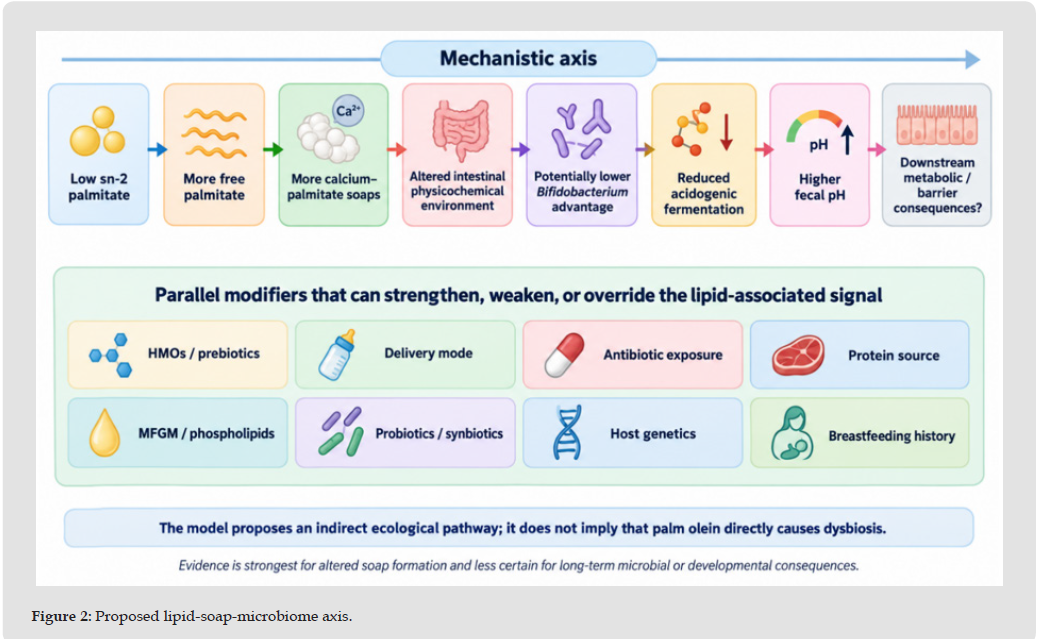
The question mark at the distal end of the pathway is deliberate. Evidence for the early biochemical steps is stronger than evidence for long-term microbial or developmental consequences. HMOs and prebiotics have powerful bifidogenic effects that can compete with or override lipid-associated ecological effects. Formula microbiome studies should therefore evaluate the lipid system and carbohydrate/ prebiotic system simultaneously rather than treating them as independent variables.
Theme 5: HMOs and Prebiotics Complicate Attribution of Microbiome Effects to Lipid Structure
The emergence of microbiome-oriented formula technologies creates an important interpretive challenge. Human-milk oligosaccharides are selectively utilized by infant-associated bifidobacteria and help shape the low-pH, bifidobacteria-rich intestinal ecology typical of many breastfed infants (B Zhang, et al. [39-43). Randomized trials demonstrate that altering oligosaccharide composition alone can shift the microbiota. Estorninos [44] reported that a milk-derived oligosaccharide-supplemented formula shifted selected microbiota characteristics closer to those observed with human milk and altered markers of intestinal immune defense. Bosheva [45] showed that formula supplemented with a blend of five HMOs changed microbiome development, microbial metabolism, fecal pH, and maturation biomarkers compared with standard formula. Consequently, a modern formula containing both high sn-2 palmitate and HMOs cannot be interpreted as a trial of stereochemistry alone unless the control formula contains identical HMO supplementation. The same issue applies to galacto-oligosaccharides, fructo-oligosaccharides, probiotics, and synbiotics. The 2026 ESPGHAN technical review of manufactured HMOs further highlights the rapidly evolving evidence surrounding biotic-supplemented formulas and reinforces the need to identify each active compositional variable rather than attributing outcomes to a single headline ingredient (Hojsak [46]).
Theme 6: Bone Mineralization is Biologically Plausible but Less Certain than Fecal Outcomes
If sn-1/sn-3 palmitate increases fecal calcium soap formation, lower calcium availability could theoretically affect skeletal mineralization. This is a coherent biological hypothesis because infancy is characterized by rapid skeletal accretion. The crucial question, however, is whether differences in fecal calcium are sufficiently large and persistent to produce clinically meaningful changes in bone. The meta-analysis by Zhang [24] reported higher bone mineral content in infants receiving sn-2-palmitate-enriched formulas than in those receiving standard formula. This finding supports the possibility that biochemical differences extend to the skeleton. Nevertheless, the number of studies contributing bone outcomes was smaller than the literature evaluating fecal soaps, and long-term skeletal evidence remains limited. A 2024 trial of formula containing high sn-2 palmitate, A2 β-casein, and casein phosphopeptides reported favorable stool and bone-strength-related outcomes (Sheng [47]). The formulation itself illustrates the attribution problem: casein phosphopeptides may affect mineral handling, while A2 β-casein alters the protein system. It is therefore inappropriate to interpret all observed effects as resulting exclusively from high sn-2 palmitate.
The same methodological issue applies to a subsequent 2026 report involving this formula and measurements of energy and mineral absorption (Wang [48]). Thus, the current evidence supports a graded conclusion. Reduced fecal calcium loss is plausible and increasingly documented; improved calcium absorption is biologically consistent; some evidence suggests improved bone mineral outcomes; but whether these differences generate meaningful long-term changes in fracture risk, peak bone mass, or later skeletal health remains unknown.
Theme 7: The Supramolecular Structure of Lipids Matters in Addition to sn-Position
A central limitation of reducing the human-milk fat question to OPO is that human milk presents lipids inside relatively large fat globules enclosed by a complex biological membrane. Conventional formulas typically contain much smaller droplets with interfaces dominated by processed proteins rather than a native MFGM. MFGM contains phospholipids, sphingolipids, cholesterol, glycoproteins, and other components with potential intestinal, immune, and neurodevelopmental functions (Brink Lönnerdal, et al. [13,49-51]). Comparative studies demonstrate that formula milk fat globules differ from human milk in phospholipid composition, size, and membrane organization. Y Liu [52] reported fewer phospholipid species and lower phosphatidylethanolamine and sphingomyelin concentrations in formulas than in human milk, alongside differences in globule structure. Such observations reinforce the argument that reproducing one TAG characteristic is necessary but insufficient for reproducing the overall behavior of human-milk fat. MFGM supplementation has consequently become a prominent strategy. A systematic review and meta-analysis concluded that available MFGM-supplemented formulas supported adequate growth and had a generally favorable safety profile, although evidence for several proposed developmental benefits remained limited (Ambrożej [12]).
A multicenter randomized trial in healthy term Chinese infants likewise found MFGM-enriched formulas to be generally well tolerated and supportive of normal growth, while also illustrating that safety and tolerance evidence should be distinguished from claims of specific mechanistic superiority (B Jiang [53]). Jaramillo-Ospina [54] subsequently reported adequate growth and safety through two years among infants who had received formula supplemented with bovine MFGM during infancy. Secondary biomarker analyses found formula groups generally similar to one another for many micronutrient and metabolic outcomes, although differences from the human-milk reference group persisted (Jaramillo Ospina [55]). More recent microbiome analyses suggest that MFGM may also influence microbial metabolites, although its effects are not equivalent to breastfeeding. Christensen [56] reported distinct stool microbiota and metabolite patterns among infants receiving MFGM-enriched formula, standard formula, and human milk, with differences between the two formula groups generally smaller than differences between formula and human milk. Another technological strategy is to increase lipid-droplet size and create a phospholipid-coated interface more similar to human- milk globules. Teoh [16] showed that such a concept formula supported adequate growth and tolerance.
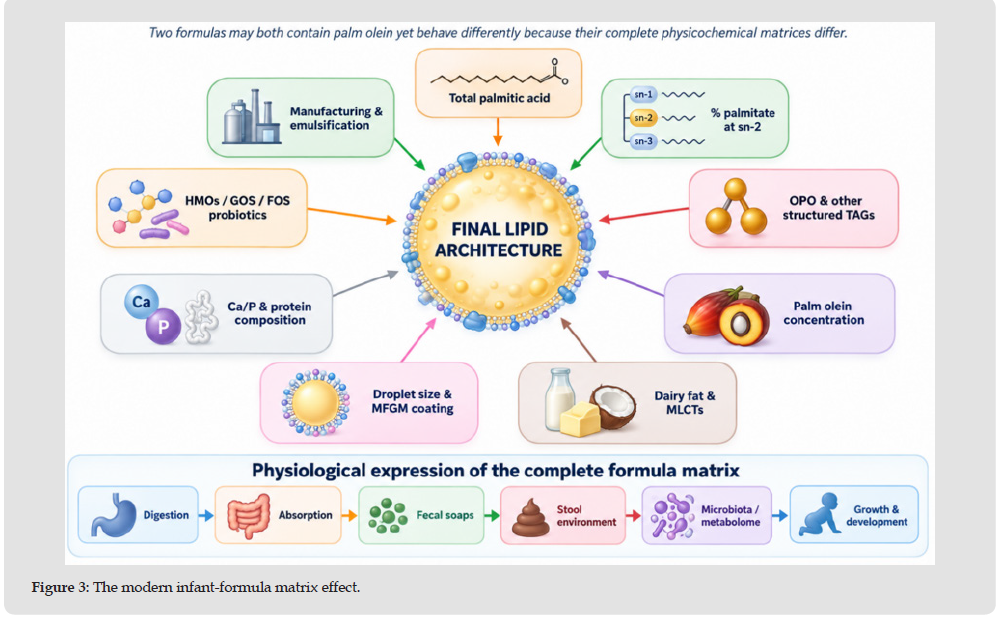
Follow-up of a related trial reported BMI trajectories and blood-pressure outcomes at school age that differed from those of children who had received conventional formula, suggesting that early lipid architecture may have longer-term metabolic consequences, although these findings require independent replication (Abrahamse Berkeveld [57]). In 2025, Zuffa [58] provided multi-omics evidence that milk-phospholipid-coated lipid droplets could influence infant gut microbiota and metabolomic profiles and that these changes were associated with weight-gain trajectories. The findings are important conceptually because they demonstrate that physical lipid architecture itself can be a biological exposure, independent of conventional fatty-acid percentages. Figure 3 explains why contemporary trials should not be categorized solely according to whether palm olein appears on the ingredient list. Two formulas containing palm olein may behave differently if one contains high-sn-2 structured lipids, different minerals, MFGM, HMOs, or a substantially different lipid-droplet interface. The model also highlights a major limitation of historical evidence synthesis: formulas are composite interventions. A statistically significant difference between two products identifies an effect of the products as formulated, but attribution to palm olein requires that competing compositional explanations have been sufficiently controlled. This distinction should become standard in future clinical reporting.
Figure 3
Theme 8: Human Milk Remains Structurally Distinct Even from Sophisticated Formulas
Improving formula structure does not establish equivalence with human milk. Comparative lipidomics continues to demonstrate differences across hundreds of lipid species. Wu [5] identified more than 400 lipid species and substantial differences in fatty-acid distribution and TAG composition between human milk and infant formulas. Human milk also contained more sphingomyelin in the analyzed samples. Independent benchmarking of glyceride composition similarly indicates that no single fat source reproduces the full molecular architecture of human milk, supporting the use of multidimensional rather than ingredient-only comparisons (Q Liu [22]). Purkiewicz Pietrzak- Fiećko [59] similarly documented variability in fatty-acid profiles among commercial formulas and differences relative to breast milk. Wang [19] reviewed the complexity of human-milk phospholipids and emphasized that mimicking their composition and biological effects remains an ongoing technological challenge. A 2025 systematic review and meta-analysis of human-milk polar lipids and cholesterol further documented substantial compositional variation across lactation and populations, emphasizing that biomimicry requires attention to a dynamic reference system rather than a single fixed target composition [3].
Recent efforts to combine MFGM ingredients and exogenous phospholipids illustrate the movement toward structural biomimicry. Zhu [60] developed a formula model designed to more closely reproduce human-milk fat composition and structure and evaluated its effects during digestion. Such approaches are scientifically relevant because they move beyond simple fatty-acid matching, but clinical evidence will be required before technological similarity can be equated with physiological equivalence.
The Original Palm-olein Hypothesis was Mechanistically Useful but Taxonomically too Simple
The historical palm-olein debate identified a genuine biochemical issue: total palmitic-acid concentration alone does not define nutritional behavior. That insight remains valid. What has become outdated is the use of ingredient identity as a surrogate for lipid structure. Palm olein itself is neither sufficient nor necessary to predict a formula’s final sn-2-palmitate level. Structured lipids can substantially modify stereospecific composition, dairy fat can alter positional palmitate, and the final blend may include multiple sources. Consequently, labels such as “palm-containing” and “palm-free” have limited mechanistic precision. A structure-based analysis leads to a more nuanced interpretation. Conventional formulas with high proportions of sn-1/sn-3 palmitate are expected to release more free palmitate during lipolysis. Contemporary clinical evidence consistently supports the downstream prediction of increased fecal saponified palmitate. High-sn-2 formulas, by contrast, reduce fecal soap formation. This is perhaps the strongest conclusion currently available. What follows after soap formation is less deterministic. Stool outcomes vary. Microbiota effects are emerging but inconsistent. Bone evidence is suggestive but not extensive. Growth is affected by many macronutrient and energy variables. Therefore, the strength of inference should be proportional to mechanistic distance from TAG hydrolysis.
The Biochemical Effect should not Automatically be Converted into A Clinical-Harm Claim
It is tempting to construct a simple sequence in which reduced absorption automatically represents harm. Such interpretation needs restraint. A measurable difference in fecal palmitate or calcium does not by itself establish clinically important nutrient deficiency, impaired development, or disease. The strongest modern study extending to 24 weeks found reduced fecal palmitate soaps and lower calcium excretion with high-sn-2 formula but no difference in stool characteristics relative to low-sn-2 formula (Shen [26]). This result illustrates precisely why mechanistic and clinical endpoints must remain distinct. Similarly, meta-analytic evidence suggesting greater bone mineral content deserves attention but should not be extrapolated into claims about long-term skeletal outcomes without longitudinal data. Infant bone mineralization is influenced by total calcium and phosphorus intake, vitamin D status, growth velocity, endocrine factors, and physical development in addition to intestinal soap formation. The same principle applies to weight. Some structured-lipid trials report greater weight gain than conventional formula. In infant nutrition, however, faster weight gain cannot automatically be considered advantageous. Optimal growth should be interpreted relative to healthy growth trajectories rather than maximizing weight accumulation.
Stool Consistency Should not be used as a Surrogate for Lipid Absorption
Stool softness is clinically noticeable and relevant to caregivers, but it is an imperfect mechanistic endpoint. Structured lipid can reduce soap formation without changing stool consistency, while prebiotics can soften stools without materially altering palmitate stereochemistry. This explains why commercial formulas with multiple differences can produce apparently inconsistent stool results. Future trials should separate at least four outcomes: fecal saponified palmitate, total fecal fatty-acid soaps, fecal mineral excretion, and validated stool-consistency scores. Treating these measures as interchangeable obscures mechanism.
A Plausible Lipid–Microbiome Axis has Emerged, but Causality Remains Incomplete
The microbiome literature has substantially strengthened the scientific interest of the subject. Earlier reviews could discuss microbial effects mainly as theoretical consequences of altered digestion. Contemporary studies now provide human data. The Guo [36] randomized trial, the 2025 metagenomic analysis by Wang, et al. [17,18]. observational pathway analysis collectively supports a relationship among sn-2 palmitate, fecal lipid chemistry, and microbial characteristics. Yet the evidence remains insufficient to conclude that conventional palm-olein formulas cause clinically adverse dysbiosis. Several alternative explanations remain. HMOs and GOS/FOS can produce powerful bifidogenic effects. Delivery by cesarean section, antibiotic exposure, maternal microbiome, geography, complementary feeding, and environmental exposures influence microbial development. Furthermore, greater resemblance to a breastfed microbiome should not automatically be treated as proof of clinical benefit unless the relevant microbial functions and health outcomes are demonstrated. The field should therefore move beyond taxonomic endpoints alone. Shotgun metagenomics, metabolomics, fecal lipidomics, stable-isotope studies, and longitudinal clinical phenotyping can determine whether changes in bacterial abundance correspond to meaningful changes in metabolic function.
Modern Formula Technologies can Mitigate Older Physiological Disadvantages without Reproducing Human Milk
An important translational conclusion is that technological innovation can modify the physiology associated with palm-derived palmitate. OPO enrichment changes positional distribution. Dairy fat changes natural TAG composition. MFGM and phospholipid interfaces change droplet structure. HMOs and prebiotics modify microbial ecology. Formula development is therefore moving from compositional imitation toward structural and functional biomimicry. This progression begins with matching total fat and essential fatty acids, then advances to matching palmitic-acid concentration and modifying its sn-position, reproducing a broader spectrum of TAG molecular species, and adjusting lipid-droplet size and interfacial composition. More advanced designs incorporate MFGM and phospholipid components, integrate the lipid system with HMO/prebiotic and protein systems, and evaluate functional performance using multi-omics together with clinically relevant outcomes. The implication is that evidence generated with older formulations becomes progressively less generalizable as modern formulas acquire new structural and biological features.
Formula Comparison should Use a Hierarchy of Lipid Characterization
A major recommendation arising from this review is that clinical trials should report a minimum lipid-characterization dataset. At minimum, that dataset should identify the fat sources used, total palmitate content, positional distribution of palmitate, relevant structured TAG species, and the physical characteristics of the lipid-droplet interface. First, total fatty-acid composition should be reported, including palmitate. Second, the percentage of palmitate located at sn-2 should be quantified. Third, relevant TAG molecular species-particularly OPO and related structures-should be characterized where possible. Fourth, investigators should report the source and proportion of vegetable oils, dairy fat, and structured lipids. Fifth, lipid-droplet size and interfacial composition should be described for studies in which processing differs. Failure to report these properties makes it impossible to determine whether two studies actually investigated comparable nutritional exposures. Without such reporting, apparent disagreement between studies may reflect unrecognized differences in formulation rather than true inconsistency in biological effects. Figure 4 presents the principal conceptual contribution of this review. Ingredient identity should be viewed as the lowest-resolution description of a formula lipid system.
Figure 4
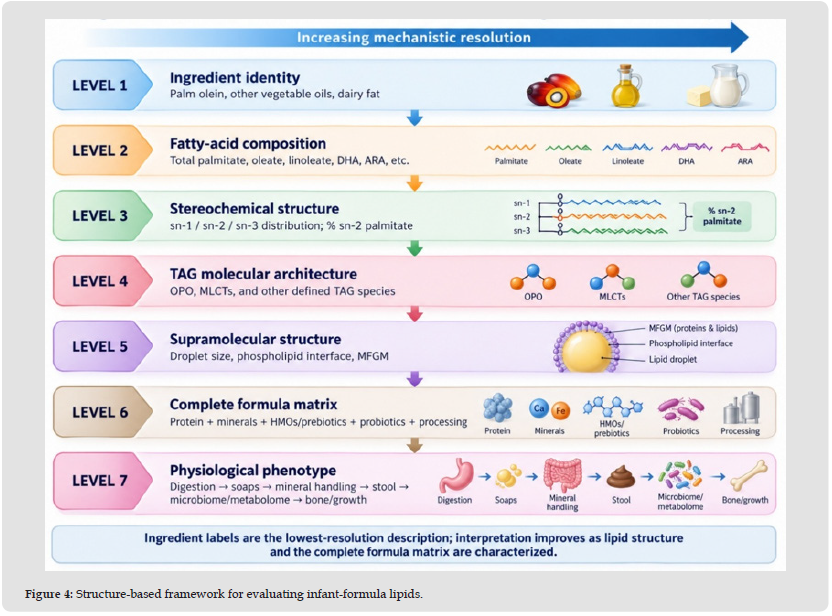
Increasingly mechanistic interpretation becomes possible as evaluation progresses from fatty-acid composition through stereochemistry, TAG molecular species, supramolecular structure, and finally the complete formula matrix. A structure-based framework can also improve regulatory and clinical evidence interpretation. Two products cannot be assumed to differ biologically because one lists palm olein and the other does not, nor can two palm-containing formulas automatically be treated as equivalent. The relevant exposure is the physicochemical system ultimately encountered by the infant gastrointestinal tract.
Industry Sponsorship Requires Transparency Rather than Automatic Dismissal
A substantial portion of modern infant-formula research involves manufacturers because producing experimental formula, ensuring regulatory compliance, performing compositional analyses, and conducting infant feeding trials are expensive. Several relevant studies therefore include industry-employed authors or commercial sponsorship. This does not justify dismissing their findings. It does, however, increase the importance of preregistered protocols, prespecified primary outcomes, appropriate controls, independent statistical analysis where feasible, transparent reporting of formula composition, publication of negative findings, and independent replication. A particularly important methodological problem occurs when an experimental formula contains multiple innovations simultaneously. An intervention combining high sn-2 palmitate, A2 β-casein, phosphopeptides, HMOs, and another fat structure may be a legitimate product- level clinical trial, but it cannot identify the isolated effect of palm olein or sn-2 palmitate. The distinction between product efficacy and ingredient causality should be made explicit.
Research Priorities
Several research priorities emerge from the current evidence base. First, head-to-head trials should compare formulas that are identical except for clearly defined lipid variables, because a highsn- 2 versus low-sn-2 comparison is more mechanistically informative than comparisons between commercial products that differ in several ingredients. Second, dose-response studies are needed to determine whether the relationship between the proportion of sn-2 palmitate and fecal soap formation is linear or whether clinically relevant thresholds exist. Third, stable-isotope tracer studies could quantify palmitate and calcium absorption directly and reduce reliance on fecal proxies. Fourth, microbiome research should integrate fecal lipid chemistry with metagenomics, metatranscriptomics, metabolomics, and targeted short-chain-fatty-acid measurements so that taxonomic changes can be connected to microbial function. These integrated designs would provide a stronger test of the proposed lipid–soap– microbiome axis than bacterial relative abundance alone. Fifth, longer skeletal follow-up is needed to determine whether differences in early bone mineral content persist or have clinically meaningful consequences. Sixth, studies should test effect modification by delivery mode, antibiotic exposure, breastfeeding history, HMO exposure, and other ecological factors that may alter mineral or microbiome responses. Finally, independent replication is particularly important when the available evidence originates predominantly from a small number of manufacturers or research groups [61,62].
The palm-olein controversy in infant formula should no longer be framed as a binary question of whether palm oil is beneficial or harmful. The scientific evidence supports a more precise conclusion: the physiological behavior of palmitic acid depends substantially on its stereochemical position within triacylglycerols and on the physicochemical context of the entire formula. The classical biochemical mechanism remains convincing. Palmitate occupying sn-1 or sn-3 is more readily released as free palmitic acid during digestion, creating an opportunity for formation of insoluble calcium–palmitate soaps. Contemporary randomized and controlled studies confirm that increasing sn-2 palmitate can reduce fecal palmitate soaps and frequently reduce fecal calcium loss. These findings provide modern confirmation that positional lipid chemistry has physiological consequences. Clinical implications become less certain farther downstream. Stool consistency does not consistently change when fecal soap formation declines. Evidence for improved bone mineralization is promising but requires longer-term confirmation. Growth findings should not be interpreted as a simple hierarchy in which faster weight gain is necessarily superior. The emerging microbiome literature represents an important new dimension. Relationships among low palmitate, fecal saponified palmitate, bifidobacterial abundance, fecal pH, and microbial metabolism are increasingly supported by human studies.
Nevertheless, HMOs, prebiotics, MFGM, delivery mode, antibiotics, and other factors substantially modify early microbial colonization, making single-ingredient causal claims premature. Modern infant formulas further complicate comparisons with historical products because structured lipids, dairy fat, MFGM, phospholipid-coated droplets, HMOs, prebiotics, probiotics, and modified protein systems can alter digestive and ecological responses. Findings from older palm-olein formulas therefore cannot automatically be generalized to all current products. The most appropriate contemporary question is consequently not “Does this formula contain palm olein?” but “What stereochemical and supramolecular lipid structure does the infant actually digest, and how does that structure interact with the complete nutritional matrix?” This reframing prevents ingredient labels from being used as proxies for complex digestive behavior and better aligns interpretation with the mechanistic evidence reviewed above. Future formula evaluation should report total palmitate, sn-2 distribution, relevant TAG species, fat sources, lipid-droplet characteristics, mineral composition, and microbiome-active co-ingredients. This structure-based approach provides a more scientifically rigorous framework for interpreting palm olein, designing infant-formula research, and developing formulas that more closely reproduce the digestive and physiological behavior-not merely the ingredient composition- of human milk.

International Association of Landscape Archaeology, Czech Glass Society, Czech Republic

Department of Chemistry, Semenov Institute of Chemical Physics, USSR Academy of Sciences, Moscow, Russia

Department of Educational Sciences, Research Centre Qualities of Teachers, School of Education – HAN, Nijmegen, Netherlands

Associate Professor at Department of Breast and Thyorid Surgey, Chongqing General Hospital, China

Neurology, LA BioMed Research Institute, USA





 Abstract
 PDF