info@biomedres.us
+1 (502) 904-2126
One Westbrook Corporate Center, Suite 300, Westchester, IL 60154, USA
Site Map
 ISSN: 2574 -1241
Received: September 10, 2026; Published: September 28, 2026
*Corresponding author: Loso Judijanto, IPOSS Jakarta, Indonesia
DOI: 10.26717/BJSTR.2026.66.010408
Phenolic-rich fractions recovered from oil-palm processing represent an emerging opportunity to connect circular bioeconomy strategies with microbiome-oriented metabolic health interventions. Unlike conventional debates concerning palm oil as dietary fat, this review focuses on non-lipid palm-derived bioactives and their potential interaction with the gut microbiota in obesity. Palm-processing aqueous fractions contain chemically diverse phenolics whose biological activity may depend on gastrointestinal bioaccessibility, microbial biotransformation, and production of metabolites capable of influencing intestinal and systemic physiology. Contemporary evidence supports bidirectional interactions between dietary polyphenols and gut microorganisms, with potential effects on short-chain fatty acids, phenolic microbial metabolites, bile-acid signaling, intestinal permeability, metabolic endotoxemia, inflammation, insulin sensitivity, lipid metabolism, and energy regulation. Palm-specific clinical studies demonstrate the safety and selected cardiometabolic effects of standardized oil palm phenolics, whereas direct evidence connecting palm-derived phenolic interventions to microbiome-mediated improvement of obesity remains limited. An important 2024 palm-residue study used fecal fermentation rather than an oral clinical intervention, highlighting the translational gap between microbial plausibility and demonstrated human efficacy. This review proposes a palm phenolic–microbiome–host axis and argues that future development should progress from generic “phenolic-rich extract” concepts toward chemically fingerprinted, microbiologically stratified, metabolomically verified, precision nutraceuticals. Responders and nonresponders should become a central consideration in future clinical development.
Keywords: Oil Palm Phenolics; Palm-Processing Residues; Gut Microbiome; Obesity; Polyphenols; Short-Chain Fatty Acids; Microbial Metabolites; Metabolic Inflammation; Precision Nutrition; Nutraceuticals
Obesity is increasingly understood as a heterogeneous metabolic disorder rather than a uniform consequence of excessive energy storage. Expansion and dysfunction of adipose tissue can coexist with insulin resistance, dyslipidemia, ectopic lipid deposition, altered endocrine signaling, chronic low-grade inflammation, intestinal-barrier disturbances, and changes in hepatic and skeletal-muscle metabolism. These abnormalities vary substantially among individuals with similar body mass indices, which helps explain why responses to apparently identical dietary interventions can differ considerably. Within this complex phenotype, the gut microbiome has emerged as one environmental and biological interface capable of connecting habitual diet with nutrient processing, inflammatory signaling, energy regulation, and host metabolic function [1-4]. The relevance of the microbiome to obesity does not imply the existence of a single “obese microbiome.” Human microbial ecosystems are highly heterogeneous and are influenced by habitual diet, geography, medication, age, gastrointestinal transit, host physiology and many other exposures. Consequently, modern interpretation has moved beyond attempts to identify one universal taxonomic signature and toward evaluation of microbial functions, metabolic pathways and microbe-derived metabolites. Short-chain fatty acids (SCFAs), bile acids, aromatic metabolites, lipopolysaccharide-related signaling molecules and tryptophan derivatives are among the microbial products potentially capable of linking intestinal ecology to adipose tissue, liver, gut barrier and neuroendocrine systems [3-7].
Dietary polyphenols are particularly relevant to this functional perspective. Many polyphenolic compounds exhibit incomplete absorption in the upper gastrointestinal tract. The compounds that remain unabsorbed can reach the colon, where bacterial enzymes may transform them through deglycosylation, reduction, demethylation, dehydroxylation, ring cleavage and other reactions into metabolites whose absorption and biological activities differ from those of the parent compounds. The relationship is bidirectional because polyphenols and their metabolites can in turn influence microbial growth, community structure and metabolism [8-14]. Recent reviews further emphasize that bioactivity depends on the interplay among Gastrointestinal Bioaccessibility, microbial transformation, dietary fiber, and host metabolism rather than on the ingested parent compound alone [15]. This biological concept creates an opportunity to reconsider the oil-palm industry from a biomedical perspective. Processing oil-palm fruit generates not only commercially valuable lipid fractions but also aqueous streams and residues containing phenolic compounds. Technologies have been developed to recover polyphenols from sterilization condensate and other aqueous processing streams, while treatment studies of palm oil mill effluent (POME) confirm that these streams can contain chemically relevant phenolic constituents. Recovery therefore creates the possibility of converting compounds otherwise treated as processing contaminants or wastewater constituents into standardized bioactive fractions [16-19].
Oil palm phenolics (OPP) are among the best characterized biomedical examples. Contemporary literature describes OPP as a water- soluble phenolic-rich material recovered from aqueous by-products generated during oil-palm milling. Its recognized compounds include Caffeoylshikimic-acid isomers, p-hydroxybenzoic acid and protocatechuic acid. Clinical translation has advanced beyond preclinical work: a 2022 randomized phase I trial found encapsulated OPP doses up to 1,500 mg/day to be generally tolerated over 60 days; a subsequent phase II study investigated lipid outcomes in adults with hyperlipidemia; and newer trials have reported changes in antioxidant, inflammatory and cardiovascular endpoints [20-24]. However, the terms OPP, palm oil residue (POR), POME-derived phenolic fraction, sterilizer-condensate extract and “palm phenolics” should not be used interchangeably. They can differ in source stream, extraction technology, composition, concentration and suitability for human consumption. This distinction is particularly important for interpreting the 2024 study by Chuaykarn and colleagues, which evaluated palm oil residue in a fecal fermentation system inoculated using fecal material from people with obesity. The study reported microbial and metabolite changes, including altered propionate-related outcomes and formation of 3-(3-hydroxyphenyl) propionic acid, but it was not an oral intervention in people with obesity. Thus, it provides palm-specific evidence of microbial transformability rather than proof that consuming a palm-residue nutraceutical improves obesity clinically [25].
The distinction between mechanistic plausibility and clinical proof is fundamental. A broad literature shows that dietary polyphenols can influence microbiome-related endpoints in experimental models and in some human interventions. Yet the magnitude and direction of changes are heterogeneous, and metabolic improvements do not invariably accompany microbial changes. Meta-analyses in populations with overweight or obesity suggest effects on selected bacteria, LPS, oxidative markers and in some analyses SCFAs, while pooled effects on body weight and some inflammatory outcomes remain inconsistent [26-29]. Accordingly, the objective of this critical qualitative literature review is to evaluate whether a scientifically credible Palm Phenolic–Microbiome–Host Metabolic Axis can be constructed from the current evidence. The review specifically asks how phenolic-rich palm-processing fractions might be transformed by intestinal microorganisms; whether microbial community or metabolic functions are modified; how SCFAs and other microbial metabolites could influence obesity-related physiology; where direct palm-specific evidence ends and inference from broader polyphenol research begins; and whether interindividual differences in microbial metabolism justify development of microbiome-informed precision nutraceuticals.
Palm-Processing Sidestreams as Sources of Non-Lipid Bioactives
The conventional nutritional discussion surrounding oil palm has focused predominantly on the fatty-acid composition of palm oil. Phenolic-rich aqueous fractions represent a conceptually different exposure because their biomedical relevance is determined by non-lipid phytochemicals recovered during processing. From a circular- bioeconomy perspective, this distinction is valuable: molecules that are present in processing liquors can be separated from the environmental burden associated with untreated effluent and redirected into higher-value applications if extraction, purification, contaminant control and standardization are sufficiently rigorous [16-18]. Jusoh, et al. [16] demonstrated the technical possibility of recovering polyphenolic compounds from palm-mill sterilization condensate through an emulsion liquid membrane process. Nur, et al. [17] independently demonstrated that POME contains phenolic compounds sufficiently abundant to become important targets during treatment and biodegradation. Krishnan, et al. [18] further showed that the phenolic profile of POME is chemically alterable during oxidative treatment, emphasizing that processing conditions can transform the composition of the starting material. Collectively, these studies support a central principle for nutraceutical development: the source stream cannot be separated conceptually from the subsequent extraction and stabilization process because the process determines the material eventually administered to humans. Standardized OPP represents a more advanced translational material than untreated POME. OPP has undergone pharmacological characterization and clinical testing, whereas POME itself is an industrial effluent and must never be conceptually conflated with a finished nutraceutical. Contemporary palm-phytonutrient literature has therefore begun to emphasize molecular characterization, nutrigenomic effects and standardized formulations rather than simply describing total phenolic content [19- 21]. This distinction becomes particularly important when different palm-derived materials yield different chromatographic fingerprints. Total phenolic concentration measured as gallic-acid equivalents can be useful for quality control, but it cannot identify which individual compounds are present, their relative abundance, degradation products, matrix binding or potential microbial substrates. The broader foodomics literature now argues that dietary intervention studies should characterize the intervention itself using targeted and untargeted analytical methods rather than applying sophisticated metabolomics only to biological samples [30].
Bidirectional Interaction between Polyphenols and the Microbiome
The apparent paradox of polyphenols is that many exhibit relatively low systemic bioavailability as parent compounds despite substantial reported biological effects. Microbial transformation provides one explanation. Once compounds reach the colon, microorganisms may convert structurally complex plant phenolics into smaller molecules with different physicochemical properties. These microbial products can subsequently be absorbed, conjugated by host enzymes and distributed systemically, producing a combined microbial–host metabolome rather than a simple reflection of the original dietary compound [9,11,14,31]. This reciprocal interaction also means that “bioavailability” should not be defined solely as the plasma concentration of the ingested parent polyphenol. Microbially generated phenylpropionic acids, phenylacetic acids, valerolactones and related compounds may constitute meaningful exposures. For example, human and experimental work on oat avenanthramides identified Faecalibacterium prausnitzii as an important determinant of conversion to dihydro- metabolites, while fecal fermentation studies with epicatechin demonstrate substantial differences among individuals in conversion rates and metabolite production [5,32]. These observations have direct conceptual implications for palm phenolics. Two individuals could consume an identical chemically standardized dose yet produce different concentrations and profiles of downstream phenolic metabolites if their microbial enzyme repertoires differ. Consequently, an intervention can be dose-standardized at ingestion while remaining biologically non-standardized after microbial transformation. This is one of the strongest scientific arguments for a precision-nutraceutical framework.
Obesity, Intestinal Ecology and Metabolite Signaling
The obesity–microbiome relationship includes several plausible pathways but should not be reduced to a single taxonomic marker. Earlier studies frequently emphasized the ratio of Firmicutes to Bacteroidetes, whereas contemporary reviews demonstrate considerable heterogeneity across populations and emphasize that species-, strainand pathway-level functions are more informative than phylum ratios alone [1,3,33]. A functional model places microbial metabolites between microbial ecology and host physiology. SCFAs result largely from microbial fermentation of nondigestible substrates. Acetate, propionate and butyrate have different metabolic destinations and signaling effects, including interactions with intestinal epithelial cells, enteroendocrine pathways, energy metabolism and immunological regulation. SCFAs can interact with free-fatty-acid receptors and influence secretion of peptides such as GLP-1 and PYY, while butyrate is an important substrate for colonocytes. Yet fecal SCFA concentration represents the residual balance after production, utilization and absorption and therefore should not be treated as a direct measure of whole-body SCFA exposure [7,34,35]. Microbiome-related metabolic signaling extends beyond SCFAs. Bile-acid transformation, endotoxin- associated pathways, tryptophan metabolism and diverse aromatic metabolites can affect host receptors, intestinal immunity and metabolic tissues. This broader perspective is important because palm-residue fermentation produces phenolic metabolites whose potential biological functions may not be captured by measuring SCFAs alone [4,11,13]. Recent synthesis of dietary bioactives and obesity-associated inflammation likewise supports a network model in which microbial metabolites interact with barrier, inflammatory, and metabolic pathways rather than acting through a single endpoint [36].
The Intestinal Barrier and Metabolic Inflammation
Obesity is frequently associated with inflammatory and intestinal- barrier abnormalities, although human causality remains difficult to establish. Increased intestinal permeability could facilitate exposure to bacterial components such as lipopolysaccharide, creating a plausible connection between intestinal ecology and systemic inflammatory tone. Reviews of human and experimental evidence caution that barrier dysfunction varies among individuals and cannot be inferred automatically from obesity alone [5,6]. Polyphenols could influence this pathway through several routes. They may modify microbial abundance or metabolism, alter production of SCFAs or aromatic metabolites, influence oxidative conditions in the intestinal lumen, and interact directly or indirectly with epithelial and inflammatory signaling. In experimental obesity, polyphenol-rich interventions have improved intestinal-barrier endpoints in parallel with microbial changes, although translation to human disease remains incomplete [37-39]. The strongest contemporary human synthesis remains cautious. [27] Found reduced circulating LPS and changes in antioxidant and SCFA-related outcomes across randomized polyphenol trials in adults with overweight or obesity, but effects on cytokines and body weight were inconsistent. This pattern supports a biologically plausible gut–inflammation pathway while simultaneously illustrating why biomarker changes should not be equated with clinically meaningful obesity treatment.
From Population Averages to Metabotypes
Precision nutrition becomes relevant when average intervention effects conceal biologically meaningful subgroups. The microbiome is particularly suited to this concept because microbial communities possess different metabolic capacities Narduzzi, et al. [31] proposed phenolic metabotypes as a framework for understanding interpersonal variation in the metabolism of dietary polyphenols. Wang, et al. [5] demonstrated a specific organism-dependent phenolic transformation in humans, while Lessard-Lord, et al. [32] identified fast and slow microbial converters of epicatechin and distinct metabolite- production patterns. Clinical intervention evidence supports the importance of context. Cortés-Martín, et al. [40] showed that pharmacological therapy influenced microbiota modulation during supplementation with a pomegranate nutraceutical in metabolic syndrome. Jardon, et al. [41] found sex-specific relationships between baseline microbiota and metabolic responses to combined resveratrol and EGCG supplementation in adults with overweight or obesity, even though the intervention did not produce a broad overall shift in microbiota composition. These findings indicate that a nutraceutical may influence host metabolism without generating a simple universal microbiome signature and that medications, sex and baseline ecology can modify responsiveness. Modern precision nutrition therefore integrates phenotype, dietary exposure, microbiome, metabolome and sometimes genetic information rather than defining responders from one microbial taxon. Metabolomics can provide an objective biochemical bridge between exposure and response, while metagenomics can identify microbial pathways capable of producing relevant metabolites [42-48]. This multidimensional approach is consistent with recent obesity-focused precision-nutrition frameworks that place individual biological and behavioral heterogeneity at the center of intervention design [49].
Review Design
This study employed a Critical Qualitative Literature Review Design. It was not designed as a systematic literature review or meta- analysis and therefore does not claim exhaustive retrieval of all eligible publications. The purpose was to integrate chemically, microbiologically and clinically heterogeneous evidence into an interpretive framework capable of distinguishing established findings from plausible but unconfirmed translational hypotheses. A qualitative design was considered appropriate because the evidence spans fundamentally different experimental levels: palm-processing and extraction studies, analytical chemistry, simulated digestion and fecal fermentation, animal experiments, human safety and cardiometabolic trials, general polyphenol–microbiome interventions, systematic reviews and precision-nutrition methodology. Pooling these data as though they represented a uniform intervention would obscure rather than resolve the central scientific problem.
Literature Identification and Evidence Domains
Priority was given to peer-reviewed publications from January 2020 through September 2026. Searches were conceptually organized around the combinations of oil palm phenolics, palm phenolics, palm oil residue, palm oil mill effluent, polyphenols, gut microbiome, gut microbiota, obesity, metabolic syndrome, microbial biotransformation, phenolic metabolites, short-chain fatty acids, intestinal permeability, metabolic endotoxemia, metagenomics, metabolomics, metabotype and precision nutrition. Contemporary methodological guidance concerning diet–microbiome studies was used to inform critical appraisal [50,51]. Evidence was interpreted hierarchically. Direct palm-specific human intervention studies were considered the most relevant for safety or host clinical outcomes, but they were not assumed to demonstrate microbiome mediation unless microbiome endpoints were measured. Palm-specific ex vivo or in vitro studies were treated as mechanistic evidence. Human studies involving nonpalm polyphenols were considered translational analogues. Animal studies were used principally to illuminate mechanisms rather than demonstrate human efficacy.
Critical Appraisal Strategy
Studies were interpreted according to material characterization, study population, intervention composition, dose, duration, comparator, diet control, medication exposure, microbiome method, metabolomic method and clinical outcome selection. Particular attention was paid to whether observed host effects could genuinely be linked to changes in microbial function or whether microbiome measures were merely parallel exploratory outcomes. This distinction is important because microbiome research is vulnerable to underpowered designs, high-dimensional multiple testing, methodological heterogeneity and compositional-data problems. Diet is also difficult to measure accurately, while antibiotics, gastrointestinal medication, habitual diet and other exposures can materially modify microbial ecology. Robust diet–microbiome studies therefore require careful phenotyping, aligned dietary and stool sampling, adequate power and functional rather than exclusively taxonomic analysis [45,50]. Recent clinical mapping of microbial-derived polyphenol metabolites similarly identified limited use of shotgun metagenomics and substantial heterogeneity across polyphenol classes and host contexts, reinforcing the need for standardized high-resolution multi-omics designs [52].
Theme 1 — “Palm Phenolics” Describes a Family of Materials Rather than One Standardized Exposure
The first major finding of the literature synthesis is that the palm-derived test material must be precisely defined. POME, sterilizer condensate, crude palm residue, phenolic concentrate and encapsulated standardized OPP occupy different positions along a processing continuum. An aqueous industrial stream can contain useful phenolics but also other compounds that make it unsuitable for direct human administration. Recovery, purification and formulation are therefore part of the biomedical exposure rather than merely manufacturing details [16-18]. The clinical OPP literature illustrates how greater standardization enables translation. The 2022 phase I randomized trial used encapsulated OPP rather than raw processing material and evaluated multiple doses over 60 days. The absence of serious adverse events and lack of clinically concerning biochemical abnormalities provided a foundation for subsequent studies. The phase II hyperlipidemia trial evaluated 250 mg/day and reported a sex-specific triglyceride signal in male participants, while the 2025 trial in mild hyperlipidemia reported improved antioxidant capacity and reduced TNF-α. A later phase I report also identified blood-pressure and antioxidant signals in healthy adults [21-24]. These studies are important but should not be misinterpreted. They show that a defined palm-derived phenolic product can reach human clinical testing and can generate systemic biological signals. They do not yet demonstrate that the clinical effects are mediated by the gut microbiome, nor do they establish treatment efficacy for obesity.
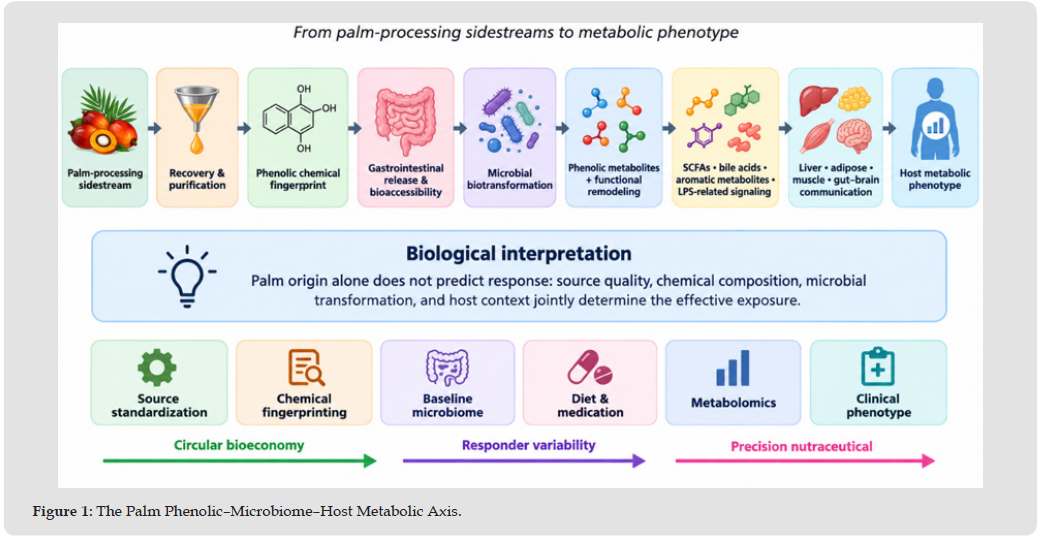
The conceptual sequence synthesized in Figure 1 distinguishes the industrial source from the biologically active exposure. This separation is essential because variability introduced during extraction, purification, and formulation can propagate through every subsequent level of gastrointestinal, microbial, and metabolic response. Figure 1 emphasizes that palm origin alone cannot predict host response. The biologically relevant exposure is produced by a chain beginning with source authentication and chemical composition and continuing through microbial metabolism. Weakness at an upstream level-for example, inadequate characterization of the extract-makes downstream claims about microbiome or metabolic effects difficult to reproduce. The framework is consistent with contemporary foodomics recommendations that the dietary intervention itself should be subjected to detailed chemical analysis rather than treated as a fixed black box [30].
Figure 1
Theme 2 — The 2024 Palm-Residue Study Provides Direct Microbial Plausibility, not Clinical Proof
The study by Chuaykarn, et al. [25] is currently one of the most directly relevant pieces of evidence connecting a palm-derived residue with an obesity-associated microbiome. It compared several indigestible carbohydrates and plant-derived materials using fecal microbiota originating from individuals with obesity. Palm oil residue changed microbial composition in the fermentation system, lowered the reported Firmicutes: Bacteroidetes ratio relative to the starting fecal material, affected propionate production and altered predicted metabolic pathways. Importantly, the investigators also detected 3-(3-hydroxyphenyl) propionic acid as a product of microbial transformation of the palm residue. The value of this study lies less in the Firmicutes: Bacteroidetes finding than in its demonstration of Microbial Biotransformation. Formation of a hydroxyphenyl propionic-acid derivative directly supports the premise that compounds in a palm-derived material can serve as substrates for gut microorganisms. This provides a mechanistic bridge between palm phytochemistry and microbial metabolism. However, the experimental design also defines its limits. Batch fecal fermentation does not reproduce oral digestion, absorption, enterohepatic circulation, host epithelial responses or chronic dietary adaptation. It cannot determine whether the transformed metabolites reach systemic circulation or modify insulin sensitivity, adiposity or appetite. Moreover, interpreting a lower Firmicutes: Bacteroidetes ratio as inherently beneficial would be inconsistent with contemporary understanding of obesity-associated microbiomes [1,3,33]. The most defensible interpretation is therefore that palm residue has Microbiome-Active Chemical Potential. It should be used to design targeted human studies rather than cited as evidence that palm phenolics already represent an established microbiome therapy for obesity.
Theme 3 — Microbial Metabolites are More Informative than Taxonomic Shifts Alone
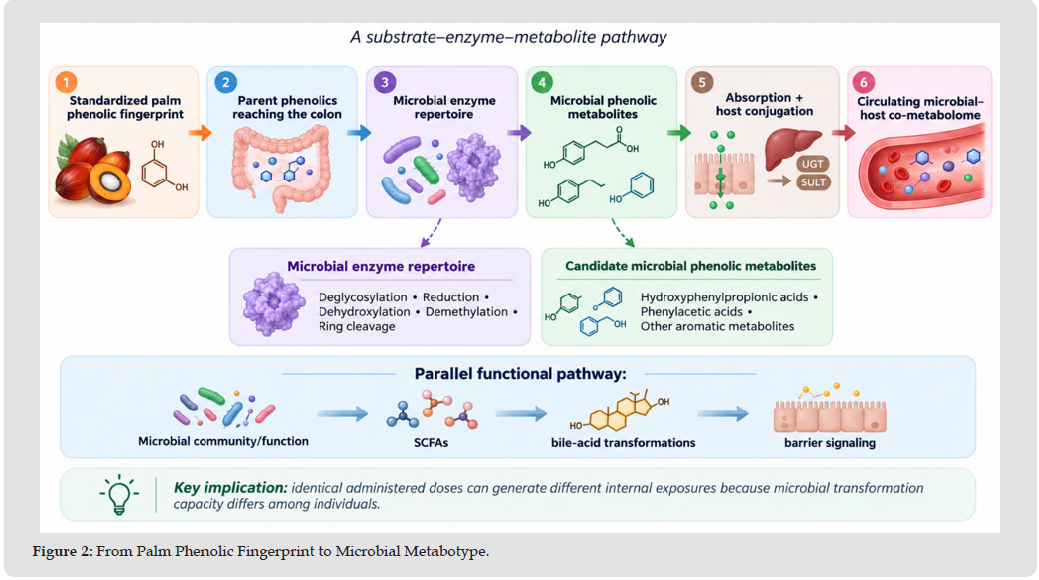
A recurrent pattern across the polyphenol literature is that taxonomy does not fully explain host response. Different microbial communities can perform overlapping functions, whereas relatively small changes in specific metabolic pathways can alter concentrations of biologically active metabolites. Metabolomic analysis is therefore increasingly treated as a functional complement to sequencing [11,43,44]. This distinction is particularly relevant for polyphenol metabolism. Parent compounds may undergo sequential transformations involving multiple organisms. The microbial community therefore functions as a metabolic consortium. The same polyphenol can yield different metabolite profiles depending on the organisms and enzymes present, creating individual metabotypes rather than one universal response [31,32]. The oat avenanthramide study by [39] is an instructive analogue for palm phenolics because it linked a dietary plant phenolic to a specific microbial transformation and demonstrated delayed appearance of microbially generated metabolites. In future palm research, comparable studies should attempt to identify the species, genes, and enzymatic reactions involved in transformation of caffeoylshikimic-acid derivatives, protocatechuic acid-related substrates and other characteristic compounds. Figure 2 illustrates why the field should move from the generic proposition that polyphenols alter the microbiome toward explicit substrate–enzyme–metabolite pathways. It also highlights the need to distinguish the administered dose from the internal exposure generated after microbial transformation. The key implication of Figure 2 is that a chemically identical supplement can yield different internal exposures across individuals. This concept is supported by the identification of phenolic metabotypes and fast versus slow microbial converters in non-palm systems. Palm-specific development should therefore measure both parent compounds and microbial metabolites rather than assuming that the administered dose is equivalent to the bioactive dose [1,32,33].
Figure 2
Theme 4 — SCFAs Constitute a Plausible Pathway, but Interpretation Requires Restraint
SCFAs are attractive candidates for linking palm phenolics to host metabolic regulation. Polyphenols can indirectly modify SCFA production by changing microbial ecology or by interacting with fermentable dietary substrates. Broader experimental and clinical evidence has linked SCFAs to enteroendocrine signaling, epithelial metabolism and immunological regulation, while reviews of palm-containing Malaysian dietary patterns have emphasized the potential relevance of microbiota-mediated fermentation to metabolic health [7,34,35]. Nevertheless, “more fecal SCFA” should not be considered automatically beneficial. Most SCFAs produced in the colon are absorbed, and fecal concentration represents only the fraction remaining after production, epithelial utilization, absorption and transit. A reduction in fecal concentration could theoretically occur alongside greater absorption, whereas a higher concentration could reflect greater production, poorer absorption or altered transit. Studies should therefore complement fecal SCFA measurements with circulating SCFAs, isotope-tracer approaches or other estimates of metabolic flux when feasible. Human meta-analytic evidence illustrates both promise and uncertainty. Mao, et al. [26] reported microbiota and inflammatory changes after polyphenol interventions in overweight or obesity populations but did not identify a consistent pooled increase in SCFA production. González-Gómez, et al. [27] subsequently reported increases in butyrate and acetate together with reduced LPS in a different evidence synthesis. Alshatari and Ziarno [29] analyzing 50 randomized trials across adult populations, reported a generally more butyrogenic profile but explicitly warned that the associations did not establish a mechanistic prebiotic effect. Wang, et al. [28] further demonstrated that dose, duration and food matrix can modify intervention outcomes [26-29]. These apparently different findings strengthen rather than weaken the case for a qualitative interpretation. Polyphenol– SCFA relationships are likely conditional on substrate type, accompanying dietary fiber, baseline microbiota, disease phenotype and analytical method. Cheng, et al. [53] similarly emphasize synergy between fiber and polyphenols, indicating that the matrix surrounding palm phenolics may influence microbial response as much as the phenolic compounds themselves.
Theme 5 — Gut-Barrier and Inflammatory Pathways Provide a Plausible Metabolic Bridge
A palm phenolic–microbiome pathway would be most clinically meaningful if microbial changes translated into host physiology. Intestinal- barrier integrity is one plausible bridge. Obesity-related dysregulation of barrier function could increase exposure to microbial products, including LPS, contributing to systemic inflammatory signaling. The magnitude and universality of increased intestinal permeability in human obesity remain uncertain, but the pathway has substantial mechanistic support [5,6]. Experimental polyphenol research suggests that changes in intestinal oxidative stress, microbial ecology and barrier proteins can occur together. Zhou, et al. [39] for example, reported that Fu-brick-tea polyphenols reduced diet-induced obesity in mice in association with microbial remodeling, reduced intestinal oxidative stress and improved barrier function; fecal transplantation experiments strengthened the microbiota-dependence of those effects. Such findings provide mechanistic templates but cannot be transferred directly to palm phenolics or human obesity. Palm-specific human studies nonetheless show potentially relevant systemic signals. OPP supplementation has been associated with improved antioxidant status and reduced TNF-α in adults with mild hyperlipidemia, while other OPP trials have investigated lipid and blood-pressure outcomes [22-24]. These findings are compatible with pathways relevant to metabolic health but do not identify the microbiome as mediator because the trials were not designed to demonstrate a microbiome- dependent causal chain. Thus, a major research opportunity is to connect the existing clinical OPP platform to gut-focused measurements. Future trials could integrate intestinal permeability markers, LPS-related biomarkers, fecal and plasma metabolomics, inflammatory markers and microbiome sequencing. This would determine whether OPP-induced systemic changes track with a reproducible microbial-metabolite signature.
Theme 6 — Human Non-Palm Polyphenol Studies Demonstrate both Translational Potential and Heterogeneity
Human trials involving other polyphenol sources provide useful analogues because they show what a future palm trial could-and could not-reasonably expect. Pomegranate is particularly instructive because ellagitannin metabolism generates microbiota-dependent urolithin metabotypes. Cortés-Martín, et al. [40] found that concurrent medication affected microbiota responses to pomegranate extract in metabolic syndrome. Sivamani, et al. [54] studied a standardized pomegranate extract alongside microbial and SCFA outcomes, illustrating the value of simultaneously quantifying microbial composition and metabolites. Hou, et al. [55] evaluated pomegranate juice with or without inulin in 68 adults with overweight or obesity. Although the three-week intervention did not significantly change anthropometric or conventional biochemical measures, the combination of pomegranate juice and inulin produced more pronounced changes in microbial composition and microbiota-associated metabolites, including SCFAs. This study demonstrates an important temporal principle: a microbial or metabolomic response can precede detectable changes in body weight or routine blood chemistry. Conversely, absence of microbiome change can itself be informative. The 2024 EGCG-resveratrol analysis by [2]. Did not show a general intervention- driven shift in gut microbiota composition. Yet baseline microbiota predicted selected metabolic responses in men, and strong sex differences were observed in microbiota–metabolic associations. The result therefore supports precision stratification more strongly than a universal prebiotic effect [41]. Muralidharan, et al. [56] examined a citrus-polyphenol preparation in overweight or obesity adults and explicitly considered interactions between adiposity and microbial response. Agrinier, et al. [57] demonstrated that a polyphenol-rich camu-camu intervention reduced liver fat and liver-injury markers in overweight hypertriglyceridemic adults while also modifying gut microbiota composition. These studies demonstrate that polyphenol- rich interventions can be evaluated against organ-level metabolic endpoints, but they also reinforce the need for mechanistic mediation analysis before attributing clinical effects to the microbiome. Systematic evidence remains heterogeneous. Sweeney, et al. [58] found limited evidence that berry-polyphenol interventions consistently modified both microbiota and blood pressure, whereas broader recent meta-analyses suggest selected microbial or inflammatory benefits. The variability across intervention sources cautions against assuming that all phenolic-rich products are functionally equivalent [26-28,58].
Theme 7 — Responders and Nonresponders Should Become a Central Feature of Palm-Phenolic Research
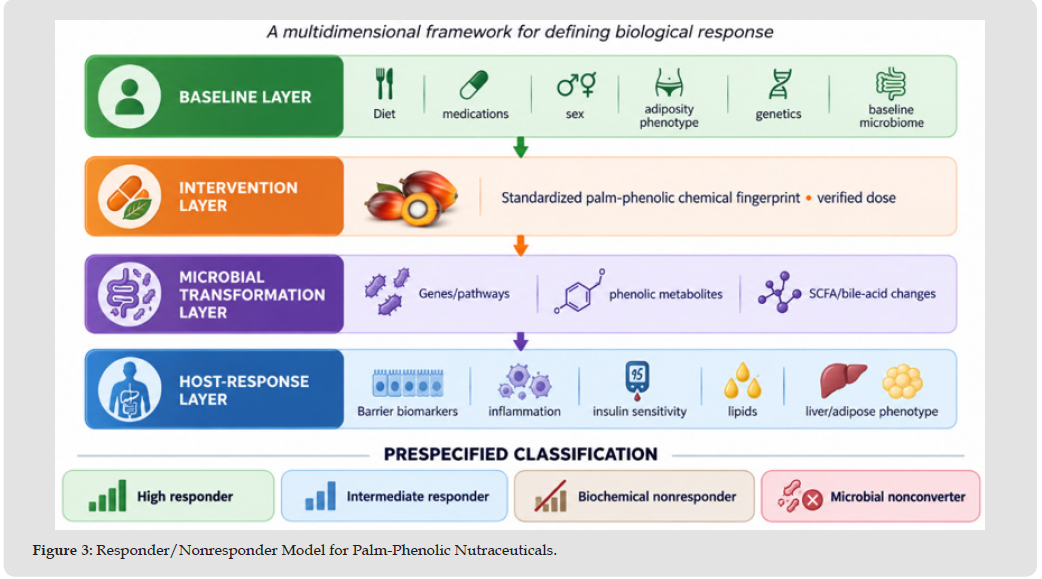
Interpersonal variability is not merely statistical noise. In polyphenol research it can represent biologically distinct metabolic capacities. The same dietary compound can produce different microbial metabolites depending on the presence or abundance of organisms carrying the necessary enzymes. This is the conceptual basis of phenolic metabotypes [31,39]. Medication introduces another layer. Cortés-Martín, et al. [40] showed that pharmacological therapy influenced microbiota modulation by a nutraceutical in metabolic syndrome. Sex can also modify responses, as demonstrated by Jardon, et al. [41]. More broadly, circulating metabolomic variation is independently influenced by diet, microbiome and host genetics, illustrating why single-variable personalization is unlikely to be sufficient [44]. A responder to palm phenolics should therefore not be defined merely as a participant whose abundance of one “beneficial” bacterium increases. A stronger definition would combine evidence of exposure, microbial transformation, and host effect. For example, a high-confidence responder might demonstrate a reproducible increase in one or more predefined microbial phenolic metabolites, an associated functional microbial pathway, and concordant improvement in a metabolic outcome such as insulin sensitivity, postprandial lipid metabolism, or inflammatory status. The multidimensional definition proposed in Figure 3 distinguishes biological response from taxonomic fluctuation and provides a basis for stratified trial analysis. It requires concordance among exposure, microbial transformation, and clinically relevant host responses rather than classification based on a single microbial taxon. This framework prevents a misleading classification in which any microbiome change is interpreted as a therapeutic response. Precision nutrition research increasingly emphasizes baseline microbial function, host phenotype, and multi-omics integration for prediction of diet response [2,33,45-48].
Figure 3
How much of the Palm Phenolic–Microbiome–Host Axis is Actually Established?
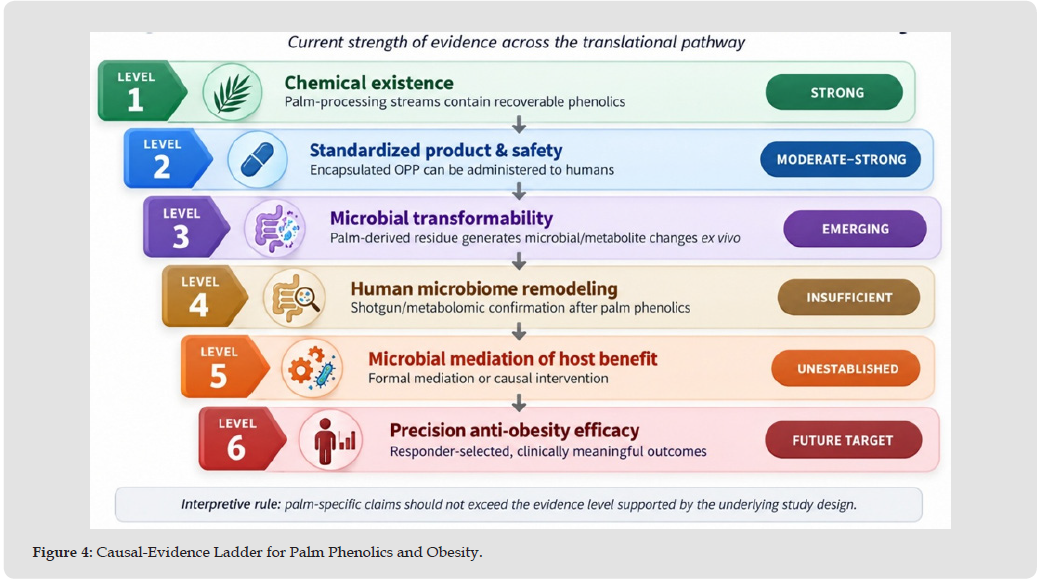
The evidence supports some elements of the proposed axis much more strongly than others. The existence of phenolic compounds in oil-palm processing streams is well established, and technologies can recover or modify these compounds. Standardized OPP has progressed into human clinical testing, providing direct evidence of tolerability and selected cardiometabolic biological effects. Palm residue can be transformed byobese-derived fecal microbiota in vitro, establishing direct palm-specific microbial plausibility. What has not yet been established is a complete causal chain demonstrating that oral palm-phenolic supplementation remodels the human gut microbiome, generates identified microbial metabolites, and that these metabolites mediate clinically meaningful improvement in obesity. Current palm-specific evidence therefore has a translational gap between microbial mechanism and host clinical outcomes. This distinction matters for publication quality and nutraceutical claims. It would be scientifically inappropriate to combine the OPP clinical trials and the POR fecal-fermentation study as if they were evaluating the same material or the same mechanism. The former demonstrate human exposure to standardized phenolic preparations but have not established microbiome mediation; the latter demonstrates microbial transformation but not human oral efficacy. Figure 4 maps the causal-evidence ladder and makes explicit where the palm-phenolic field is relatively mature and where evidence remains incomplete. The framework is intended to prevent mechanistic plausibility from being presented as equivalent to demonstrated human efficacy. The evidence ladder illustrates why this field should be presented as translationally promising rather than clinically established. Recent reviews increasingly advocate gut-microbiota-targeted polyphenol interventions for obesity, but the strongest generalized human evidence still demonstrates heterogeneous microbiome and biomarker changes rather than reliable weight loss attributable to microbial mechanisms [27-29,59].
Figure 4
The Firmicutes: Bacteroidetes Ratio should not Anchor Future Palm Studies
One attractive result of the 2024 POR study is the reported reduction in the Firmicutes: Bacteroidetes ratio. However, this metric should not become the central outcome of future clinical trials. At phylum level, both Firmicutes and Bacteroidetes contain organisms with diverse and sometimes opposing metabolic functions. Relative abundance is also compositional: an apparent decline in one group can occur because another group expands, even without a meaningful reduction in absolute abundance. More informative approaches include species- and strain-resolved metagenomics, quantification of microbial pathways, gene-family analysis, targeted metabolite production and, when feasible, absolute bacterial abundance. Contemporary obesity reviews and precision-nutrition frameworks increasingly emphasize functionality, host–microbe interaction and integrated prediction rather than phylum ratios [3,4,33,48]. The POR result therefore remains useful as descriptive evidence within its experimental system but should not be interpreted as proof that the intervention “normalized dysbiosis.” A better conclusion is that it shifted the microbial ecosystem and metabolic output under the tested fermentation conditions.
SCFAs should be Integrated with Phenolic Metabolites rather than Treated as the Sole Endpoint
SCFAs are often positioned as the default functional outcome of microbiome interventions. For palm phenolics, however, microbial transformation of phenolic structures may be at least as informative. The demonstration of 3-(3-hydroxyphenyl) propionic acid from palm residue provides a direct experimental clue that should guide targeted metabolomics in future studies. An optimal analytical panel should therefore include acetate, propionate and butyrate alongside candidate phenolic metabolites, bile acids, tryptophan-derived compounds and potentially markers of endotoxin exposure. This would allow investigators to determine whether the microbial response reflects generalized fermentation or a specific palm-phenolic catabolic signature. Metabolomics is particularly valuable because it measures the biochemical phenotype produced jointly by diet, microbiota and host. Yet metabolomics of human samples should be matched by rigorous analysis of the administered product. Keohane, et al. [30] found that clinical polyphenol–microbiome studies often use sophisticated omics on biological samples without comparably comprehensive chemical profiling of the intervention. For palm-derived residues, where source and processing variation may be substantial, this imbalance could seriously impair reproducibility. A 2026 scoping review of clinical studies on microbial-derived polyphenol metabolites found that most studies still relied on 16S rRNA sequencing and that relatively few used shotgun metagenomics, underscoring the need for higher- resolution functional characterization [52].
The Complete Nutritional Matrix may Determine Efficacy
Palm phenolics will rarely be consumed in isolation from the broader diet. Fiber availability influences microbial fermentation, and polyphenols can interact with dietary fiber physically and biologically. Cheng, et al. [53] argue that fiber-polyphenol interactions can alter microbial composition, SCFA production and barrier-related effects. This implies that a palm-phenolic capsule administered against a low-fiber diet may produce a different microbial phenotype from the same capsule consumed within a fiber-rich dietary pattern. The finding by Hou, et al. [55] that pomegranate juice combined with inulin generated stronger microbiota and metabolite responses than pomegranate juice alone illustrates this principle in humans. The intervention matrix can therefore act as an effect modifier rather than a passive carrier. This consideration has practical consequences for clinical trial design. Background dietary fiber and habitual polyphenol intake should be measured systematically. Trials should determine whether dietary standardization is necessary around intensive metabolic testing, while longer free-living trials may require repeated dietary assessment to distinguish intervention effects from changes in habitual diet.
The Clinical Endpoint should be Metabolic Health, not Microbiome Normalization
A microbiome-informed nutraceutical should ultimately improve a clinically relevant phenotype rather than simply move the microbiota toward an assumed ideal state. There is no universally accepted composition of a “healthy microbiome,” and interindividual variation is substantial [45]. For obesity research, candidate clinical endpoints could include insulin sensitivity, hepatic fat, postprandial lipid metabolism, inflammatory biomarkers, waist circumference, objectively measured body composition and potentially appetite-related outcomes. Body weight is important but should not be the sole criterion because metabolic benefits can occur without large shortterm changes in weight. The camu-camu trial provides an example in which a polyphenol-rich intervention affected hepatic fat, a more specific metabolic endpoint, while simultaneously modifying gut microbiota [57]. This focus is important because contemporary umbrella evidence suggests that average effects of polyphenols on body weight are small or inconsistent even when anti-inflammatory or metabolic mechanisms remain biologically plausible [47,60]. OPP research can leverage this principle. Existing OPP trials already provide experience with safety, lipid, antioxidant, inflammatory and blood-pressure measurements. Adding microbiome and metabolomic modules to similarly rigorous trials could allow the palm field to move from parallel observations to mechanistic integration.
Responder Stratification should be Prespecified rather than Discovered Retrospectively
Many nutrition studies identify responders only after the primary analysis has failed to show a uniform effect. Such exploratory subgrouping can generate hypotheses but is vulnerable to false-positive findings. A precision-nutraceutical program should instead define responder hypotheses before trial completion.
A practical strategy would be to perform baseline shotgun metagenomics and identify predefined genes or pathways plausibly involved in metabolism of signature palm phenolics. Participants could then be stratified prospectively by transformation capacity. Plasma and urinary phenolic metabolites after a short standardized challenge could provide a second layer of classification, creating a biochemical metabotype. Repeated intervention could then test whether high converters show greater changes in preselected metabolic outcomes than low converters. This approach follows the conceptual direction established by microbial metabotype studies and current precision-nutrition frameworks [31-33].
Proposed Definitive Clinical-Development Pathway
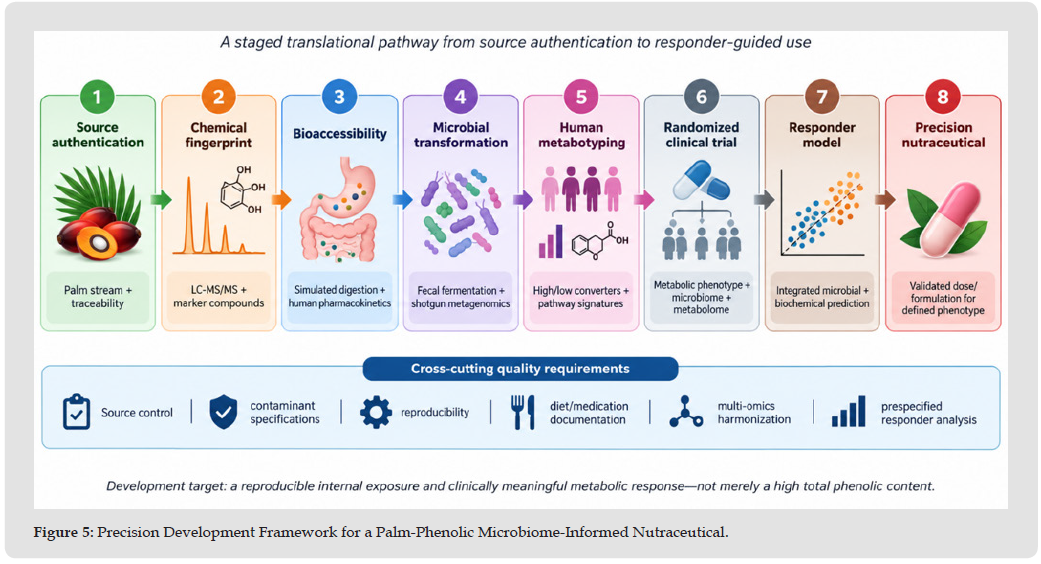
A definitive trial should not begin with obesity-related weight loss as its only primary endpoint. A staged program would be scientifically stronger. An initial pharmacokinetic–microbiome study could establish whether a standardized palm-phenolic preparation reaches the colon and produces reproducible microbial metabolites. Participants could consume a chemically fingerprinted product while serial plasma, urine and fecal samples are collected. Shotgun metagenomics, targeted phenolic metabolomics and SCFA/bile-acid profiling would identify transformation patterns. The next stage could enroll adults with overweight or obesity and defined metabolic dysfunction, such as insulin resistance, dyslipidemia or elevated liver fat. A randomized placebo-controlled design lasting approximately 12–24 weeks would be more informative than a very short intervention. Prespecified endpoints should combine metabolic phenotype, gut function, microbial pathways, and metabolite exposure. At minimum, future trials should measure dietary intake, medication, antibiotic exposure, stool consistency, and transit-related factors because each can influence microbial composition and metabolite concentrations. Shanahan, et al. [50] emphasize alignment between dietary measurement and microbiome sampling, while Attaye, et al. [51] demonstrate how heterogeneity and bias currently limit inference from diet–microbiome cardiometabolic interventions.
The translational pathway proposed in Figure 5 integrates chemical standardization, microbial function, and clinical phenotyping into a single precision-development strategy. It also specifies cross-cutting requirements for source control, multi-omics harmonization, and prespecified responder analyses.
Figure 5 shifts the development target from a nonspecific “antioxidant palm extract” to a mechanistically characterized intervention. This is consistent with contemporary precision nutrition, which increasingly combines microbial profiling, metabolomics and clinical phenotypes, while recognizing that current microbiome-based personalization still requires substantial validation before routine implementation [42,45-48,33,30,].
Figure 5
Circular-Bioeconomy Value should not Substitute for Biomedical Evidence
The prospect of extracting nutraceutical ingredients from palm-processing sidestreams has obvious circular-economy appeal. Recovery can potentially generate value from aqueous streams that otherwise require treatment and can encourage more complete utilization of oil-palm biomass. However, environmental desirability does not establish clinical efficacy, just as phenolic abundance does not establish safety. A biomedical product derived from an industrial sidestream requires especially rigorous source control. Heavy metals, microbial contaminants, process chemicals, degradation products and batch variability must be addressed. The manufacturing process should ideally operate under food- or pharmaceutical-grade quality systems, with clear specifications for signature compounds and contaminants. The circular-bioeconomy narrative should therefore be framed as an additional value proposition rather than evidence supporting therapeutic claims. The strongest case for palm-derived phenolics will arise when environmental valorization and biomedical validation converge independently.
Overall Interpretation
The broader polyphenol literature provides credible evidence that dietary phenolics and gut microorganisms interact bidirectionally. Experimental evidence demonstrates microbial dependence for selected metabolic effects, human studies show phenolic metabotypes and baseline-microbiome-dependent responses, and recent meta- analyses identify signals involving microbial taxa, SCFAs, LPS and inflammatory pathways [38,10,13,26,59,29,61-63]. For palm-specific material, the evidence is narrower but strategically promising. OPP has advanced into human clinical evaluation, palm processing streams can yield recoverable phenolic fractions, and palm residue can be transformed by obesity-derived fecal microbial communities. These components are sufficient to justify a targeted translational research program. They are not sufficient to claim that palm-derived phenolic- rich residues are already proven microbiome-mediated therapies for obesity. The strongest scientific contribution of the present review is therefore not the assertion of efficacy but the identification of the missing causal links required to establish efficacy. That critical distinction can make the review more valuable than an unqualified nutraceutical narrative [64,65].
Phenolic-rich fractions generated during oil-palm processing represent a scientifically credible opportunity for developing higher-value bioactive ingredients, but their relevance to obesity should be framed around non-lipid phytochemistry and microbial metabolism rather than conventional debates about palm oil as dietary fat. This distinction is essential for separating the proposed microbiome-informed nutraceutical concept from ingredient-level claims about palm oil itself. The current evidence supports several components of a proposed palm phenolic–microbiome–host axis. Palm-processing streams contain recoverable phenolic compounds; standardized oil palm phenolics have entered human clinical testing; dietary polyphenols are extensively transformed by gut microorganisms; and palm-derived residue can itself undergo microbiome-associated transformation under ex vivo conditions. These findings collectively establish biological plausibility. Nevertheless, a critical translational gap remains. Direct human evidence has not yet demonstrated that orally administered palm-derived phenolic products reproducibly remodel the microbiome of adults with obesity, generate a defined set of microbial metabolites, and thereby produce clinically meaningful metabolic improvement. Palm-specific microbiome claims must therefore remain proportionate to the current evidence.
Future research should replace broad terms such as “phenolic- rich palm residue” with rigorously characterized materials defined by source, extraction method, contaminant specifications, chemical fingerprint, stability and bioaccessibility. Microbiome studies should prioritize microbial function, gene pathways and metabolites over simplistic phylum-level biomarkers. SCFAs should be evaluated alongside phenolic microbial metabolites, bile acids and markers of intestinal and systemic signaling. A particularly important future direction is the identification of responders and nonresponders. Baseline microbial metabolism may determine whether two people receiving the same palm-phenolic dose experience substantially different internal exposures. Integration of chemical fingerprinting, shotgun metagenomics, metabolomics, pharmacokinetics and detailed metabolic phenotyping could therefore convert interpersonal variability from a methodological problem into a foundation for precision nutraceutical development. The most appropriate development pathway is therefore a staged sequence that links source quality to verified biological response. Development should proceed from the palm sidestream to a standardized chemical fingerprint, verified gastrointestinal exposure, a microbial transformation signature, a defined metabolite profile, a host metabolic response, responder classification, and ultimately a precision nutraceutical. This framework simultaneously preserves scientific caution and highlights a significant research opportunity: transforming palm-processing sidestreams into microbiome- informed nutraceuticals whose value is demonstrated not simply by phenolic content, but by reproducible biochemical mechanisms and clinically relevant metabolic effects. Its translational value will depend on independent replication, transparent material characterization, and evidence that microbial or metabolomic signatures meaningfully improve prediction of clinical response.

International Association of Landscape Archaeology, Czech Glass Society, Czech Republic

Department of Chemistry, Semenov Institute of Chemical Physics, USSR Academy of Sciences, Moscow, Russia

Department of Educational Sciences, Research Centre Qualities of Teachers, School of Education – HAN, Nijmegen, Netherlands

Associate Professor at Department of Breast and Thyorid Surgey, Chongqing General Hospital, China

Neurology, LA BioMed Research Institute, USA





 Abstract
 PDF