info@biomedres.us
+1 (502) 904-2126
One Westbrook Corporate Center, Suite 300, Westchester, IL 60154, USA
Site Map
 ISSN: 2574 -1241
Received: September 07, 2026; Published: September 22, 2026
*Corresponding author: R K Prajapati, Coordinator Counselling, The University of The South Pacific, Suva, Fiji
DOI: 10.26717/BJSTR.2026.66.010396
Learning is a relatively permanent change in knowledge, skills and behaviour resulting from experiences. In higher education specifically, SDL is emphasized so as to make the learners take initiative, become self-motivated, learn new things or learn things newly and gain newer experiences. Also, world over people are experiencing knowledge explosion due to which it is not possible for the teachers to teach each and everything inside the class room. Moreover, the teachers also have to shoulder administration-related and / or research-related activities or responsibilities. Further, the teachers wish their learners be the independent learners by searching information available in books, journals in libraries or through internet, which becomes possible due to SDL. The restrictions-imposed world over during pandemic caused by COVID-19, led SDL helpful in keeping the young learners also engaged in gaining new knowledge and new experiences. Whether this habit of SDL is persistent and helping university learners succeed in life was a query that was tried to be resolved through this small study, by checking learners’ perceptions about SDL. They were given a small questionnaire to respond to, and it was found that the university learners utilize SDL hours judiciously, but not in a robust way.
Keywords: SDL; Higher Education; Adult Learners; Tertiary Education
Education is widely regarded as the soul of a society, as it enables the transfer of knowledge, beliefs, and values from one generation to the next, and plays a central role in shaping individuals and driving social change. As highlighted by Nelson Mandela, education is a powerful weapon capable of transforming both individuals and societies. In contemporary contexts, education has also become a national responsibility, particularly as public funding and taxpayer contributions increasingly support educational systems. In higher education, rapid growth in knowledge across disciplines has resulted in a knowledge explosion, making it impractical for teachers to deliver all necessary content within classroom settings alone. At the same time, academic staff are required to balance teaching with administrative and research responsibilities. These challenges, combined with the global disruptions caused by the COVID-19 pandemic, have intensified the need for learners to assume greater responsibility for their own learning, as restrictions on face-to-face instruction necessitated independent engagement with learning materials. Within this context, Self-Directed Learning (SDL) has emerged as a critical pedagogical approach, particularly in higher and tertiary education systems. SDL emphasizes learner autonomy, initiative, and intrinsic motivation, enabling learners to take responsibility for acquiring new knowledge and skills beyond formal instructional settings.
In practice, SDL supports the development of competencies such as independent problem-solving, critical thinking, and lifelong learning, which are increasingly valued by industry. From a theoretical perspective, SDL aligns closely with adult learning theory, which posits that learners learn most effectively when they are actively involved in the learning process and when learning is relevant to real-world applications. [1] defined self-directed learning as a process in which individuals take the initiative, with or without the help of others, in diagnosing their learning needs, formulating learning goals, identifying resources, implementing learning strategies, and evaluating learning outcomes. He further emphasized that adult learners themselves are vital resources for learning and that education should extend beyond the transmission of knowledge to support learners in directing and managing their own learning as a lifelong process. Existing literature on SDL has examined its role across diverse educational and professional contexts, highlighting the importance of a supportive psychological climate and the role of instructors as facilitators rather than traditional transmitters of knowledge. Studies grounded in adult learning theory suggest that learners succeed in environments where they are motivated, able to participate actively, and encouraged to apply learning in practical ways. Despite this growing body of research, several gaps remain.
There is limited empirical evidence on how effectively university students utilize their allocated SDL time, and few studies have examined students’ perceptions of SDL within institutional settings. Moreover, comparative investigations across academic disciplines and qualification levels, such as certificate and diploma programmes, remain underexplored. These gaps are significant, as ineffective or superficial engagement with SDL may limit students’ conceptual understanding, even when formal course requirements are met. The present study seeks to address these gaps by examining university students’ perceptions of self-directed learning within a tertiary education context. Specifically, it investigates how students perceive SDL and whether differences exist in perceptions across disciplines such as Information Technology and Counselling, as well as across qualification levels such as certificate and diploma programmes. Guided by adult learning theory, this study employs a quantitative approach using a structured questionnaire to collect data from university learners. By providing empirical evidence on students’ engagement with and perceptions of SDL, the study contributes to both theory and practice by extending understanding of SDL implementation in higher education and offering insights that may inform instructional design, learner support strategies, and policy decisions aimed at strengthening self-directed learning in university settings.
Several studies have explored self-directed learning (SDL) across health and higher education contexts. [2] examined SDL theory and practice, highlighting its importance as a pathway to lifelong learning in medical education. Their work emphasized the link between SDL readiness and students’ ability to sustain independent learning habits. [3] developed and implemented a self-directed learning readiness scale for undergraduate health professional students. Their study provided a validated instrument to measure SDL readiness, with implications for integrating SDL systematically into health curricula. Further [4] reported on their experience implementing SDL assessment tools among undergraduate medical students. Published in the Medical Journal Armed Forces India, this study reinforced the reliability and practicality of SDL assessment tools, offering evidence-based strategies for embedding SDL in higher education training programs. These studies demonstrate the increasing interest in SDL, though most research has focused on medical sciences students. Limited work has been conducted among students of other disciplines such as information technology and counselling. In this sense, the present study contributes novel insights by extending the inquiry into perceptions of SDL among tertiary learners outside the medical sciences [5].
Present study was a survey about the students’ perspective about Self-Directed Learning. These students were enrolled in one of the universities in Fiji Islands, either for certificate or Diploma course in either Information Technology or Counselling. Although the students enrolled in different courses in one of the universities in Fiji Islands constituted the population of this work, the sample constituted only those students enrolled in Certificate or Diploma courses in Information Technology or Counselling. Following Table 1 reveals the course-wise students enrolled for different courses at the time when this study was undertaken - The sample used for this study was not homogeneous, as it was a case study, however, the above table reveals that the number of students opting for I.T were the same for diploma and certificate course, whereas the number of students opting for Counselling in the diploma or certificate course was not the same in the sample. These students’ responses for the questionnaire were marked, recorded and have been processed for statistical treatment and have been presented in subsequent tables [6].
Table 1: Table showing the nature of sample.

Tool Used
The researchers prepared a self-created test to be used as a tool for this purpose. The test had 20 multiple-choice questions/statements related to various aspects of Self-Directed Learning. The test was sent to experts to decide on validity and reliability of the tool. Each correct answer was scored as 1 per question. The scores were further processed for other calculations and have been presented later in the section of results and discussion.
Validity and Reliability of the Tool Used
Validity: A test is considered as valid, if it measures what it is supposed to measure. The test on students’ perceptions about Self-Directed Learning could be said to possess internal and external validity. Internal validity refers to whether the effects observed in a study are due to the manipulation of the independent variable, that is students’ perceptions in this study and not some other factor. External validity refers to the extent to which the results of a study can be generalized to other settings (ecological validity), other people (population validity), and over time (historical validity). (Validity in Research: Definitions, Types, & Examples (simplypsychology.org) In this case the tool prepared by the researchers shows face validity, content validity and also construct validity, as the tool has questions/statements related to measurement of learners’ understanding of concept of Self-Directed Learning, along with most of the aspects of the concept-Self-Directed Learning and also other underlying aspects.
Reliability: It refers to the consistency and dependability of a test’s results, ensuring that it measures what it is intended to measure across different conditions and times. Reliability states how consistently a method measures something. When we apply the same method to the sample under the same conditions, we should get the same results. If not, the method of measurement may be unreliable or there may have crept some partiality or favouritism. Reliability could be of any one type such as-Test-retest, Interrater, parallel forms or internal consistency by measuring the individual items. The tool used in this work indicated that it has internal consistency that was checked through the calculations of correlation between individual questions’ scores and total scores. The average value of correlation between individual questions and total scores was calculated to decide the reliability and validity of the tool used and has been presented subsequently in results and discussion part [7-9].
Ethical Consideration
All the participants in the research were assured about the secrecy of the information. They were informed that their answers would be strictly used for the purpose of research only. Participants were free to withdraw at any time if they were not comfortable with answering the questions/statements. Participants did not pay for the test nor did they receive any payment for test.
Statistical Technique
The data collected with the help of self-made questionnaire on students’ perception about Self Directed Learning was computed statistically to calculate Mean, Standard Deviation and Critical Ratio. It has been presented in the following Table 2.
Table 2: Table showing frequency of scores of students who opted for Certificate in Counselling (n=34).
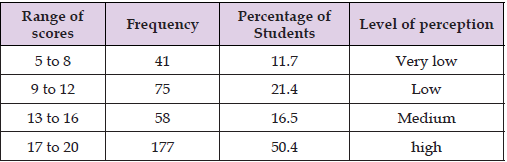
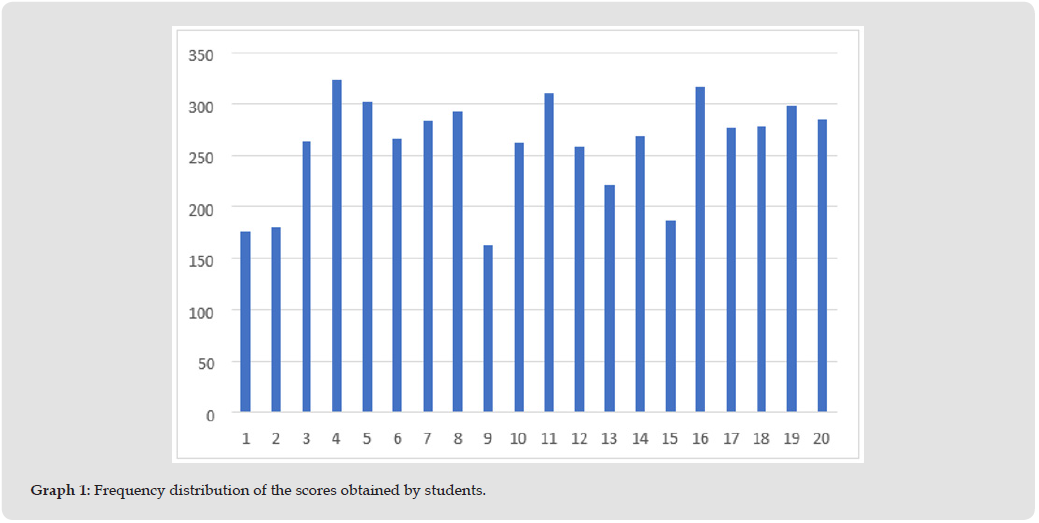
After completing the scoring of the participant students on a selfmade questionnaire, the students’ scores were categorized into four levels as shown in the following Table 3- Above frequency distribution is presented in the following Graph 1 also- The above table and graph both reveal that the understanding of the learners about SDL is not normally distributed, as per central limit theorem. There are exceptions in biological and other data. This could be or might be due to evolutionary advancement. Here, majority i.e. 50.4 % students from the sample indicate high level of their perception about Self-Directed Learning, whereas only 11.7 % students indicate that they have a very low level of perception about Self Directed Learning and around one third of the sample of students show mediocre level of perception, although the researchers expected to have medium and high level of perception in a greater number of students constituting their study sample. The lowest frequency is observed in case of question 9 and the highest frequency is seen in case of question 4. Immediately the question arises in our mind that needs further exploration as to what could be the reason to have low level of perception, or why students do not use study hours judiciously.
Table 3: Table showing level of perception of students about SDL (n=351).
Graph 1
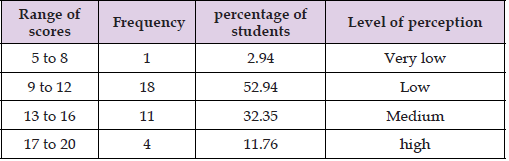
The data was further segregated according to the course/subject opted by students and has been presented in the following Tables 3-5 and Graph 2- The above table and graph reveal that the students having high level of perception were few that is just 11.76 %, majority that is 52.94 % of the students indicated low level of perception. Those showing very low level of perception were also very few. The graphical distribution here tends to be towards normal, though not perfectly normal. (Graph 3) From the above table, it is evident that majority that is 70.94 % students showed high level of perception about their understanding of Self-Directed Learning, whereas only 13.67 % students showed very low level of perception. Also, the percentage of students scoring high and indicating very high level of understanding the concept of SDL, is more in the students opting for Certificate in IT as compared to that of students opting for Certificate in Counselling. (Graph 4) Considering the students opting for Diploma in Counselling, it was observed that only 2.40% students showed high level of perception about Self-Directed Learning and 42.16 % students showed medium and the same percentage that is 42.16 % students showed low level of perception, as reflected in the above Table 4. Also, the percentage of students scoring high and indicating very high level of understanding the concept of SDL, is more in the students opting for Diploma in IT as compared to that of students opting for Diploma in Counselling (Table 6 & Graph 5).
Table 4: Table showing frequency of scores of students who opted for Certificate in IT (n=117).
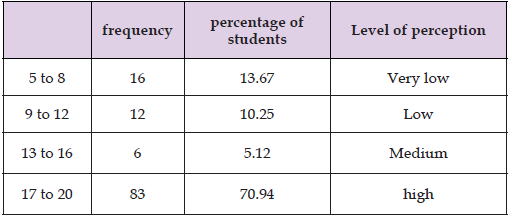
Table 5: Table showing frequency of scores of students who opted for Diploma in Counselling(n=83).
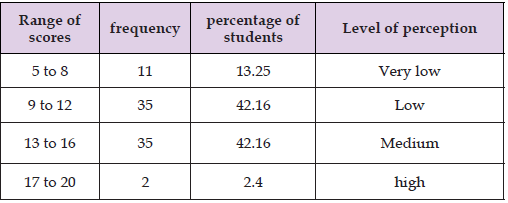
Graph 2
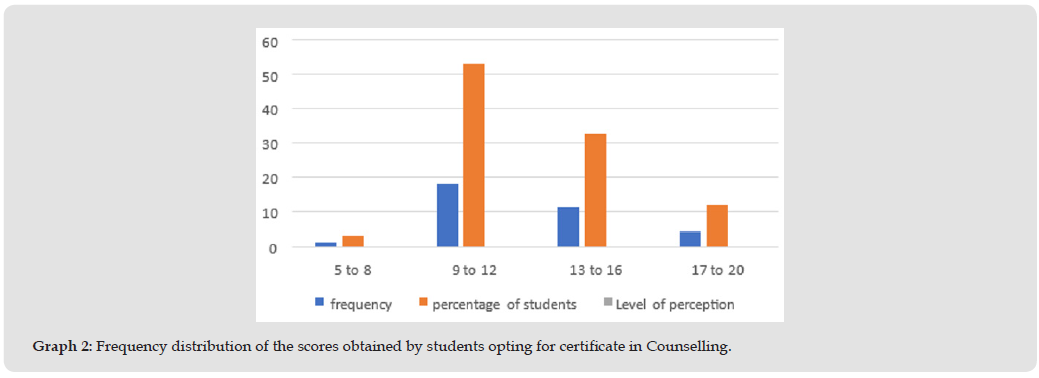
Graph 3
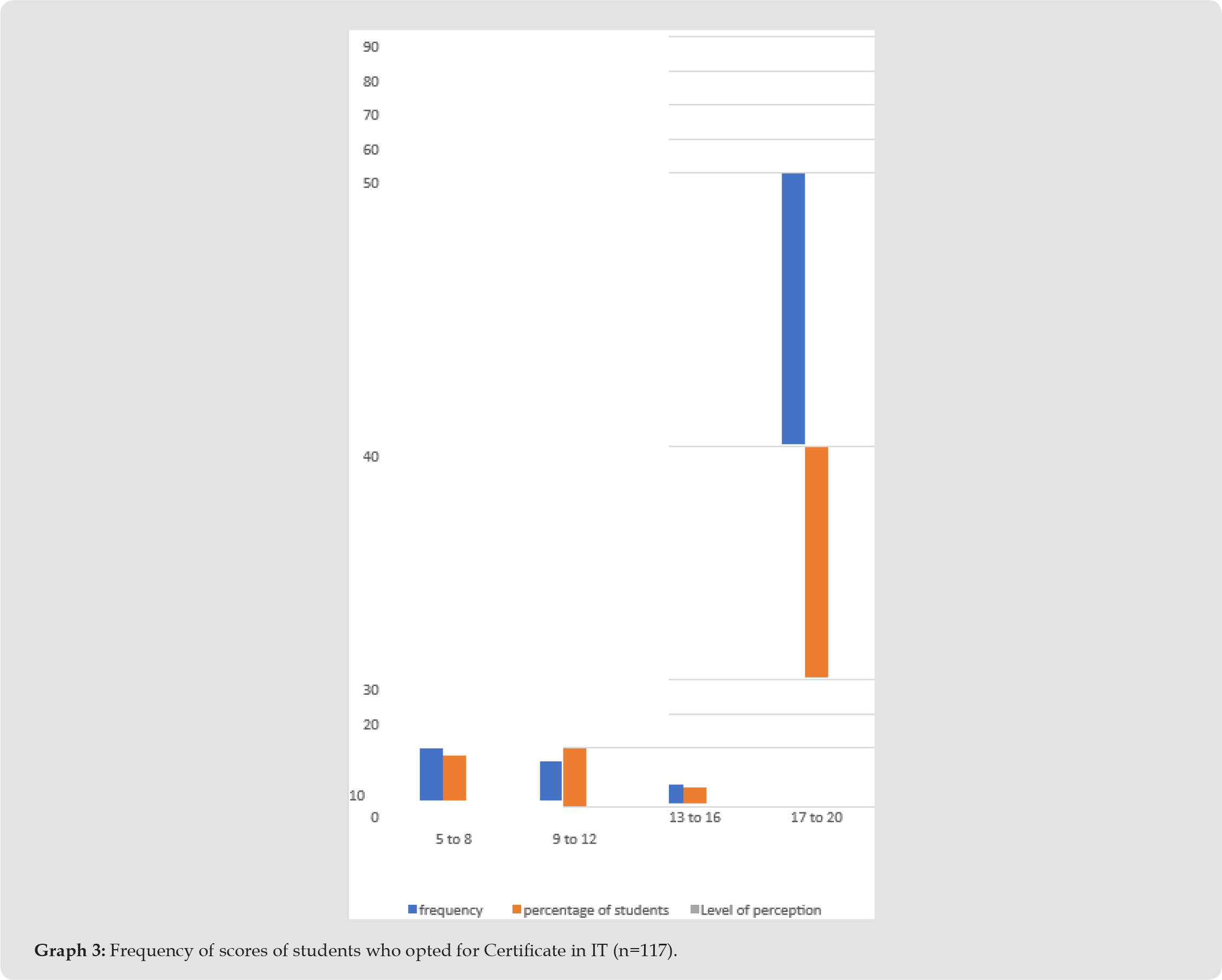
Graph 4
Graph 5
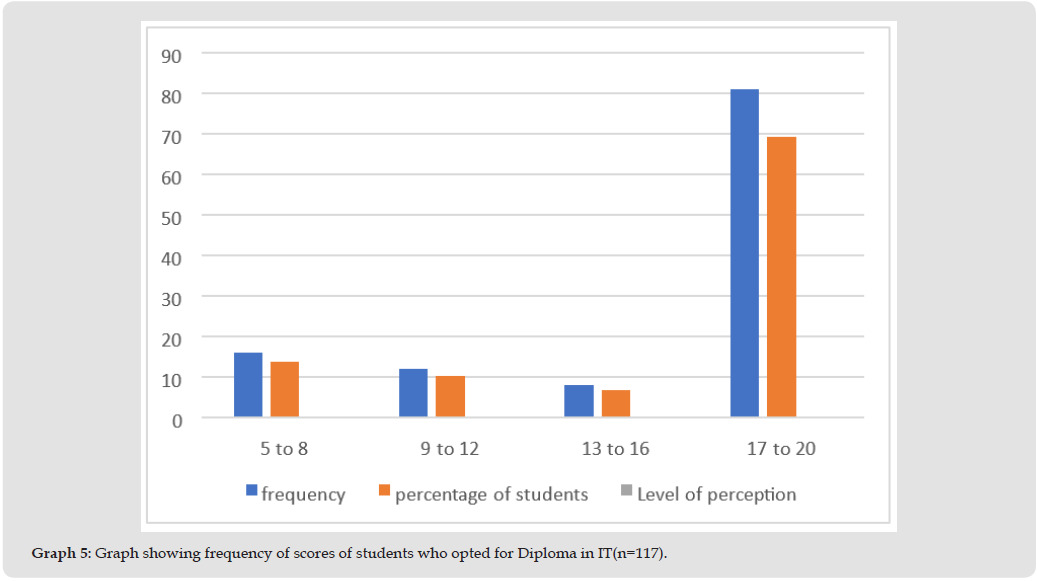
Table 6: Table showing frequency of scores of students who opted for Diploma in IT(n=117).
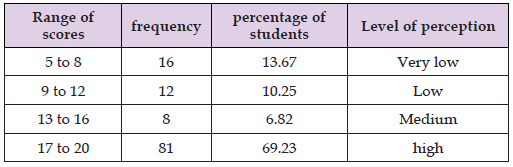
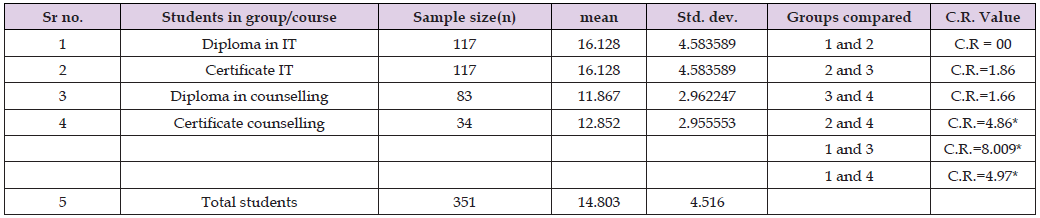
It was apparent from the above Table 5, that majority that is 69.23 % students opting for Diploma in IT indicated high level of perception and 13.67 % students indicated very low level of perception about Self-Directed Learning, that was similar to those students opting for Certificate in IT. Thus, from the point of view of level of subject also, it is evident that students opting for Diploma in IT, have a better understanding of concept of SDL, as compared to that of students opting for Diploma in Counselling. Further, mean and standard deviation of scores was calculated to see how widely the scores of the sample have been spread and it has been presented in the following Table 3 showing the mean, s. d. and Critical Ratio i.e. c. r. that helps us to find if there is a significant difference in mean of the two groups when compared and thus helps us to accept or reject the null hypothesis (Table 7). From the above table C.R. reflects on significant difference between mean and s. d. of various groups, when compared. Students opting for Diploma in IT and Diploma in Counselling show higher C.R. indicating the significant difference in between the means of two groups. Similarly, students opting for Certificate in IT and Certificate in Counselling indicate the significant difference between their mean scores and in favour of students opting for Diploma in IT and Certificate in IT. There seems no difference in the mean and s. d. of students opting for Diploma and Certificate in IT.
Table 7: Table showing, mean, s. d. and CR.
(Maybe, this is probably due to the easy access and demand of the course IT) Alongside these, the researchers also calculated the correlation between each question in the tool used and the total scores of each student on each question to get the idea of nature of internal consistency in these questions and overall test. The average value of r was found to be 0.73, with lowest in Diploma in counselling being 0.36 and highest in Diploma in IT being 0.70. Overall correlation indicated fairly constant consistency to support that the self-made test was valid and also reliable. Further, the question wise scores and total scores of the students in all four groups were computed for calculating correlation i.e. r and have been recorded in the following Table 8.
Table 8:
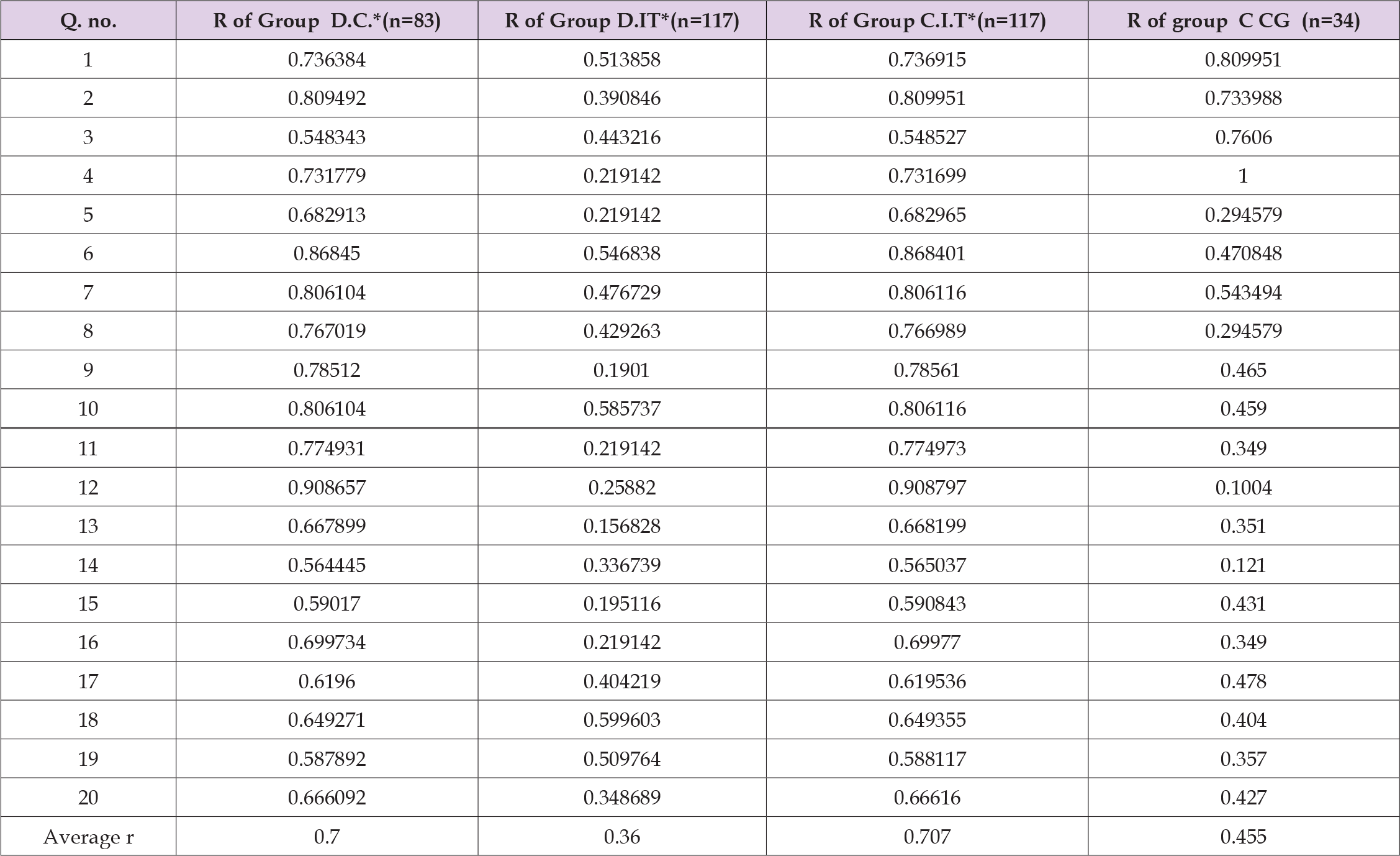
Note: *DC=Diploma in Counselling, CC=Certificate in Counselling, DIT=Diploma in IT, CIT=Certificate in IT.
The findings of the study provide important insights into university students’ perceptions of self-directed learning (SDL) across different disciplines and qualification levels. Analysis of the overall sample (n = 351) revealed that students’ perceptions of SDL were unevenly distributed. While a majority of students (50.4%) demonstrated a high level of perception of SDL, a notable proportion exhibited low (21.4%) or very low (11.7%) levels of perception. Approximately one-third of the sample fell within the medium perception category. This distribution suggests that although SDL is conceptually familiar to many students, a substantial segment of learners may not fully internalize or effectively practise SDL principles. The pattern also indicates that high access to learning resources does not necessarily translate into consistent or deep understanding of self-directed learning processes. A closer examination by discipline and qualification level revealed clear differences. Students enrolled in Information Technology (IT) programmes-both certificate and diploma consistently demonstrated higher levels of perception of SDL. More than two-thirds of IT students reported high levels of SDL perception, with similar mean scores observed across certificate and diploma levels. This consistency suggests that exposure to technology-driven learning environments, frequent engagement with problem-solving tasks, and regular independent exploration of digital resources may contribute to stronger SDL awareness among IT students.
In contrast, students enrolled in Counselling programmes, particularly at the certificate level, showed markedly lower levels of SDL perception. Among diploma-level Counselling students, only a very small proportion demonstrated high SDL perception, while the majority fell within the low to medium categories. These findings indicate that disciplinary context plays a significant role in shaping students’ engagement with and understanding of self-directed learning. The statistical analysis further supports these observations. Critical Ratio (C.R.) values indicated significant differences between IT and Counselling students at both certificate and diploma levels, with IT students consistently outperforming their Counselling counterparts in SDL perception. However, no significant difference was observed between certificate and diploma students within the IT discipline, suggesting that progression in qualification level alone does not necessarily enhance SDL perception unless supported by discipline-specific learning practices. This finding aligns with adult learning theory, which emphasizes learning environment and task design over formal qualification level as determinants of learner autonomy. The reliability analysis of the self-made questionnaire also yielded important insights. The overall average correlation coefficient (r = 0.73) indicates acceptable internal consistency and suggests that the instrument was both reliable and appropriate for measuring SDL perception.
However, variation in item-level correlations across groups was observed, with the lowest average correlations occurring among Diploma in Counselling students. This variability may reflect differences in how students interpreted specific SDL-related concepts or engaged with self-assessment items. The consistently higher correlations among IT students further reinforce the notion that these learners possess more coherent and stable perceptions of SDL constructs. Despite relatively high overall scores, qualitative interpretation of the results suggests that many students’ understandings of SDL may be superficial rather than deeply conceptual. While students were able to respond correctly to several items, patterns in responses indicate possible guessing and limited clarity regarding the broader purpose and processes of SDL. This supports earlier observations that learners often equate SDL with task completion or information retrieval rather than reflective, goal-oriented, and self-regulated learning. The frequent use of digital tools for completing assignments, without corresponding conceptual engagement, may partially explain this mismatch between perceived and actual SDL competence. Overall, the findings indicate that although students-particularly those in IT disciplines demonstrate relatively high awareness of self-directed learning, this awareness does not always translate into effective or meaningful SDL practices.
The lower perception levels observed among Counselling students highlight the need for discipline-sensitive instructional strategies that explicitly scaffold SDL skills. These results reinforce the argument that SDL should not be assumed to develop naturally but must be intentionally cultivated through guided practice, reflective activities, and structured feedback, especially in the early stages of higher education.
Higher education increasingly requires learners to acquire upto- date knowledge and skills, a process that is strongly supported by the use of technological tools such as the internet, computers, search engines (e.g., Google, Bing, Yahoo, Ask), and various software applications including WhatsApp. These technologies make it easier for students to access information and complete projects or presentations within stipulated timeframes. However, despite the availability of such tools, many learners tend to rely heavily on copy-and-paste practices and repeated surface-level use of digital resources rather than engaging in deep and permanent conceptual learning. The findings of this study suggest that learners need to be more actively involved in meaningful discussions and reflective learning activities that contribute to both current academic understanding and future learning outcomes.
Theoretical Implications
From a theoretical perspective, the findings reinforce the relevance of adult learning theory and self-directed learning frameworks, particularly the emphasis on learner autonomy, intrinsic motivation, and experiential learning. The observed tendency toward surface learning highlights the need to reconceptualize SDL not merely as independent access to information, but as a structured process that supports deep cognitive engagement. This study extends existing SDL theory by demonstrating the gap between access to digital learning resources and the effective internalization of knowledge, thereby underscoring the importance of guided self-directed learning in higher education contexts.
Practical Implications
Practically, the study highlights the need for higher education institutions and educators to design learning environments that move beyond information access and promote active engagement, discussion, and reflection. Educators should guide learners in using digital tools ethically and effectively, emphasizing conceptual understanding over task completion. Structured SDL activities, regular monitoring, and feedback mechanisms can help reduce overreliance on copy-paste practices and encourage meaningful learning. These findings suggest that institutions should integrate SDL-oriented instructional strategies and academic integrity awareness into curricula to support the development of lifelong learning skills.
This narrative review discusses self-directed learning, its implementation, and the roles of various bodies, a guiding framework, and challenges to implementing it. It’s an educational method in which learners plan, implement, and assess their learning, align with those of 21stcentury education. By becoming self-directed learners, individuals gain critical thinking skills, digital tool proficiency, and the ability to retrieve information efficiently, employ appropriate learning methods by developing a strategic approach to learning, and extend learning beyond the classroom. It nurtures a growth and lifelong learning mindset necessary to succeed in a rapidly changing world. Furthermore, it can be a powerful and effective tool for navigating the ever-demanding field challenges of the healthcare profession. Although accrediting standards worldwide have acknowledged their significance, many institutions do not adopt them due to a need for a change in mindset from traditional approaches. Students and educators accustomed to teacher-led methods may struggle with it. It can, however, be easily embraced and implemented by educators and students with deliberate planning and targeted training by institutions. An integrated approach is necessary to successfully integrate self-directed learning into healthcare education. Students’ readiness should be assessed, their roles understood, and digital literacy encouraged.
From the observations and findings of this study, the researchers felt that self-directed learning should be monitored initially by teachers or tutors and reviewed on a regular basis during the early stages of higher education. Such guided monitoring may help learners gradually develop the skills and discipline required for effective self-directed learning. Learners should also be made aware of the consequences of plagiarism and encouraged to avoid unethical academic practices while engaging in independent learning activities. Further, learners should be provided with opportunities to practise identifying key factors related to self-directed learning, such as self-assessment, feedback mechanisms, learning environments, and teaching– learning strategies associated with a given concept. Understanding the relationships among these factors can enhance learners’ intellectual competence and promote deeper conceptual learning. Additionally, learners should be encouraged to recognize the importance of critical aspects associated with self-directed learning, including time management, self-motivation, and the benefits offered by SDL. This awareness can enable learners to take initiative in identifying their learning needs, setting appropriate goals, selecting relevant resources, evaluating their progress, and developing lifelong learning skills.
Despite these contributions, the study has certain limitations that should be acknowledged. First, the findings are based on self-reported perceptions of students, which may be influenced by personal bias or social desirability. Second, the study was conducted within a specific institutional and disciplinary context, which may limit the generalizability of the results to other higher education settings. Third, the use of a questionnaire provides a snapshot of perceptions at a single point in time and does not capture changes in self-directed learning behaviours over an extended period. Future studies may address these limitations by incorporating longitudinal designs, mixed-method approaches, and broader institutional samples to gain a more comprehensive understanding of self-directed learning in higher education.

International Association of Landscape Archaeology, Czech Glass Society, Czech Republic

Department of Chemistry, Semenov Institute of Chemical Physics, USSR Academy of Sciences, Moscow, Russia

Department of Educational Sciences, Research Centre Qualities of Teachers, School of Education – HAN, Nijmegen, Netherlands

Associate Professor at Department of Breast and Thyorid Surgey, Chongqing General Hospital, China

Neurology, LA BioMed Research Institute, USA





 Abstract
 PDF