info@biomedres.us
+1 (502) 904-2126
One Westbrook Corporate Center, Suite 300, Westchester, IL 60154, USA
Site Map
 ISSN: 2574 -1241
ISSN: 2574 -1241
ISSN: 2574 -1241
Received: September 03, 2026; Published: September 15, 2026
*Corresponding author: Nobuko Sekinaga, 3118, Sasaga, Matsumoto City, Nagano, 399-0033, Japan
DOI: 10.26717/BJSTR.2026.66.010387
Objective: This study aimed to perform a comparative analysis of home nursing simulation scenarios created by
generative AI and home nursing simulation education-related materials developed by faculty from the perspective
of the eight domains of the INACSL Healthcare Simulation Standards of Best Practice® (hereinafter referred
to as INACSL standards), clarifying the characteristics of their textual structures and educational functions.
Methods: Based on actual nursing exercise conditions, five setting conditions were provided as prompts to a
generative AI (such as Gemini 1.5 Pro) to request the generation of home nursing simulation scenarios. These
were compared with a group of exercise-related materials developed and used by faculty to analyze the presence
and specificity of descriptions based on the eight domains of the INACSL standards.
Results: Faculty-developed materials comprehensively covered domains ranging from learning objectives to
operational management. On the other hand, AI-generated scenarios depicted the psychosocial backgrounds of
care recipients and families, clinical judgments, interpersonal care, and the post-visit debriefing process across
all seven scenes, demonstrating extremely high resolution in Simulation Design and Facilitation.
Conclusion: While generative AI is highly useful for creating rich and concrete clinical scenario materials, it
cannot independently complete the entire framework of an educational program (objectives, evaluation, and operations).
Therefore, a complementary relationship is crucial, where faculty position, complement, and integrate
AI-generated scenarios within an educational design based on INACSL standards.
Keywords: Generative AI; Home Nursing; Simulation Education; INACSL; Scenario Creation
In home nursing, nurses are required to integrate a wide variety of information—including not only the patient’s illness and physical condition but also their lifestyle habits, family relationships, living environment, caregiving capacity, and personal values—to practice nursing tailored to the individual’s living space. Unlike hospitals, where medical professionals manage the environment, home nursing occurs in the patient’s own living space, requiring nurses to grasp the situation from limited information and make clinical decisions while building relationships with the care recipient and their family [1-3]. Simulation-based education is utilized to cultivate these abilities [4- 8]. Simulation education requires a comprehensive educational design that goes beyond simply presenting a scenario that reproduces a clinical scene, including learning objectives, preparatory learning/ prebriefing, facilitation, debriefing, evaluation, and operational management. The INACSL Healthcare Simulation Standards of Best Practice ® (hereinafter referred to as INACSL standards) are positioned as a standard framework to enhance the quality of simulation-based education [9-12]. Meanwhile, in recent years, the rapid development of generative AI has expanded the possibilities of using AI in educational materials and scenario creation [13]. In home nursing, where complex scene settings combining numerous factors are required, utilizing the text generation capabilities of generative AI holds significant value.
Therefore, this study aimed to perform a comparative analysis of home nursing simulation scenarios created by generative AI and educational materials developed by faculty from the perspective of INACSL standards, clarifying the scope of scenario content creation that generative AI can handle and the comprehensive educational design role that faculty must fulfill.
Research Design
This study is a non-interventional document analysis research comparing home nursing simulation scenarios created by generative AI with home nursing simulation education-related materials developed by faculty. Both were compared using the same analytical framework to organize their educational functions and textual characteristics.
Materials for Analysis
AI-Generated Materials: Generative AI (Google Gemini 1.5 Pro, version as of June 2026) was used with input information including care recipient information (chief complaint, past medical history, lifestyle background, family situation, etc.), home nursing instructions, and the first page of the home care service plan. All input data were fictitious mock cases developed by the faculty, containing no real personal information. The generated home nursing scenario comprised a simulation scenario document with 7 scenes from the start of the visit to the post-visit reflection, detailing the backgrounds of Patient A and family, vital signs measurement, home oxygen therapy (HOT) management, fall prevention, caregiver burden, and dialogue-format interactions among the characters. To ensure clinical validity and educational realism for home nursing practice, five setting conditions were provided to the AI as reference prompts based on actual nursing exercise conditions:
1. Time Setting: A development of approximately 15 minutes, including vital signs measurement, observation, nursing instruction, and daily life support.
2. Character Setting: Home nurse, nursing student, patient (Patient A), primary caregiver (husband), and cohabiting family member (eldest son’s wife).
3. Observation and Medical Management Items: Blood pressure management, medication confirmation, defecation status (considering COPD and recurrence risk of cerebral infarction), home oxygen therapy (HOT) management, and environmental adjustments for fall prevention associated with hemiplegia.
4. Student Learning Process: Participating in observation and assistance under the guidance of the nurse, and learning clinical judgment through post-visit reflections (verbalizing tacit knowledge).
5. Interpersonal Care Skills: Proper communication including consideration of the family’s psychological exhaustion, interaction that respects self-esteem, and empowerment.
Faculty-Developed Materials: A series of education and evaluation materials related to home visit technique exercises developed by faculty were analyzed. Specifically, these included learning objectives, simulation exercise plans, scene settings, time schedules, environmental settings, pre-exercise materials, student guidance, role settings, home visit technique evaluation sheets, and checklists. These were treated as a set of related materials created to conduct the exercises.
Analytical Framework and Classification Criteria: Of the INACSL standards, eight domains directly related to the study materials were selected as the analytical framework: Outcomes & Objectives, Simulation Design, Prebriefing, Facilitation, The Debriefing Process, Professional Integrity, Evaluation of Learning and Performance, and Operations. Although the INACSL standards were revised in 2025 (4th edition) to include 10 items, these 8 domains were adopted because the study’s objective was to compare the “AI-generated simulation scenario” and the “faculty-developed materials.” The descriptive status of each domain in the analyzed materials was classified into three levels:
○: Clear description present (Educational elements are clearly and specifically demonstrated)
△: Partial description present (Related elements exist but are not structured as educational functions)
N/A: No description (Not included due to the scope or nature of the material)
Note that “N/A” does not mean a functional limitation of generative AI, but rather indicates that the description was not present in the specific scenario text analyzed in this study.
Ensuring Reliability of Analysis: The analysis was performed by researchers with professional expertise in home nursing, who matched the descriptions in each material with the definitions of each INACSL domain to organize the presence and specificity of descriptions. For the AI-generated scenarios, the researchers distinguished between what was explicitly stated in the scenario text and what was inferred and complemented by the analysts as educational meaning. When explicit descriptions were absent, researchers avoided classifying them into the corresponding domains through excessive inference. The final analytical data were established after this verification process.
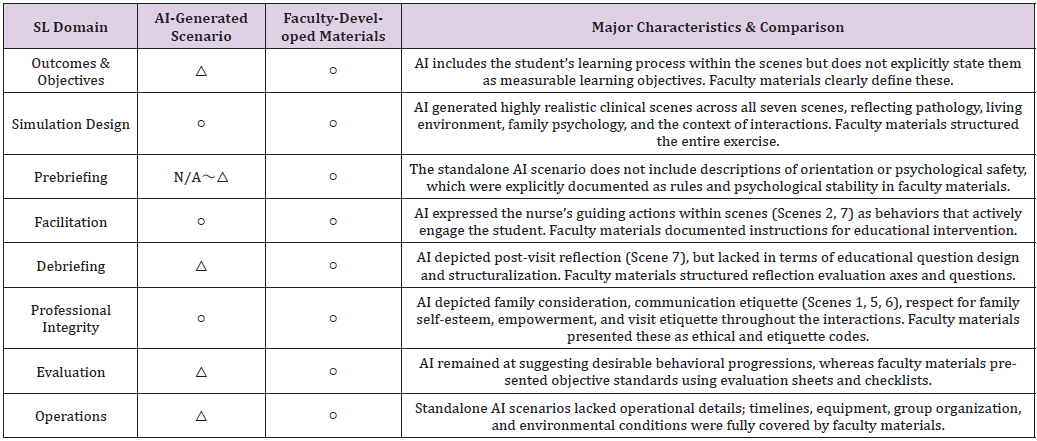
The results of analyzing the AI-generated scenarios and faculty- developed materials based on the eight INACSL domains are shown in Table 1 & Table 2. Clear differences were identified in the following four perspectives based on their descriptive tendencies and text structures.
Table 1: AI-Generated Home Nursing Simulation Scenario.
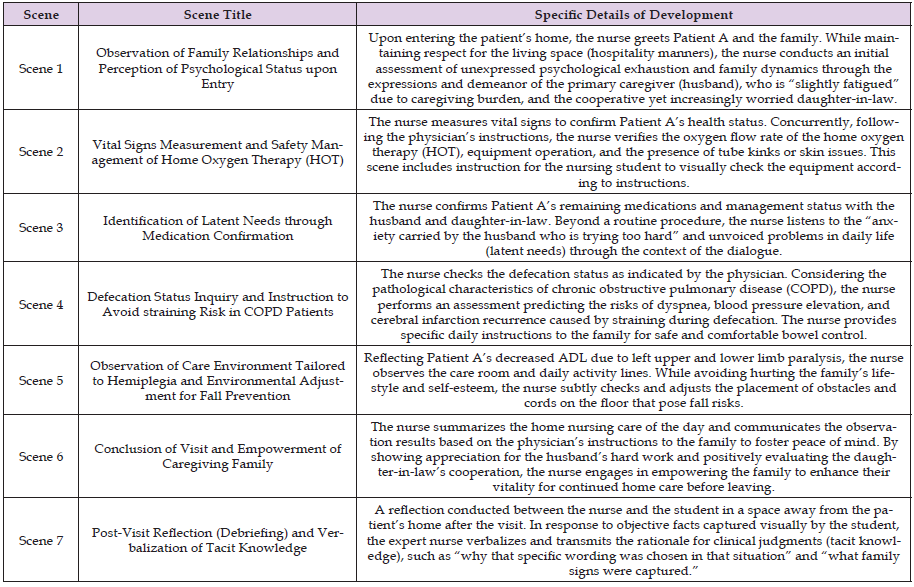
Table 2: Comparison of AI-Generated Scenarios and Faculty Materials Using INACSL Standards.
Educational Program Framework Construction (Objectives, Evaluation, Operations)
Faculty-developed materials had clear descriptions (○) in the domains of Outcomes & Objectives, Evaluation of Learning and Performance, and Operations. Structured information for managing and supervising the entire simulation exercise—such as clinical practice lesson plans, rubric evaluation sheets, equipment lists, and timeline charts—was comprehensively covered. On the other hand, the AI-generated scenario had no explicit descriptions in these domains (N/A), showing that as a standalone scenario text, it does not include the structure or evaluation criteria of the entire educational program.
Resolution and Contextualization of Clinical Scenes and Interpersonal Relations (Simulation Design)
In Simulation Design, the AI-generated scenario showed extremely high resolution and specificity (○). Multiple observation and judgment items, such as the psychosocial background of Patient A and their family (husband and daughter-in-law), vital signs measurement, HOT management, and fall risk, were naturally contextualized as a dialogue-driven drama and clinical progression from arrival to departure. While faculty-developed materials also covered scene settings and timelines comprehensively (○), the AI-generated scenario was more meticulous in depicting microscopic clinical developments, such as specific dialogue and emotional changes among characters.
Realization of Facilitator-Student Interaction and Thought Support (Facilitation, Debriefing)
In Facilitation and The Debriefing Process, the AI-generated scenario specifically depicted these interactions through dialogue (○). It visualized the process of the guiding nurse prompting the student with appropriate questions during the visit, as well as the reflection process of “verbalizing the student’s tacit knowledge” upon leaving the home after the visit. Descriptions of these domains in faculty-developed materials remained at the outline level, such as points to consider for instruction and reflection policies (△), without specifying actual question-and-answer interactions.
Expression of Ethical Considerations and Professionalism (Professional Integrity)
In Professional Integrity, faculty-developed materials included explicit guidelines such as confidentiality obligations, protection of patient rights, and agreements during orientation (○). In the AI-generated scenario, although there were no direct statements as ethical codes (△), appropriate interpersonal care attitudes and ethical considerations were embodied in the characters’ behaviours and dialogue, such as showing consideration for family members experiencing caregiving burden and communicating without damaging self-esteem.
Contextualization of Scenario Content by Generative AI and Significance of Setting Conditions
This study demonstrated that AI-generated scenarios can specifically construct complex visiting scenes, including the patient and family’s life background, physical status, psychosocial factors, family relationships, and living environment. In home nursing practice, nurses are required to view the care recipient’s living space itself as a place of care and integrate multidimensional information, rather than just performing medical care and symptom management. The AI-generated scenario contextualized and embodied these multilayered elements as a single visiting development (all seven scenes), suggesting its strong potential to support content creation for Simulation Design in the INACSL standards. It is considered that the five pre-established prompt conditions (time, characters, observation/management items, learning process, and interpersonal care skills) contributed to this high-quality content generation. Rather than simply instructing the generative AI to “create a home nursing scenario,” providing clinical and educational requirements as clear constraints intentionally extracted high-context scenarios matching actual exercise objectives.
Importance of Scenario Evaluation Using a Multidimensional Analytical Framework
The characteristic that interactions, observation, judgment, and assistance of the patient and family were described as a series of clinical developments in the AI-generated scenario is highly significant not only from the perspective of simulation educational design (INACSL standards) but also from the viewpoint of cultivating clinical judgment abilities in nursing practice. However, the INACSL standards adopted in this study are indicators for evaluating the structure and framework of educational programs, not for directly evaluating the validity of individual clinical judgment processes. To verify the effectiveness of teaching materials created by generative AI, it is essential to conduct multidimensional evaluations from both the simulation educational design framework (INACSL standards) and clinical judgment/nursing practice theories to ensure the educational validity of AI-generated materials.
Role of Comprehensive Educational Design Fulfilling by Faculty-Developed Materials
The analysis of faculty-developed materials shows that simulation education is not merely a “reproduction of clinical scenes (scenarios)” but is established as a comprehensive educational program designed from setting learning objectives to evaluation, pre-and-post guidance, and operational management. Particularly, the alignment between Outcomes & Objectives and Evaluation of Learning and Performance is the core of educational quality assurance. No matter how realistic and specific the scenario text is, if the educational framework of what to aim for and how to evaluate which behaviors is unclear, it is difficult to achieve the intended learning outcomes. Furthermore, ensuring psychological safety in Prebriefing and adjusting the exercise environment and time schedules in Operations require high-level educational judgments by faculty based on the clinical training situation and the students’ developmental stage.
Interpretation of “N/A” as a Difference in Document Structure In this study, the evaluation of Prebriefing and Operations as “N/A (No description)” in the AI-generated scenario does not imply a functional limitation of generative AI. If given appropriate instructions, AI can output drafts for orientation materials or evaluation checklists. Therefore, “N/A” in this analysis does not represent the superiority of generative AI’s capabilities but should be interpreted as reflecting differences in document structure and the scope of educational functions to be assumed between a “standalone scenario text” and a “set of exercise-related materials managed by faculty.” Clarifying this distinction is crucial when discussing the division of roles between AI and faculty.
Complementary Approach of Generative AI and Faculty, and Role Transformation of Faculty
Based on the above discussion, the relationship between AI-generated scenarios and faculty-developed materials is not mutually exclusive or substitutable, but highly “complementary.” Generative AI functions as a powerful support tool for scenario content creation, rapidly constructing drafts of clinical scenes and dialogue-driven dramas with high realism and resolution. In contrast, faculty play the role of examining, refining, and integrating these generated materials with educational objectives, students’ developmental stages, ethical considerations, evaluation criteria, and class operational conditions into a complete educational program. In future home nursing simulation education, the introduction of generative AI will not diminish the value or instructional role of faculty. Rather, faculty are required to transform their role from “creators” who write teaching materials from scratch into “educational designers and evaluators” who review, modify, and integrate high-quality materials generated by AI into reliable educational systems.
This study compared AI-generated scenarios with faculty-developed materials across the eight domains of the INACSL standards, revealing that they share a highly “complementary relationship.” Generative AI demonstrated excellent scenario construction capabilities, materializing complex life backgrounds, clinical judgments, interpersonal care, and reflection processes with high resolution through setting conditions (Simulation Design, Facilitation, etc.). On the other hand, the function of managing and assuring the quality of the overall educational design—such as learning objective settings (Outcomes & Objectives), prior learning (Prebriefing), evaluation (Evaluation), and operational management (Operations)—was assumed by faculty-developed materials. Therefore, a complementary model in which AI is used as a support tool for realistic scenario creation while faculty complement and integrate these scenarios into comprehensive educational programs based on INACSL standards serves as a practical solution to achieve both efficiency in material creation and quality assurance in education.
Research Limitations
First, as a limitation of this study, the scope of analysis is restricted to a specific AI model (Gemini 1.5 Pro) and a single set of prompt conditions (7 scenes). Caution is required when generalizing these findings to other diseases or different AI models. Second, the educational effects remain unverified. This study was limited to structural analysis of materials and did not empirically demonstrate direct educational effects on students’ clinical judgment abilities through actual exercises.
Future Directions
In the future, first, practical validation in actual exercises is necessary to objectively evaluate the impact of these materials on learning outcomes and clinical judgment. Second, verification of work costs is required to quantitatively measure the reduction in teaching material creation time for faculty. Third, establishing peer-review guidelines is essential to build standard inspection criteria for faculty to scrutinize and modify the clinical and educational validity and safety of AI-generated products.
This study is a document analysis of existing materials and AI-generated texts. The input information provided to the generative AI consisted of fictitious mock cases developed independently by the faculty, containing no real personal data. Security and ethical considerations were also maintained regarding the use of AI. Based on institutional regulations, it was confirmed that this study did not require an application for ethical review.
There are no conflicts of interest to declare in connection with this study.

International Association of Landscape Archaeology, Czech Glass Society, Czech Republic

Department of Chemistry, Semenov Institute of Chemical Physics, USSR Academy of Sciences, Moscow, Russia

Neurology, LA BioMed Research Institute, USA

Associate Professor at Department of Breast and Thyorid Surgey, Chongqing General Hospital, China

Professor of Nuclear Medicine, Faculty of Medicine and Surgery, University of Milan, Milan, Italy





 Abstract
 PDF
PDF



























