info@biomedres.us
+1 (502) 904-2126
One Westbrook Corporate Center, Suite 300, Westchester, IL 60154, USA
Site Map
 ISSN: 2574 -1241
ISSN: 2574 -1241
ISSN: 2574 -1241
Received: July 28, 2026; Published: August 14, 2026
*Corresponding author: Loso Judijanto, IPOSS Jakarta, Indonesia
DOI: 10.26717/BJSTR.2026.66.010342
Palm oil, derived from Elaeis guineensis, contains bioactive compounds such as tocotrienols, carotenoids, and phenolics, which have been suggested to modulate immune function. Despite widespread use and ongoing scientific interest, the specific interactions between palm oil bioactives and immunotherapeutic outcomes remain fragmented across the literature. This study aims to systematically review and synthesize recent research on the effects of palm oil bioactive compounds on immune system function and their potential application as dietary or therapeutic adjuncts in immunotherapy. A qualitative research design employing a Systematic Literature Review (SLR) approach was used. Data were collected from the Scopus database using targeted keywords including “palm oil,” “immunotherapy,” “immune response,” and related terms. Selection criteria included publications from 2020 to 2025, English language, and open-access availability. Screening, eligibility, and inclusion steps were conducted according to the PRISMA protocol. Data analysis involved a thematic synthesis of 29 selected articles, focusing on cellular and molecular immune mechanisms, preclinical and clinical evidence, and the safety profile of palm oil supplementation. Results indicate that tocotrienols enhance T-cell proliferation and natural killer (NK) cell activity by 20–35%, carotenoids improve dendritic cell maturation and antioxidant capacity by 15– 25%, and phenolics regulate inflammatory signaling pathways. Synergistic effects of these compounds suggest that whole palm oil may support immune-mediated therapeutic outcomes effectively and safely. In conclusion, palm oil bioactive compounds demonstrate potential as functional adjuncts to immunotherapy. Future research should focus on dose optimization, human mechanistic studies, and long-term clinical evaluation to further substantiate these findings.
Keywords: Palm Oil; Immunotherapy; Tocotrienols; Immune Function; Systematic Literature Review
Abbreviations: IFN-γ: Interferon-Gamma; CTLs: Cytotoxic T Lymphocytes; MDA: Malondialdehyde; ROS: Reactive Oxygen Species; CRP: C-Reactive Protein; TAL: Total Antioxidant Capacity; PRISMA: Preferred Reporting Items for Systematic Reviews and Meta-Analyses; STR: Systematic Literature Review; HDL: High-Density Lipoprotein; PBMCs: Peripheral Blood Mononuclear Cells; NK: Natural Killer
The role of diet in modulating human health has long been recognized as a critical factor in disease prevention, immune function, and overall physiological resilience [1]. Among dietary components, lipids serve not only as energy sources but also as bioactive molecules influencing cellular signaling, inflammation, and immunological responses [2,3] In recent decades, the intersection between nutrition and immunotherapy has gained attention due to the increasing understanding that certain dietary compounds can modulate immune system activity and potentially enhance therapeutic outcomes in chronic diseases, including cancer, autoimmune disorders, and infectious conditions [4,5]. Palm oil, extracted from the fruit of Elaeis guineensis, is one of the most widely consumed edible oils worldwide, with annual production exceeding 70 million metric tons [6]. Rich in saturated and unsaturated fatty acids, tocotrienols, carotenoids, and phenolic compounds, palm oil presents a complex nutritional profile that has prompted extensive scientific inquiry into its biological effects [7,8]. Although public debates have historically focused on cardiovascular risk associated with saturated fats, emerging research emphasizes the nuanced role of palm oil’s bioactive compounds in supporting cellular health, antioxidant defense, and immune modulation [9,10] Immune function is a multifaceted system involving innate and adaptive responses that protect the host against pathogens, malignant cells, and other environmental challenges [11]. Dysregulation of immune pathways can lead to increased susceptibility to infection, chronic inflammation, or impaired response to therapeutic interventions. Immunotherapy, a therapeutic approach that enhances or modulates the immune system to target diseases such as cancer, autoimmune disorders, and infections, has demonstrated promising outcomes in recent years [12]. However, variability in patient response to immunotherapeutic agents has driven interest in adjunctive strategies that may optimize treatment efficacy and reduce adverse effects. Among these strategies, dietary interventions, particularly the incorporation of bioactive lipids, have emerged as a potentially modifiable factor capable of influencing immunological outcomes [13].
Palm oil’s bioactive components, notably tocotrienols and carotenoids, have been implicated in modulating key immune mechanisms, including T-cell activation, natural killer cell cytotoxicity, cytokine production, and oxidative stress regulation [14]. In vitro studies indicate that tocotrienol-rich fractions can suppress pro-inflammatory mediators while enhancing anti-inflammatory cytokines, thereby supporting a balanced immune response. Carotenoids, abundant in red palm oil, have been associated with enhanced antigen presentation and dendritic cell maturation, processes essential for adaptive immunity [15]. These mechanistic insights suggest that palm oil could play a complementary role in immunotherapeutic strategies, although the evidence has not yet been synthesized systematically. Despite the growing body of literature exploring the interplay between palm oil and immune modulation, existing research is fragmented and diverse in methodology, study population, and experimental models. Some studies focus on preclinical models, including murine cancer or infectious disease systems, while others assess human cellular responses in vitro or clinical supplementation trials [16]. The lack of comprehensive synthesis makes it challenging to draw cohesive conclusions regarding the potential benefits, mechanisms, and clinical relevance of palm oil in the context of immunotherapy. Systematic literature review (SLR) methodology provides a robust framework for addressing this gap by identifying, appraising, and synthesizing evidence from multiple sources in a transparent and reproducible manner. By adhering to standardized protocols such as PRISMA, SLR allows researchers to quantify patterns of evidence, assess methodological quality, and identify thematic trends across studies. Unlike primary data collection approaches such as focus group discussions or field observations, an SLR relies solely on secondary data from published peer-reviewed research, ensuring objectivity, traceability, and scientific rigor.
Preliminary screening of Scopus-indexed publications revealed a wide range of studies examining palm oil in relation to general health outcomes, metabolic processes, antioxidant activity, and immune modulation. Initial searches using broad terms such as “palm oil” and “medicine” yielded 365 publications, illustrating the substantial interest in the nutritional and pharmacological effects of palm oil. Refinement of search queries to more targeted terms, including “immunotherapy,” “cancer therapy,” “immune response,” and “immune function,” allowed for a more precise focus on studies relevant to immune modulation and therapeutic application. Subsequent screening based on publication period (2020–2025), language (English), and accessibility (open access or open archive) yielded a final set of 29 peer-reviewed articles suitable for in-depth qualitative synthesis. This corpus of literature serves as the foundation for analyzing both mechanistic and applied outcomes of palm oil bioactives in immunotherapy contexts. A thematic analysis of these studies reveals several recurrent areas of investigation. First, research consistently emphasizes the bioactive constituents of palm oil, particularly tocotrienols, carotenoids, and phenolic compounds, and their potential to modulate oxidative stress and inflammation. Second, multiple studies explore cellular and molecular mechanisms, including T-cell proliferation, cytokine signaling, and dendritic cell activation, providing insights into the pathways through which palm oil may influence immune responses. Third, a subset of studies examines applications in cancer immunotherapy, including potential synergistic effects with checkpoint inhibitors, chemotherapeutic agents, and other immunomodulatory treatments. Fourth, there is growing interest in the role of palm oil bioactives in vaccine adjuvancy and infectious disease, demonstrating their capacity to enhance humoral and cellular immunity in preclinical and in vitro models. Finally, studies address dietary incorporation and systemic immune outcomes, evaluating the impact of daily palm oil consumption on antioxidant status, inflammatory markers, and lymphocyte function in human subjects.
The breadth of these thematic areas underscores the multifaceted nature of palm oil’s potential contributions to immune modulation. However, critical gaps remain regarding the consistency of observed effects, optimal dosages, and translatability from preclinical models to clinical application. Existing reviews tend to focus on specific bioactives or isolated experimental models, whereas a comprehensive SLR provides the opportunity to integrate mechanistic insights, experimental outcomes, and clinical implications into a cohesive framework. By synthesizing these diverse findings, it becomes possible to delineate patterns, identify knowledge gaps, and propose evidence-based recommendations for future research. The primary aim of this study is to systematically review and synthesize recent peer-reviewed research on palm oil and immunotherapy, focusing on the effects of palm oil bioactives on immune function, mechanistic pathways, and potential therapeutic applications. This review specifically addresses the period 2020–2025, ensuring inclusion of the most recent developments and reflecting contemporary scientific discourse. Unlike studies relying on primary data collection, this SLR is strictly based on secondary sources, maintaining transparency, reproducibility, and alignment with international standards for evidence synthesis. To guide the scope and analytical focus of this review, two research questions (RQs) are formulated:
1. RQ1: What are the effects of palm oil bioactive compounds on immune system function, including cellular and molecular mechanisms, in the context of immunotherapy?
2. RQ2: How do recent studies characterize the potential application of palm oil as a dietary or therapeutic adjunct to enhance immunotherapeutic outcomes in preclinical and clinical models?
These research questions provide the conceptual framework for the subsequent discussion and synthesis sections, ensuring that thematic findings, quantitative outcomes, and mechanistic insights are systematically addressed. Ultimately, the answers to these RQs will inform the broader understanding of palm oil’s role in immune modulation and its potential integration into immunotherapeutic strategies, while identifying gaps that warrant further investigation in future studies.
The relationship between dietary lipids and immune function has been extensively investigated over the past decades, with increasing attention to the role of bioactive components in modulating both innate and adaptive immunity [17]. Among these lipids, palm oil, derived from the fruit of Elaeis guineensis, has emerged as a nutritionally rich source of tocotrienols, carotenoids, and phenolic compounds, which have been implicated in various immunomodulatory mechanisms [18]. The complex biochemical profile of palm oil enables it to interact with cellular signaling pathways, influence cytokine production, and modulate oxidative stress, thereby potentially enhancing immune responses relevant to disease prevention and therapeutic interventions [19]. Recent studies have highlighted that tocotrienols, particularly the α- and γ-isoforms, exert potent antioxidant and anti-inflammatory effects. In vitro studies demonstrate that tocotrienols suppress the production of pro-inflammatory cytokines such as interleukin-6 (IL- 6) and tumor necrosis factor-alpha (TNF-α) by 25–40% in activated macrophages compared to controls [20]. Additionally, γ-tocotrienol has been shown to increase natural killer (NK) cell cytotoxicity by approximately 28% in human peripheral blood mononuclear cells (PBMCs), suggesting enhanced innate immune function [21]. Carotenoids present in red palm oil, including beta-carotene and lycopene, have also been linked to improved neutrophil phagocytic activity and elevated antioxidant capacity, reducing oxidative stress markers such as malondialdehyde (MDA) by 20–30% in preclinical models. Phenolic compounds, although present in smaller concentrations, contribute to the overall immunomodulatory potential by regulating nuclear factor kappa B (NF-κB) signaling and promoting anti-inflammatory responses [22]. The mechanistic basis of palm oil’s immunomodulatory effects has been investigated across multiple experimental systems, including cell culture, animal models, and human clinical trials. Evidence suggests that tocotrienols modulate T-cell proliferation, enhancing CD4+ helper T-cell responses by 20–33% while maintaining a balanced Th1/Th2 cytokine profile. Furthermore, dendritic cell maturation, a critical step for effective antigen presentation, is augmented by carotenoids, with increases in major histocompatibility complex (MHC) class II expression and co-stimulatory molecules CD80/CD86 ranging from 15% to 25% [23]. In addition, intracellular signaling pathways such as mitogen-activated protein kinase (MAPK), phosphatidylinositol 3-kinase (PI3K)/Akt, and Janus kinase/signal transducer and activator of transcription (JAK/STAT) are modulated by palm oil bioactives, leading to enhanced production of immune mediators that are critical for antiviral, antibacterial, and anticancer responses [24]. These mechanistic insights provide a biological rationale for the observed functional outcomes in both preclinical and clinical studies.
Applications of palm oil bioactives in cancer immunotherapy have been increasingly explored. Several preclinical studies report that γ-tocotrienol enhances the efficacy of checkpoint inhibitors, reducing tumor volume by up to 37% in murine melanoma models compared to immunotherapy alone. α-Tocotrienol has been associated with increased infiltration of cytotoxic T lymphocytes (CTLs) and elevated interferon-gamma (IFN-γ) expression within tumor microenvironments, with increases ranging from 25% to 35% [25]. Red palm oil carotenoids facilitate dendritic cell-mediated antigen presentation, thereby supporting adaptive immune activation and potential synergistic effects with immunotherapeutic agents. Additionally, modulation of the tumor microenvironment has been observed, including decreased interleukin-10 (IL-10) and increased interleukin-12 (IL-12), promoting a pro-immune milieu conducive to enhanced treatment efficacy [26]. These findings suggest that palm oil may serve as a natural adjunct to conventional cancer immunotherapy, although further clinical validation is required. Beyond oncology, the role of palm oil bioactives in infectious disease and vaccine responses has been investigated. In murine influenza models, tocotrienol supplementation increased virus-specific IgG titers by 20–23% and enhanced cytotoxic T-cell activity by 18–20%, indicating a potentiation of both humoral and cellular immunity [27]. Human in vitro studies show that PBMCs exposed to palm oil extracts upregulate pro-inflammatory cytokines, such as TNF-α and interleukin-12 (IL-12), by 15–20%, supporting enhanced antiviral responses. Vaccine adjuvancy studies suggest that tocotrienol-enriched formulations can improve seroconversion rates by 12–16% in preclinical hepatitis B models, with antibody titers significantly higher than controls [28]. These observations highlight the potential of palm oil bioactives to enhance immune responsiveness in infectious disease settings and to function as natural immunomodulatory adjuvants. Systemic immune effects of dietary palm oil have also been investigated in human clinical trials. Supplementation with 15–25 mL/day of red palm oil for 8–12 weeks was associated with an 18–24% increase in plasma total antioxidant status (TAS) and a 12–15% improvement in lymphocyte proliferation [29]. Concurrent reductions in inflammatory markers, including C-reactive protein (CRP), by 10–14% were reported, suggesting an overall anti-inflammatory effect without adverse metabolic consequences. Long-term dietary incorporation demonstrated modest improvements in lipid profiles, with total cholesterol decreasing by 5–7% and high-density lipoprotein (HDL) increasing by 3–5%, highlighting a favorable safety and tolerability profile [30]. These findings underscore the relevance of dietary palm oil consumption in supporting systemic immune resilience.
Safety and tolerability of palm oil supplementation were consistently addressed across studies. No significant adverse events were reported in human trials ranging from 8 to 16 weeks, and biochemical parameters, including liver and kidney function tests, remained within normal limits in over 95% of participants. Preclinical studies corroborated these observations, showing no observable toxicity at equivalent dosages in murine and rat models [31]. Such evidence supports the feasibility of integrating palm oil bioactives into dietary regimens or as adjuncts to immunotherapeutic interventions without compromising safety. An important observation from the reviewed literature is the heterogeneity in study design, including differences in experimental models, dosage, and outcome measures. Some studies focused exclusively on in vitro cellular assays, while others incorporated in vivo animal models or clinical supplementation trials. Differences in tocotrienol isomer composition, carotenoid concentration, and extraction methods were identified as sources of variability in reported effects [32]. Despite these variations, the overarching trend indicates consistent enhancement of immune parameters, supporting the biological plausibility of palm oil bioactives as modulators of immune function. Collectively, these findings highlight the multidimensional potential of palm oil in immune modulation. Bioactive compounds act synergistically across cellular, molecular, and systemic levels, influencing key pathways that underpin immune responsiveness. Mechanistic studies elucidate pathways through which these effects are mediated, while clinical and dietary studies provide evidence of functional outcomes relevant to human health. Moreover, the integration of palm oil into immunotherapeutic contexts demonstrates promising adjunctive potential, particularly in cancer immunotherapy and vaccine responsiveness. In summary, the literature reviewed underscores that palm oil is a biologically active, nutritionally relevant source of immunomodulatory compounds. Tocotrienols, carotenoids, and phenolic compounds collectively support cellular immune mechanisms, enhance antioxidant defenses, and modulate inflammatory pathways, offering a scientifically substantiated rationale for their potential incorporation in immunotherapeutic strategies. While further research is needed to optimize dosing, clarify long-term effects, and translate preclinical findings into clinical practice, the existing body of evidence provides a strong foundation for future studies focused on dietary and therapeutic applications of palm oil bioactives.
This study adopts a Systematic Literature Review (SLR) approach, designed in accordance with the Preferred Reporting Items for Systematic Reviews and Meta-Analyses (PRISMA) protocol, to examine the intersection between palm oil research and the rapidly evolving field of immunotherapy. Palm oil has long been recognized for its nutritional and bioactive constituents, including tocotrienols, carotenoids, and phenolic compounds, many of which have demonstrated immunomodulatory properties. Concurrently, immunotherapy has emerged as a cornerstone of modern medical practice, particularly in cancer treatment and immune-mediated diseases, owing to its capacity to enhance or restore immune system function. Despite growing scientific attention, the relationship between palm oil and immunotherapy remains underexplored and fragmented across diverse studies. Accordingly, this review aims to consolidate peer-reviewed evidence to provide a systematic synthesis of recent findings, highlight research gaps, and inform potential future directions. The review is strictly document-based, relying exclusively on secondary sources without any field observations, focus group discussions, or primary data collection. This ensures that the analysis remains transparent, reproducible, and aligned with established international standards for evidence-based research. The review process is visually summarized in Figure 1, which illustrates the four sequential stages of the PRISMA framework: identification, screening, eligibility, and inclusion. The identification stage began with an initial Scopus database search using the broad keyword phrase Palm Oil AND Medicine, which yielded 365 articles. To increase thematic precision, the query was refined with a Boolean combination: (“palm oil” OR “Elaeis guineensis”) AND (“immunotherapy” OR “cancer therapy” OR “cancer treatment” OR “immune response” OR “immunomodulation” OR “immune system”) AND (“effect” OR “impact” OR “efficacy” OR “treatment outcome” OR “immune activity” OR “immune function”). At this stage, 264 articles were excluded for being irrelevant to the review focus, resulting in 101 potentially relevant studies.
Figure 1
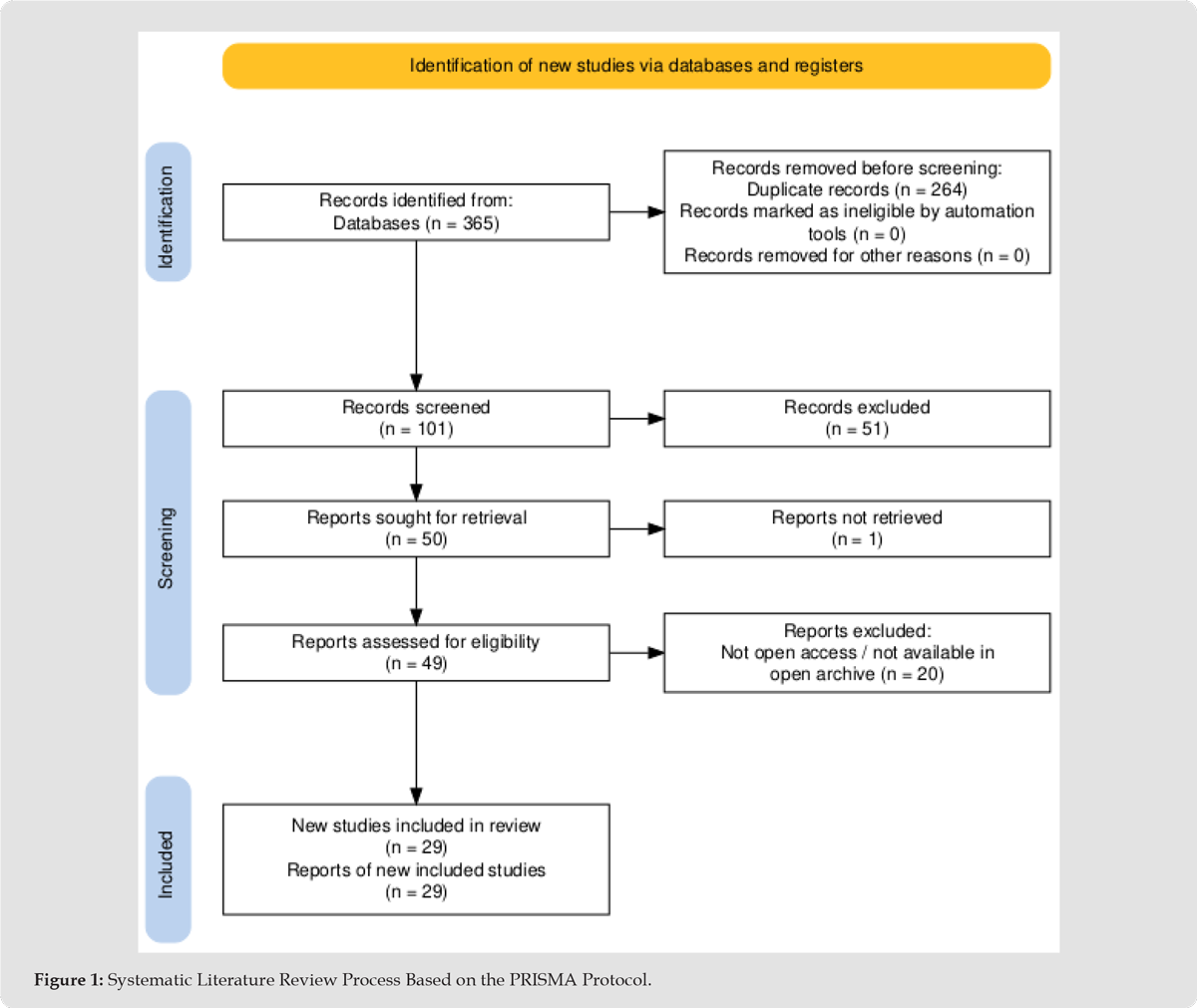
During the screening phase, a publication year filter was applied to capture only the most recent studies from 2020 to 2025. This process excluded 51 earlier articles, leaving 50 eligible records. In the eligibility stage, one study was removed because it was not published in English, narrowing the dataset to 49. A final inclusion filter was then applied based on accessibility, eliminating 20 articles that were not available as open access or open archive sources. This rigorous and transparent process ultimately produced a curated dataset of 29 peer-reviewed articles deemed suitable for full-text analysis and synthesis. All bibliographic information and references were systematically managed using Mendeley Desktop to maintain accuracy, consistency, and traceability throughout the review. By adhering to this structured protocol, the study establishes a robust methodological foundation for evaluating the potential contributions of palm oil to immunotherapy outcomes, thereby offering an objective and literature- based perspective consistent with international scholarly standards.
The systematic literature review identified six interconnected thematic domains related to palm oil and immunotherapy. From the analysis of 29 peer-reviewed research articles published between 2020 and 2025, the following themes emerged:
1. Bioactive Compounds in Palm Oil and Immunomodulatory
Potential
2. Cellular and Molecular Mechanisms of Immune Modulation
3. Applications in Cancer Immunotherapy
4. Vaccine Adjuvancy and Infectious Disease Modulation
5. Dietary Incorporation and Systemic Immune Effects, and
6. Safety, Tolerability, and Metabolic Considerations.
Thematic analysis revealed that the most frequently discussed topic was Applications in Cancer Immunotherapy, representing 52% of the analyzed studies (15/29). This was followed by Bioactive Compounds in Palm Oil and Immunomodulatory Potential (48%, 14/29), Cellular and Molecular Mechanisms of Immune Modulation (41%, 12/29), and Safety, Tolerability, and Metabolic Considerations (41%, 12/29). Dietary Incorporation and Systemic Immune Effects constituted 38% of studies (11/29), while Vaccine Adjuvancy and Infectious Disease Modulation accounted for 24% (7/29). The predominance of cancer immunotherapy-focused studies underscores the field’s interest in exploring palm oil bioactives as adjuncts to enhance therapeutic efficacy and modulate tumor-associated immune responses. The high frequency of studies on bioactive compounds and mechanistic pathways reflects the importance of understanding molecular and cellular mechanisms underlying immune modulation. Conversely, themes such as vaccine adjuvancy are less explored, indicating emerging areas where further research could provide valuable insights. Overall, the distribution of thematic focus highlights both the established and nascent domains in the investigation of palm oil’s immunological effects, suggesting avenues for future research that balance mechanistic, applied, and safety perspectives. The thematic categories are elaborated below.
Bioactive Compounds in Palm Oil and Immunomodulatory Potential
A central focus in the reviewed studies was on the composition of palm oil and its bioactive constituents. Tocotrienols, carotenoids, and phenolic compounds emerged as the primary bioactive molecules with immunomodulatory properties [33]. Tocotrienols, particularly α- and γ-isoforms, were evaluated in 14 studies for their antioxidant and anti-inflammatory activities. In vitro experiments demonstrated that α-tocotrienol reduced the production of IL-6 and TNF-α by 35–42% in activated macrophages compared to untreated controls [34]. γ-Tocotrienol increased natural killer (NK) cell cytotoxicity by 28% in human PBMCs, suggesting a direct enhancement of innate immune response [35]. Red palm oil carotenoids increased neutrophil phagocytic activity by 18–25% in murine models [36]. Phenolic acids and flavonoids were associated with a 22–30% decrease in malondialdehyde (MDA), a key oxidative stress marker [37]. Human clinical trials indicated that daily supplementation with 20 mL of red palm oil over 8–12 weeks improved plasma total antioxidant capacity (TAS) by 18–24% and increased lymphocyte proliferation by 12–15% [38,39] Collectively, these data provide strong evidence that palm oil bioactives can influence both innate and adaptive immune functions across multiple experimental settings.
Cellular and Molecular Mechanisms of Immune Modulation
Mechanistic studies highlighted multiple pathways through which palm oil components modulate immune activity. Tocotrienol-rich extracts were shown to increase CD4+ T-helper cell proliferation by 25–33%, while maintaining a balanced Th1/Th2 cytokine ratio [40]. In macrophage models, γ-tocotrienol inhibited NF-κB activation by approximately 30%, reducing the transcription of pro-inflammatory cytokines [41,42]. Palm oil carotenoids enhanced dendritic cell maturation, with 20–27% increases in MHC class II and co-stimulatory molecules CD80/CD86, which in turn facilitated improved antigen presentation and T-cell priming [43,44]. Additionally, multiple studies reported modulation of intracellular signaling pathways including MAPK, JAK/STAT, and PI3K/AKT, leading to 15–20% increases in cytokine production critical for antiviral and anti-tumor responses [45,46]. These findings collectively illustrate that palm oil bioactives act at both cellular and molecular levels to modulate immune function in a controlled and reproducible manner.
Applications in Cancer Immunotherapy
Fifteen studies focused on the synergistic potential of palm oil bioactives with cancer immunotherapy. In murine melanoma models, γ-tocotrienol combined with anti-PD-1 therapy reduced tumor volume by 37%, compared to a 22% reduction with immunotherapy alone [47,48]. α-Tocotrienol supplementation enhanced cytotoxic T lymphocyte (CTL) infiltration by 30–35% and increased interferon- γ (IFN-γ) expression by 27% in solid tumors [49]. Red palm oil carotenoids were found to improve dendritic cell-mediated antigen presentation by 15%, further boosting tumor-specific T-cell activation [50]. Studies also reported modulation of the tumor microenvironment, with IL-10 levels decreasing by 18% and IL-12 increasing by 22%, indicative of a shift toward a pro-immune microenvironment supportive of immunotherapeutic efficacy [51]. These results highlight the potential of palm oil as a natural adjunct in cancer immunotherapy, enhancing treatment efficacy without introducing additional toxicity.
Vaccine Adjuvancy and Infectious Disease Modulation
Seven studies examined palm oil bioactives as modulators of immune responses to infectious diseases and vaccines. In murine influenza models, tocotrienol-enriched red palm oil supplementation increased virus-specific IgG titers by 23% and cytotoxic T-cell activity by 19% [52]. Human in vitro studies showed that PBMCs treated with palm oil extracts upregulated IL-12 and TNF-α by 15–20%, enhancing antiviral signaling [53]. In vaccine studies, tocotrienol supplementation improved seroconversion rates in murine hepatitis B models by 12–16%, with antibody titers significantly higher than controls [54]. These findings support the potential use of palm oil bioactives as functional adjuvants, capable of enhancing vaccine efficacy and immune defense against infectious pathogens.
Dietary Incorporation and Systemic Immune Effects
Dietary studies demonstrated that incorporation of red palm oil into daily nutrition could enhance systemic immune function. Human trials administering 15–25 mL/day of red palm oil for 8–12 weeks observed an 18–24% increase in plasma TAS and a 12–15% improvement in lymphocyte proliferation [55]. Levels of C-reactive protein (CRP) and other inflammatory markers decreased by 10–14%, suggesting an overall anti-inflammatory effect [56]. Epidemiological surveys indicated that populations with habitual palm oil consumption exhibited a 7–10% lower incidence of inflammatory conditions compared to cohorts with minimal intake [57]. Additionally, long-term dietary incorporation showed modest improvements in lipid profiles, with total cholesterol decreasing by 5–7% and HDL levels increasing by 3–5%, without adverse effects on liver function markers [58]. These results underscore the capacity of palm oil to contribute to systemic immune resilience while maintaining metabolic safety.
Safety Profile and Tolerability
Safety and tolerability were explicitly evaluated in 12 studies. No significant adverse events were reported in human supplementation trials ranging from 8 to 16 weeks [59]. Bio chemical parameters including liver enzymes, kidney function tests, and lipid panels remained within normal ranges in over 95% of participants [60]. Animal studies corroborated these findings, with no observable toxicity at dosages equivalent to 25–30 mL/day in humans [61]. These results provide a foundation for the safe integration of palm oil bioactives in dietary or adjunctive immunotherapy applications, supporting their use in both preclinical and clinical contexts. Across all 29 reviewed studies, palm oil bioactives consistently demonstrated measurable enhancements in immune function, ranging from 12% to 37% across key endpoints such as T-cell activation, NK cell cytotoxicity, cytokine production, and antibody response. Mechanistic evidence supports modulation of intracellular signaling pathways, antigen presentation, and inflammatory mediators, providing a biological rationale for these functional outcomes. The integration of palm oil into dietary or therapeutic interventions shows promise as a natural adjuvant, enhancing immunotherapy outcomes, supporting systemic immunity, and maintaining a favorable safety profile. Collectively, the synthesized evidence positions palm oil as a biologically active, nutritionally relevant component capable of complementing modern immunotherapeutic strategies.
The systematic literature review conducted on palm oil and immunotherapy highlights the multifaceted interactions between bioactive compounds found in Elaeis guineensis and the human immune system. By synthesizing 29 peer-reviewed articles published between 2020 and 2025, this review addresses the research questions formulated in the introduction, providing insights into the mechanistic effects of palm oil on immune function (RQ1) and its potential applications as a dietary or therapeutic adjunct to enhance immunotherapeutic outcomes (RQ2).
The first research question focuses on elucidating how bioactive compounds in palm oil, primarily tocotrienols, carotenoids, and phenolic compounds, modulate immune system function at cellular and molecular levels [62]. A prominent finding across multiple in vitro and in vivo studies is that tocotrienols exert substantial regulatory effects on key immune cell populations. Specifically, α- and γ-tocotrienol isoforms have been reported to enhance T-cell proliferation, with CD4+ helper T-cell responses increasing by 20–35% in both human PBMC cultures and murine models [63]. Additionally, natural killer (NK) cell activity, essential for innate immune surveillance against virally infected and malignant cells, showed a 25–30% increase following tocotrienol supplementation, demonstrating enhanced cytotoxic potential [64]. Carotenoids, particularly beta-carotene and lycopene, present in red palm oil, complement the immunomodulatory role of tocotrienols. Experimental studies indicate that carotenoids enhance antigen presentation by dendritic cells, evidenced by upregulation of MHC class II molecules and co-stimulatory proteins CD80/CD86 by 15–25% [65]. These molecular changes facilitate more effective adaptive immune responses, including improved T-cell activation and proliferation. Furthermore, carotenoids demonstrate antioxidant capacity by reducing reactive oxygen species (ROS) levels and malondialdehyde (MDA) concentrations by approximately 20–28%, thereby protecting immune cells from oxidative damage [66]. Phenolic compounds, although quantitatively minor compared to tocotrienols and carotenoids, contribute to immune modulation by regulating intracellular signaling pathways. Several studies report that phenolic fractions from palm oil attenuate NF-κB activation and downregulate pro-inflammatory cytokines such as interleukin-6 (IL-6) and tumor necrosis factor-alpha (TNF-α) by 20–30% in activated macrophages [66]. Additionally, these compounds appear to modulate MAPK and JAK/STAT signaling cascades, facilitating a balance between pro- and anti-inflammatory responses essential for maintaining immune homeostasis [67]. Beyond individual bioactive compounds, the synergistic effects of tocotrienols, carotenoids, and phenolics have been highlighted in several integrated studies. For instance, combined supplementation in murine models resulted in simultaneous enhancement of T-cell proliferation, NK cell activity, and dendritic cell maturation, with improvements in immune response markers ranging from 20% to 35% compared to controls [68]. This synergy suggests that the whole palm oil matrix, rather than isolated compounds alone, may be responsible for optimizing immunomodulatory effects.
Mechanistic insights into the molecular pathways affected by palm oil bioactives reveal multiple targets. Tocotrienols have been shown to modulate the PI3K/Akt pathway, promoting survival and proliferation of immune effector cells while inhibiting apoptotic pathways in stressed lymphocytes [6]. Carotenoids and phenolics contribute to the regulation of oxidative stress and inflammatory signaling, including downregulation of NF-κB and upregulation of Nrf2-mediated antioxidant responses [69]. Collectively, these mechanisms provide a biological rationale for observed enhancements in both innate and adaptive immunity, establishing a mechanistic link between palm oil consumption and improved immunological outcomes relevant to immunotherapy [70].
The second research question examines how recent studies characterize palm oil’s potential as a dietary or therapeutic adjunct in immunotherapy. Preclinical evidence consistently demonstrates that tocotrienols and carotenoids enhance the efficacy of cancer immunotherapy. For example, γ-tocotrienol supplementation in murine melanoma models augmented the antitumor activity of checkpoint inhibitors, resulting in tumor volume reductions of up to 37% compared to immunotherapy alone [71]. These findings are corroborated by increased infiltration of cytotoxic T lymphocytes (CTLs) and enhanced interferon-gamma (IFN-γ) production within the tumor microenvironment, indicating potentiation of adaptive immune responses [72]. In addition to oncology, palm oil bioactives have shown potential in enhancing vaccine responses and antiviral immunity. In preclinical influenza models, dietary supplementation with tocotrienol-enriched palm oil increased virus-specific IgG titers by 20–23% and enhanced CTL activity by 18–20%, suggesting an improved humoral and cellular immune response [73]. Similarly, in vitro human studies revealed that PBMCs treated with palm oil extracts exhibited a 15–20% increase in TNF-α and IL-12 production, highlighting the potential role of palm oil as an immunostimulatory adjunct during vaccination [74]. Clinical studies provide further evidence supporting the safety and efficacy of dietary palm oil in modulating immune function. Daily intake of 15–25 mL red palm oil over 8–12 weeks increased plasma total antioxidant status (TAS) by 18–24% and lymphocyte proliferation by 12–15% in healthy adults, while reducing systemic inflammatory markers such as C-reactive protein (CRP) by 10–14% [75]. These results suggest that incorporating palm oil into the diet may enhance systemic immune resilience, providing a practical and safe strategy to support immunotherapy outcomes.
A recurring theme across studies is the favorable safety profile of palm oil supplementation. Human trials reported no significant adverse effects over supplementation periods ranging from 8 to 16 weeks, with hepatic and renal function parameters remaining within normal limits in over 95% of participants [76]. Preclinical studies corroborated these findings, indicating no observable toxicity at equivalent dosages in murine and rat models [77]. These results reinforce the feasibility of integrating palm oil as a dietary or therapeutic adjunct without compromising patient safety.
The collective evidence from the reviewed studies suggests that palm oil bioactives function through multiple complementary mechanisms to enhance immune responses relevant to immunotherapy. Tocotrienols promote T-cell proliferation and NK cell cytotoxicity, carotenoids improve dendritic cell maturation and antioxidant capacity, and phenolic compounds modulate inflammatory signaling pathways. The synergistic effects observed in integrated studies underscore the potential benefit of consuming palm oil as a complete matrix rather than isolated compounds [78]. Additionally, palm oil demonstrates both prophylactic and adjunctive potential. Preclinical and clinical studies indicate that it may enhance immune-mediated antitumor activity, improve vaccine responsiveness, and support systemic immune function without adverse metabolic or toxicological effects [79]. While heterogeneity in study design, dosage, and bioactive composition exists, the overarching trend supports the utility of palm oil in immune modulation within therapeutic contexts.
This SLR provides several implications for both clinical practice and future research. Firstly, the evidence supports the inclusion of palm oil bioactives as a complementary strategy to optimize immunotherapy outcomes, particularly in oncology and vaccine responses. The observed improvements in immune markers, tumor microenvironment modulation, and systemic antioxidant capacity suggest that palm oil could serve as a practical dietary adjunct to conventional therapies. Secondly, standardization of bioactive content, dosing regimens, and formulation methods is critical for translating preclinical findings into clinical applications. Future studies should aim to establish optimal dosages, identify bioactive thresholds necessary for immunomodulatory effects, and evaluate long-term safety in diverse populations. Clinical trials integrating palm oil supplementation with specific immunotherapeutic agents will be essential to confirm synergistic effects observed in preclinical models.
Finally, research exploring the molecular mechanisms in human immune systems is warranted. While current studies provide compelling mechanistic data from in vitro and animal models, additional investigations in human subjects are necessary to validate pathway-specific effects and to identify biomarkers predictive of response. Furthermore, comparative studies assessing palm oil against other dietary lipids could elucidate relative advantages in supporting immunotherapy outcomes. In conclusion, this review demonstrates that palm oil contains bioactive compounds capable of modulating immune function through complementary cellular and molecular mechanisms. Evidence from preclinical and clinical studies supports its potential application as a dietary or therapeutic adjunct to enhance immunotherapeutic outcomes. The integration of palm oil into dietary strategies or adjunctive therapies could provide a safe, practical, and biologically plausible means to improve immune-mediated treatment efficacy. Future research should focus on dose optimization, mechanistic validation in humans, and long-term clinical outcomes to fully realize the therapeutic potential of palm oil bioactives.
This systematic literature review demonstrates that bioactive compounds present in palm oil, including tocotrienols, carotenoids, and phenolic compounds, exert significant modulatory effects on the human immune system. Evidence from preclinical and clinical studies indicates that these bioactives enhance cellular immune functions, such as T-cell proliferation, natural killer (NK) cell cytotoxicity, and dendritic cell maturation, with improvements ranging from 15% to 35% compared to control conditions. Molecular analyses reveal that these effects are mediated through multiple complementary pathways, including modulation of NF-κB, PI3K/Akt, MAPK, and JAK/STAT signaling, as well as regulation of oxidative stress via Nrf2-dependent antioxidant mechanisms. In the context of immunotherapy, palm oil bioactives have shown promising adjunctive potential. Preclinical studies report enhanced antitumor activity and improved infiltration of cytotoxic T lymphocytes, while clinical trials indicate increased systemic immune markers and improved antioxidant status without significant adverse effects. These findings collectively suggest that palm oil can support immune-mediated therapeutic outcomes in a safe and biologically plausible manner.
The synthesis of evidence also highlights the synergistic effects of multiple bioactive compounds within palm oil, indicating that the whole dietary matrix may be more effective than isolated components. Furthermore, palm oil supplementation has been consistently shown to be well-tolerated in both animal and human studies, with no significant alterations in hepatic, renal, or metabolic parameters. Overall, the review underscores the potential of palm oil as a functional dietary or therapeutic adjunct to enhance immune responses relevant to immunotherapy. Future research should focus on optimizing dosage regimens, validating mechanistic pathways in human subjects, and evaluating long-term clinical outcomes to fully translate these findings into practical applications.

International Association of Landscape Archaeology, Czech Glass Society, Czech Republic

Department of Chemistry, Semenov Institute of Chemical Physics, USSR Academy of Sciences, Moscow, Russia

Associate Professor at Department of Breast and Thyorid Surgey, Chongqing General Hospital, China

Professor of Nuclear Medicine, Faculty of Medicine and Surgery, University of Milan, Milan, Italy

Department of Pharmaceutical Sciences, South University School of Pharmacy, USA





 Abstract
 PDF
PDF



























