info@biomedres.us
+1 (502) 904-2126
One Westbrook Corporate Center, Suite 300, Westchester, IL 60154, USA
Site Map
 ISSN: 2574 -1241
ISSN: 2574 -1241
ISSN: 2574 -1241
Received: July 17, 2026; Published: August 21, 2026
*Corresponding author: Mykhailo I Fyk, National Technical University “Kharkiv Polytechnic Institute” Kharkiv, Ukraine
DOI: 10.26717/BJSTR.2026.66.010337
Background: Chronic pain and post-traumatic stress disorder (PTSD) are closely interconnected pathological
conditions characterized by central sensitization, autonomic dysregulation, neuroinflammation, and reduced
quality of life. Contemporary rehabilitation increasingly relies on multimodal approaches capable of simultaneously
targeting nociceptive, psycho-emotional, and neuroimmune mechanisms [1-8].
Objective: To summarize the biophysical rationale, clinical experience, and future development prospects of the
MAGNUZ–MUFLON multimodal platform for the rehabilitation of patients with chronic pain and PTSD [9-15].
Main Text: The MAGNUZ–MUFLON platform integrates bioresonance stimulation, pulsed electromagnetic fields,
low-intensity pulsed ultrasound, electrotherapy, wearable physiological monitoring, and telerehabilitation components
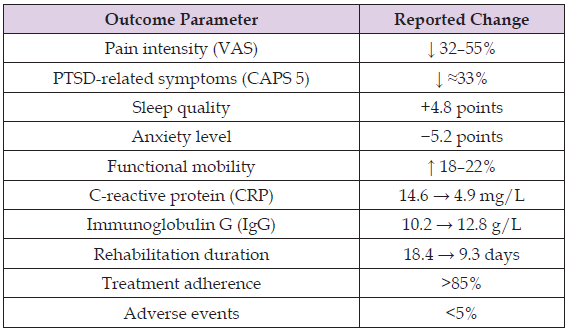
within a unified bioelectronic framework. Preliminary investigations reported pain reduction ranging
from 32% to 55%, improvement in functional mobility by 18–22%, enhancement of sleep quality by 4.8 points,
approximately 33% reduction in PTSD-related symptoms, decrease in C-reactive protein levels from 14.6 to 4.9
mg/L, and reduction of rehabilitation duration from 18.4 to 9.3 days [9,10,14].
Conclusions: Current evidence suggests that multimodal bioelectronic rehabilitation represents a promising
direction in personalized rehabilitation medicine. However, the available data are predominantly derived from
pilot investigations and require confirmation through multicenter randomized controlled studies [9-15].
Keywords: Chronic Pain; PTSD; Bioelectronic Medicine; Multimodal Rehabilitation; Neuromodulation; Bioresonance Therapy; Telerehabilitation
Abbreviations: IASP: International Association for the Study of Pain; PEMF: Pulsed Electromagnetic Field Therapy; TENS: Transcutaneous Electrical Stimulation; EMS: Electrical Muscle Stimulation; LIPUS: Low-Intensity Pulsed Ultrasound
According to the current definition of the International Association for the Study of Pain (IASP), chronic pain is recognized as a distinct pathological condition that extends beyond a simple consequence of tissue injury. Its pathophysiology involves central sensitization, autonomic nervous system dysfunction, neuroinflammatory processes, and altered neurotransmitter regulation [1,7]. Patients simultaneously affected by chronic pain and PTSD represent a particularly challenging clinical population. Contemporary research indicates a bidirectional relationship between pain and trauma-related disorders: persistent nociceptive activity may exacerbate psycho- emotional disturbances, whereas chronic stress responses may contribute to the maintenance of pain sensitization and disability [4]. Several classical concepts have influenced the emergence of modern bioelectronic medicine. These include Blackman’s studies describing frequency-dependent biological responses to electromagnetic fields [5], Liboff’s ion-cyclotron resonance model [6], and the landmark paper by Famm et al., A Jump-Start for Electroceuticals, which established a conceptual framework for therapeutic neuromodulation technologies [2]. Against this scientific background, a series of investigations conducted at the National Technical University “Kharkiv Polytechnic Institute” focused on the development of the MAGNUZ– MUFLON platform for multimodal rehabilitation of chronic pain and post-traumatic disorders [9-15].
The first practical stage in the development of the platform involved the creation of the multiphysical rehabilitation device MUFLON X for patients with post-traumatic syndromes [9].
Subsequent research led to the development of the expanded MAGNUZ–MUFLON architecture, integrating:
• Bioresonance Stimulation;
• Pulsed Electromagnetic Field Therapy (PEMF);
• Transcutaneous Electrical Stimulation (TENS);
• Electrical Muscle Stimulation (EMS);
• Low-Intensity Pulsed Ultrasound (LIPUS);
• Digital physiological monitoring;
• Telerehabilitation Components [10,14].
A further stage of development introduced a multi-atlas approach
for localization of therapeutic intervention zones and algorithm-
based treatment personalization [12,15].
A distinctive feature of the MAGNUZ–MUFLON platform is the use of two carrier channels operating within different physical domains. According to the proposed concept, the combination of dual carriers with multicomponent low-frequency modulation may simultaneously influence nociceptive processing, autonomic regulation, microtrophic tissue responses, and psycho-emotional status [10-13]. An additional line of investigation has focused on the possible role of tissue zeta potential, electrokinetic interactions, and electroosmotic modulation of the fascial matrix as mechanisms potentially contributing to enhanced biological responsiveness [11,13] (Table 1).
Table 1: Conceptual Architecture of the MAGNUZ–MUFLON Platform.
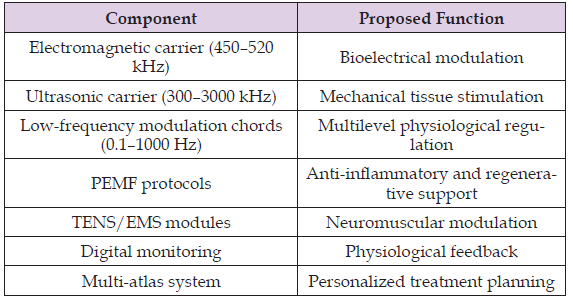
Table 2: Summary of Clinical Outcomes Reported for MUFLON X and MAGNUZ–MUFLON.
Despite encouraging preliminary observations, most studies have involved relatively small patient cohorts and have not yet been validated in multicenter settings [9,10].
Several important scientific questions require further investigation:
• Mechanisms of multilevel electromagnetic modulation;
• The role of electrokinetic processes within biological tissues;
• Electroosmotic Interactions within the fascial matrix;
• Automated approaches to treatment personalization [11-
15].
Future development may include integration of artificial intelligence, closed-loop feedback systems, and adaptive real-time control of therapeutic protocols, thereby moving toward personalized bioelectronic rehabilitation technologies [14,15].
The MAGNUZ–MUFLON platform represents a promising interdisciplinary development at the intersection of rehabilitation medicine, physiotherapy, bioelectronic medicine, and digital health technologies. Research conducted at NTU “KhPI” demonstrates the progressive evolution from the MUFLON X bioresonance system toward a comprehensive multimodal rehabilitation platform for patients with chronic pain and PTSD [9-15]. Although current evidence remains preliminary, the reported clinical observations support continued investigation of the technology. Future multicenter randomized controlled studies will be required to establish efficacy, define optimal treatment protocols, and clarify the underlying biophysical mechanisms.

International Association of Landscape Archaeology, Czech Glass Society, Czech Republic

Department of Chemistry, Semenov Institute of Chemical Physics, USSR Academy of Sciences, Moscow, Russia

Department of Educational Sciences, Research Centre Qualities of Teachers, School of Education – HAN, Nijmegen, Netherlands

Associate Professor at Department of Breast and Thyorid Surgey, Chongqing General Hospital, China

Neurology, LA BioMed Research Institute, USA





 Abstract
 PDF
PDF



























