info@biomedres.us
+1 (502) 904-2126
One Westbrook Corporate Center, Suite 300, Westchester, IL 60154, USA
Site Map
 ISSN: 2574 -1241
ISSN: 2574 -1241
ISSN: 2574 -1241
Received: July 28, 2026; Published: August 10, 2026
*Corresponding author: Muhammad Zeshan Aslam , University of Veterinary and Animal Sciences , Outfall Road , Lahore 54000 Pakistan
DOI: 10.26717/BJSTR.2026.66.010334
This serotype, Salmonella Infantis as part of Enterobacteriaceae family, possesses traits of multidrug resistance and concurrence at chicken production facilities, which makes it a priority topic in aspect of antimicrobial resistance to be addressed further. As short-chain fatty acids appeared to be an effective solution against Salmonella in general, specific studies of this serovar Infantis are not documented yet. The main objective of this experiment was to test latency of supplement of functional carbohydrates (MCM) as prebiotic, coated butyrate, medium-chain fatty acids, and a short-chain organic acid combination against S.Infantis in broilers challenged with oral infection. In total, 396 Ross 308 broilers were housed with 22 birds per pen, and two treatments were administered to 9 replicate pens each:
1) Control diet
2) Supplement diet
which was the control diet with feed supplement mixed in feeding phases 1 and 2, and no additive given in feeding phase 3.
Seeder birds were orally inoculated with 10⁹ CFU/ml Salmonella Infantis in first week. Salmonella counting via plating, farm performance parameters and morphologic gut health scoring based on factors of inflammation, ballooning, flaccidity, translucency, abnormal content, and undigested feed particles was done in both treatments. Less number of Salmonella-positive birds were found in the supplement group vs
control group on day 40 (P = 0.033). In the first and second feeding phase (days 0–28), gut health had significant improvement in supplement group vs control group (P = 0.0331). The supplement group tended to have a lower feed conversion ratio (P = 0.04) and higher body weight (P = 0.037) at day 0–11 against control. There were no significant differences between treatments on mortality (3.7%). Since the trial was designed to develop a strategy mimicking practical conditions and explain Salmonella propagation with better gut health results, therefore feeding a feed supplement based on selected blend of functional carbohydrates tended to reduce Salmonella Infantis-positive birds in absence of antibiotic growth promoters.
Keywords: Salmonella Infantis; Seeder Model; Functional Carbohydrates; Coated Butyrate; Gut Health Scoring; Antibiotic Growth Promoters
Abbreviations: ABW: Average Body Weight; ADG: Average Daily Gain; AMR: Antimicrobial Resistance; ANOVA: Analysis of Variance; CDC: Centre’s for Disease Control and Prevention CFU; Colony Forming Unit; EFSA: European Food Safety Authority; EPEF: European Poultry Efficiency Factor; EU: European Union; FCR: Feed Conversion Ratio; FI: Feed Intake; GIT: Gastrointestinal Tract; MCFA: Medium Chain Fatty Acids; NTS: Non-Typhoidal Salmonellosis; OA: Organic Acids; PCR: Polymerase Chain Reaction; SCFA: Short Chain Fatty Acids; SP: Selko Presan; FY: Feed Additive Treatment Group; WG: Weight Gain; XDR: Extensively Drug-Resistant
World population is projected to grow more than 10 billion and this number will put unavoidable pressure on food production systems [1]. Poultry meat has shown highest consumption pattern and only in EU poultry meat is 40% of total meat consumption [2]. With increasing demand of poultry and poultry products, the risk of zoonosis, food safety concern and most importantly antimicrobial reduction patterns would have increased parallelly [3,4]. The fact that strengthens the idea of working on the alternatives to antibiotic growth promoters in food chain specially in chicken production system is that antimicrobial resistance (AMR) would be sole responsible for 5 million deaths in upcoming 5 years and the worst current average is of Asian region with 1.3 Million human deaths per year [5]. Nonetheless the impact on financial crises and economic losses is of sheer importance related to the culling of the flocks because of increased resistant bacteria incidence. Salmonellosis as zoonotic disease, is well connected to the consumption of chicken’s primary and secondary processed products [6].
In human salmonellosis cases five serovars has been gained a target status through laying hens and broilers consumption namely Salmonella Entritidis, Salmonella Typhimurium, Salmonella Infantis, Salmonella Kentucky and Salmonella Heidelberg [7]. Salmonella infested food sources can cause non typhoidal salmonellosis (NTS), Non-typhoidal salmonellosis other than gastrointestinal infection can also be responsible of invasive fetal diseases, osteomyelitis, arthritis and meningitis in human [8]. Centre for disease control and European food safety authority reported around 420 deaths per annum and more than 65, 000 human cases due to resistant Salmonella in US and EU respectively, out of which the number of food borne cases are 6632, making 21 percent of total zoonotic cases in humans [9,10]. Salmonella detection in human samples has been observed at different stations in Pakistan with 50 % positive cases in Punjab province mainly due to an outbreak of Salmonella Typhi [11].
Different sources of research have also shown the presence of multi drug resistant Salmonella Infantis in poultry flocks in Pakistan, 54 out of 149 (36 %) Salmonella isolates of chicken necropsy has been confirmed by targeting serovar-specific gene fragmentation and PCR [12]. Similar sort of results with 33 % (13/39) Salmonella Infantis positive isolates were detected in chicken meat samples through genome sequencing in Kingdom of Saudi Arabia [13]. In general Salmonellosis in chicken related with self-limiting gastrointestinal symptoms, remains between 2 and 7 days, varies from mild to severe. The bacteria can be invasive and after invasion into bloodstream and organs, causing infection and requiring effective antimicrobial therapy; Salmonellosis control strategies are based on two fundamental principles:
a) The reduction of prevalence levels in poultry by means of health, biosecurity, or food strategies and
b) Protection against infection in humans. At the food production tier, the prevention of salmonellosis requires a detailed approach at farm, processing, distribution, and consumer levels. Right handling of food, avoiding cross-contamination, and proper cooking can reduce the risk and ensure the safety of food.
Efforts to reduce transmission of Salmonella by food and other routes must be implemented using a One Health approach gives us a pathway to reduction strategies of Salmonella in food and other horizontal routes [14]. In intensive poultry farming, salmonellosis can be fatal to farm economics, therapeutic antibiotics can be used as curing agents as well as for the growth promotion. Studies shown that drugs like fluoroquinolones, salinomycin sodium, polymyxin B, trimethoprim during a Salmonella challenge either eliminated the pathogen or reduce the prevalence in the gut [15]. Modifications in the diet, can also help in the Salmonella reduction, experiments have been conducted on bacterial pathogenesis and counts based on dietary modifications has shown that mashed feed/ whole grain diet inducing acidifications in gizzard and less availability of volatile fatty acids in caudal intestine has lesser cecal Salmonella counts than the pelleted feed. Feed with high dietary fiber (used by lactobacillus to maintain pH acidic in GIT) and immunomodulators like β-glucans can also help in reduction of salmonellosis [16,17].
Organic acids from C1-C7 are considered short chain fatty acids and known as weak acids based on their affinity of quickly losing proton. These acids are naturally formed in the result of carbohydrate metabolism in the GIT and dissociate in water, pKa is the dissociation constant that defines the polarity of an acid to diffusion of molecule into pathogen cell wall. Inside bacteria, acid works in two ways reducing the cytoplasmic pH balance by releasing hydrogen ions, in response bacteria depletes energy to balance it and cytoplasmic accumulation of dissociated anions. OA further helps in reducing pH at proventricular level that can help in more proteolytic enzyme generation (pepsin), thus better protein digestibility and reduce amino acid availability for pathogens [18,19]. Butyric acid or butanoic acid is one of the short chain fatty acids (C4) produced by fermentation of starch left in cecum and rapidly consumed by enterocytes in cranial GIT section [20].
Butyric acid is most efficacious against pathogenic bacteria such as Salmonella spp. and E. coli and promotes beneficial gut microbes mainly bacteria. It is a primary energy source for enterocytes, also plays part in differentiation and maturation of intestinal epithelial cells [21]. Phytogenic compounds or phytobiotic are the natural plant derivatives, either liquid or powder extracts, safe, non-volatile and known to have efficacy in controlling inflammation, improving animal gut health & halt the enteric pathogen’s growth [22]. Plant extracts can affect the biological functioning of pathogens by disturbing ion exchange process and bacterial biofilms [23]. Mainly known as essential oils, the potential priority alternative to replace antibiotics for growth promotion in chicken animal nutrition [24]. By default, prebiotics are oligo- or polysaccharides.
Based on monosaccharides such as glucose and fructose are digestible and thus not considered prebiotics according to the standard definition. Mannose is not used by the chicken host but cannot be considered to be a prebiotic since it is not fermented by the indigenous microbiota. Mannose, however, has been shown to decrease Salmonella colonization in chickens. Mannose is the saccharide ligand for bacterial type 1 fimbriae. These type 1 fimbriae are common surface projections of Salmonella, by which the bacteria can attach to the intestinal mucosa. Mannose binds type 1 fimbriae of Salmonella and thereby blocks adhesion of type 1 fimbriae bearing bacteria to epithelial cells and mucus (Craven, et al. [25,26]). Supplementing 2.5% mannose in the feed has been shown to reduce Salmonella colonization (Oyofo, et al. [27]). Addition to the feed of the more economically relevant 0.1% inclusion rate also reduced shedding, caecal and liver colonization after infection of 2week old chickens with 2x10⁷cfu of a S. enteritidis strain (Agunos, et al. [28]).
As per trend of inclining requirement of antibiotic-free animal health products, rejection of poultry products due to public health and AMR issues and the ban on inclusion of antibiotic growth promoters globally, chicken feed and farming industry is looking for the effective alternatives. Different type of organic acids, such as SCFA, MCFA, salts of butyric acid and saccharides in synergism have many serviceable effects on broiler gut health and performance parameters, therefore can be used as replacement of antibiotic in chicken production systems and food chain. The convince able strategy and modelling through which the synergistic blend of SCFA, butyric acid and refined carbohydrates as either phytobiotics (based on source) or prebiotics (based on working principle), improve gut health and production performance during a Salmonella challenge condition is discussed in this article.
Housing Principles
All the parts of this study were conducted at poultry research center Nutreco, Casarrubios del Monte, Toledo Spain. Current study was approved by Poultry Research Centre Ethical committee as per animal laws and regulation of European Directive 2010/63/EU. All the birds are randomly allocated to all the pens as well as treatments and a pen can be considered as an experimental unit. An extensive power analysis was done as pre-experiment in which it was predicted that with selected number of animals per pen a minimal difference of 0.6- 0.7 log CFU cecal Salmonella could be shown as significantly different (power = 0.80). Henceforward in total 396 broiler chickens (Ross 308 as hatched) were included, housed in 9 pens with 22 birds each per treatment. Three feeding phases were included, however the total length of the study was extended to 42 days. (Table 1). Additionally, the seeder birds were housed separately and fed the control diet until inoculation at day 05-06 after which they were placed in their respective treatment pens. All the birds had ad libitum access to feed and water, and the housing management factors like temperature, ventilation, air quality, cleaning protocols and the lighting schedule were set as per the guidelines of Ross 308 broiler management guide [29].
Table 1: Study Design.

Salmonella Media Production & Seeder Model
One week prior to inoculation, a cryovial containing the stock culture of Salmonella Infantis was thawed and streaked onto a Plate Count Agar (PCA) plate. The plate was incubated at 37°C for 24 hours. A single colony from the PCA plate was subsequently transferred to a Xylose Lysine Deoxycholate (XLD) agar plate and incubated under the same conditions. This process of daily sub-culturing on fresh PCA and XLD plates was continued until the day preceding inoculation to ensure the availability of active and pure colonies. On the day before inoculation, fresh colonies were collected using a sterile loop and suspended in Brain Heart Infusion (BHI) broth. The inoculated BHI was incubated at 37°C for 20–24 hours to obtain an overnight culture with an approximate concentration of 10⁹ CFU/mL, which served as the inoculum for the seeder model.
To verify the concentration of the inoculum, decimal serial dilutions were performed. Aliquots from the dilutions were plated on Petrifilm™ Aerobic Count (AC) plates, incubated at 37°C for 48 hours, and colony-forming units (CFU) were enumerated at the appropriate dilution level. The Salmonella Infantis strain was adapted to rifampicin using the gradient agar technique by selecting colonies able to grow at progressively higher concentrations of the antibiotic & growth has been tested in pre-experiment. This extra selective layer opted to purify results and enhance the counting method. Media developed based on agar technique to separate obtain a concentration of 1 ×10^9 CFU / ml [30]. This infection dose orally inoculated into seeders and placed on day 5 & 6 into pens of T2 as method explained above. Two days post inoculation (DPI)), cloacal swabs were taken from all seeder birds to test for presence of Salmonella via PCR. On day 13, 19 and 40, five non-seeder birds were randomly selected for Salmonella counting by ceca sampling. In the negative control, all pens were swabbed to test for presence of Salmonella Infantis.
Salmonella counting was performed on internal standard operating protocol of PRC Nutreco based on preparation of BGA in plates with 1ml of prepared antibiotic solution (rifampicin 100 μg/ml, MIC=50) and later extension on different dilutions i.e. -1, -2, - 3, -4 to select the most suitable dilution for counting, ideally 10-300 CFUs. Ceca samples were collected in stomacher bag, transported immediately to lab and kept in refrigerator. Extracting cecal content, weighing it and adding buffered peptone water with automatic dilutor (1:10 dilution) enriched with Salmonella selective supplement (Bio`-Rad Salmonella capsule) were later steps. Once added into stomacher bag, smashed for 30 seconds and kept it at room temperature for 30-60 minutes before start platting. If the Salmonella CFUs are less than a bare minimum level (< 10 FCUs) on all dilutions we had performed Real time-PCR based on ISO 7218:2024 (IQ-Check Salmonella II kit, Bio Rad) to check for positive or negative samples and explained later in PCR section.
Supplemental Treatment
Birds were fed a commercial, pelleted, diet (Table 2), with phase 1 being between days 0-11, phase 2 between days 11-28 and phase 3 between days 28-40. In Phase 1 and 2, 4 kg/t feed supplement containing a mixture functional carbohydrate, salts of butyrate, SCFAs and MCFAs (Fysal Fit-4, Trouw Nutrition, The Netherlands) was added to the additive feed. No dietary treatment was applied in the third feeding phase, all birds received the same diets.
Table 2: Composition & calculated nutritional analysis of Positive Challenged control and FF4 supplement treatment group.
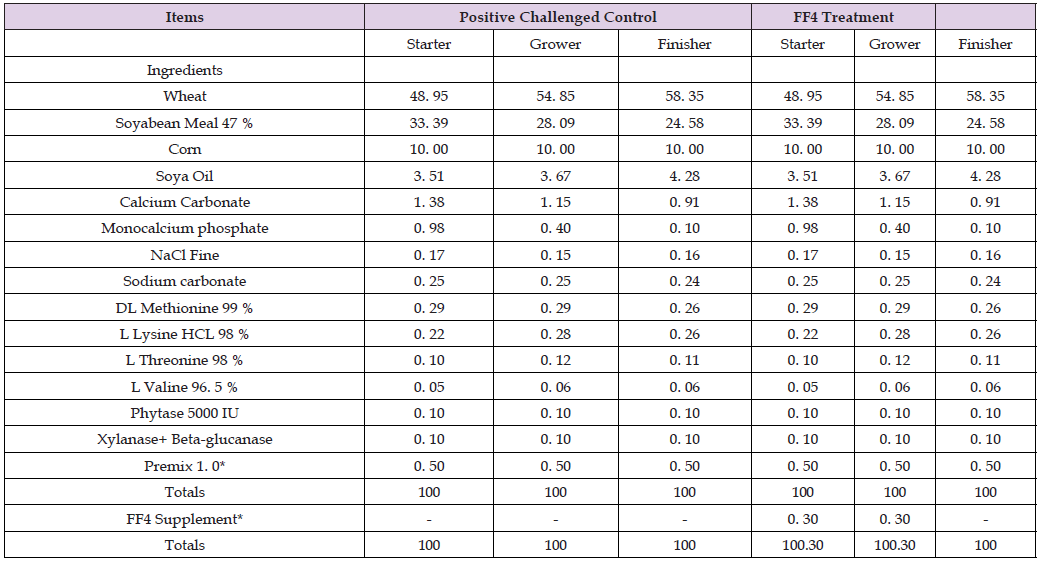
Note: *Premix 1. 0: Vit A total IU10000. 0, Vit D3 total IU 2500. 0, Vit E-ac total IU 50. 0, Vit B1 total (as thiamine) mg 2. 0, Vit B2 total mg 6. 0, Vit B6, total
(pyridoxine HCl) mg 4. 0, Niacin tot mg 40. 0, Panto acid tot mg 10.
0, Biotin totmcg150. 0, Vit B12 tot mcg 25. 0, Chol-Cl tot mg 300. 0, Chol-OH tot mg 260. 4 and macro minerals.
*FF4 Fysal Fit 4: Na & Ca target release butyrate, sorbic acid, Silicic acid, vegetable oil of soya, vegetable fat of palm, manose precursors *Dry matter 919.80
g *ME Broiler 2019 (Kcal) 2925.0,. *Crude Protein 196.6 g.
Growth Performance
For the production parameters on growth performance, the average feed intake and weight gain of all the birds in all the pens were calculated phase wise lately onto day 0, 11, 28 & 39. These parameters (BW & FI) were used to calculate feed conversion ratio & feed efficiency phase wise [31]. Routine check for mortality was implemented and calculated regularly to correct growth parameters.
Real Time - Polymerase Chain Reaction:
The objective of the real-time polymerase chain reaction test was rapid detection as well as confirmation of Salmonella presence in cecal samples, and it was performed using the iQ-Check Salmonella II kit following the known procedure. The following reagents were part of the test performed on the Bio-Rad (Bio-rad [32]) real-time PCR instrument:
• Oligonucleotides (primers and probes)
• DNA polymerase
• Nucleotides
Procedure: Sampling procedure and quantities included cloacal swabs pooled from 10 seeder birds on day 07 after placement. Samples were collected under sterile conditions and transported to the laboratory for storage under refrigeration (4 °C) and could be stored for up to 96 hours before analysis. The sample was placed in a sterile Stomacher bag with a filter. All Purpose Tween 80 broth (APT broth) was added at a dilution of 1:10 to the sample, previously supplemented withmRAPID Salmonella capsule (1:225 mL). The sample was incubated at 41.5 °C for 19 hours. Then, 1 mL of the incubated sample was transferred to a tube containing 9 mL of unsupplemented APT in a laminar flow cabinet and incubated at 37 °C for 5 hours. Extraction: For DNA extraction, the heating block was turned on and set to 98 °C, and 30 minutes were allowed for temperature stabilization. All reagents were included in the iQ-Check kit. The lysis buffer was placed on a magnetic stirrer for 5 minutes. A pair of Eppendorf tubes was labeled with sample numbers, and 100 μL of lysis buffer was dispensed into one tube of each pair. In the laminar flow cabinet, 100 μL of sample was added to the tube containing lysis buffer. Tubes were heated in a heating block at 95 °C for 15 minutes and centrifuged for 5 minutes at 15,000 rpm. An aliquot of 50 μL of the supernatant was transferred to a clean, labeled Eppendorf tube. DNA was considered extracted at this point. Samples could be stored at −20 °C for up to one year.
Amplification: For preparation of the RT-PCR step, reagents for amplification and fluorescence were mixed (MasterMix) in an Eppendorf tube in the laminar flow cabinet. The proportion of mixing was set according to the number of samples, and both positive and negative controls were added with the samples. The MasterMix was used within 60 minutes of preparation. Forty-five microliters of MasterMix were dispensed into selected wells for controls and samples, and 5 μL of the respective sample was added. Care was taken to ensure that no bubbles formed during plate sealing. The sealed plate was placed in the thermocycler, and the conventional PCR process was executed using the software.
Performance
Growth performance was measured according to the same methodology as described above. Measurements in this experiment took place on day 0, 5, 11, 28 & 39. Macroscopic gut health scoring was performed on day 13 & 19 on 5 non-seeder birds per treatment, similar birds as selected for Salmonella sampling. The gut health scoring method in current study has been performed by trained staff (Credential ID EBP/N/2020/0097) on 5 randomly selected birds per treatment group in control and supplement group on day 13 and day 19 to visualize changes in the intestinal tract, Macroscopic gut health scoring points are mainly divided into proximal & distal gastrointestinal tract named as
i. Ballooning
ii. Inflammation
iii. Flaccid
iv. Translucent
v. Abnormal Content
vi. Undigested Particles
proximal part includes duodenal loop, jejunum and Meckel’s diverticulum marked as distinction b/w distal part [38]. Distal parts include remaining ileum, cecum, cecal tonsils. Mean Lesion Score was calculated for both control and supplement group on day 13 & day 19 per treatment. Same animals cecal tonsils used for Salmonella counting in of Experiment to keep corelate the results b/w Gut health scoring and Salmonella counting.
Statistical Design
All the data has been statistically analyzed on randomized complete block design, by SAS Studio version 9. 0. The quantitative Salmonella counts, and growth performance were analyzed By PROC MIXED keeping treatment as a fix factor while mortality, qualitative Salmonella counts, and lesion scoring were analyzed through PROC GLIMMIX as these factors are based on non-normal distribution. One way ANOVA was applied in all procedures to analyze differences of Salmonella counts, growth performance and gut health scoring. Later, Tukey’s Post Hoc test (HSD) was used to distinguish the difference of p value (<0. 05) as significant and p value (<0. 1) as tendency.
Salmonella Infantis Colonization in Caeca through PCR:
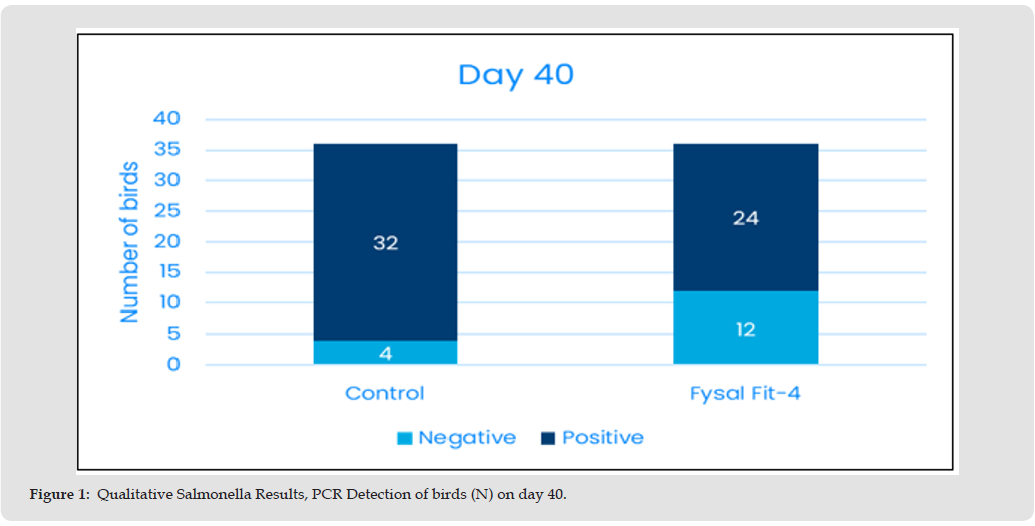
Salmonella Infantis pathogenic dose in seeders placed in both groups were log 9 CFU/ ml. Upon microbiology there were no significant differences in Salmonella cecal counts on sampling day 13 (P=0.3535), 19 (P=0.7452) & 40 (P=0.3537) in both groups (Table 2). A real time polymerase chain reaction detection results was significant in finisher phase as only 24 birds are positive in supplement group versus 32 birds in positive control (P =0.03) on sampling Day40 (Figure 1).
Figure 1
Gut Health Scoring
Gut health scoring known as lesion scoring or dysbacteriosis scoring is a method is a macroscopic scoring system developed by MD. (De Gussem [33]) and being regularly conducted on chicken farms, in live and uniform animals to analyze the visual lesions/dysbacteriosis pattern based on zero to ten binary factors. The mean lesion scores on day 13 in supplement group, with mean value 2.9 (±0.63) has shown significant reduction than the challenge control mean lesion score 5.2 (±0.63) (P=0.0331) and there was no significance difference on day 19 (P=0.3744) (Tables 3 & 4).
Table 3: Qualitative Salmonella Presence, PCR Detection of Salmonella Infantis colony forming units, ex-pressed in log cfu/ml (± standard error).
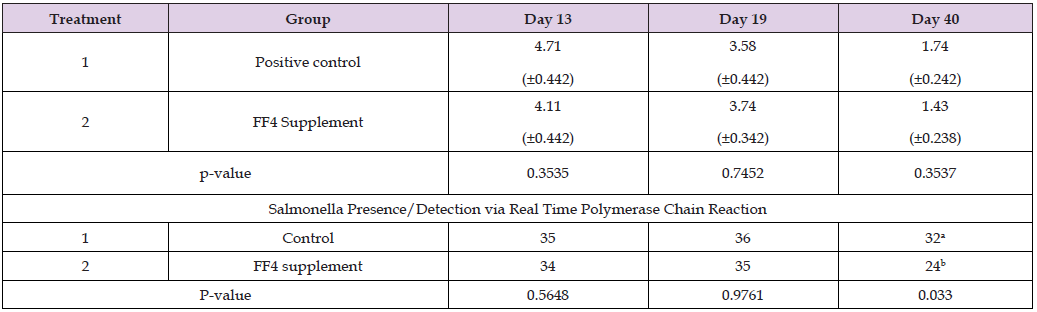
Table 4: Macroscopic Gut Health Scoring / Lesion Scoring of the 5 birds per treatment group expressed as mean of additive binary scores (± standard error).
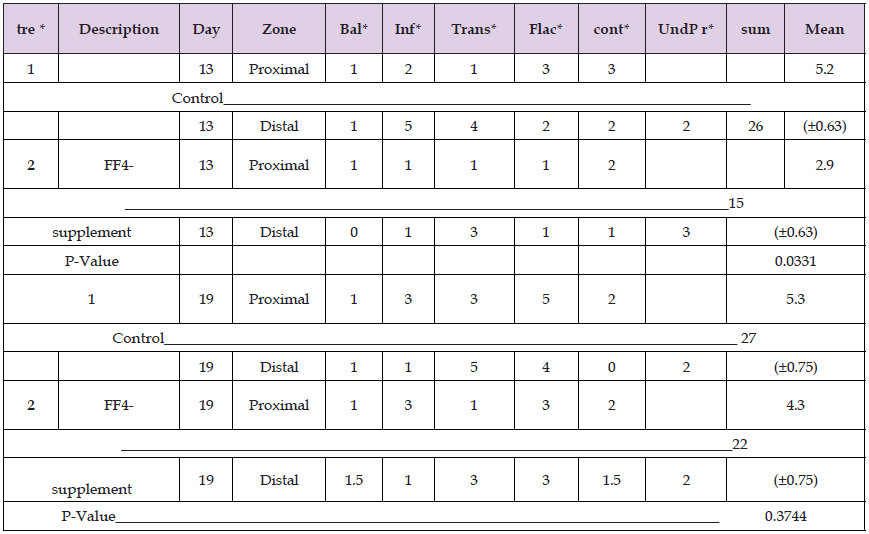
Note: Tre*=Treatments, *Bal=Ballooning, *Inf=Infllamation, *Trans=Transleucent, *Flac=Flaccid, *Cont=Abnormal content, *Undig pr=Undigestible particles in distal intestinal tract.
Farm Performance
The farm performance was analyzed based on average values phases wise for body weight (BW), daily gain (ADG), feed intake (FI) and feed conversion ratio (FCR). The mean body weight of supplement group at 0, 5, 11, 28 & 39 were 46.7, 141.3, 378.9, 1890.0 and 3226.7 grams respectively showing significance & tendency only at day 5 and day 11 versus challenged control (P=0.0377) (P=0.0829). There were no significant phase wise differences recorded between treatment and control group on average daily gain and average feed intake. Feed conversion ratio had been corrected by following formula of Adjusted FCR:

and a significance had been recorded in starter phase (P=0.0474) while no significant results had been observed in other phases (Tables 3 & 5).
Table 5: Growth Performance of total flock end expressed in grams (g) per day per bird x,ytendency to be different (P<0.1), a,bindicate significant differences (P<0.05).
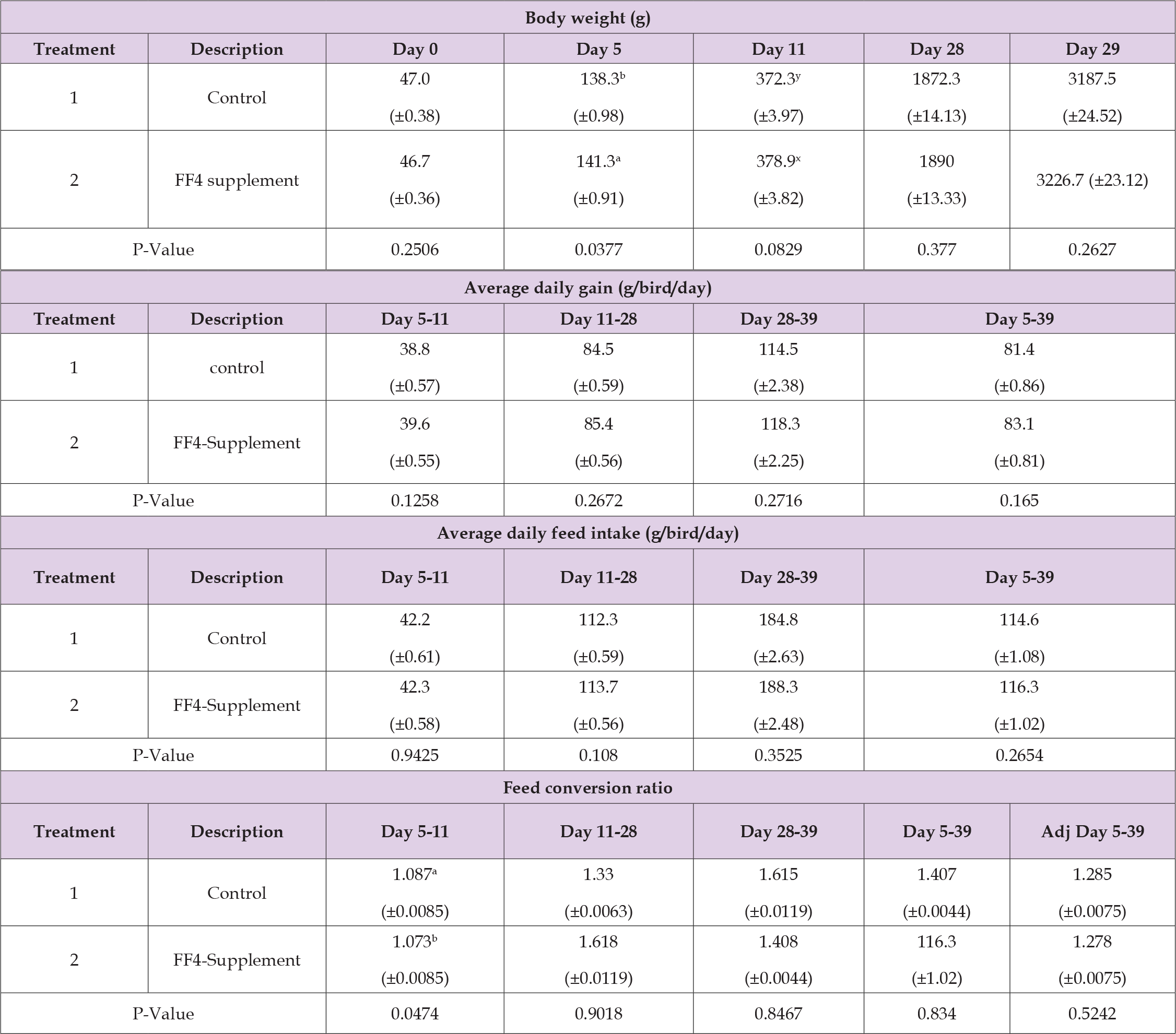
During the study there was clear significant impact of supplement on number of salmonella positive birds in treatment group while no significant differences has observed between control and supplement groups in S. Infantis propagation at any phase of the flock length via cecal counts. The persistance of S. Infantis in fast growing broilers in comparison to other breeds has been explained by Drauch [34] and same author also explained about orally infused infection of S. Infantis had shown more pathogenicity in terms of persistance and retention than a farm derived strain [35], bird genetics and specific pathogenicity pattern of this strain can be a factor of nonsignificant cecal count results. Morover the combination of genes set possed by this serovar appeared to enhance virulence, adhesion, survival and biofilming capability than other serovars by devloping replicons of original genes set [36].
The significance of better adhesion of S. Infantis 119944 & 335-3 Vs S. Typhymurium SL1344 (0.20 % Vs 0.03 %) on chicken fibroblast DF-1 was confirmed in comparitive studies of most prevelant non typhoidal Salmonella serovars in human and poultry [37]. This study also revealed the less disruption of tight junctions during S. Infantis induced infection than S. Typhimurium showing milder invasiness of S. Infantis in cranial gut, as refined & functional carbohydrates like the one used in this supplement “mannose carbohydrate mixture” act by mimicking host cell surface glycoproteins and interacting with bacterial adhesins (e.g. fimbriae), thereby reducing pathogen attachment to intestinal epithelial cells. However, the efficacy of this mechanism may vary depending on the adhesion characteristics of specific Salmonella serovars., which S. Infantis due to its microbial nature and genetic advanceness can easily escape. Therefore the less S.
Infantis positive birds in the end of cycle appeared in supplement group may be mainly because of short chain organic acids, medium chain fatty acids and bytyrate present in supplement which indirectly and slowly improved gut environment by promoting microbiota, enhancing competitive exclusion, healing host epithelial cells which is generally a time taking process and effects may require time to become fully establish. Similar kind of supplements containing functional carbohydrates and organic acid combination including coated butyrate had shown significant reduction in caeca against other serovars of Salmonella for example S. Entritidis & S. Typhimurium [38] leading to the idea that of less effective product only in case of S. Infantis under current experimental conditions of high bacterial loads i.e log 9 cfu / ml. It is a known phenomenon that butyric acid down regulates hilA expression, which is necessary for SPI-I to promote invasion in epithelial cells (Lawhon [39]).
Therefore, it is established that S.Infantis posses the additional characterization of mutations in Fim1 for adhesion further studies are required to prove that functional carbohydrates like mannose is truly required in non-AGP based feed supplements against this particular serovar. As well as earlier studies of seeder or parental infective models based only on the lower concentration such as log 3 CFU / ml, higher concentration like log 9 CFU / ml such as used in current study could be another reason of higher cecal Salmonella counts both in control and supplement group. There is a significant improvement in gut health of broilers during starter phase which is a primary time period for developing dysbacteriosis. Since, the supplement containes SCFA, MCFA, Butyrate and functional carbohydrates many studies like Wongkuna S [40] had shown the improvement in overall gut health due to less tissue damage and inflammation associated with reduction in Salmonella species in GIT of chicken. Another study of (Onrust, et al. [41]) explained reasoning that Salmonella as occasional SRBs (sulphate reducing bacteria), compete for lactate in gut with butyrate- producing bacteria, thus increase in Salmonella spp. in GIT can imbalance microbiota and affects gut health by inducing more pro inflammatory response, thus the non-significant results in last feeding phase might relate to the with drawl of supplement and continous bacterial pressure.
Further studies are required to establish the correct scenerio with limited dependent variables to prove the hypothesis of improved gut health in last phases of chicken in seeder models of S. Infantis. The growth performance was analyzed based on average values phases wise for body weight (BW), daily gain (ADG), feed intake (FI) and feed conversion ratio (FCR). Current results have shown no or very less improvement in growth performance in this experiment. There were only significant improvements in feed conversion ratio and body weight during starter phase of treatment group, similar results have been reported by Remus (Remus [42]) in both treated and nontreated groups of Salmonella induced infection in broilers with reduced ADFI (9%), ADG (29%) and regression analysis concluded that it is because protein utilisation is diverted towards immune system and nutrients used in maintainance energy. This might co-relates with the high infective dose of log 9 CFU / ml in current study and to tackle higher loads of pathogen bird’s immune system utilised more nutrients. Since this experiment was not focused on growth parameters so a protocol based on step wise increment in infective dose in future studies can suggest the more clear results.
Conceptualization, S.V.K. and M.Z.A.; methodology, M.Z.A., S.V.K. and E.V.H.; validation, A.I., S.V.K. and E.V.H.; formal analysis, M.Z.A. and E.V.H.;
investigation, M.Z.A., E.V.H. and S.V.K; resources, S.V.K., E.V.H. and A.I.,.; data curation,
M.Z.A. and S.V.K.; writing—original draft preparation, M.Z.A.; writing review and editing,
,S.V.K., J.D.N. and A.I.; visualization, M.Z.A. and J.M; supervision, A.I.,J.M. and S.V.K.; project administration, A.I..; funding acquisition, S.V.K. and J.M. All authors have read and agreed to the published version of the manuscript.
This research was performed by logistic support of Trouw Nutrition Netherlands.
The animal study protocol was approved by the Poultry Research Centre Ethical Committee (Nutreco, Casarrubios del Monte, Toledo, Spain) in accordance with the European Directive 2010/63/EU on the protection of animals used for scientific purposes. Protocol code: PHU-20-SI/2024, approval date: 15 March 2024.
There is no negative controlled included because salmoenlla infection can transfer horizontally.

International Association of Landscape Archaeology, Czech Glass Society, Czech Republic

Department of Chemistry, Semenov Institute of Chemical Physics, USSR Academy of Sciences, Moscow, Russia

Department of Educational Sciences, Research Centre Qualities of Teachers, School of Education – HAN, Nijmegen, Netherlands

Associate Professor at Department of Breast and Thyorid Surgey, Chongqing General Hospital, China

Neurology, LA BioMed Research Institute, USA





 Abstract
 PDF
PDF