info@biomedres.us
+1 (502) 904-2126
One Westbrook Corporate Center, Suite 300, Westchester, IL 60154, USA
Site Map
 ISSN: 2574 -1241
ISSN: 2574 -1241
ISSN: 2574 -1241
Received: July 16, 2026; Published: July 27, 2026
*Corresponding author: Urmila Diwekar, Stochastic Research Technologies LLC, Crystal Lake, IL, United States. Univeristy of Illinois Chicago, Chicago, IL, United States
DOI: 10.26717/BJSTR.2026.66.010325
Introduction: Successful embryo implantation in in vitro fertilization (IVF) depends on achieving adequate endometrial
thickness through estrogen supplementation. Current hormone replacement therapy protocols do not
account for inter-patient variability, potentially resulting in excessive hormone exposure and adverse effects.
Therefore, personalized estrogen dosing strategies are needed to improve treatment efficiency and safety.
Objectives: This study aims to develop a patient-specific optimal estrogen dosing framework using Pontryagin’s
Maximum Principle and compare its performance with a previously developed Nonlinear Programming (NLP)-
based optimization approach.
Methodology: Clinical data from 41 IVF patients were used to construct individualized endometrial thickness
models. An optimal control problem was formulated to minimize cumulative estrogen dosage while achieving a
target endometrial thickness of 8 mm. Maximum Principle–based dosing profiles for treatment durations of 10
and 13 days were compared with two NLP formulations.
Results: Both optimization methods substantially reduced estrogen exposure compared with experimentally
administered dosages, with more than 50% of patients achieving dosage reductions greater than 10%. Although
NLP generally produced lower total dosages, the Maximum Principle yielded smoother continuous dosing profiles
without discontinuities.
Practical Implications: The proposed Maximum Principle framework may improve the clinical feasibility, safety,
and cost-effectiveness of personalized IVF hormone therapy.
Abbreviations: IVF: In Vitro Fertilization; NLP: Nonlinear Programming; ART: Assisted Reproductive Technologies; HRT: Hormone Replacement Therapy; GnRH-a: Gonadotropin-Releasing Hormone Agonist; t-NC: True Natural Cycles; M-NC: Modified Natural Cycles; Mild-OS: Mild Ovarian Stimulation Protocols; LBR: Live Birth Rates; CPR: Clinical Pregnancy Rates; AI: Artificial Intelligence; DAE: Differential-Algebraic Equation
Assisted Reproductive Technologies (ART) encompass a broad range of medical procedures designed to address infertility through the manipulation of oocytes, sperm, or embryos outside the human body (Graham, et al. [1]). Over the past several decades, ART has transformed reproductive medicine and provided millions of individuals and couples worldwide with opportunities to achieve pregnancy despite underlying fertility challenges. Among the various ART procedures, in vitro fertilization (IVF) remains the most widely utilized and clinically recommended treatment due to its versatility and comparatively high success rates across diverse infertility etiologies. IVF involves the fertilization of mature oocytes with sperm in a controlled laboratory environment, followed by the transfer of one or more resulting embryos into the patient’s uterus. The standard IVF process consists of four major stages: controlled ovarian stimulation (superovulation), oocyte retrieval, fertilization and embryo culture, and embryo transfer (Diwekar, et al. [2]). While significant technological advances have improved outcomes at each stage of the IVF process, successful implantation of the embryo into the uterine endometrium remains one of the most critical determinants of pregnancy success. Implantation is a highly coordinated biological process requiring precise synchronization between embryo development and endometrial receptivity. Consequently, inadequate endometrial preparation is recognized as a major contributor to implantation failure and unsuccessful IVF cycles.
To optimize implantation conditions, several endometrial preparation protocols have been developed and are routinely employed in clinical practice. These include hormone replacement therapy (HRT) cycles with or without gonadotropin-releasing hormone agonist (GnRH-a) suppression, true natural cycles (t-NC) with or without luteal phase support, modified natural cycles (modified-NC), and mild ovarian stimulation protocols (Mild-OS) (Papanikolaou et al., 2024). Among these approaches, HRT-based protocols are particularly common because they allow clinicians greater control over the timing of endometrial development and embryo transfer. Regardless of the protocol employed, the achievement of an adequately developed endometrial lining is considered essential for successful implantation. Endometrial thickness, typically measured using transvaginal ultrasound, has emerged as one of the most widely used clinical indicators of endometrial receptivity. Although the precise optimal thickness remains a subject of ongoing investigation, numerous studies have demonstrated a positive association between increased endometrial thickness and improved pregnancy outcomes (Eftekhar, et al. [3,4]). Clinical evidence suggests that live birth rates (LBR) in fresh IVF cycles tend to improve when endometrial thickness reaches approximately 10–12 mm, while in frozen embryo transfer cycles, the benefit appears to plateau between 7 and 10 mm (Aboulghar [5]). Importantly, successful pregnancies can still occur outside these ranges; however, clinical consensus generally considers an endometrial thickness of at least 8 mm to be favorable for implantation and pregnancy maintenance. Endometrial thickness below 7 mm is commonly classified as “thin endometrium” and has been associated with reduced clinical pregnancy rates (CPR), lower live birth rates, higher miscarriage rates, and increased risk of adverse obstetric outcomes such as preterm delivery (Papanikolaou et al., 2024), (Zheng et al., 2022). The biological mechanisms linking endometrial thickness and implantation success are multifactorial. Adequate endometrial growth reflects proper estrogen-mediated proliferation of the functional endometrial layer, sufficient vascularization, and the establishment of a receptive uterine microenvironment capable of supporting embryo attachment and invasion. Thin endometrium may result from impaired blood flow, inadequate estrogen response, uterine scarring, inflammation, or previous surgical interventions, all of which can compromise implantation potential. Consequently, considerable clinical effort has been devoted toward developing strategies to improve endometrial growth in patients exhibiting persistently thin endometrium.
In current clinical practice, HRT-based endometrial preparation protocols typically involve administration of exogenous estradiol either as a fixed daily dose of 6 mg or as a stepwise increasing regimen consisting of 2 mg/day during days 1–7, 4 mg/day during days 8–12, and 6 mg/day thereafter until embryo transfer. Estradiol priming generally continues for 10–36 days depending on patient response. Once the endometrial thickness exceeds approximately 7 mm, progesterone supplementation is initiated to induce secretory transformation of the endometrium and is continued until the luteo-placental shift, typically occurring between the 10th and 12th weeks of gestation (Papanikolaou et al., 2024). In cases where endometrial growth remains inadequate, additional interventions—including hormonal therapies, vasoactive agents, antioxidants, platelet-rich plasma, and growth factors—may be employed to promote endometrial proliferation (Eftekhar [3]). Nevertheless, increasing the dose and duration of estrogen administration remains the most common and clinically accepted approach for treating thin endometrium, forming the primary focus of the present study. Although recent studies suggest that an endometrial thickness near 12 mm may maximize the likelihood of live birth (Gingold, et al. [6]), many clinical protocols continue to adopt 8 mm as a practical and clinically achievable threshold for adequate receptivity. This threshold is therefore used in the current work as the target endometrial thickness for optimization. Despite the widespread use of estrogen supplementation protocols, current dosing strategies remain largely empirical and relatively uniform across patients. Standardized regimens do not adequately account for substantial inter-patient variability in hormonal sensitivity, ovarian reserve, metabolism, uterine physiology, or endometrial growth dynamics. As a result, some patients may receive unnecessarily high hormone doses while others fail to achieve sufficient endometrial development despite prolonged treatment. This variability has motivated increasing interest in personalized medicine approaches for IVF treatment optimization.
Recent advances in computational modeling, systems engineering, and artificial intelligence (AI) have created new opportunities for individualized IVF treatment planning. For example, the Opt-IVF clinical decision support system developed by our group provides personalized and optimized hormonal dosing during the superovulation stage of IVF using mathematical optimization techniques. Clinical evaluation demonstrated that Opt-IVF achieved a 20% reduction in hormonal dosage while simultaneously increasing pregnancy rates by approximately 42% (Diwekar, et al. [7]). The methodology employed Pontryagin’s Maximum Principle to derive optimal hormonal dosing trajectories tailored to individual patient characteristics (Diwekar [8]). These results illustrate the substantial potential of model-based optimization approaches to improve IVF efficiency, reduce treatment burden, and enhance clinical outcomes. Parallel to these developments, AI technologies have become increasingly integrated into reproductive medicine. Current applications of AI in IVF include embryo image analysis, preimplantation genetic testing, treatment protocol selection, outcome prediction, and automated embryo grading systems (Diwekar, et al. [7,9,10]). Machine learning and predictive analytics have demonstrated promising capabilities in improving clinical decision-making and identifying patterns not readily apparent through conventional analysis. However, despite these advances, the use of AI and mathematical optimization for individualized hormone dosing and endometrial preparation remains relatively underdeveloped. Most existing clinical dosing strategies continue to rely heavily on physician experience and generalized treatment guidelines rather than patient-specific optimization.
To address this limitation, our group recently developed a differential- algebraic equation (DAE)-based mathematical model describing the temporal dynamics of endometrial thickness during estrogen therapy (Lanza [11]). The model incorporates patient-specific physiological characteristics and can be personalized using clinical data obtained during the initial days of monitoring, including baseline endometrial thickness and hormone concentrations. This personalization process enables the construction of individualized patient profiles capable of predicting endometrial growth trajectories under varying estrogen dosing regimens. Such patient-specific models provide a foundation for applying advanced optimization and control strategies to IVF treatment planning. An important advantage of this framework is the ability to formulate estrogen administration as an optimal control problem. By integrating personalized physiological models with optimization algorithms, it becomes possible to determine the minimum effective estrogen dosage required to achieve a desired endometrial thickness target while simultaneously minimizing unnecessary hormone exposure. This approach has the potential to reduce IVF treatment costs, improve patient comfort, and minimize adverse side effects associated with prolonged or excessive estrogen administration, including impaired insulin sensitivity, hypertriglyceridemia, thromboembolic risk, and alterations to gut microbiota composition (Coussa [12]).
In earlier work, our group investigated this concept using a nonlinear programming (NLP)-based optimization framework and demonstrated that estrogen dosages could be reduced for all patients while still achieving the target endometrial thickness of 8 mm (Lanza [11]). Two optimization strategies were evaluated: one allowing a minimum daily dose of 0.0 mg and another imposing a lower bound of 0.5 mg/day. The results indicated that permitting a zero lower bound produced greater average reductions in total estrogen usage. However, the resulting dosing profiles frequently exhibited discontinuities and abrupt changes in dosage, which may be less practical or clinically desirable for implementation. Building on prior work, the present study extends the optimization framework by applying Pontryagin’s Maximum Principle to derive a continuous optimal-control formulation for estrogen dosing during endometrial preparation. The proposed methodology provides a mathematically rigorous framework for generating patient-specific dosing trajectories while addressing limitations associated with discontinuous NLP-derived solutions. This paper presents the mathematical derivation of the optimal control formulation, describes its implementation for personalized estrogen dosing, and compares its performance with the previously developed NLP-based optimization approach.
Model and Non-Linear Programming Methodology in Past Research
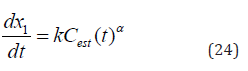
Our group’s previous work (Lanza [11]) collected data from 41 patients who underwent IVF. The research data included the number of days each patient was dosed with hormones (the experimental time) and the initial thickness; in addition, the previous research also developed a model to personalize dosages for each patient after two days of monitoring [13-15]. A differential equation was formulated to relate hormone dosage to endometrial lining thickness.
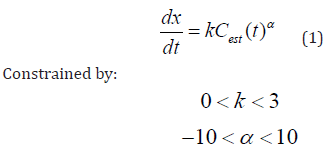
Where dx dt represents the rate of change of the endometrium’s thickness and Cest(t) represents the hormone dosage on a given day. k is the rate constant and α is the rate exponent. The general mathematical technique used to solve optimal control problems includes Calculus of Variations, Pontryagin’s Maximum Principle, and Dynamic Programming. Non-Linear Programming (NLP) optimization methods can also be applied to such problems if the system can be discretized into a nonlinear algebraic equation. In our earlier work, we used NLP to obtain dosing profile for the following optimization problem. To optimize dosages to achieve the 8 mm endometrial thickness, patient profiles were created using the initial thicknesses, experimental dosages, and the experimental thicknesses at given days, as well as the k value, as k was found to be patient independent. These profiles were then used to minimize the objective function shown in Eq. 2 to find each patient’s α value.
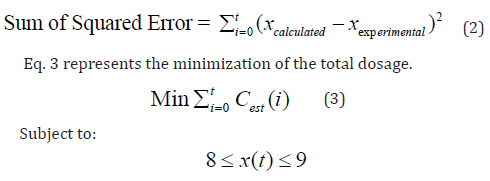
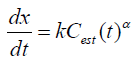
This model was then optimized using nonlinear programming in MATLAB to achieve an 8mm thickness.
Derivation of Dosages Through Pontryagin’s Maximum Principle
Here, we use the Maximum Principle to derive an optimal control profile for the optimization problem of minimizing total estrogen dosing for optimal endometrium thickness. Our objective function for this optimal control problem is as follows:
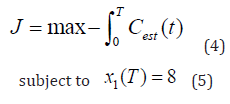
where T is the final time, Cest is the dose of estrogen given each day (varies with time), and χ1 is the endometrial thickness. The state equation for endometrium thickness and final endometrium thickness constraint are given by:
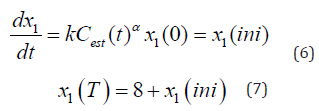
The Lagrangian form of objective function (with maximization), including Equation (2), can be given

We want to write the equations for the maximum principle formulation, therefore, we add one more state variable.

Now we can write the objective function for the maximum principle formulation in terms of the state variables:
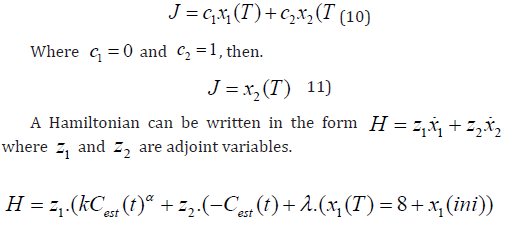
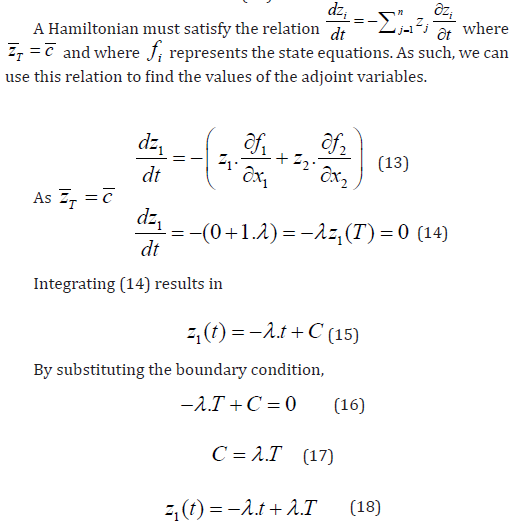
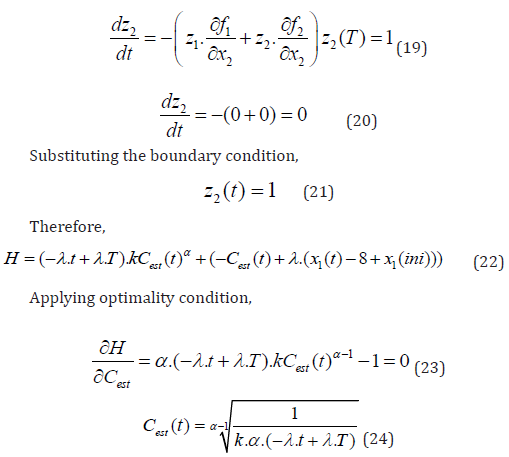
We have the dosage profile as a function of λ . The other condition this problem should satisfy is the constraint on final thickness, Equation (5). We want to find λ such that this constraint is satisfied. This involves an iterative loop for λ on top of the maximum principle formulation, providing an analytical equation for the profile. We use the secant method to solve this outer loop.
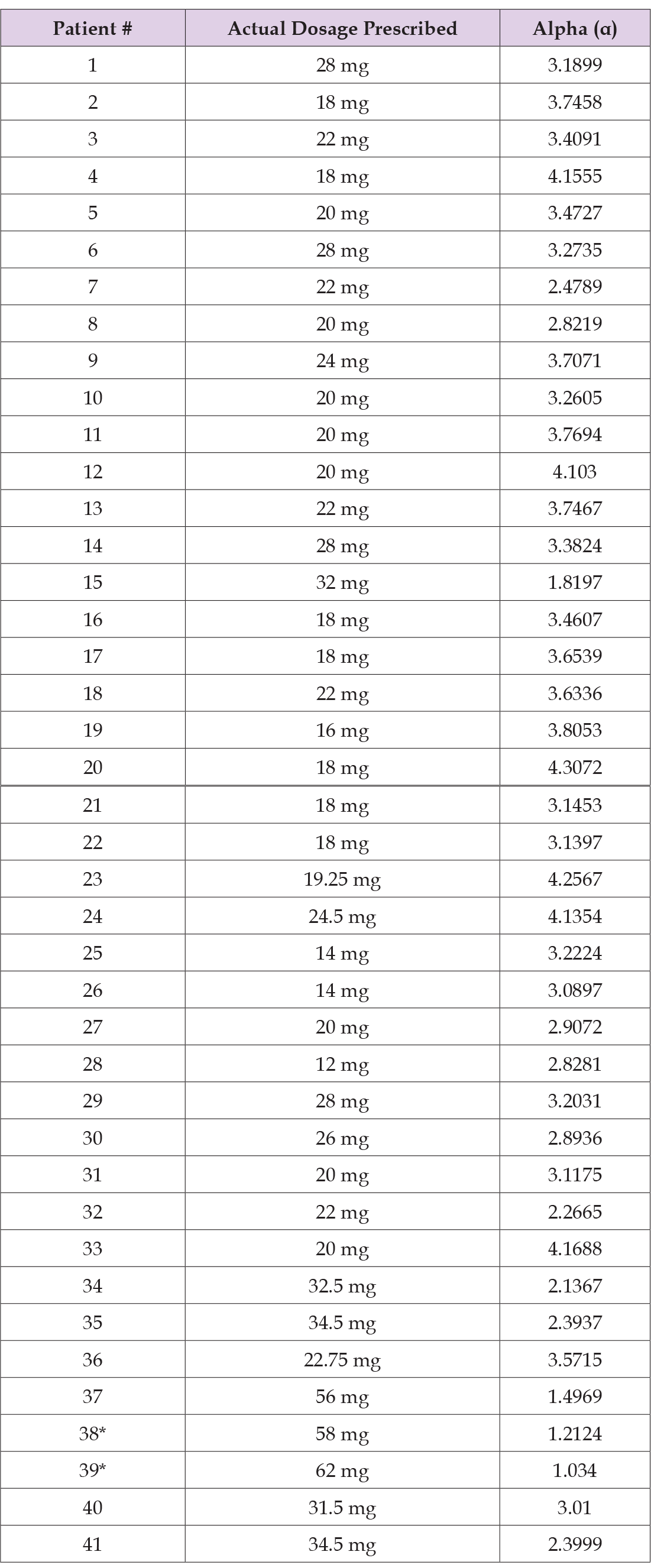
Previous work reported data from 41 patients undergoing in vitro fertilization (IVF) (Table 1). The present study uses the same patient dataset to compare estrogen dosing strategies obtained using Pontryagin’s Maximum Principle with those derived from Nonlinear Programming (NLP), as well as with the experimentally administered dosages received by the patients. The Maximum Principle formulation was implemented using two treatment durations. In the first case, the dosing period T was fixed at 13 days, consistent with the duration used in the NLP formulation. In the second case, T was reduced to 10 days for all patients to investigate whether shortening the treatment period could further reduce the total hormone dosage. Both Maximum Principle approaches were compared against two NLP models, one with a lower dosage bound of 0.0 mg and the other with a lower bound of 0.5 mg. Across all formulations, the resulting optimal dosages exhibited substantial inter-patient variability. Figure 1 compares total estrogen dosages for each patient across the four optimization approaches (two NLP-based and two Maximum Principle–based). Overall, the NLP approaches generally produced lower total dosages. Figure 2 isolates the Maximum Principle results and compares the two treatment durations. For the majority of patients, reducing the dosing period to T =10days resulted in a greater reduction in total dosage compared to (T =13) days. Although the daily estrogen dosages were higher when (T =10) , the cumulative dosage over the treatment period was lower. Figure 3 illustrates the daily dosing profiles for Patient 1 under both Maximum Principle approaches. While the daily doses increased for (T =10) , the total dosage decreased to 17.8647 mg, compared to 20.8658 mg when (T =13) , demonstrating a substantial overall reduction. When Maximum Principle results were compared with the experimentally administered dosages, a consistent reduction in hormone intake was observed for all patients, similar to trends seen with the NLP methods. For this comparison, the treatment duration and final endometrial thickness were constrained to match the experimental values. As shown in Figure 4, more than 50% of patients experienced a reduction in estrogen dosage exceeding 10% relative to experimental dosing. These results indicate that the Maximum Principle framework has the potential to significantly reduce hormone exposure in IVF treatments. For certain patients, the Maximum Principle approach outperformed NLP. For example, Patient 34 (Figure 5) achieved lower total dosages using both Maximum Principle formulations than with either NLP model. Specifically, total dosages of 22.2639 mg (T =13) and 20.3496 mg (T =10) were obtained using the Maximum Principle, compared to 23.487 mg and 25.7892 mg for the NLP models with lower bounds of 0.0 mg and 0.5 mg, respectively. However, for most patients, NLP yielded lower total dosages than the Maximum Principle. Patient 31 (Figure 6) exemplifies this trend. The NLP models produced total dosages of 5.0509 mg (lower bound 0.0 mg) and 10.4577 mg (lower bound 0.5 mg), whereas the Maximum Principle solutions resulted in higher total dosages of 15.7598 mg (T =13) and 13.5318 mg (T =10) . However, it should be noted that NLP profiles introduces discontinuity (zero dose or minimum dose on some days) in dosing that maximum principle does not.
Figure 1
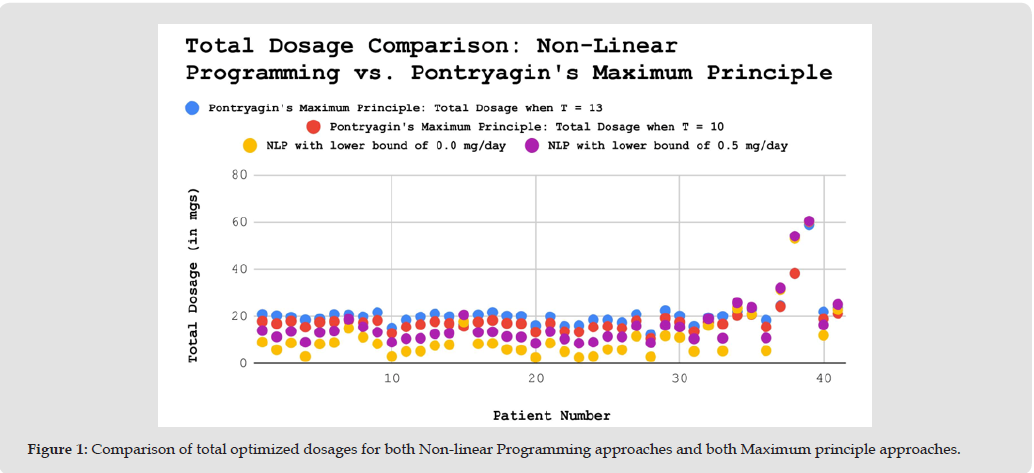
Figure 2
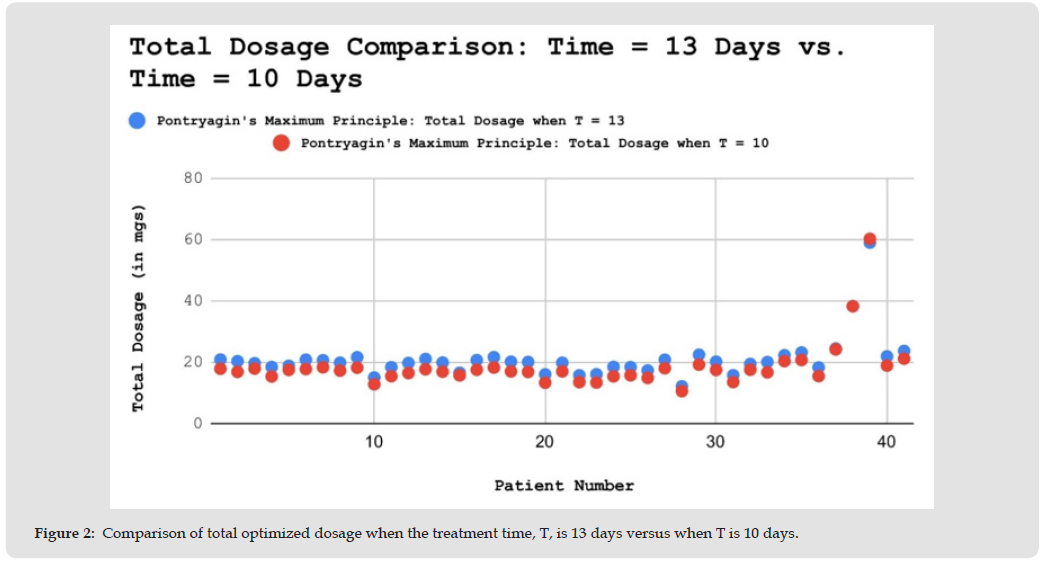
Figure 3
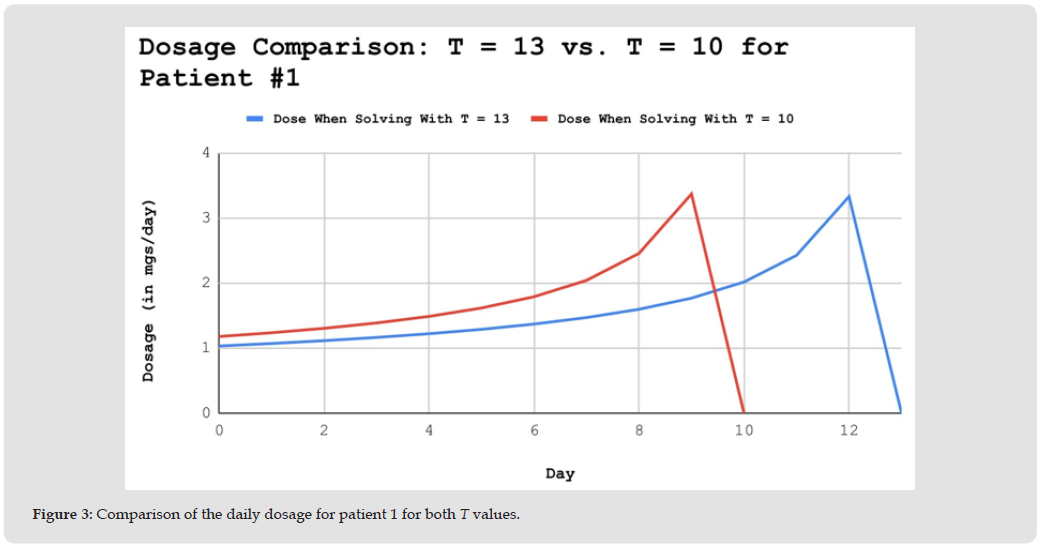
Figure 4
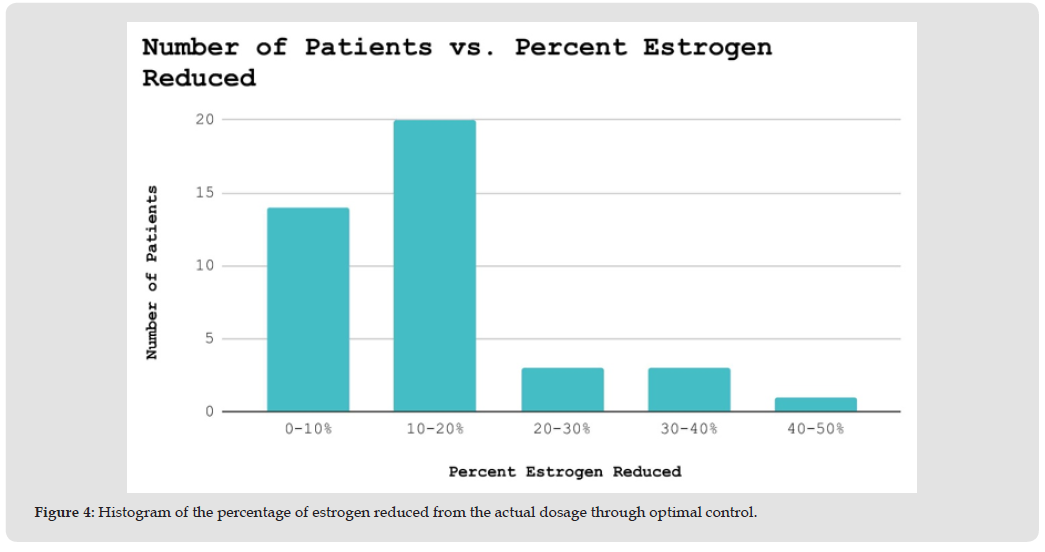
Figure 5
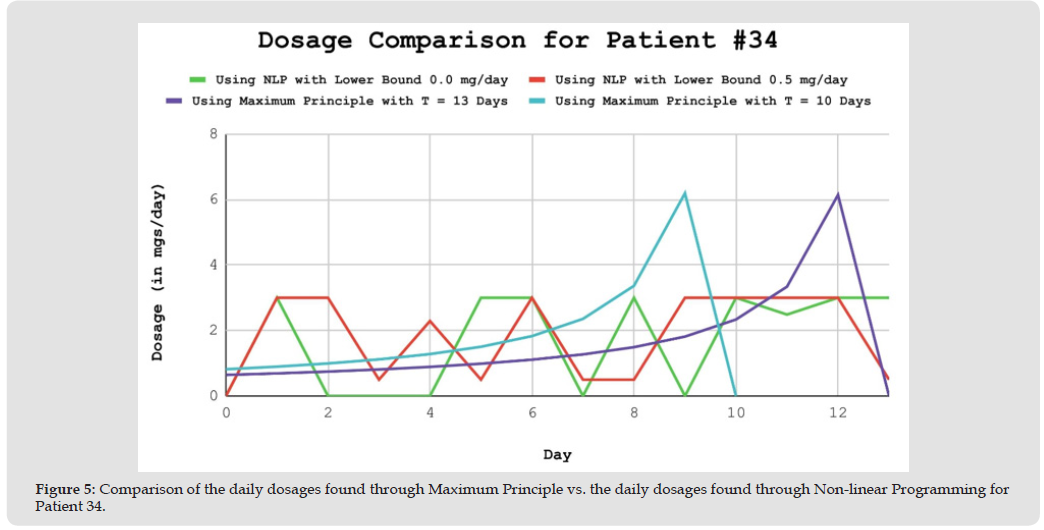
Figure 6
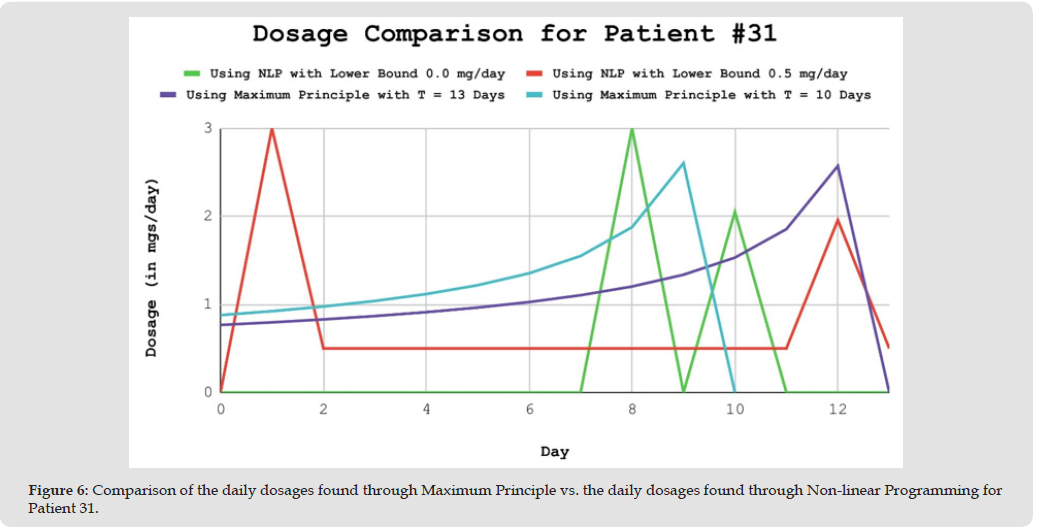
Table 1: Patients and personalized model parameters.
Limiting Case
Figures 1 and 2 in Section 3 show that, in both Maximum Principle approaches, patient 39’s total optimized dosages of 58.98 mg and 60.21 mg far exceeded the other patients’ and was an outlier. This was an instance of a limiting case. Due to the patient’s α value being 1.034. This is because, as α approaches 1, the equation for the dosage results in an expression that is raised to the power of 1/0, making it undefined. So, to appropriately find the dosage, the derivation had to go back to the initial state equation.
Essentially, as alpha approaches one, the relationship between the thickness and the dosage becomes increasingly linear; the dosage for each day will be a constant number. This means that the final dosage will be equal to the dosage at all other times, or:

The initial thickness for the patient was 5.0 mm, and the final thickness was found to be 7.4 mm. Using those values, the dosage can be calculated as follows
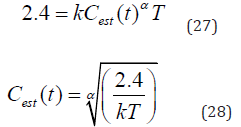
T, the number of days, in this case, was kept as both 13 and as 10. When utilizing 13 days as the treatment time, the daily dosage was found to be around 4.537 mg per day, yielding a total dosage of around 58.98 mg, and when utilizing the value of 10, the daily dosage was found to be around 6.021 mg per day, yielding a total dosage of around 60.21 mg.
This study demonstrates the potential of optimal control theory to improve personalization in hormone replacement therapy for in vitro fertilization (IVF). By applying Pontryagin’s Maximum Principle to the problem of estrogen dosage optimization, patient-specific dosing profiles were generated that successfully achieved the target endometrial thickness while reducing overall hormone exposure. The proposed framework was evaluated using clinical data from 41 IVF patients and compared with previously developed Nonlinear Programming (NLP)-based optimization methods. The results show that both optimization approaches significantly reduced estrogen dosages compared with experimentally administered treatment regimens. In many cases, patients experienced reductions exceeding 10% in cumulative hormone exposure while still satisfying the desired endometrial thickness constraints. Although the NLP formulations generally produced lower total dosages, the Maximum Principle approach yielded smooth, continuous dosing trajectories that avoided the abrupt discontinuities and zero-dose intervals frequently observed in NLP solutions. From a clinical perspective, smoother continuous dosage profiles may improve treatment adherence, simplify implementation, and better reflect realistic medical practice. The study also demonstrated that reducing the treatment duration from 13 days to 10 days could further reduce the cumulative hormone dose for many patients, despite requiring slightly higher daily doses.
This finding highlights the importance of jointly optimizing both treatment duration and dosage schedule to achieve more efficient IVF protocols. Additionally, the limiting-case analysis for patients with alpha values approaching one revealed important mathematical and physiological characteristics of the model and provided insights into cases where nearly linear dosage-response behavior occurs. Beyond dosage reduction, the proposed methodology contributes to the broader movement toward precision medicine in reproductive healthcare. Current IVF hormone replacement protocols remain largely standardized despite significant patient-to-patient variability in endometrial response. The integration of personalized mathematical modeling and optimal control methods offers a pathway toward individualized treatment strategies that can reduce unnecessary hormone exposure, minimize side effects, and potentially lower treatment costs. Future work should focus on validating the Maximum Principle–based framework through prospective clinical trials and expanding the model to incorporate additional physiological variables, patient biomarkers, and uncertainty in treatment response. Incorporating machine learning and artificial intelligence techniques alongside mechanistic optimal control models may further enhance predictive accuracy and clinical applicability. Overall, this work demonstrates that personalized optimal control approaches hold significant promise for improving the safety, efficiency, and practicality of IVF hormone therapy.
This work was funded by NSF supplemental grant 2335090.
We used ChatGPT version 5.5 to correct the English in this manuscript.
All clinical work was conducted at the Akansha Hospital and Research Institute in Gujarat, India. The Institutional Review Board of Sat Kaival Hospital Pvt. Ltd. Ethics Committee, Gujarat, India, approved the protocol and consent forms.
All deidentified data can be obtained by contacting the corresponding author.
None.

International Association of Landscape Archaeology, Czech Glass Society, Czech Republic

Department of Chemistry, Semenov Institute of Chemical Physics, USSR Academy of Sciences, Moscow, Russia

Department of Educational Sciences, Research Centre Qualities of Teachers, School of Education – HAN, Nijmegen, Netherlands

Associate Professor at Department of Breast and Thyorid Surgey, Chongqing General Hospital, China

Neurology, LA BioMed Research Institute, USA





 Abstract
 PDF
PDF



























