info@biomedres.us
+1 (502) 904-2126
One Westbrook Corporate Center, Suite 300, Westchester, IL 60154, USA
Site Map
 ISSN: 2574 -1241
ISSN: 2574 -1241
ISSN: 2574 -1241
Received: July 06, 2026; Published: July 22, 2026
*Corresponding author: Kirti Mutreja, Homeopathic Physician and Psychiatrist Bhaktivedanta Hospital and Research Institute Mumbai, India
DOI: 10.26717/BJSTR.2026.66.010313
Background: Chronic psychological stress acts as a primary catalyst for systemic pathology, destabilising the
complex bidirectional communication networks within the human body. This network is best represented by the
Psycho-Neuro-Endocrino-Immuno (PNEI) axis.
Objective: This paper outlines the physiological mechanics of stress-induced disruption across major neuroendocrine
axes—including the Hypothalamic-Pituitary-Thyroid (HPT), Hypothalamic-Pituitary-Adrenal-Pancreatic
(HPAP), and Hypothalamic-Pituitary-Gonadal (HPG) axes—and evaluates how ultra-diluted, individualised
homeopathic medicines restore homeostatic balance by mitigating primary psychological stressors.
Methods: A comprehensive review of the scientific literature was conducted, synthesising current advancements
in clinical PNEI networks with peer-reviewed homeopathic research, clinical trials, and multi-case series.
Discussion: Chronic mental or emotional conflicts trigger a sustained cascade of Corticotropin-Releasing Hormone
(CRH) and cortisol, leading to down-regulation of the thyroid axis, insulin resistance, reproductive dysfunction,
and inflammatory or autoimmune vulnerability. Individualised homeopathic prescribing addresses
these specific, deep-seated psychological conflicts. This treatment strategy mitigates the primary upstream triggers
of the stress response, directly reducing downstream allostatic overload. Recent biochemical evaluations
support this model, showing significant post-treatment reductions in inflammatory cytokines, oxidative stress
markers, and serum cortisol.
Conclusion: Homeopathy provides an effective, non-toxic, and highly individualised therapeutic system that
directly aligns with modern PNEI and systems biology frameworks.
Keywords: Psycho-Neuro-Endocrino-Immunology (PNEI); HPA Axis; Homeopathy; Psychosomatic Medicine; Allostatic Load
Abbreviations: HPT: Hypothalamic-Pituitary-Thyroid; HPAP: Hypothalamic-Pituitary-Adrenal-Pancreatic; HPG: Hypothalamic-Pituitary-Gonadal; CRH: Corticotropin-Releasing Hormone; PNEI: Psycho-Neuro-Endocrino-Immuno; PVN: Paraventricular Nucleus; GnRH: Gonadotropin-Releasing Hormone; LH: Luteinizing Hormone; FSH: Follicle-Shifting Hormone; PCOS: Polycystic Ovary Syndrome; PMDD: Premenstrual Dysphoric Disorder; LPS: lipopolysaccharides; PNEI: Psycho-Neuro-Endocrino-Immuno; BBB: Blood-Brain Barrier; BDNF: Brain-Derived Neurotrophic Factor; NMDA: N-Methyl-D-Aspartate; SOD: Superoxide Dismutase; IDO: Indoleamine 2,3-dioxygenase
Modern medicine is undergoing a foundational paradigm shift away from reductionist models toward integrated systems biology. The human organism does not function as a collection of isolated organs. Instead, it operates as a continuous, bidirectional communication network known as the Psycho-Neuro-Endocrino-Immuno (PNEI) axis. Within this integrated framework, cognitive perceptions and sustained emotional states directly influence neurotransmitter release, hormonal secretions, and cellular immune profiles. Chronic, unresolved psychological conflicts and environmental stressors act as primary upstream disruptors of this systemic equilibrium. When a stressor is perceived as unmanageable, it triggers a sustained allostatic load. This state causes deep dysregulation across several physiological pathways, including the:
• Hypothalamic-Pituitary-Thyroid (HPT) axis
• Hypothalamic-Pituitary-Adrenal-Pancreatic (HPAP) axis
• Hypothalamic-Pituitary-Gonadal (HPG) axis
This chronic dysregulation manifests clinically as complex psychosomatic, psychiatric, metabolic, allergic, and autoimmune diseases. Homeopathy, founded over two centuries ago by Dr. Samuel Hahnemann, operates on a highly individualised, holistic model that naturally mirrors modern PNEI concepts. By mapping a patient’s unique mental, emotional, and physical symptoms into a single totality, the homeopathic physician selects ultra-diluted remedies tailored to the patient’s specific internal experience of stress. This paper outlines the physiological mechanisms linking psychological trauma to systemic disease through the PNEI axis. It also evaluates the clinical evidence demonstrating how individualised homeopathy addresses these core emotional conflicts to restore homeostatic balance.
The central stress response is mediated by the paraventricular nucleus (PVN) of the hypothalamus, which secretes Corticotropin-Releasing Hormone (CRH). Under acute conditions, this is an adaptive mechanism. However, chronic activation leads to sustained allostatic overload, disrupting multiple interconnected neuroendocrine pathways:
The Hypothalamic-Pituitary-Adrenal-Pancreatic (HPAP) Axis
Chronic stress causes sustained hypercortisolemia. Cortisol promotes systemic gluconeogenesis while simultaneously inhibiting peripheral glucose uptake. This sustained elevation drives visceral adiposity, hyperinsulinemia, and pancreatic beta-cell exhaustion, ultimately causing metabolic syndrome and Type 2 Diabetes Mellitus.
The Hypothalamic-Pituitary-Thyroid (HPT) Axis
Sustained elevations in CRH and cortisol directly suppress the synthesis of Thyroid-Stimulating Hormone (TSH) and thyrotropin-releasing hormone (TRH). Concurrently, elevated stress hormones increase the activity of type 5 deiodinase. This enzyme shifts peripheral thyroid hormone conversion away from active Triiodothyronine (T₃) toward inactive reverse T₃ (rT₃). This shift results in functional tissue- level hypothyroidism, which presents clinically as treatment-resistant depression, cognitive slowing, and fatigue.
The Hypothalamic-Pituitary-Gonadal (HPG) Axis
Elevated CRH directly inhibits the pulsatile secretion of Gonadotropin- Releasing Hormone (GnRH) from the hypothalamus. Glucocorticoids also desensitise pituitary gonadotropes to GnRH and suppress the production of luteinizing hormone (LH), follicle-shifting hormone (FSH), estradiol, and testosterone. This down-regulation leads to amenorrhea, polycystic ovary syndrome (PCOS), erectile dysfunction, and psychological disorders like Premenstrual Dysphoric Disorder (PMDD).
Neurological & Immune-Inflammatory Shift
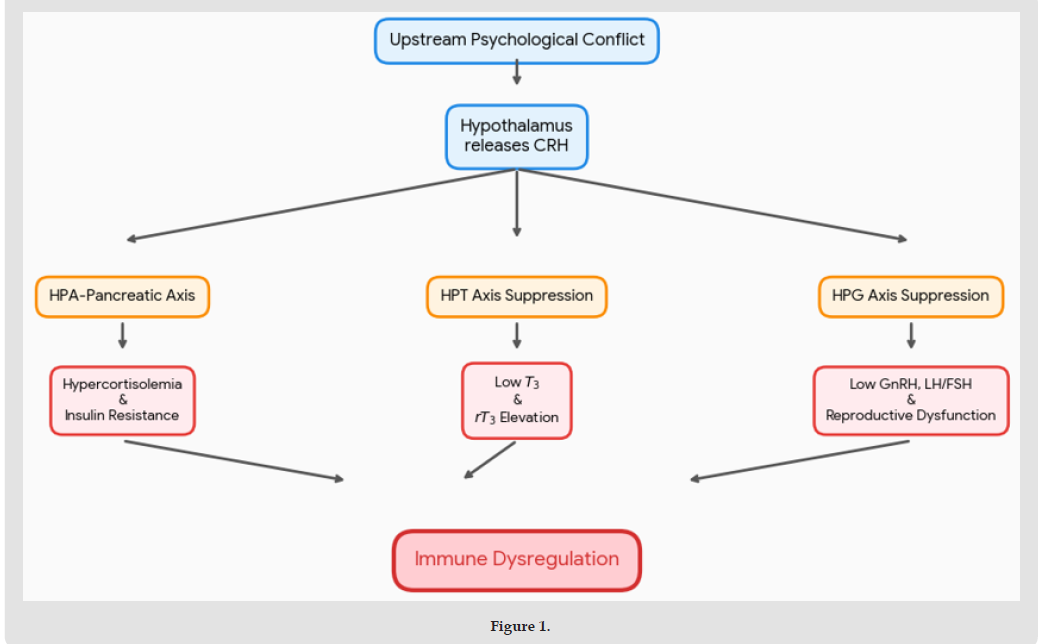
Sustained cortisol elevations lead to glucocorticoid receptor resistance on circulating immune cells. This loss of negative feedback allows pro-inflammatory transcription factors, such as Nuclear Factor Kappa B (NF-\(\kappa \)B), to upregulate unchecked (Figure 1).
This shift triggers a systemic transition from a Type 1 T-helper (\ (Th_{1}\)) cell-mediated immune response to a Type 2 T-helper (\ (Th_{2}\)) humoral response. This chronic inflammatory environment can manifest across multiple bodily systems:
• Allergic/Atopic conditions: Asthmatic conditions and eczema are driven by the \(Th_{2}\) shift.
• Autoimmune diseases: Conditions like rheumatoid arthritis and Hashimoto’s thyroiditis are exacerbated by chronic inflammatory signaling.
• Neurological conditions: Chronic systemic inflammation triggers microglial activation in the brain. This neuroinflammation disrupts synaptic plasticity, leading to clinical depression, anxiety disorders, and accelerated neurodegeneration.
Figure 1
Neuroinflammation and Psychiatric Pathologies
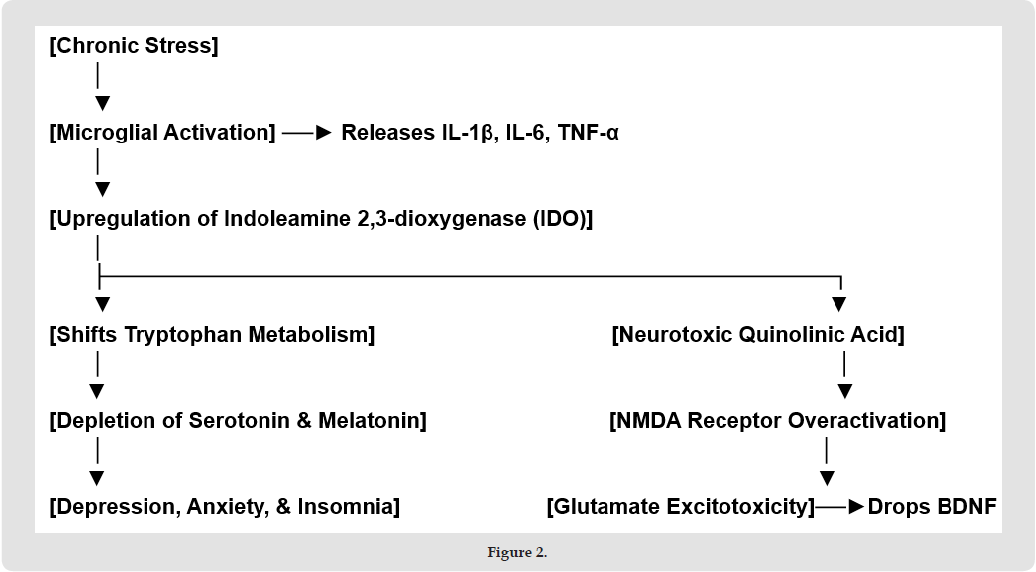
Psychiatric manifestations of chronic stress are directly driven by neuroinflammation mediated through the PNEI framework. Peripheral pro-inflammatory cytokines cross the blood-brain barrier (BBB) via leaky tight junctions, activating resident macro-phages and microglial cells from a resting phenotype to an active, destructive state. Activated microglia release massive amounts of pro-inflammatory cytokines— specifically Interleukin-1 beta (IL-1β), Interleukin-6 (IL-6), and Tumor Necrosis Factor-alpha (TNF-α). These cytokines trigger a major shift in brain chemistry:
• The Tryptophan-Kynurenine Pathway Shunt: Cytokines upregulate the enzyme Indoleamine 2,3-dioxygenase (IDO) in astrocytes and microglia. IDO shunts tryptophan metabolism away from serotonin and melatonin synthesis and toward the kynurenine pathway. This causes a severe drop in central serotonin and melatonin levels, driving clinical depression, severe anxiety, and insomnia.
• Glutamate Excitotoxicity: Kynurenine metabolism generates quinolinic acid, a potent N-methyl-D-aspartate (NMDA) receptor agonist. Overactivation of NMDA receptors causes an influx of intracellular calcium, leading to glutamate excitotoxicity. This toxic state dramatically downregulates Brain-Derived Neurotrophic Factor (BDNF), halting neurogenesis in the hippocampus and causing structural atrophy associated with treatment-resistant psychiatric disorders (Figure 2).
Figure 2
The Microbiota-Gut-Brain-PNEI Connectivity
The modern PNEI framework expands beyond the central nervous system to integrate the bidirectional pathways of the microbiota- gut-brain axis. Psychological stress triggers the immediate release of systemic catecholamines, which compromise the integrity of the intestinal epithelial barrier, causing a clinical state known as “leaky gut”. This barrier breakdown allows bacterial endotoxins, such as lipopolysaccharides (LPS), to translocate across the gut wall into systemic circulation, causing a state of chronic endotoxemia. Systemic LPS continuously stimulates toll-like receptors (TLRs) on circulating immune cells, causing a persistent shift from a Type 1 T-helper (Th₁) to a Type 2 T-helper (Th₂) humoral response. This chronic immune activation triggers a continuous release of peripheral cytokines that travel up the vagus nerve and breach the BBB, reinforcing central neuroinflammation. Simultaneously, this gut dysbiosis disrupts the production of vital short-chain fatty acids (SCFAs), such as butyrate, which are essential for maintaining proper BBB integrity and keeping microglial cells in a calm, resting state.
Homeopathy approaches these conditions from the opposite direction, working from the top down. Rather than suppressing peripheral symptoms, the homeopathic case-taking process acts as a targeted psychological evaluation. By identifying the primary emotional shock or unresolved cognitive conflict, the physician targets the upstream source of PNEI dysregulation.
The Therapeutic Simillimum as a Signal
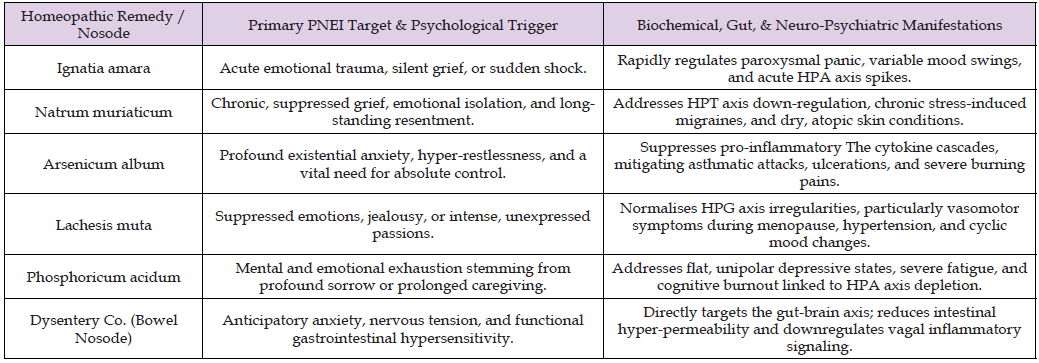
Homeopathic remedies are ultra-highly diluted, potentised substances that retain structural information via molecular clusters or nanoparticles. When prescribed according to the law of similars (Similia Similibus Curentur), the remedy introduces a highly specific, biocompatible energetic signal to the central nervous system. This signal acts on the limbic system and amygdala, effectively desensitising the patient’s hyper-reactive response to their primary psychological triggers. By resolving this emotional conflict at the cognitive level, the downstream neuroendocrine and immune cascades are allowed to reset (Table 1). Furthermore, classical homeopathy leverages Bowel Nosodes—specialised remedies prepared from non-lactose fermenting intestinal bacteria—to directly target dysbiosis within the gut-brain axis. These nosodes help restore balance to the intestinal microbiome, reducing systemic endotoxemia and its downstream neuroinflammatory effects.
Table 1:
Recent peer-reviewed studies and clinical evaluations provide clear evidence that individualised homeopathic treatment can modify objective biochemical markers of stress:
HPA Axis and Cortisol Modulation
A landmark clinical trial examining the biochemical influence of homeopathic medicines on human stress markers demonstrated a significant reduction in serum cortisol and adrenaline levels compared to control groups [1]. This indicates a direct, measurable stabilisation of the HPA axis [1].
Reduction in Oxidative Stress & Neuroinflammation
In the same trial, researchers observed a significant post-treatment increase in Superoxide Dismutase (SOD) activity. This up-regulation was accompanied by a direct decrease in key pro-inflammatory biomarkers, specifically Interleukin-6 (IL-6) and Tumor Necrosis Factor- alpha (TNF-\(\alpha \)). This biochemical shift confirms that reducing upstream psychological stress leads to measurable reductions in peripheral inflammation. In vitro models evaluating the impact of ultra-dilute remedies on central nervous system immune cells have revealed powerful neuroprotective properties. A landmark study published in the International Journal of Molecular Sciences demonstrated that potentised homeopathic preparations can directly modulate microglial cells. When exposed to an inflamed microglial environment, the remedy decreased total intracellular reactive oxygen species (ROS) by 40% and mitochrondrial ROS production by 67%. This was accompanied by a direct decrease in key pro-inflammatory biomarkers, specifically Interleukin-6 (IL-6) and Tumor Necrosis Factor-alpha (TNF-α). This biochemical shift confirms that reducing upstream psychological stress leads to measurable reductions in peripheral inflammation.
High Clinical Resolution Rates
In a recent multi-center clinical study published in the International Journal of Research Publication and Reviews, 30 patients presenting with chronic, stress-induced PNEI disorders were treated with individualised homeopathy [2]. Therapeutic outcomes were evaluated using the validated Modified Naranjo Criteria (MONARCH):
• 80.0% (24 cases) achieved Marked Improvement, showing comprehensive resolution of both psychiatric symptoms and physical neuroendocrine imbalances [2].
• 13.3% (4 cases) demonstrated Moderate Improvement [2].
• 6.7% (2 cases) showed Mild or No Improvement [2-14].
The clinical efficacy of individualised homeopathy can be explained through the lens of modern systems biology and PNEI networks. Conventional psychotropic drugs typically function via receptor antagonism or reuptake inhibition. While effective at altering neurotransmitter availability, this approach often leaves the underlying, deep-seated psychological conflicts unaddressed, and can introduce significant side-effect burdens or long-term dependency. In contrast, classical homeopathic prescribing maps the patient’s entire constitutional makeup. By matching the patient’s unique emotional triggers and physical vulnerabilities to a single medicine, the practitioner targets the central processing centers of the stress response. This targeted approach helps downregulate the sustained release of CRH from the PVN of the hypothalamus.
As central CRH levels normalise, the downstream physiological cascades follow suit:
• The HPT axis is released from glucocorticoid-mediated inhibition, allowing proper thyroid hormone synthesis and peripheral conversion to T₃.
• The HPG axis recovers its pulsatile GnRH release, restoring regular reproductive function and stabilising cyclical affective disorders.
• The autonomic nervous system returns to homeostatic balance, reducing excessive sympathetic drive and easing the metabolic burden on the pancreatic axis.
• The gut epithelial barrier is restored, reversing gut dysbiosis, reducing systemic LPS translocation, and stopping vagal pro-inflammatory inputs.
• Microglial activation is suppressed, which downregulates IDO activity, corrects the tryptophan shunt, restores endogenous serotonin levels, and raises BDNF to promote neuroplasticity. This comprehensive, top-down stabilization explains why individualised homeopathic treatment often yields concurrent improvement across multiple seemingly unrelated symptoms, such as the simultaneous resolution of chronic anxiety, irritable bowel syndrome, and atopic dermatitis in a single patient.
The Psycho-Neuro-Endocrino-Immuno (PNEI) axis provides a robust, scientific framework that validates the core clinical observations of homeopathic medicine. Chronic psychological stress and unresolved emotional conflicts cause widespread, systemic damage by disrupting interconnected neuroendocrine, microglial, and gut-microbiome pathways. By treating the patient as an integrated system and targeting the upstream emotional triggers of disease, individualised homeopathy offers a safe, effective, and scientifically grounded method for restoring homeostatic balance. To further integrate these findings into mainstream medical care, future research should focus on large-scale, randomized controlled trials that combine validated clinical outcomes with objective neuroendocrine, metabolic, and immunological biomarkers.

International Association of Landscape Archaeology, Czech Glass Society, Czech Republic

Department of Chemistry, Semenov Institute of Chemical Physics, USSR Academy of Sciences, Moscow, Russia

Department of Educational Sciences, Research Centre Qualities of Teachers, School of Education – HAN, Nijmegen, Netherlands

Associate Professor at Department of Breast and Thyorid Surgey, Chongqing General Hospital, China

Neurology, LA BioMed Research Institute, USA





 Abstract
 PDF
PDF



























