info@biomedres.us
+1 (502) 904-2126
One Westbrook Corporate Center, Suite 300, Westchester, IL 60154, USA
Site Map
 ISSN: 2574 -1241
ISSN: 2574 -1241
ISSN: 2574 -1241
Received: June 26, 2026; Published: July 16, 2026
*Corresponding author: Wolf D Grimm, Univ.-Prof. Dr. med. dent. habil. Dr.med. dent., Senior Professor, Periodontology, University of Witten/Herdecke, Practice Team Hasslinghausen, Center of Excellence for Periodontology and Implantology, Sprockhövel, Germany
DOI: 10.26717/BJSTR.2026.66.010307
Background: Minimally invasive periodontal plastic surgery using the tunnel technique combined with subepithelial connective tissue grafting (SCTG) has demonstrated favorable short- and mid-term outcomes for root coverage procedures. However, robust long-term clinical evidence beyond 10 years remains limited.
Methods: This retrospective longitudinal cohort study included 73 patients with 710 gingival recession defects treated between 2010 and 2025 using the tunnel technique with SCTG, with or without enamel matrix derivative (EMD). Mean follow-up was 6.0 ± 4.0 years, with observation periods extending up to 16 years. Primary outcomes included recession depth reduction and complete root coverage (CRC).
Statistical comparisons between baseline and final follow-up were performed using paired tests.
Results: Mean recession depth decreased from 2.72 ± 0.84 mm at baseline to 0.45 ± 0.31 mm at final follow-up (p < 0.001). Complete root coverage was achieved in 83.4% of treated sites (95% CI 80.2–86.3%).
Importantly, 100% of sites demonstrated long-term stability, with no clinically relevant relapse observed.
Conclusion: The tunnel technique combined with SCTG demonstrates high predictability and exceptional longterm stability for the treatment of gingival recession under real-world clinical conditions.
Graphical Abstract
Long-Term Clinical Performance of the Tunnel Technique with Subepithelial Connective Tissue Grafting: A 16- Year Retrospective Cohort Study
Background: Minimally invasive tunnel procedures combined with subepithelial connective tissue grafting (SCTG) show high short-term root coverage rates. However, long-term stability beyond 5 years remains insufficiently documented.
Study Design
Retrospective longitudinal cohort study 74 patients, 710 recession sites, Miller Class I-III, natural teeth, no implants, Surgeries performed 2010–2025, Follow-up up to 15 years
Intervention Tunnel technique
Subepithelial connective tissue graft ± Enamel matrix derivative
Primary Outcomes
• Recession depth reduction (mm)
• Complete root coverage (CRC)
• Long-term stability (≥1 mm relapse)
Key Results
• 83.4% complete root coverage,
• Mean recession reduction: 2.72 mm,
• 100% long-term stability
• No site deteriorated beyond baseline values
• Maximum observation: 16 years.
Keywords: Gingival Recession; Tunnel Technique; Connective Tissue Graft; Long-Term Stability; Periodontal Plastic Surgery; Root Coverage
Study Aim and Hypothesis
The primary aim of this retrospective longitudinal cohort study was to evaluate long-term clinical performance of the tunnel technique combined with SCTG, with or without adjunctive EMD, under routine clinical conditions.
Specifically, the study sought to assess:
• Magnitude of recession reduction
• Complete root coverage rates
• Long-term marginal stability over 16 years
The working hypothesis was that minimally invasive tunnel surgery combined with phenotype enhancement via SCTG would result in sustained root coverage stability and minimal long-term relapses.
Clinical Implications
The present long-term data provide clinically relevant evidence supporting the tunnel technique combined with subepithelial connective tissue grafting as a highly predictable and durable treatment modality for localized gingival recession. With a complete root coverage rate of 83.4% and sustained soft tissue stability in 100% of treated sites over follow-up periods extending beyond 16 years, this approach demonstrates not only short-term effectiveness but also long-term maintenance of clinical outcomes. These findings are particularly relevant for patients with aesthetic demands, thin periodontal phenotypes, or high risk of progressive recession. The absence of clinically relevant relapse (≥1 mm) underscores the biological stability of augmented tissues when surgical principles are respected, and supportive periodontal care is maintained. From a practical standpoint, the tunnel technique offers a minimally invasive alternative to conventional flap procedures, preserving vascular supply and minimizing surgical morbidity while achieving durable root coverage. Clinicians may therefore consider this protocol as a reliable long-term solution in the management of Miller Class I, II and III recessions, especially in cases where long-term aesthetic stability is a primary therapeutic objective.
These findings provide strong support for:
• Tunnel technique as long-term solution
• SCTG-based phenotype enhancement
• Stability dependent on maintenance therapy
• Application for high-aesthetic-demand patients
The extended observation period (up to 16 years) positions this
dataset among the longest real-world cohorts in tunnel-based soft tissue
augmentation.
Summary of Results
• Mean follow-up was 6.0 ± 4.0 years (maximum 16 years).
• Mean recession reduction: 2.72 mm
• Complete root coverage: 83.4%
• Long-term stability: 100%
• No site exhibited ≥1 mm relapses at final follow-up.
• CRC rates were consistent across anterior and posterior regions.
Observed outcomes align with previously reported
CRC rates of 70–90% in RCTs [3,20,27].
• The 100% stability observed exceeds relapse rates reported
in long-term RCT extensions [6,28].
Over the past decade, periodontal plastic surgery has shifted towards minimally invasive microsurgical concepts emphasizing preservation of vascular supply, atraumatic tissue handling, and biologically driven wound stabilization. Systematic reviews and randomized trials published between 2016 and 2026 consistently confirm that connective tissue grafting remains the gold standard for root coverage procedures, particularly in Miller Class I/II or RT1/RT2 recessions. Minimally invasive periodontal plastic surgery has increasingly focused on preservation of vascular supply and phenotype enhancement [13]. Connective tissue grafting remains the gold standard for root coverage procedures [1,2]. The tunnel technique preserves interdental papillae and supraperiosteal vascularization [3,4]. Fiveyear volumetric analyses confirmed superior soft tissue stability compared with coronally advanced flap approaches [3,4]. Long-term phenotype modification significantly predicts marginal stability over 10 years [5,6]. Randomized clinical trials demonstrated superior volumetric stability compared with coronally advanced flap approaches [6,27,28]. Five-year 3D digital analyses confirmed enhanced soft tissue thickness and marginal stability [28]. Long-term extension studies indicate that soft tissue phenotype modification significantly predicts 10-year gingival margin stability. Systematic reviews report complete root coverage rates ranging between 70% and 90% [2,7].
However, robust real-world data exceeding 10 years remain limited to [3,6]. However, most available datasets report follow-ups between 12 and 60 months [3,20]. Despite encouraging mid-term evidence, most available studies report follow-up durations between 12 and 60 months. Only few datasets extend beyond 8–10 years, and these rarely include large cohorts under routine clinical practice conditions. Furthermore, volumetric and stability analyses beyond the initial remodeling phase remain underreported. Thus, a structured longitudinal evaluation exceeding 16 years is scientifically warranted to determine whether early root coverage outcomes translate into durable soft tissue stability. The present study therefore evaluated the long-term clinical performance of the tunnel technique combined with SCTG under routine clinical conditions over a 16-year observation period.
Study Design
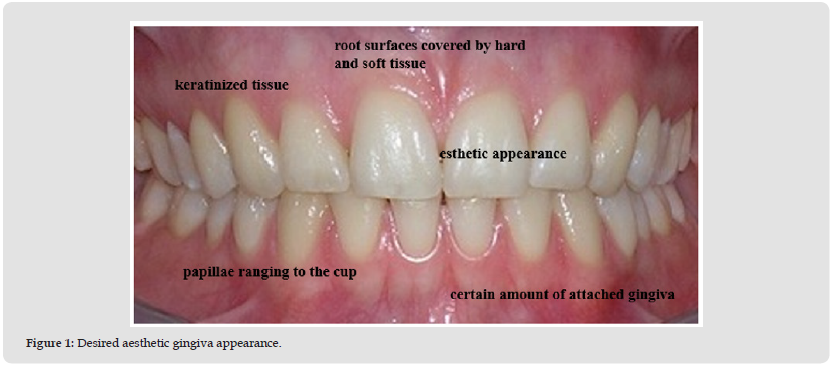
This investigation was conducted as a retrospective longitudinal cohort study evaluating long-term clinical outcomes of minimally invasive periodontal plastic surgery using the tunnel technique in combination with subepithelial connective tissue grafts (SCTG), with or without adjunctive enamel matrix derivative (EMD). All surgical procedures were performed between 2009 and 2025 in one private periodontal referral practice (JSch). All surgeries were performed by the same periodontist. Clinical follow-up data were available through 2025 and 2026, enabling extended observation periods up to 16 years in a substantial proportion of treated sites, see Figure 1. The study adhered to the principles of the Declaration of Helsinki. All patients had previously provided written informed consent for surgical treatment and anonymized scientific use of their clinical data.
Figure 1
Study Population
Cohort Characteristics: A total of 74 patients (57 female, 17 male) were included, contributing 710 recession sites for analysis. Surgical treatment was performed across multiple tooth regions in both arches. Each treated tooth was considered an analytical unit for site-level outcome assessment. The mean clinical follow-up was 6.0 ± 4.0 years, with a maximum observation period of 16 years. Patient records were screened for individuals treated for localized gingival recession defects using the tunnel technique. Seventy-four patients (57 female, 17 male) with 710 recession defects were included.
Inclusion Criteria
• Gingival recession ≥3 mm
• Miller Class I–III
• Completion of non-surgical therapy when needed
• FMPS <20%
• FMBS <15%
• Probing depth ≤4 mm
Exclusion Criteria
• Uncontrolled systemic disease
• Immunosuppression
• Pregnancy or lactation
• Previous head and neck radiation therapy
• Incomplete clinical documentation
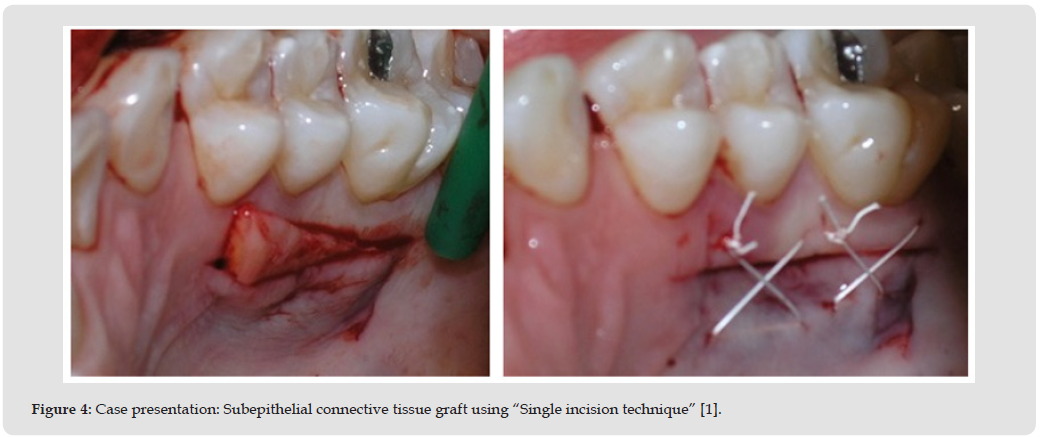
Surgical Protocol: All procedures were performed by one experienced periodontist using a standardized microsurgical approach. After local anesthesia, sulcular incisions without vertical releases were placed. A full-thickness flap was coronally elevated transitioning into split thickness apically to create a tension-free tunnel extending beyond the mucogingival junction [3,27], see Figure 2. The surgical concept followed microsurgical principles described in contemporary periodontal plastic surgery literature. Preservation of papillary integrity and maintenance of supraperiosteal vascularization are considered critical for graft survival and volumetric stability, see Figures 3a & 3b [28]. Subepithelial connective tissue grafts were harvested using a single-incision technique to reduce donor-site morbidity, consistent with current recommendations, see Figure 4 SCTGs were harvested using a single-incision technique to reduce donor morbidity [1]. Grafts were stabilized using sling sutures [2,3,4]. In selected cases, enamel matrix derivative was applied to enhance wound stability and periodontal regeneration, based on randomized data demonstrating improved attachment stability [11,12].
Figure 2
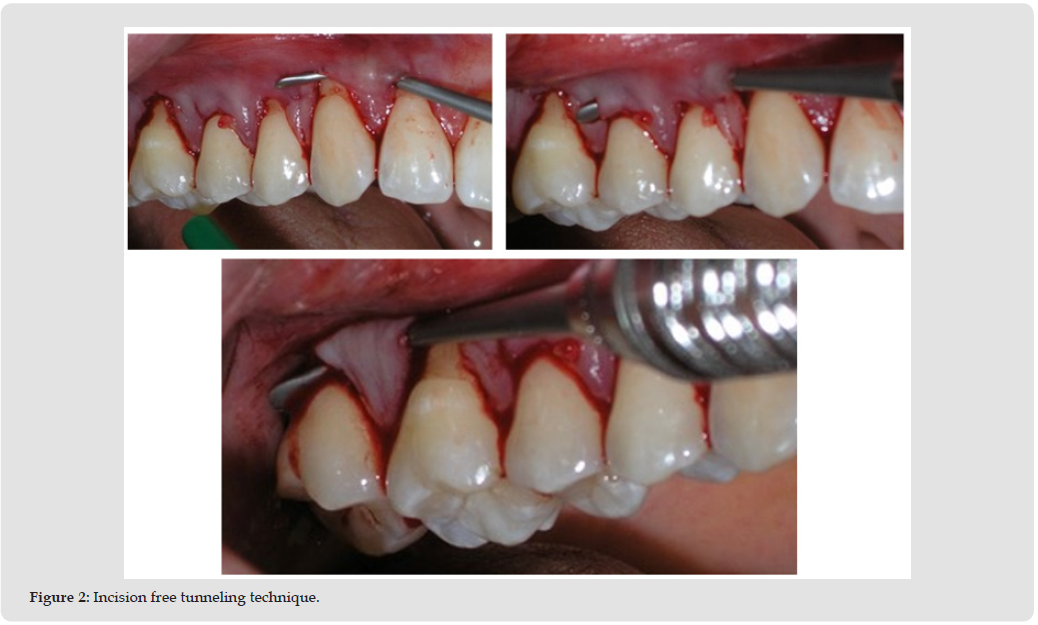
Figure 3
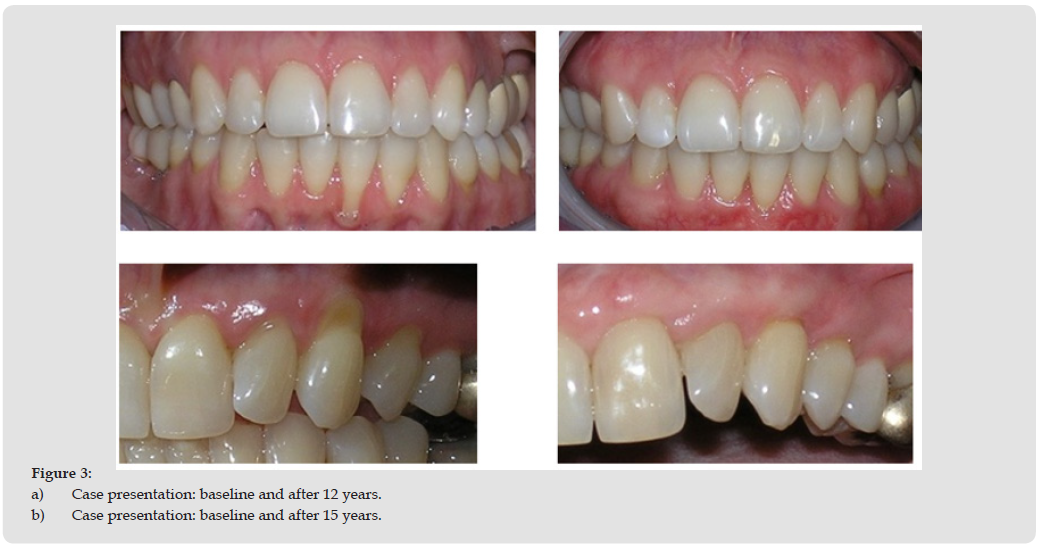
Figure 4
Postoperative care included chlorhexidine rinses and standardized oral hygiene instructions.
Outcome Measures
Primary Outcome
• Recession depth (RD)
Secondary Outcomes
• Complete root coverage (CRC)
• Mean root coverage (MRC)
• Long-term stability (≥1 mm relapses)
Outcomes followed contemporary periodontal reporting standards.
Follow-Up Protocol
Patients were enrolled in supportive periodontal therapy with recall intervals ranging from 3 to 12 months depending on individual risk profile.
For statistical evaluation, outcomes were compared between baseline and the last available follow-up, ensuring maximal long-term assessment.
Methodological Strength
This retrospective real-world cohort provides one of the largest long-term datasets on tunnel technique-based soft tissue augmentation, including follow-up periods extending beyond 15 years. The results reflect routine clinical performance and long-term stability of minimally invasive periodontal plastic surgery.
Limitations
Despite the strength of the extended observation period and the large number of treated sites, several limitations must be acknowledged:
• The retrospective study design limits control over confounding variables and does not allow causal inference.
• The absence of randomization or a parallel control group precludes direct comparison with alternative surgical techniques.
• Site-level analysis may introduce intra-patient clustering effects, although statistical methods were applied to account for repeated measures.
• Early postoperative data were not uniformly available for all cases, restricting detailed time-course analysis of initial healing dynamics.
• Patient-reported outcomes (e.g., aesthetic satisfaction, hypersensitivity) were not consistently documented across the entire follow-up period.
In addition to the previously stated limitations:
• Lack of volumetric digital STL comparison (as used in Zuhr [28,29])
• Absence of standardized RES scoring
• Incomplete PROM documentation
• Future prospective 10-year digital volumetric studies are warranted.
• Nevertheless, the real-world nature of the cohort enhances external validity and reflects routine clinical performance rather than controlled trial conditions.
Cohort Characteristics
A total of 74 patients (57 female, 17 male) were included, contributing 710 recession sites for analysis.
Surgical treatment was performed across multiple tooth regions in both arches. Each treated tooth was considered an analytical unit for site-level outcome assessment. The mean clinical follow-up was 6.0 ± 4.0 years, with a maximum observation period of 16 years. Descriptive statistics (mean ± SD) were calculated. Paired comparisons were performed using paired t-tests or Wilcoxon tests as appropriate. Clustering at the patient level was addressed via repeated-measures analysis. Significance level: α = 0.05.
Study Cohort
A total of 74 patients (57 female, 17 male) contributing 710 treated recession sites were included in the final analysis. All sites had complete baseline and follow-up documentation and were therefore eligible for longitudinal evaluation. The mean clinical follow-up period was 6.0 ± 4.0 years, with a maximum observation time of 16 years, allowing assessment of both mid-term and long-term treatment stability, see Figure 5.
Figure 5
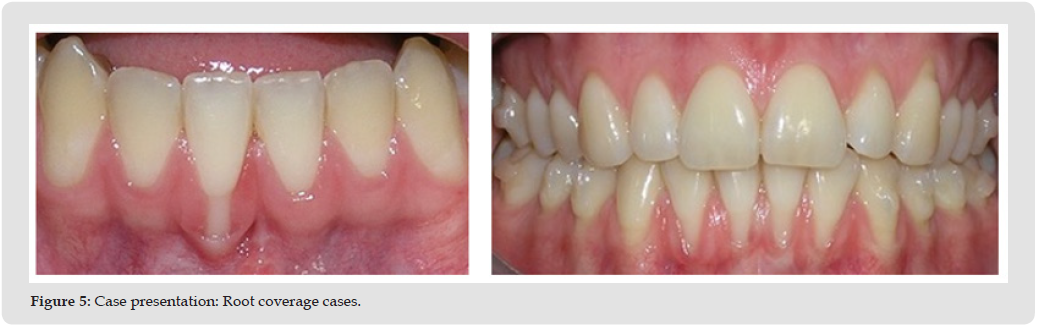
Recession Reduction and Root Cove Rage
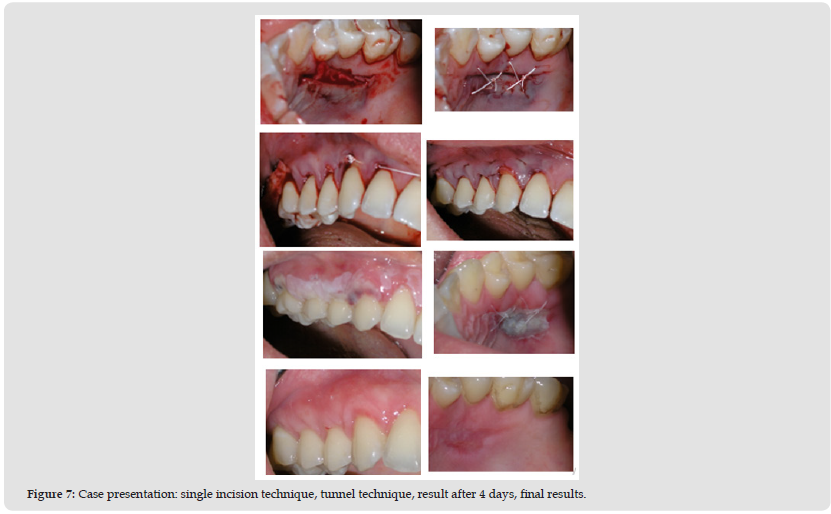
At baseline, all sites presented with measurable gingival recession. Following treatment with the tunnel technique and subepithelial connective tissue grafting, a marked reduction in recession depth was observed across the cohort, The mean recession reduction amounted to 2.72 mm per site, demonstrating a substantial clinical improvement. Complete root coverage (CRC), defined as a final recession depth of 0 mm, was achieved in 83.4% of treated sites, indicating a high predictability of the surgical approach. Residual recession was limited to minor defects in the remaining sites and did not exceed baseline values in any case, see Figures 6 & 7.
Figure 6
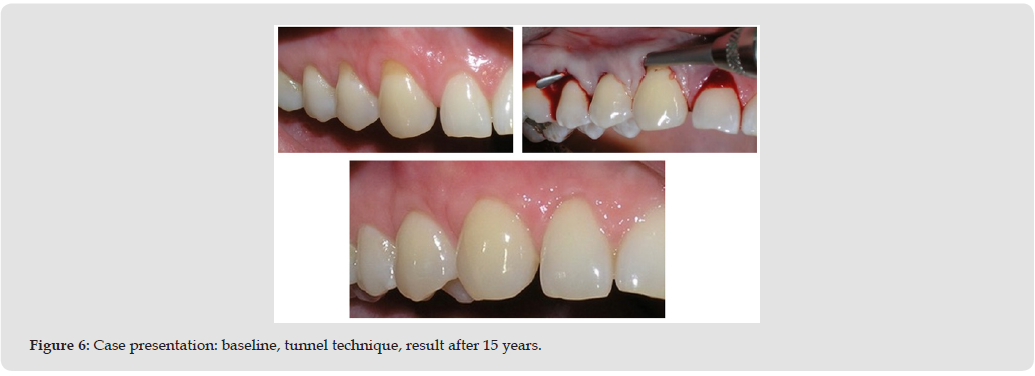
Figure 7
Long-Term Stability
Long-term outcome analysis revealed excellent stability of the augmented soft tissues.
At the final follow-up examination:
• 100% of sites demonstrated stability, defined as absence of deterioration beyond baseline recession values.
• No treated site exhibited clinically relevant relapse (≥1 mm) after initial healing.
• These findings indicate sustained maintenance of root coverage and soft tissue levels over extended observation periods, including follow-ups of 16 years.
Site-Level Outcomes
Evaluation at the site level confirmed consistent treatment effects across different tooth regions and arches. Both anterior and posterior sites showed comparable improvements, with high CRC rates and stable marginal tissue levels. Multiple treated sites within individual patients exhibited similar response patterns, supporting the robustness of the surgical protocol under routine clinical conditions. The observed CRC rate of 83.4% aligns with previously reported ranges of 70–90% in randomized controlled trials evaluating tunnel-based approaches. Importantly, the 100% long-term stability observed in this cohort exceeds relapse rates reported in 9-year RCT data, where minor marginal shifts were documented [29]. This discrepancy may be attributable to strict supportive periodontal therapy adherence within the present cohort. The mean recession reduction of 2.72 mm is consistent with volumetric analyses reported by Zuhr, et al. [29], confirming biologically meaningful soft tissue thickening.
The present retrospective longitudinal 16-Year Real-World Cohort Study demonstrates that minimally invasive periodontal plastic surgery using the tunnel technique combined with subepithelial connective tissue grafting provides highly predictable and durable clinical outcomes, with stability maintained for up to 16 years. Across 710 treated recession sites, a complete root coverage rate of 83.4% and a mean recession reduction of 2.72 mm were achieved. Notably, 100% of sites remained stable at final follow-up, with no site exhibiting deterioration beyond baseline recession values. These findings underline the long-term reliability of the tunnel technique under routine clinical conditions.
Most published studies on tunnel-based root coverage procedures report short- to mid-term follow-up periods ranging from 6 to 36 months, with CRC rates typically between 70% and 90%. While these reports consistently confirm favorable early healing, evidence regarding long-term tissue stability remains scarce. The present dataset substantially extends existing knowledge by providing real-world outcome data over more than a decade, thereby addressing a critical gap in the literature. The high stability observed in this cohort may be attributed to several biological and technical factors. Preservation of the interdental papillae and maintenance of an intact blood supply through the tunnel approach likely promote graft revascularization and soft tissue integration. Furthermore, the absence of vertical releasing incisions minimizes surgical trauma and reduces the risk of marginal tissue collapse during healing. The use of subepithelial connective tissue grafts contributes to increased tissue thickness, which has been identified as a key determinant of long-term recession stability.
Importantly, treatment effects were consistent across different tooth regions, suggesting that the described protocol is robust and transferable to a wide range of clinical scenarios. The observation that no site demonstrated clinically relevant relapse supports the concept that once complete or near-complete root coverage is achieved, augmented soft tissues can be maintained over extended periods if patients adhere to supportive periodontal care. The retrospective nature of the study represents an inherent limitation, such as randomization and standardized early follow-up intervals, but in most of the cases we have described, regular follow-ups have been performed. However, this design also reflects genuine clinical practice and offers valuable insight into long-term outcomes beyond the constraints of controlled trials. The large number of treated sites and extended observation period strengthen the external validity of the findings.
From a clinical perspective, the present results support the tunnel technique combined with SCTG as a reliable approach for the management of localized and multiple gingival recession, providing not only high rates of root coverage but also exceptional long-term stability. These findings are particularly relevant for patients seeking durable aesthetic and functional improvement, emphasizing the importance of minimally invasive soft tissue augmentation strategies in contemporary periodontal practice. The present data corroborates the concept that phenotype modification via SCTG plays a decisive role in long-term marginal stability. Longitudinal analysis across six RCTs demonstrated that soft tissue thickness gain is a significant predictor of 10-year stability.
Comparative trials evaluating acellular dermal matrices or collagen substitutes suggest reduced donor morbidity, but occasionally slightly inferior volumetric stability compared to autogenous CTG. The present dataset reinforces the long-term reliability of autogenous grafting. The observed CRC rate aligns with previously reported ranges of 70–90% in randomized controlled trials [2,7]. Longitudinal analyses demonstrated that soft tissue thickness gain is a significant predictor of 10-year stability [5].
Limitations include retrospective design, lack of control group, and absence of standardized volumetric STL analysis as performed in digital RCTs [27,28]. Another limitation is the site-based analysis, which may introduce clustering effects within individual patients. This was addressed statistically using a repeated-measures framework. In addition, patient-reported outcomes were not consistently available throughout the entire observation period and therefore could not be evaluated longitudinally. Nevertheless, the extended follow-up and substantial number of treated sites enhance external validity.
From a clinical perspective, the present results support the tunnel technique combined with SCTG as a reliable approach for the management of localized and multiple gingival recession, providing not only high rates of root coverage but also exceptional long-term stability. These findings are particularly relevant for patients seeking durable aesthetic and functional improvement, emphasizing the importance of minimally invasive soft tissue augmentation strategies in contemporary periodontal practice.
Within the limitations of this retrospective longitudinal cohort study, the tunnel technique combined with subepithelial connective tissue grafting demonstrated high predictability and exceptional long-term stability.
Across 710 treated recession sites, complete root coverage was achieved in 83.4% of cases, with a mean recession reduction of 2.72 mm. Importantly, all treated sites remained stable over a mean follow- up of 6 years, with maximum observation extending to 16 years and no site showing deterioration beyond baseline recession levels. Minimally invasive tunnel surgery combined with SCTG provides predictable root coverage and remarkable long-term soft tissue stability. The present real-world cohort contributes valuable extended follow-up data supporting the biologic durability of phenotype-modifying procedures.
The tunnel technique combined with subepithelial connective tissue grafting provides:
• High predictability (83.4% CRC)
• Significant recession reduction (2.72 mm)
• Exceptional long-term stability (100%)
These findings indicate that minimally invasive soft tissue augmentation using the tunnel approach provides durable and biologically stable outcomes, supporting its role as a long-term therapeutic strategy in the management of localized and multiple gingival recession.
This retrospective observational study analyzed anonymized clinical data obtained during routine periodontal treatment. According to national regulations governing retrospective analyses of anonymized clinical data, formal approval from an institutional ethics committee was not required. All patients provided written informed consent for treatment and the scientific use of anonymized clinical data. The investigation was conducted in accordance with the Declaration of Helsinki.
X The authors declare that they have no known competing financial interests or personal relationships that could have appeared to influence the work reported in this paper
International Association of Landscape Archaeology, Czech Glass Society, Czech Republic

Department of Chemistry, Semenov Institute of Chemical Physics, USSR Academy of Sciences, Moscow, Russia
Associate Professor at Department of Breast and Thyorid Surgey, Chongqing General Hospital, China
Professor of Nuclear Medicine, Faculty of Medicine and Surgery, University of Milan, Milan, Italy

Department of Pharmaceutical Sciences, South University School of Pharmacy, USA





 Abstract
 PDF
PDF



























