info@biomedres.us
+1 (502) 904-2126
One Westbrook Corporate Center, Suite 300, Westchester, IL 60154, USA
Site Map
 ISSN: 2574 -1241
ISSN: 2574 -1241
ISSN: 2574 -1241
Received: June 16, 2026; Published: July 13, 2026
*Corresponding author: Kuiate David, Faculty of Medecine and biomedical sciences, University of Yaounde, Radiology and Medical Imaging Department, ‘Les Promoteurs de la Bonne Santé’ Medical Centre, Pan-African Institute for Paramedical Training (IPAF PM), Cameroon
DOI: 10.26717/BJSTR.2026.66.010297
Introduction: Accurate alignment of radiographic projections with clinical indications is essential for effective
medical imaging techniques, ensuring optimal interpretation through comprehensive examination reports.
Objective: The general objective was to evaluate the concordance between radiographic projections and the
clinical indications of examination requests at HGOPY. More specifically, to evaluate the quality of examination
requests, the correlation between radiographic projections and clinical indications, and the consequences of
discrepancies between the performed projections and the clinical indications.
Method And Materials: This qualitative, descriptive, cross-sectional study was conducted on 242 conventional
radiography requests. All Medical Imaging Technicians and radiologists who refused to participate were excluded,
as well as emergency examination requests. Data were collected using a data collection sheet and processed
using Word and Excel 2007 software.
Results: Of the 242 registered requests for conventional radiology examinations, most were produced by general
practitioners, surgeons, interns/residents, rheumatologists and paediatricians. Chest radiography was the
most common examination requested (76%), with an above-average degree of compliance (67%) based on 13
elements deemed relevant to a radiographic examination request. 99.58% of prescribed examinations were
compatible with the clinical information provided, while 9% of the performed projections were discordant. This
led to modifications being made to the radiographic projections, compared to those initially requested. This
modification improved 3% of diagnoses.
Conclusion: There is a moderate concordance (Kappa = 0.137) between modified radiographic projections and
the quality of the final diagnosis (p < 0.05). Radiological consultation continues to be an important factor in
improving patient management.
Keywords: Radiography; Assessment; Projection View
Radiology, a medical imaging technique based on X-ray attenuation, is now an essential tool for diagnosing and monitoring a wide range of pathologies (Adambounou, et al. [1]). Concordance between radiographic incidences (projections) and examination indications is essential for good practice in medical imaging techniques. Furthermore, this concordance enables the acquisition of successful images that are useful for the patient, thereby improving the quality of interpretation and obtaining reliable results that enhance patient care (Moifo, et al. [2]). As Medical Imaging services develop, the demand for imaging procedures increases, particularly for CT scans, and there is a tendency to trivialise conventional radiographic examinations (Kamano [3]). However, a medical prescription is the first step in any imaging examination and is essential for its completion. It requires a series of necessary pieces of information to be efficient. Studies carried out in Africa on medical imaging examination requests have found high rates of non-compliance. For example, Akinola et al. and Abubakar et al. in Nigeria identified 100% of requests as non-compliant (Akinola, et al. [4]). Similarly, a study conducted at the Gynaeco- Obstetric Hospital of Yaoundé revealed that medical imaging requests were incomplete in terms of administrative and clinical information, with an overall non-compliance rate of 98.9% (Moifo, et al. [2]). A further study by Dr Yannick Onana revealed that, of the requests retained, CT scans and radiographs had the highest rates of non-compliance.
Currently, there is no validated guide in Cameroon for the proper use of medical imaging examinations (Zeh, et al. [5]). Consequently, sub-Saharan African countries implicitly follow the recommendations of French professional associations (Moifo, et al. [2]). An examination form must contain all the administrative and clinical information necessary to justify, guide and interpret the examination. Furthermore, information essentiale for scheduling and conducting the examination must be included (Akinola, et al. [4]). It is crucial to ensure that radiological examinations are only performed when appropriate clinical indications are present. However, preliminary studies suggest significant discrepancies between the requested radiological examinations and the clinical indications provided on the examination forms. This can result in unnecessary examinations and additional costs for patients, as well as unnecessary radiation exposure (Moifo, et al. [2]). The aim of this study is to evaluate the concordance between radiographic pojections views performed and clinical indications at the HGOPY. Specifically, the study will assess the quality of examination requests, evaluate the correlation between radiological examinations and clinical indications, and assess the consequences of discrepancies between examinations performed and clinical indications.
We conducted a qualitative, descriptive and cross-sectional study, at the Radiology and Medical Imaging Department at the Gynaecology, Obstetrics and Paediatrics Hospital (HGOPY) in Yaounde. The study population consisted of all requests for conventional radiography received by the department during the study period, as well as the medical imaging technicians and radiologists involved in carrying out and interpreting these examinations. Data were collected using a data collection sheet, that was use to collect informations such as Administrative data, quality standard of the request (base on the presence of the 13 elements deemed necessary for a radiographic request, as defined by the Roussel & Lelièvre criteria), clinical indication (Compatibility of the requested examination with the provided clinical information), Realisation procedures (The radiographic incidence initially requested versus the incidence finally performed), Modifications of projection view (reasons for modifying the incidence, if applicable) and diagnostic impact of the modified projection (evaluation of diagnostic quality following modification of projection). Data were processed using Word and Excel 2007. The statistical analysis involved calculating frequencies and percentages. To evaluate the agreement between the modification of incidences and the quality of the final diagnosis, the Kappa coefficient (Cohen’s Kappa) was employed. The chi-squared test (χ²) was used to test for correlations, with a significance level set at p < 0.05.
A total of 242 requests for conventional radiology examinations were analysed. The majority of the prescribers were general practitioners, surgeons, interns/residents, rheumatologists and paediatricians. Chest radiography was the most frequently prescribed examination, accounting for more than three-quarters of all procedures. This high frequency is consistent with its role as the primary examination for respiratory and cardiovascular pathologies, and with its greater accessibility. The degree of compliance with examination requests was above average at 67%. Although 33% of requests were still non-compliant. The vast majority (99.58%) of prescribed examinations were compatible with the clinical information provided. This indicates that prescribers generally have a good understanding of which type of imaging modality is indicated for the clinical context. Although the type of exam was highly compatible, the specific radiographic projection was modified in 9.09% of cases. This underscores the importance of the radiology team (technicians and radiologists) in refining the prescription to effectively answer the diagnostic question.
The primary reason for modification was the lack of sufficient clinical detail on the request (45.45%). This forced the radiology team to either infer the necessary view or consult the patient further. In 36.36% of cases, the technician or radiologist identified a specific concern that required a projection other than the standard one requested. Modifying incidences improved diagnosis for 3% of the total patient population. Although this percentage may seem low, it represents a substantial increase in diagnostic accuracy for those patients. This confirms that the “radiological consultation,” or the process of verifying and adjusting the request, is a crucial step in the care chain. A Kappa coefficient of 0.137 indicates slight to moderate concordance between modification of incidence and quality of final diagnosis. The p-value of less than 0.05 indicates that this relationship is statistically significant. While modifying the incidence generally improves the diagnostic process, this suggests that it is not the sole factor determining diagnostic quality; other variables also play a major role. The Khi2 test suggests that general practitioners had a higher rate of discordance (13.6%) compared to specialists (5.3%). This implies that specialists may be more familiar with the specific radiographic projections required for their field, or provide more precise clinical indications (Tables 1-8).
Table 1: Distribution of examinations by region.
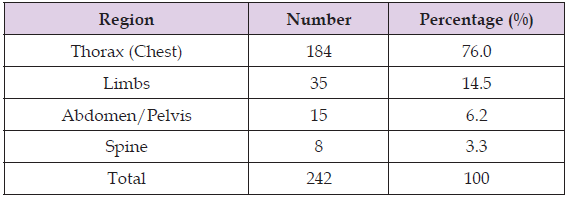
Table 2: Quality of examination requests based on 13 relevant elements.
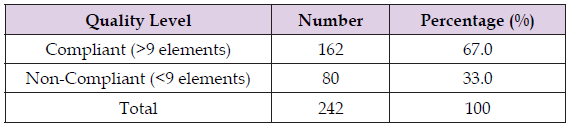
Table 3: The compatibility between the requested examination and the clinical information.
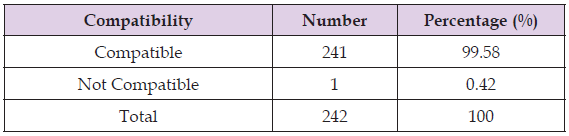
Table 4: Concordance between the requested and performed projection views.
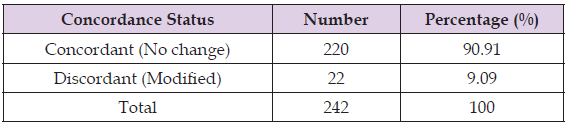
Table 5: Reasons for modification of radiographic projection views (N = 22).
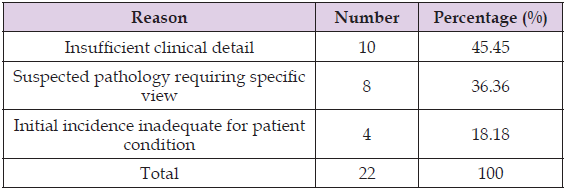
Table 6: Diagnostic quality evaluation after modification of projection views.
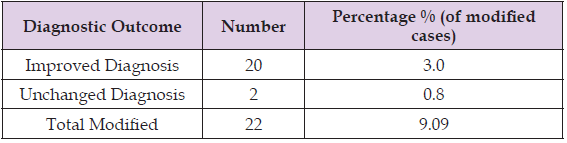
Table 7: Test of concordance (Kappa) between modification of projection views and diagnostic quality.
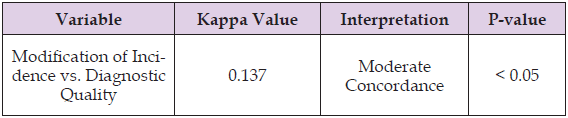
Table 8: Test of correlation (Khi2) between prescriber qualification and discordance rate.
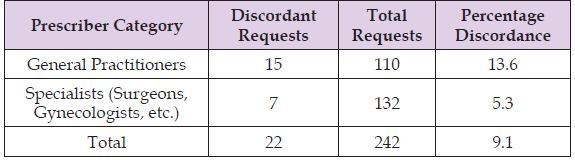
This study aimed to evaluate the concordance between radiographic ptojection views performed and clinical indications at the Yaoundé Obstetrics and Gynaecology Hospital. The results showed a high rate of compatibility (99.58%) regarding the type of examination requested but a significant rate of modification (9.09%) regarding the specific projection performed. The quality of examination requests was found to be 67% compliant. This contrasts with previous studies in the region. For example, Moifo, et al. [2] found a 98.9% insufficiency rate in requests in Yaoundé, and Onana, et al. [6] found nonconformity rates of 23.2% among general practitioners and 29.1% among specialists. Our lower rate of noncompliance (33%) may indicate an improvement in documentation practices or a difference in the strictness of the evaluation criteria (13 elements). Nevertheless, the fact that one-third of requests are noncompliant is concerning. As Roussel [7] have noted, a good request should describe symptoms, clinical data, and the specific question to be answered.
The high proportion of chest X-rays in our study (76%) is consistent with literature indicating that chest radiography is the most common imaging procedure worldwide. However, the 9% discrepancy in incidence rates is a critical finding. It reflects the “silent” corrections made by radiology technicians and radiologists. The literature often emphasizes the role of the “radiological consultation.” The 2003 French Decree mandates an exchange of information between the prescriber and the radiographer. In our context, this exchange often occurs implicitly during the examination. When faced with a vague request, such as “chest X-ray,” the technician must decide whether to take a posteroanterior (PA) or anteroposterior (AP) view or include lateral views based on the patient’s ability to stand or their clinical state. The predominant reason for modification was “insufficient clinical detail” (45.45%). This aligns with the findings of Pinto et al. (2012), who noted that consultation times are often too short for general practitioners to write detailed requests. The pressure of a heavy workload and the “tick-box” culture of prescribing may cause clinicians to omit the clinical reasoning that would guide the radiographer.
Statistical analysis revealed a Kappa of 0.137, indicating moderate concordance between modifying the incidence and diagnostic improvement. Although the modification only improved the diagnosis in 3% of cases, the p-value (less than 0.05) confirms the significance of this intervention. This finding supports the conclusion that the radiology team acts as a safety net. Without this technical adjustment, the examinations of those patients might have been non-diagnostic, leading to repetition of the exam, increased radiation dose, and delayed treatment (Burengengwa [8]). Furthermore, the higher rate of discordance associated with general practitioners compared to specialists (13.6% vs. 5.3%) suggests a gap in training regarding the specific technical requirements of radiography. Specialists, being more frequent users of imaging in their field, likely have a better understanding of which projection is necessary for their diagnostic query [9-15].
This study evaluated the concordance between radiographic projection views and clinical indications at Yaoundé Obstetrics and Gynaecology Hospital. While the prescribed examination was generally appropriate, the requested projection often lacked precision. The radiology team modified the examination in 9.09% of cases, which significantly improved the diagnostic quality for some patients. There is moderate concordance (κ = 0.137) between the modified projection views and the quality of the final diagnosis (p < 0.05). Radiological consultation remains a valuable tool for improving patient management quality. To enhance this process, continuing medical education on the importance of detailed clinical information should be implemented for prescribers, and direct communication (teleconsultation) between clinicians and radiologists before examinations are performed should be encouraged.

International Association of Landscape Archaeology, Czech Glass Society, Czech Republic

Department of Chemistry, Semenov Institute of Chemical Physics, USSR Academy of Sciences, Moscow, Russia

Department of Educational Sciences, Research Centre Qualities of Teachers, School of Education – HAN, Nijmegen, Netherlands

Associate Professor at Department of Breast and Thyorid Surgey, Chongqing General Hospital, China

Neurology, LA BioMed Research Institute, USA





 Abstract
 PDF
PDF



























