info@biomedres.us
+1 (502) 904-2126
One Westbrook Corporate Center, Suite 300, Westchester, IL 60154, USA
Site Map
 ISSN: 2574 -1241
ISSN: 2574 -1241
ISSN: 2574 -1241
Received: June 13, 2026; Published: July 02, 2026
*Corresponding author: Sapogin LG, Technical University (MADI), Leningradsky Prospekt, Moscow, Russia
DOI: 10.26717/BJSTR.2026.66.010284
This article describes a model of Unitary Quantum Field Theory in which a particle is represented as a wave packet. The frequency dispersion equation is chosen such that the packet periodically appears and disappears without changing shape. The envelope of the process is identified with the ordinary wave function. The equation of such a field is nonlinear, and the mass depends on velocity in the same way as under relativistic invariance, but all the schizophrenia with time dilation and line contraction disappears. Under ordinary transformations, they reduce to the Dirac, Schrödinger, and Hamilton-Jacobi equations. A number of new experimental effects are predicted for both high and low energies. The fine structure constant (1/137) was calculated in 1988, and the masses of numerous (33) elementary particles, starting with the electron, were estimated in 2007 with an accuracy of at least 1%. Two pentaquarks, the theta baryon, the Higgs boson, and the 28 GeV particle were discovered 11 years later, all calculated with high precision. The overall picture of the world is based on a unified unitary field. These equations allow for the origin of the Universe without a Big Bang. Gravity is no longer a mystery. In principle, a completely new type of energy is possible for humanity. The civilization of the future will be free of hydrocarbons and coal.
Keywords: Unitary Quantum Theory; Standard Model; Quantum Electrodynamics; Maxwell’s Equations; Schrödinger Equation; Solid State; Standard Model; Higgs Boson; Big Bang
Abbreviations: UQT: Unitary Quantum Theory; HO: Hypothetical Observer; QM: Quantum Mechanics; LLCE: Local Law of Conservation of Energy; MADI: Moscow State Technical University; CL: Conservation Laws; ECL: Energy Conservation Laws; LECL: Local Energy Conservation Law; QFT: Quantum Field Theory; SM: Standard Model; LHC: Large Hadron Collider; SORENA: Socialist Reconstruction and Science
It is difficult to avoid the conclusion that only a mathematical description expresses all our knowledge of the various aspects of our reality. An opinion extracted from Soviet newspapers. It seems that most researchers have completely forgotten that one of the most outstanding modern minds, Albert Einstein, rejected standard quantum mechanics until the end of his life. It is better to quote his famous words: “The enormous initial success of Quantum Theory could not persuade me that it is based on a game of dice. I do not believe that this fundamental concept is a suitable foundation for physics as a whole... Physicists consider me an old fool, but I am convinced that the future development of physics will take a different direction than it has so far. I reject the central idea of modern statistical Quantum Theory... I am absolutely certain that the existing statistical character of modern Quantum Theory must be attributed to the fact that this theory operates only with incomplete descriptions of physical systems.” A. Einstein (back translation). “In fact, we now have to distinguish between ‘matter’ and ‘fields’, although we can hope that future generations will overcome this dualistic interpretation and replace it with a general idea, as the field theory of our day is vainly trying to do.” A. Einstein (back translation). At the first stage of the development of Quantum In the framework of classical physical theory, the mechanism of wave-particle duality was not discovered at all, as was done later in the UQT [1-12]. It is surprising that the super-abstract ad hoc quantum ideology developed by Niels Bohr turned out to be generally suitable for describing quantum reality. The researcher did not contradict anything, strictly using new, often paradoxical quantum rules, and any paradox could be removed by simply prohibiting its analysis. Although many researchers tried to solve these problems, they did not succeed. The generally accepted interpretation of quantum theory became beyond criticism. Moreover, the definition of methods describing one of the aspects of quantum reality was declared the main goal of quantum science, while the picture in images and movements became simply an optional goal. Nevertheless, one general philosophical problem remained: the dual principles of fundamental physics. There were particles as points, which were the source of a field that was not reducible to the field itself; however, researchers did not make every effort to resolve this issue. The introduction of such a microparticle led to a wide range of different divergences - everyone knows that the electric energy of a point charge is equal to infinity. Many ideas, absolutely brilliant from a mathematical point of view, appeared, suitable for canceling these arising infinities. As an explanation, one can cite the words of P. A. Dirac: “... the majority of physicists are quite satisfied with the existing situation. They consider relativistic quantum field theory and electrodynamics to be completely perfect theories, and there is no need to worry about this situation. I must say that I do not like this at all, because according to such a perfect Theory, we must, without any reason, neglect the infinities that appear in the equations. This is simply mathematical nonsense. “Usually, in mathematics, a quantity can be rejected only if it is too small, not because it is infinitely large and one would like to get rid of it.” Directions in Physics, New York, 1978 (back translation).
The significant success of quantum mechanics (especially in stationary cases) was based on the simple correlation between the de Broglie wavelength and the geometric properties of the potential. Formally, the particle was considered a point; otherwise, it would have been difficult to add the character of a probability amplitude to the wave function. But the point-like nature of charge, as well as the principle of complementarity, prevented progress in the structure of elementary particles, and therefore further development of quantum field theory within the accepted paradigm led to the complete failure of quantum field theory itself. There is another concept in physics; It comes from W. Clifford, A. Einstein, E. Schrödinger and Louis de Broglie, in which a particle is considered as a clot (wave packet) of a certain Unified Field. The position of the supporters of this concept is most clearly expressed by the following words of A. Einstein: “We could, therefore, regard matter as consisting of regions of space in which the Field is extremely strong. A thrown stone, from this point of view, is a changing Field in which the states of greatest Field intensity move through space with the speed of the stone. In this new physics there is no place for either the Field or matter, for the Field is the only reality... and the laws of motion would automatically follow from the laws of the Field” (back translation). According to the classification of M. Jammer [13], the definition of a particle as a wave packet is called the Unitary theory. The first articles on this issue were published in [1-9,14-19]. In Unitary Quantum Theory, a particle is described as a wave packet that periodically spreads across the Metagalaxy and reassembles as it moves. For such a moving wave packet, both relativistic and classical quantum mechanics follow from unitary quantum equations [6-9,11-12], but this has not yet been definitively proven and is a task for the future. Nevertheless, the scalar equation of the UQT (telegraph type) as a whole allows us to obtain not only the Schrödinger equations, but also Maxwell’s equations [6- 9,11]. The field of research of the Unitary Quantum Theory (UQT) is the deepest level of matter: the level of elementary particles and quantum effects. It is known that all particles, in addition to corpuscular properties, also have wave properties (particles can interfere with each other or with themselves), and their behavior is described by wave functions. In the case of a particle moving in free space, the wave function is described as a plane de Broglie wave, the wavelength of which is inversely proportional to the momentum of the particle. If the particle is slowed down or accelerated by applied fields, then its wavelength increases or decreases accordingly. The wave itself has no physical interpretation, but the square of its amplitude is proportional to the probability of finding the particle in a given location. This is why these waves are also called “probability waves” or “knowledge waves,” etc. There’s another problem: a particle doesn’t have a precise value for its position and momentum simultaneously, although both quantities can be measured arbitrarily closely (the uncertainty principle), and determining the trajectory of a quantum particle is meaningless. Unlike the laws of classical physics with its determinism, where the results of the motion of individual particles can be predicted, in Quantum Theory, only the probability of the behavior of individual particles can be predicted. Even nature doesn’t know the path a particle will take during diffraction by two slits. But that’s not the worst part. Quantum physics embraces wave-particle duality, as well as field and matter duality. All particles act as sources of a field, but it turns out that they are, seemingly, mere points, unrelated to these fields.
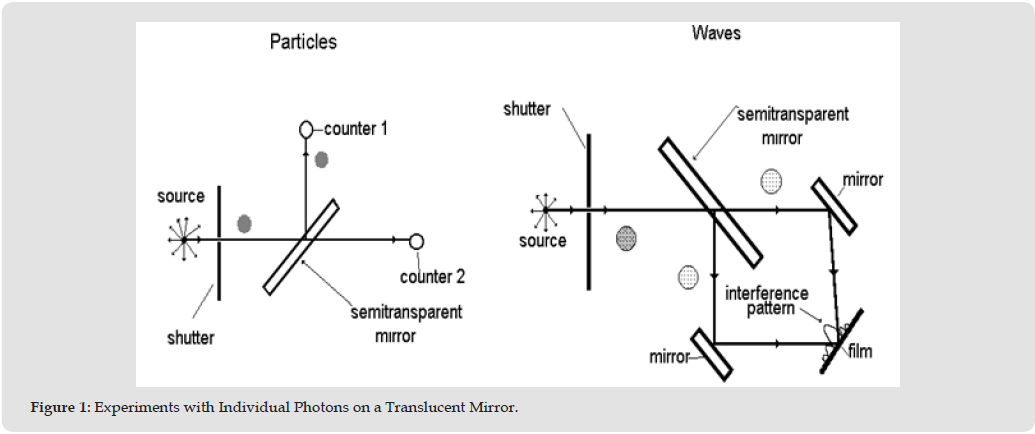
Let’s consider an extremely simple experiment with individual particles in terms of modern Quantum Theory. It will allow us to understand what is happening and will be useful in the future. Suppose individual photons fall on a translucent mirror, directed at a 45-degree angle to their beam. Translucency means that half of the incident light is reflected, and the other half is transmitted. Photon counters are installed along the path of the reflected and transmitted beams (Figure 1). In terms of Wave Theory, everything is simple: the incident wave will be reflected and partially transmitted. But the particles, if they are indivisible, should be reflected or transmitted. If the particle counter of the reflected beams registers an event, then, obviously, we must assume that the second counter will register nothing. It is easy to see that if we combine the transmitted and reflected beams and direct them to a screen, then... it’s all a matter of how we reason. Wave Theory will yield an interference pattern, while corpuscular Theory will not. In fact, interference patterns are observed experimentally, even for individual photons, and our assumptions are, to put it mildly, incorrect. To avoid any doubt about how this is even possible, it’s best to forbid anyone from even thinking about it. And the principle of complementarity in modern physics does just that. It allows us to ask only those questions that can only be answered experimentally. When someone tries to find a particle, this means refusing to observe an interference pattern, and vice versa. As if we could know from an experiment whether a particle passed by or was reflected, we would understand the particle’s actual behavior. But this is impossible to do with macroscopic instruments. The principle of complementarity makes quantum physics descriptively inaccessible. There are many experiments that we simply cannot explain “without regarding the wave function as a wave that affects the entire domain, rather than as particles that can be here and there, which is possible in terms of a clearly probabilistic point of view” (E. Schrödinger, back translation). In other words, the wave acts across the entire region simultaneously, not “maybe here, maybe there”; otherwise, there would be no diffraction or interference. Ultimately, we must acknowledge that the prohibitions of the Complementarity principle correspond to the philosophy of weakness, and the role of this principle is clearly analogous to that of caloric, phlogiston, and other obsolete concepts.
Figure 1
Humanity’s stupidity is a gift from God, But we must not abuse it. Otto von Bismarck. Let’s ask questions forbidden by the Complementarity principle. What is an electron’s wave? How does an electron behave when no one is looking at it? Is this natural behavior? How does it manage to pass through a potential barrier when its energy is less than the barrier’s height (the tunnel effect)? How does it, being indivisible, simultaneously pass through two slits separated by a distance greater than its own size? How can a probabilistic treatment of the wave function be a result of the mathematical formalism of the Theory? Why is true quantum mechanics reversible? This is a primary law, and irreversibility must follow from it to resolve the paradoxes in statistical mechanics. And last but not least: what is the structure of the electron in terms of probability? This is a vast complex of mysteries. All (or almost all) physicists have resigned themselves to it and even prefer not to talk about it. But there are those who do. Paul Langevin even called the formalism of quantum mechanics with its principle of complementarity “intellectual depravity.” E. Schrödinger wrote that he “was happy for three months” when he came up with the idea of considering a particle as a packet (bunch) of de Broglie waves, until the English mathematician Darwin proved that the packet would quickly disappear. But the problem with all these attempts (by E. Schrödinger, Louis de Broglie, and others) was that they always tried to construct it using de Broglie waves. They have such dispersion that any localized wave packet should quickly spread out. Including nonlinearity (Louis de Broglie) simply complicated the problem enormously, but didn’t solve it.
Ernst Mach’s worldview is well characterized by an episode from his life. Mach studied ballistics and often performed at shooting ranges. He once said to a colleague: “There’s a question, “The question that constantly torments me is: does a projectile exist in the interval between firing and hitting the target? We don’t see or feel it in any way.” “You’re crazy,” his colleague replied. “How can you doubt the existence of a projectile? You calculate its trajectory yourself, and your calculations agree with experiment. Isn’t that proof of the projectile’s existence?” “That doesn’t prove anything,” Mach objected. “A trajectory can only be an additional mathematical concept used to predict further observations. The projectile may not move along a trajectory at all. It may disappear at the moment of firing and reappear at the moment of hitting the target.” His colleague merely shrugged in surprise. But Mach didn’t stop there. To solve this problem, he designed a special device for photographing a projectile in flight. Mach not only became convinced that the projectile existed in flight, but also saw certain lines emanating from the projectile in the photographs, which were called Mach lines. It was precisely because of his doubts about the existence of an unobservable flying projectile that Mach developed the theory of supersonic gas dynamics. As a tribute to his achievements, the ratio of the speed of a flying object to the speed of sound is called the Mach number. See H. Laitko and D. Hoffman, Issues in Natural and Technical History, 1988 (4th), pp. 45- 57. The most important feature of Unitary Quantum Theory (UQT) is that it describes a particle as a cluster (packet) of some unified unitary field, rather than as a dubious structure of de Broglie probability waves. To observe particles, which we regard as very small clusters of some unitary field, we introduce a hypothetical observer (HO) capable of measuring the parameters of these particles using hypothetical microprobes. The dimensions of the microprobe are much smaller than the dimensions of the particles. The result of these measurements will be a certain structure function describing the packet of the unitary field. Obviously, these HO is and microprobes cannot exist, but our thought experiments will be as simple as possible. If we assume a linear dispersion of these unitary waves, we obtain an extremely curious process, never before applied in a mathematical formulation. If we have dispersion, then the harmonic components of the unitary waves, propagating at different speeds, will cause the wave packet to spread throughout space or throughout the entire Metagalaxy. Mathematical studies show that this spreading occurs without any change in the shape of the wave packet. However, during motion, there is a moment when the wave packet disappears altogether. Where does its energy disappear to? It remains in the form of harmonic components, which set a specific background at any point in space. Since these waves do not decay and continue to propagate at their speed, after some time the wave packet will begin to reappear at another point, but its sign will be reversed. During motion, the packet will periodically appear and disappear (Figure 2).
Figure 2
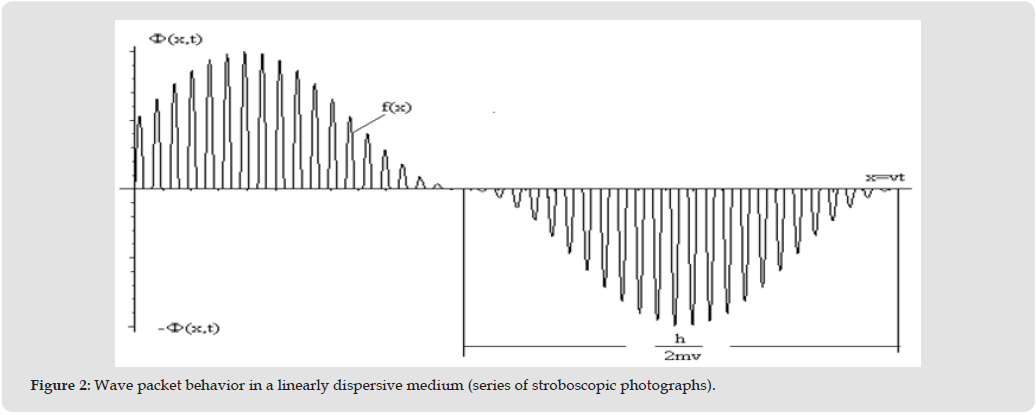
The envelope of the process is the location of the packet’s maximum points as it moves. It is sinusoidal and is at rest in all reference frames. In other words, its velocity is zero (or constant) in any reference frame. If we judge the speed of light by the behavior of the envelope of the light propagation velocity (a kind of phase velocity of the envelope), it will be the same in all reference frames. However, the group velocity of the photon packet will depend on the velocity of the source and the observer. This addition of group velocities in accordance with generally accepted laws was noted [20] by Römer (1699). As the Earth moves away from Jupiter, the light catches up with the Earth, its speed relative to the Earth decreases, and the group is recorded for 15 seconds longer. About six months later, the Earth approaches Jupiter at the same speed, the speed of the group from Io in the Earth’s system increases, and its observation time on Earth decreases by the same 15 seconds. Unfortunately, no serious measurements of the photon group velocity have been made. If we change the reference frame, we obtain a different value for the envelope wavelength, but it also remains stationary. Calculations show that the envelope wavelength is exactly equal to the de Broglie wavelength, and the dependence of this wavelength on the packet velocity is the same! From the definition of wave velocity, the misconception that the speed of light is completely independent of the velocities of the source and observer is only now becoming clear. This is profoundly incorrect and has confused all researchers for many years. This is because the speed of the sinusoidal envelope of the packet maxima does not change as the packet moves. It is completely independent of the motion of the source and observer. Römer’s observation is not the only phenomenon confirming the classical law of velocity addition for light. Half a century after Römer, the English astronomer D. Bradley discovered the phenomenon of stellar aberration, which consists of all stars describing ellipses on the celestial sphere over the course of a year with a semimajor axis observed from Earth at an angle of 20.5 arc seconds. Aberration is also caused by the Earth’s motion around the Sun. To observe a star at the zenith from a moving Earth, the telescope tube must be tilted forward along the motion, because during the time it takes the light to pass through the tube, the eyepiece, along with the Earth, will move forward. The speed of light relative to a star is equal to c, and in the Earth’s system, moving perpendicular to the direction of light, it is equal to the square root of the sum of the speed of light squared plus the Earth’s orbital velocity squared. The phenomenon of changing the periods of Jupiter’s satellites, first discovered by Roemer, is now known in laboratory practice as the longitudinal Doppler effect, and the phenomenon of aberration as the transverse Doppler effect. All these widely known facts in physics are ignored in the exposition of the theory of relativity. This has confused all of humanity.
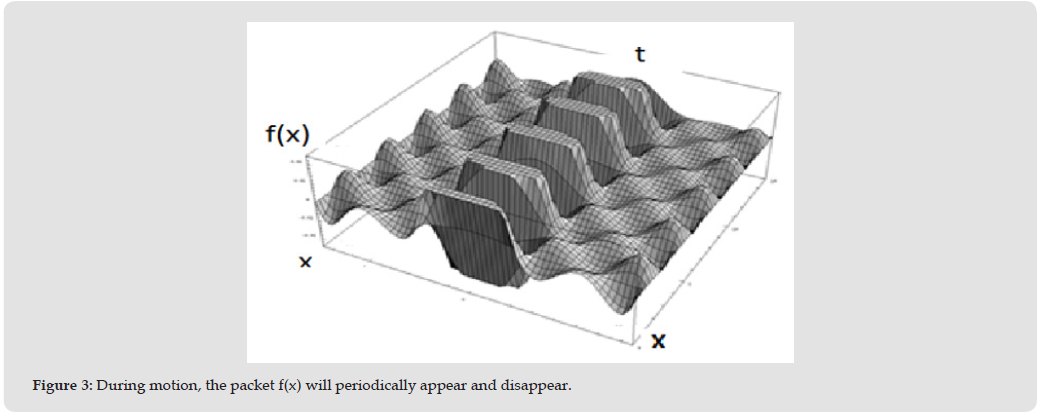
In the last century, when precise interplanetary radar became possible, experiments were conducted to determine the distance to Venus. In addition to two American observatories (the Massachusetts station and the station in Puerto Rico), the Crimean Observatory of the USSR Academy of Sciences also participated. In June 1964, it was established that the signal delay in the USSR was always shorter than in the USA. The difference was five times greater than the possible measurement errors. An analysis conducted by B. Wallace [21-22] showed that the signal propagation speed was superimposed on the circumferential velocity of the Earth’s rotation. While in Crimea it was directed towards the signals from Venus, in the USA it was in the opposite direction, i.e., “the relative speed of light in space is c + v, not c.” This measurement is of great scientific value, but the Crimean Observatory refused further participation in the work, and its signature does not appear in the results. As you can see, the entire unitary quantum theory is preoccupied with the decisive use of this fundamental idea. It should be emphasized that this periodic appearance and disappearance of particles is a mathematical model and does not yet relate to quantum mechanics, since a stationary packet does not oscillate (Figure 3). Such a periodic appearance and disappearance of a particle was recently observed: A laser beam contains photons of the same phase in its stream. This will lead to modulation of the photon stream, with a period of 1/2 the wave. Thus, in some sections of the beam, at certain moments in time, photons in the form of particles will simply be absent, which was discovered in experiments in London [23]. There is a serious problem with the very small number of neutrinos emitted by the Sun in measurements. They are insufficient for a definitive understanding of solar physics. The neutrino flux will differ significantly from the photon flux of an infrared laser. Neutrinos will exist in different, uncorrelated phases within the flux, and due to their low mass, they will have enormous periods of appearance and disappearance. Thus, the solar neutrino flux will be significantly smaller than what is detected, since some neutrinos will disappear at the point of detection. This explains the small number of solar neutrinos, which leads to discrepancies with theory.
Figure 3
The stability of a wave packet is determined by the balance between dispersion and nonlinearity. A similar phenomenon occurs for soliton-type solutions in the Korteweg–de Vries (KdV) equation [24], but the soliton is stable. The requirement of relativistic invariance, which would be the main requirement of any Theory, refines this idea further. It states the following: if God excited a wave packet in space with his finger and then removed it, the packet would then oscillate like a membrane or a string. The frequency of these free natural oscillations is very high: it is proportional to the rest energy of the particle and is equal to the frequency of the so-called Schrödinger vibration “zitterbewegung”.
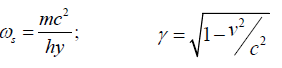
During motion, periodic appearances and disappearances of a particle (de Broglie oscillations) occur due to dispersion with a frequency ωB . At low energies,
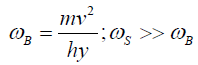
and the presence of fast natural oscillations has no effect on the
experiment. Thus, all quantum phenomena are the result of de Broglie
oscillations. As the frequency increases, a resonance phenomenon
arises, leading to an increase in the oscillation amplitude and an increase
in mass. The well-known graph of particle mass versus velocity
as it approaches the speed of light (Figure 4) is actually half the conventional
resonance curve for the forced oscillation of a harmonic oscillator
in the absence of dissipation. The packet amplitude increases,
and this is the mechanism by which kinetic energy is converted into
matter (mass). Time dilation and packet compression must be forgotten
forever. It was precisely these circumstances that led Poincaré to
regard such relativistic dynamics as unnecessary exotica. In the case
were v→c , the frequency ωB →ωs (normal resonance) γ →0 ),
and beats with a difference frequency
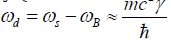 appear. The
particle will acquire a completely new low-frequency envelope with
a new wavelength.
appear. The
particle will acquire a completely new low-frequency envelope with
a new wavelength.
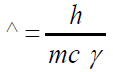
Figure 4
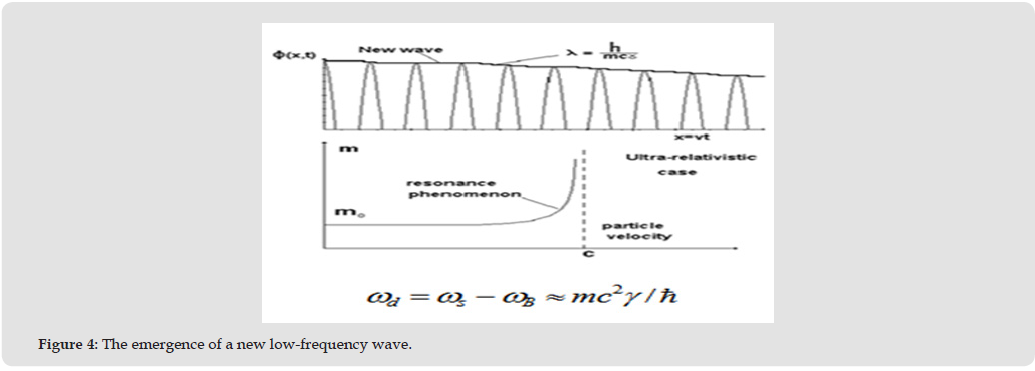
This new wave can be detected experimentally at CERN. If found, it will be a requiem for standard quantum theory. At very high speeds, the magnitude becomes significantly larger than the size of the quantum system with which it (the new wave) interacts – Figure 4. Now the wavelength of the new wave increases with energy, while the de Broglie wave slowly decreases with speed. Such a high-energy particle will take the form of a quasi-stationary wave packet, moving in accordance with classical laws. This explains the success of the hydrodynamic theory associated with the production of multiple particles, where a packet with an extremely large attitude can break up into a series of packets with smaller amplitudes. However, such processes of new particle production are not limited to high-energy particles. Something similar occurs at low energies, but the vast majority of the resulting wave packets are below the detector barrier and therefore will not be detected. It would be wonderful to observe the emergence of such a new wave, whose wavelength increases with energy, in experiments at future accelerators [1-5,8-9]. There are curious titles in the journals: “Fission of Elementary Particles” and «Evidence of Fractional Electrons in Liquid Helium” [25]. On the cover [26] it is written about this: “One man thinks the electron splits. If he is right, it is the end of Quantum Theory.” If our HO (Hypothetical Observer) places a large number of his microprobes in the path of the wave packet, he will be able to observe the envelope of such a process, and all this will not contradict general Quantum Mechanics, since this envelope corresponds to the wave function. A pure sinusoidal envelope can be detected by the HO in one case: if there were only a single particle in the world. But the real world consists of a huge number of particles moving at different speeds. Partial waves (harmonic components) of all particles can be summed up into real field fluctuations, which will act randomly. These fluctuations will ruin the idyllic nature of our HO measurements for a single particle in the Universe, because the sinusoidal envelope will be distorted by vacuum fluctuations and difficult to clearly distinguish.
Any wave packet described in terms of the structure function can be decomposed using the Fourier transform into plane sinusoidal (partial) waves. There are infinitely many of these waves, and their amplitude is infinitely small. If they are summed, the result is zero everywhere except in the region occupied by the structure function. Thus, the structure function can be represented either as a function of time (temporal representation) or as a function of the amplitude of harmonic components related to frequency (spectral representation). These are absolutely equivalent mathematical representations. There is now no need for the Complementarity principle, which was a very convenient ad hoc representation. It is easy to understand how the synthesis of corpuscular and wave properties is realized. Corpuscular properties arise due to the localization of the wave packet in a small spatial region. The wave properties of de Broglie waves can be explained as follows: when a wave packet approaches a diffraction system (for example, in Young’s double-slit experiment), we observe ordinary diffraction of unitary waves (harmonic components), and a diffraction pattern of these waves appears on the screen, superimposed on the diffraction pattern of the de Broglie wave. HO can observe this with his microprobes. DC current does not flow in a circuit with a capacitor, but with AC voltage, current does flow. For DC, the capacitor is an open circuit, but for AC, there is no open circuit. Clearly, some mysterious process occurs between the capacitor plates, called displacement current. But there are no electrons in the vacuum between the plates. In UQT, this is explained in the most natural way: The velocities of electrons disappearing on one plate and appearing on the other are extremely small. This means that the magnitude of the de Broglie wave is large and occupies the entire distance between the plates. The wave function of the quantum mechanics differs from the standard wave function of quantum mechanics by the factor of the running structure function:

The structure function f(r-vt) of a wave packet nullifies the de Broglie wave everywhere except in the region of its existence. The wave simply does not exist, and there is no need to invent an ether. Thus, problems associated with the disappearance of the wave function are absent. We would like to emphasize that the de Broglie wave is not actually a wave, but rather maxima. The packet’s motion creates a sinusoidal waveform. The geometric position of the packet’s maximum points manifests itself as a sum of harmonic waves and exists in any diffraction experiment because all propagation equations are linear. As long as these packets don’t overlap, everything is linear, and the superposition of unitary waves creates a common diffraction pattern modulated by a de Broglie wave, even though de Broglie waves don’t exist.
Let’s consider real instruments, which are always macroscopic. In them, atomic nuclei and electron shells are located quite close to each other and form very numerous but discrete states. The transition from one such state to another is a quantum leap. Therefore, the absorption and emission of energy between atomic systems is accomplished via quanta. However, this doesn’t mean that a quantum or particle propagates as something constant and indivisible during motion. The energy of a particle can be divided or changed by vacuum fluctuations. A photon’s wave packet, for example, in the case of superimposed vacuum fluctuations, can briefly transform into a meson. A photon can masquerade as a proton or a neutron. In conventional Quantum Field Theory, the proton is assumed to possess a certain atmosphere of mesons. This follows from the interpretation of the results of proton beam collisions. However, proton beams do not contain mesons. Protons appear and disappear during their motion, and their masses periodically vary from the proton mass to zero, passing through the masses of mesons. This creates the appearance of a meson atmosphere. Ultimately, all quantum measurements are based on energy absorption and are irreversible processes [4,5,9]. For any device to detect a particle to operate, at least a quantum of energy is required—this is the threshold energy of the device. Incidentally, it’s worth noting that our HO (Hypothetical Observer) uses devices with zero threshold energy, so it can even detect vacuum fluctuations.
Let’s consider the interaction of a particle with a detector [4,5,9,11]. A particle is a wave packet, and its energy is proportional to the packet’s intensity, but it can change due to periodic disappearances and reappearances. Furthermore, the packet itself can be absorbed during the interaction. To detect a particle, the detector must wait until the combined energy of the particle and the vacuum fluctuations is greater than or equal to the threshold energy. Clearly, the probability of the detector triggering will be proportional to the amplitude of the wave packet, or more precisely, to the intensity of the wave function envelope. If a wave packet with an intensity that is too low, compared to the threshold energy of the microdevice, approaches the detector, then a large vacuum fluctuation is required, but the probability of such an event is too low. and therefore, the probability of detecting a particle is low (Figure 5). The theory of quantum measurements has been developed within the framework of Unitary Quantum Theory (UQT), and the statistical interpretation now follows from UQT, but is not postulated, as was previously the case. The theory of such quantum measurements [4,5,9] yields the probability of detecting a particle:
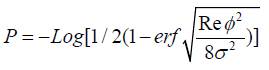
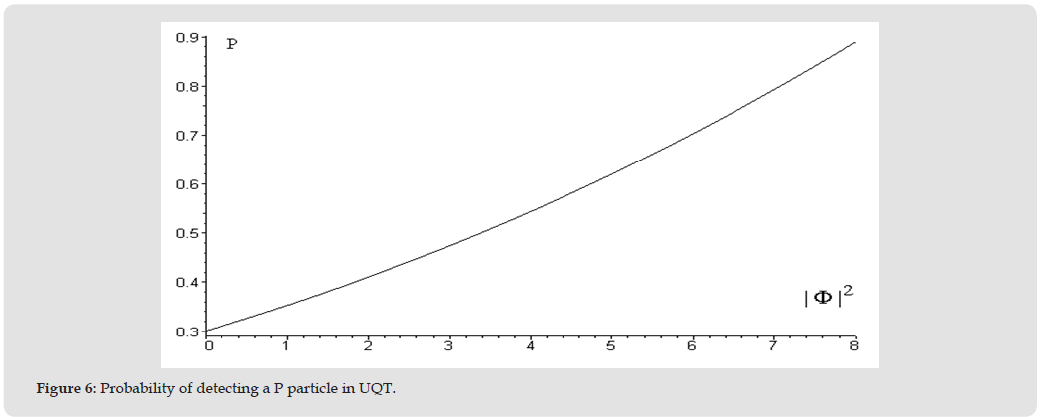
In conventional quantum mechanics, P ~ ΨΨ* is postulated, but below is a theoretical numerical plot (Figure 6) for the probability of detecting a P particle in UQT: This point of view automatically requires that the variance of vacuum fluctuations be finite, which, in turn, requires a finite universe!
Figure 5
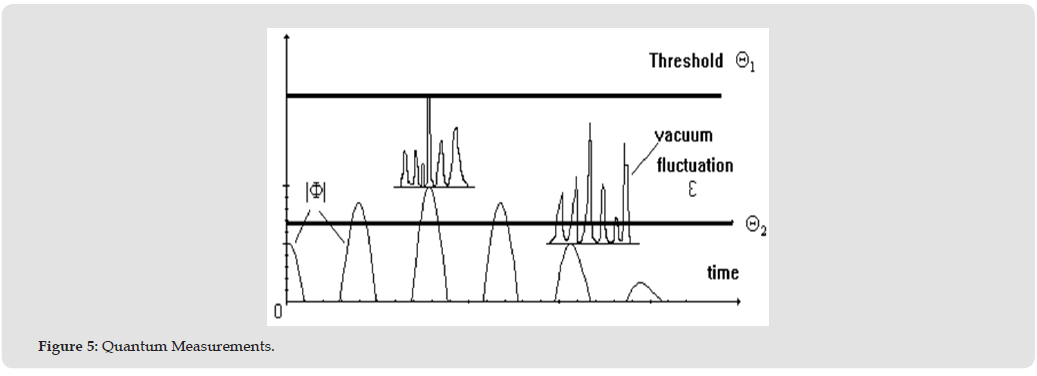
Figure 6
The uncertainty principle arises because energy and momentum are not constants (Equation 4), but change periodically due to dispersion due to particle disappearances and reappearances [1-3,11]. Furthermore, due to the statistical laws of measurements with detectors, it is impossible to accurately measure anything due to unpredictable vacuum fluctuations. A Hypothetical Observer (HO) could predict the position, momentum, or energy of a packet if it were unique in the Universe, i.e., in the absence of vacuum fluctuations. The presence of unpredictable vacuum fluctuations makes all laws of the microworld fundamentally statistical for any observer. Accurately predicting expected events requires precise knowledge of vacuum fluctuations at any given moment, which is impossible, as it requires knowledge of the structure and behavior of every packet (particle) in the Universe and control of its motion. Laplace’s mechanical determinism [6-9,11,27] is completely lost in both modern physics and the future. Maxwell was right when he said, “The true logic of our world is the calculus of probabilities.” (reverse translation). The envelope of a packet of unitary waves, arising from linear transformations (appearance and disappearance), corresponds to Huygens’ principle. It explains how the formal connection between a moving particle and a monochromatic de Broglie wave, as if propagating in the direction of motion, with all the wave properties, is possible. There are unitary waves (spectral decomposition waves), which we consider as participants in diffraction and interference, but thanks to the principle of superposition, we obtain the same result as if a de Broglie wave were also involved in this process. The new linear equations of the UQT allow for time inversion with the simultaneous replacement of the wave function with its conjugate—formal reversibility. In fact, this Reversibility would only occur if the universe consisted of only one particle. In the real world, the restoration of the previous vacuum fluctuation is also necessary for full reversibility of the process, which is impossible. This doesn’t mean quantum processes are irreversible; reversibility is simply statistical in nature, but now the direction of time is determined solely by entropy. The envelope “wave” introduced earlier is monochromatic, but in reality, it doesn’t exist as a traveling plane wave with such properties. Although it is related to the particle’s energy, other definitions, such as “probability waves, knowledge waves,” can also be used. Unlike general quantum theory, a very important stage in understanding the tunnel effect is now approaching (see Figures 14 & 15). If we have a sufficiently narrow barrier with a height exceeding the energy of the incident particle, then, according to classical mechanics, it will never pass through the barrier. In general quantum theory, an incident wave is partially reflected and passes by, and we have a finite probability that the particle will end up behind the barrier. In these cases, general quantum mechanics posits that the particle tunnels for itself in the barrier, concealing the method by which this tunnel was created. How does the HO (Hypothetical Observer) see this process? If a particle approaches the potential barrier in the absolute collapse phase, it easily passes through the barrier without interacting with it due to the linearity of all equations at low field amplitudes. It simply appears behind the barrier without interacting with it if its width is much smaller than the de Broglie wavelength. However, if it approaches the maximum amplitude of the packet in phase, the particle will be reflected due to the nonlinear interaction of the waves with the barrier field. (see Figures 14 & 15). Now let’s return to the experiment with the semitransparent mirror discussed above. From the perspective described, a wave packet (particle) will split at the mirror and enter each beam, depending on the phase of the packet near the mirror and the structure of the mirror at that location. Generally, we have two unequal fragments of wave packets with smaller amplitudes, which can interfere. This reduces the probability of detecting fragments, since a noticeable vacuum fluctuation is required to overcome the counter’s detection threshold. Consequently, a single particle may be lost during measurements or even registered as separate particles in both beams simultaneously. The creation of two particles from one is not a disconcerting fact, because the energy of the fragments will be restored to the required level by vacuum fluctuations. Note that the assertion of standard Quantum Mechanics that a single particle can be simultaneously located at many points in the quantum world sounds strange from a common-sense perspective and remained without any fundamental understanding for decades. Within the framework of the quantum theory of quantum mechanics, these scientific explanations are, in principle, correct [6-9,11]. We currently face an ambiguous situation when it comes to high-tech experiments with fantastic results, such as the classic Brown and Twiss experiments and their variations (Figure 1). Two counters were found to simultaneously detect particles—a clear confirmation of the phenomena under discussion. Moreover, most similar experiments (including experiments with entangled photons) directly confirm this interpretation. The results of experiments with entangled particles are quite simple and understandable within the framework of UQT, while the idea of searching for some kind of superluminal mystical connections between particles is completely unrelated. It’s meaningless. This is well known and even discussed as the story of the right and left shoes and fits perfectly with the UQT.
In a beam of light consisting of photons, an increase in the number of photon pairs is always observed. This effect persists even in situations where induced radiation is impossible. If we collide different particles, and if one or two particles disappear at the point of interaction, they will pass through each other without any interaction. Indeed, in proton-proton interactions, 6% of the particles do not interact, but pass through each other. A similar effect occurs in the hydrogen atom in its minimum energy state. It is well known that this is not a rotational s-state, but the Bohr-Sommerfeld atomic model describes the spectrum strictly in the relativistic case. If we apply this model to the s-state of an electron, we find that the electron’s paths pass through the nucleus, which was previously ruled out as completely absurd. Today, it is clear that the electron simply oscillates in a straight line, passing through the proton [28]. All this allowed the author to consider the problem of deuteron-deuteron interactions in other aspects and predict cold fusion [1,9,18-19,29-30]. A quantum object becomes classical as its mass increases, i.e., in the case of a superposition of a large number of wave packets. The case where all the packets that make up the body appear and disappear simultaneously is impossible, since the packets have different velocities and masses. Therefore, such a combination appears as a stable and constant object moving according to the laws of classical mechanics, although each packet is described in terms of quantum mechanics. It seems that all particles in the Universe owe their existence to each other, and the Universe itself is merely a mathematical illusion, a trick. This coincides with the basic philosophy of India, which believes that the world as a whole does not exist. Recall William Shakespeare’s “The Tempest”: We are such stuff As dreams are made on; And our little lifeIs rounded with a sleep. To be fair to the proponents of Complementarity, the following must be stated. They don’t violate it, although they have to resort to contrivance. They must say that particles always approach the mirror in correlated pairs, with one passing through and the other being reflected. Of course, the effect of induced emission must be taken into account, whereby the emission of one atom increases the probability of emission by another excited atom from the same source, but this doesn’t always occur. Let’s return to the principle of Complementarity. Clearly, if we weren’t concerned with the nature of the particle, but simply regarded it as an indivisible point, then the principle of Complementarity would be true.
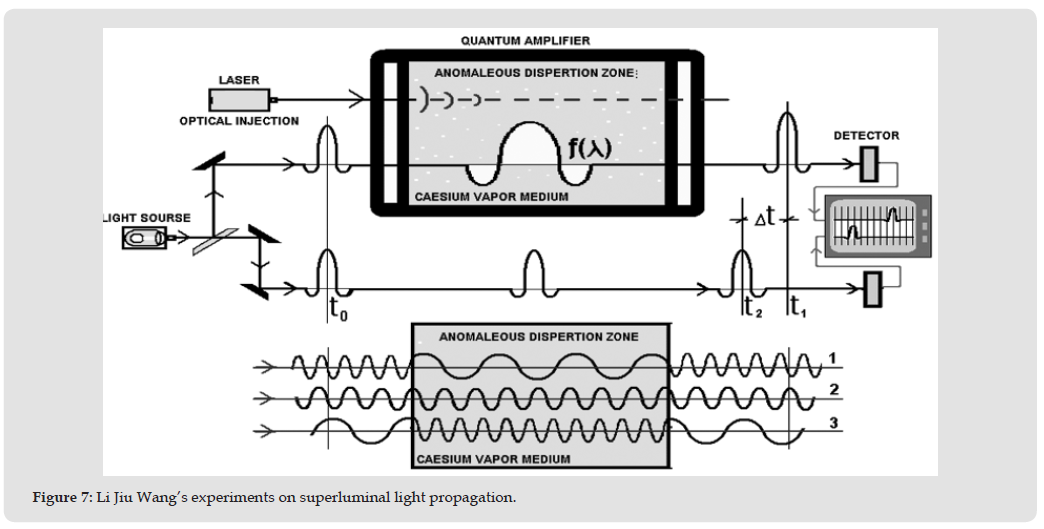
This is a very intriguing principle, and it’s surprising that N. Bohr was able to invent it. In recent years, numerous experiments have been conducted that have detected superluminal velocities. Let us demonstrate that in Unitary Quantum Theory (UQT), any speed is possible, and the speed of light is not the maximum possible. Consider a flat Euclidean space in which a photon propagates along the x-axis. According to UQT, this is a wave packet, and it can be represented as an infinite sum of (unitary) harmonic components that exist on the x-axis, figuratively speaking, at a distance of a million light years forward and backward. Now, if we place a special device on the x-axis, arbitrarily far away, creating an anomalous special dispersion, a particle will emerge at the device’s output because the harmonic components will shift relative to each other. The most interesting thing about this process is that nothing moves between the incident and emerging particle at this speed! In other words, the generally accepted definition of velocity in UQT is inapplicable [6-8,10,11,31-33]. Such experiments were conducted by several groups (in Berkeley, Vienna, Cologne, Florence, etc.), and they revealed superluminal speeds. The most interesting studies were [9,34,35], in which Li Jiu Wang discovered a speed 310 times higher than the speed of light (Figure 7). He supposed that the special theory of relativity was absolutely destroyed. This fact was discovered back in 1965 by G. Basov [36,37], but at that time there was no explanation for it. Li Jiu Wang gave the same interpretation as we did, but only for a light pulse. In this case, it was an incorrect interpretation, since the envelope of the light pulse was not distorted in the experiment, and Wang noticed this surprising fact. Our idea that particles are unitary wave packets is an absolutely original idea for world science. Packet waves can be realized as individual unitary waves from the spectral decomposition of wave packets of individual photons, rather than as the spectral decomposition of the light pulse as a whole. Then the shape of the pulse envelope will not be distorted.
Figure 7
The conclusions of Unitary Quantum Theory are confirmed by their practical applications to traditional physics problems. For the first time in world science, Unitary Quantum Theory made it possible to calculate the electron charge, or the fine structure constant (1/137), with high accuracy (0.3%) [9,15-17,38]. Somewhat later, Unitary Quantum Theory made it possible to calculate the mass spectrum of many elementary particles without any adjustable parameters [39-42]. Incidentally, the calculated spectrum includes a particle with a mass of 131.51711 GeV (L = 2, m = 2), which, if desired, can be called the Higgs boson. Any researcher can replicate these results using a notebook with the mathematical programs Maple or Mathematica. These two programs have been around for quite some time and, in fact, eclipse Artificial Intelligence, which is simply a financial tool.
Note that Maple is faster than Mathematica at analytic integration of large polynomials, while Mathematica is faster at numerical integration. The computational results of these programs are completely identical. Due to nonlinearity, the analytical solution is not scalar problems [37] will require new mathematical methods, and it is not even clear how to implement them. The table below shows some calculated particles in MeV from the electron to the maximum possible in spectrum (Table 1).
(e – electron, λ - muon, π 0 -π -meson, Ρ -proton etc.)
Table 1:

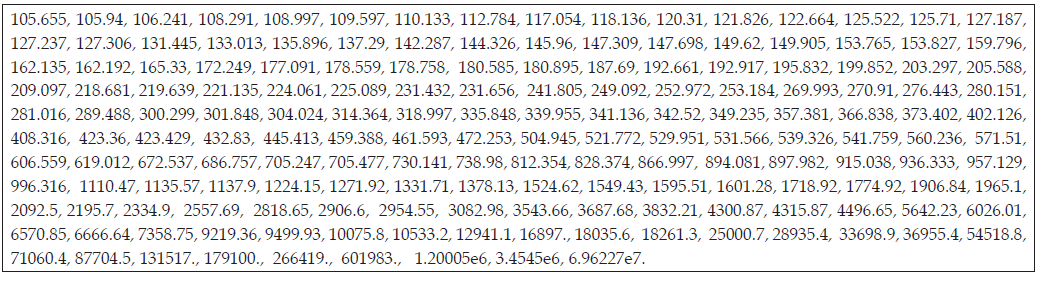
No one had done this before. Interestingly, the nonlinear scalar integro-differential equation of the UQT for the mass spectrum was solved analytically. Nature has given humans a similar gift in calculating the hydrogen spectrum, while no other exact analytical solution to the Schrödinger equation has been implemented in practice. Table 2 lists all the theoretical masses obtained in MeV, from the muon to the heaviest, called the Dzhan [39]: There’s a bit of a catch here. The mass spectrum of elementary particles in Table 2 was calculated in 2007 [9,39,40] and the Higgs boson was discovered later. This story has one unpleasant fact for CERN. They didn’t predict its mass; one of the two detectors determined the mass to be 125 GeV, the other 130 GeV. There’s even a movie about it online. According to our Theory, it’s 131.517 GeV (L=2, m=2), but at CERN they always mention only 125 GeV!!! According to generalized data (LHC + Tewatron, USA), the Higgs boson mass lies in the range of 125-140 GeV with a 99.99% probability. Discovered after 2007: the Ө^+ baryon (1540 MeV, UQT gives 1549.43 (L=9, m=5)) and penta quarks: (4338.2±0.7 MeV, UQT gives 4315.87 MeV (L=9, m=5)) and (7.0±1.2 MeV), UQT gives 7.0498 MeV (L=31, m=22)). For obvious reasons [43], UQT is not mentioned as a precursor. Some interesting trends can be observed in CERN’s overall scientific policy. Its management follows the mainstream to avoid losing sponsors. Just remember the hoopla surrounding faster- than-light neutrinos... so much talk... and modern science was crumbling to dust...So what’s the bottom line? Project director Antonio Ereditato and his three assistants were forced to leave CERN, and the astonishing discovery was attributed to a faulty cable connection! But this raises some suspicions. What kind of strange educational institution is this, where 150 students can’t connect a cable? Is this really CERN or a vocational school? Meanwhile, it has become known that not all of the 150 participants in this experiment agreed with this explanation. And what about the data on supernovae: during a star’s explosion, neutrinos are detected first, and the light arrives later, after 3 hours [35] Furthermore, there are numerous experimental astronomical observations of superluminal velocities [34, 36]. A new particle was also discovered at the Large Hadron Collider: colliding protons decay into muon pairs with an energy of 28 GeV and could destroy the entire Standard Model. A particle with a mass of 28.9354 GeV was predicted by us in 2007 – see Table 2 and Figure 8. Later, something else became known: the electron-positron collider was built at CERN before the LHC was built... In one of the studies, Arno Heister discovered (with 3 sigma) a mass of 30.4±1.78 GeV (see (Figure 8)). We have this value in Table 2 – 28935.4 MeV (L=3, m=3), but Arno Heister was not given the opportunity to collect statistics up to 5 sigma because such a decay contradicted the Standard Model... He took offense and published everything on arXiv.org. They publish without peer review there... This story can be found online. Quite recently, there was a report by Roman Ryutin (a visiting CERN employee from Russia) [44] about the discovery of a particle with a huge mass of 172.13±0.77 GeV in a collision of proton beams with energies of 13 TeV. In our Table 2 (2007) there is a particle of 179.100 GeV (L=3, m=0), the discrepancy with experiment is less than 4%. Its mass is very close to the maximum possible mass of the Dzhan particle in the UQT – 69.6227 TeV (L=0, m=0).
Figure 8
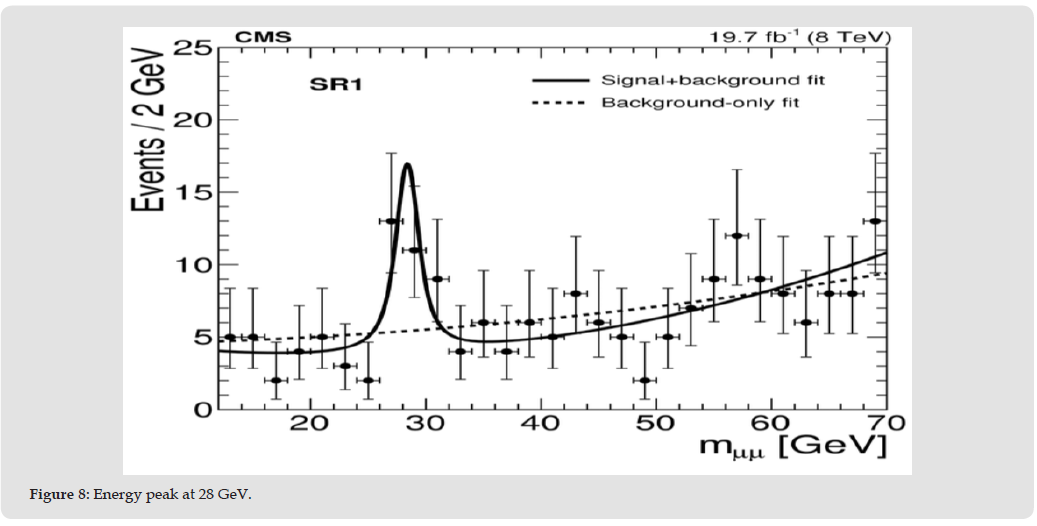
Table 2:
Modern theoretical physics is characterized by strict rules. Any new theory must incorporate classical results. This requirement is strictly satisfied because the relativistic Hamilton-Jacobi equation and the Dirac equation follow from the quantum theory of quantum mechanics, i.e., from all the modern foundations of fundamental quantum science. In the linear equations of the quantum theory of quantum mechanics, mass was replaced by the integral of the rest energy density divided by the square of the speed of light, resulting in a system of 32 nonlinear integro-differential equations. These were first obtained by L. Sapogin and V. Boichenko [15-17] in 1984, and it was only in 1988 that they solved the dimensionless scalar version of this equation, allowing one to obtain the fine-structure constant 1/137—the electron charge—with an accuracy of 0.3% [6-8,11,15- 17,37]. The oscillating charge equation was obtained shortly after the fine structure constant was estimated. Initially, this equation was simply postulated [18,19,45] and used to describe the process of cold nuclear fusion due to the interaction of deuterons. This equation has the following form:
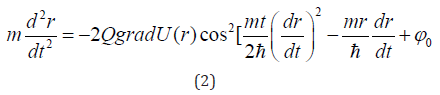
where m is the mass, r is the radius vector, U(r) is the external potential, is the initial phase, and Q is the constant part of the particle charge. As soon as, and for each electromagnetic field there is a magnetic field, and the Lorentz force, must be taken into account. In the electromagnetic mode, E and H are similar, since the energies and the force F can be neglected. The factor 2 in the equation is necessary to convert to the equation of classical mechanics, since the average charge will be half as large. In this approximation, the UQT wave packet is realized as an oscillating spatial electric charge, its magnitude depending on time, position, and velocity. This allows the use of Newton’s equations, but invariance under Galilean transformations disappears, and conservation laws disappear. The tunneling effect becomes more obvious: as a moving particle approaches a potential barrier in a phase where the charge is extremely small, it easily passes through the barrier. However, when the charge is large, the repulsive force increases, and the particle is reflected (Figures 14 & 15). Numerical solutions of these equations [9,45-47] for the most common quantum problems yield the same results as calculations in general quantum mechanics (QM). However, the most promising problem is the incidence of a stream of particles with different velocities and phases on a chain of potential barriers. As shown by numerical calculations of the passage of particles through a chain of successive barriers, the particles passing through have approximately the same velocities and the same phases at the exit. The figures show numerical calculations [46] of the number of particles passing through 2 or 3 barriers (Figures 9 & 10).
Figure 9
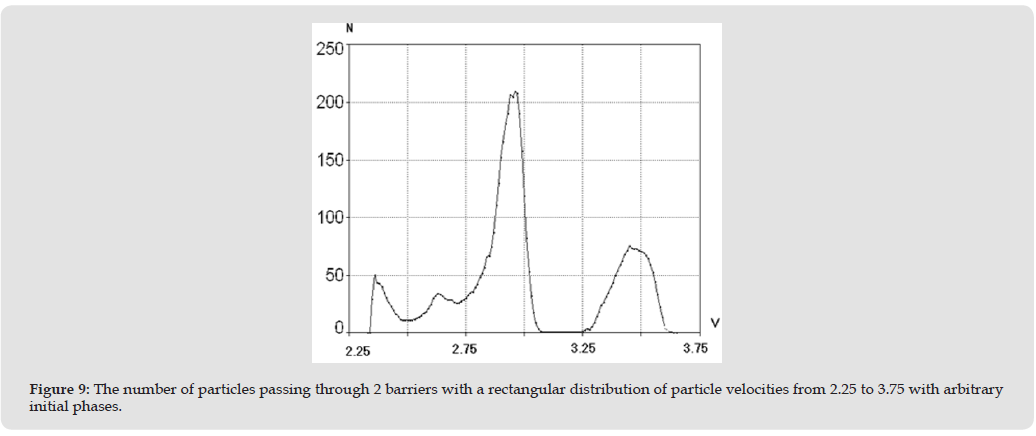
Figure 10
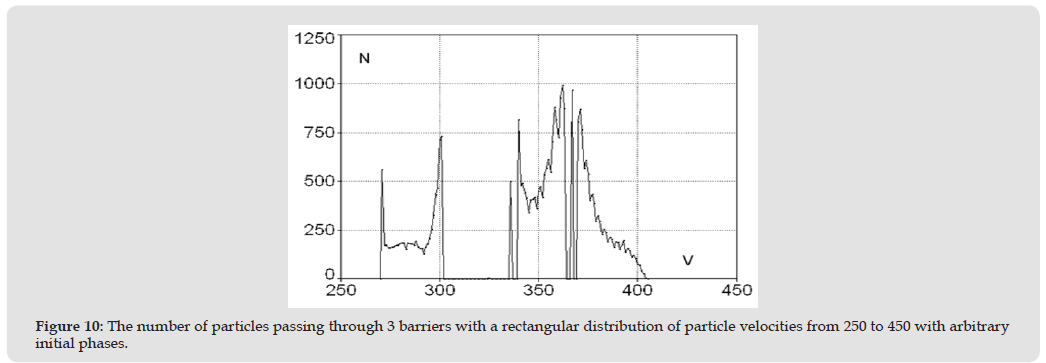
Any solid-state physicist will immediately recognize the wellknown forbidden bands. But, most importantly, for the creation of new energy sources, particles that have passed through barriers have approximately the same phase and velocity, which allows us to understand that they will generally accelerate in any potential well—the «crematorium solution». Films deposited with several successive potential barriers have a huge future in energy. Incidentally, using the UQT, this equation can be derived from the Schrödinger equation at very low energies [6-8]. However, there are some interesting differences. The equations of motion for an oscillating charge have not previously been considered in physics and have an important difference from the classical laws of motion—the equation is not invariant under Galilean transformations. This means the absence of the great classical laws of conservation of momentum and energy. They appear in the UQT, and subsequently in classical mechanics, only after averaging over all particles. This idea was confirmed by calculations of scattering at various potentials.
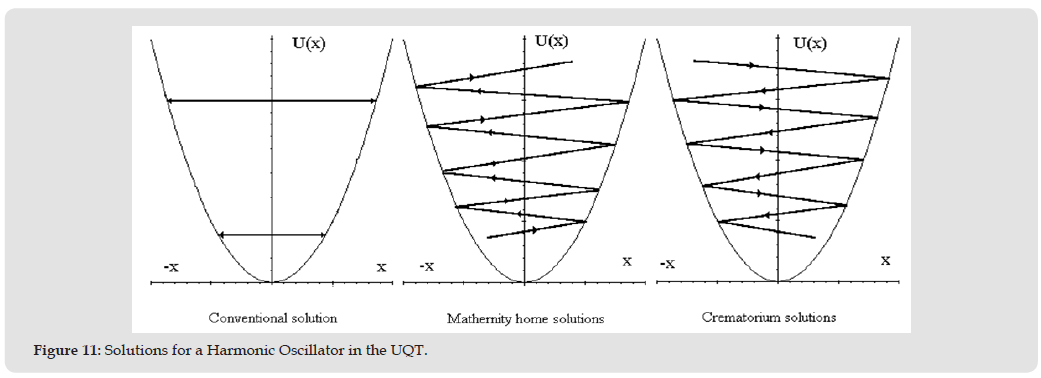
If a quantum particle enters a potential well, numerical integration of such an equation for a harmonic oscillator yields three types of solutions, which can be classified as follows:
1. Regular oscillations, limited over a long period of time, i.e. (based on preliminary calculation analysis) stationary.
2. Oscillations with monotonically increasing amplitude—the “Maternity Home” solution—Matter appears. In some cases, these oscillations can suddenly jump at the end of a certain time interval to an infinite trajectory using the zero argument of the sine function, and then the particle’s charge tends to zero. In this case, the particle can abruptly transition to a “ghost” state.
3. Damped oscillations with an amplitude approaching zero; in this case, the particle sometimes transitions to a “phantom” state, i.e. From the perspective of the wave packet, the particle disperses throughout the Universe. The “Crematorium” solution is when Matter disappears. All processes, except for the initial conditions, now also depend on phase. These solutions appear randomly in the world of fluctuations and can explain both the origin of the Universe and the use of future energy sources in the world.
As is known, in all experiments, the local law of conservation of energy (LLCE) and the law of conservation of momentum, in individual quantum processes, are valid only for high-energy states. For low energies, we cannot assert this due to the uncertainty principle and the stochastic nature of the predictions of quantum mechanics. This is precisely why the idea of a global, rather than local, LLCE exists invisibly in quantum mechanics, and it is not new. For physics, this only means that for a stationary solution with fixed discrete energy levels (general quantum mechanics), the velocity of a particle reflected by a wall is equal to the velocity of the incident particle. The UQT also allows us to consider another approach: if the particle’s velocity decreases with each reflection, it corresponds to the “Crematorium” solution, while if it increases, it corresponds to the “Maternity Home” solution. Which scenario becomes reality depends on the initial phase of the wave function and the particle’s energy. Furthermore, UQT is fundamentally inapplicable to closed systems, because such systems are idealizations that were very useful but are unsuitable for UQT. In any case, all modern science, including quantum mechanics (QM), remains based on the great LLEC, which forbids the creation of the Universe. However, a complex situation has developed in QM. QM generalizes the facts of classical mechanics, including all its laws, but its results are rather statistical in nature, valid only for large numbers of particles. But how should we consider individual particles with their individual processes? It turns out that for individual particles, the LLEC does not follow from QM (!), thus individual events are completely random and do not obey this law. To circumvent this issue, it was declared that quantum mechanics does not describe individual events!? But this is just talk; QM describes single events but can only predict the probability of a given event. Let’s discuss a thought experiment. To simplify our discussion, we will use a classical particle. If it approaches a wall, its velocity after reflection will always be equal to its falling velocity (here we neglect the magnitude of the frictional force and assume that the particle and wall are perfectly elastic).
In the case of a quantum particle, the velocities after reflection will have a wide range of reflected velocities, given equal initial conditions. Some particles will be reflected with velocities higher than the initial velocity, others lower than the initial velocity, and some will have velocities equal to the falling velocity, and each case will be considered statistically in terms of quantum mechanics. Let’s answer the following question: what happens if we place another wall opposite the first one and observe the particle’s velocity after each reflection? Then we will obtain an increase in the particle’s energy without the action of any external force. Systems energetics in the 21st century will address the issue of creating initial conditions for a large number of particles so that only the “Maternity Home” solution is realized, while the «Crematorium solution» is maximally suppressed. But this depends on the choice of initial phases and the system’s geometry [45]. The key to this process is to use a group of particles with the same phase. This can be accomplished (see Figures 14 & 15 below) by passing a stream of particles with different phases and velocities. After passing through such a chain of periodic barriers, the stream of passed particles contains particles with the same energy and phase.
Thus, if the ideas of Unitary Quantum Theory are correctly applied, there is no general prohibition on creating a quantum “perpetual motion machine.” Formally, such a prohibition does not exist even in general quantum mechanics, because there are no conservation laws for a single process under low-energy conditions, but the problem of controlling probabilities remains. It appears that UQT today offers such an opportunity and suggests ways to regulate probability values by controlling phase. Along with theoretical studies, numerous numerical solutions of equations with oscillating charges have been conducted, the momenta of particles falling at different velocities have been summed, and the resulting results have been compared with the momentum of the reflected particles. It has been established that for various repulsive potentials, the total momentum of reflected particles is precisely equal to the momentum of the incident particles, but for a single scattered particle, the momentum value can be either less or greater than the momentum of the incident particle. This problem is very complex and requires further research, as everything depends on the initial conditions (velocity, phase, distance). The prospects arising from the UQT are profound. Any categorical prohibitions, such as the impossibility of creating a “perpetual motion machine,” or any other confirmation of the inviolability of the Laws of Nature, are unacceptable in philosophy. No, these laws will never be disregarded. But in science and technology, there will be areas that are very limited at the initial stage, so these laws will be insufficient. The question of the existence of global LECs (we have proven that they are not local laws) remains in limbo. Only idleness and the habits of human thought lead to intuitive atavism based on Newton’s laws. Yes, conservation laws are undeniable in classical mechanics, and from the perspective of this Theory, a continuously operating perpetual motion machine is theoretically impossible. It should be emphasized that conservation laws were transferred to quantum mechanics as an object of imitation for classical mechanics. But quantum mechanics is more fundamental— Newton’s laws follow from it as a special case. And if, in terms of Unitary Quantum Theory, it is theoretically possible to generate energy from nothing, then a quantum “perpetual motion machine” can be constructed in this way. The equation with an oscillating charge is a completely new type of equation of motion [6-8,18,19].
For such an equation, there are no conservation laws for energy and momentum. They only emerge after averaging over the ensemble. Incidentally, Schrödinger mechanics also does not offer conservation laws for low energies (it can only suggest the probability of an event occurring), and it cannot advise us on how to visualize energy generation processes, while UQT can. The circulation theorem does not apply to the equation with an oscillating charge, which allows the charge to move from point A to point B along different paths, but at different energy costs, and this difference should be utilized. The author, together with cosmonaut Dzhanibekov, attempted to build a power plant operating according to these principles, but the laboratory and equipment burned down. We believe such a system could generate electricity at extremely low cost. If such an energy program were implemented on our planet, it would undoubtedly lead to overheating of the environment. But UQT offers a solution again: we can build refrigeration units that implement the “Crematorium” solution and facilitate cooling. The excess heat will disappear. Numerous cold fusion experiments (including the recent experiments of Andrea Rossi in Italy) have shown that nuclear reactions exist, but the products of nuclear reactions alone are insufficient to explain the enormous amounts of heat generated. This falls within the purview of UQT’s “Maternity Home” solutions [6-8,18,19,45,46,48,9,11]. Furthermore, the oscillating charge equation describes the wave properties of a particle quite well. We are confident that experiments on the diffraction reflection of electrons from a lattice (classical Davisson-Germer experiments) can be simulated on a supercomputer, but the author does not have this capability.
Today, the scientific world is excited about Andrea Rossi’s E-Cat [49], which is simply a pressurized ceramic tube filled with nickel powder and hydrogen. When exposed to current, this tube heats up and releases heat 3-50 times greater than it consumes. And since we’re talking megawatts, any manipulation is unlikely. Many official scientific commissions have concluded that nuclear reactions cannot generate such amounts of energy. Even the isotopic composition of nickel remains stable, and the heat release appears completely mysterious, which doesn’t prevent the use of these power plants. The first thing that upsets us is the claim that nuclear fusion occurs when Ni reacts with hydrogen to form Cu:
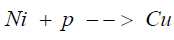
This is because nuclear fusion leads to the release of energy. Obviously, Ni is heavier than Fe, so its reaction with a proton, Ni + p = Cu, requires energy! Nuclear reactions are unlikely to be occurring here. A different process is involved. Nickel grains (these can be grains or tiny crystals) in the E-cat have cavities tens of angstroms in size (they act as potential wells). A proton with the correct phase can penetrate into the cavity. Heat is generated in these cavities as a result of multiple protons impacts on the cavern walls—the “Maternity Home” solution is implemented (Figure 11). Currently, the history Andrea Rossi’s E-cat seems like a resounding slap in the face to all of modern science [11,12,33,50]. Interestingly, there are devices called the Testatik Machine M/L Converter from the religious group Methernitha. They belong to a Christian religious community located in Linden near Bern. Their creator is the Swiss physicist Paul Baumann, who lives in the community. These fantastic devices operate as DC generators and are available in four sizes with power ratings of 0.1; 0.3; 3, and 10 kW. Externally, this device resembles an electrostatic machine with Leyden jars, so familiar from school physics labs. There are two acrylic disks with 36 narrow sectors of thin aluminum glued to them, rotating between capacitor plates. These plates are apparently coated with films deposited with a system of several potential barriers that allow only electrons with the same phase and velocity to pass through. Exponentially increasing oscillations of the “Maternity Home” type occur. The energy of these oscillations is diverted and rectified by a diode. As the disk rotates, foil is placed between the plates, breaking the oscillations and then the oscillations begin to build up again. The disks rotate in different directions, and the required mechanical energy is hundreds of times lower than the energy produced – measured at approximately 100 mW.
Figure 11
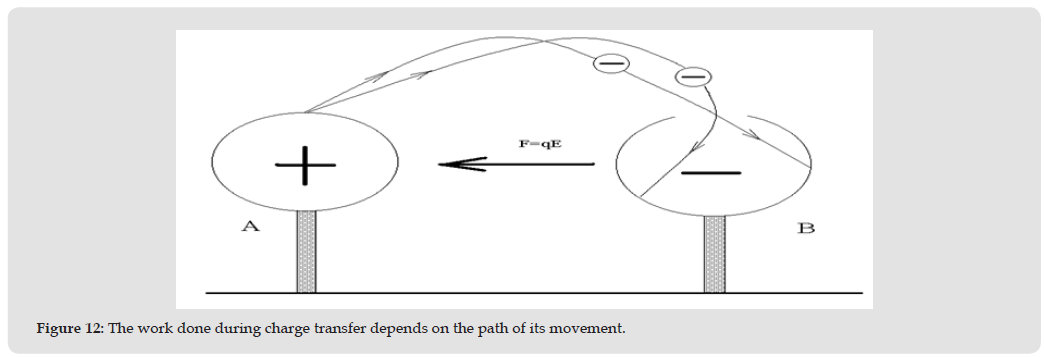
The largest device, with a power rating of 10 kW, has a disk diameter of over 2 m, while the smallest is 20 cm. A device with a power rating of 3 kW weighs 20 kg. No cooling or heating of the air occurs during prolonged operation; it simply smells of ozone. It turns out that the inventor doesn’t fully understand the device’s operating principle. Professor S. Marinov (Bulgaria), who received a 100-watt device from the community, wrote in his book, «The Hard Road to Truth»— Documents on the Violation of Conservation Laws,” published in 1989 by International Publishers East-West: “I can confirm beyond reasonable doubt that this device is a classical ‘perpetual motion machine.’ Without any initial input, it can rotate indefinitely and generate electrical energy equal to 100 watts... In this device, the motor and generator are combined... However, it is unclear how this is possible.” The author of Unitary Quantum Theory knows approximately how all this works, but in this article, we will only do what is absolutely clear: we will show that the operation of this device is completely consistent with UQT. This is obviously related to the concept of charge separation. Consider two metal spherical surfaces with a hole, isolated from the Earth and from each other. If we transfer the first electron from sphere A to the inner surface of sphere B through the hole using an insulated rod, a potential difference arises. Then, if we transfer the second and subsequent electrons, sphere A attracts the transferred charge, while sphere B repels it, and to move the charge, we must expend energy.
At the Moscow State Technical University (MADI), Professor V.I. Utchastkin lectures on Unitary Quantum Theory (UQT) and new energy sources. In his explanations, he uses a figurative analogy: consider a sack of potatoes with a mass equal to m (Figure 12). If we carry it up a floor of height h, we expend an amount of work against the gravitational field equal to mgh. And if we throw it down, we gain kinetic energy, and these quantities are equal. However, we can also carry not the entire sack, but each potato one at a time. The work required to carry one potato depends on time, distance, speed, and coordinates, and it should be carried out in such a way that the work expended is minimal. If you can carry the entire bag in this manner, you will obtain the quantity (mv2 ) / 2 > mgh
Figure 12
Now we obtain the uncertainty principles [6-8,11]. Since a particle (wave packet) periodically appears and disappears at the de Broglie wavelength (more precisely, the packet disappears twice, and the probability of its detection is sufficiently high only near the maximum), the position of such a packet can be determined with an error:
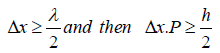
Since an error of ΔP=2P is inevitable when measuring the modulus of momentum, we have the following inequality:
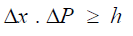
The assertion of standard Quantum Mechanics that particles have no trajectory becomes clearer. Of course, there is a large grain of truth in these statements. Firstly, this can be said about the intermittent (dashed) motion of a particle with an oscillating charge. Secondly, any packet (particle) can split into several parts during its motion. Each of these parts, summed up by vacuum fluctuations, can, in principle, lead to the formation of several new particles. Or, conversely, the particle may disappear altogether and contribute to the general oscillating chaos of the vacuum. But in any case, it’s better to have a clearer understanding of the motion of a specific particle than to rely on the currently accepted, vague proposition of the absence of a trajectory.
Inventors and swindlers of every stripe and range many years tried to construct or even to design “perpetuum mobile”, i.e. imaginary mechanism able to work without outside energy supply. Peter the First (Russian Emperor Peter Great) had even established Russian Academy of Science for such researches (see. V.L. Keerpechev, “Talks about mechanics”, Gostechisdat, 1951, page 289), but today persons from modern Russian Academy of Science do not like to recollect that circumstance. At the other side French Immortals have decided in 1775 to consider no projects of “perpetuum mobile”, and it seems they have not been mistaken jet. However, one mistake is known: Daniel Bernoulli was awarded a prize by French Academy for mathematical proof that a boat with engine and screw propeller would never have faster speed than sailing ship! Magnificent successes of classical thermodynamics have strengthened Humanity confidence in Divine Infallibility of Conservation Laws (CL). Today it is considered nearly indecent to call in question these laws.
First of all, let us clarify the origin of Conservation Laws in classical mechanics [6-9,11,19]. Nearly each textbook contains a statement that Energy Conservation Law (ECL) results from homogeneity of time, Momentum Conservation Law results from homogeneity of space, and Angular Momentum Conservation Law – from isotropy of space. And so many people are impressed that Laws themselves result from space-time properties that nowadays are no doubt a relativistic conception. But for example, angular momentum is not a relativistic conception already. Therefore, such restricted approach is not totally correct, Newton’s second law of motion or relativistic dynamics equation and concept of system closeness should be attracted. More over the requested space- time properties themselves are usually wrongly being interpreted. For example, it is assumed that time homogeneity means simple equivalence among all moments of time and homogeneity and isotropy of space means equivalence of all its points and absence of preferential direction in space (all directions are equal) correspondingly. But these statements are sensu stricto wrong. For example, within many mechanical systems the Earth center direction and horizontal direction differ in principle (for example, pendulum clock located in horizontal plane will not work at all). We can say the same about the body being at the top of the hill, it is able to roll dawn independently, but according to classical mechanics it never climbs by itself. And for a person, being young or old, these moments of time are not equal at all. Hereinafter we would like to explain in what way all that should be understand. Time homogeneity implies that, if at any two moments of time in two similar closed systems someone runs two similar experiments, their results would not differ.
Space homogeneity and isotropy means that if closed system is moved from one part of the space to another or oriented in other way, nothing would be changed. But in fact, the homogeneity of time and space as well as their isotropy are secondary or simple corollary of Newton equation. And we can show it. Derivation of Energy and Momentum Conservation Laws from Newton equation is quite simple in idea. Viz., let us write down the main equation of dynamics in form of:

For closed system F=0 (there are no external forces) and the equation possess the integral

expressing the momentum Conservation Law.
Now let’s write the main equation of dynamics in the form:
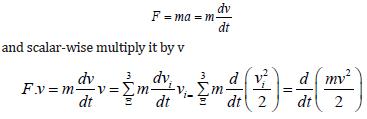
where v is a modulus of velocity vector v. For the closed system F=0 it exists the integral

expressing one of the forms of energy Conservation Law. Using the definition of the angular momentum for the particle, i.e.

and differentiating it both parts by t, we obtain
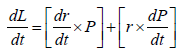
As the momentum vector is parallel to velocity vector, the first bracket is equal to zero. And basing on the equation and on definition of central force, as one not creating a momentum, we get
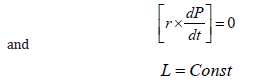
In the case of central force within unclosed system angular momentum remains constant in value and direction. Indeed, all properties of space and time follow from Newton equations only. All conservation laws in Newtonian mechanics are strictly valid if the mass is a strict constant. But as soon as mass (magnetic moment, charge etc.) is a function of time, coordinates and velocity, the conservation laws disappear. This is what happens in the UQT, in particular in equations eq1, eq2. Essentially, the entire UQT is a further development of Newtonian mechanics. The energy and momentum Conservation Laws can be easily obtained within relativistic dynamics from relativistic relation between energy and momentum:

The term is an invariant, i.e. it is similar within all reference frames. In other words, it is some kind of constant. This relation can be written in rather different form
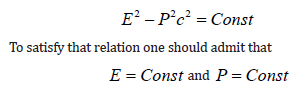
And that is nothing else than energy and momentum Conservation
Laws. As we will see below, special relativity cannot serve as a
basis for conservation laws and equation (3) will turn into inequality
equation (4). But strictly speaking there is in relativistic mechanics
there is a law of conservation of four-momentum vector, but we are
not going to stop at these details. In accordance with the classical mechanics,
the energy Conservation Law signifies that energy of closed
system remains constant, hence, if at the moment t=0 the energy of
such system is denoted by E0 , and at the moment t is denoted by
, Et then E0 = Et−
In accordance with standard quantum theory, the energy Conservation
Law is laid down in the same way. Within that theory we have
the same integrals of motion as in classical mechanics. Some value L
would be an integral of motion if
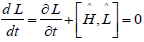
As
 is determined by commutator of operator and of Hamilton’s
operator, so any quantity L, being not evidently dependent on
time will be an integral of motion if its operator commutes with H.
When quantity L is not evidently dependent of time, then the first
terms vanish. As remainder we have
is determined by commutator of operator and of Hamilton’s
operator, so any quantity L, being not evidently dependent on
time will be an integral of motion if its operator commutes with H.
When quantity L is not evidently dependent of time, then the first
terms vanish. As remainder we have
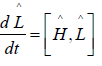
and, as we know, the quantum Poisson bracket vanishes for the integrals of motion being not evidently dependent on time. Thus,

In any good work dealing with quantum theory, it was shown that probability w to observe at any moment t any value of such motion integral L , does not depend on time either. We will denote below such integrals of motion Ln . As far operators ^L and ^H commuted they had common eigen-functions that were functions of stationary states. We should note that the last were obtained from solution of Schrödinger equation without time (not containing t) which is derived from full Schrödinger equation if
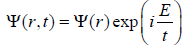
i.e. if this equation has the periodic solutions. The solutions of Schrödinger equation not containing t satisfy Conservation Laws, which are, indeed, dictated by condition of total time-independence. This in fact imposes us energy conversation laws, as nothing depends on time. The expansions of such solutions in eigen-functions’ have the form:
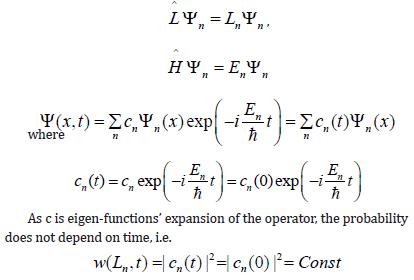
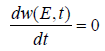
We should note once more that it is the probability to observe some given value that is time-independent, while, the value itself is occasional in each individual case. As far the energy is an integral of motion and probability w(E,t) to find out at the moment t energy value to be equal to Е is time-independent, then:
Quantum energy Conservation Law in the above-mentioned form assume the possibility of energy determination at the current moment of time not taking into account its uncontrolled changes due to influence of the process of measurement itself. That situation did not rise any doubts within classical mechanics. But according to quantum theory (as we have written already in [6-8]), the energy can be measured without disturbance of its value only up to

Where - is the duration of measuring process. Formally, there are
no troubles for energy Conservation Law, as the energy is the integral
of motion and we have arbitrary large time interval to accomplish long
measuring. For example, let measure within time τ , then leave the
system alone for the time Т, and then measure the energy once again.
The energy Conservation Law in standard quantum mechanics states
that the result of the second measuring will coincide to  with the results of the first measurement. But even according to standard
quantum theory all this is not totally logical, because really existing
vacuum fluctuations may meddle and they are able to change
the result. Here we have evident violation of Conservation Law due to
vacuum fluctuations, although the integrals of motion exist (contrary
to UQT). The standard quantum theory carefully avoids the question
of Conservation Laws for single events at small energies. Usually that
question either does not being discussed at all, or there are said some
words that quantum theory does not describe single events at all.
But these words are wrong, because the standard quantum theory
describes, in fact, single events, but is able to foreseen only the probability
of that or other result. It is evident that at that case there are
no Conservation Laws for single events at all. These laws appear only
after averaging over a large ensemble of events. As the matter of fact,
it can be easily shown that classical mechanics is obtained from quantum
one after summation over a large number of particles. And for a
quite large mass the length of de Broglie wave becomes many times
less than body dimensions, and then we cannot talk about any quantum-
wave characteristics any more. It is well known that local laws
of energy and momentum conservation for the individual quantum
processes are valid within all experiments at high energies only. We
cannot say so in the cases of law energies at least due to uncertainty
relation and stochastic nature of all predictions in quantum theory.
The idea of global but not local energy Conservation Law is invisibly
presenting in quantum mechanics and in any case is not new. From
the physical viewpoint it just means that in stationary solutions with
fixed discrete energies (standard quantum mechanics) the velocity of
a particle reflected from the wall is equal to the velocity of an incident
particle. If the particle energy decreases at each reflection, then that
case corresponds to solution type “Crematorium” and if increases – to
“Maternity home” solution. The scenarios under which events will be
developed depend on the initial phase of the wave function and particle
energy (see section 7). In the strict Unitary Quantum Theory and
in the theory of quantum measuring [1-5,9] un-removable vacuum
fluctuations part a great role. It is quite clear these fluctuations being
totally unforeseen and non-invariant with respect to space and time
translations. In other words, within UQT there are no habitual spacetime
properties. As we will see below, eq.(3) cannot serve as a basis
for conservation laws and will look like eq.(4).
with the results of the first measurement. But even according to standard
quantum theory all this is not totally logical, because really existing
vacuum fluctuations may meddle and they are able to change
the result. Here we have evident violation of Conservation Law due to
vacuum fluctuations, although the integrals of motion exist (contrary
to UQT). The standard quantum theory carefully avoids the question
of Conservation Laws for single events at small energies. Usually that
question either does not being discussed at all, or there are said some
words that quantum theory does not describe single events at all.
But these words are wrong, because the standard quantum theory
describes, in fact, single events, but is able to foreseen only the probability
of that or other result. It is evident that at that case there are
no Conservation Laws for single events at all. These laws appear only
after averaging over a large ensemble of events. As the matter of fact,
it can be easily shown that classical mechanics is obtained from quantum
one after summation over a large number of particles. And for a
quite large mass the length of de Broglie wave becomes many times
less than body dimensions, and then we cannot talk about any quantum-
wave characteristics any more. It is well known that local laws
of energy and momentum conservation for the individual quantum
processes are valid within all experiments at high energies only. We
cannot say so in the cases of law energies at least due to uncertainty
relation and stochastic nature of all predictions in quantum theory.
The idea of global but not local energy Conservation Law is invisibly
presenting in quantum mechanics and in any case is not new. From
the physical viewpoint it just means that in stationary solutions with
fixed discrete energies (standard quantum mechanics) the velocity of
a particle reflected from the wall is equal to the velocity of an incident
particle. If the particle energy decreases at each reflection, then that
case corresponds to solution type “Crematorium” and if increases – to
“Maternity home” solution. The scenarios under which events will be
developed depend on the initial phase of the wave function and particle
energy (see section 7). In the strict Unitary Quantum Theory and
in the theory of quantum measuring [1-5,9] un-removable vacuum
fluctuations part a great role. It is quite clear these fluctuations being
totally unforeseen and non-invariant with respect to space and time
translations. In other words, within UQT there are no habitual spacetime
properties. As we will see below, eq.(3) cannot serve as a basis
for conservation laws and will look like eq.(4).
Now space-time is heterogeneous and non-isotropic. For example, if the experiment is replaced in any other point of the space or repeated at other time, then in the point where the particle’s parameters were examining and particle is interacting with macro-device, another value of vacuum fluctuations would appear (differing from the previous one) that would give another result. Of course, that is true for small energies and individual events (particles) only. The Unitary Quantum Theory is much more destructive with regard to the notion of Closed System. For single events at small energies that notion is inapplicable at all because at any moment of time and in any place where the particle is located (for example, within potential hole) vacuum fluctuation may be abruptly changed. It may occur thanks to various causes; either due to the nature of vacuum fluctuations, or due to the tunneling effect of another random particle. Sometimes it is stated that energy Conservation Laws follow from E. Noether theorem, although those results have been contained in the works of D. Gilbert and F. Klein. For any physical system, the motion equations of which can be obtained from variation principle, every one-parameter continuous transformation, that is keeping the variation functional invariant, corresponds only one differential law of conservation and then there exists explicitly conserved quantity. However, it can be easily seen that vacuum fluctuations being imposed on varying functional (Lagrangian) does not remain constant (in any case it seems so today) under parametrical transformations. That consideration does not work too without ensemble averaging either. In other words, all requirements that lead to classical laws of conservation are absent now. It is hard to expect that the entire laws of conservation will remain valid in that situation for the single particles at small energies. But nowadays it seems that classical laws of energy, momentum and angular momentum conservation for the single quantum objects do not work at small energies due to the periodic appearance and disappearance of particles. All direct experimental checks of the Conservation Laws were carried out in the cases of great energies but in the cases of small energies for single particles probability results can be obtained only.
In that case it is indecently even to recollect the idea of Conservation Law. And now a bit of Philosophy for reader. Local Energy Conservation Law (LECL) for individual processes results from the Newton equations for closed systems. It is naive to think that its local formulation will remain constant forever. And it would be a gross error to transfer ECL without alterations from Newton mechanics to quantum processes inside microcosm. Definitely speaking references to the first law of thermodynamics are baseless because it is a postulate. For example, in his letter to one inventor the famous Russian mathematician N.N. Lousin wrote: “First law of thermodynamics was a product of unsuccessful attempts of the humanity to create “perpetuum mobile” and frankly speaking did not follow from anything”. Today we can say with more belief that no resourceful machines within the network of Newton mechanics are able to realize “perpetuum mobile”, and the decree of French Academy, accepted in 1755 to consider no projects of “perpetuum mobile” is still valid. We should add that is apparently true for all projects based on Newton mechanics only. See section 10 in that article. It is characteristic of the understanding the position ECL in modern physics that this low is bringing down, especially in theory, to the rank of second-order conclusion from the equations of motion. Some physicists reduce ECL to the statement of the first law of thermodynamics, others as for example D.I. Blochintsev [51] consider that “it is quite possible with further development of new theory ECL form will be transformed”. As F. Engels wrote in his “Natural dialectics”: “…no one of physicists does not, in particular, consider ECL as everlasting and absolute law of the nature, as a law of spontaneous transformation of substance motion forms and quantitative permanency of that motion at its transformations.” Many of them are thinking in another manner as, for example, M.P. Bronshtein. He wrote in his work “Substance structure” «ECL is one of the basic laws of Newton mechanics. And nevertheless, Newton had not attributed to that law rather general character that law had in reality. The reason of that Newton mistaken point of view at ECL was quite interesting…» Now it is understandable that in the light of the above mentioned such point of view was not wrong at all. And we should remind that Sir Isaac Newton had foreseen in his “theory of bout” many things even quantum mechanics.
At the other side, the founders of quantum mechanics perfectly understood that the Conservation Law for the single quantum processes at small energies did not exist at all. So, the first thought that understanding of ECL on a par with the second law of thermodynamics, as statistical law, being correct on average and not applicable to the individual processes with small energies, appeared as despair and went back to Erwin Schrödinger first and then to N. Bohr, Kramers, Sleter and G. Gamov. In 1923 Bohr, Kramers and Sleter in despair tried to construct the theory according to which in the process of dispersion energy and momentum Conservation Laws were satisfied statistically on the average during long time intervals but were inapplicable to the elementary acts. Lev Landau even called that as “Bohr perfect idea”. According to that theory, the process of dispersion should be continuous, but Compton electrons are emitted in a random way. The authors assumed both processes of wave dispersion and Compton electrons dispersion were not connected with each other (?). The main idea was to lay a bridge between quantum theory of the atom and classical emission theory. There were introduced specially so called “virtual” oscillators which generate in accordance with classical theory waves (non quantum one) enable to induce the transition from the state with lower energy to the state with higher energy. These waves did not carry the energy, but power necessary for atom transition from lower to the higher state was generated within the atom itself. Along with that the inverse process of the atom transition from excited state to the lower one could take place, but the energy was not taken away by waves but should disappear inside the atom. In other words, the increase of one atom energy was not connected with energy decrease in another one.
Authors considered that these processes compensated each other on average only and that compensation was the better the more events are participated. Energy Conservation Law has statistical character according to that interpretation, and there is no law of conservation for single events, but they appear in processes involving large number of particles, i.e. at transition to Newton mechanics. But then it should be acknowledged that in the case of Compton Effect the changes of motion direction of the light quantum and its energy to be appeared in the result of collision were happening apart from the changes of electron’s state. The unfounded of such an approach was lately experimentally proved by Bote and Geiger. To say the truth, the authors abandoned that point of view later; moreover, at that time this idea did not follow from quantum theory equations. And to get out of the tight spot it was declared that quantum mechanics did not describe single events at all. Thus, the most striking paradox was removed by a simple prohibition just to think about it! But genius idea that laws of conservation are not valid for individual processes and appear in quantum mechanics after statistical averaging does not become less genius even if those for whom it “has come to mind” rejected it. May be, this idea was a little premature and should have a somewhat different shape. Contrary to that Unitary Quantum Theory describes single particles. And the alteration of their behavior is determined not only by initial values of its position and velocity but also by initial phase of the wave function (of the wave packet). Then for the single particle local Conservation Laws do not exist at all. And that is quite another question how to measure the initial phase or any other parameters of a single particle. Let us examine the following virtual experiment. For more simplicity let use in our reasoning some quantum ball-particle. If classical ball is running to the wall (for simplicity assume it as perpendicular), the velocity of the reflected ball would be equal to its initial velocity (we neglect friction and consider the ball and the walls as totally resilient). In the case of quantum ball, the velocity of the reflected ball in various experiments with similar initial circumstances will have the whole spectrum of values: there will be balls reflected with the velocity higher than initial, equal to it and lower then initial. And all these will be described by means of quantum mechanics within uncertainty relation. Let us ask what would be if we place a second wall parallel to the first one in such a way the ball at each reflection increased its velocity? Then we would get the growth of the ball energy without any efforts from our side.
The aim of future constructors of such systems of XXI century would be the necessity to create such initial conditions for the great number of particles forming the object, that is realized the sole solution “Maternity home” and is suppressed as far as possible the other solution. It is evident from the above-mentioned that at competent exploitation of the Unitary Quantum Theory ideas the principal prohibition for “perpetuum mobile” does not exist. Formally as it was shown above that prohibition does not exist even in standard quantum mechanics (there is no laws of conservation for single processes with small energies), and to get energy the particles should be selected in some way (grouping together all random processes with excess energy). But the standard quantum mechanics refuse to describe single events and is not able to advise the way for grouping. As it seems today, the Unitary Quantum Theory gives us such an opportunity. However, by efforts of scientific groups, interested in their own stability because of simple instinct of self-preservation the great idea of free energy generation was distorted to such a degree everybody who starts to talk about it is taken for mad. The modern experimental physics have examined the correctness of Conservation Laws for huge energies in single cases and for large macro-object when ensemble averaging is used, but the area of small energies is terra incognita.
Let’s recall the problem of providing electricity for long-term space flights [52]. Professor Uchastkin’s analogy accurately describes the theoretical approach to solving this problem. Of course, much remains to be done to understand how to exploit this phenomenon with these quantum potatoes and how to build a device that can maintain minimal energy while delivering them to an altitude h. How can we power a spacecraft for months of flight? Photovoltaic cells are used near Earth, but the greater the distance to the Sun, the more unnecessary they become. The use of a nuclear energy source is problematic for various reasons. Today, we cannot significantly improve this situation; there are not even theoretical ideas that would allow us to get closer to a solution. Based on this situation, general concepts about the structure of matter and its properties are emerging. A new concept of physics is currently being proposed. If we stick with space technology, it will lead to the creation of engines based on new principles of energy production, supporting real-time telecommunications over long distances in space, free from the limitations inherent in the scattering of electromagnetic waves. From the above, it follows that the UQT opens the prospect of solving the problem of communication over extremely long distances in outer space, eliminating the problems of exchanging information between Earth and a spacecraft.
The theory also predicts approaches to creating new energy sources and new types of engines that would be practically ideal for building the spacecraft of the future. Conventional jet engines convert thermal energy into kinetic energy of the working fluid emitted by the engine, and the reaction force of this flow into the force accelerating the spacecraft. Therefore, space flights over extremely long distances will require enormous reserves of working fluid. Classical progressive technology requires increasing the velocity of the ejected mass of the working fluid. It turns out that it is possible to create a very weak constant- velocity jet engine, but (!) without ejecting mass. Let’s use the analogy method again. Consider a classic physics problem for university entrance exams: there is a boat in still water and a man with a bag of sand. Could he propel a boat by manipulating a bag of sand indefinitely? The correct answer is to throw the bag of sand from the front of the boat to the stern, then slowly return it, throw it again, and so on. Since the Stokes viscous friction force is proportional to velocity, the boat will perform an oscillatory motion, to which some linear motion will be applied. Based on this idea, swamp buggies were built in Germany—in them, a large mass moves quickly in one direction and slowly in the opposite direction. Many decades ago, this same effect was widely and extensively discussed in the USSR in popular science magazines and on television (the Dean machine).
A similar phenomenon exists in both classical and quantum electrodynamics, and it is related to the Lorentz force of radiation friction. The manifestation of the Lorentz force becomes obvious if we consider the interaction between a charge and the field it creates. For a stationary charge, the force of this self-force is zero; otherwise, a free charge would experience self-acceleration. But if a charge begins to move, the electromagnetic field, since its propagation speed is finite, cannot immediately adjust, and the accelerated charge essentially collides with its own field. In other words, this effect can be described as the appearance of an energy flow that is directed against the particle’s motion and slows it down. This generates electromagnetic viscosity, the magnitude of which is related to acceleration. How can this phenomenon be exploited? If a parallel-plate capacitor contains a cloud of electrons, it can be made to swing between its plates with varying acceleration values, back and forth, by applying a sawtooth voltage to the plates so that the cloud does not touch the plates. Due to the different frictional forces of radiation alternating forward and backward along the electric field lines, a propulsive force is generated. The radiation of such accelerated charges is always perpendicular to their motion and can be shielded, but most importantly, this motion does not change the momentum relative to the direction of the capacitor’s field. Paradoxically, it seems that we obtain motive force by expending energy on this process, but without ejecting any mass in the direction opposite to the motion.
The author (jointly with V. A. Dzhanibekov) even published an article in the American journal “Journal of New Energy” (vol. 5, #1, 2000) containing a precise analytical solution to this problem: a motive force of several micrograms is generated in a parallel-plate capacitor containing a cloud of electrons, in which the distance between the plates is one meter, and the applied sawtooth voltage is millions of volts. A pitiful result for such a rich imagination, and so far, there is no prospect! Curiously, a similar jet engine was created in England – the Em-drive by Roger Shawyer (see [52]). But if stable charged particles exist whose mass is more than one million times the electron mass, then this idea becomes very interesting from a technical perspective. Do such stable charged leptons exist, and how can they be generated in sufficiently large quantities? No one can answer this question today... To generate thrust, it is also possible to eject the mass/matter created by the potential well, accelerating into it at the same time. As a rule, the UQT offers hope for possibilities that are evident from the “Maternity Home” solution. Let’s consider the results. In the future, the UQT will solve several fundamental problems of the world’s energy supply and all problems in outer space: the rapid acquisition of information, the energy supply problem, and the creation of new types of engines. It is too early to draw up technical plans for these solutions, but all of the above should be viewed not as empty fantasy, but as a possible future program of fundamental research to transition our civilization to new physical principles. The ideas of the UQT are presented.
1. There are no strict principles of superposition in the UQT. It is violated by the collision of wave packets.
2. There are no strict closed systems in the UQT, and conservation laws only hold for high energies. Note that existing conservation laws prohibit the origin of the universe.
3. The classical relativistic relationship between energy and momentum is valid in the UQT only after averaging over observed phenomena, and relativistic invariance itself is not a “sacred cow.”
4. Space in the UQT is not homogeneous and isotropic and has a complex geometry.
5. Particles and their interactions are local. Any “ghost” interaction (Einstein’s term) is absent.
6. The existing quantum theory of elementary particles—the Standard Model—requires significant changes.
7. The concept of velocity as a quotient of the distance traveled divided by a certain time interval is not suitable for the UQT. If a particle spreads across the Metagalaxy and then reappears somewhere else, what should we do with the velocity if nothing moved between the points of disappearance and arrival; the particle simply vanished and then reappeared in a new location? A similar unexpected breakdown of physics was observed 50 years ago, when the “weak interaction” burst into physics, so to speak. Since the UQT becomes nonlinear, it automatically unifies all four interactions that can transition from one to another.
All was going well until the intervention of the Austrian General Staff: the shells were sent to the rear, and the wounded to the front. “The Good Soldier Švejk” by Jaroslav Hašek. In the Special Theory of Relativity, there is a statement that affects humanity like a paradoxical mantra, inducing paralysis: suppose there are two observers with rulers and clocks, seated in two objects and moving in a straight line at constant speed toward each other. Then, from the perspective of the first observer, the second observer’s clock slows down, and the rulers’ contract because he is moving. But the second observer can (?) say that he is at rest, while the first observer sees the clock slowing down and the ruler contracting. To determine which clocks are actually slowing down, the observers must meet, but this would violate the conditions of inertial motion at constant speed. Therefore, it is impossible to directly verify this. The experiment shows that the returning clocks slow down, and this time delay is due to changes in gravitational potential, but there is no contraction of the rulers. This is all strange because the two effects are so closely related. This mantra is completely false. Imagine that the first observer is sitting on a raindrop falling at a constant speed, while the second observer is on Earth. According to this dubious assertion of the Special Theory of Relativity, the first observer can say that his raindrop is at rest and that the second observer, together with the Earth, is moving toward him. If the observers are not complete idiots, then the first observer should ask the second about the source of such a large amount of kinetic energy. This assertion can only make sense if the masses of the first and second objects are equal. On the other hand, the special theory of relativity is actually a property of the Lorentz transformations (1904), derived by W. Vogt (1887) in the 19th century. These transformations follow from the properties of Maxwell’s equations, which were also proposed in the 19th century (1873). One of these equations, relating the electrostatic flux from an electric charge (Gauss’s theorem), is actually a different mathematical notation of Coulomb’s law for point charges. However, today everyone knows that Coulomb’s law is only valid for fixed charges and does not hold for moving charges. Furthermore, few people know that laser beams scatter off each other in a vacuum, which is completely impossible in Maxwell’s equations—they are linear. This means that Maxwell’s equations are approximate—and for charges— moving points, experimental results differ significantly from calculated ones if the charge regions overlap. Few people consider the shocking nonsense of the way any physics course presents a point charge of an electric field as a kind of sun with lines of force symmetrically extending from the point. But an electric field is a vector, and where is it directed? The sum of such vectors is zero, isn’t it? There’s no attempt to argue this point, but such an idealization is incorrect. Note that Sir Isaac Newton never used the term “point mass,” but it’s ridiculous to think that such a simple idea never occurred to him! As for Einstein, he considered “the electron a stranger in electrodynamics.” Maxwell’s equations are not absolute truth, and therefore we must forget and disavow the widespread assertion that the requirement of relativistic invariance is a prerequisite for ANY future Theory. In fact, some secret power is pursuing specific goals using the principles of General Relativity and Special Relativity [43]. To appease harsh critics, we note that the quantum theory of quantum mechanics allows us to obtain the correct relationship between energy and momentum, mass increases with velocity, and relativistic invariance itself simply follows from the fact that the envelope of a moving packet is stationary in any (including non-inertial) reference frame. To be fair, it should be noted that the unitary waves that make up particles are not relativistically invariant. The success of Maxwell’s equations in describing an a priori quantum view of the world was very impressive [52]. His correlation of classical mechanics in the form of requirements for appropriate Lorentz transformations was remarkably confirmed by experiments (relativistic mass growth), which resulted in the unsubstantiated as sertion of Maxwell’s equations as absolute truth. In this case, one can say that the acceleration effect correlates with changes in the gravitational potential, while from the perspective of General Relativity, gravity and inertia are identical. Other reasons for this effect were later very carefully investigated by the author’s student, Professor Yuri Ratis (Samara State Aerospace University), who formulated modern spinor quantum electrodynamics from the point of view of UQT [52]:
1. Maxwell’s equations contain a constant c, which is interpreted as the phase velocity of a plane electromagnetic wave in a vacuum.
2. Michelson and Morley never measured the dependence of the velocity of a plane electromagnetic wave in a vacuum on the velocity of the reference frame, since plane waves were a mathematical abstraction, and analyzing their properties in a laboratory experiment is fundamentally impossible.
3. Electromagnetic waves cannot exist in a vacuum by definition. The spatial region in which an electromagnetic wave propagates is no longer a vacuum. As soon as an electromagnetic field arises in a spatial region at a given instant, that region acquires new characteristics, becoming a material medium. And such media have special material properties, including force and momentum.
4. Since an electromagnetic wave, passing through an abstract vacuum (mathematical vacuum), transforms it into a material medium (physical vacuum), it will interact with this medium. 5. The interaction of an electromagnetic wave and a physical vacuum result in compact wave packets called photons.
6. The group velocity of a wave packet (photon) propagating in a medium with normal dispersion is always less than its phase velocity. Phase velocity is a mathematical concept and cannot be measured at all.
All of the above allows the author to draw an unambiguous conclusion: the fundamental difficulties of modern relativistic Quantum Field Theory (QFT) stem from its deeply flawed assumptions. This tragic, global error was caused by a misrepresentation of concepts: the velocity of electromagnetic wave packets “c,” obtained in numerous experiments, was mistaken for the constant “c” appearing in Maxwell’s equations and the Lorentz transformations. This blind admiration for the geniuses of Maxwell and Einstein (the author in no way doubts the genius of these men) led 20th-century physics to a dead end. The solution lay in the need to reconsider all the fundamental postulates underlying modern physics. This is precisely what QFT accomplished [6-10,52]. Furthermore, many astronomers have detected superluminal velocities in their observations of stars and galaxies [35, 53]. In fact, motions exceeding the speed of light had previously been discovered by numerous research groups. Almost everyone was incredulous [35]. The importance of these experiments for the Special Theory of Relativity is defined in the article [32], where on page 69 it is stated that this should be considered direct experimental proof of the Special Theory of Relativity principle. On the one hand, time in the Special Theory of Relativity exists only in our minds. On the other hand, the Lorentz transformations correctly describe some experimental facts, such as mass increasing with velocity. Otherwise, all atomic accelerators would be incapable of functioning, and it would be a grave mistake to consider the entire Special Theory of Relativity a failure. The attitude toward it is currently quite vague and can be fully compared to the debate among artists about the meaning of Malevich’s painting “Black Square.” A curious aside: the Special Theory of Relativity asserts that the speed of propagation of information and signals cannot exceed the speed of light. At the same time, it is now well known that gravitational interaction propagates at a speed many times greater than the speed of light. Laplace [27] long ago obtained corresponding estimates. But this problem is not discussed in the Special Theory of Relativity.
More than a hundred years have passed since the special theory of relativity was formulated. It is currently considered absolutely correct, although it has received little criticism in various countries, and in response to the theory, something akin to a medieval inquisition even took place, even within the Russian Academy of Sciences. To illustrate the methods of judgment, we cite a paragraph from an article by Academician E. Lifshitz, published in «Literaturnaya Gazeta», No. 24, 1978, in which he publicly denounced as paranoid anyone who dared to criticize the theory of relativity: “I see two types of scientists. Some of them are people with paranoid mental disorders... Not scientific crooks, but simply not quite mentally normal...» They, as a rule, study fundamental problems and reject quantum physics, the theory of relativity, etc. And all this despite the fact that by the time this accusation was published, Academician Lifshitz was well acquainted with a large heap of scientific facts proving the absurdity of what he considered the “theory of relativity.” He was also well acquainted with the methods of organized political violence that were used to put this “greatest Theory” into practice. And here is the result: “... Only in 1966, the Department of General and Applied Physics of the USSR Academy of Sciences helped medical specialists identify “twenty-four paranoids,” thereby entrusting the Academy with the functions of a witch hunt to eradicate dissent in physics. Nevertheless, in Russia and in the world, for example, there are many honest and courageous scientists. V. Krasnoyarov, Doctor of Philosophy [54], who wrote the following: “With all due respect to the scientific community, one cannot escape the thought that it was misled (for non-scientific reasons) and forced to put on the stupid cap of relativism. We feel pain and humiliation, but science must undergo the difficult path of its own purification.”
The lack of alternatives completely baffles the mind. Henry Kissinger. The author must honestly state that before the fundamental postulates of Unitary Quantum Theory were formulated and published, he had little doubt about the conclusions drawn from the Lorentz transformations. The general scientific community was generally hostile to the conclusions about time dilation in fast-moving clocks. This conclusion still does not disturb the author, since the Lorentz transformations can be derived from the speed of light (electromagnetic waves) regardless of the speed of its source or observer, which seems completely disconcerting from a common-sense perspective, and time dilation and the shortening of the ruler are simply elementary consequences of this strange experimental fact. On the other hand, numerous experiments are currently being conducted [9,35,55-58] demonstrating changes in the velocity of electromagnetic waves when observed by moving observers and sources, but this fact is not discussed. The transformations of coordinates and time were initially published by Vogt in early 1887, completed by Lorentz in 1904, and finally named Lorentz transformations. Poincaré and Einstein, dissatisfied with the invariance of Newtonian mechanics under Galilean transformations, concluded (1904-1905) that the equations of mechanics should be modified so that they are invariant under Lorentz transformations, which in mechanics leads to an increase in mass with velocity. This was experimentally confirmed by Kaufmann (1902-1903). Maxwell’s theory unified various previously unrelated phenomena, and the special theory of relativity began its triumphant march across the world. Poincaré fully developed and published relativistic mechanics, but despite Kaufmann’s experiments, he regarded it as a curiosity. In those victorious years, few knew that Coulomb’s law (Gauss’s theorem, as one of Maxwell’s equations) was valid only for charges that were stationary relative to each other. Furthermore, as was subsequently experimentally demonstrated, the scattering of electromagnetic waves occurs in a vacuum and cannot be described by Maxwell’s equations, since they are linear. No one has ever returned to this issue, although today it is perfectly clear that electrodynamics is not a theory of final resort, and it seems unreasonable to require that any future theory be invariant under Lorentz transformations.
It should be noted that Maxwell’s equations were originally written using a quaternion formulation [59], with the vectors E and B being used later, but the original equations contained a total time derivative. The equations were invariant under Galilean transformations, and Lorentz transformations were not even considered. Then Hertz and Heaviside [60,52] introduced the vector and scalar potentials A and φ, which led to the emergence of second-order inhomogeneous wave equations that were unknown in Maxwell’s formulation of the equations, and the total time derivative was replaced by a partial derivative. These equations were regarded as the definitive formulation of electrodynamics and are believed to require no modification. They are now considered relativistically invariant, but the invariance under Gallium transformations has disappeared. The special theory of relativity went even further, asserting, albeit without sufficient evidence, that there are no speeds greater than the speed of light. This supposedly disproved the principle of causality, but in fact was completely untrue. The principle of causality provides one of the general principles of physics, establishing permissible limits on the influence of physical events on one another. It does not allow any influence of a given event on all events that have already occurred (“the cause event precedes the response event in time” or “the future does not influence the past”). The relativistic principle of causality appears even stronger, since it also excludes the mutual influence of events separated by a spatial interval. The concepts of “earlier” and “later” are not absolute for them, and they change with changes in the frame of reference. The mutual influence of these events would only be possible if there were a frame of reference that included the motion of an object at a speed exceeding the speed of light in a vacuum. The well-known opinion that superluminal motion is impossible from the perspective of the Theory of Relativity is therefore based on the relativistic principle of causality, and this opinion can be refuted. Humanity has forgotten that to describe the Solar System, nothing more is needed than Newton’s equations, with some additional corrections for other factors. If we take into account the slow changes in gravitational potentials in space, then, as Laplace established [27], the speed of propagation of gravity will be 70 million times the speed of light. Further, in Section 19, we will show that the speed of propagation of gravity is generally equal to infinity.
Currently, there is considerable evidence and experiments demonstrating speeds many times greater than the speed of light [9,35,36,52,55-58], discussed in the extensive literature on this subject. It seems ironic that neutrinos traveling faster than light were first observed at CERN, but then abandoned there (otherwise the theory of relativity would have collapsed) under the pretext of poorly secured fiberglass cables (!). Many researchers participated in these studies at CERN, and as far as we know, not all of them share the same opinion, but they are silent... discipline. Incidentally, neutrinos traveling faster than light were observed during supernova explosions [35], and they were detected first, while the optical explosion was noticed a few hours later. The problem of the medium (ether), easily resolved by special relativity, is considered in isolation from its questions. The author does not believe that the ether, as a medium for some particles, actually exists, and we believe that this most obscure problem of modern times will be solved by future generations. Nevertheless, a few criticisms should be leveled at the Theory of Relativity and Electrodynamics. The equations for the Lorentz force do not follow from Maxwell’s equations, but are introduced into electrodynamics manually! Furthermore, according to Einstein’s own apt remark, “the electron is a stranger in electrodynamics,” and true equations should not contain point charges or masses. Incidentally, There appears to be another inconsistency with the Lorentz transformations: they cannot be fully verified, since a moving clock or ruler must be returned to the test, which contradicts the condition of the property of inertial motion with constant velocity. Experiments show that clocks that return to the opposite direction slow down because they are subject to acceleration... Curiously, in the ruler paradox (which is simply related to time dilation), the moving ruler does not change its length after returning... You must admit, this is very strange... [52]. The solution to Unitary Quantum Theory revealed, quite unexpectedly for the author, some consequences of the Lorentz transformations. It turned out that the fundamental relativistic relation between energy and momentum (3) is valid only after averaging. According to UQT, a particle—a wave packet—periodically appears and disappears as it moves (being smeared across the Metagalaxy). When a particle is smeared, it loses its mass and momentum, although it retains energy in the form of harmonic components, and the relations

sometimes appear as an average. The increase in particle mass
with increasing velocity is currently determined by entirely different
factors. When the frequency of appearance and disappearance of a
moving particle,
 , approaches the natural frequency of the
packet oscillations,
, approaches the natural frequency of the
packet oscillations,
 , due to dispersion, a normal resonance
occurs with an increase in the packet amplitude as v→c. This leads
to an increase in mass in the intrinsic frame of reference. The standard
graph of the particle’s mass versus its velocity is now simply half
the amplitude-frequency characteristic of the forced oscillations of a
harmonic oscillator without dissipation, and the mass increase is absolute
in the intrinsic frame of reference (see Section 3, (Figure 4)).
One might ask: in what medium does the particle move, if it has not
yet been determined? Once again, I will honestly answer that I do not
know, but I do not like the idea of ether. If ether is a medium, then it
is unclear why its influence is not manifested either in the laws of
motion of the solar system or in the spectrum of the hydrogen atom,
and why motion relative to it is not detected. De Broglie waves essentially
don’t exist, as they are the geometric locus of the maximum
points of a wave packet as it moves and don’t require the ether for
their propagation. But the problem of the ether remains, as there are
unitary waves—harmonic spectral components when a packet is decomposed
into a spectrum. The question arises as to whether these
spectral components physically exist, or whether they are simply a
mathematical trick, like quarks. They seem to exist, but they cannot
be detected in a free state. In radio physics, the problem of observing
an individual harmonic component for a single wave packet leads to
the impossibility of creating a filter that passes only one harmonic
component. Therefore, it is impossible to observe this. Time does not
accelerate or decelerate in different reference frames, but the rates of
all processes simply change equally under the influence of a changing
gravitational potential, because mass changes. If a running clock is
reversed, it slows down, since it has undergone an acceleration equivalent
to a change in gravitational potential. Gravity and inertia are one
and the same, and this is one of the most profound physical ideas of
General Relativity. The goal of future generations is to clarify this. According
to the General Theory of Relativity, the creation of multiple
particles after a collision of high-energy particles (with a large packet
amplitude) with a periodic structure of another particle is simply a
diffraction process of the interaction of nonlinear waves with each
other, and the jets of the resulting particles are diffraction maxima.
, due to dispersion, a normal resonance
occurs with an increase in the packet amplitude as v→c. This leads
to an increase in mass in the intrinsic frame of reference. The standard
graph of the particle’s mass versus its velocity is now simply half
the amplitude-frequency characteristic of the forced oscillations of a
harmonic oscillator without dissipation, and the mass increase is absolute
in the intrinsic frame of reference (see Section 3, (Figure 4)).
One might ask: in what medium does the particle move, if it has not
yet been determined? Once again, I will honestly answer that I do not
know, but I do not like the idea of ether. If ether is a medium, then it
is unclear why its influence is not manifested either in the laws of
motion of the solar system or in the spectrum of the hydrogen atom,
and why motion relative to it is not detected. De Broglie waves essentially
don’t exist, as they are the geometric locus of the maximum
points of a wave packet as it moves and don’t require the ether for
their propagation. But the problem of the ether remains, as there are
unitary waves—harmonic spectral components when a packet is decomposed
into a spectrum. The question arises as to whether these
spectral components physically exist, or whether they are simply a
mathematical trick, like quarks. They seem to exist, but they cannot
be detected in a free state. In radio physics, the problem of observing
an individual harmonic component for a single wave packet leads to
the impossibility of creating a filter that passes only one harmonic
component. Therefore, it is impossible to observe this. Time does not
accelerate or decelerate in different reference frames, but the rates of
all processes simply change equally under the influence of a changing
gravitational potential, because mass changes. If a running clock is
reversed, it slows down, since it has undergone an acceleration equivalent
to a change in gravitational potential. Gravity and inertia are one
and the same, and this is one of the most profound physical ideas of
General Relativity. The goal of future generations is to clarify this. According
to the General Theory of Relativity, the creation of multiple
particles after a collision of high-energy particles (with a large packet
amplitude) with a periodic structure of another particle is simply a
diffraction process of the interaction of nonlinear waves with each
other, and the jets of the resulting particles are diffraction maxima.
The principle of relativity is discarded in the General Theory of Relativity, but relativistic equation (1) holds after averaging. It turned out that when solving nonlinear integro-differential equations of the UQT, both when estimating the fine-structure constant [9,15-17,32,37] and when calculating the mass spectra [9,10,37,40- 42] of many elementary particles, the solution must be sought in the proper reference frame, and time, as a parameter closely related to time, completely disappears in the analysis. No fundamental constants, with the exception of π and e, were used. Thus, time is again viewed as purely Newtonian, existing only in our consciousness, and the requirement of relativistic invariance appears to be a century-old human illusion. Incidentally, the problem of reversibility was solved in the UQT: in Unitary Quantum Theory, it simply does not exist [9,11,52], and the direction of time’s arrow is determined by entropy. The most valuable result of the Unitary Quantum Picture of the World is a serious suspicion of the validity of the Lorentz transformations for any aspect of the worldview. The world is not only electromagnetic waves; this issue has already been considered by the author previously [32,58,52,61], and we do not intend to return to this topic again. The main result is that the concept of four-dimensional relativistic spacetime does not exist at all. According to the Unitary Quantum Picture, time is Newtonian. Time is a figment of our minds and is used only to describe dynamic processes. Nature has no concept of time at all and represents the world only as a complex spatial geometry. But today, world science defends both the special and general theories of relativity [43]. The statement “the speed of light” is assertion that “the speed of light is the maximum possible speed in nature” is a fallacy. Any deviation of light from a straight line (for example, in a gravitational field) is impossible, since the magnitude of the velocity after the deviation will be greater than the speed of light. A secret peace agreement, apparently still in effect, maintains science defends both special and general relativity [43]. Further developments in the theory of quantum mechanics showed that the Lorentz transformation appears to be a Pyrrhic victory. This is well captured in Naum Korzhavin’s poem:
But their misfortune was victory,
And after victory- emptiness.
Perhaps this is all empty, a deception of the inexperienced soul... Pushkin, “Eugene Onegin” Since relativistic invariance underlies each of the many quantum theories, it leaves a diabolical imprint on everything. However, the relativistic inequalities (Equation 4) between energy and momentum, although true, do not necessarily follow solely from relativistic invariance and may stem from other mathematical causes that will be discovered in the future. Currently, the Standard Model (SM) contains the most elegant mathematical marvels of researchers whose hands were tied by a relativistic straitjacket, and it doesn’t do a bad job of describing some experimental data. It’s amazing that it was even possible to come up with it, and to confirm the SM, it was necessary to find the “Higgs boson.” To this end, governments of several countries have allocated significant funds for the construction of the Large Hadron Collider (LHC). For the entire SM, interaction with the Higgs field is crucial, since without such a field, other particles would simply have no mass, which would destroy the theory. To begin with, it should be noted that the Higgs field is material and can be identified with the medium (ether), as was the case in past centuries. But the authors of the SM, like modern physics, have studiously forgotten this. I wouldn’t like to reopen this old debate. It’s a rather complex issue, and let’s leave it to the next generation. But another problem with the SM, never mentioned before, is that when interacting with the Higgs field, any particle acquires mass. As for the Higgs boson itself, it completely falls outside this universal mechanism for the origin of mass for every particle!.
And this is no small matter; it has fundamentally certain consequences for the SM. Since the discovery of the Higgs boson, nothing valuable has happened to the world, except for a grand banquet. Of course, the boson justifies spending tens of billions of euros. But already, opinions are being expressed at CERN that it’s possible. If the Higgs boson isn’t found, it will open up a whole new world of dizzying possibilities, and where were they before? But that’s not the point! If only this elusive particle were the only weakness of the SM! Unfortunately, today this theory cannot correctly calculate the masses of elementary particles, including the mass of the Higgs boson itself. Worse, the SM contains between 20 and 60 arbitrary parameters! (There are different versions of the SM). The SM has no theoretically proven algorithm for calculating the particle mass spectrum and no ideas on how to do it! On the other hand, the SM has no room for dark matter or gravity, but the UQT does [32,41,52,58]. Any verification of the SM results seems very difficult for the average physicist, not directly involved in the SM’s developers. This is a high-level mathematical feat, and the obtained results must be trusted because there is no way to directly verify them through any research. In the UQT, any mathematician with a laptop and Maple or Mathematica can easily check the results of calculations for the electron charge and the mass spectrum of many particles.
This is similar to the situation with the Ptolemaic models of the Solar System before the advent of Kepler’s laws and Newtonian mechanics. These terrestrial models of planetary motion in the Solar System initially required the introduction of so-called epicycles, specially selected to coordinate theoretical predictions and observations. The description of planetary positions was quite good; however, later, to improve the accuracy of the predictions, many more epicycles had to be introduced. Good mathematicians know that epicycles are, in fact, analogous to the Fourier coefficients in the description of the expansion according to Kepler’s laws. Thus, by adding epicycles, one can improve the accuracy of the Ptolemaic model. However, this does not mean that the Ptolemaic model adequately described reality. Note the following noteworthy fact. Conventional quantum theory allows spectra to be calculated using quantum equations with an external potential—a consequence of the geometric relationship between the de Broglie wavelength and the characteristic dimension of the potential. The quantum equation of our UQT contains no external potential and describes a particle in empty space. Mass quantization arises due to the delicate balance of dispersion and nonlinearity, which ensures the stability of a certain number of wave packets. This is the first time that spectra have been calculated using quantum equations without an external potential.
... nuclei are pure emerald, But perhaps people are lying… A.S. Pushkin? Nuclear physics, as part of Quantum Theory, is very unlucky. The potential of strong interactions is so complex that even the most cumbersome and complex mathematical expression cannot reliably describe experiments on the interaction of two nucleons. It depends in a highly complex way on all the parameters of nucleon motion: their orientation to the velocity vectors, acceleration, spin, magnetic moment, etc. It is unlikely that one can find a parameter on which their interaction does not depend. From the perspective of quantum theory, strong interactions arise as a result of the superposition of nucleons, when wave packets overlap. Currently, the mathematical method for recording the interaction of overlapping wave packets is completely vague, since the nonlinear interaction at any point in space-time is different due to the different amplitudes of the waves. This is a truly complex problem—for each point in spacetime, there exists only its own nonlinear mathematical problem, and even with an intuitive understanding of the situation, we don’t expect its solution anytime soon. It is unlikely that a complete understanding of the structure of the nucleus can be expected in the near future without a precise expression of the potential for strong interaction. Overall, it should be noted that the quantum world appears more understandable and simpler in UQT than in general Quantum Mechanics, but we cannot replicate this in terms of the underlying mathematics. The emergence of an exact analytical solution to the scalar problem of the mass spectrum of elementary particles can be seen as a gift from Fate (or a blessing from God) for UQT. Incidentally, standard Schrödinger quantum mechanics possesses the same gift—an exact analytical solution to the equation of hydrogen atoms. The nuclear process at low energies must be reconsidered. Currently, rigorous nuclear physics does not assume nuclear reactions at low energies, which contradicts experimental data [9,11,62,33,38]. Here, we should also note our skepticism regarding the idea of nuclear fusion in tokamaks, which we consider hopeless. To justify these experiments, we must mention that this approach was developed in the face of a lack of other ideas and under the great pressure of future energy problems. However, using classical cold fusion reactions to generate energy is also hampered by the complexity of phasing colliding nuclei. This phenomenon is well described by the oscillating charge equation, while cold nuclear fusion was predicted in the UQT six years before its actual discovery [9-12,18,19,38,45,47,52,63,64]. It has long been discovered that nuclear transmutations are widespread (especially noticeable in plants and biological objects), but they are weakly related to energy release. Examples of such reactions include:
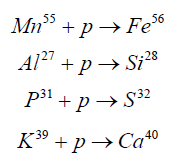
In reactions of this type, a slow proton tunnels into the nucleus and remains there. No nuclear energy is released because the nucleus remains stable after the reaction. According to classical nuclear physics, the nucleus, as usual, after being struck by a charged proton with high kinetic energy, becomes unstable and disintegrates into fragments with high kinetic energy. Reactions of this type were considered impossible at low energies and therefore were not studied in classical nuclear physics, but many geologists do not doubt their possibility. Apparently, this is an entirely new type of nuclear reaction, unrecognized by modern nuclear science, but experimentally discovered quite a long time ago. Today, there is ample experimental data confirming the massive nature of nuclear transmutation [9,10,52]. Moreover, there are numerous nuclear waste disposal projects that utilize this method.
Band theory of solids is based on solving the problem of electron motion in the field of two or more charges. However, this problem does not yet have an analytical solution, and in practice, only theoretical qualitative solutions are used. As a result, electrons in solids have well-defined energy levels. This area of science is very successful and is unlikely to be revised. Solving equations with an oscillating charge for an electron moving in the field of several nuclei also leads to the appearance of allowed and forbidden bands [6-8,45, 46]. The classical tunneling effect stands somewhat apart. In UQT, the probability of tunneling depends on the phase of the wave function (unlike conventional quantum theory, where squaring the modulus of the wave function completely eliminates its dependence on phase). It would be interesting to prove this dependence experimentally. This can be easily achieved by creating a new transistor based on a fundamentally new principle of electron current control, exploiting the strong dependence of barrier permeability on phase for electrons passing through a chain of barriers [46]. We will not analyze the modern theory of superconductivity, but we are confident that the equation with an oscillating charge can provide new insights both into superconductivity and into the mysterious properties of quantum liquids.
The process of chemical catalysis and catalysts are the great mystery of modern science. The number of theories of chemical catalysis is equal to the number of chemical catalytic processes. Specialists in chemical catalysis always assume that a particular reaction fails only because the necessary catalyst has simply not been found [65,52]. Michael Faraday studied these problems. Specifically, he spoke of platinum as a universal catalyst. It is known that platinum practically does not react with anything, which immediately suggests that chemical processes have nothing to do with it and that a universal physical reaction mechanism should be sought. It’s possible that the idea of energy generation in a potential well awaits the development of a general Theory of Catalysis. Here, it’s worth recalling the brilliant words of the renowned Russian physical chemist Professor A.N. Kharin (Russia, Taganrog, 1954), who always said in his lectures: “The problem of chemical catalysis is the most incomprehensible in modern physical chemistry and will not be solved until physicists discover some new mechanism capable of explaining the appearance of energy that lowers the reaction barrier.” We are confident that water can be similarly decomposed into oxygen and hydrogen, as in Figure 13. Under normal conditions, a mixture of oxygen and hydrogen is stable. In other words, the two stable substances (a mixture of hydrogen and oxygen) are simply separated by a high energy barrier, which can be overcome (analogous to the tunneling effect) with the right catalyst and the concepts of UQT. To date, numerous experiments have been conducted on water splitting. The energy released during hydrogen combustion is tens of times greater than the energy required for the splitting process. This makes it possible to construct a water engine for automobiles. Even more astonishing is the cleavage of the polysaccharide bonds (2.7 eV) in the lysozyme molecule. This enzyme is somewhat like a pumpkin, with a cavity where the polysaccharide molecule fits. Once inside, the polysaccharide molecule begins to oscillate within this cavity, implementing the “Maternity Home” solution, and fragments of the split polysaccharide escape from the cavity. And lysozyme is ready for its next “feat”! There are amazing results [66] on catalytic decomposition
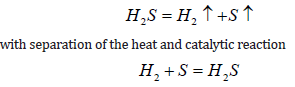
Figure 13
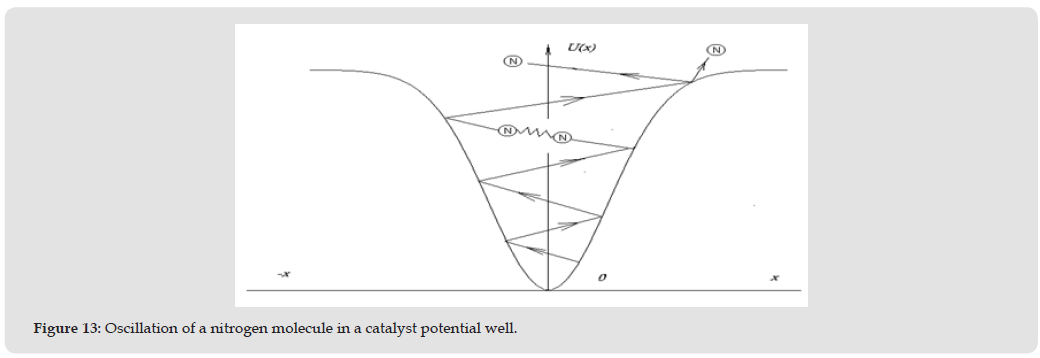
also, with heat release! At Oak Ridge Laboratory, Adam Rondinone’s catalyst (a copper-containing fullerene) was developed that converts carbonic acid (carbonated water) into ethyl alcohol! These reactions require no additional energy. However, from the perspective of chemical thermodynamics, this is a clear violation of the law of conservation of energy! According to modern concepts, no catalyst adds any energy to the catalyzed process. However, experience shows that this is not the case! The catalyst adds energy to the process. And the only rational explanation for this fact is provided by new solutions for the quantum oscillator in UQT. This example is not unique in the chemistry of catalysis. Catalysis specialists avoid discussing the release of excess heat, yet they “normally” ignore this fact to avoid a reputation for “ignorance” in simple thermodynamic calculations. The role of the catalyst in modern catalytic chemistry must be reconsidered. This has been done in [6-8,11,12,65]. The UQT allows, we hope, to take the first tentative steps in the right direction.
The author will present the laws of thermodynamics with some caution [9,67]. Today, in Russia, as elsewhere in the world, fundamental laws are generally not discussed in science. But this was not always the case, especially in Russia, where the scientific community was not afraid to discuss fundamental principles. The journal “Socialist Reconstruction and Science” (SORENA) was published in the USSR from 1931 to 1936. Its goals and objectives were as follows: “SORENA” was conceived as the largest and most fundamental scientific and technical journal in the Soviet Union; its articles were written with the close participation of the best scientists, engineers, economists, and leaders of the USSR. The journal published guidelines for the implementation of dialectical materialism in the natural and technical sciences, published theoretical articles on all general educational subjects, military issues of modern technology, the organization of scientific research and technical work, and covered important news, problems, and achievements of the scientific and technical world abroad. Its editorial board included such outstanding scientists as A.F. Ioffe, L.K. Martens, A.N. Frumkin, and others. The editor-in-chief of the journal was A.N. Klushina, the former wife of V. Kuibyshev, and the editor-in-chief was Academician N.I. Bukharin. In 1935, two articles were published in the journal: Bronstein’s “Is It Possible to Save Energy?” (SORENA, 1935, 1, pp. 7–10) and S. Shubin’s “On Energy Saving” (SORENA, 1935, 1, pp. 11–13). In his article, Shubin, while acknowledging Bronstein’s clear exposition of physical, experimental, and theoretical arguments as proof of the law of conservation of energy, rated his philosophical ideas very low and reviewed Bronstein’s article with the following words: «Today in nuclear physics we have neither direct experimental evidence for or against the law of conservation of energy, nor direct theoretical indications that could help resolve this problem, because a strict relativistic quantum theory does not exist at all. But we, dialectical materialists, have a powerful methodological principle that helps us easily look into the future. It states that ‘anything is possible. The law of energy conservation so strongly appealed to the bourgeois accountant, who built the world in the image and likeness of a budget book, that it could break down every day. The alchemists’ dream of a perpetual motion machine has a chance of being realized in a future communist society.” At the end of 1936, following the trial against Academician Bukharin, the journal “Socialist Reconstruction and Science” was closed. It was removed from libraries, and publications were destroyed.
Among the regular contributors to this journal was Anatoly Grigorievich Razumnikov, a professor at the Bauman Moscow State Technical University (MHTU) in Moscow, who published an article criticizing thermodynamics. Unfortunately, we were unable to find this article. Back in 1954, Professor Alexei Nikolaevich Kharin told me that Razumnikov was considered the founder of modern chemical thermodynamics. These issues were no longer discussed in either the Soviet Union or Russia; indeed, any discussion of Thermodynamics, Quantum Mechanics, or the Theory of Relativity was generally prohibited.
I submitted my article with trepidation, so high was the level of this journal [67]. But the article was published immediately. The great thermodynamics is based on five different postulates: Minus the first law – the assertion of thermodynamic equilibrium. The first law is the law of the impossibility of perpetum mobile, which applies, among other things, to all thermal processes. The second law limits the direction of thermodynamic processes, prohibiting the spontaneous transfer of heat from cooler to hotter bodies. It is also formulated as the law of entropy increase. The third law is not a postulate at all, but rather Nernst’s theorem on absolute zero, which cannot be achieved as a result of a finite number of thermodynamic processes. The fourth law implies that, for each moment in time, the same set of variables can be used to describe both the homogeneous state of open equilibrium and nonequilibrium systems, and for the homogeneous states of closed equilibrium systems, slightly supplemented by variables characterizing the chemical composition of the system. From a logical point of view, these 5 postulates do not represent a complete system of axioms of classical thermodynamics, while statistical physics provides a justification for the laws of thermodynamics and their connection with the laws of motion of microparticles from which macroscopic bodies are built. It also examines. The limits of applicability of thermodynamic laws and the exceptions that we are going to discuss. If we look at the process of the emergence of the law of conservation of energy, we will see that it is based solely on Newton’s equations (described in detail in [9,45] p. 19[52]), and the properties of space and time arise simply as their consequences. Since almost all the equations and phenomena of classical physics are described by Newtonian mechanics and are rigorously derived from it, its laws remain immutable. But, for example, according to Unitary Quantum Theory (UQT), which we expect to replace standard quantum mechanics, the law of conservation of energy and momentum for a single particle does not apply, while the conservation laws themselves become obvious after averaging over an ensemble of particles.
This is evident from the non-invariance of the equation of particle motion with respect to coordinates and time. But Newton’s equations are invariant to spatiotemporal translations: neither the equations nor the physical state of the system change when replacing, where a are some fixed quantities. This is understandable, since the particle’s properties are constant and do not change with changes in coordinates and time. According to Unitary Quantum Theory, space-time translations do not exist for either the fundamental expression of the wave function or the oscillating charge equation (1), nor for conservation laws, which appear only after averaging over the ensemble. This is also intuitively understandable, since the wave packet describing the particle changes and sometimes even disappears as it moves through space. In UQT, the wave function differs from the standard wave function of quantum mechanics by the presence of a certain factor of the running structure function eq (1). But now, instead of the square of the wave function’s modulus, simply the square of the wave function acquires special significance, and thus the phase does not disappear as it did before, but becomes significant. Its magnitude strongly influences the behavior of the particle, for example, the tunnel effect [1-5,9]. Many years ago, A. Poincaré discovered that increasing or decreasing the charge and mass of particles by the same amount would have no effect on the equations of motion, and this effect cannot be detected experimentally. From a simple physics perspective, it is clear that if a particle approaches a potential barrier at a phase where its charge is very low (the phase is such that the packet vanishes), the particle can tunnel through the barrier (Figure 14). If there is another barrier at half the de Broglie wavelength, the particle will also pass through it (Figure 15). Thus, particles passing through two barriers will have the same velocity and phase. If the distance between the barriers is reduced, particles with higher energies will pass through the barriers; in other words, the two barriers will separate particles with specific energies and phases. Note that in conventional quantum mechanics, according to [1-5,9,10,68], this effect should also occur, but, to our knowledge, it has not been experimentally confirmed. Let’s consider a theoretical situation. For example, we have a closed volume with free electrons separated by a plate with the following parameters: the plate consists of two very narrow potential barriers, the width of which is a few angstroms, and the distance between the barriers is several times greater than their width.
Figure 14
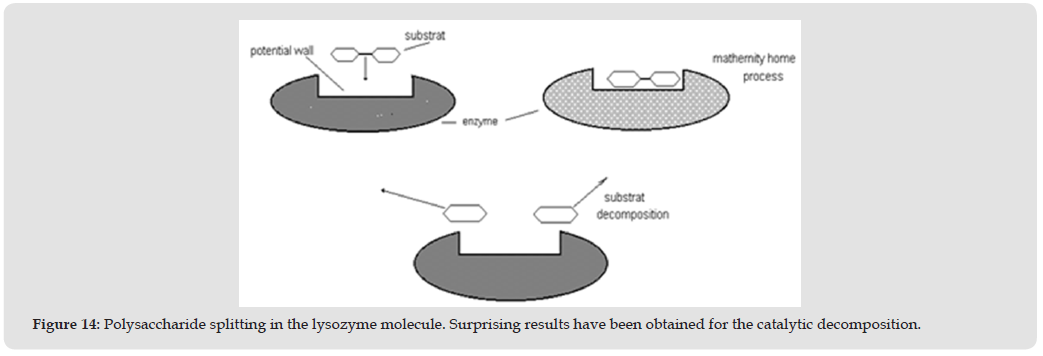
Figure 15
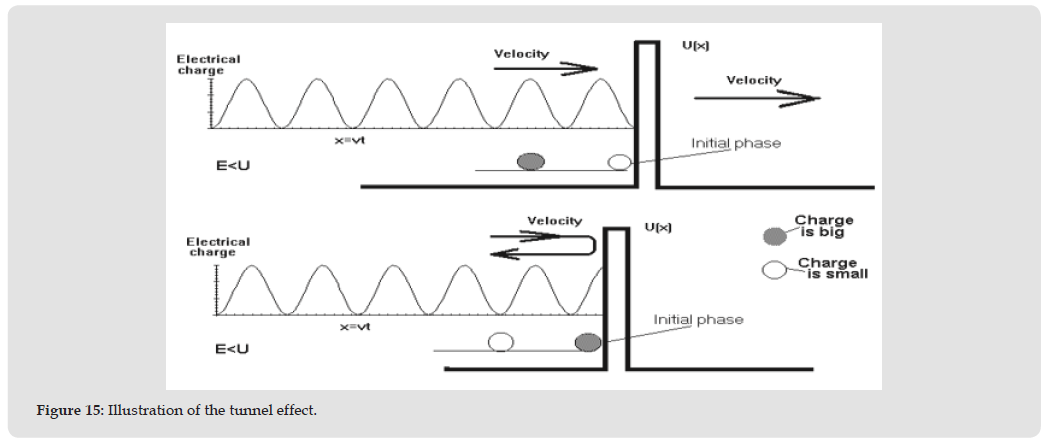
Important: half the de Broglie wavelength must be located between the barriers, and the de Broglie wavelength must correspond to the maximum number of free electrons in the distribution curve. This is not that difficult to do. As calculations in the UQT [9,10,52,67,68] show, such a plate will play the role of a New Maxwell’s Demon, because the two barriers will be anomalously penetrable only for particles with half the wavelength equal to the distance between the barriers (Figure 15). This follows not only from the UQT, but also from traditional Quantum Mechanics [68]. Thus, only electrons with the same energy and phase will be able to pass through such a plate. Consequently, as the distance between the barriers in the second chamber after the wall decreases, the temperature increases, since only electrons with higher energy will pass through the barrier system. By the way, if this chamber has reflective walls, then the distance between them can be set to trigger an oscillatory process and implement the “Maternity Home” solution [9], which will cause an increase in the voltage between the walls and may be useful. It should be noted that systems with two potential barriers are very promising for harnessing the energy of the future, as this will allow for the production of a large number of particles with the same energy and phase. Thus, considering this version of Maxwell’s Demon leads to a violation of the first and second laws of thermodynamics, and we cannot find any arguments for their salvation. A group of engineers led by Professor Thibodie at the American University of Arkansas [69] not only developed but also successfully tested a scheme that allows for the detection of thermal motion (Brownian motion of atoms) of graphene and subsequently converting it into electric current, which also collapses the first and second laws of thermodynamics [67].
However, we still lack experimental data for a proper analysis of these processes. Chemical catalysis and catalysts are a great mystery of modern science, see Section 17. All of this directly violates the law of energy conservation from the perspective of Gibbs’s chemical thermodynamics! By the modern definition, a catalyst adds no additional energy to the process it catalyzes. But experiments have shown that catalysts do add energy! And this example of catalytic chemistry is not unique. Catalytic chemists constantly encounter excessive heat generation, yet they continue to ignore this fact, lest they be branded “ignoramuses” in elementary thermodynamic calculations. We are confident that the role of the catalyst in modern catalytic chemistry should be reconsidered, as was done in [1-4,14,52]. However, mainstream science does not yet believe this. The UQT admits that it has taken the first steps in the right direction.
It’s very funny to seek truth for money. It will always be where the pay is highest. A. Pechorina. The existing general picture of the world looks extremely bleak. The author of the Unitary Quantum Theory has written about this repeatedly. On the one hand, General Relativity describes the world in terms of a field, but unfortunately, it has very weak experimental data, although it is quite clear to a demanding mind. On the other hand, modern quantum theory has absolutely brilliant experimental confirmations, but is replete with paradoxes that baffle any serious mind. The standard response of a professional theoretical physicist to these paradoxes is simple – “shut up and count!” – which can only elicit a smile from an unbiased researcher. There is no reason to doubt the correctness of the Unitary Quantum Theory, as it allowed, for the first time in the world, the calculation of the fine structure constant of 1/137 [9] p. 58 (this is the square of the dimensionless electric charge) and find an analytically exact solution to the scalar integro-differential equation of the UQT. This resulted in an accurate calculation of the mass spectrum of many elementary particles, including the mass of the Higgs boson five years before its discovery. This calculation was made in 2007, and when it was published, Professor Vladimir Dubovik (Laboratory of Theoretical Physics, JINR – Dubna) told the author: “They won’t forgive you for this. In two or three months, there will be nothing left of you; they’ll find the error.” But 17 years have passed, and everyone pretends that the UQT doesn’t exist. Note that any good student or mathematician can reproduce all of these calculations [9] p. 64]on a regular laptop using Maple or Mathematica. But all these results required the sacrifice of the Special Theory of Relativity: all that remains is the growth of mass at very high speeds, while the decrease in the length of the rulers and the slowing of clocks is a thing of the past. On the other hand, the increase in mass with speed now has a physically clear character, is absolute, and is simply related to the increase in the amplitude of the wave packet—for more details, see [9] p. 6, [1-3]. The particle’s motion is absolute, but the question remains: in what direction does it move? For now, the answer is vague. We suspect that the motion occurs relative to the global world potential, but this will become clear in the future.
Now the Special Theory of Relativity has acquired features that are essential for a closed cosmology, and it lacks the laws of conservation of energy and momentum (at least in the approximate version of the equation with an oscillating charge [45]). It is the laws of conservation of energy and momentum that prohibit the emergence and development of the Universe, and they are absent from some versions of General Relativity, but there are also some questions that can be resolved by abandoning certain relativistic interpretations. Collisions of high-energy protons can produce new protons, as well as the mass of mesons and other particles. However, science remains elusive as to how matter (mass) can arise from the conventional relative physical quantity of mass, which is independent of the reference point. How does kinetic energy transform into mass and vice versa? These difficulties arise in interpreting the multiple production of particles, since before the UQT, the mechanism for converting kinetic energy into matter was completely incomprehensible from the standpoint of the special theory of relativity, where mass has the same value in all reference frames and is invariant regardless of the particle’s motion. The complete confusion on this issue is clearly evident in Okun’s silly article in the journal Uspekhi Fizicheskikh Nauk [63]. In the UQT, multiple production of particles is explained as follows: as a particle accelerates, its mass begins to increase, and this is due to an increase in the amplitude of the wave packet in its own reference frame at resonance [9]. The field of such a wave packet will diffract by the complex structure of a proton at rest, and the diffraction maxima will contain a huge number of different particles. In multiple production, these are primarily π+, π-, π0, strange particles, and new nucleons. Heavy particles— B mesons, W bosons, and Z bosons—are produced much less frequently. This is the direct mechanism for converting kinetic energy into matter (mass). Nuclear reactions create a mass defect that is converted into kinetic energy of the fragments. This is the reverse process of converting matter (mass) into kinetic energy. See section 7. The main problem in studying such collisions is the enormous number of particles produced. The reverse process is observed in any nuclear reaction and is widely exploited by humanity, confirming the conversion of mass into kinetic energy in the products of nuclear reactions. Unfortunately, special relativity has left its diabolically schizophrenic imprint not only on quantum theory but also on general relativity.
Let’s imagine two particles flying toward each other from different, distant locations, were, according to our calculations, they should meet. If the gravitational fields affecting the particles’ motion were different (this is the most reasonable assumption), then at the supposed meeting point they would have different times and, therefore, they would never meet. The fact is, if two points have the same spatial coordinates but different times, then these are completely different points, and for the particles to meet, they must also have the same time. Even if they have the same spatial coordinates, their time coordinates will always be different, and no collisions are possible. This, of course, is monstrous. What was sacrificed, and what conclusions can be drawn from this consideration:
1. The concept of time is misinterpreted in Special Relativity, General Relativity, and Quantum Theory.
2. The flow of time can only be uniform and independent of physical conditions. This position was always held by Sir Isaac Newton and all sensible people.
3. A change in gravitational potential does not change the rate of time, but only the rate of physical processes.
The Great Quantum Theory of Relativity (GQTR) has long since arrived at the same requirements [1-9]. In order to salvage Einstein’s remarkable physical ideas about the coincidence of gravitational and inertial mass, the identification of inertia and gravity (which all form the basis of GQTR), it is necessary to eliminate time. Almost half a century ago, physicists John Wheeler and Bryce DeWitt [70-72] were able to derive the Great Equation based on Einstein’s general ideas, which the scientific community initially met with hostility because “it violated the laws of physics.” Objectively speaking, the Equation did not violate the laws, but it fundamentally changed the familiar picture of the world. According to Wheeler and DeWitt’s discovery, such a quantity as time does not exist: “Time never has been, time does not exist, and time never will be.” “It’s only in our heads and the equations we use every day. Processes in the Universe are not required to obey any periodicity or intervals. We know of no phenomena capable of describing time,” — John Wheeler [71]. And how can one not recall once again the words of St. Augustine: “I know what time is until I am asked about it...” The star has just appeared at point 3 (Figure 16), and the photons have started their movement away from it, long before they finally reach the telescope, but their harmonic components will appear at point 3 IMMEDIATELY, since they have already been there. There are many photons, the sum of their unitary waves carries energy, which leads to a change in the resistance of the detector (3) in (Figure 16). Currently, there are many scientific articles on this topic [73]. And here is the icing on the cake: in 1976, at a symposium in Byurakan [53,70,74], Professor N.A. Kozyrev reported on unusual astronomical observations that he made while scanning the celestial sphere with a reflecting telescope covered with an opaque cover. He placed unusual devices in the focal plane of the telescope - torque sensors or a small thin-film resistor, which is part of the balanced arm of the bridge (Figure 17).
Figure 16
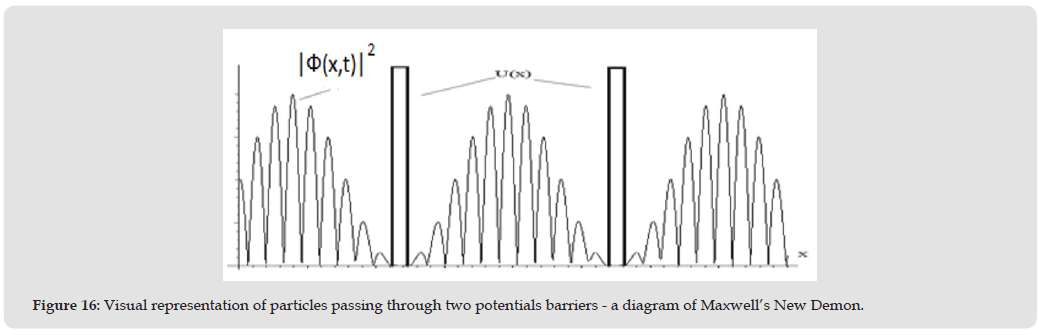
Figure 17
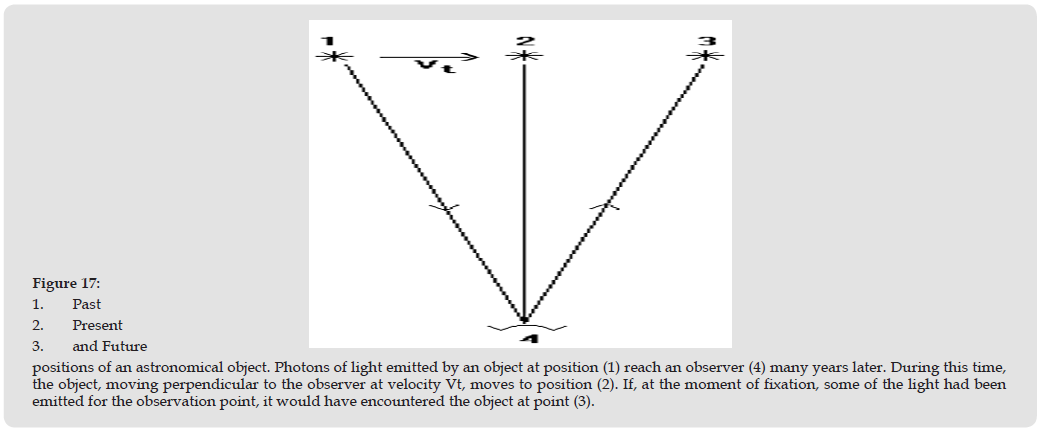
Figure 18
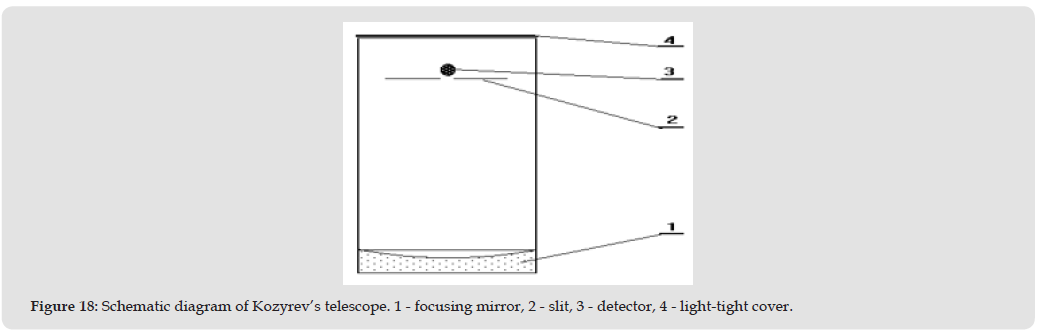
These results initially seemed so incredible that astronomers dismissed them, and for over a decade, no one attempted to replicate these observations using Professor Kozyrev’s method. They were later confirmed in Japan, Germany, and America, and the “madman” aura surrounding Kozyrev vanished without a trace. But Kozyrev initially claimed that these were examples of superluminal motion. Here, we would like to offer a very simple and natural explanation of these results from the perspective of the kinetic theory of relativity. According to the kinetic theory of relativity, any particle is a single wave packet (a field bundle—a packet f(r-vt)) of equation (1). If one performs a Fourier transform on it, instead of this function, one obtains a set of infinite sinusoids (unitary waves) that exist on the r-axis from 0 to infinity. Mathematically, this is exactly the same representation. In other words, both objects exist simultaneously. Trust the mathematics!
General relativity “explains” gravity through the curvature of space; in other words, it replaces one mystery with another, without explaining the origin of gravitational forces. But other approaches have long been in existence. One of them is the kinetic model of gravity. It was proposed by the Swiss mathematician Nicolas Fatio de Duilhor in 1690 and expanded upon by Georges Le Sage in 1756. There is even a Newtonian assessment of this theory: “A unique hypothesis which can explain gravitation has been developed by the most brilliant geometer, Mr. N. Fatio.” The basic idea of the model is that the universe is filled with extremely small particles moving randomly and in different directions at very high speeds. A consequence of this chaotic motion is the pressure these particles exert on any material bodies they encounter. Since the direction of particle motion is random, the average flow of these particles in any direction is approximately the same. Accordingly, the external pressure exerted by the total flow of such particles on any three-dimensional object is balanced in all directions and is generally directed toward its geometric center. But Maxwell disagreed with these ideas, and Poincaré even proved that the speed of gravitational particles must exceed the speed of light by several orders of magnitude, which would lead to overheating of the planets. If gravity is caused by shielding, then the Moon, when it is between the Earth and the Sun, should significantly influence the force of gravity between these bodies and, consequently, the Earth’s trajectory, but nothing of the sort is observed in reality. This is precisely what put an end to the kinetic model of gravity. But all this can be revived if, instead of hypothetical particles, we consider unitary waves of the spectral decomposition of wave packets representing particles of matter. These waves have very small amplitudes and, therefore, all matter is completely transparent to them. They are chaotic and multidirectional.
Let’s say two particles are some distance apart. Let’s consider the unitary waves from these particles moving strictly toward each other. Within this broad spectrum, there will inevitably be waves of the same wavelength, which will form a standing wave. Unlike other waves, it will have no momentum. Consequently, waves coming from other directions will exert pressure on these two packets with their momentum, but strictly in the direction connecting the centers of the packets, the pressure of such waves will be less, which will lead to the emergence of an attractive force between them. Moreover, gravity itself does not require intermediaries such as gravitational waves, and the concept of speed has no physical meaning in relation to gravity, since the entire universe is formed from existing unitary waves of constituent particles. Therefore, classical Newtonian mechanics does not use the speed of gravity when calculating the force of mutual attraction. It is unnecessary, as it is an absolutely redundant and meaningless quantity, since the speed of propagation of gravity is infinite. Young mathematicians should pay attention to two books [75,76], using which one can theoretically obtain the Law of Universal Gravitation and the gravitational constant based on the ideas presented. But many years later [77] Tom Van Flandern, an American astronomer and astrophysicist, conducted a series of experimental measurements of the frequency of pulses emitted by binary pulsars in different regions of the celestial sphere, and subsequent calculations showed that the Earth’s gravitational vector to the Sun is directed not toward the Sun’s apparent position from Earth, but toward the center of its true position. In other words, the situation is very similar to the results of Professor Kozyrev’s experiments. From this it clearly followed that the speed of propagation of gravity in the measurements exceeded the speed of light by at least 10 orders of magnitude greater than the speed of light. In fact, do binary pulsars predict their future position, velocity, and acceleration faster than the light time between them allows? The book [77] poses discouraging questions: “Why do black holes have gravity despite the fact that nothing can escape them, since this would require a speed faster than the speed of light? Why does a total eclipse of the Sun by the Moon reach its peak before the gravitational forces of the Sun and Moon equalize?”
The origin of life on Earth – this question always interested people. Nearly any nation has legends and stories about this, different texts can be found in ancient holy books like the Bible, the Quran and others. Nowadays the hot disputes around the origin of life on Earth are continuing. The main issue is the question: was it by chance or not. Let’s start with definitions. There is no conventional and generally accepted definition of life. Some scientists consider the life as a process more than a structure and describe it, for example, as process of maintenance of non-equilibrium state of organic system with the production of energy from surrounding media. Systems without distinguished spatial boundary – autocatalytic cycles, ―living solutions– can correspond to such definition of life. Other scientists underline the obligatory discreteness of animal objects and think that conception ―life is inseparable from the idea ―organism. The only life we know is the life on Earth, and we do not know what properties are obligatory for any life in general. However, we would like to take chance and indicate two of these properties. First – the existence of genetic information; second – active functioning for the purpose of self-maintenance, growth and reproduction as well as for production of energy necessary for these works. Any living organism on Earth solves these problems with the help of three classes of complex organic molecules: DNA, RNA and proteins. DNA is responsible for the first problem – keeping genetic instructions. Proteins are responsible for the second – active ―work. It’s very strict specialization. Proteins never hold genetic instructions, while DNA never ―works actively. Third class of molecules – RNA – serves as intermediary between DNA and proteins providing genetic information read-out. RNA helps to create proteins in accordance with the ―instructions of DNA molecule. Some of RNA functions are similar to the protein’s duties (active work of genetic code reading and protein synthesis), others remind DNA functions (keeping and transfer of information). And all these works are done by RNA not solely but with proteins’ active participation. On the first sight RNA seems unnecessary. And somebody can easily imagine an organism without RNA at all where its functions are divided between DNA and proteins. But in fact, such organisms do not exist in principle. What molecule appeared first? Some scientists considered it was no doubt proteins: because they were responsible for any work in a living cell and life was impossible without proteins. Other scientists opposed that proteins could not keep genetic instructions. But life is impossible without genetic instructions even less so. And according to second opinion DNA was the first! The problem seemed undesirable: DNA was unnecessary without proteins, and proteins – without DNA. In accordance with these theories both molecules have to appear simultaneously, but that is hard to imagine. During these debates the ―spare RNA was nearly forgotten. As everybody thought it could neither keep information nor work without extra assistance.
Our civilization is not aware of other forms of life but it does not mean that they do not exist. Perhaps they do not exist on the Earth, but probably in other circumstances organic-silicon forms of live may exist instead of Earthly carbon forms. The modern UQT gives us instruments to create different elementary particles, nucleus, atoms and simplest molecules from the chaos of world potentials fluctuations, and then due to gravity to create planets, stars, galaxies. One of the authors of our articles (V. Dzhanibekov) five times was in outer space, but he has never faced any interference of Creator. All these reasons can hardly help us in solving the problem of the origin of the life, moreover both the second law of thermodynamics (every system left to its own trends to more from order to disorder, simplification, destruction and in the long run to randomness), and the general reasoning from the probability theory are seriously impeding these processes. We would like to analyze some of these reasons. Theory of creationism assumes that every living organism (or at least the simplest form) once was created (constructed) by a certain Supernatural being (divinity, absolute idea, super intelligence, super civilization and so on). Obviously in ancient times the members of mostly all religious took this point of view, in particular the Christians. In modern times the theory of creationism is still widely used not only by religious but also by scientific community. It’s usually used for the explanations of the most complicated unsolved for the moment problems of bio-chemical and biological evolution in connection with the synthesis of proteins and nucleic acids, forming of mechanism of their interaction, creation and forming of some complex organelles or organs (like ribosome, eye or brain). From time to time the acts of ―creation are used for the explanation of the absence of evident transition stages from one type of animal to another, for example, from worms to arthropods, from monkey to human and so on.
We should underline that philosophical dispute about priority of mind (super-brain, absolute idea, divinity) over matter cannot be solved in principle; however, every attempt to explain any problem of modern biochemistry and evolution theory by incomprehensible super-natural acts of creation brings these problems over the scope of scientific investigations. That is why the theory of creationism cannot be ranked as scientific theory of the origin of life on Earth. There is another idea – Theory of stationary state. In accordance with that theory the life was carried from one planet to another by ―seeds of life‖ moving along the space being a part of comets and meteorites (panspermatism). For example, the academician V. I. Vernadsky, the founder of the study of biosphere, held this idea. However, the stationary state theory that assumes infinitely long existence of the Universe does not comply with the information of modern astrophysics that stipulates the Universe appeared not so far ago but only 16 billion years. Obviously, all these theories do not propose any explanation of the mechanism of life origin, either replacing it to another planets (panspermatism) or moving back to infinity (theory of stationary state). But question – what is the origin of life at other planets - still remains valid. In any case the scheme of life origin is more or less the same. All this create a lot of other problems, the main – conflicting probability of this event. The mathematical computations definitely show impossibility of accidental appearance of even the simplest cellular structure basing on the known for the moment mechanism of implementation. In other words, if God does not exist, then the life of Earth should be the result of numerous random coincidences that is absolutely impossible.
Professor of chemistry R. Schapiro (USA) has calculated that the probability of appearance of 2000 types of proteins to create a simple bacterium equals 1:10⁴⁰⁰⁰⁰. That is there are 10⁴⁰⁰⁰⁰ (1 and 40 thousand zeros) different variants of these types of proteins creation and only one of them – that should be ―absolutely random‖- can create a life. Professor of astronomy and mathematics Chandra Wickramasinghe commented it as follows: “This value (10⁴⁰⁰⁰⁰) is big enough to bury Darwin and his theory”. Most evolutionists have to agree with this truth. For example, the well-known scientist evolutionist Harold Bloom admits: “Accidental appearance of even the smallest protein is absolutely impossible”. Sir Frederic Hoyle, famous researcher, once said: “The chances that DNA just occurred are about as unlikely as a typhoon blowing through a junkyard and constructing a Boeing-747.”, - and then: «The point of view that the current program of living cell could appear on Earth by chance in primordial soup is an utmost and obvious nonsense” [78]. There is one problem more – being separated all elements of genetic material and proteins are antagonistic to each other. They are destroying each other if being free in the cell, but nobody takes this into account in computations. We can be happy that position of God in the process of life origin remains for the Creator. Our social consciousness damaged by atheism interprets everything in a special manner: if event can be explained by any scientific law the designed has nothing to do with this. Divinity appears always out of scientific discoveries and acts in the field of miracle. Indeed, one can ask every atheist, for example atomic physicist, about the terms he can believe in God. And he will reply that it should be something extraordinary, a Miracle. For instance, a patient should recover in a flash and throw off his crutches before his eyes (and only at terms he has known the disable person for many years).
In other words, a miracle should arise contrary to the laws of physics, biology… contrary to the laws of Nature – only at this terms it will be a Miracle. But here we get into intellectual trap! The laws of Nature are internally deterministic, one follows another and so there is no space for observer, he cannot affect the Law. That is why it is called the Law of Nature. When we ask the Designer about the Miracle thereby, we admit him being the Creator, because only that who creates laws and can correct them for a certain task is able to interfere in the situation and create something in defiance of the Laws of Nature. For example, to create something alive from something lifeless. Or in reply to our prayer to cure cancer to great surprise of physicians. But note that physicists will say that he hasn’t seen either the moment of revival of the matter, or cure, or even the annual Descent of the Holy Fire. And that is one more confirmation of fact that Laws of Nature have only one Creator. If the Almighty had no relation to the approval of the Laws of Nature, then the miracles would be at every turn. But as far He has created these laws what can be the reasons for Him to break the laws? Too many miracles can bring down the laws of Nature; miracles will stop being wonders and laws – will stop being laws…This transfer from Nature to Creator and back indicates the dualism of our consciousness. Meanwhile the contrasting the Creator to the Nature is akin to the contrasting father to mother. In reality any search for the scientific truth is in fact the cognition of God. And in the course of these researches, we will have to define the laws of that incomprehensive transfer from lifeless to alive, from alive to animate, from animate to spiritual… And thanks to God’s will we are sure that is knowable. Let’s resume: Over the whole history of humanity there was not a good event when something alive was descended from anything except alive. Till now evolutionism hasn’t presented any believable scientific explanation of the origin of such sophisticated complexes as DNA, human brain and many others complicated elements in the space.
For the materialist the statement that every alive object has arisen by itself while the modern science with the help of natural processes is only coming to the discovery of a protein molecular origination is nonsense. There is no scientific evidence that life can arise from the lifeless material, but there is a reliable illustration that such self-generation is impossible at all. Only DNA can produce DNA. No chemical reactions of molecules are able to reproduce even roughly this super-complicated code that is so important for all known forms of life. Thus, UQT does not allow dispersing the darkness in the problem of the origin of life. We would like to resume with the words of Robert Jastrow [79]: “For the scientist who has lived by his faith in the power of reason, the story ends like a bad dream. He has scaled the mountain of ignorance; he is about to conquer the highest peak; as he pulls himself over the final rock, he is greeted by a band of theologians who have been sitting there for centuries”.
In conclusion, I would like to quote the extremely poignant words of Louis de Broglie: “To those who say that a new interpretation is not necessary, I would like to point out that a new interpretation may have deeper roots, and such a theory will ultimately be able to explain the wave-particle duality. But this explanation will not be obtained from the abstract modern formalism of our time, nor from the vague concept of complementarity. But I think that the highest goal of science is always to understand. The history of science shows that if someone has ever succeeded in understanding a class of physical phenomena more deeply, new phenomena and applications have emerged. I hope that many researchers will study this fascinating question, discard preconceptions and not overestimating the significance of mathematical formalism, no matter how beautiful and essential it may be, because this can lead to the loss of the deep physical meaning of the phenomena.” (Louis de Broglie, Compt. Rend, 258, 6345, 1964 back translation).
The author has been developing the concept of universal critical thinking for over 65 years and has discovered that today’s humanity has little interest in the TRUTH, with money becoming the primary goal. In the past, in the USSR, this wasn’t entirely true. Incidentally, the great Leo Tolstoy considered «money the greatest evil for humanity. » Today, the main difficulty in adopting a new worldview lies in the growth of ignorance, which is associated not only with a decline in the general level of education but also with a certain degradation, as evidenced by insignificant political figures around the world. It’s impossible to look at modern political figures without tears. Previously, members of royal and ruling families, as well as some politicians, had a very solid education and were icons in their countries—role models for the people. Now, however, they have all suffered a moral failure after the publication of the infamous Epstein documents. As a result, reason and prudence have abandoned virtually every country on our planet, and only a few drops of common sense remain in Russia’s behavior.
The extreme complexity of the overall false picture of the world and the emergence of useless but well-funded projects also challenge the adoption of the new paradigm. Who wants to lose their grant money? However, a new picture of the world could free humanity from the serious problems looming in the future [9] p. 90 [1-3,43,61]. Most importantly, countries will free themselves from hydrocarbon and coal consumption and solve almost all energy problems. The author has an almost political viewpoint on everything happening [43] in the world and society. This position has become widespread among the medical and biological community. It turns out that confusing them is much more difficult than convincing the engineering and physical sciences. I would like to add a remarkable quote from Antoine de Saint-Exupéry: “Truth is not something that can be proven, but something that makes all things easy and clear” (reverse translation). In essence, the UQT has revealed new properties of the world and a new theoretical possibility for a radical transformation of civilization [48]. This article is essentially a new extended authorized text [80]. Let us recall the prophetic words of the famous American science fiction writer Arthur C. Clarke: “What is theoretically possible will be achieved practically regardless of technical difficulties [81-100]. It is enough to desire it.” (reverse translation) - Profiles of the Future, 1963.
The author expresses gratitude for the discussions to Professors V.A. Boichenko, V.A. Dzhanibekov, S.I. Konstantinov, V.V. Graboshnikov, A.A. Kostin, V.I. Utchastkin.

International Association of Landscape Archaeology, Czech Glass Society, Czech Republic

Department of Chemistry, Semenov Institute of Chemical Physics, USSR Academy of Sciences, Moscow, Russia

Department of Educational Sciences, Research Centre Qualities of Teachers, School of Education – HAN, Nijmegen, Netherlands

Associate Professor at Department of Breast and Thyorid Surgey, Chongqing General Hospital, China

Neurology, LA BioMed Research Institute, USA





 Abstract
 PDF
PDF



























