info@biomedres.us
+1 (502) 904-2126
One Westbrook Corporate Center, Suite 300, Westchester, IL 60154, USA
Site Map
 ISSN: 2574 -1241
ISSN: 2574 -1241
ISSN: 2574 -1241
Received: May 30, 2026; Published: June 17, 2026
*Corresponding author: Asma Saghir Khan, Superior, senior lecturer Food and Nutrition Department of Home Economics Mirpur University of science and technology MUST Azad Kashmir, Pakistan
DOI: 10.26717/BJSTR.2026.65.010267
The modern dietary landscape is heavily reliant on refined white sugar (sucrose), which provides metabolic energy but lacks critical micronutrients and dietary fiber. This review article evaluates date powder, processed from the dehydrated fruit of the date palm (*Phoenix dactylifera*), as a functional, whole-food alternative to conventional sweeteners. By retaining the entire cellular matrix of the fruit pulp, date powder functions as a dense source of sustained-release carbohydrates and essential minerals. This paper analyzes the nutritional profile, digestive benefits, and antioxidant capacity of date powder based on current empirical data. Furthermore, it details the simple mechanical and thermal processing steps required to convert the fruit into a stable powder format. The findings suggest that integrating date powder into daily food systems can effectively enhance metabolic energy and combat mineral deficiencies across various target demographics.
Keywords: Date Powder; Natural Sweetener; Energy Intake; Mineral Fortification; Dietary Fiber; Antioxidants
In contemporary human nutrition, balancing high metabolic energy demands with adequate micronutrient intake remains a significant challenge. Most accessible energy sources, such as refined sugars and ultra-processed syrups, deliver rapid caloric energy but are entirely devoid of vitamins and minerals [1]. This overconsumption of “empty calories” often coexists with hidden hunger, where individuals experience chronic deficiencies in vital macro-minerals like iron, potassium, and magnesium [2]. To address these overlapping issues, food science is focusing on plant-based, clean-label ingredients that can replace refined sugars while adding nutritional value. The fruit of the date palm (*Phoenix dactylifera*) is an excellent candidate due to its natural sweetness and rich phytochemical profile. Processing whole dried dates into a fine, shelf-stable powder represents a highly practical advancement. Date powder preserves the dietary fiber and mineral complexes of the fresh fruit, making it an ideal functional ingredient [3]. This review explores how date powder serves as a natural matrix to safely optimize systemic energy and mineral intakes.
Because date powder is produced by removing moisture from the whole fruit, its macro- and micronutrients become highly concentrated. Unlike refined white sugar, which is pure sucrose, date powder delivers a diverse nutritional matrix.
Sustained Energy Delivery and Fiber Dynamics
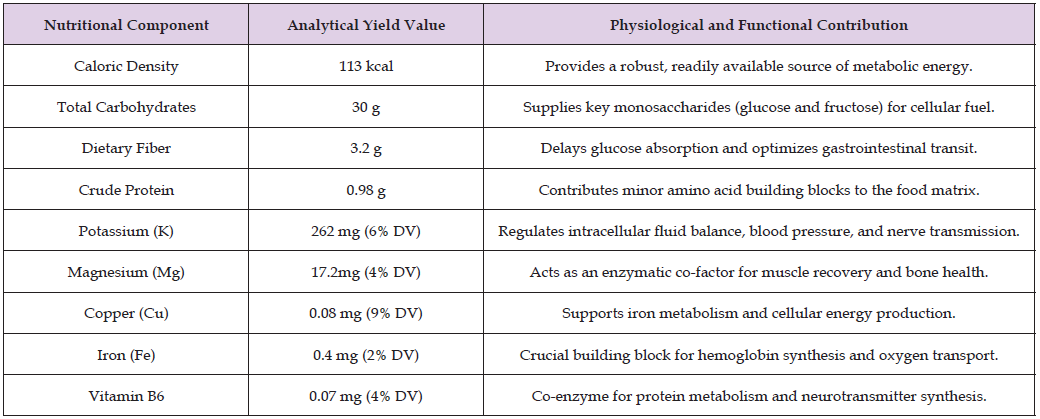
While date powder is relatively calorie-dense due to dehydration, its energy delivery mechanism is highly stable [4]. Refined white sugar causes immediate blood glucose spikes followed by severe insulin crashes, leading to physical fatigue (Table 1). Conversely, the natural sugars in date powder are bound within a dense matrix of dietary fiber, supplying over 3 grams of fiber per standard serving. This high fiber content slows down gastric emptying and delays the enzymatic breakdown of carbohydrates in the small intestine [5]. This ensures that glucose enters the bloodstream at a controlled, gradual rate, providing long-lasting metabolic energy without overworking the pancreas. Additionally, this fiber profile enhances digestive health, prevents constipation, and supports bowel regularity.
Table 1: Nutritional Matrix of Date Powder (Based on a Standardized 40g Serving Equivalent).
Cellular Protection via Rich Antioxidant Capacity
Apart from basic calories, date powder is a potent source of bioactive, non-enzymatic antioxidants [6]. These compounds protect human cells from free radicals—unstable molecules that cause oxidative stress, damage cellular structures, and trigger chronic diseases. The therapeutic value of date powder is enhanced by three major classes of antioxidants:
Flavonoids: Highly effective anti-inflammatory agents that help reduce the risk of type 2 diabetes, cardiovascular diseases, and cellular malignancies.
Carotenoids: Lipid-soluble pigments that are clinically proven to support heart health and lower the risk of eye disorders like macular degeneration.
Phenolic Acids: Potent anti-inflammatory compounds that help protect against coronary heart disease and oncological pathways.
Natural Mitigation of Iron and Mineral Deficiencies
Chronic mineral depletion, especially nutritional iron deficiency, is a widespread public health issue. Date powder serves as a natural, organic fortificant to improve iron status [7]. While plant-derived non-heme iron typically has a lower baseline absorption rate, the date matrix naturally contains organic trace elements and vitamins (such as Vitamin B6 and copper) that help optimize iron uptake in the gastrointestinal tract [8]. Furthermore, its rich potassium and magnesium content supports muscle relaxation and cellular hydration, making it an excellent natural recovery fuel.
Processing Methodology of Date Powder
(Figure 1).
Figure 1
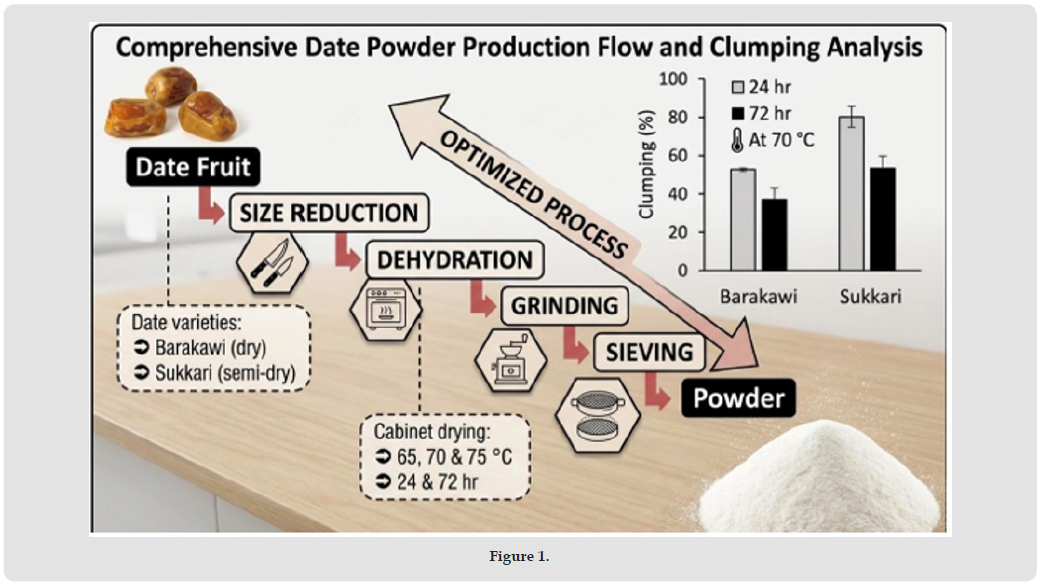
Transforming whole dates into a free-flowing, low-moisture powder involves simple unit operations designed to protect heat-sensitive micronutrients and antioxidants while ensuring shelf stability.
Figure 2
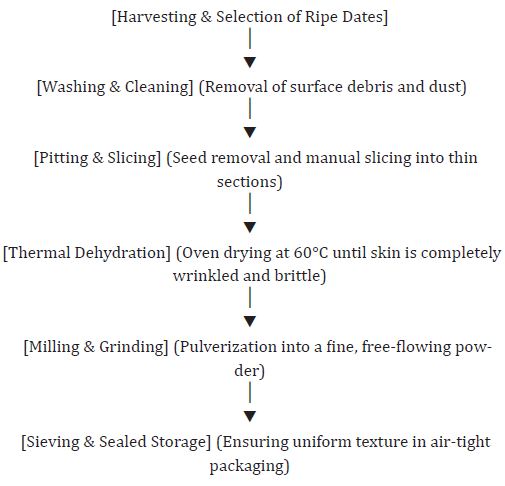
1. Selection and Slicing: Ripe fruits are selected, washed, and manually or mechanically pitted. The clean date flesh is sliced into thin pieces to maximize surface area, allowing for faster and more even drying [9].
2. Dehydration: The date slices undergo controlled thermal drying in hot-air ovens or food dehydrators, usually at temperatures around 60^\circ\text{C}. Keeping the heat at this moderate level prevents the sugars from burning or undergoing excessive non-enzymatic browning, while protecting heat-sensitive vitamins and phenolics. Drying continues until the moisture drops below 7\%, turning the pieces brittle and wrinkled.
3. Pulverization: The fully dried, brittle date pieces are ground in high-speed impact mills to create a fine, uniform powder. The powder is then sieved and immediately placed in air-tight packaging to protect it from absorbing environmental moisture.
Target Demographics and Food Applications
Due to its nutritional diversity, date powder is highly versatile and serves as a premium dietary supplement for several distinct groups:
Growing Pediatric Cohorts: Infants transitioning to solid foods need energy-dense, nutritious options. Adding date powder to homemade baby porridges or oats naturally boosts calories, iron, and fiber without exposing young children to early chemical additives or processed white sugars.
Athletes and Fitness Communities: During heavy exercise, glycogen stores drop quickly. The natural sugars in date powder help replenish energy, while its high potassium levels serve as a natural electrolyte source to prevent muscle cramps and support post-workout recovery.
Maternal and Gestational Care: Pregnant individuals have significantly higher requirements for iron and caloric energy. Date powder offers a wholesome, nutrient-dense way to satisfy sweet cravings while providing natural fiber to prevent pregnancy-related digestive issues.
Industrial and Culinary Uses
Because of its high solubility, water-binding capacity, and rich caramel notes, date powder works well across various areas of food production:
Baking and Pastries: It can partially or completely replace refined white sugar in biscuits, energy bars, and cakes, improving moisture retention and adding a deep golden colour.
Beverages and Smoothies: It disperses smoothly in milkshakes, healthy juices, and plant-based milks (like oat or almond milk), acting as a clean-label sweetener that doesn’t settle at the bottom. Nutraceutical Mixes: It functions as a base ingredient for homemade or commercial pre-workout powders and energy balls, eliminating the need for synthetic flavourings.
Date powder is a highly effective, scientifically validated functional food that bridges the gap between clean energy delivery and optimal mineral intake. It successfully addresses the major health drawbacks of refined sucrose by combining natural sugars with an active network of dietary fiber, multi-class antioxidants, and essential trace elements like iron and potassium. By implementing standardized drying protocols, date powder can be easily integrated into daily cooking and the broader food industry, helping to replace empty sugar calories with functional, health-promoting nutrition.

International Association of Landscape Archaeology, Czech Glass Society, Czech Republic

Department of Chemistry, Semenov Institute of Chemical Physics, USSR Academy of Sciences, Moscow, Russia

Neurology, LA BioMed Research Institute, USA

Associate Professor at Department of Breast and Thyorid Surgey, Chongqing General Hospital, China

Professor of Nuclear Medicine, Faculty of Medicine and Surgery, University of Milan, Milan, Italy





 Abstract
 PDF
PDF



























