info@biomedres.us
+1 (502) 904-2126
One Westbrook Corporate Center, Suite 300, Westchester, IL 60154, USA
Site Map
 ISSN: 2574 -1241
ISSN: 2574 -1241
ISSN: 2574 -1241
Received: May 12, 2026; Published: June 08, 2026
*Corresponding author: Marcelo Barros de Vasconcellos, PhD from the Center for Health Sciences, Master in Public Health, Specialist in aquatic activities, Rio de Janeiro State University (UERJ), Brazil
DOI: 10.26717/BJSTR.2026.65.010256
Drowning represents a significant public health problem in Brazil, the Americas, and worldwide. Despite this, it remains neglected, and young people receive insufficient guidance on its prevention. This study aimed to analyze changes in conceptual and attitudinal drowning prevention among students in Rio de Janeiro, Brazil. This is a longitudinal study conducted between 2022 and 2026, involving the same students from four classes who were followed at five time points: 6th grade (2022), 7th grade (2023), 8th grade (2024), 9th grade (2025), and 1st year of high school (2026), totaling 110 participants from CAp-UERJ. The instrument used was a structured questionnaire on the Drowning Preventive Knowledge Level (DPKL), consisting of three parts and 20 items, administered in the school environment. In the first part, students matched images commonly used on drowning prevention signs with their respective meanings (7 questions). In the second part, they associated flag colors (green, yellow, and red) with sea bathing conditions (3 questions). In the third part, they answered “yes” or “no” to statements regarding appropriate behaviors in aquatic environments (10 questions). Based on individual results, each class participated in five annual pedagogical interventions. The results showed an improvement trend over the period (2022–2026) in recognizing the illustrations of the seven prevention signs, with emphasis on the sign indicating the absence of lifeguards, which improved by 7 percentage points. There was also progress in knowledge of flag meanings, with increases of 7, 7, and 5 percentage points for green, yellow, and red flags, respectively. Additionally, improvements were observed in all 10 assessed attitudes, especially in the behavior of not pushing peers into the water, which increased from 90% to 100% correct responses. Among participants overall, the “excellent” DPKL level showed a significant increase of 10 percentage points. In general, a progressive improvement was observed, with a linear trend of increased performance as schooling advanced. It is concluded that systematic, continuous, and low-cost school-based educational interventions were effective in promoting significant improvements in DPKL among children and adolescents. Over the five-year period (2022– 2026), consistent progress was observed both in the conceptual domain—related to the identification of signs and flags- and in attitudinal aspects related to safety in aquatic environments, resulting in high performance levels, with a predominance of “excellent” classifications. Educational programs that integrate conceptual and attitudinal content, combined with diagnostic tools such as the DPKL, prove to be relevant strategies for guiding more effective and targeted interventions. Expanding and institutionalizing these actions within the school curriculum may significantly contribute to reducing drowning-related accidents and deaths, fostering more aware, cautious individuals capable of making safe decisions in aquatic environments throughout life.
Keywords: Drowning; Aquatic Safety; Prevention; School Children; Attitudes
Drowning is a physiological process that includes both fatal and non-fatal outcomes (COLLINGS, et al. [1]), constituting a critical concern (DIMMER, et al. [2]) and a serious public health problem in the Americas (PAJARES, et al. [3]) and worldwide (ISIN [4]), with more than 1 million deaths every three years (WHO [5]).Collective awareness is needed regarding the importance of giving greater attention to preventive measures, as they are essential to reduce the incidence of drowning, prevent premature deaths (PEDEN, et al. [6]), and may be more effective than rescue or treatment actions (DAVIS, et al. [7]). Early identification of risk factors through proactive approaches, especially educational ones, is essential (PINO, et al. [8]). Preventive education should begin in the prenatal period and extend throughout life, involving physicians (MCCALLIN, et al. [9]), educators, family members, peers, and public authorities (WILLIAMS, et al. [10-13]). Educational interventions aimed at children have a positive impact on drowning prevention (XIE, et al. [14]), and school-based actions can reduce future incidents (ISIN [4]). However, there remains a challenge in developing accessible, low-cost, replicable, and pedagogically effective strategies (PINO, et al. [12]). Swimming lessons are not universally accessible and do not cover all aspects of aquatic safety; however, schools have broad reach and facilitate the integration of this topic into the curriculum, promoting attitudes and values oriented toward the preservation of life (WILLIAMS, et al. [10,15]). In this context, students tend to be receptive to preventive messages (PINO, et al. [8]), making schools a favorable environment for competency-based education, focused on the practical application of knowledge and the functionality of learning (KOON, et al. [16,17]). Educational actions in aquatic safety should prioritize the development of competencies by integrating knowledge, skills, and attitudes (VASCONCELLOS, et al. [18]). Competence results from the articulation of these elements (ZABALA [17]) and, in the aquatic context, requires not only motor skills but also conceptual understanding and appropriate attitudes (VASCONCELLOS [19]).
Indeed, multiple prevention approaches are necessary, as no single method is completely effective in preventing drowning (FARRELL [20]). Despite advances, studies conducted by the World Health Organization (WHO) and the Pan American Health Organization (PAHO) indicate that gaps still persist in interventions aimed at preventing childhood drowning (PAJARES, et al. [3]), reinforcing the need to expand educational actions in the school environment (LI, et al. [21]), where there are still several barriers to the implementation of aquatic safety education (CLARK [22]). In this regard, diagnostic assessments such as the Drowning Preventive Knowledge Level (DPKL) (VASCONCELLOS et al., 2019) allow the identification of students’ limitations and guide more targeted interventions. Based on these diagnoses, it is possible to define content, objectives, and pedagogical strategies that promote the development of preventive competencies. Therefore, the aim of this study was to analyze, over five years, the conceptual and attitudinal changes related to drowning prevention among students in Rio de Janeiro, Brazil.
This is a longitudinal study conducted with students from the Instituto de Aplicação Fernando Rodrigues da Silveira (CAp-UERJ), at the Rio de Janeiro State University, Brazil. At the beginning of the research, in 2022, the school had 1,140 students distributed across 48 classes, from the 1st year of Elementary School to the 3rd year of High School. Four 6th-grade classes were selected for follow-up until 2026, as this group is considered to have lower risk perception and higher vulnerability to drowning (XIE, et al. [14]). In addition, this age group already demonstrates reading and symbol interpretation skills, which supports longitudinal monitoring. The sample consisted of 110 students (56 boys and 54 girls), assessed at five annual time points: 6th grade (2022), 7th (2023), 8th (2024), 9th (2025), and 1st year of High School (2026). Students aged 9 to 16 years who were regularly enrolled were included, and only those with intellectual disabilities that prevented completion of the questionnaire were excluded. During the study, there were two sample losses due to school transfers. The data collection instrument, integrated into Physical Education classes (PINO, et al. [8]), consisted of a structured questionnaire with conceptual and attitudinal components, developed by (Vasconcellos, et al. [23]). It included 20 items assessing the Drowning Preventive Knowledge Level (DPKL), organized into three parts. In the first part, students matched images of prevention signs with their meanings (7 items). In the second part, they associated flag colors (green, yellow, and red) with bathing conditions (3 items). In the third part, they answered “yes” or “no” to statements regarding safe behaviors in aquatic environments (10 items). The DPKL was classified into five levels: very weak (0–2), weak (3–4), fair (5–6), good (7–8), and excellent (9–10). The total score resulted from the sum of correct answers (0.5 points per item). Questionnaires were reviewed for completeness, and the data were analyzed using averages and categorized results. In addition to providing feedback on the results, each class received annual pedagogical interventions focused on drowning prevention.
Part 1 – Conceptual Knowledge of the 7 DPKL Signs
The results of this study showed that students demonstrated an improvement trend over the five-year period (2022–2026) in their knowledge of the meanings of the seven drowning prevention signs (Table 1).
Table 1: Prevalence of correct answers in identifying the meanings of the seven drowning prevention signs among students who were in the 6th grade in 2022 and followed up until the 1st year of high school in 2026.
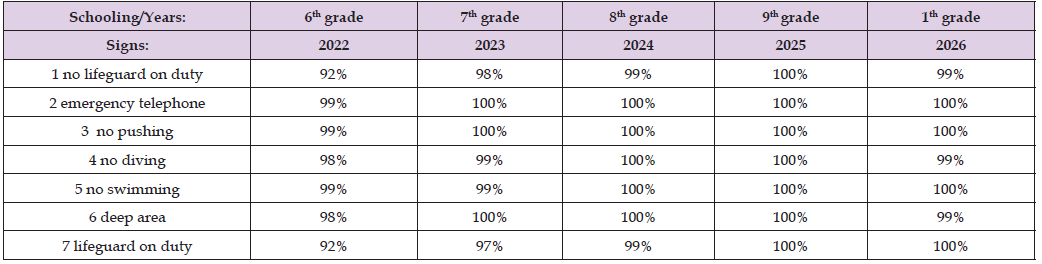
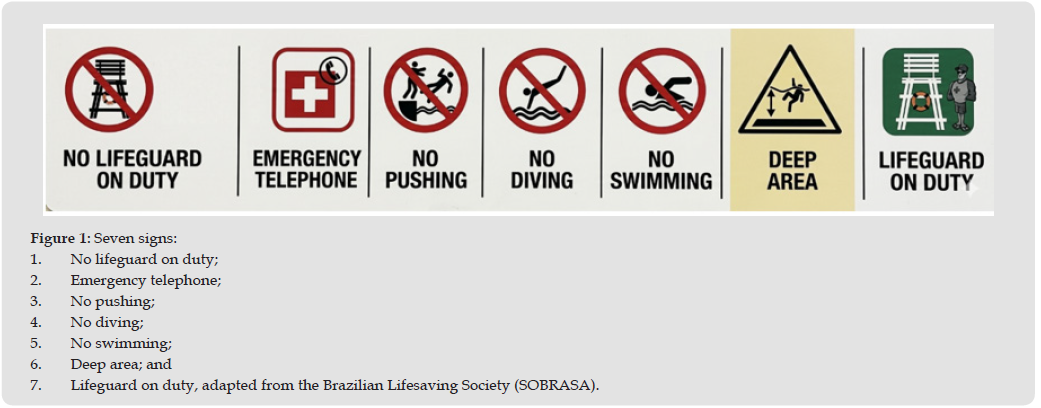
When the signs were analyzed individually, sign 1, referring to the absence of a lifeguard, showed an improvement of 7 percentage points during the investigated period. Locations with lifeguards should be chosen (PRATT, et al. [24]), as they are safer for bathing (JOHNSON [25]). Through supervision, lifeguards act to protect, monitor, care for, and anticipate risk situations (VASCONCELLOS, et al. [26]), not only through prevention but also by assisting in rescue situations, thereby avoiding the feared outcome of drowning-related death (MORELAND, et al. [27]). Children who are unfamiliar with these environments often do not recognize warning signs and may feel hesitant to ask about usage rules (VASCONCELLOS, et al. [26]). Therefore, it is essential to educate them to ask lifeguards about the safest places for leisure in beaches, rivers, reservoirs, lakes, waterfalls, and swimming pools, as well as to alert them when identifying a drowning situation (PINO, et al. [8]). There was also improvement over the years in recognizing sign no. 2. Identifying and correctly using an emergency telephone can expedite contact with rescue services and save lives (VASCONCELLOS, et al. [28]), since in drowning cases, every minute of delay increases the risk of death. Regarding regulatory signs (🚫), improvements were observed over the 2022–2026 period, with greater student accuracy in identifying signs such as “no pushing”, “no diving”, and “no swimming”. This conceptual knowledge is essential for guiding safe attitudes and procedures. The improvement observed in 2026 may be associated with increased student maturity (VASCONCELLOS, et al. [29]). For sign 6 (deep area), there was improvement during the first three years of analysis, followed by a slight decline in the proportion of correct responses. Being able to identify deep areas contributes to drowning risk reduction. For the final sign, no. 7 (lifeguard on duty), there was an improvement trend over the five-year period, reaching an increase of 8 percentage points from 2022 to 2026. Furthermore, 100% correct responses were observed from 2025 onward, maintained in 2026. Despite the improvements observed in the studied group, there remains a need for continuous actions to consolidate preventive behaviors among older adolescents, promoting greater attention and a more accurate understanding of risk signals.
Part 2 – Conceptual Knowledge of the 3 DPKL Flags
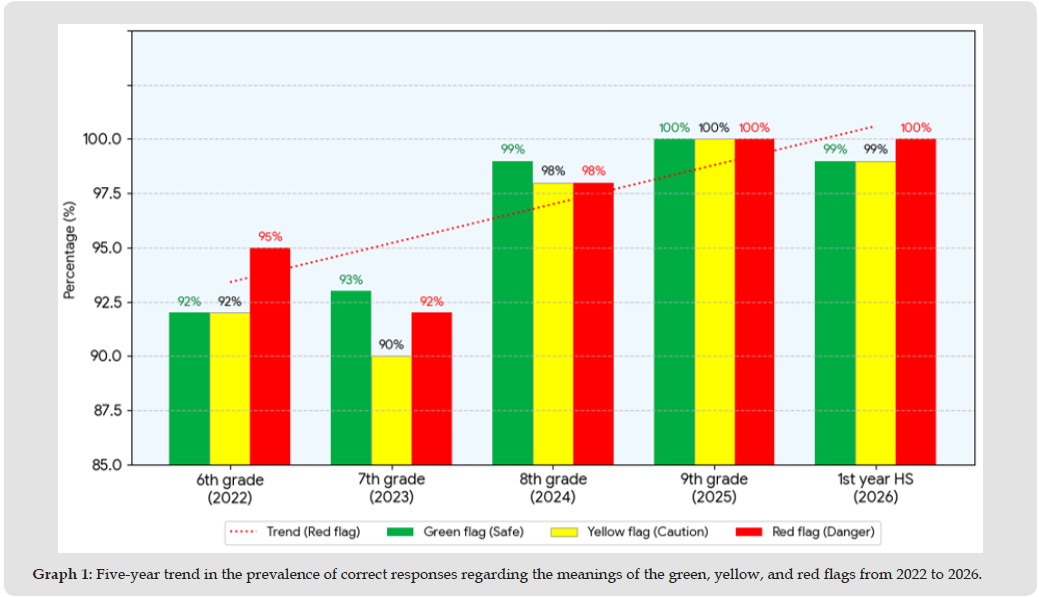
There was an observed trend of improvement in students’ knowledge of the meanings of all three flags (green, yellow, and red), with respective increases of 7, 7, and 5 percentage points over the five-year period (2022–2026) (Graph 1). Overall, in 2024, although the correct response rate for flag meanings was high (98%), the red flag had not yet reached 100% accuracy. Subsequently, this changed, and it is noteworthy that 100% correct responses were achieved for all three flags during the 2022–2025 period, with a slight decline of one percentage point in 2025–2026 for the green and yellow flags. These fluctuations indicated the need for continued interventions to maximize understanding of their meanings. In fact, continuity proved effective, as in 2026, 100% of the students in the 1st year of high school who were followed throughout the five-year period correctly identified the meaning of the red flag (Figure 1). The improvements found in this study were similar to those reported by (Pino, et al. [8]) in which, after intervention, all students correctly identified the red flag and approximately 90% recognized the green and yellow flags. Just as traffic light colors constitute a universal language understood by almost everyone and play a fundamental role in road safety, it is expected that drowning prevention signs will eventually become globally standardized for safety in all aquatic environments. For this to occur, communication must be standardized so that messages can effectively promote safe behaviors (PEDEN, et al. [6]). Failure to correctly identify a sign makes the environment appear less hostile and dangerous, leading individuals to ignore warning signals, which may result in harm. Indeed, raising awareness about the yellow flag is important because, similarly to a traffic signal, it indicates “caution”. However, some individuals mistakenly interpret the yellow flag as indicating private swimming areas (WOODS, et al. [30]).
Figure 1
Graph 1
The green flag, in turn, indicates that the area is “open” for swimming; however, no aquatic environment is completely safe. For this reason, supervision of children in water is essential, and they must always remain under supervision. This is a particularly vulnerable group, both due to their still-limited ability to assess risks (VASCONCELLOS, et al. [23]) and their insufficient development of swimming skills, which compromises their autonomy in aquatic environments (PINO, et al. [12]). Teaching prevention symbols is especially important in early school years, as children learn to interpret them before full literacy development (VASCONCELLOS, et al. [26]). In addition, household water containers such as toilets and buckets can cause drowning in infants and should remain covered or emptied in the presence of children (VASCONCELLOS, et al. [31]). The red flag, on the other hand, indicates “stop immediately” and, in this context, can be used to prevent entry (VASCONCELLOS, et al. [23]) for swimming or diving due to its association with danger (WOODS, et al. [30]). Recognizing and understanding it is essential, as on beaches it serves to prevent young people from exposing themselves to risks when sea conditions are unfavorable. It may indicate the presence of waves, currents, and other hazardous factors, and is contraindicated for all swimmers. Moreover, knowing a risk and failing to prevent it constitutes negligence, not accident (BARROS [32]). Although the causes of drowning are numerous and complex, its prevention can be achieved through a combination of simple and feasible actions (PEDEN, et al. [6]) that teach the correct meaning of flags and signs (VASCONCELLOS [33]). These interventions must be well structured, ensuring learning and medium-term retention (VASCONCELLOS, et al. [15]), with continuous awareness to achieve effectiveness (RIVERA [34]).
Part 3-Attitudinal Knowledge about Swimming Pools, Rivers, and Beaches-10 DPKL Items
The results showed that all students understand that they should not push classmates at the edge or into the pool (Question 1), with an increase of 10 percentage points (Table 2). This finding indicates progress in safe interpersonal behavior (KOON, et al. [16]), as they recognize the risk of drowning associated with this practice and therefore consider it inappropriate (VASCONCELLOS, et al. [14,35]). Regarding the drain (hole) that sucks water from the pool (Question 2), there was an improvement of 11 percentage points in the 2022–26 period. In fact, children were unaware of the existence and dangers of placing their hands in the suction drain and the risk of it pulling in any body part that comes into contact with it, which may cause serious injuries (VASCONCELLOS, et al. [33]). In Questions 3 and 4, students demonstrate a greater sense of autonomy by stating that they do not need permission to enter or leave the pool, an attitude that may ignore risks. This behavior may be linked to adolescence, a phase marked by the search for independence and social influence, which reinforces the importance of appropriate educational programs (KOON, et al. [16]). However, leaving the pool without notice increases the risk of accidents, such as falls in deep or unsupervised areas, making it essential that entry and exit occur with supervision (PAJARES, et al. [3]), since even swimmers may need help due to discomfort or cramps (Figure 2). It was observed that despite improvement over the five-year period, in the last three years there was a slight decline in awareness of accident prevention (Question 5). Prevention is expected to be seen as an approach that can protect individuals from fatal and fatal drowning JAGNOOR, 2024). (SCARR [36]). Adopting attitudes that value prevention rather than recklessness is essential to safely enjoy aquatic environments (VASCONCELLOS, et al. [15]). The study shows that although students recognize the risks of headfirst dives or somersault entries (Question 6), some still consider performing a “backflip”, a potentially serious practice, especially in shallow, murky, or unknown waters, which may cause cervical injuries and even tetraplegia (VASCONCELLOS, et al. [33]). This may be related to adolescents’ greater propensity for risk-taking behaviors (DIMMER, et al. [2]). Behaviors observed, for example, on social media may encourage unsafe practices in aquatic environments, such as videos showing jumps from great heights. On the other hand, when properly used, educational videos can contribute to awareness and reduce hospitalizations related to drowning (PEDEN, et al. [6]) by teaching safe behaviors and how to avoid risks (KOON, et al. [16]). Thus, it is recommended to avoid playful diving and always check the depth, reinforcing: “pool diving: think first”! (VASCONCELLOS, 2022b).
Table 2: Five-year prevalence of correct attitudes in the use of swimming pools, rivers, and beaches from 6th grade to 1st year of high school.
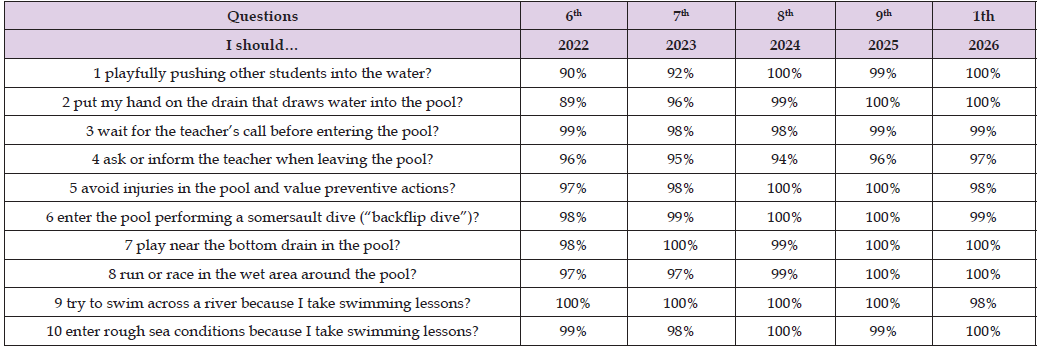
Figure 2
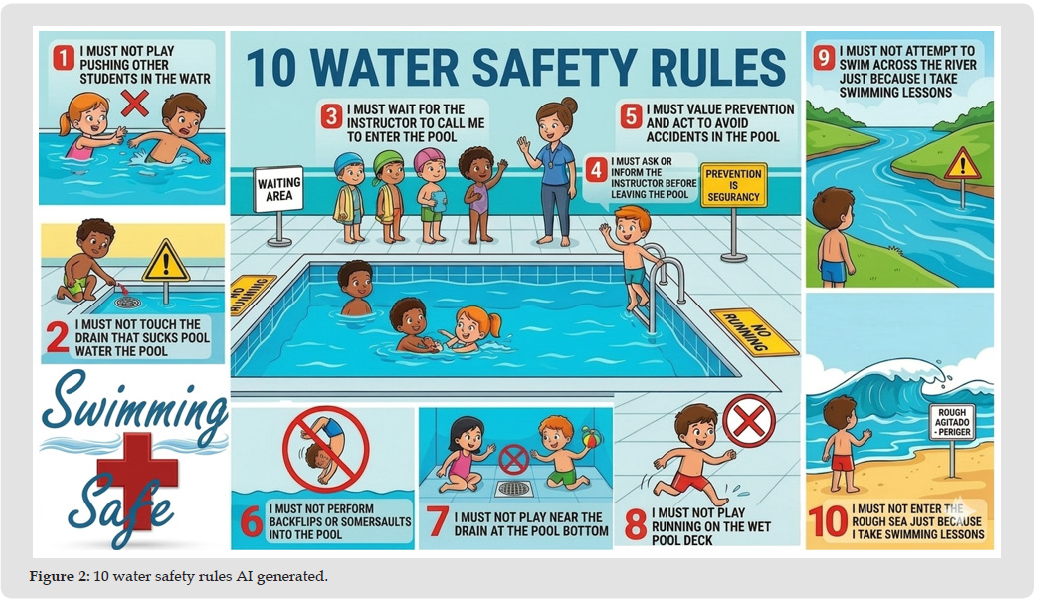
An improvement was noted in the prevalence of not playing near the main drain (Question 7), reaching up to 100% of appropriate attitudes. This device is responsible for suctioning pool water and can trap a person’s body, potentially causing serious or fatal injuries, especially in children, making it essential to adopt safety practices related to the water circulation system to prevent accidents (VASCONCELLOS, et al. [33]). There was a significant improvement, with 100% correct responses in 2026 regarding the rule “walk, don’t run!” (Question 8) around the pool. This area poses a risk of falls because it is wet and slippery (VASCONCELLOS, et al. [37]), which may lead to serious injuries or even death (ALQAHTANI et al., 2022); therefore, children should be discouraged by lifeguards and family members from running in this area (JOHNSON [25]). It was observed that although 100% of participants (Question 10) recognize that they cannot enter rough seas just because they attend swimming lessons, there are still students who believe they are capable of swimming across rivers (Question 9) based solely on this experience, with a prevalence of 2%. Each adolescent needs to be aware of their swimming limitations and the potential dangers of such aquatic environments (PIDGEON, et al. [38]). This highlights a difficulty in recognizing limits, as swimming in a pool does not guarantee skill in natural environments (VASCONCELLOS, et al. [11]). In addition, adolescents tend to overestimate their abilities and underestimate risks (DIMMER, et al. [2]). Thus, although swimming lessons are still underutilized in drowning prevention (HAMILTON, et al. [13] they can promote safe attitudes if they address different aquatic contexts (VASCONCELLOS [28]), without creating a false sense of security (WILLIAMS, et al. [10]). Preventing drowning requires broad competencies (VASCONCELLOS [31]) cognitive, behavioral, and emotional that go beyond technical swimming skills (PIDGEON, et al. [33,39]). (Vasconcellos [11]) emphasize that preventive swimming education should include three-dimensional CAP content:
a) Procedural (knowing how to perform, aquatic competence);
b) Attitudinal (knowing how to behave); and
c) Conceptual (knowing how to interpret information).
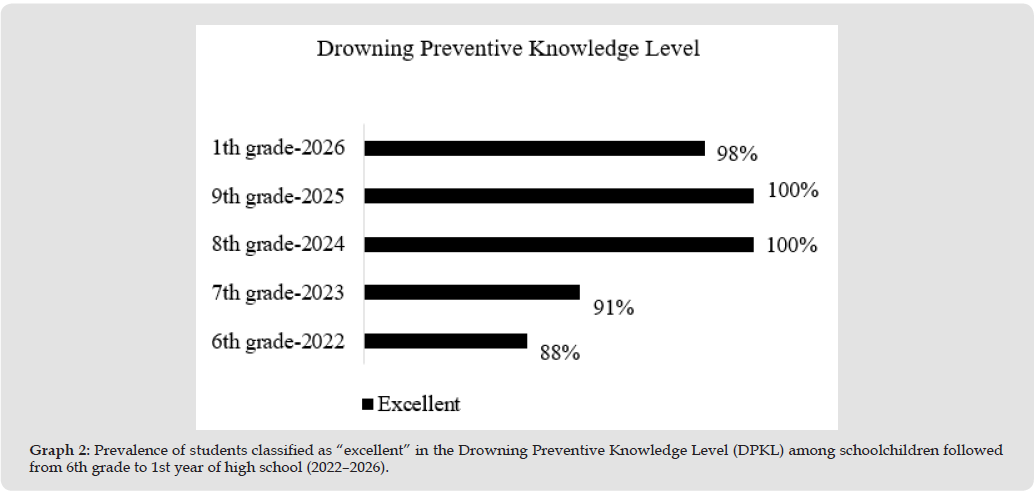
It was observed that the Drowning Preventive Knowledge Level (DPKL) of the students followed from 6th grade to 1st year of high school showed a significant improvement trend of 10 percentage points in the proportion classified as “excellent” (Graph 2), as well as the absence of the “fair” level from 2024 onward. This demonstrates that the group assimilated the interventions and began to understand symbols and concepts related to accident prevention in aquatic environments. The educational actions implemented at school proved effective in increasing the assimilation of this content.
Graph 2
The use of a diagnostic tool to assess and monitor DPKL may contribute to accident prevention. Considering that children and adolescents tend to reproduce their peers’ behaviors, each student plays an important role in disseminating values and promoting preventive attitudes outside the school environment (KOON, et al. [16]). The results indicate that annual interventions are capable of improving students’ DPKL, highlighting prevention as an effective strategy to reduce drowning cases. Small actions, when properly implemented in the school environment, have a positive impact on learning (VASCONCELLOS, et al. [31,35]), with potential application in real-life situations. It is also worth noting the need for more efficient strategies in contexts with limited resources and low safety regulation (MUGEERE et al., 2022); (VASCONCELLOS & MASSAÚD [26]). In this sense, the study aligns with United Nations proposals by adopting low-cost, high-impact interventions for drowning prevention (SCARR, et al. [36]); (LEAVY et al., 2023). With the increase in DPKL, it is expected that students will develop aquatic competence, being able to accurately “read” risk situations and adopt appropriate strategies to address them (ZABALA [17]). The improvement in knowledge is relevant, as lack of awareness of risk areas may result in fatal drowning incidents, reinforcing the importance of educational projects focused on identifying warning signs and signals. It is possible that the interventions, combined with increased maturity, contributed to greater awareness and a reduction in risk behaviors in aquatic environments (VASCONCELLOS et al., 2019; LIN et al., 2019), with the expectation of more prudent attitudes based on attention, caution, and responsibility.
As a school-based intervention strategy, between 2022 and 2026, up to two weeks after the DPKL assessment, the researchers returned to the school to present individual results. Students, gathered in the school court, received their questionnaires (scores from 0 to 10), which were analyzed and discussed item by item, with the presentation of correct answers and guidance on prevention, as well as time allocated for questions and clarification (VASCONCELLOS, et al. [40]). The interventions, lasting on average 20 minutes, addressed aquatic safety in Physical Education classes through conceptual and attitudinal content, in a progressive manner appropriate to the age group (PINO, et al. [8]). Opposing concepts such as prohibited/allowed and safe/unsafe were explored, as well as topics such as rip currents, shipwrecks, floods, and waterspouts, along with their associated risks and factors, including visibility, sharp objects, water temperature, venomous animals, and microorganisms (VASCONCELLOS, et al. [1,5,18,23]), prioritizing educational strategies without fear appeals (HAMILTON, et al. [13]). The meanings of beach warning flags were also addressed, emphasizing their importance in risk perception and drowning prevention (RIVERA [34]), considering that lack of understanding of aquatic hazards contributes to the occurrence of incidents (DIMMER, et al. [2]). In the attitudinal domain, the aim was to encourage respect for rules, the adoption of preventive behaviors, and the consolidation of safe attitudes. Attitudes directly influence behaviors in aquatic environments and are essential for safety, especially given the relationship between knowledge, risk perception, and action (PRATT, et al. [24]) In this context, Physical Education constitutes a privileged space for such development (VASCONCELLOS, et al. [35]).
Procedural content was also developed, guiding students on how to act in different situations, such as entering water safely, identifying risks, distinguishing aquatic environments, and providing assistance without exposing themselves to danger (VASCONCELLOS, et al. [27,31]). It is emphasized that learning must be effectively transferred to real-life situations (ZABALA [17]). Finally, the pedagogical approach encouraged reflection on the relationship between knowledge and practice, emphasizing that understanding rules and risks implies their application in daily life. Practical examples were used to reinforce safe behaviors, such as avoiding running on wet surfaces, not performing dangerous jumps, respecting warning signs, and not entering restricted areas.
The results demonstrate that systematic, continuous, and lowcost school-based educational interventions are effective in promoting significant improvements in the Drowning Preventive Knowledge Level (DPKL) among children and adolescents. Over the period from 2022 to 2026, consistent progress was observed both in the conceptual domain—particularly in the identification of signs and flags—and in attitudinal aspects related to safety in aquatic environments, resulting in high performance levels, with a predominance of the “excellent” classification among students. The findings reinforce that drowning prevention should be understood as a continuous educational process that requires periodic reinforcement for the consolidation of learning, especially among younger students. They also highlight that the school environment is a strategic space for the development of aquatic competencies, as it integrates knowledge, skills, and attitudes with potential real-life application.
Despite these advances, challenges remain, particularly regarding risk-taking behaviors typical of adolescence, such as overestimation of one’s own abilities and the pursuit of autonomy without adequate risk assessment. These aspects indicate the need for more targeted pedagogical strategies that take such specificities into account. Educational programs based on conceptual and attitudinal content, combined with diagnostic tools such as the DPKL, represent relevant instruments to guide more effective and targeted interventions. The expansion and institutionalization of these actions within the school curriculum may contribute to reducing drowning incidents and deaths, fostering individuals who are more aware, cautious, and capable of making safe decisions in aquatic environments throughout life. We thank Professors Pietro Rodrigues Corrêa and Izabel Maria da Silva Sobral, who participated in the interventions in 2022–2023; the scholarship holders Lívia Viana and Silvia Caloiero, who worked in 2023–2024; Catharina Cerboni Michel (2023–2025); and SOBRASA for donating banners, beach umbrellas, T-shirts, “sheriff” badges, and educational materials aimed at drowning prevention.

International Association of Landscape Archaeology, Czech Glass Society, Czech Republic

Department of Chemistry, Semenov Institute of Chemical Physics, USSR Academy of Sciences, Moscow, Russia

Neurology, LA BioMed Research Institute, USA

Associate Professor at Department of Breast and Thyorid Surgey, Chongqing General Hospital, China

Professor of Nuclear Medicine, Faculty of Medicine and Surgery, University of Milan, Milan, Italy





 Abstract
 PDF
PDF



























