info@biomedres.us
+1 (502) 904-2126
One Westbrook Corporate Center, Suite 300, Westchester, IL 60154, USA
Site Map
 ISSN: 2574 -1241
ISSN: 2574 -1241
ISSN: 2574 -1241
Received: May 18, 2026; Published: June 01, 2026
*Corresponding author: Kuiate David, Department of Radiology and Medical Imaging, Les Promoteurs de la Bonne Santé Medical Center, University of Dschang, Cameroon, University of Ngaoundere / CFPP-ISPMS, Cameroon
DOI: 10.26717/BJSTR.2026.65.010251
Background: Radiological investigations are indispensable tools for clinical diagnosis in both primary and tertiary
healthcare settings. In Cameroon, access to radiographic image interpretation remains a critical public
health challenge due to a severe shortage of radiologists. Chest radiography is the most frequently performed radiological
examination, yet is widely recognised as one of the most technically demanding to interpret accurately.
Objectives: Evaluate the accuracy of radiographers in chest radiograph interpretation in Yaounde radiology departments;
to determine the sensitivity and specificity of their interpretations; and to identify factors associated
with better diagnostic performance.
Methods: A descriptive, analytical, cross-sectional study was conducted from November 2019 to August 2020
in active radiology and medical imaging departments in Yaounde, Cameroon. Fifty-one (51) radiographers interpreted
a standardised set of 12 digital chest radiographs covering a range of pathologies, from normal to complex
abnormal. Interpretations were compared against diagnoses established by a qualified radiologist (gold
standard). Statistical analysis was performed using Epi-Info and SPSS v22.0, with a significance threshold of p <
0.05. Chi-square and Fisher’s exact tests were used for correlation analyses.
Results: The study population was predominantly male (52.94%), with a mean age of 30.74 ± 7.46 years. Medical
Imaging Technicians represented 64.71% of participants. Overall mean accuracy was 30.4%, ranging from 6%
(thymic opacity) to 67% (minor bilateral pleural effusion). Poor overall performance was recorded in 68.63% of
participants, average in 27.45%, and good in only 3.92%. Global sensitivity was 71.35% and specificity 47.44%.
Professional experience was the only variable significantly correlated with performance (p = 0.0035), while
diploma level (p = 0.065) and sector of activity (p = 0.960) showed no significant association.
Conclusion: The accuracy of radiographers in chest radiograph interpretation in Yaounde is globally insufficient.
Professional experience is the primary determinant of diagnostic performance. Targeted continuing education
programmes, formal curriculum reform integrating radiograph interpretation, and strengthened radiologist-
radiographer collaboration are urgently required to improve radiographic reporting quality in Cameroon.
Keywords: Radiographer; Chest Radiograph; Diagnostic Accuracy; Sensitivity; Specificity
Abbreviations: TP: True Positive; FP: False Positive; TN: True Negative; FN False Negative
Chest radiography is the most commonly performed radiological investigation worldwide, accounting for approximately 20% of all radiological examinations in some countries (Piper K [1]). It is an essential diagnostic tool for the detection and characterisation of pulmonary and cardiothoracic disorders, as well as for pre-employment and preoperative screening (Speets AM [2]). Despite its apparent simplicity, chest radiography is widely recognised as one of the most challenging radiological examinations to interpret correctly, with significant inter-observer variability reported in the literature (Robinson PJ [3]). In sub-Saharan Africa, and particularly in Cameroon, access to radiographic image interpretation constitutes a critical public health challenge. With only 40 radiologists serving the entire national population (Adrienne Engono [4]), the demand for medical imaging services far exceeds available interpretation capacity. This shortfall is compounded by the geographic concentration of specialists in major urban centres, leaving rural and peri-urban populations without timely access to qualified radiological interpretation. A similar pattern of radiologist shortage has been documented across other sub-Saharan African countries, including Nigeria (Monu JU [5]). In high-income countries such as the United Kingdom, Australia, and New Zealand, the professional scope of radiographers has been formally extended to include radiograph interpretation within accredited postgraduate training frameworks (Piper K [1,6]). This role extension has demonstrated levels of accuracy, sensitivity, and specificity comparable to those of radiologists for selected pathology categories, substantially improving service delivery and patient throughput (Woznitza N [7]). In Cameroon, however, radiographer reporting remains an unregulated and largely informal practice, without formal educational support or structured supervision.
Since radiographers are frequently the sole healthcare professionals present during imaging examinations, particularly in peripheral facilities, their capacity to recognise major radiographic abnormalities could significantly improve patient management in resource-constrained settings. Yet no systematic study had previously evaluated chest radiograph interpretation competency among radiographers in the Cameroonian capital. This study was therefore designed to fill this evidence gap, with the aim of informing policy decisions on radiographer training and role extension in Cameroon and comparable African settings.
The study was a descriptive, analytical, cross-sectional study conducted from November 2019 to August 2020 in active radiology and medical imaging departments in the metropolitan city of Yaounde, Cameroon. Yaounde was selected as the study site because it hosts the high standard radiology departments, the highest concentration of radiologists and largest number of medical imaging Technician (Radiographer).
The target population was made of 51 radiographers (Medical Imaging Technicians and Medical Imaging Engineers) actively employed in radiology and medical imaging departments in Yaounde. This sample size was consistent with comparable published studies in the African and international literature (Ekpo EU, et al. [8-9]). Twelve (12) digital chest radiographs were selected from archival images produced during the study period, all previously interpreted by two (2) qualified medical radiologist whose diagnosis served as the gold standard reference. The radiographs covered a purposive range of pathologies:
1. Pneumonia
2. Minor bilateral pleural effusion
3. Pulmonary tuberculosis
4. Large right pleural effusion on right mastectomy
5. Acute pulmonary oedema
6. Pneumothorax
7. Pullmonary metastases
8. Hydro-pneumothorax
9. Interstitial syndrome
10. Thymic opacity
11. Massive right atelectasis with probable effusion
12. Right upper-lobe atelectasis with probable lung tumour
Participants were allocated a maximum of 18 minutes (approximately 90 seconds per image), in accordance with Royal College of Radiologists guidelines. All sessions were conducted under standardised conditions: controlled ambient lighting, image viewing on a laptop computer using the Micro Dicom DICOM viewer, with the ability to adjust contrast, zoom, and rotate images. Magnification aids were also made available to participants. Data were collected through a standardised socio-demographic questionnaire and an individual response booklet. Individual interpretations were classified as true positive (TP), false positive (FP), true negative (TN), or false negative (FN) relative to the radiologist gold standard, enabling calculation of accuracy, sensitivity, and specificity at the individual and group levels. Data were entered and analysed using Epi-Info and SPSS version 22.0. Chi-square and Fisher’s exact tests were applied for correlation analyses. Statistical significance was defined as p < 0.05.
Ethical Considerations
Ethical approval was obtained from the Health Service Ethics Committee of the University of Ngaoundere (NU-HSEC). Participation was entirely voluntary and anonymous. All participants received a written information sheet and provided signed informed consent prior to enrolment, with an explicit right to withdraw at any point without penalty or consequence.
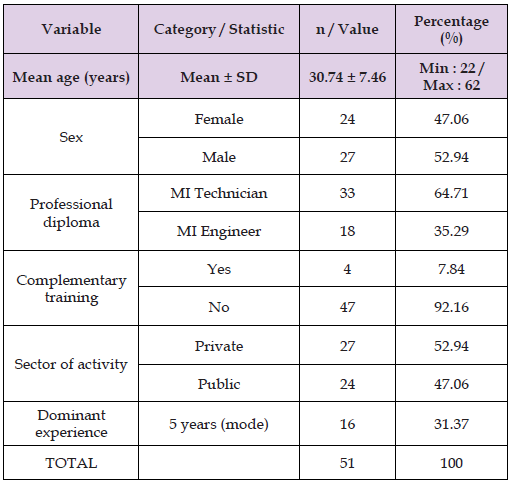
Socio-Demographic and Professional Characteristics: Fifty- one radiographers were enrolled in the study. (Table 1) summarises the socio-demographic and professional characteristics of the study population. The study population was young (mean age 30.74 ± 7.46 years, range 22-62), predominantly male (52.94%), and largely composed of Medical Imaging Technicians (64.71%). The overwhelming majority of participants (92.16%) had received no complementary training in radiograph interpretation. Professional experience of 5 years was the most common (31.37%), and participants were distributed approximately equally between public and private sectors.
Table 1: Socio-demographic and professional characteristics of participating radiographers.
Accuracy by Radiograph
(Table 2) presents the accuracy rates of participants for each of the 12 chest radiographs submitted for interpretation, with the corresponding pathology and a qualitative assessment of performance level. Accuracy varied markedly across pathologies. The highest performance rates were recorded for minor bilateral pleural effusion (67%) and pulmonary tuberculosis (51%), both highly prevalent in Cameroon and therefore more familiar to practitioners in their daily work. Conversely, rare or visually complex pathologies such as thymic opacity (6%), pulmonary metastases (14%), and hydro-pneumothorax (14%) yielded very low accuracy rates. The overall mean accuracy of approximately 30.4% reflects a globally insufficient level of performance across the study population.
Table 2: Accuracy of radiographers per chest radiograph.

Overall Final Performance
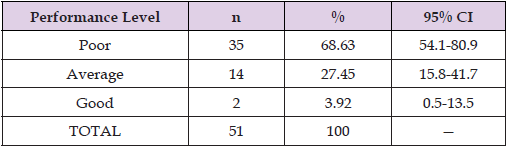
(Table 3) presents the distribution of radiographers by overall performance level following interpretation of all 12 radiographs. More than two-thirds of participants (68.63%) achieved a poor overall performance rating, while only 3.92% reached a good level. This finding confirms a widespread deficit in chest radiograph interpretation competency across the study population and underscores the urgent need for targeted educational and professional development interventions.
Table 3: Distribution of radiographers by overall performance level in chest radiograph interpretation.
Correlation between Professional Diploma and Performance
(Table 4) explores the relationship between professional diploma level (Medical Imaging Engineer versus Medical Imaging Technician) and final interpretation performance. Although Medical Imaging Engineers demonstrated a slightly higher rate of poor performance (88.9% vs. 57.6% for Technicians), this difference did not reach statistical significance (p = 0.065, Fisher’s exact p = 0.051). These findings indicate that diploma level alone, in the absence of specific training in radiograph interpretation, does not confer a meaningful diagnostic advantage for chest radiograph interpretation.
Table 4: Correlation between professional diploma and final performance in chest radiograph interpretation (Chi² = 5.46; df = 2 ; p = 0.065).

Correlation between Professional Experience and Performance
(Table 5) analyses the relationship between years of professional experience and final interpretation performance. A statistically significant correlation was observed between professional experience and chest radiograph interpretation performance (Chi² = 41.18, p = 0.0035; Fisher’s exact p = 0.004). Radiographers with fewer than 2 years of experience invariably achieved poor performance (100%), while those with 10 or more years tended towards average or good performance. This dose-response pattern strongly confirms that accumulated clinical experience is the primary determinant of interpretation competency in this population.
Table 5: Correlation between professional experience and final performance in chest radiograph interpretation (Chi² = 41.18; df = 20 ; p = 0.0035).

Correlation between Sector of Activity and Performance
(Table 6) presents the relationship between sector of practice (public or private) and overall interpretation performance. No significant difference in performance was observed between radiographers working in the public and private sectors (Chi² = 0.081, p = 0.960; Fisher’s exact p = 1.000). The distribution of performance levels was virtually identical in both sectors, indicating that the institutional work environment does not directly influence chest radiograph interpretation competency in this cohort.
Table 6: Correlation between sector of activity and final performance in chest radiograph interpretation (Chi² = 0.081; df = 2; p = 0.960).

Sensitivity, Specificity, and Overall Accuracy
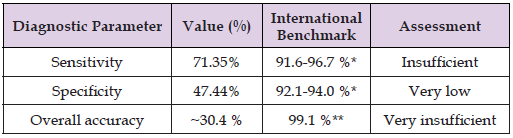
(Table 7) presents the global diagnostic parameters of the study population, compared with benchmarks from the international literature. A sensitivity of 71.35% and specificity of 47.44% were markedly lower than internationally reported benchmarks for radiographers trained in formal reporting programmes. The very low specificity is of particular clinical concern, as it indicates a high rate of false-positive interpretations, potentially driving unnecessary further investigations, additional radiation exposure, and patient anxiety. These results highlight a substantial gap between current radiographic reporting practice in Cameroon and international standards.
Table 7: Diagnostic parameters of radiographers compared with international standards.
Study Population
Our sample of 51 radiographers is comparable to that of similar studies conducted in Africa and internationally. (Ekpo, et al. [8]) in Nigeria enrolled a similar number of participants, as did Williams I with 50 respondents and Neep MJ in Australia with 73 participants (2013). (Ofori-Manteaw [10]) in Ghana used only 8 radiographers, suggesting our sample size is sufficiently robust for meaningful analysis. The study population was young (mean age 30.74 years), consistent with the 34.7 years reported by (Ekpo, et al. [8]), and the slight male predominance reflects the current professional demographics of radiography in Cameroon. The near-total absence of complementary training in radiograph interpretation (92.16% without additional training) is a pivotal contextual finding that underlies the performance levels observed throughout this study. The types of training reported by the minority who had received it (radioprotection, ultrasonography, tuberculosis-related projects, and online courses) were unrelated to systematic chest radiograph interpretation, further reinforcing the curricular gap identified.
Overall Accuracy and Performance
An overall mean accuracy of 30.4% and a poor global performance rating in 68.63% of participants confirm a widespread deficit in chest radiograph interpretation competency within the radiography profession in Yaounde. These findings are consistent with observations from Nigeria (Ekpo EU [8]) and Ghana (Kyei KA, et al. [11]), establishing a regional pattern of insufficient preparation for radiograph interpretation across sub-Saharan Africa. The contrast with international data from countries with established radiographer reporting programmes is striking. In the United Kingdom, (Piper K [1]) demonstrated that radiographers trained through an accredited postgraduate programme achieved an overall accuracy of 99.1%, sensitivity of 97.6%, and specificity of 99.3% for skeletal trauma. (Woznitza [7]) similarly reported sensitivity of 91.6-96.7% and specificity of 92.1-94.0% for chest radiograph interpretation at Homerton University Hospital. (Brealey [2]), in a meta-analysis, confirmed comparable levels of radiographer reporting accuracy across multiple UK sites. These comparisons underscore the decisive and irreplaceable role of formal, accredited training programmes in enabling safe and effective radiograph interpretation by radiographers.
Pathologies Most Accurately Identified
The highest accuracy rates were recorded for pathologies most commonly encountered in the Cameroonian clinical environment: minor bilateral pleural effusion (67%) and pulmonary tuberculosis (51%). This pattern suggests that repeated clinical exposure to specific radiographic presentations in daily practice can generate a degree of empirical visual pattern recognition, independent of formal interpretation training. Pulmonary tuberculosis, which is highly endemic in Cameroon, represents a radiographic pattern with which local radiographers are likely particularly familiar, given its frequency in routine clinical workload. Conversely, rare or visually complex pathologies such as thymic opacity (6%), pulmonary metastases (14%), and hydro-pneumothorax (14%) yielded very low accuracy rates, revealing the inherent limitations of purely experiential learning in the absence of structured theoretical training. These findings highlight the importance of systematic didactic education covering the full spectrum of thoracic pathology, rather than relying solely on workplace exposure to common presentations.
Professional Experience: The Principal Performance Determinant
Professional experience emerged as the sole statistically significant predictor of chest radiograph interpretation performance (p = 0.0035). This clear dose-response relationship confirms that accumulated clinical experience constitutes an effective, if informal, mechanism of skill development over time. Similar findings have been reported by (Ofori-Manteaw [10]) in Ghana, and are consistent with the broader literature on clinical expertise development in health professions. However, a critical observation is that even the most experienced radiographers in our study (10 or more years of practice) did not consistently achieve good performance levels, and their overall accuracy remained well below internationally accepted standards. This finding strongly suggests that professional experience alone cannot substitute for formal, structured training in radiograph interpretation. The combination of extended clinical exposure with a rigorous educational programme appears necessary to reach clinically safe and reliable levels of reporting competency.
Absence of Effect of Diploma Level and Sector of Activity
The absence of a statistically significant correlation between diploma level and performance (p = 0.065) is an instructive finding with direct implications for curriculum policy. It indicates that neither the Medical Imaging Technician nor the Medical Imaging Engineer training programmes in Cameroon currently include adequate preparation for radiograph interpretation. This curricular deficit is common to both qualification levels, explaining the absence of a meaningful performance differential between them. Curricular reform targeting both levels of training is therefore required, rather than a selective approach focused on one category of radiographer. Similarly, the absence of a sector effect (p = 0.960) suggests that neither the public nor the private sector currently provides an institutional environment conducive to the development of radiograph interpretation skills, whether through formal in-service training, mentored reporting, or structured radiologist supervision. This finding implies that systemic policy-level interventions are needed across all employment contexts, rather than sector-specific initiatives.
Sensitivity and Specificity: Clinical Implications
A sensitivity of 71.35% implies that approximately one in three genuine radiographic abnormalities would be missed by radiographers in this cohort, with potentially serious consequences for patient management, particularly for time-sensitive or life-threatening conditions such as tension pneumothorax, acute pulmonary oedema, or active tuberculosis. Missed diagnoses in these clinical contexts can result in delayed or inappropriate treatment, disease progression, and, in the most serious cases, patient death. The very low specificity of 47.44% is, however, equally concerning from a clinical and health system perspective. A specificity below 50% indicates that more than half of truly normal or alternative radiographs were incorrectly classified as containing a specific abnormality, generating a high rate of false positives. In resource-constrained healthcare settings such as Cameroon, the downstream consequences of false-positive radiograph interpretations include unnecessary additional investigations, inappropriate treatments, additional patient radiation exposure, and disproportionate consumption of limited healthcare resources.
Comparison with Regional and International Literature
Our findings align with those reported in comparable African studies. (Ekpo EU [8]) in Nigeria documented variable radiographer performance in chest radiograph interpretation, with sensitivity ranging from 63.6% to 100% and specificity from 64.3% to 95.7% depending on the pathology, reflecting similar heterogeneity in competency levels. (Kyei KA, et al. [11]) in Ghana identified significant knowledge gaps among final-year radiography students in chest radiograph evaluation, pointing to persistent deficiencies at the training stage. (Ofori-Manteaw [10]), also in Ghana, reported that training significantly improved radiographer performance in appendicular radiograph interpretation, providing proof-of-concept for the efficacy of targeted educational interventions. The collective evidence from across sub-Saharan Africa establishes a consistent regional pattern: radiographers in these settings demonstrate insufficient preparation for autonomous radiograph interpretation, rooted in training curricula that have not yet formally incorporated this competency [12-21]. Addressing this gap requires both national curricular reform and the development of regional capacity-building initiatives, drawing on models demonstrated in high-income countries and adapted to the specificities of African healthcare systems.
This study has provided the first systematic evaluation of chest radiograph interpretation competency among radiographers in Yaounde radiology departments, Cameroon. The findings reveal a globally insufficient level of accuracy, with a poor overall performance rating in 68.63% of participants, an overall mean accuracy of approximately 30.4%, a sensitivity of 71.35%, and a specificity of 47.44% - all substantially below internationally reported standards for trained radiographer reporters. Professional experience was the sole statistically significant predictor of diagnostic performance (p = 0.0035), emphasising the critical role of clinical exposure in skill development. Diploma level and sector of activity did not significantly influence interpretation competency, reflecting a shared curricular deficit that is independent of qualification level or practice environment. These findings are consistent with data from comparable African settings and highlight a regional pattern of insufficient radiographer preparation for radiograph interpretation.

International Association of Landscape Archaeology, Czech Glass Society, Czech Republic

Department of Chemistry, Semenov Institute of Chemical Physics, USSR Academy of Sciences, Moscow, Russia

Neurology, LA BioMed Research Institute, USA

Associate Professor at Department of Breast and Thyorid Surgey, Chongqing General Hospital, China

Professor of Nuclear Medicine, Faculty of Medicine and Surgery, University of Milan, Milan, Italy





 Abstract
 PDF
PDF



























