info@biomedres.us
+1 (502) 904-2126
One Westbrook Corporate Center, Suite 300, Westchester, IL 60154, USA
Site Map
 ISSN: 2574 -1241
ISSN: 2574 -1241
ISSN: 2574 -1241
Received: May 14, 2026; Published: May 25, 2026
*Corresponding author: Urmanova Yu M, Doctor of Medical Sciences, Professor, Professor of the Department of Internal Medicine at Alfraganus University, Uzbekistan
DOI: 10.26717/BJSTR.2026.65.010244
Purpose of the Study: to assess the spectrum of cardiovascular complications in type 2 diabetes mellitus (DM
2).
Material and Methods of Research: The work is based on a survey of 75 patients selected from among those
treated at the clinic of the Republican Scientific and Practical Medical Center of Endocrinology of the Ministry of
Health of the Republic of Uzbekistan. The selected patients were divided into 2 groups, which underwent clinical
and hormonal studies. Group 1 included 38 patients with DM 2 in association with CHF; Group 2 included 37
patients with DM 2 without CHF. All patients underwent general clinical, biochemical, hormonal and functional
studies.
Research Results: Among macrovascular complications, the most common were ischemic heart disease -19
(39.5%) cases out of 48, and peripheral arterial disease - peripheral arterial disease 9 (18.8%) cases. Microvascular
complications were observed more frequently Diabetic cardiomyopathy 12 (25%) cases. Diabetic autonomic
cardiovascular neuropathy was noted in 7 (14.6%) patients.
Conclusions: Among the cardiovascular complications, the most common were ischemic heart disease -19
(39.5%) cases out of 48, diabetic cardiomyopathy 12 (25%) observations and diabetic autonomic cardiovascular
neuropathy was noted in 7 (14.6%) patients
Keywords: DM 2; CHF; Spectrum of Cardiovascular Complications
Abbreviations: CHF: Chronic Heart Failure; DACN: Diabetic Autonomic Cardiovascular Neuropathy; CHD: Coronary Heart Disease; PAD: Peripheral Arterial Disease; AGEs: Advanced Glycation End Products; DCM: Diabetic Cardio Myopathy; AG: Arterial Hypertension; DBP: Diastolic Blood Pressure; SBP: Systolic Blood Pressure; CKD: Chronic Kidney Disease; PICS: Post-Infarction Cardiosclerosis; LDL: Low-Density Lipoprotein; TG: Triglycerides
Chronic heart failure (CHF) and type 2 diabetes mellitus (DM 2) are common chronic diseases that represent a significant global burden. Both conditions significantly impact morbidity, mortality, and healthcare costs. The relationship between heart failure and diabetes is particularly noteworthy because it is bidirectional, with each disease influencing the development and progression of the other. [1] Diabetes mellitus, characterized by chronic hyperglycemia, affects approximately 9.3% of the world’s population. [2] It is well known that diabetes is a significant risk factor for cardiovascular disease, including heart failure. Several population-based studies consistently demonstrate that diabetes increases the risk of heart failure by 2-5 times [3]. The underlying mechanisms linking diabetes and heart failure involve complex pathophysiological processes, including insulin resistance, endothelial dysfunction, inflammation, and oxidative stress. Cardiovascular complications in DM 2 are complex. Improving the prognosis requires a multidisciplinary approach: strict monitoring of glucose levels (HbA1c), lipid profile, and blood pressure, as well as the use of modern medications (SGLT2 inhibitors, GLP-1 agonists) with cardioprotective effects [4]. Macrovascular complications in type 2 diabetes are associated with accelerated atherosclerosis caused by hyperglycemia, oxidative stress, and dyslipidemia. The following types of macrovascular cardiovascular complications are distinguished [5].
• Coronary heart disease (CHD): The most common complication
(up to 39.7% of cases in patients with DM 2). It
includes angina, myocardial infarction, and sudden cardiac
death.
• Cerebrovascular diseases: High risk of ischemic stroke due
to damage to cerebral blood vessels.
• Peripheral arterial disease (PAD): Lesions of the arteries
of the lower extremities leading to diabetic foot syndrome
and increasing the risk of amputation.
The following types of microvascular cardiovascular complications are distinguished:
• Diabetic cardiomyopathy (DCM): Structural and functional
changes in the myocardium that occur independently of
coronary heart disease or hypertension. Characterized by
fibrosis, cardiac wall stiffness (diastolic dysfunction), and
hypertrophy.
• Diabetic autonomic cardiovascular neuropathy (DACN):
Damage to the nerve fibers innervating the heart. It manifests
as persistent tachycardia at rest, decreased heart rate
variability, silent myocardial ischemia, and orthostatic hypotension.
Type 2 diabetes is an independent risk factor for heart failure. Patients with diabetes often suffer from:
• HF with preserved ejection fraction (HFpEF): Due to diastolic
dysfunction (heart stiffness).
• Heart failure with reduced ejection fraction (HFrEF): As
a result of extensive ischemic lesions. [6-8].
Pathogenetic mechanisms of macro- and microvascular complications in type 2 diabetes: [9-10].
1. Endothelial dysfunction: Dysfunction of the inner wall of
blood vessels due to hyperglycemia.
2. Formation of advanced glycation end products (AGEs):”-
Sugaring” of cardiac proteins, leading to fibrosis.
3. Oxidative stress and chronic inflammation: Cardiomyocyte
damage.
4. Metabolic disorders: The transition of the myocardium
from glucose consumption to fatty acid oxidation, which is
less energetically efficient.
Given the bidirectional relationship between heart failure and diabetes, it is crucial to recognize and treat both conditions simultaneously to achieve optimal outcomes. Integrated care models involving multidisciplinary teams, including cardiologists, endocrinologists, and general practitioners, are essential for comprehensive treatment strategies for individuals with heart failure and diabetes.
To assess the spectrum of cardiovascular complications in type 2 diabetes mellitus.
The work is based on an examination of 48 patients selected from among those treated at the clinic of the Republican Scientific and Practical Medical Center of Endocrinology of the Ministry of Health of the Republic of Uzbekistan. The criteria for inclusion of patients in the study were the presence of DM 2, arterial hypertension of I, II, III degree, CHF I-III FC according to NYHA. Exclusion criteria: age over 65 years, insulin therapy, heart rhythm disturbances, liver and kidney failure, cancer. The main group included 48 patients with type 2 diabetes in association with CHF; The comparison group included 20 patients with type 2 diabetes without CHF (control) All patients underwent general clinical, biochemical, hormonal and functional studies. The diagnosis of CHF and treatment were carried out on the basis of the Clinical Guidelines for CHF, Russia, 2016 [4]. In these recommendations, we used the classification of CHF, according to which CHF is distinguished by LV ejection fraction, CHF by stages, by functional class. A comprehensive examination of the patient was carried out simultaneously; with the patient’s consent, a questionnaire was filled out using the anamnestic method, anthropometric measurements were taken, and functional examination methods were carried out; blood was also taken for laboratory test. Biochemical tests included determination of uric acid, ALT, AST, bilirubin, total cholesterol (TC), triglycerides (TG), low-density lipoprotein cholesterol (LDL-C), and high-density lipoprotein cholesterol (HDL-C) using the Mindray automated analyzer. A glycated hemoglobin level (hemoglobin A1c, HbA1c) >6.5% (48 mmol/mol), blood glucose concentration, impaired glucose tolerance, and impaired fasting glucose are used as diagnostic criteria for type 2 diabetes.
The obtained data were processed using Microsoft Excel and STATISTICA_ 6 software. The arithmetic mean (M), standard deviation of the arithmetic mean, and error of the arithmetic mean from all n replicates (m) were calculated. The significance of differences in levels between groups was assessed using the confidence interval and Student’s t-test (p). Differences were considered statistically significant at p < 0.05. Research results. Table 1 shows the distribution of patients examined by gender and age. As can be seen from (Table 1), the majority of patients were aged 60 to 74 years, representing 23 out of 11 cases, respectively, for both men and women. (Table 2) provides clinical and anamnestic characteristics of patients included in the study. As can be seen from (Table 2), The reliability of differences in comparison with the control group regarding SBP, DBP, BMI in the studied patients was established (p<0.05). Moreover, 10 (21%) of 48 patients in the study group had a history of myocardial infarction. In this group, bad habits (smoking) were more common, and the duration of type 2 diabetes was higher (b<0.05) compared to the control group. Next, we studied the biochemical characteristics of patients (Table 3). As can be seen from Table 3, in patients of the main group, a significant increase in fasting glycemia, postprandial glycemia, glycated hemoglobin, and blood creatinine (p<0.05) was found against the background of dyslipidemia (decrease in HDL, SCF. (p< 0.05). Finally, we examined the spectrum of macro- and microvascular cardiovascular complications in the study group (Table 4). The data presented in Table 4 show that the most common macrovascular complications were ischemic heart disease -19 (39.5%) cases out of 48, and peripheral arterial disease - peripheral arterial disease 9 (18.8%) cases of the microvascular complications, the most frequently observed were: Diabetic cardiomyopathy was observed in 12 (25%) cases. Diabetic autonomic cardiovascular neuropathy was observed in 7 (14.6%) patients.
Table 1: Distribution of patients by gender and age
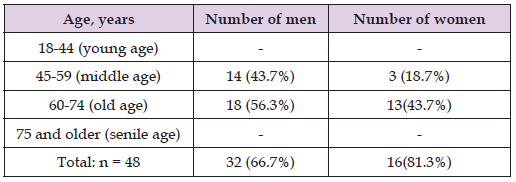
Table 2: Clinical and anamnestic characteristics of patients included in the study.
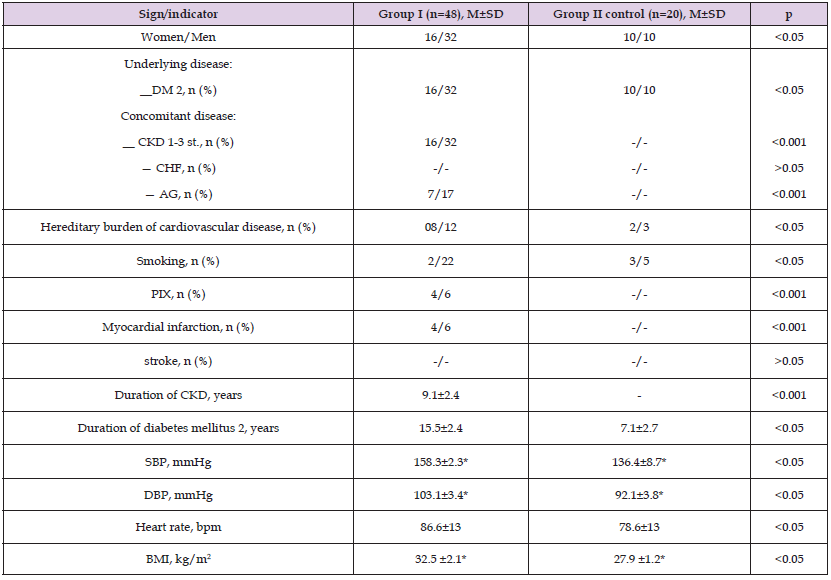
Note: AG: arterial hypertension, DBP is diastolic blood pressure, SBP is systolic blood pressure,p: reliability criterion, CKD: Chronic kidney disease, PICS: post-infarction cardiosclerosis
Table 3: Average biochemical blood parameters of patients in the study groups.
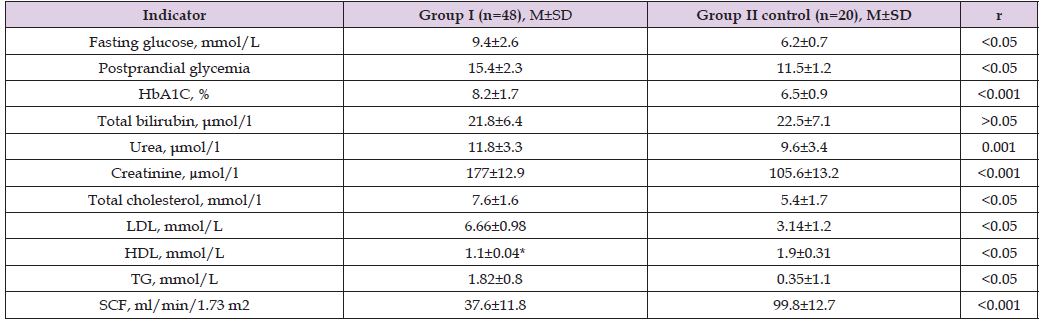
Note:HbA1C: glycated hemoglobin, LDL: low-density lipoprotein, TG: triglycerides, SCF: glomerular filtration rate.
Table 4: Spectrum of cardiovascular complications in the study group.
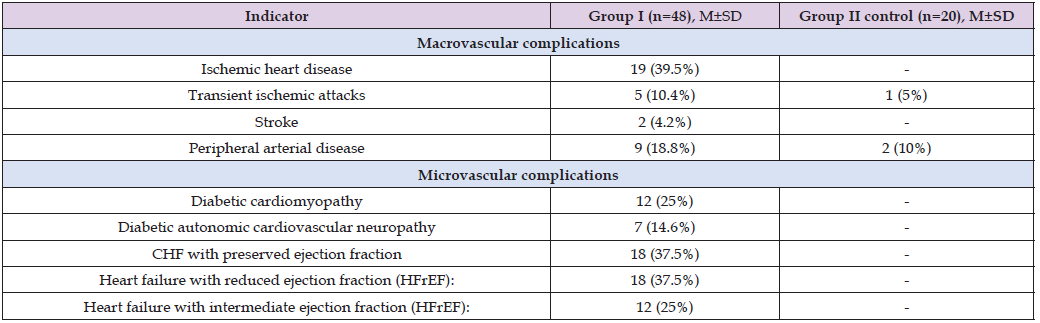
Among the cardiovascular complications, the most common were ischemic heart disease -19 (39.5%) cases out of 48, diabetic cardiomyopathy 12 (25%) observations and diabetic autonomic cardiovascular neuropathy was noted in 7 (14.6%) patients.

International Association of Landscape Archaeology, Czech Glass Society, Czech Republic

Department of Chemistry, Semenov Institute of Chemical Physics, USSR Academy of Sciences, Moscow, Russia

Department of Educational Sciences, Research Centre Qualities of Teachers, School of Education – HAN, Nijmegen, Netherlands

Associate Professor at Department of Breast and Thyorid Surgey, Chongqing General Hospital, China

Neurology, LA BioMed Research Institute, USA





 Abstract
 PDF
PDF



























