info@biomedres.us
+1 (502) 904-2126
One Westbrook Corporate Center, Suite 300, Westchester, IL 60154, USA
Site Map
 ISSN: 2574 -1241
ISSN: 2574 -1241
ISSN: 2574 -1241
Received: April 17, 2026; Published: May 25, 2026
*Corresponding author: Salem K Alketbi, The Biology and DNA Section, General Department of Forensic Science and Criminology, Dubai Police, Dubai, UAE.
DOI: 10.26717/BJSTR.2026.65.010242
The recovery of trace DNA from non-porous surfaces is influenced by multiple factors, including substrate characteristics,
swabbing approach, and sampling conditions. Although non-porous substrates are frequently treated
as a relatively uniform category in forensic DNA recovery studies, differences in surface morphology may influence
the retention and accessibility of biological material during sampling. This study evaluated the influence of
non-porous surface morphology on DNA recovery efficiency and STR profile quality using commonly employed
forensic swabbing techniques and sampling durations. Controlled DNA deposition was performed on smooth
glass, matte ceramic tile, and textured plastic surfaces. Samples were collected using wet single swabbing (W),
moist–dry single swabbing (MD), and wet–dry double swabbing (WD) at sampling durations of 15 sec, 30 sec,
and 45 sec. DNA extraction, quantification, and STR profiling were subsequently performed to evaluate DNA recovery
efficiency, allele recovery, and profile quality. Surface morphology significantly influenced DNA recovery
efficiency (p < 0.001), with smooth glass surfaces consistently producing the highest DNA recovery and STR profile
completeness, whereas textured plastic surfaces demonstrated lower and more variable recovery outcomes.
The MD technique produced the highest overall recovery efficiency, while the W technique generally yielded
lower recovery values, particularly on textured plastic surfaces (p < 0.001).
Increasing swabbing duration from 15 sec to 30 sec significantly improved DNA recovery across all evaluated
surfaces (p < 0.001), whereas extending duration to 45 sec produced limited additional benefit on smoother
substrates but improved recovery from textured plastic surfaces. Significant interaction effects were observed
between surface morphology, swabbing duration, and swabbing technique (p < 0.05). STR profiling demonstrated
greater profile completeness and reduced allele dropout on smoother substrates compared with textured
surfaces. Smooth glass surfaces produced the highest mean allele recovery (96.8% ± 4.1%), whereas textured
plastic surfaces demonstrated lower and more variable profile recovery (79.6% ± 11.5%). The findings demonstrate
that non-porous surfaces should not necessarily be considered a homogeneous category in forensic DNA
recovery studies or operational evidence collection protocols. Surface morphology may significantly influence
biological material accessibility, DNA recovery efficiency, and downstream STR profile quality.
Keywords: Forensic Genetics; Forensic Science; DNA Recovery; Trace DNA; Touch DNA; Str Profiling; Forensic DNA Analysis; Non-Porous Surfaces; Swabbing Techniques; Surface Morphology
Trace DNA represents one of the most frequently encountered forms of forensic biological evidence and plays a critical role in linking individuals to objects and environments associated with criminal activity [1-7]. Unlike visible biological fluids, trace DNA is typically deposited through routine or incidental contact with surfaces such as tools, door handles, weapons, and clothing, either during brief interactions or repeated handling events [3,8-10]. Due to its often invisible nature and low quantity, trace DNA is particularly valuable in cases where no obvious biological material is present. Despite its evidential importance, trace DNA analysis remains inherently challenging, with recovery outcomes often exhibiting variability in both DNA yield and STR profile completeness. This variability is influenced by multiple factors, including the physicochemical properties of the substrate [11-14], environmental conditions that may promote degradation, redistribution, or loss of deposited DNA-containing material [15-18], and differences in sampling practices applied during evidence collection and processing [11,19-22]. Substrate characteristics—such as porosity, surface microtopography, moisture retention capacity, and surface coatings—can influence the adhesion, persistence, and potential entrapment of trace biological material. In addition, procedural variables, including the choice of wetting agent and the number of sampling passes, may significantly affect recovery efficiency and downstream profiling outcomes [23-30].
Interpretation is further complicated by variability introduced during downstream analytical workflows [2,4,12,31-35], the potential for contamination during handling and laboratory processing, and known inter-individual differences in DNA shedding and transfer dynamics [36-45]. Consequently, the effectiveness of DNA recovery is highly dependent on the nature of the substrate being examined. For example, cotton and nylon-flocked swabs have demonstrated effective recovery from smooth, non-porous surfaces such as glass and plastic [10,11,23-25], whereas adhesive tape-based methods often provide improved recovery from porous or fibrous materials, including textiles and fabrics [46-51]. These observations reinforce the importance of selecting recovery strategies according to substrate characteristics rather than applying a single approach across all evidence types. In response to the limitations of conventional collection methods, a range of modified and hybrid approaches has been developed. These include combined cotton and microFLOQ® swabbing strategies integrated with direct amplification workflows, wet-vacuum systems designed for complex substrates, and chemical enhancers intended to improve cellular detachment and DNA recovery [28,51- 53]. Such developments reflect continued efforts to optimize trace DNA recovery under increasingly complex forensic conditions. The growing recognition of substrate-specific behaviour has further emphasized the need for adaptive sampling strategies that consider the physical and chemical properties of evidential materials rather than applying standardized methods indiscriminately [54-57].
Parallel advances in analytical sensitivity have enabled the detection and analysis of increasingly low quantities of DNA [58,59]. Although silica-based extraction methods remain widely used, they may result in measurable sample loss, particularly when working with low-template or degraded material [1,60]. As a result, direct amplification approaches that bypass extraction and quantification have gained attention as potential strategies to preserve limited biological material and reduce analytical processing time [21,27,61]. Nevertheless, regardless of improvements in analytical sensitivity, successful DNA profiling remains fundamentally dependent on the efficient recovery of deposited DNA-containing material at the sampling stage. Given the inherent variability associated with touch DNA deposition, controlled DNA deposition provides a more robust framework for examining the influence of substrate properties on DNA recovery efficiency. By minimizing variability arising from donor differences, transfer mechanisms, and environmental interactions, controlled deposition enables a more precise assessment of how surface characteristics and sampling strategies influence recovery outcomes.
Various swabbing strategies have been explored to enhance DNA recovery from different substrates. The single wet swab technique remains one of the most widely applied methods, whereby a moistened swab is used to collect cellular material from a surface [62-65]. Alternatively, the wet–dry double swab technique, originally described by Sweet, et al. [66], involves the sequential application of a damp swab to rehydrate and mobilize biological residues, followed by a dry swab to absorb residual moisture and recover additional cellular material. This approach is considered to enhance DNA recovery by maximizing the transfer of biological material from the substrate [66] and has been widely adopted in forensic practice [67,68]. Its effectiveness is particularly relevant in low-template scenarios and complex sample types, such as fingernail evidence, where biological material may accumulate and persist [69]. The efficiency of DNA recovery using swabbing techniques is influenced by several variables, including the type and volume of wetting agent, the swab material, and the pressure and angle applied during sampling [70-74].
Substrate type is also a key determinant of recovery efficiency. Non-porous surfaces generally yield higher DNA recovery than porous substrates, as biological material remains on the surface rather than being absorbed into the substrate matrix [11], whereas porous materials, such as fabrics, can retain cellular material within their structure, reducing recovery efficiency [64]. However, within the category of non-porous substrates, surface characteristics can vary substantially. Materials may exhibit highly smooth finishes, such as glass, or more complex surface topographies, including matte or textured finishes commonly found in plastics and coated materials. These differences may influence both the retention of biological material on the surface and its accessibility during swabbing, reflecting a balance between surface adherence and recoverability. Despite the recognized importance of substrate type, non-porous surfaces are often treated as a uniform category in forensic sampling protocols. In practice, however, variation in surface morphology and microtopography may influence how biological material is deposited, retained, and subsequently recovered. While smooth surfaces may facilitate efficient transfer of material to the swab, textured or matte finishes may retain cellular material within surface irregularities, potentially altering recovery outcomes.
Furthermore, although several factors affecting DNA recovery have been investigated, the influence of swabbing duration remains relatively underexplored. A sampling duration of approximately 15 seconds per swab has been suggested as appropriate for certain techniques [75], although it remains unclear whether extended durations improve recovery across different surface finishes and swabbing approaches. Understanding these effects is essential for optimizing evidence collection strategies and improving consistency in forensic DNA recovery from commonly encountered non-porous surfaces. The aim of this study is to evaluate how surface architecture and topography influence DNA recovery efficiency from non-porous substrates, and to determine their effect on the performance of commonly used swabbing techniques.
Selection and Preparation of Non-Porous Surfaces
Three commonly encountered non-porous substrates representing distinct surface finishes and topographical characteristics were selected for this study: smooth glass, matte ceramic tile, and textured plastic. These surfaces were selected due to their frequent occurrence in handled items encountered in forensic casework and to represent varying degrees of surface smoothness and microtopography. Smooth glass was included as a highly smooth reference surface and is commonly encountered in items such as mobile phone screens, windows, display panels, and glass tables. Matte ceramic tile represented a fine-finish non-porous substrate similar to surfaces encountered in household flooring, walls, and bathroom environments. Textured plastic was selected to represent surfaces with increased surface irregularities that may influence biological material retention and recovery and is commonly found in vehicle dashboards, steering wheel components, tool handles, electronic casings, and household appliances.
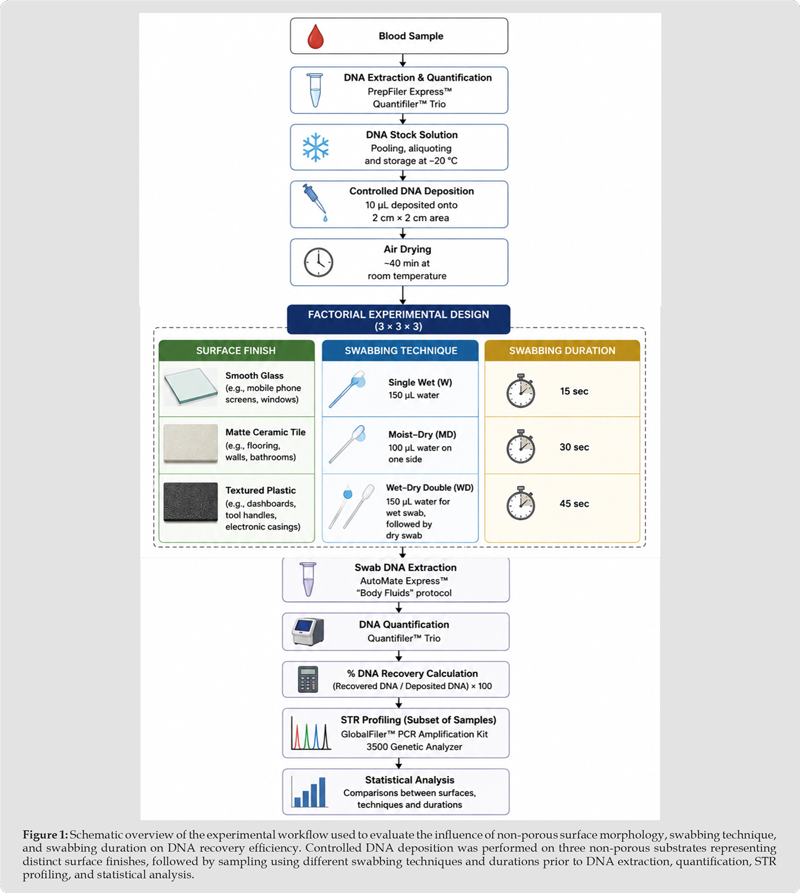
Glass substrates consisted of clear glass panels cut into standardized sections measuring approximately 5 cm × 5 cm. Matte ceramic tiles of similar dimensions were obtained commercially, while textured plastic substrates were prepared from rigid plastic panels with a uniform textured finish. Prior to experimentation, all substrates were decontaminated to remove potential exogenous DNA. Surfaces were cleaned using 1% sodium hypochlorite followed by 70% ethanol and subsequently exposed to ultraviolet (UV) irradiation for 20 min on each side. All sample preparation and swabbing procedures were conducted in a dedicated pre-PCR environment using appropriate contamination prevention measures. All handling was performed using powder-free gloves and sterile forceps to minimize contamination. Experimental procedures were conducted under ambient laboratory conditions. A schematic overview of the experimental workflow used throughout the study is presented in Figure 1.
Figure 1
DNA Preparation and Deposition
To prepare stock solutions of known DNA concentration for deposition onto the substrates, DNA was extracted from multiple 40 μL aliquots of a single-source human blood sample using the PrepFiler Express ™ Forensic DNA Extraction Kit (Thermo Fisher Scientific, USA), as described in Section 2.6. DNA extracts from the blood aliquots were pooled into a single tube to maximize homogeneity across all experimental samples. To minimize repeated freeze–thaw exposure, the pooled DNA stock solution was subsequently divided into multiple aliquots and stored at −20°C until required for experimentation. A separate aliquot was used for each experimental day. Each aliquot was quantified in triplicate using the Quantifiler™ Trio DNA Quantification Kit (Thermo Fisher Scientific, USA) on the QuantStudio™ 5 Real-Time PCR System according to the manufacturer’s recommendations. Average DNA concentrations were calculated from the triplicate quantification results prior to deposition onto the substrates to ensure consistency between experimental runs. For each experimental replicate, 10 μL of the DNA stock solution was deposited within a defined 2 cm × 2 cm area at the centre of each prepared substrate surface. Deposited samples were allowed to air dry at room temperature for approximately 40 min prior to sampling to simulate dried biological material commonly encountered in forensic casework. Each prepared substrate was subsequently sampled using one of the swabbing techniques described in Section 2.3 and one of the swabbing durations described in Section 2.4. The overall experimental design is summarized in Table 1.
Table 1: Summary of the experimental design used to evaluate the effect of surface finish, swabbing technique, and swabbing duration on DNA recovery from non-porous substrates.
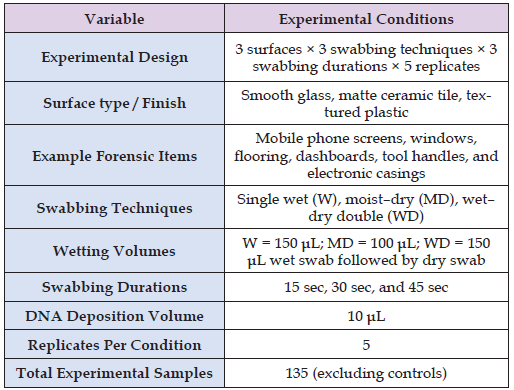
Note: Abbreviations: W = single wet swabbing; MD = moist–dry single swabbing; WD = wet–dry double swabbing.
Swabbing Techniques
Three commonly used swabbing techniques were evaluated in this study: single wet swabbing (W), moist–dry single swabbing (MD), and wet–dry double swabbing (WD). Sterile cotton swabs (Copan, Italy) were used throughout the study, and sterile molecular-grade water was used as the wetting agent. For the single wet swab technique, a sterile cotton swab was moistened with 150 μL of sterile molecular- grade water prior to sampling. The swab was then applied to the deposited area using a continuous diagonal back-and-forth motion across the entire sampling area. For the moist–dry single swab technique, one side of the swab head was moistened using approximately 100 μL of sterile molecular-grade water while the opposite side remained relatively dry. The moistened side was first applied to the substrate followed immediately by the drier side of the same swab. For the wet–dry double swab technique, the deposited area was initially sampled using a wet swab prepared with 150 μL of sterile molecular- grade water, followed immediately by a second dry swab applied to the same area. All swabbing procedures were performed using consistent pressure and diagonal sampling motions to ensure uniform coverage of the deposition area. To minimize inter-operator variability, all sampling was conducted by the same examiner throughout the study. The selected wetting volumes were chosen to provide sufficient moisture for substrate rehydration while minimizing excessive liquid spreading or sample dilution on non-porous surfaces.
Swabbing Duration
Each swabbing technique was evaluated using three sampling durations: 15 sec, 30 sec, and 45 sec per swab. Swabbing durations were selected to assess whether increasing sampling time improved DNA recovery efficiency across different non-porous surface finishes and swabbing approaches. The 45 sec duration was additionally included to evaluate whether prolonged swabbing improves recovery from more complex non-porous surface finishes, particularly textured substrates that may retain trace biological material within surface irregularities. Swabbing was performed using continuous diagonal back-and-forth motions with approximately equal coverage of the deposition area maintained between samples.
Impact of Swabbing Technique and Duration on DNA Recovery
To evaluate the influence of surface finish, swabbing technique, and swabbing duration on DNA recovery, each substrate was sampled using the three swabbing techniques described above: single wet swabbing (W), moist–dry single swabbing (MD), and wet–dry double swabbing (WD). Each technique was evaluated using three swabbing durations: 15 sec, 30 sec, and 45 sec per swab. The study design incorporated three non-porous substrates representing different surface finishes, three swabbing techniques, and three swabbing durations. Five independent replicates were performed for each experimental condition, resulting in a total of 135 experimental samples excluding controls (Table 1). To minimize procedural variability, all swabbing procedures were conducted by the same examiner using consistent diagonal back-and-forth motions and approximately equal pressure across all samples. Swabbing durations were controlled using a digital timer to ensure consistency between replicates. Although efforts were made to standardize swabbing pressure, sampling motion, and sampling duration, minor examiner-dependent variability may still occur during manual forensic sampling procedures. Negative substrate controls were prepared for each surface type by swabbing cleaned substrate surfaces without DNA deposition. In addition, extraction blank controls consisting of unused sterile swabs were processed alongside experimental samples to monitor for potential contamination during extraction and downstream processing.
Processing of DNA Samples
The PrepFiler Express™ Forensic DNA Extraction Kit (Thermo Fisher Scientific, USA) was used for DNA extraction from both the blood sample used to prepare the stock DNA solution and all swab samples using the “Body Fluids” protocol on the AutoMate Express™ Nucleic Acid Extraction System according to the manufacturer’s instructions. For preparation of the stock DNA solution, 40 μL aliquots of blood were extracted using a final elution volume of 100 μL. For swab samples, depending on the swabbing technique employed, either one swab or two swabs were added to each column/tube assembly prior to extraction. A total of 500 μL of lysis buffer was added to each sample, and all swabs were processed according to the manufacturer’s protocol. A final elution volume of 50 μL was used for all swab extractions. An extraction blank was included with each extraction batch and consisted of a single unused sterile swab processed through the complete extraction workflow. In addition, a negative control was generated for each substrate type by swabbing a cleaned substrate surface using a wet swab which was subsequently processed alongside experimental samples. No detectable DNA was observed in extraction blanks or negative controls.
All extracted samples were quantified using the Quantifiler™ Trio DNA Quantification Kit (Thermo Fisher Scientific, USA) on the Quant- Studio™ 5 Real-Time PCR System according to the manufacturer’s recommendations. The total quantity of DNA recovered from each sample was calculated by multiplying the quantified DNA concentration by the corresponding elution volume. The quantity of DNA initially deposited onto each substrate was determined by multiplying the concentration of the relevant stock solution by the deposited volume (10 μL). DNA recovery efficiency was subsequently calculated by comparing the quantity of DNA recovered with the quantity initially deposited onto the substrate surface and expressed as a percentage recovery value. Percentage DNA recovery was calculated based on the quantity of total human DNA quantified using the Quantifiler™ Trio system relative to the known quantity of deposited DNA. A subset of samples representing the median DNA recovery value within each experimental group was selected for STR profiling to evaluate downstream profile quality and allele recovery. These included representative experimental samples, the stock DNA extract used for deposition as a reference profile, and negative substrate controls for each surface type.
DNA amplification was performed using the GlobalFiler™ PCR Amplification Kit (Thermo Fisher Scientific, USA). Amplification reactions were carried out on the Applied Biosystems™ GeneAmp® PCR System 9700 thermal cycler using 29 amplification cycles with an input of approximately 0.7 ng DNA in a total reaction volume of 15 μL, in accordance with internal laboratory validation procedures. Amplified products were separated and detected using capillary electrophoresis on the Applied Biosystems™ 3500 Genetic Analyzer (Thermo Fisher Scientific, USA) using an injection voltage of 1.2 kV and an injection time of 24 sec according to manufacturer recommendations and internal laboratory validation parameters. DNA profiles were analysed using GeneMapper™ ID-X Software Version 1.6 (Thermo Fisher Scientific, USA) using an analytical threshold of 175 RFU and a homozygous threshold of 700 RFU.
Statistical Analysis
Statistical analyses were performed using IBM SPSS Statistics Version 29 (IBM Corp., USA) and R statistical software. Data distribution was assessed using the Shapiro–Wilk test for normality. Depending on data distribution, either parametric or non-parametric statistical analyses were applied. Differences in DNA recovery between substrate types, swabbing techniques, and swabbing durations were assessed using analysis of variance (ANOVA) or the Kruskal–Wallis test, where appropriate. Pairwise comparisons were conducted using post hoc analyses with Bonferroni correction. Statistical significance was set at p < 0.05. In addition to DNA quantity and percentage recovery, STR profile completeness and allele recovery were assessed descriptively to evaluate the practical impact of substrate topography and sampling strategy on downstream DNA profiling performance.
DNA Recovery Across Different Non-Porous Surface Finishes
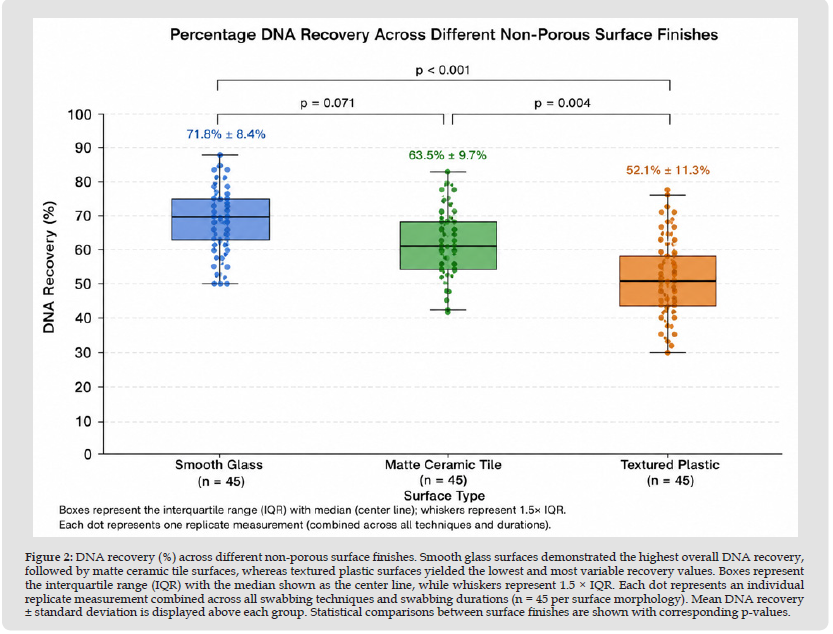
Differences in DNA recovery efficiency were observed between the three non-porous substrates evaluated in this study. Overall, smooth glass surfaces demonstrated the highest mean percentage DNA recovery, followed by matte ceramic tile, whereas textured plastic surfaces generally yielded the lowest and most variable recovery values across the tested swabbing conditions. When data from all swabbing techniques and swabbing durations were combined, smooth glass surfaces produced a mean DNA recovery of 71.8% ± 8.4%, compared with 63.5% ± 9.7% for matte ceramic tile and 52.1% ± 11.3% for textured plastic surfaces. Statistical analysis demonstrated a significant overall effect of surface type on DNA recovery efficiency (ANOVA, p < 0.001). Post hoc pairwise comparisons revealed significantly greater DNA recovery from smooth glass surfaces compared with textured plastic surfaces (p < 0.001). Matte ceramic tile surfaces also demonstrated significantly higher recovery than textured plastic surfaces (p = 0.004). Although smooth glass surfaces consistently yielded higher mean recovery values than matte ceramic tile surfaces, this difference was less pronounced and did not reach statistical significance under all experimental conditions (p = 0.071).
In addition to lower overall recovery, textured plastic substrates demonstrated increased variability between replicates compared with the smoother substrates. Greater dispersion of recovery values was particularly evident at shorter swabbing durations, suggesting that surface irregularities may influence both the retention of cellular material and the consistency of swab-mediated recovery. These findings indicate that non-porous surfaces should not necessarily be treated as a uniform substrate category in forensic DNA recovery studies. Surface morphology and microtopography appeared to influence DNA recovery efficiency, with smoother surfaces generally facilitating more efficient and consistent recovery of deposited biological material. The distribution of percentage DNA recovery values across the three non-porous surface finishes is presented in Figure 2.
Figure 2
Effect of Swabbing Technique on DNA Recovery
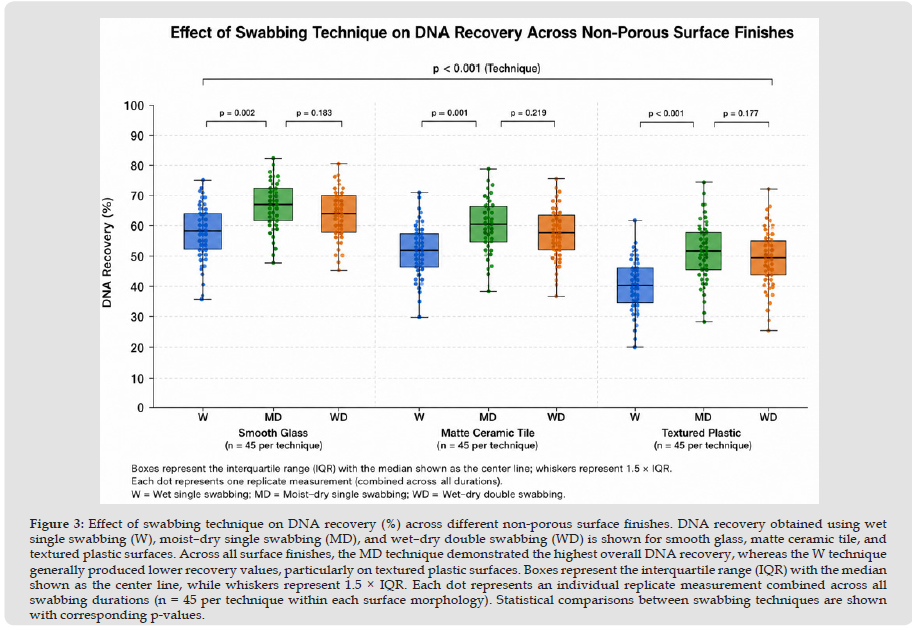
Differences in DNA recovery efficiency were observed between the three swabbing techniques evaluated across the non-porous substrates. Overall, the moist–dry single swabbing technique (MD) demonstrated the highest mean DNA recovery across all tested surface types, followed closely by the wet–dry double swabbing technique (WD), whereas the single wet swab technique (W) generally produced lower recovery values, particularly on textured plastic surfaces. When recovery data from all substrate types and swabbing durations were combined, the MD technique yielded a mean DNA recovery of 67.9% ± 9.2%, compared with 65.8% ± 10.1% for the WD technique and 58.6% ± 11.8% for the W technique. Statistical analysis demonstrated a significant overall effect of swabbing technique on DNA recovery efficiency (ANOVA, p < 0.001). Pairwise comparisons indicated that both MD and WD techniques produced significantly greater DNA recovery compared with the W technique (p < 0.01). Although MD demonstrated consistently higher mean recovery values than WD across most experimental conditions, the differences between these two techniques were comparatively small and were not statistically significant under all substrate conditions (p > 0.05).
The effect of swabbing technique was most pronounced on textured plastic surfaces, where the W technique demonstrated the lowest recovery values and the greatest variability between replicates. In contrast, both MD and WD techniques appeared more effective at recovering cellular material from the textured substrate, likely due to improved interaction between the moist swab surface and the substrate irregularities. On smooth glass surfaces, differences between the three swabbing techniques were less substantial, with all techniques demonstrating relatively high recovery efficiency. Across the tested non-porous surfaces, the MD technique demonstrated a favorable balance between recovery efficiency and sampling consistency. The improved performance observed with MD may be associated with the combined effect of substrate rehydration and immediate recovery using the relatively drier region of the same swab, potentially reducing redistribution or excessive spreading of trace biological material during sampling. The distribution of DNA recovery values for each swabbing technique across the three non-porous surface finishes is presented in Figure 3.
Figure 3
Effect of Swabbing Duration
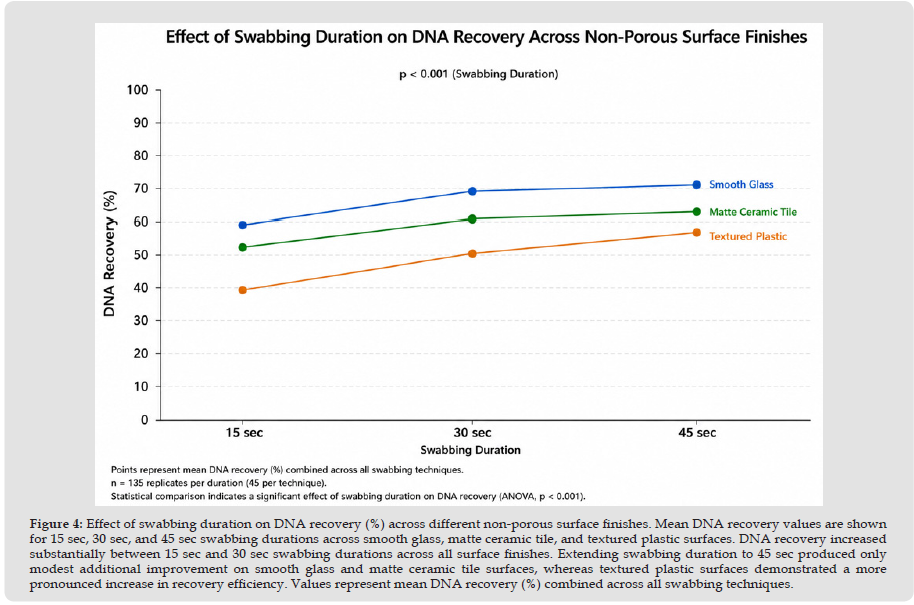
Swabbing duration influenced DNA recovery efficiency across the evaluated non-porous substrates, although the magnitude of this effect varied according to surface finish. Overall, increasing swabbing duration from 15 sec to 30 sec resulted in a measurable improvement in DNA recovery across all surface types and swabbing techniques. In contrast, extending the swabbing duration from 30 sec to 45 sec generally produced only minimal additional improvement on smoother substrates, while a more noticeable benefit was observed for textured plastic surfaces. When all swabbing techniques were combined, the mean percentage DNA recovery across all substrates increased from 56.4% ± 11.2% at 15 sec to 64.9% ± 10.4% at 30 sec. Extending the swabbing duration to 45 sec resulted in a smaller overall increase to 67.1% ± 10.1%. Statistical analysis demonstrated a significant overall effect of swabbing duration on DNA recovery efficiency (ANOVA, p < 0.001). The influence of prolonged swabbing was most evident on textured plastic surfaces. On this substrate, extending the swabbing duration from 30 sec to 45 sec produced a measurable improvement in recovery efficiency and reduced variability between replicates. In contrast, smooth glass and matte ceramic tile surfaces demonstrated only modest gains beyond 30 sec, suggesting that additional swabbing time may provide limited benefit on smoother non-porous substrates where biological material remains more accessible to collection.
Pairwise comparisons demonstrated significant differences between 15 sec and 30 sec sampling durations across all surface types (p < 0.01). However, differences between 30 sec and 45 sec durations were comparatively smaller and did not reach statistical significance for smooth glass and matte ceramic tile surfaces under all experimental conditions (p > 0.05). On textured plastic surfaces, the increase observed at 45 sec remained more pronounced, indicating that prolonged swabbing may enhance recovery from surfaces containing greater microtopographical irregularities. These findings suggest that the effect of swabbing duration is substrate-dependent and that prolonged sampling may be particularly advantageous for textured non-porous surfaces where deposited DNA-containing material may be retained within surface irregularities. In contrast, smoother substrates may reach near-maximal recovery efficiency at shorter sampling durations.
The relationship between swabbing duration and DNA recovery across the different non-porous surface finishes is presented in Figure 4.
Figure 4
Interaction Between Surface Finish and Swabbing Variables
Interaction effects were observed between substrate topography, swabbing technique, and swabbing duration, indicating that the effectiveness of sampling strategies was influenced by the physical characteristics of the non-porous substrates. Significant interaction effects were observed between surface finish and swabbing duration (two-way ANOVA, p = 0.012), as well as between surface morphology and swabbing technique (p = 0.019), indicating that the effectiveness of sampling strategies varied according to substrate topography. In particular, the benefit associated with prolonged swabbing duration varied according to surface architecture and was most evident on textured plastic surfaces. Across smooth glass surfaces, all three swabbing techniques demonstrated relatively high DNA recovery efficiency, and extending swabbing duration beyond 30 sec produced only limited additional improvement. The MD and WD techniques consistently yielded slightly higher recovery values than the W technique; however, differences between techniques became less pronounced on the smoother substrate surface, where biological material appeared readily accessible for collection regardless of sampling duration.
A similar pattern was observed for matte ceramic tile surfaces, although overall recovery values were modestly lower than those observed for smooth glass. Increasing swabbing duration from 15 sec to 30 sec improved recovery across all techniques, whereas extending duration to 45 sec resulted in comparatively smaller gains. The MD technique demonstrated the most consistent recovery performance across the tested durations on matte ceramic tile surfaces. In contrast, textured plastic surfaces demonstrated a stronger interaction between swabbing duration and swabbing technique. On this substrate, the W technique produced substantially lower recovery values at shorter durations and exhibited greater variability between replicates. Extending swabbing duration to 45 sec produced a more noticeable improvement in DNA recovery on textured plastic surfaces compared with the smoother substrates, particularly for the MD and WD techniques. These findings suggest that prolonged swabbing may facilitate improved access to cellular material retained within surface irregularities and microtopographical features.
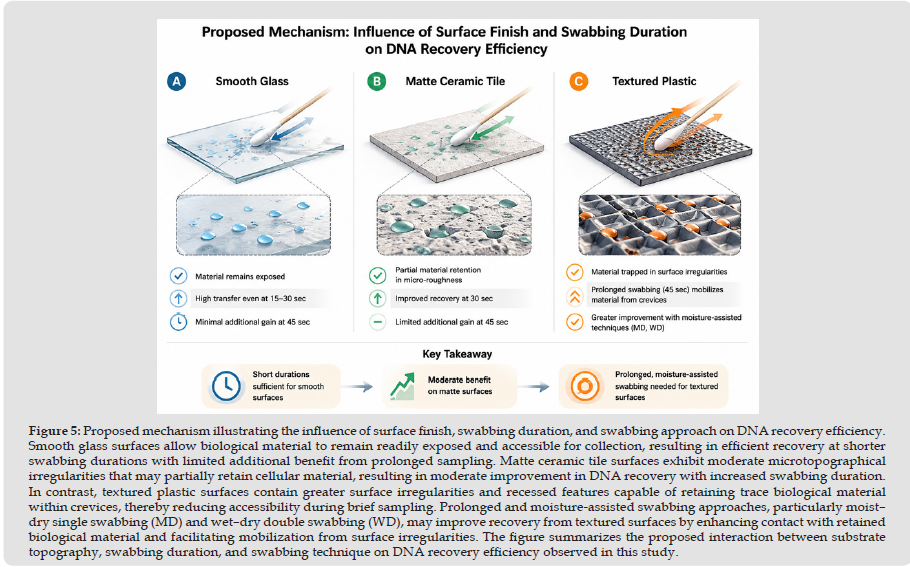
Among the evaluated techniques, the MD approach demonstrated the most balanced performance across all surface finishes and swabbing durations. The combined use of a moist region followed immediately by a relatively drier region of the same swab may have improved both mobilization and recovery of biological material while limiting redistribution of moisture across the substrate surface. Conversely, the W technique appeared more sensitive to surface irregularities, particularly at shorter sampling durations. Overall, these findings indicate that non-porous surface architecture influences not only the efficiency of DNA recovery but also the relative effectiveness of swabbing strategies and sampling durations. The interaction between substrate topography and swabbing variables was particularly evident on textured plastic surfaces, where prolonged swabbing and moisture-assisted sampling approaches produced greater improvements in recovery efficiency than those observed on smoother substrates. The interaction between surface finish, swabbing technique, and swabbing duration on DNA recovery efficiency is summarized in Figure 5.
Figure 5
STR Profile Quality and Allele Recovery
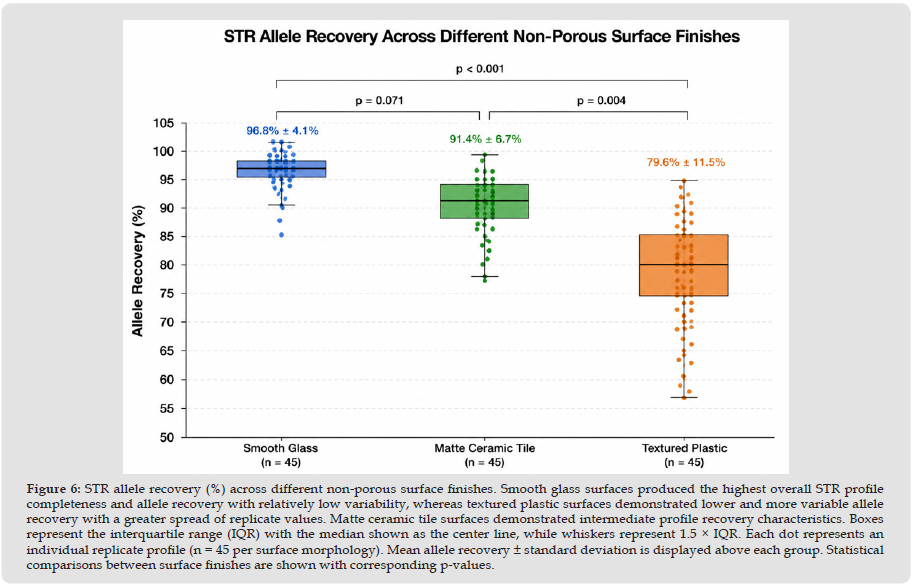
Differences in DNA recovery efficiency between the evaluated non-porous surfaces were reflected in downstream STR profile quality and allele recovery outcomes. Overall, samples recovered from smooth glass surfaces generated the most complete and balanced STR profiles, whereas textured plastic surfaces demonstrated greater variability in profile quality and increased occurrence of allele dropout. Across the evaluated samples, smooth glass surfaces produced the highest mean profile completeness, with an average allele recovery of 96.8% ± 4.1%. Matte ceramic tile surfaces demonstrated slightly lower but generally consistent profile recovery, with a mean allele recovery of 91.4% ± 6.7%. In contrast, textured plastic surfaces yielded lower and more variable profile completeness, with a mean allele recovery of 79.6% ± 11.5%. Samples recovered from smooth glass and matte ceramic tile surfaces generally produced balanced electropherogram peak heights with minimal stochastic effects. In comparison, profiles generated from textured plastic surfaces exhibited greater peak height variability, occasional inter-locus imbalance, and an increased frequency of partial allele dropout, particularly among samples recovered using shorter swabbing durations and the W technique.
The influence of swabbing duration on profile quality was also evident. Samples collected at 15 sec demonstrated a greater frequency of reduced peak heights and partial profiles, particularly on textured plastic surfaces. Increasing swabbing duration to 30 sec improved both allele recovery and overall profile completeness across all surface types. Extending swabbing duration to 45 sec produced only modest additional improvement for smooth glass and matte ceramic tile surfaces, whereas textured plastic surfaces demonstrated a more noticeable reduction in allele dropout and increased profile completeness at the prolonged duration.
Among the evaluated swabbing techniques, the MD and WD approaches generally produced more complete profiles and higher average peak heights than the W technique, particularly on textured plastic surfaces. These findings are consistent with the quantitative DNA recovery results and support the proposed role of moisture-assisted swabbing in improving access to biological material retained within surface irregularities. Overall, the STR profiling results demonstrated that differences in DNA recovery efficiency between non-porous surface finishes translated directly into differences in forensic profile quality and interpretability. Although complete or near-complete profiles were commonly obtained from smooth surfaces, textured substrates demonstrated greater susceptibility to stochastic effects and variable profile recovery under less optimal sampling conditions. The mean allele recovery percentages obtained across the different non-porous surface finishes are presented in Figure 6.
Figure 6
Influence of Surface Finish on DNA Recovery
The findings of this study demonstrate that non-porous surface finish can significantly influence DNA recovery efficiency and downstream STR profile quality. Smooth glass surfaces consistently yielded the highest DNA recovery and the most complete STR profiles, whereas textured plastic surfaces demonstrated lower and more variable recovery outcomes. These findings support the hypothesis that surface microtopography influences both the retention and accessibility of trace biological material during forensic sampling. Similar substrate-dependent differences in trace DNA recovery have been reported previously in studies evaluating glass, fabrics, and other handled surfaces [10-12,64,75]. The observed differences between surface finishes may be explained by the interaction between deposited DNA-containing material and substrate surface characteristics. On smooth surfaces, cellular material remains largely exposed and accessible to swab contact, facilitating efficient transfer during sampling. In contrast, textured surfaces contain recessed features and surface irregularities that may physically retain cellular material within microstructures, reducing direct swab contact and increasing recovery variability. Previous studies have similarly demonstrated that physicochemical substrate properties and surface morphology can influence biological trace retention and recovery efficiency [6,11,12].
These findings suggest that DNA recovery from non-porous surfaces is influenced by a balance between cellular material adherence and accessibility during sampling. Although textured surfaces may promote retention of trace biological material, retention does not necessarily equate to improved recoverability, particularly when biological material becomes inaccessible within recessed surface structures and microtopographical irregularities. Such surface features may reduce direct swab contact and limit efficient transfer of biological material during sampling. This mechanistic interpretation is supported by the increased recovery variability and greater frequency of partial STR profiles observed for textured plastic surfaces in the present study. The findings are also consistent with previous studies demonstrating that substrate type and environmental interactions can substantially influence trace DNA recovery and profile quality [15-18,63,64]. However, unlike many previous studies that evaluated limited substrate categories or treated non-porous surfaces as relatively uniform, the present study specifically demonstrates that differences in surface morphology within non-porous substrates may significantly influence DNA recovery performance.
Influence of Swabbing Technique and Duration
Swabbing technique and swabbing duration both influenced DNA recovery efficiency across the evaluated surface finishes. Overall, the moist–dry single swabbing (MD) technique demonstrated the highest and most consistent recovery performance, while the wet single swabbing (W) technique generally yielded lower recovery values, particularly on textured plastic surfaces. The improved performance observed with moisture-assisted techniques may be associated with enhanced mobilization of biological material from the substrate surface. Moistening may facilitate rehydration of dried biological residues and improve transfer efficiency during sampling [66,67]. In the MD approach, the sequential contact between the moist and relatively drier regions of the same swab may have improved both mobilization and collection of cellular material while minimizing excessive spreading across the substrate surface. Similar observations regarding the influence of wetting strategies and swab performance on DNA recovery have previously been reported [19,21-25,70-74].
The influence of swabbing duration was particularly evident on textured plastic surfaces. Increasing sampling duration from 15 sec to 30 sec substantially improved DNA recovery across all surface finishes, whereas extending duration to 45 sec produced comparatively limited improvement on smooth glass and matte ceramic tile surfaces. In contrast, textured plastic surfaces continued to demonstrate measurable recovery improvement at prolonged durations.
These findings suggest that additional swabbing time may improve access to biological material retained within surface irregularities and recessed features. Previous studies have demonstrated that swab type, wetting solution, and sampling strategy can significantly influence touch DNA recovery [12,19,21-25,70-74]. However, relatively limited attention has been given to the interaction between swabbing duration and substrate surface architecture. The present findings indicate that prolonged swabbing may be particularly beneficial when sampling textured non-porous surfaces, whereas smoother substrates may reach near-maximal recovery efficiency at shorter sampling durations.
Re-Evaluating “Non-Porous” as a Single Category
Non-porous surfaces are frequently grouped together within forensic sampling protocols and experimental studies. However, the findings of the present study suggest that non-porous substrates should not necessarily be considered a homogeneous category with respect to DNA recovery behavior. Despite all evaluated substrates being classified as non-porous, substantial differences in DNA recovery efficiency, profile completeness, and recovery variability were observed between smooth, matte, and textured surface finishes. This distinction may have important implications for both forensic research and operational evidence collection. Many previous studies investigating trace DNA recovery have relied on a limited number of representative substrates, often using smooth glass or similarly uniform surfaces as model non-porous substrates [10-12,31,75]. While such surfaces provide useful experimental consistency, the present findings suggest that conclusions derived from a single non-porous substrate may not necessarily be generalizable to other commonly encountered non-porous surfaces with different surface finishes and microtopographical characteristics. The findings of this study therefore support a more nuanced interpretation of non-porous substrates in forensic DNA recovery research. Surface morphology and topography may influence the accessibility of deposited DNA-containing material during sampling, even when substrate absorption characteristics remain minimal. Consequently, future forensic sampling studies may benefit from considering surface finish as an independent experimental variable rather than grouping all non-porous surfaces together.
Implications for Forensic Sampling Protocols
The findings of the present study have practical implications for forensic evidence collection strategies involving non-porous surfaces. The results suggest that sampling protocols may benefit from considering surface finish characteristics when selecting swabbing approaches and determining sampling duration. For smoother non-porous surfaces, such as glass, relatively efficient DNA recovery was achieved across all swabbing techniques and durations, indicating that prolonged sampling may provide limited additional benefit under certain conditions. In contrast, textured surfaces demonstrated greater sensitivity to both swabbing duration and swabbing approach, suggesting that additional sampling effort may be beneficial when recovering trace biological material from irregular or textured substrates. The MD and WD approaches demonstrated improved recovery performance compared with the W technique, particularly on textured plastic surfaces. These findings support the use of moisture- assisted sampling approaches when targeting low-template biological material on surfaces containing greater microtopographical complexity. Similar benefits associated with optimized swabbing strategies and collection approaches have been reported previously [21-25,71,73]. Importantly, the findings do not suggest that a single swabbing strategy should universally replace existing collection protocols. Rather, the results indicate that adapting sampling approaches according to substrate surface characteristics may improve recovery efficiency and downstream STR profile quality in selected forensic scenarios. Such considerations may be particularly relevant in low-template DNA casework where minor differences in sampling efficiency may influence evidential outcomes [1,31].
Casework and Operational Relevance
The findings of this study are relevant to a wide range of forensic evidence types commonly encountered in operational casework. Many handled items recovered during investigations, including mobile phones, plastic packaging, vehicle interior components, laminated materials, and ceramic surfaces, exhibit substantial variation in substrate topography despite all being broadly categorized as non-porous. The present findings suggest that textured or irregular non-porous surfaces may require greater sampling effort to maximize DNA recovery compared with smoother substrates. This may be particularly important in low-template DNA scenarios where recovery efficiency can directly influence the generation of interpretable STR profiles. The increased variability observed on textured plastic surfaces also highlights the potential for stochastic effects and partial profiles when sampling more complex non-porous substrates. Reduced allele recovery and increased stochastic effects on textured surfaces may influence evidential interpretation by increasing the likelihood of partial profiles, allelic dropout, and profile imbalance in low-template forensic casework scenarios.
Similar recovery challenges and operational considerations have been described in previous casework-oriented studies involving vehicle interiors, door handles, handled consumer items, and skin-contact surfaces [2,13,29,30,59]. The findings may therefore contribute to improved understanding of recovery variability encountered in practical forensic examinations. From an operational perspective, the balance between sampling efficiency and recovery optimization remains important. While prolonged swabbing may improve recovery on certain textured surfaces, particularly when using moisture-assisted approaches, such strategies may also increase processing time during large-scale evidence examinations. Consequently, the selection of sampling strategies may require consideration of both evidential value and operational practicality.
Limitations and Future Directions
Several limitations should be considered when interpreting the findings of the present study. First, controlled DNA deposition was used to reduce variability associated with donor shedding characteristics, transfer mechanisms, and environmental exposure. While this approach provided a more standardized framework for evaluating substrate-related recovery differences, it may not fully replicate the complexity of real touch DNA deposition encountered in forensic casework [4,31,45]. Second, only a limited number of non-porous surface finishes were evaluated. Although the selected surfaces represented commonly encountered smooth, matte, and textured substrate categories, additional materials with varying chemical compositions and microtopographical properties may exhibit different recovery behaviors. Similarly, only one swab type and a limited number of swabbing approaches were evaluated.
Future studies may benefit from extending this work to additional substrate types, alternative swab materials, environmentally exposed biological deposits, and true touch DNA scenarios [16-18,52,53,63,64]. The influence of surface morphology on persistence, secondary transfer, and direct amplification workflows may also represent valuable areas for future investigation [21,27,32,33,36,61]. Furthermore, evaluating the interaction between substrate surface characteristics and emerging forensic collection technologies may improve understanding of how surface topography influences downstream DNA recovery and interpretation in operational forensic casework [52,54-56].
The findings of the present study demonstrate that non-porous surface architecture can significantly influence DNA recovery efficiency, STR profile quality, and the effectiveness of commonly used forensic swabbing approaches. Although non-porous substrates are frequently treated as a relatively uniform category in forensic sampling studies and operational protocols, the results indicate that substantial differences may exist between smooth, matte, and textured surface finishes. Smooth glass surfaces consistently produced the highest DNA recovery and STR profile completeness, whereas textured plastic surfaces demonstrated lower and more variable recovery outcomes. These differences appear to be associated with variations in surface microtopography, which may influence both the retention and accessibility of biological material during swabbing. The findings further demonstrate that moisture-assisted swabbing approaches, particularly moist–dry single swabbing and wet–dry double swabbing, may improve DNA recovery from textured non-porous surfaces compared with wet single swabbing alone.
Swabbing duration also influenced recovery efficiency, with prolonged sampling producing more pronounced benefits on textured surfaces than on smoother substrates. These findings suggest that sampling strategies may benefit from considering surface finish characteristics when recovering trace cellular material from non-porous evidence items. Overall, the present study highlights the importance of surface topography as a contributing factor in forensic DNA recovery and supports a more nuanced interpretation of non-porous substrates in forensic sampling research and operational evidence collection. The findings may contribute to the optimization of trace DNA recovery strategies and improve understanding of recovery variability encountered in forensic casework involving commonly handled non-porous surfaces.
The authors gratefully acknowledge the support, collaboration, and resources provided by the participating institutions throughout the course of this study. Appreciation is also extended for the technical, academic, and scientific support received during the experimental work, data analysis, and manuscript preparation process, which contributed significantly to the successful completion of this research.
The authors declare that they have no competing financial or non-financial interests that could have influenced the design, methodology, analysis, interpretation, or reporting of this study. The research was conducted independently to ensure the integrity and objectivity of the findings.
This study was conducted following approval from the relevant institutional oversight committee (Approval No. DFSC-REC-2026-014) and in accordance with applicable ethical standards for research involving human biological material. A previously collected single- source human blood sample was used for preparation of controlled DNA stock solutions under approved laboratory procedures. All experimental procedures complied with internationally recognized guidelines relating to biological sample handling, research integrity, and data confidentiality.
H.P.S. contributed to sample preparation, laboratory processing, experimental support, data interpretation, and critical review of the manuscript. S.K.A. conceived and designed the study, supervised the experimental and analytical workflow, performed forensic DNA and statistical analyses, developed the figures and graphical illustrations, and led manuscript preparation, revision, and final editing. Both authors contributed to interpretation of the findings, reviewed and approved the final manuscript, and accept responsibility for the integrity and accuracy of the work.
Not applicable.
This research received no external funding.

International Association of Landscape Archaeology, Czech Glass Society, Czech Republic

Department of Chemistry, Semenov Institute of Chemical Physics, USSR Academy of Sciences, Moscow, Russia

Neurology, LA BioMed Research Institute, USA

Associate Professor at Department of Breast and Thyorid Surgey, Chongqing General Hospital, China

Professor of Nuclear Medicine, Faculty of Medicine and Surgery, University of Milan, Milan, Italy





 Abstract
 PDF
PDF



























