info@biomedres.us
+1 (502) 904-2126
One Westbrook Corporate Center, Suite 300, Westchester, IL 60154, USA
Site Map
 ISSN: 2574 -1241
ISSN: 2574 -1241
ISSN: 2574 -1241
Received: April 26, 2026; Published: May 22, 2026
*Corresponding author: Dario Mizrachi, Department of Biomedical Sciences, Noorda College of Osteopathic Medicine, Provo, Utah, USA
DOI: 10.26717/BJSTR.2026.65.010240
Antibiotic resistance is alarmingly rising, underscoring the need for non‑traditional antibacterial strategies that
continue beyond classical targets such as cell wall synthesis or protein translation. Here, we engineered a bacteriostatic
peptide derived from the monomeric structure of the actin‑like cytoskeletal protein MreB, a central
determinant of rod shape and cell‑wall organization in Escherichia coli. Guided by structural homology with
other actin‑like proteins and sequence analysis, we selected a peptide segment (G190–I266, pMreB) and fused
it to a cell‑penetrating sequence (pMreB‑CPP). We evaluated their effects on bacterial physiology using colony‑forming
assays in BL21(DE3) cells, biofilm formation assays in MG1655 cells, and negative‑stain electron
microscopy to determine changes in cell morphology. pMreB‑CPP treatment produced a significant reduction
in colony counts and biofilm formation compared with PBS and non‑cytoskeletal protein controls. The incubation
of pMreB-CPP with viable cells induced coccoid cell shapes consistent with disruption of MreB‑dependent
cell‑wall organization, mirroring phenotypes reported for the small‑molecule MreB inhibitor A22. These findings
support MreB‑derived peptides as a promising scaffold for bacteriostatic agents that function by perturbing
the bacterial cytoskeleton rather than directly killing cells, offering a potential path to new therapeutics that may
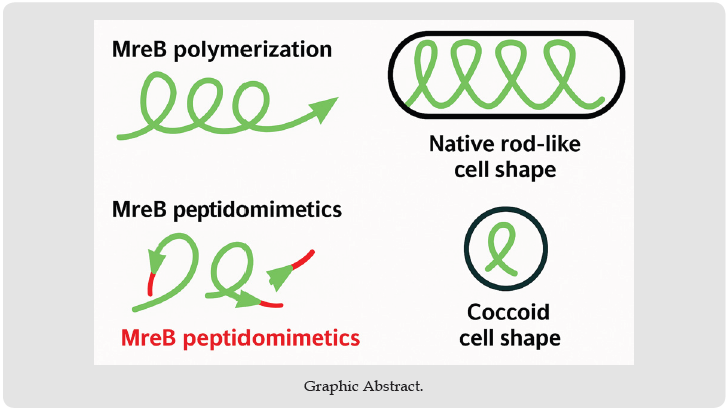
reduce selective pressure for resistance relative to conventional bactericidal antibiotics (Graphical Abstract).
Actin-like proteins in E coli (MreB) polymerizes to create the native rod-like shape typical of these bacteria. In
this article we describe the generation of an MreB peptidomimetic that halts polymerization of MreB and alters
cell morphology, viability, and has the potential to act as a specific bacteriostatic of E coli.
Graphic Abstract 1
Bacterial infectious diseases in the U.S. are facing a critical surge in antibiotic resistance, with the “nightmare bacteria” rising over 460% between 2019 and 2023 [1]. Over 2.8 million antibiotic-resistant infections occur annually, causing at least 35,000 deaths [1]. Medical solutions for bacterial infections in the US rely primarily on targeted antibiotics and prevention through vaccines to address pathogens like MRSA, E. coli, etc. Diagnostic testing is crucial due to rising antimicrobial resistance, ensuring appropriate drug selection, with emerging therapies focusing on monoclonal antibodies [2]. An antibiotic is a drug that treats bacterial infections. They are classified as either bacteriostatic or bactericidal. Bacteriostatic describes a specific type of antimicrobial action: stopping bacterial growth and reproduction, as opposed to killing them, as is the action of bactericidal therapeutics [3]. Examples of bacteriostatic antimicrobials include tetracyclines such as doxycycline, macrolides such as azithromycin and erythromycin, clindamycin, sulfonamides, trimethoprim, chloramphenicol, linezolid, and tigecycline [3]. Typically, a bacteriostatic antibiotic is chosen when the infection can be treated sufficiently by halting bacterial growth, especially if the patient’s immune system can then clear the organisms [3]. For many common infections, bacteriostatic and bactericidal drugs have similar outcomes, thus, the distinction is often less important than the organism, site of infection, and susceptibility [4]. Endocarditis, meningitis, bacteremia, and febrile neutropenia are cases when clinicians often favor bactericidal therapy because rapid eradication is the goal, particularly if host defenses are limited [5]. As bacteria become increasingly resistant to commonly used antibiotics, the development of alternative therapeutic approaches is critical.
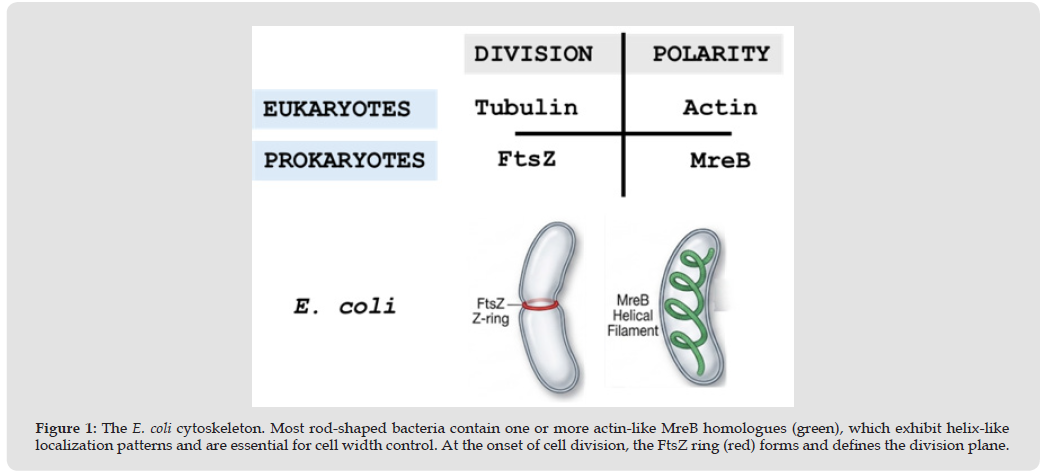
Furthermore, a study of 21 different drug interactions using screening methods revealed more information about antagonism among antibiotics using different mechanisms of action, using E. coli [6]. Their results suggested that antagonism among bactericidal and bacteriostatic drugs was highly prevalent and specifically it was found frequently in combinations such as tetracyclines and aminoglycosides with β-lactams, macrolides with fluoroquinolones, and β-lactams with folic acid synthesis inhibitors [6]. There are existing experimental compounds that target the bacterial cytoskeleton, including compounds against FtsZ [7] and MreB [8], some have antibacterial activity (Figure 1). However, these compounds are not yet approved for clinical use as antibiotics, and currently no approved antibiotic currently targets the bacterial cytoskeleton proteins directly. FtsZ is a tubulin-like protein that helps form the division ring during cell division. MreB is the actin-like protein that helps maintain rod shape and cell-wall organization and synthesis, so disrupting it can seriously impair growth. MreB polymerizes into filaments that interact with the inner membrane of the E coli cell. Polymerization is aided by the cytoplasmic protein RodZ, which regulates MreB’s membrane association and curvature preference [9]. These filaments are preferentially located along the sidewalls, avoiding the poles, which allows for selective expansion of the cell diameter rather than lengthening [9,10]. ATP binding, which induces a conformational change in MreB, promotes assembly on the cell membrane [11]. ATP hydrolysis to ADP occurs following polymerization, inducing structural rearrangements that manage filament turnover and interaction with the membrane [12].
Figure 1
For MreB, studies have identified promising binding regions, including the ATP/nucleotide-binding site, the A22-binding pocket, and the inter-protofilament interface [13]. Inhibiting MreB can cause misshapen cells and disrupt cell-wall organization, making bacteria less fit or nonviable. In some cases, it may inhibit motility [10]. The current compounds that target these proteins are promising but still face challenges: FtsZ and MreB inhibitors often run into issues with potency, resistance, and translating good biochemical hits into clinically useful drugs. A22 works by binding directly to MreB’s ATP-binding pocket and competing with ATP, which disrupts MreB polymerization and destabilizes the bacterial actin-like cytoskeleton [13]. This effectively cripples those processes by preventing normal MreB filament assembly [13]. A22 is useful as a research tool, but it is not a clean, perfectly specific drug, as some studies report additional toxic effects at higher concentrations or in certain strains [14]. MreB is one of many actin-like proteins, species specific but with great structural and functional homology [15]. Using Alanine scanning methods, Maharjan, et al. [16], found that MreB is absolutely required for cell shape maintenance in Ecoli, and that mutants that have lost rod shape maybe using a novel cell wall synthesis pathway. This new pathway might be inefficient and lead to loss of cell viability [16]. Urinary tract infections (UTIs) are the most common infection caused by E. coli, accounting for over 90% of bladder infections. Uropathogenic E. coli (UPEC) ascends the urethra, causing symptoms like pain, frequent urination, and fever [17]. E. coli is also a major cause of diarrhea and foodborne illness (e.g., E. coli O157:H7) [18]. This fairly common pathogen is a good starting point to demonstrate the benefits of creating bacteriostatic solutions that may target MreB. In the present work we have engineered a specific peptide based on the structure of monomeric MreB. Our results correlate with those reported for A22 [13]: decrease in growth, changes to the cellular shape, including coccoid shape induction. Our peptide was selected through a series of logical experimentation, amino acid sequencing analysis, confirmed using a colony and biofilm formation assays, and, finally, compared to the effects of a pore-forming protein that has been demonstrated to lead to E coli and mammalian cells death [19].
1. Materials: Bacterial cells were obtained from New England Biolabs (Ipswich, MA, USA). Media for bacterial cells culture, and general salts and buffers were obtained from Genesee Scientific (El Cajon, CA, USA). Control protein Hsp60 6xHis tag (catalog # 230-30126, Ray Biotech, Corners GA, USA). Antibody, anti-6xHis mouse monoclonal antibody (MA1-135; Invitrogen, Carlsbad, CA, USA).
2. Plasmids and DNA synthesis were obtained through TWIST Biosciences (San Francisco, CA, USA). All amino acid sequences were codon-optimized for K12 E. coli prior to engaging TWIST for plasmid synthesis.
3. Negative Staining: Fresh bacterial cells, directly from the end of the experiment, were prepared for negative staining by applying a 5 μL of cells onto a carbon-coated grid (300-mesh copper grid) for 2 min and blotting with filter paper to remove excess solution. A second solution of 1.5% uranyl acetate was immediately applied for another 2 min. Dried grids were examined using an FEI Tecnai 12 Spirit Twin electron microscope. Twenty fields for each sample concentration were randomly selected and photographed at different magnification levels. Image analysis was then performed with ImageJ software (Version 1.54r 25 September 2025). Image collection was carried out at the Microscopy facility, Brigham Young University, Provo Utah.
4. Protein Expression and Purification: Our protocols for protein expression and purification have been published previously [20]. Briefly, we employed terrific broth as a medium for cells to grow at 37 °C. IPTG induction commenced when OD600 was 0.8–1. The temperature was then lowered to 16 °C for a period of 16–18 h. All our protein constructs contained a 6xHis tag and were purified using NiNTA [20]. For protein expression anti-6xHis monoclonal antibody (MA1-135; Invitrogen, Carlsbad, CA, USA) were employed at a dilution of 1:20,000. Final steps toward developing the image were carried out using the LI-COR system (Lincoln, NE, USA). TATAx3: We prepared the iDRIVE TATAx3 (also known as iDRIVE -PFP) protein to be expressed and purified according to our own protocol [19].
5. Cell Colony Assay and Biofilm Assay: Based on the molecular weight of our control peptide Hsp60 or iDRIVE-PFP or pMreB-CPP, we proceeded to incubate E coli cells with peptide, protein, or PBS for 1 hour prior to plating or preparing Biofilm. For the colony counting assay we used BL21 DE3 cells, for the Biofilm formation assay we used MG1655 cells. In these experiments we mixed cells and peptide/protein or PBS at a ratio of 1 bacterium per 1,000,000 molecules of the test subject. Following the incubation, we diluted cells and plated approximately 500 bacteria for the colony assay, and 10 μL of MG1655 (OD600 nm= 1). Colonies were allowed to grow in LB 2% agar plates for 24 hours at 37 oC. Biofilm was allowed to grow in LB 1.5% agar, at 25 oC, for 3 days.
6. Statistical Analysis: Student’s t-test was performed using GraphPad Prism version 11.0 to generate the graphs to compare number of colonies under the different treatments.
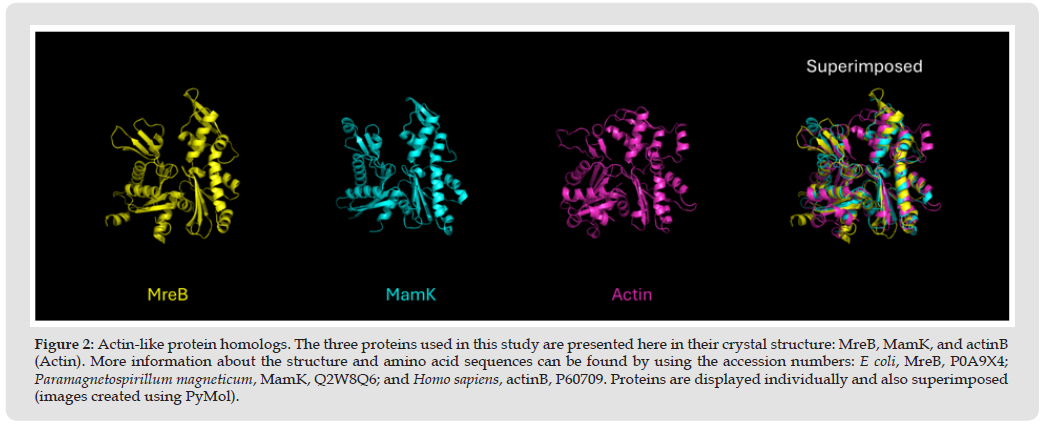
To begin addressing the creation of an MreB-derived peptide that can act as a bacteriostatic agent, we first examined other actin-like proteins that have a similar function in the generation of a viable cytoskeleton [21]. Bacterial Mre (murein cluster e) proteins have been known for a long time to be cell shape determinants [22]. MreB is widespread in bacteria with complex (nonspherical) shapes but is absent from most bacteria displaying coccoid (spherical) morphologies [21]. It is present in both gram-positive and gram-negative bacteria [22]. MreB appears to be essential in all bacteria studied so far, including B. subtilis, E. coli, C. crescentus, Rhodobacter sphaeroides, Salmonella enterica serovar Typhimurium, and Streptomyces coelicolor [21,22]. Anfinsen’s article in 1973 [23], sets the stage for the foundational idea that sequence dictates 3D structure, and structure dictates function. We selected two proteins to establish a point of comparison with MreB. We compared three cytoskeleton protein: E coli MreB; MamK from Paramagnetospirillum magneticum [24]; and actinB from Homo sapiens [25]. As observed in Figure 1, all three proteins have a similar monomeric structure, and as evident by superimposing the structures they have similar domains and structures (Figure 2). Following our initial examination of the structure of these three cytoskeletal proteins, we examined the shape of their respective cells. MreB is a Gram-negative bacterium rod-shaped [21].
Figure 2
Paramagnetospirillum magneticum is also Gram-negative, helical or spiral-shaped bacterium [24,26]. Finally, Homo sapiens Actin, where cells exhibit a vast diversity of shapes that are directly related to their specific functions within the body. Typically visualized as rounded (in tissue culture and textbooks), human cells can be highly irregular, elongated, or flattened depending on their role and environment [27]. Considering all three proteins have a role in cytoskeleton as common function, but not the shape their cells adopt, we decided to understand if their presence inside E coli would have an effect on cell shape, cellular growth or viability. Cytoskeleton formation is highly organized, following not just the polymerization of actin-like proteins but also following polarity, and association with the membrane [9,11,15]. We decided to overexpress these three actin-like cytoskeletal proteins as tethered to the inner membrane of E coli (Figure 3). We created fusion proteins of claudin 1 (CLDN1) a mammalian tight junction protein, to the actin-like protein at its C-terminus. These proteins are expressed using pET28 plasmids. These fusion constructs contain a 6xHis tag for expression detection by Western Blot. The expression of these fusion proteins will localize the actin-like proteins to the inner membrane, but randomly, not well organized as the cytoskeleton formation dictates. Thus, our design is to disrupt the formation of the native cytoskeleton and observe the differences between overexpression of CLDN1-MreB, CLDN1-MamK, and CLDN1-Actin. Figure 3C contains a Western blot result for the detection of CLDN1-actin-like protein expression in BL21 DE3 cells. The data suggests that CLDN1- MreB is rapidly degraded. CLDN1-MamK shows evidence of degradation but also full-length protein. Finally, CLDN1-Actin only shows evidence of full-length expression. These results are in agreement with results for cell growth in Figure 4.
Figure 3
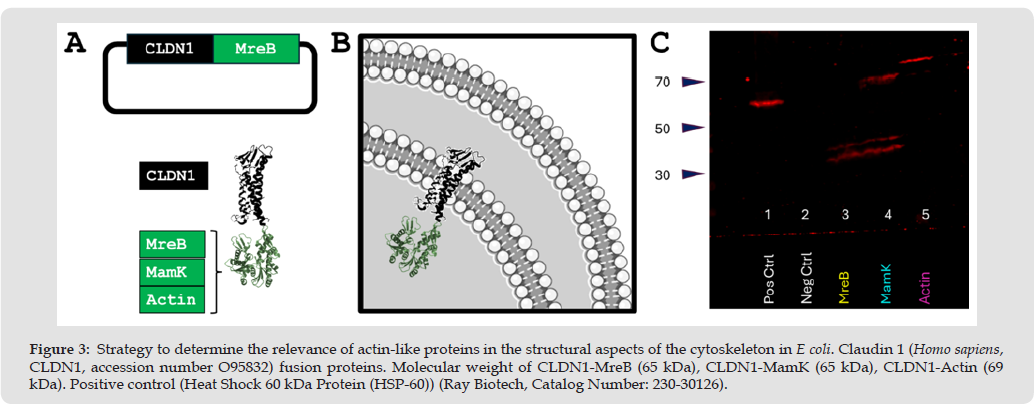
Figure 4
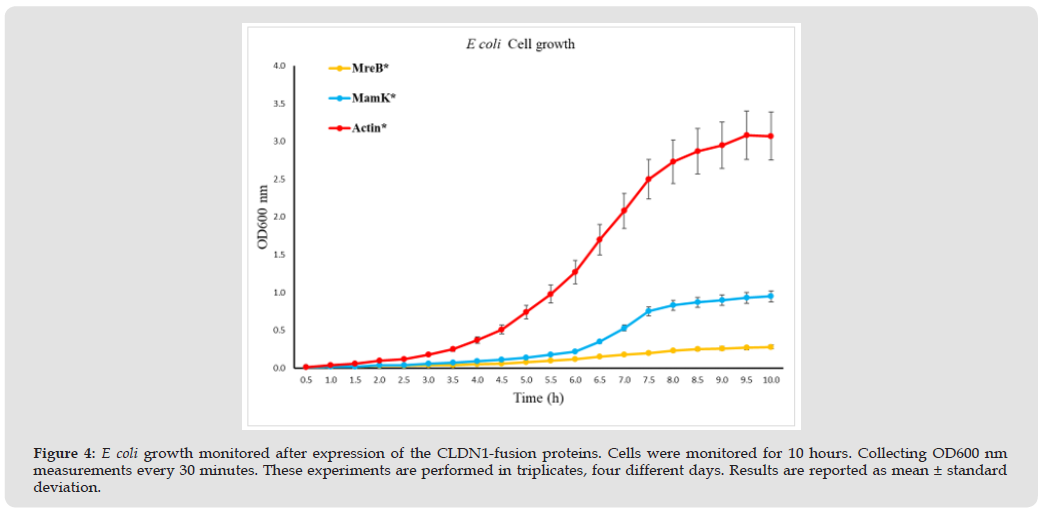
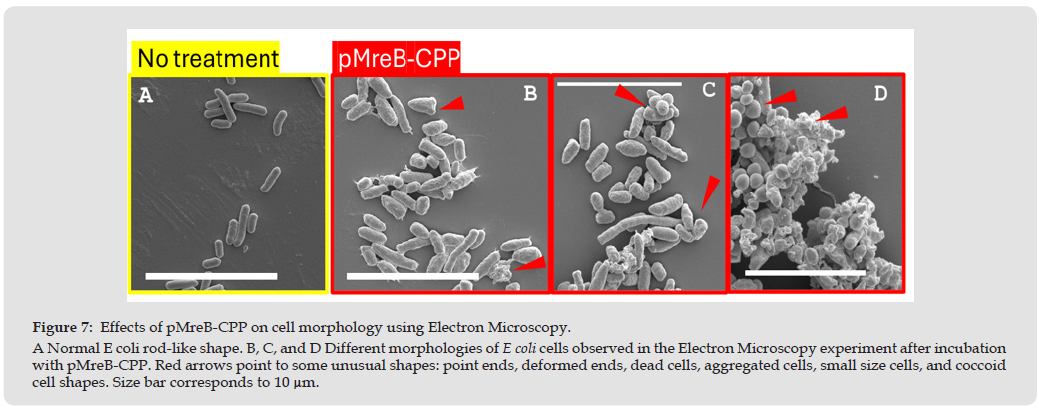
We observed that overexpression of Actin had no effect on cell growth. As expected, cells double in number every 30 minutes and tend to saturate at OD600 nm of ~2-3. MamK on the other hand, had a greater impact on cell growth, plateauing only close to OD600 nm ~1 after 10 hours. Finally, the biggest impact was observed by the overexpression of MreB (CLDN1-MreB). Cells did not grow past OD600 nm ~0.2-0.3, and seem to plateau after 4 or 5 hours. Based on this observations we decided to examine the amino acid composition of these proteins and compare beyond their structural homology [12]. The amino acid analysis of these three proteins involved comparison of pairs of proteins, MreB and MamK, MreB and Actin, and finally all three together (Figure 5). While comparing amino acid sequences we focused on the fact that Actin had no effect on growth. That disqualified the use of sequences of high to medium homology between these proteins. Considering MamK had an intermediate effect we reasoned the existence of a partial homology between MamK and MreB, in order to disrupt native MreB cytoskeleton. After examining this analysis, we decided to further create a new plasmid containing only the amino acid sequence of MreB corresponding to the segment between Gly190 and Iso266 (Figures 5 & 6). With the intention to test our peptide, pMreB, as a bacteriostatic we further engineered the peptide to have a cell-penetrating peptide (CPP) sequence that can be used to alter cell physiology externally. The sequence of our CPP was extracted from the literature [28] (Figure 6). Our peptide pMreB-CPP was then expressed in E coli (BL21 DE3) at low temperature to avoid the peptide’s disruption of growth. We attribute to the soluble property of the peptide its lesser ability to decrease or inhibit growth, compared to CLDN1-MreB (Figure 4). The peptide was purified and used to detect morphology defects in E coli’s cells (Figure 7). Typically, cells were incubated with pMreB-CPP for three hours at 37 oC to ensure active cellular division. Cell to peptide ratio was 1 bacterium per 1,000,000 molecules of pMreB-CPP. Figure 7 demonstrates visually that pMreB-CPP was successful in penetrating the outer and inner membranes of E coli, as deduced by the peptide having an effect on the cytoskeleton/shape of cells. Many of these changes have been described for A22, a small molecule capable of disrupting MreB-dependent cytoskeleton development in E coli [13,14].
Figure 5
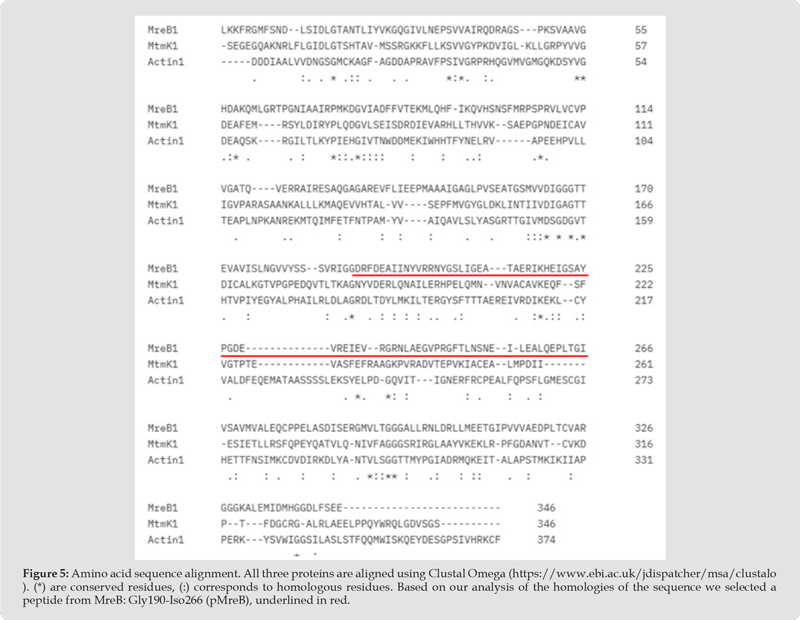
Figure 6
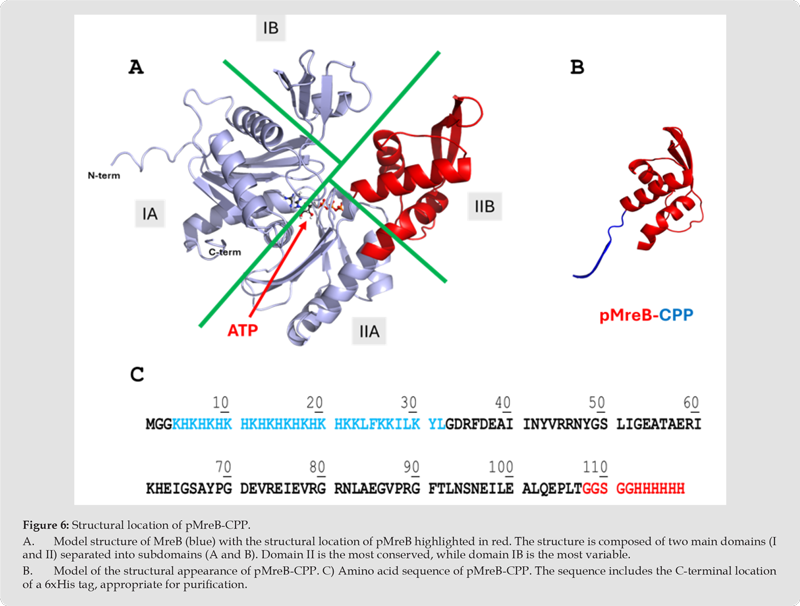
Figure 7
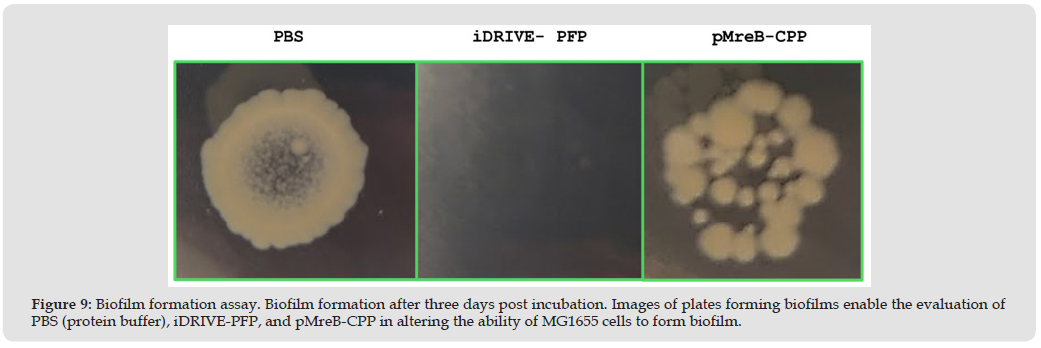
To further clarify the effects of pMreB-CPP in cell viability or its bacteriostatic properties, we evaluated its value in a colony-forming assay. We incubated BL21 DE3 cells and peptide at a ratio of 1 bacterium per 1,000,000 molecules of pMreB-CPP. Incubations were carried out for 1 hour at room temperature (21 °C), enabling peptide penetration but reduction of cellular division/growth. Thus, our strategy is to infuse each bacterium with sufficient pMreB-CPP that when growth is resumed by time and temperature (37 °C) on LB-2% agar plates, the peptide may reduce the cell’s ability to grow and establish colonies (Figure 8). Plates are created by adding 500 bacteria per plate, after treatment. Finally, we prepared cells MG1655 in a biofilm formation assay. These E coli cells are motile and have been characterized in the literature as models for biofilm formation [29]. Cells are incubated as per the colony formation assay. After 1 hour of incubation, 10 μL of cells, at OD600 nm of 1, are placed at the center of the plate (LB 1.5% agar). Plates are incubated for three days and imaged. To compare pMreB-CPP with more efficient proteins that can kill E coli cells, we resourced to a pore-forming protein (PFP) that is delivered externally also through a CPP. This strategy was developed by our laboratory recently and follows other reports of pore-forming proteins expressed in E coli, and their successful outcome in killing E coli by osmotic shock [19,30]. These results can be observed in Figure 9. The biofilm assay seems to indicate that when incubated at the ratio of 1 bacterium per 1,000,000 molecules of protein/peptide cells develop normal biofilm (PBS), failed to form biofilm (iDRIVE-PFP), or have a reduced capacity to form biofilm (pMreB-CPP). Through our experimental workflow, we have been able to compare actin-like cytoskeletal proteins; extract structural and functional information and create a peptide that has bacteriostatic properties as observed in its ability to reduce colony formation and biofilm formation. We do not present mechanistic evidence as to the properties of pMreB to bind to MreB in vivo, or its effects on the conformational changes that allow MreB to bind ATP, hydrolyze ATP, polymerize, or bind to other partners that guide the growth of the cytoskeleton. No crystal structure of E coli MreB exists. Nevertheless, from the literature [8,14,31], bacterial MreB protein’s structure has been divided into two main domains separated into subdomains (Figure 6A).
Figure 8
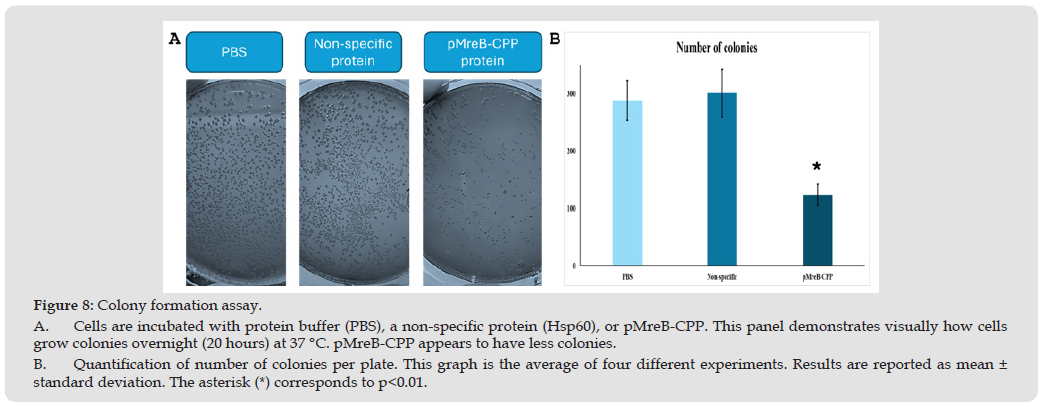
Figure 9
Domain II is the most conserved, while domain IB is the most variable. Our peptide pMreB belongs to the domain II, the majority of the amino acids in pMreB belong to the subdomain IIB. Domain IIB seems associated with allowing water molecules into the cleft near the ATP-binding region (Figure 6A) [8,14]. Unlike strict ATP dependence in some actins, MreB tolerates GTP/ADP for polymerization, but ATP hydrolysis optimizes membrane organization [32]. ATP hydrolysis is not strictly required for MreB filament formation, as MreB polymerizes into filaments in vitro with ATP [12,33]. However, hydrolysis plays a key regulatory role: polymerization induces subunit flattening that restructures the nucleotide pocket to promote ATP hydrolysis, which then triggers conformational changes leading to filament disassembly, reduced bending, and altered membrane binding [12]. Mutations at the interface between domains IIA and IIB disrupts intra protofilament contact [31]. In the formation of the protofilaments, domain IIB interacts with domain IIA. This can be clearly seen in the EM structure of MamK (PDB ID: 5JYG) [34]. The structural homology among actin-like bacterial proteins [22] thus gives a possible explanation for the role of pMreB. As such its homology to the IIB domain could guide it to intercalate or establish contact with domain IIA of a full-length MreB, destabilizing the formation of protofilaments. Furthermore, the position that pMreB could adopt in protofilament polymerization may influence the conformational changes related to water molecules entering the vicinity of the ATP-binding pocket or simply restrict the movement of the domains and subdomains as required for successful polymerization [8,21].
In the present article we have organized a strategy to identify a peptide that specifically interferes with the formation of E coli cytoskeleton by MreB protein. We have provided qualitative and quantitative evidence that viability of cells is compromised in the presence of the derived peptide. Our data also suggests that a CPP could be a valid strategy to deliver these peptides to affect cytoskeleton formation in bacterial cells. Finally, the structural homology among actin-like bacterial proteins, and as such homology in function, seems to indicate that mimicking our strategy it will be possible to find peptides similar to pMreB in both Gram-positive and Gram-negative organisms. Targeting the IIB subdomain with specific amino acid sequences according to the specific organism, could be a successful avenue to create novel bacteriostatic..

International Association of Landscape Archaeology, Czech Glass Society, Czech Republic

Department of Chemistry, Semenov Institute of Chemical Physics, USSR Academy of Sciences, Moscow, Russia

Department of Educational Sciences, Research Centre Qualities of Teachers, School of Education – HAN, Nijmegen, Netherlands

Associate Professor at Department of Breast and Thyorid Surgey, Chongqing General Hospital, China

Neurology, LA BioMed Research Institute, USA





 Abstract
 PDF
PDF



























