info@biomedres.us
+1 (502) 904-2126
One Westbrook Corporate Center, Suite 300, Westchester, IL 60154, USA
Site Map
 ISSN: 2574 -1241
ISSN: 2574 -1241
ISSN: 2574 -1241
Received: April 24, 2026; Published: May 15, 2026
*Corresponding author: Julian Ungar Sargon, Former Clinical Director, Borra College of Health Sciences, Dominican University, River Forest, IL, USA
DOI: 10.26717/BJSTR.2026.65.010226
Religious trauma has moved from the clinical margins to the center of contemporary trauma studies, yet the neurologist, internist, pain physician, and psychiatrist remain largely unequipped to recognize it. This essay reviews the emerging scholarly literature on religious trauma-including Winell’s formulation of Religious Trauma Syndrome, Pargament and Exline’s six-domain model of religious and spiritual struggles, Panchuk’s philosophical account of the shattered spiritual self, Freyd’s betrayal trauma theory, and the growing epidemiological data on adverse religious experiences-and argues that these frameworks, though indispensable, remain constrained by the same biomedical and cognitivist assumptions that obscure the theological depth of the wound. I then integrate this literature with a framework developed across my corpus at jyungar.com and in peer-reviewed journals: hermeneutic medicine, which treats the patient as a sacred text requiring interpretive presence rather than a malfunctioning system requiring repair. Three Kabbalistic categories-tzimtzum (divine contraction), shevirat ha-kelim (the shattering of vessels), and tikkun (repair through sacred gathering) -are proposed as clinically generative for survivors of religious harm. Post-Holocaust theology supplies a second framework: the refusal of premature consolation in the face of divine absence. Finally, the synthesis of Twelve-Step recovery spirituality with Chassidic and post-Holocaust thought offers a clinical path for patients whose religious wound has been compounded by compulsive or misdirected desire. The essay concludes with a three-tier clinical framework for the religiously injured patient.
Figure 1
Keywords: Keywords: Religious Trauma; Spiritual Abuse; Hermeneutic Medicine; Tzimtzum; Post-Holocaust Theology; Kabbalah; Betrayal Trauma; Moral Injury; Twelve-Step Recovery; Trauma-Informed Care
Figure 2

Abbreviations: C-PTSD: Complex Post-Traumatic Stress Disorder; RSS: Religious and Spiritual Struggles; ACE: Adverse Childhood Experiences; ARE: Adverse Religious Experiences
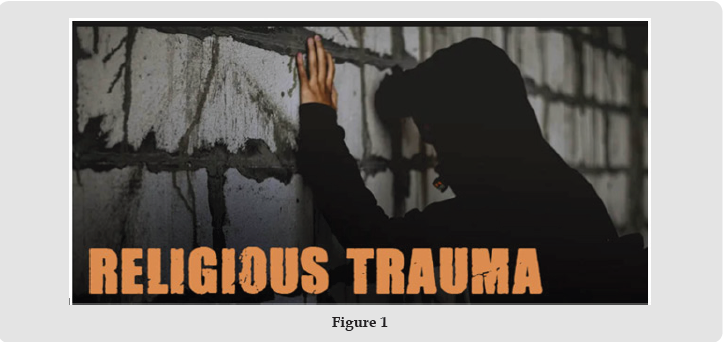
Religious trauma is one of the most prevalent, least diagnosed, and most theologically freighted categories of injury that patients bring to the medical office. A growing body of empirical research estimates that one in three American adults has experienced religious trauma at some point in life, with roughly ten to fifteen percent currently suffering from its acute symptoms [1]. (Figure 1) Survivors present to neurologists with somatoform pain and autonomic dysregulation, to internists with unexplained gastrointestinal and cardiac symptoms, to pain physicians with chronic regional pain syndromes refractory to standard intervention, and to psychiatrists with the composite symptomatology that increasingly resembles complex post-traumatic stress disorder (C-PTSD) [2,3]. And yet the clinical encounter consistently fails these patients-not because clinicians are inattentive but because the conceptual vocabulary in which contemporary medicine operates cannot accommodate what survivors actually need to say.
The wound is not only neurochemical or cognitive; it is theological. Across a sustained body of scholarly work developed over the past decade, I have argued that contemporary biomedicine has reproduced a Cartesian split that severs the sacred dimension of suffering from the clinical task of alleviation, [4,5] and that hermeneutic medicine- an interpretive practice in which the patient is approached as a sacred text rather than a malfunctioning system offers a path beyond that split [6-8] In that framework, the task of the clinician is not merely to diagnose and treat but to create the sacred space in which the patient’s story may be read with the care and interpretive discipline that rabbinic tradition devoted to the text of Torah. Religious trauma, I will argue in what follows, is the clinical condition in which this hermeneutic framework is not optional but essential-because the wound itself is inscribed in the theological register, and cannot be reached by a language that refuses that register on principle. This essay has two movements. The first half surveys the modern scholarly literature on religious trauma as it has emerged across psychology, psychiatry, sociology, philosophy, and pastoral studies over the past fifteen years. The second half integrates that literature with the framework I have developed in hermeneutic medicine, Lurianic Kabbalah, post-Holocaust theology, and the Twelve-Step recovery tradition, proposing a clinically operational three-tier approach to the religiously injured patient. My wager is that these traditions - far from being ornamental adjuncts to secular trauma care - offer the conceptual resources that contemporary trauma scholarship is currently groping toward but has not yet articulated in their full theological depth.
The formal scholarly category of religious trauma is remarkably recent. The term Religious Trauma Syndrome (RTS) was introduced by the psychologist Marlene Winell in a three-part series in Cognitive Behaviour Therapy Today in 2011, and named a cluster of cognitive, affective, functional, and social symptoms observed in individuals who had left - or were in the process of leaving - authoritarian religious communities [9]. Winell’s clinical insight was that such patients suffered from a twofold injury: first, the chronic indoctrination and behavioral control inflicted by the community of origin, and second, the traumatic rupture of leaving, which entails loss of identity, relational network, meaning system, and eschatological horizon. The phenomenology she described overlapped substantially with complex post-traumatic stress disorder as articulated by Judith Herman [2] whose foundational distinction between single-event trauma and the progressive personality erosion of chronic captivity mapped with uncanny precision onto the experience of survivors of high-control religious communities. The field has since taken up Herman’s language of captivity and institutional betrayal as central to the religious trauma picture. A parallel development within the psychology of religion, led by Kenneth Pargament and Julie Exline, produced a different and more nuanced framework: the six-domain model of religious and spiritual struggles (RSS) [10,11]. The model distinguishes supernatural struggles (with the divine or with perceived demonic forces), intrapsychic struggles (moral, ultimate-meaning, and doubt-related), and interpersonal struggles with religious communities and their representatives. The RSS Scale, validated across multiple religious traditions including Jewish, Christian, Buddhist, Hindu, Muslim, and unaffiliated populations, demonstrated that such struggles are ubiquitous- approximately one-third of U.S. adults report a recent religious or spiritual struggle - and that they are independently associated with depression, anxiety, suicidality, and poorer health outcomes, even when controlling for positive religious coping [11,12]. Crucially, divine struggles and moral struggles showed the strongest longitudinal association with psychological decline, while interpersonal religious struggles (including what is increasingly called spiritual abuse) often precipitated the others.
Epidemiological work has begun to move religious trauma out of the clinical anecdote into population-level science. Slade and colleagues, in their 2023 sociological study through the Global Center for Religious Research, estimated that between twenty-seven and thirty-three percent of U.S. adults have experienced religious trauma during their lifetime, with ten to fifteen percent currently symptomatic [1]. The Religious Trauma Institute, founded in 2019 by Laura Anderson and Brian Peck, has proposed the broader construct of adverse religious experiences (ARE), deliberately parallel to the adverse childhood experiences (ACE) framework that has transformed pediatric and developmental psychiatry [13,14]. The ARE construct encompasses any religious belief, practice, or structural arrangement that undermines safety, autonomy, or physical, emotional, relational, or psychological well-being - a broader frame than RTS, and one that allows for systematic epidemiological investigation of cumulative religious harm. Oakley, Kinmond, and Blundell’s work on spiritual abuse has specified the interpersonal and institutional mechanisms - coercive theology, spiritual gaslighting, manipulation of religious language to enforce compliance - by which this harm is delivered [15].
Three further strands of contemporary scholarship deserve particular attention for the clinician. First, Freyd’s betrayal trauma theory specifies that the most damaging traumas are those perpetrated by (Figures 2-4) on whom the victim is emotionally, relationally, or economically dependent; the dependence enforces a paradoxical cognitive accommodation in which the victim cannot fully acknowledge the betrayal without destroying the relationship on which survival depends [16]. This is precisely the structure of much religious harm: the perpetrator is the parent, the pastor, the rabbi, the spiritual mentor, the community itself, or ultimately the God-image in whose name they speak, and the survivor’s emotional, eschatological, and communal survival depends on the very system that wounds. Second, moral injury, as developed by Litz and colleagues in the veteran population and extended by Zerach and Levi-Belz, names the specific psychological devastation of acts that violate deeply held moral and spiritual commitments-including the betrayal of trusted authorities [17,18] Religious trauma is, among other things, moral injury delivered by the very structures that claimed to be its antidote. Third, the philosopher Michelle Panchuk has provided a conceptual account of what she calls the shattered spiritual self and the hermeneutical injustice suffered by survivors: religious trauma produces not only distress but a specific epistemic wound, in which survivors lack the conceptual vocabulary to name what happened to them because the dominant interpretive framework - their own religious community’s - has disqualified such naming in advance [19,20].
Taken together, this literature converges on a clinical picture: religious trauma is a complex, chronic, betrayal-based injury with strong phenomenological overlap with C-PTSD; it is mediated through specific interpersonal and theological mechanisms (authoritarian communities, toxic God-images, coercive eschatology, spiritual abuse); it produces measurable downstream consequences in mood, anxiety, suicidality, somatic symptomatology, and functional impairment; and it is systematically under-recognized by the secular mental health system, which tends to treat religion as a protected cultural variable rather than a potential etiological factor, and by the religious community itself, which has strong institutional incentives not to name its own harm.
Although the great majority of the religious trauma literature has been developed in reference to Christian fundamentalism and evangelicalism, a specifically Jewish scholarly literature has begun to emerge, and it is with this literature that any clinically useful Jewish account must be in conversation. Rosmarin, Pirutinsky, Appel, Kaplan, and Pelcovitz, in a 2018 study in Child Abuse and Neglect, surveyed 372 religiously diverse American Jews and found that although overall rates of childhood sexual abuse were statistically comparable to national norms, formerly Orthodox individuals reported rates of involuntary penetration three times higher than the rest of the sample [21]. A history of sexual abuse was associated with increased odds of psychiatric diagnosis, greater mental distress, and lower religious observance and intrinsic religiosity - findings that parallel the spiritual- struggle literature but locate them in a specifically Jewish institutional context. A moderate buffering effect of spiritual and religious engagement against mental distress was also observed, reminding clinicians that the post-traumatic religious picture is not monochromatic.
Lusky-Weisrose, Marmor, and Tener’s 2021 systematic review in Trauma, Violence, and Abuse synthesized the available empirical literature on sexual abuse within Orthodox Jewish communities across North America, Israel, and Australia, identifying three recurring themes: the suppression of disclosure by communal norms, the ambivalent communal and professional response, and the complex longterm sequelae [22]. The review named the specific features of closed religious collectives - intense communal loyalty, reputation-sensitive marriage markets, reluctance to involve civil authorities, and the theological weight given to rabbinic authority-as structural amplifiers of the primary trauma. Additional scholarship has examined get refusal (the refusal of a husband to issue a Jewish bill of divorce, leaving the wife in halakhic bondage) as a specifically Jewish form of spiritual abuse [23] and has analyzed moral injury among ex-ultra-Orthodox Israelis, whose disaffiliation frequently follows, rather than precedes, prior sexual and spiritual victimization [24,25]. Clinical models developed in response to these findings are instructive. The Benafshenu Center within Bayit Cham in Israel, drawing on the concept of communal dissociation, has pioneered culturally sensitive trauma treatment for Haredi survivors of sexual abuse; the model centers the clinician’s compassionate witness of both the individual and the community, rather than demanding that the survivor choose between therapy and religious identity [26]. This kind of integrative, culturally literate approach- one that refuses the false binary of religious affiliation versus psychological health - is precisely what the hermeneutic framework developed in my own published work has sought to make available across the spectrum of religious traditions [7,8,27].
For the practicing clinician, the diagnostic question is rarely whether religious trauma exists as a sociological phenomenon but whether a particular patient before one now is suffering from it, and whether to name it. In my five decades of neurological practice, I have come to recognize a recurrent constellation. The patient presents with chronic somatic symptoms disproportionate to identifiable pathology- intractable headache, fibromyalgia-type widespread pain, pelvic or abdominal pain, conversion symptoms, dissociative episodes - and a personal history in which strict religious upbringing, coercive community structures, or specific religious violations (clerical sexual abuse, spiritual gaslighting, religious threats around sexuality or apostasy) are present but rarely raised. The autonomic picture often shows sustained hyperarousal, consistent with the neurobiological signature of complex PTSD that I have previously described [28,29].
The cognitive and affective picture typically includes the classical Winell cluster: intrusive fear of damnation persisting long after intellectual repudiation of the belief system, black-and-white thinking, perfectionism, scrupulosity, chronic shame, difficulty with decision-making, impaired critical reasoning around theological questions, and a brittle self-concept organized around the impossible simultaneous demand to be both sinful-and-worthless and chosen- and-special [9,13]. The social picture includes estrangement from family of origin, hostility from former co-religionists, mistrust of any institutional structure, and difficulty with secular intimate relationships. The spiritual picture - which is very often the one the patient most needs named - includes anger at God, grief for the faith lost, terror of the absence of ultimate meaning, and the particular moral injury of realizing that the community that promised salvation caused harm. In my pain-management practice the religious trauma picture is often specifically somatic. The body that has been told it is fundamentally sinful, that its desires are demonic, that its sexuality is shameful, and that its autonomy is dangerous does not simply absorb these messages as cognitive propositions. It stores them as posture, tension, visceral dysregulation, and chronic pain. The hermeneutic clinician reads such pain not as a malfunctioning nociceptive system but as an inscribed text - a somatic record of theological injuries that have never had a hearing [30,31]. The implication for treatment is considerable: neither analgesia nor cognitive reframing, taken alone, will reach a wound whose grammar is theological.
The contemporary mental health system is, in principle, sympathetic to religious trauma and, in practice, poorly positioned to treat it. Three structural limitations deserve to be named plainly. First, the dominant diagnostic system remains committed to a Cartesian epistemology in which mind, body, and spirit are separable domains, with the spiritual relegated to the private, the incidental, or the confessional. I have argued elsewhere that this Cartesian split is not a neutral methodological convenience but a theological commitment in disguise - one that cannot accommodate a patient whose very wound is constituted through the entanglement of meaning, body, and community [5,32]. Second, the training of most contemporary psychotherapists and physicians in religious literacy is, charitably described, minimal. As Winell has noted, clinical programs tend to treat religion as a cross-cultural variable to be respected rather than a potential etiological factor to be assessed, with the result that the religious content of a patient’s distress is frequently either ignored or pathologized without discernment. [9,13] Pargament and Exline’s lifework has been precisely to correct this lacuna - their clinical manual Working with Spiritual Struggles in Psychotherapy provides one of the few systematic interventions - but uptake within mainstream psychiatric training remains uneven [12].
Third, the biomedical paradigm imposes a specific linguistic economy that cannot host the theological register in which religious trauma is inscribed. The fifteen-minute clinical encounter, the DSM- 5-TR diagnostic checklist, the electronic health record field structure, and the pharmacologic intervention as default-all of these institutional features organize clinical speech around problems that can be counted and interventions that can be billed [33,34]. The patient who says I cannot pray anymore and when I try the old God appears with his face of rage has no diagnostic code, no billable unit, and no pharmacologic target. The clinician who is competent to receive such speech is operating outside the frame the system rewards. Any serious engagement with religious trauma at the level of clinical practice must therefore involve not only new diagnostic sensibilities but a reimagined space and temporality of the encounter - a sacred space, in the specific sense I have developed across my corpus [35-37].
The framework I have developed reconceives the clinical encounter as an interpretive rather than strictly technical event [6,7,8,38]. Hermeneutic medicine treats the patient’s presentation - history, body, silence, somatic inscription, relational pattern - as a sacred text requiring the kind of patient, layered, disciplined reading that rabbinic tradition has developed over two millennia for the text of Torah. The physician is, in this framework, a reader rather than a mechanic, and the task is to discern the multiple strata of meaning - what classical Jewish exegesis names peshat (the plain sense), remez (the allusive), derash (the homiletical), and sod (the mystical) - each of which is present in the patient’s text but accessible only through different disciplines of attention [39,40]. For religious trauma, the hermeneutic reframing is particularly generative. The survivor’s somatic symptom is not a biomedical epiphenomenon; it is a densely encoded text in which spiritual injury, betrayed trust, unspoken moral wound, and theological abandonment are all inscribed simultaneously. The trauma- informed clinician who is not also theologically literate can read only the peshat - the physiological and behavioral surface. The specifically religious injury lives at the level of sod, where the patient’s relationship to the sacred, to divine presence and absence, to the moral order, to the community’s God-image, and to the eschatological horizon has been ruptured. Hermeneutic medicine provides the interpretive vocabulary through which the clinician can approach that deeper register without either disciplining it into a secular frame or colluding with the theology that caused the injury. A second crucial element of the hermeneutic framework is what I have called sacred listening - an experiential-encounter mode of receiving the patient’s speech that is categorically distinct from rational-faith interrogation [41,42]. Sacred listening receives the patient’s testimony as a form of revelation, without premature interpretation and without the closure of clinical formulation. For survivors of religious trauma, whose prior experience of being heard has often been conditioned on orthodoxy or filtered through institutional gatekeepers, sacred listening is in itself a reparative act. It restores the survivor’s hermeneutical authority - the right to interpret one’s own experience - which, following Panchuk’s analysis, has been systematically expropriated by the community of origin [19,20].
Lurianic Kabbalah, the sixteenth-century mystical system developed around the figure of Isaac Luria in Safed, supplies three theological categories that are unusually well-suited to the clinical picture of religious trauma: tzimtzum (divine self-contraction), shevirat ha-kelim (the shattering of the vessels), and tikkun (repair through the gathering of fallen sparks). I have argued across many publications that these are not archaic metaphors but precise clinical tools, and they are particularly powerful in the context of religious injury [43-46]. Tzimtzum in its Lurianic formulation names the primordial divine self-withdrawal that creates the ontological space within which finite being is possible. The clinical translation, which I have developed at length elsewhere, treats therapeutic tzimtzum as the disciplined self-contraction by which the clinician withdraws agenda, interpretation, and the impulse to repair in order to create the hollowed space in which the patient can appear [43,46,47]. For survivors of religious trauma, this clinical posture is more than a stylistic preference. Their injury was delivered in part by the inability of the religious community to contract - by its totalizing presence, its colonization of interior life, its refusal of hollowed space. The hermeneutic clinician who enacts tzimtzum performs, in the therapeutic encounter, the opposite of what the community failed to do, and in that structural inversion begins the work of repair.
Shevirat ha-kelim - the shattering of the primordial vessels, which in the Lurianic myth could not contain the divine light poured into them - names the ontological structure of a world in which brokenness is not aberration but origin. The clinical significance for religious trauma is profound. Survivors frequently experience their own shattered selfhood as a personal failure; the religious community they have left often reinforces this reading, framing disaffiliation as moral weakness. The Lurianic frame reverses this. Brokenness is not individual pathology but cosmic condition; the scattered sparks of the patient’s shattered religious self are not evidence of damage to be repaired by re-submission, but holy fragments to be gathered and redeemed through the patient’s own interpretive labor. [44,45,48] I have called this the theology of sacred brokenness, and have argued that it offers a therapeutic vocabulary unavailable within either the biomedical or the original religious framework [49,50]. Tikkun - the work of gathering scattered sparks - gives the survivor a theological frame for the long, non-linear work of recovery. Tikkun is not restoration to the prior state. It is the construction of a new vessel, built from the fragments of the old, in which the sparks of sacred meaning that were always present in the original tradition - even when its institutional form caused injury - can be recognized, gathered, and re-cast [45,51]. Clinically, this frame allows the survivor to hold two truths simultaneously that the mainstream religious trauma literature often struggles to hold together: that the community of origin caused real harm, and that within that community there were nevertheless genuine sparks of sacred encounter that deserve not to be discarded with the rest. This is the clinical work of what I have called post-Orthodox spirituality - a stance that neither returns to the original framework nor accepts the secular alternative as the only remaining option, but constructs the patient’s own vessel from the fragments.
No Jewish engagement with religious trauma can proceed without reckoning with the theological rupture of the Shoah. The post-Holocaust theologians - Fackenheim, Berkovits, Greenberg, Rubenstein, and, in a more mystical register, the work of Elliot R. Wolfson - have established a constellation of positions about the nature of divine presence and absence after Auschwitz that are, I have argued, directly clinically applicable to survivors of religious trauma on a smaller scale [52-54]. The core post-Holocaust insight is that any theology that offers premature consolation in the face of radical evil is complicit in that evil; anti-theodicy - the refusal to justify God in the face of suffering - is both more honest and more pastorally adequate than the traditional theodicies that explain suffering away. Religious trauma survivors encounter, with remarkable frequency, clinicians and clergy who offer precisely the premature consolation that post-Holocaust theology forbids. They are told that their suffering has a purpose, that their abuser did not represent the true faith, that forgiveness is the path to healing, that the community must be restored. Each of these moves, however well-intentioned, enacts a theodicy in miniature - and reinjures the survivor by refusing to sit with the absence of justification that post-Holocaust thought has identified as the only ethical posture after radical harm [52,55]. The hermeneutic clinician, schooled in post-Holocaust sensibility, is prepared instead to hold the absence: to receive the survivor’s anger, grief, and theological desolation without rushing to explain or repair, trusting that only the long work of sitting with absence can open the possibility of any genuine recovery.
A specifically Kabbalistic resource here is the figure I have called the Dark Shekhinah - the dimension of the divine feminine in exile, wounded with the people, present in the abyss rather than above it [53,56]. For the religious trauma survivor, the possibility that divine presence inhabits the site of the wound rather than standing apart from it is not a cognitive proposition to be argued but a therapeutic experience that may, over time, be made available. The Lurianic Shekhinah in exile is a divine figure who has herself been wounded by the shattering - a divinity in whose brokenness the survivor’s brokenness finds not explanation but company. This is, I have argued, the deepest theological gift the tradition can offer to the religiously traumatized: not an answer, but a companion [56,57].
Figure 3
Religious trauma frequently presents entangled with compulsive behavior - with the full spectrum of substance and process addictions, disordered eating, sexual compulsions, and workaholic over functioning. This entanglement is not coincidental. In work developed in recent essays I have called the clinical form displaced divinity: the injured religious self, unable to sustain the original object of devotion, redirects the structural energy of worship toward a substitute object that can neither bear that weight nor deliver what the soul is actually seeking [58-60]. The Twelve-Step tradition, in my reading, is one of the great contemporary achievements of practical spirituality, and its affinity with Chassidic categories - particularly those developed in the Tanya and in the writings of the Me’or Einayim - is strikingly deep [60-62].The Twelve-Step concept of surrender, the radical recognition of powerlessness that opens the door to the possibility of a Higher Power of the survivor’s own conception, offers a clinical alternative to the false choice between the original community’s authoritarian God and the secular flat ontology. I have developed this at length in essays on the yechida - the innermost soul-level in Chassidic thought - as a personal theology that is available to the survivor without requiring either re-submission to the original framework or complete theological evacuation [63,64]. The dialectical tension between divine transcendence and immanence, which the Chassidic masters worked through across generations, maps with remarkable precision onto the clinical work of reconstituting a workable relationship to the sacred after religious trauma: neither the tyrannical transcendence of the injuring community, nor the consoling immanence that denies the reality of the wound, but a dialectical holding of both [65,66].
Recent empirical work on moral injury, twelve-step recovery, and spiritual reconstitution after religious harm supports this clinical approach [17,18,67]. The comparative analysis I have offered between the Twelve Steps and Ramchal’s Mesilat Yesharim, and between Breslov tikkun ha-brit practice and contemporary recovery spirituality, documents the convergent wisdom of ancient Jewish sources and modern recovery communities - both of which recognize that the restoration of the injured soul requires structured, embodied, community- mediated practice rather than purely cognitive intervention [68,69]. For the religiously traumatized patient, a Twelve-Step framework re-described in theologically serious Jewish categories offers a recovery path that neither abandons the sacred register nor collapses it into the original injuring frame.
Figure 4
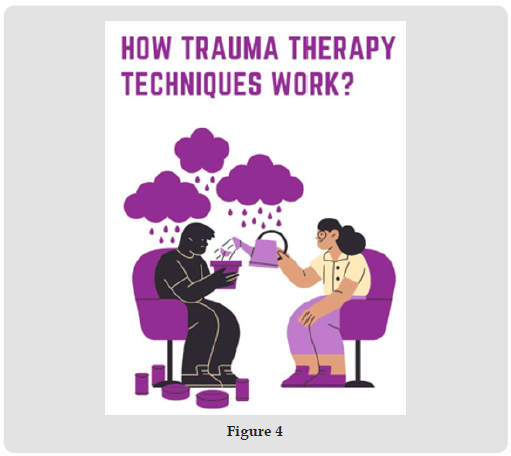
Drawing the foregoing together, I have proposed and progressively refined a three-tier clinical framework for the religiously traumatized patient - a framework initially developed for complex PTSD and for chronic pain but particularly applicable to religious injury [28,29,70]. The three tiers are not sequential treatment phases in the classical sense but overlapping registers of intervention, each of which must be active for the work to proceed.
The first tier is neurobiological and somatic stabilization. The religiously traumatized patient almost invariably arrives in a state of chronic autonomic dysregulation; somatic modalities - carefully selected bodywork, breath practices, vagal-tone interventions, EMDR where indicated, and judicious pharmacologic support for sleep and acute anxiety - establish the physiological floor on which any further work depends [28,29]. Without this tier, insight is inaccessible and relational safety is unreachable. With it, the patient begins to experience the body as a potential ally rather than a locus of permanent alarm.
The second tier is hermeneutic and narrative. Within the sacred space of the therapeutic encounter, the patient’s story is read, re-read, and progressively re-interpreted; the clinician practices sacred listening, therapeutic tzimtzum, and disciplined interpretive restraint, refusing to impose either the original religious framework or a debunking secular counter-framework. The patient’s hermeneutical authority - the right to interpret one’s own experience - is progressively restored. Specific practices I have found clinically generative include the construction of what I have called the spiritual autobiography, the mapping of the patient’s toxic and generative God-images, and the deliberate articulation of theological questions that the original community did not permit to be asked [7,8,41].
The third tier is theological and communal reconstitution. This is the slowest and most delicate of the three, and the one most often mishandled by well-meaning clinicians. The task is not to restore the patient to the original community; nor is it to recruit them to an alternative tradition of the clinician’s preference; nor is it to settle the patient into a permanent secular apostasy. The task is to support the patient’s own work of tikkun - the gathering of the sparks that are authentically theirs, from wherever they arise (the tradition of origin, other traditions, Twelve-Step spirituality, post-Holocaust theology, mystical literature, contemporary poetry, embodied practice) - into a vessel that the patient themselves has constructed. The successful endpoint of this tier is not a specific religious affiliation but the patient’s restored capacity to inhabit the theological register at all - to ask ultimate questions, to mourn what was lost, to acknowledge what was genuinely given, and to move into the remainder of life with a workable relationship to meaning [70-72].This framework is, I would emphasize, offered not as a competitor to secular trauma-informed care but as its completion. Nothing in the three-tier model contradicts established trauma research; it extends that research into a register the secular framework has systematically excluded. The physician who undertakes this work will require resources - supervision, theological consultation, a willingness to sit with theological discomfort - that the ordinary clinical education does not supply. But the alternative - continuing to receive religiously traumatized patients within a framework that cannot speak of their actual wound - is no longer defensible.
Religious trauma is the clinical condition in which the biomedical paradigm’s deepest assumption - that the spiritual register is separable from the somatic and the psychological - is most decisively refuted by the patient’s actual presentation. The contemporary scholarly literature on religious trauma, from Winell’s naming of RTS through Pargament and Exline’s six-domain model, Panchuk’s philosophical analysis of hermeneutical injustice, and the epidemiological work of the Religious Trauma Institute and the Global Center for Religious Research, has given the field the evidence base it requires to be taken seriously by medicine [1,9,11-13,19,20]. What remains is the theological literacy that would allow clinicians to meet the wound at the level at which it is inscribed.
The framework I have proposed across my corpus - hermeneutic medicine informed by Lurianic Kabbalah, post-Holocaust theology, and the Twelve-Step tradition - is one serious attempt to supply that literacy from within the Jewish tradition, in dialogue with but not reducible to secular trauma science. Its core intuitions are simple: the patient is a sacred text; the clinician must enact tzimtzum to receive that text; brokenness is cosmic structure rather than personal failure; premature consolation is a form of injury; the long work of tikkun proceeds through the patient’s own hermeneutical labor; and the theological register, far from being optional in clinical medicine, is precisely where the deepest wounds and the deepest resources of healing are both to be found. The religiously traumatized patient comes to the clinic bearing an injury that has no billing code, no pharmacologic target, and no standard intervention. They come because they have nowhere else to go. The task of medicine in the coming decade is to become adequate to what they bring - not by religious instruction, not by sectarian preference, but by the cultivated clinical capacity to receive the theological depth of human suffering and respond with the interpretive care it requires. This essay has attempted to sketch what that capacity might look like. The work of building it is before us.
Why Trauma Requires a Separate Accounting
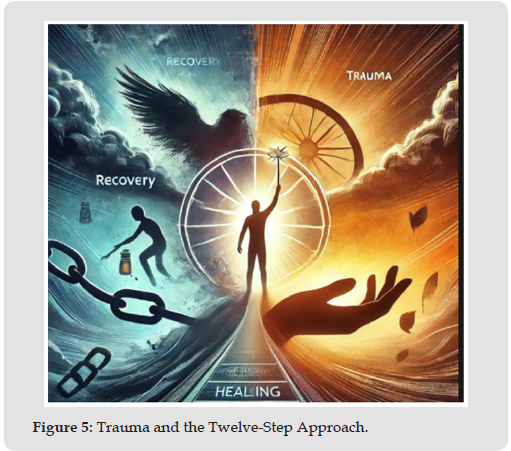
(Figure 5) Above we developed a framework for reading the religiously traumatized patient as a sacred text requiring hermeneutic care rather than biomedical repair, and has situated that reading within Lurianic Kabbalah, post-Holocaust theology, and the Twelve- Step tradition. One clinical substrate of that framework merits extended examination here, since it is the condition under which the hermeneutic approach is most often tested in actual practice: the concurrent presence of traumatic injury and addictive behavior. This addendum fills that gap. It argues, with reference to the peer-reviewed clinical literature, that any serious integration of Hasidic spirituality with Twelve-Step recovery must also engage the trauma that so often underlies addictive behavior, and that without this engagement the application of the Steps to trauma survivors may be at best incomplete and at worst actively re-injurious.The argument proceeds in five movements. First, the epidemiological and clinical evidence linking adverse childhood experience and interpersonal trauma to the development of substance use disorders is summarized. Second, Edward Khantzian’s self-medication hypothesis is presented as a clinically parsimonious explanation for why trauma generates addiction. Third, Judith Herman’s tripartite model of trauma recovery is outlined, with particular attention to the foundational requirement of safety. Fourth, the specific points of friction between classical Twelve-Step language and the psychology of the trauma survivor are examined, along with the evidence-based integrations that have emerged over the past two decades, principally Lisa Najavits’ Seeking Safety and Jamie Marich’s trauma-adapted Twelve-Step work. Fifth, the findings are brought back into conversation with the hermeneutic-kabbalistic framework of the main essay, with particular attention to how tzimtzum and shevirat ha-kelim are sharpened, not softened, when trauma is placed at the center of the account.
Figure 5
Trauma as a Primary Cause of Addiction
The modern clinical literature on addiction begins, for practical purposes, with the publication of the Adverse Childhood Experiences (ACE) Study by Vincent Felitti, Robert Anda, and colleagues at Kaiser Permanente and the Centers for Disease Control. [14] In a cohort of over seventeen thousand middle-class insured adults, the investigators documented a graded, dose-response relationship between the number of adverse experiences encountered before age eighteen-abuse, neglect, household dysfunction-and the later development of virtually every major category of adult morbidity, including substance dependence. Individuals reporting five or more categories of adverse childhood experience were seven to ten times more likely to report illicit drug use and addiction than those reporting none, with the attributable risk fractions reaching fifty-six and sixty-three percent respectively [73]. Subsequent convergent evidence from neurobiology and epidemiology, compiled by Anda, Felitti, Bremner, and colleagues, established that these effects are mediated by durable alterations in the developing central nervous system, with implications that persist across the life course [74].
The clinical implication is straightforward but under-appreciated. Addiction is not, for the majority of addicted persons, a freestanding disease that arrives in adulthood as the consequence of poor choice or weak will. It is typically the sequel to early, often interpersonal, injury that has shaped both the brain’s stress-response architecture and the person’s repertoire of available coping strategies. In a large population-based sample, Afifi and colleagues confirmed the cumulative relationship between adverse childhood experiences and later substance use disorder, with mood and anxiety disorders partially mediating the association [75]. Among adolescents seeking substance use treatment, up to seventy-one percent report a history of physical or sexual assault or witnessing intimate partner violence [76]. The prevalence of trauma exposure among adults with substance use disorder is similarly elevated relative to general-population controls, and it tends to be associated with poorer clinical course, earlier onset of use, and more severe psychiatric comorbidity [77].
These findings are not epiphenomena of a troubled sub-population. In the Twelve-Step rooms themselves, Department of Veterans Affairs data suggest that up to three-quarters of trauma survivors report drinking problems, and among persons with alcohol use disorder, posttraumatic stress disorder is one of the most common comorbid conditions along with depression and anxiety. Any spiritual or theological account of addiction that does not reckon with this substrate will necessarily be speaking to a theoretical subject rather than to the concrete suffering person who walks into the meeting. This is also the substrate that makes religious trauma and addictive behavior so frequently intertwined: the coercive religious environment that produces the religious wound often simultaneously produces the affective dysregulation that later seeks pharmacological relief [28,29].
Addiction as an Attempt at Self-Repair
Edward J. Khantzian, over a five-decade clinical career at Harvard and Cambridge Health Alliance, developed what has become the most theoretically durable psychodynamic account of addictive disorders: the self-medication hypothesis. First published as the lead article in the American Journal of Psychiatry in 1985 and substantially expanded in the Harvard Review of Psychiatry in 1997, the hypothesis maintains that persons who become addicted are not randomly selecting substances in pursuit of pleasure but rather are discovering, through trial and error, pharmacological agents whose specific psychoactive profiles address particular deficits in affect regulation, self-esteem, relationship capacity, and self-care [78,79]. Opiates mute the disorganizing effects of rage and aggression; cocaine and other stimulants relieve the subjective distress of depression, hypomania, or attentional disorganization; alcohol and sedative-hypnotics dampen the hyperarousal of anxiety and posttraumatic intrusions.
The hypothesis has two features that are worth dwelling on. The first is its compassionate epistemology. Khantzian begins his clinical interview not with “what did the drug do to you” but with “what did the drug do for you,” a question that takes seriously the possibility that the addictive use was, for a time, a form of self-ministration in the absence of any other available care [80]. This inversion of the standard clinical posture aligns naturally with the hermeneutic stance articulated in the main essay: the addicted behavior is a text, not a mere pathology, and its meaning can only be disclosed by a clinician willing to read it charitably. The second is the hypothesis’ theoretical parsimony regarding the trauma-addiction link. Under the self-medication hypothesis, persons with untreated posttraumatic stress find that alcohol and opioids offer rapid, reliable suppression of hyperarousal, intrusive memory, and dissociative distress; the substance becomes, in Khantzian’s phrase, a technology of self-regulation in the absence of a developed internal capacity for such regulation.
The empirical literature has not uniformly supported every detailed prediction of the hypothesis-some studies find mutual-maintenance relationships in which substance use exacerbates as well as relieves symptoms, and some specific symptom-substance pairings prove less robust than originally proposed [81]. Nevertheless, the core insight has been repeatedly confirmed: subjective states of suffering, whether rooted in early trauma or in acquired psychiatric illness, are central to the motivation to use, to become dependent, and to relapse [82]. The hypothesis supplies, in other words, the psychological mechanism that connects the epidemiological finding (ACEs predict addiction) to the clinical phenomenology (this particular person is using to manage this particular unbearable internal state). It is also the mechanism that explains why the religious trauma survivor so often presents with comorbid addiction: the theological injury produces affective states-shame, terror, dissociation from an abandoning or persecuting divine-that the patient has learned to manage pharmacologically in the absence of any other available resource [58,59].
Why Safety Must Precede Remembrance
If Khantzian provides the mechanism, Judith Herman provides the architecture of recovery. Her 1992 monograph Trauma and Recovery and her subsequent peer-reviewed articulation in Psychiatry and Clinical Neurosciences in 1998 established what has become the consensus clinical framework for the treatment of complex trauma [2,83]. Herman’s core proposition is that psychological trauma is fundamentally an experience of disempowerment and disconnection, and that recovery must therefore proceed in stages, each with a distinct organizing task: first the establishment of safety; then remembrance and mourning; finally reconnection with ordinary life. The stages are not rigid compartments but rather shifting centers of gravity; a given patient will cycle through them non-linearly, and a good clinician learns to recognize which task is most salient at any given moment. The first stage is foundational. Herman insists, with great clinical force, that no therapeutic work can usefully proceed until the survivor has achieved a baseline of safety-safety in her body, safety in her relationships, safety from ongoing victimization, and safety from the self-destructive behaviors (including substance use) that themselves reenact the traumatic dynamic [84].
The clinical implication for the addicted trauma survivor is direct: sobriety, relational stability, and symptom management must be established before the patient is asked to undertake the difficult work of constructing a narrative about what was done to her. Premature exposure to trauma memory, in the absence of a consolidated safety, tends to precipitate relapse, dissociation, or re-traumatization. This is also why the “Higher Power” conversation of Step Two cannot be rushed with a religious trauma survivor: for someone whose original spiritual formation was itself the site of injury, premature theological reframing is a violation of the first-stage requirement and often produces the very dissociative and compulsive symptoms the Step is meant to ameliorate. The second stage, remembrance and mourning, involves the reconstruction of a narrative of the traumatic history in a form that can be integrated into the self. The third, reconnection, involves the re-establishment of meaningful affiliation, purpose, and relational trust. The whole arc is governed by what Herman calls the guiding principle of recovery: the restoration of power and control to the person from whom they were taken. Van der Kolk, Pelcovitz, Roth, Mandel, McFarlane, and Herman, in a 1996 American Journal of Psychiatry supplement, documented the characteristic clinical presentation of complex posttraumatic stress-what has since been codified as Complex PTSD in the ICD-11-with its distinctive features of dissociation, somatization, and affect dysregulation, all of which shape and complicate the recovery arc [85]. These are precisely the presentations that populate my own PTSD clinical work and that form the basis for the three-tier healing model developed elsewhere in my published corpus [28,29,70,71].
Where Trauma Survivor do Not Speak the Same Language
With the epidemiology, mechanism, and recovery framework in place, the specific clinical difficulties of applying the classical Twelve Steps to trauma survivors can be stated clearly. The First Step, with its admission of powerlessness, is where the difficulty most often surfaces. For the person whose addiction is unaccompanied by interpersonal trauma, the admission of powerlessness over the substance is liberating-it ends the exhausting illusion of control and opens the space for surrender to a larger source of help. For the survivor of interpersonal abuse, however, the language of powerlessness overlaps painfully with the experience of the original injury, in which she was literally made powerless by a coercive other. The clinical danger is that the First Step may be heard, not as an invitation to release the illusion of self-management over a substance, but as an instruction to re-inhabit the helplessness that was the essence of the trauma itself. This is the same structural difficulty that the main essay identifies in the figure of the religiously traumatized patient, for whom the category of “surrender” may reactivate the very coercion that produced the injury [48].
Jamie Marich, a clinician in recovery who has written extensively on this question, has been unusually direct about the risks. Rigid or dogmatic application of the Steps by untrained sponsors or treatment centers, she argues, can function as a form of secondary traumatization, particularly when practices such as forced Fourth and Fifth Steps are imposed without attention to the survivor’s window of tolerance, or when the addict label is wielded in ways that eclipse the traumatic history underlying the addictive behavior [86]. Spiritual abuse, in her account, is a legitimate form of trauma in its own right-a point the main essay has already argued at length with reference to Oakley, Kinmond, and Blundell, and Panchuk’s philosophical treatment of hermeneutical injustice [15,19,20]. A spirituality-based recovery program that does not reckon with this fact risks compounding the injury it seeks to heal.
The Higher Power concept introduces a parallel difficulty that is already familiar from the main essay’s treatment of divine absence and the Pargament-Exline model of divine struggles [11,12]. The survivor’s internalized representation of God is frequently shaped by the early failure of the actual caregivers, such that the Higher Power is experienced as abandoning, punitive, or complicit in the original abuse. The prayers of the abused child went unanswered; the Higher Power failed to rescue. The survivor may arrive at the Second Step with the question: “How can I believe in a loving, all-powerful God after what happened?”-a theologically serious question that the classical Step literature does not, in itself, answer, but that the post-Holocaust theological tradition developed in the main essay is equipped to address [52-57]. The meeting format itself can also be triggering. Long stretches of sitting silently, close physical proximity to unfamiliar others, graphic qualifications, and the loss of control over the conversational flow can each produce somatic activation in a survivor whose autonomic nervous system has been shaped by past threat. In a thoughtful clinical essay, Eytan and Ronel argue that the Twelve- Step notion of powerlessness can nonetheless be clinically useful for trauma survivors-but only when it is carefully distinguished from the helplessness of victimization. The transformative admission is not “I was weak in the face of my abuser” but rather “I was, at the time of the trauma, actually unable to stop, prevent, or interfere with what was being done to me, and recognizing that fact is what allows me to stop carrying the guilt of not having stopped it [87]. This is a precise theological-clinical distinction, and it requires both clinical skill and a reframed reading of the Step tradition to communicate.
Evidence Base for Integrated Treatment
The most rigorously studied evidence-based integration of trauma treatment and substance-use recovery is Lisa Najavits’ Seeking Safety protocol, first published as a treatment manual in 2002 and subsequently the subject of an extensive body of efficacy research [88]. The model is present-focused rather than past-focused: rather than beginning with the narrative reconstruction of the trauma, it teaches a curriculum of twenty-five coping-skill topics organized around five domains-safety, integrated treatment of trauma and substance use, the restoration of ideals, cognitive and behavioral content, and attention to clinician processes. Topics such as “Detaching from Emotional Pain (Grounding),” “Asking for Help,” “Honesty,” “Creating Meaning,” “Healing from Anger,” “Setting Boundaries in Relationships,” and “Coping with Triggers” are directly relevant both to the stabilization task of Herman’s first stage and to the affect-regulation deficits identified by Khantzian.
A 2013 comprehensive review by Najavits and Hien in the Journal of Clinical Psychology found Seeking Safety to be the most rigorously studied treatment for comorbid PTSD and substance use disorder at the time. [89] A 2016 meta-analysis by Lenz, Henesy, and Callender in the Journal of Counseling and Development confirmed its efficacy, with medium effect on PTSD and modest effect on substance use outcomes [90]. A 2023 meta-analysis by Sherman, Balthazar, Zhang, and colleagues in Brain and Behavior, which included data through 2020 and analyzed dose-response relationships across randomized controlled trials, again found Seeking Safety to produce reliable reductions in both PTSD and substance use symptoms, with additional benefit observed when more of the twenty-five topics were delivered [91]. Najavits and colleagues have also demonstrated the feasibility of delivering the model via mobile application with peer support, extending access to populations that do not engage professional care [92]. Direct comparisons between Seeking Safety and trauma-focused exposure therapies have yielded a more nuanced picture. Norman, Trim, Haller, and colleagues, in a 2019 JAMA Psychiatry randomized controlled trial, found that integrated exposure therapy and Seeking Safety produced equivalent reductions in drinking outcomes but that exposure therapy outperformed Seeking Safety on PTSD outcomes [93]. A 2016 Cochrane systematic review by Roberts, Roberts, Jones, and Bisson likewise found that psychological therapies for comorbid PTSD and substance use are clinically challenging and that outcomes remain imperfect across modalities [94]. The practical clinical implication is that Seeking Safety is particularly valuable as a first-stage stabilization intervention-consistent with Herman’s framework-and that once stabilization is achieved, trauma-focused exposure or cognitive processing work may be added for patients who can tolerate it.
The Substance Abuse and Mental Health Services Administration, in its 2014 Trauma-Informed Care in Behavioral Health Services Treatment Improvement Protocol, codified a set of principles for trauma-informed service delivery that are now the standard of care in United States behavioral health settings: safety, trustworthiness and transparency, peer support, collaboration and mutuality, empowerment and voice and choice, and attention to cultural, historical, and gender issues [95]. A trauma-informed Twelve-Step meeting, in this framework, is not one that abandons the Steps but one in which the Steps are presented in a way that honors each of these principles.
The Efficacy of the Twelve Steps:
One must be careful here to avoid the mistake that Marich warns against-the assumption that because the classical Steps create particular difficulties for trauma survivors, the Steps themselves are to be discarded. The empirical evidence concerning Twelve-Step efficacy is now substantial and favorable. The 2020 Cochrane systematic review by John Kelly of Harvard, Keith Humphreys of Stanford, and Marica Ferri of the European Monitoring Centre for Drugs and Drug Addiction, which synthesized twenty-seven studies including over ten thousand five hundred participants, found that manualized Twelve-Step Facilitation interventions were more effective than other established treatments (including cognitive behavioral therapy) for increasing abstinence rates from alcohol, with the benefit sustained over twenty-four and thirty-six months, and with substantial healthcare cost offsets [96,97]. The review estimated that forty-two percent of participants in Twelve-Step programs would remain completely abstinent at one year, compared to thirty-five percent of participants receiving other treatments.
Lee Ann Kaskutas, in an influential Journal of Addictive Diseases review of 2009, organized the evidence for Alcoholics Anonymous efficacy around six Hill-style criteria for causal inference-magnitude, dose-response, consistency, temporality, specificity, and plausibility- and found strong evidence across five of the six, with specificity remaining the most difficult criterion to establish given the non-randomized nature of much of the literature [98]. Kelly, Stout, Magill, Tonigan, and Pagano, in a 2011 Alcoholism: Clinical and Experimental Research lagged mediational analysis, identified spiritual practices and spiritual change as one of the theoretical mechanisms of behavior change in Alcoholics Anonymous, although social network change, self-efficacy, coping, and craving reduction were also significant mediators [99]. The upshot is that Twelve-Step programs do work, for many people, and that the spiritual mechanism is real but operates alongside a set of robust psychosocial mechanisms that can be further strengthened when the program is delivered in a trauma-informed manner. This is consistent with my own corpus on the integration of Twelve-Step recovery with theological and mystical frameworks-an integration that is clinically operational, not merely speculative [59- 62,66,68].
Theological Re-Reading
The clinical and empirical material developed above is not merely an addition to the framework of the main essay-it sharpens and in certain respects reorients it. If the religious trauma framework describes the injured patient as one whose sacred text has been torn by coercive religious formation, the trauma-addiction literature requires us to ask what particular somatic and affective residue that tearing leaves behind, and what psychic wound the compulsive behavior is attempting to cover. The answer, in a majority of clinical cases, is that the compulsive behavior is medicating the somatic and affective residue of an earlier traumatic injury to the self-an injury that may itself have been religiously inflected, or that may have been simply compounded by a religious environment inadequate to hold it.
Read through this lens, the Lurianic category of shevirat ha-kelim- the shattering of the vessels-acquires a precise clinical referent [44,45]. In the cosmogonic myth, the primordial vessels could not contain the divine light and shattered, leaving sparks of holiness scattered through the husks of material existence, in need of ingathering and restoration (tikkun). In the psyche of the trauma survivor-particularly the religiously traumatized survivor whose capacity for spiritual containment has itself been damaged-the developing self is likewise a vessel that has been broken by forces exceeding its capacity to contain them: by abuse, neglect, or terror at an age when no container could have held what was poured in. The fragments of the self are scattered-dissociated, somatized, externalized into compulsive behavior. Recovery, in both the theological and the clinical register, is the patient ingathering of these fragments into a vessel that has been reconstructed to hold more. Herman’s three stages-safety, remembrance, reconnection-map remarkably well onto the classical structure of tikkun: first the building of a new vessel (binyan), then the gathering of the sparks (birur), finally their unification with the whole (yichud).
The category of tzimtzum-divine self-contraction-undergoes a parallel sharpening [43,45,47]. In the post-Holocaust theologies that inform the larger body of my work, tzimtzum names the withdrawal of divine presence that makes room for human freedom and, tragically, for radical human evil [52,54]. The clinical analogue is the therapeutic tzimtzum of the trauma-informed clinician, who withdraws her own agenda, her own need for the patient to progress on her timetable, her own impulse to reassure prematurely, and thereby creates the conditions under which the patient may at last find her own voice. This is the same discipline that Marich describes when she insists on the survivor’s right to work the Steps at her own pace, and it is the same discipline that Herman describes when she insists that safety must precede remembrance. The refusal to impose premature narrative is, in this sense, a sacred clinical practice-the exact practice articulated in the main essay as the refusal of premature consolation.
The Twelve-Step concept of powerlessness, read through this lens, ceases to be a demand that the survivor re-inhabit her helplessness and becomes instead an invitation to relinquish the exhausting and ultimately self-punishing illusion that she could have or should have prevented what happened. The Second Step’s Higher Power ceases to be the failed-rescuer of childhood prayer and becomes instead the Shekhinah-the indwelling presence that did not prevent the suffering but has accompanied and continues to accompany the sufferer through it. [56,57] This is not a sentimental reframing; it is the concrete theological work that post-Holocaust Jewish thought has already done in response to a catastrophe on the historical scale, and it is precisely the resource that the trauma-informed Twelve-Step sponsor most needs when working with a patient whose religious formation left no room for a God who could fail to prevent an evil and still be worthy of surrender [49,50].
Clinical Implications for the Hermeneutic Framework
Several practical implications follow for clinicians and sponsors working within the hermeneutic-kabbalistic framework developed in the main essay. First, screening. Given that the majority of persons presenting for substance-use treatment carry significant trauma histories, and that religious trauma is frequently among those histories, screening for adverse childhood experiences, current posttraumatic symptoms, and adverse religious experiences should be standard at intake; the Adverse Childhood Experiences Questionnaire, the PTSD Checklist for DSM-5, and the Religious and Spiritual Struggles Scale11 are validated, free instruments that require only a few minutes to administer.
Second, staging. The theological work of reframing desire, naming the idol, and undertaking teshuvah belongs, in Herman’s terms, to the second and third stages of recovery. Before it can be undertaken, the patient must have achieved stabilization: sobriety sufficient to permit reflective thought, relational safety sufficient to permit vulnerability, and somatic regulation sufficient to permit the approach of difficult material. Seeking Safety and other first-stage protocols do precisely this work and should not be skipped in the service of deeper theological engagement. This sequencing is consistent with the three-tier PTSD healing model developed elsewhere in my corpus, in which neurobiological stabilization and trauma-informed coping precede the hermeneutic and theological work of the deeper tiers [70-72].
Third, sequencing of the Steps. For the trauma survivor, the First Step may productively be worked twice: once for the substance, and once for the original trauma, with careful attention to the distinction between “I was unable to stop what was being done to me at age seven” and “I am unable to stop what I am doing to myself at age forty.” The Fourth and Fifth Steps, with their moral inventory and disclosure to another human being, are powerful precisely because they require a witness; they should be undertaken only when a trustworthy witness has been identified and when the survivor’s window of tolerance will sustain the disclosure without dissociation. The Sixth and Seventh Steps, concerning the removal of character defects, require particular caution for the religiously traumatized patient, for whom the language of defect may reactivate a punitive religious scripting; here the Kabbalistic reframing of brokenness as cosmic structure-not personal failure-is clinically indispensable [44,68].
Fourth, the role of the body. Van der Kolk and colleagues have demonstrated that traumatic memory is held somatically and is not fully accessible through verbal processing alone; interventions that engage the body-EMDR, somatic experiencing, yoga, mindful movement- are not ancillary but central. [100] The classical Step literature is almost entirely verbal; a trauma-informed integration makes room for the body’s participation in the work of recovery. This is also consonant with the Hasidic insistence that prayer is not merely intellectual assent but an engagement of the whole person, b’khol levavcha u’v’khol nafshecha u’v’khol me’odecha-with all one’s heart, all one’s soul, and all one’s being-and with my own published work on the dreambody and the embodiment of healing [30]. Fifth, the sponsor as a hermeneutic partner. In the framework of hermeneutic medicine developed throughout the main essay and across my corpus, the clinician reads the patient as a sacred text requiring interpretive wisdom [27,37,38]. The same discipline applies to the Twelve-Step sponsor, who is not a transmitter of a fixed dogma but a co-reader of the sponsee’s particular life, including its traumatic chapters. When the sponsee encounters the Step language, the sponsor’s task is neither to insist on the literal reading nor to dilute the language beyond recognition, but to undertake with her the patient hermeneutic work of translating the tradition’s grammar into the idiom of her particular wounded self. This is the exact hermeneutic posture the main essay has argued is required of the clinician who encounters the religiously traumatized patient.
The Wound at the Altar
In earlier work I have argued that the wound itself may become an altar-the place at which the divine absence is encountered, mourned, and transformed without being papered over with premature consolation. [49] The present addendum extends that claim into the specific clinical domain of trauma and addiction. The addicted person who enters a Twelve-Step meeting is in most cases carrying a wound that both predates and underlies the addictive behavior, and any serious integration of Hasidic spirituality with Twelve-Step recovery-including the integration proposed in the main essay-must accept this as its starting point rather than its afterthought. The empirical literature now gives us the tools we need. The ACE study documents the epidemiological reality. Khantzian’s self-medication hypothesis gives us the mechanism. Herman’s three stages give us the architecture. Najavits’ Seeking Safety gives us the first-stage protocol. Marich’s trauma-informed Twelve-Step work gives us the sponsorship model. The Kelly-Humphreys-Ferri Cochrane review confirms that the Steps themselves, when delivered well, remain among the most effective interventions we have. What remains is the theological labor of integrating these resources with the traditional sources-of reading the contemporary addiction science alongside the Lurianic and Hasidic accounts of the shattered and restored vessel, and of learning to hear in the First Step’s language of powerlessness not a re-staging of the survivor’s original helplessness but an invitation, finally, to set that helplessness down.
The Shekhinah, in the Zohar’s figuration, goes into exile with her people. She does not prevent the catastrophe; she accompanies it, and the work of tikkun is her slow return. The trauma-informed Twelve- Step meeting is, on its best days, one of the rooms in which that return is enacted: bodies that have been harmed sit together in a space they have made safe, name what they have carried, and discover, in one another’s witness, the indwelling that was never in fact absent-only hidden. This is the therapeutic space in its sacral register, and it is the space that the hermeneutic-kabbalistic framework of the main essay, amended by the clinical evidence summarized here, is finally trying to describe.

International Association of Landscape Archaeology, Czech Glass Society, Czech Republic

Department of Chemistry, Semenov Institute of Chemical Physics, USSR Academy of Sciences, Moscow, Russia
Department of Educational Sciences, Research Centre Qualities of Teachers, School of Education – HAN, Nijmegen, Netherlands

Associate Professor at Department of Breast and Thyorid Surgey, Chongqing General Hospital, China

Neurology, LA BioMed Research Institute, USA





 Abstract
 PDF
PDF



























