info@biomedres.us
+1 (502) 904-2126
One Westbrook Corporate Center, Suite 300, Westchester, IL 60154, USA
Site Map
 ISSN: 2574 -1241
ISSN: 2574 -1241
ISSN: 2574 -1241
Received: March 20, 2026; Published: April 01, 2026
*Corresponding author: Daniel Lopez Hernandez, Clínica de Medicina Familiar “División del Norte”, Instituto de Seguridad y Servicios Sociales de los Trabajadores del Estado, Cuidad de México, México
DOI: 10.26717/BJSTR.2026.65.010158
Background: Hypertension is one of the most prevalent chronic conditions managed in primary care and represents a major contributor to cardiovascular morbidity and mortality worldwide. Characterising the demographic and epidemiological profile of hypertensive patients, it is essential to better understand multimorbidity patterns and to inform prevention and integrated care strategies in primary healthcare settings.
Methods: We conducted a population-based, cross-sectional, analytical study using a secondary dataset from the Medical Financial Information System (SIMEF) at the “División del Norte” Family Medicine Clinic (ISSSTE), Mexico City. Adults with a clinical diagnosis of hypertension who attended outpatient consultations between January and December 2022 were included. Sociodemographic characteristics and ICD-10–coded comorbidities were analysed using descriptive statistics and 95% confidence intervals.
Results: A total of 4,864 adults with hypertension were included, predominantly female (61.3%). The mean age was 67.1 years old (SD=12.7). Most patients were older adults (73.7%), with the highest concentration in the 60–69-year age group (30.2%), followed by those aged 70–79 years old (26.7%). Diabetes was the most prevalent comorbidity (45.2%), followed by obesity (19.5%) and dyslipidaemia (19.2%). Sex-based differences were observed: diabetes, dyslipidaemia, and chronic kidney disease were significantly more frequent among males, whereas obesity, hypothyroidism, and chronic venous insufficiency were more prevalent among females. Among communicable diseases, acute pharyngitis (6.8%), urinary tract infection (6.4%), and COVID-19 (6.1%) were the most frequent diagnoses, with significantly higher frequencies of acute pharyngitis and urinary tract infections among females. Across age groups, diabetes, obesity, and dyslipidaemia consistently formed the core cluster of cardiometabolic comorbidities.
Conclusion: Patients with hypertension in Mexican primary care exhibit a high burden of cardiometabolic multimorbidity and distinct age- and sex-specific epidemiological patterns. These findings highlight the importance of integrated and sex-sensitive approaches to the prevention and management of hypertension and its associated comorbidities across the course of life.
Keywords: Hypertension; Diabetes; Dyslipidaemia; Morbidity; Primary Care
Hypertension remains one of the most important modifiable risk factors for cardiovascular disease and a leading cause of premature mortality worldwide [1-2]. Moreover, it contributes substantially to the development of atherosclerosis, ischaemic heart disease, heart failure, chronic kidney disease, and cerebrovascular disease [1-3]. It is increasingly recognised as a complex and heterogeneous disease entity rather than merely a biomarker of cardiovascular dysfunction, encompassing genetic susceptibility [4], environmental exposures, and metabolic dysregulation [5-9]. Globally, an estimated 1·4 billion adults aged 30–79 years old were living with hypertension in 2024, representing approximately the 33% of the population within this age group [10], and afflicts 30–40% of the adult population worldwide [2]. Furthermore, the prevalence is increasing with increasing age, with more than 70% of adults aged 60 and older having hypertension [11]. Overall, the prevalence of hypertension is higher in European countries than in North America [12,13]. Nevertheless, the global burden of disease is disproportionately concentrated in lowand middle-income countries, where nearly two-thirds of individuals with hypertension reside [10]. Likewise, approximately 600 and 630 million adults (44%) remain unaware of their condition, and receive pharmacological treatment, respectively [10]. In addition, only 320 million (23%) achieve adequate blood pressure control [10].
In Latin America, hypertension prevalence remains high and continues to rise, particularly in urban populations [14]. Control rates in several Latin American countries remain below 50% [15], mirroring global inequities in cardiovascular prevention. On the other hand, population-based analyses indicate that cardiometabolic risk factors—particularly obesity, insulin resistance, diabetes, dyslipidaemias— frequently cluster with hypertension [16,17], amplifying the risk of myocardial infarction and stroke. Therefore, Mexico exemplifies these challenges. Non-communicable diseases are the leading causes of mortality nationwide, with ischaemic heart disease, type 2 diabetes mellitus, and cerebrovascular disease ranking among the principal causes of death [18]. National surveys have consistently reported a high prevalence of elevated blood pressure among adults, with a considerable proportion remaining undiagnosed or inadequately controlled [19]. In urban Mexican populations, hypertension—especially when accompanied by hypertriglyceridaemia and the so-called lipid triad—has been identified as a major risk factor for acute myocardial infarction [20,21]. These findings underscore the need for integrated cardiovascular risk assessment strategies that address the clustering of metabolic abnormalities rather than isolated risk factors.
The growing burden of hypertension in Mexico and across Latin America reflects broader epidemiological transitions related by ageing populations, rapid urbanisation, sedentary lifestyles, excess body weight, and high sodium intake. Given the substantial proportion of individuals with undiagnosed or uncontrolled hypertension [15], strengthening primary care–based screening, improving treatment adherence, and implementing population-level prevention strategies remain urgent public health priorities. Primary care plays a central role in the detection, prevention, and management of hypertension, as it often represents the first point of contact between individuals and the healthcare system [22]. This level of care is uniquely positioned to facilitate early identification of patients with elevated blood pressure, provide lifestyle counselling, initiate pharmacological treatment, and ensure long-term monitoring and therapeutic adherence, thereby it contributes to the reduction of cardiovascular risk. From an epidemiological perspective, characterising the distribution, determinants, and clinical and sociodemographic profiles of hypertension in primary care populations is essential for identifying vulnerable groups, assessing comorbidities, and guiding risk stratification, resource allocation, and public health policies. Therefore, the aim of this study was to describe the sociodemographic and clinical characteristics and to establish the epidemiological profile of patients with hypertension receiving care in a primary care unit in Mexico City.
Study Design and Data Collection
The present study was designed as a population-based, cross-sectional, analytical investigation using a previously published secondary dataset [23]. The database included patients from Mexico who attended outpatient consultations in the “División del Norte” Family Medicine Clinic, which is part of the Instituto de Seguridad y Servicios Sociales de los Trabajadores del Estado (ISSSTE), in Mexico City, Mexico [23]. The information was extracted from the Medical Financial Information System (SIMEF), an institutional system that systematically records outpatient consultations performed by healthcare personnel [23]. The dataset comprised medical records collected between January and December 2022 previously analysed and published by our research group [23]. In total, the database contained 73,974 consultation records corresponding to 17,918 patients across all age groups [23]. For the purposes of the present study, an initial eligibility screening was conducted to include only individuals aged 20 years old and older (n = 16,197). Subsequently, a second inclusion criterion was applied, restricting the analytical sample to patients with a confirmed diagnosis of hypertension, resulting in a final sample of 4,864 individuals. The study was conducted between December 1st, 2025 and January 31st 2026.
Patient Selection and Study Population
The data collection procedure included the following steps:
1. Data was extracted monthly (January–December) from Excel
files generated by the SIMEF system.
2. A unified database was subsequently constructed, and all
individual patient records were cross-referenced to verify
internal consistency and minimise duplication.
3. A final validation step was performed to ensure the integrity
and completeness of the merged dataset.
4. The consolidated database was then screened to identify records
meeting the study’s inclusion criteria, while those not
fulfilling these criteria were excluded.
5. Following this eligibility assessment, a total of 4,864 individuals
aged 20 years old and older with a confirmed diagnosis
of hypertension, ensuring the accuracy, reliability, and quality
of the final analytical sample.
6. All cleaned and validated data was stored in an Excel workbook,
which served as the statistical dataset for subsequent
epidemiological analyses.
Inclusion Criteria:
1. Patients with hypertension of both sexes aged 20 years old
or older.
2. Individuals with at least one consultation registered in the
SIMEF system during the study period.
3. Complete clinical records, including identification variables
(name, file number, sex, beneficiary type), International Classification
of Diseases 10th revision (ICD-10) diagnosis code(s), and consultation
dates.
Exclusion Criteria:
1. Patients younger than 20 years old.
2. Records that were incomplete, inconsistent, or lacked essential
identification or diagnostic information in the SIMEF system.
3. Duplicate records identified during data cleaning.
Finally, a census sampling method was employed, including all eligible
records from the newly generated dataset. All this ensured that
only patients with complete and consistent records were included in
the study.
Variables and Statistical Analysis
The variables analysed comprised age (in years), sex (male and female), number of outpatient consultations, and comorbidities coded according to the ICD-10. In total, 1,375 ICD-10 codes were registered. Several new variables were generated to identify diabetes, obesity, dyslipidaemia, chronic kidney disease, and age groups. Diabetes, was defined using the next ICD-10 codes: type 1 diabetes (E10.0, with coma; E10.1, with ketoacidosis; E10.2, with renal complications; E10.3, with ophthalmic complications; E10.4, with neurological complications; E10.5, with peripheral circulatory complications; E10.6, with other specified complications; E10.7, with multiple complications; E10.8, with unspecified complications; and E10.9, without mention of complication); type 2 diabetes (E11.0, with coma; E11.1, with ketoacidosis; E11.2, with renal complications; E11.3, with ophthalmic complications; E11.4, with neurological complications; E11.5, with peripheral circulatory complications; E11.6, with other specified complications; E11.7, with multiple complications; E11.8, with unspecified complications; and E11.9, without mention of complication); E12.9, malnutrition-related diabetes mellitus, without mention of complication; E13.0, other specified diabetes mellitus, with coma; E13.8, other specified diabetes mellitus, with unspecified complications; E13.9, other specified diabetes mellitus, without mention of complication; E14.3, unspecified diabetes mellitus, with ophthalmic complications; and E14.9, unspecified diabetes mellitus, without mention of complication.
For obesity, the following ICD-10 codes were included: E66.0 – Obesity; E66.2 –Extreme obesity with alveolar hypoventilation; E66.8 –Other obesity; and E66.9 –Obesity, unspecified. For dyslipidaemia, the selected codes were: E78.0 –Pure hypercholesterolaemia; E78.1 –Pure hyperglyceridaemia; E78.2 –Mixed hyperlipidaemia; E78.4 – Other hyperlipidaemia; and E78.5 –Hyperlipidaemia, unspecified. For the age group variable, the population was categorised into three main age groups of interest: early adulthood (EA: 20-39 years old), midlife (ML: 40-59 years old), and the elderly population (EP: 60 and older years). Age groups were further stratified by decade of life (20–29, 30–39, 40–49, and 50–59 years old). The older adult population was likewise classified into sexagenarians (60–69 years old), septuagenarians (70–79 years old), octogenarians (80–89 years old), nonagenarians (90–99 years old), and centenarians (≥100 years old).
Categorical variables are presented as absolute frequencies and percentages, while quantitative variables are described using mean, standard deviation (SD), range, maximum value, minimum value, median, and interquartile range (IQR). A 95% confidence interval (95% CI) was reported where applicable. Comparisons of categorical variables were performed using the likelihood ratio and the Yates’ continuity correction chi-square (χ²) (LRχ² and Yχ², respectively) or Fisher ´s exact test, as appropriate. Quantitative variables were compared using Student’s t-test, and Median Test between independent groups. A two-tailed p-value of < 0.05 was considered statistically significant.
Ethical Considerations
The present study was conducted in compliance with the Good Clinical Practice Guidelines, national regulations, and the principles outlined in the Declaration of Helsinki for research involving human subjects. The study protocol received approval from two institutional bodies: the Research Committee and the Research Ethics Committee (approval number MFDN/SM//EZ/315/2024, dated February 6th 2024) of the FMC “División del Norte.”. The Data was treated confidentially. To guarantee confidentiality, only the principal investigators had access to the complete dataset, including identifiable patient information (e.g., names). The patient names were replaced with unique identification numbers. The assigned number allows the data to be linked to a specific individual without revealing the individual’s identity. This approach ensured that all patient data was handled under ethical standards and maintained the highest level of confidentiality throughout the study. This anonymization was conducted before sharing the dataset for statistical analysis with some researchers. After the statistical analysis, only the processed statistical data was made available to the rest of the research team.
Characteristics of the Study Population
A total of 4,864 patients with hypertension was included. The sex- and age-distribution showed a predominance of females and people in their sixties, respectively (Table 1). Table 1 presents the prevalence of hypertension in the study population stratified by sex and age group, providing an overview of its distribution across demographic categories. Hypertension was more frequently observed among females than males, reflecting the greater representation of women in the study population. The highest prevalence was concentrated among older adults, particularly in the 60–69-year age group, followed by individuals in the ML group (50-59 years old). In contrast, younger adults exhibited a markedly lower prevalence of hypertension. Across most age strata, females accounted for a higher proportion of hypertension cases than males; however, the magnitude of this difference varied by age group. Moreover, during midlife, women represented a greater share of hypertensive individuals, suggesting earlier onset or higher detection in these age ranges. Conversely, among the oldest age groups, particularly those aged 80 years old and older, males constituted a relatively higher proportion of hypertensive cases compared with their representation in younger strata, indicating a shift in the sex distribution with advancing age.
Table 1: Comparison of Age Distribution by Sex in the Study Population.
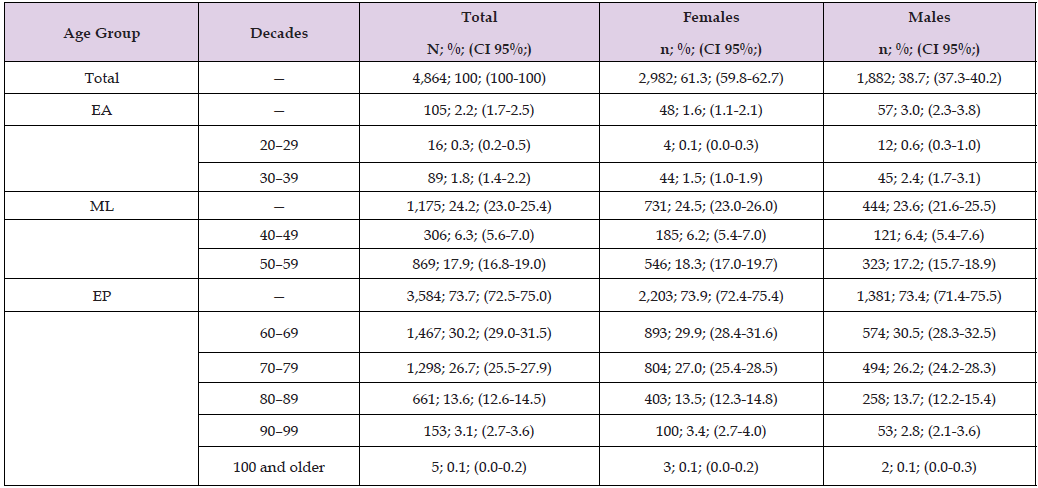
Note: Source: Prepared by the authors using the results from the SIMEF database, January-December, 2022. EA: early adulthood (20-39 years old). ML: midlife (40-59 years old). EP: elderly population (60 years old and over). Decades: 20-29 years old; 30-39 years old; 40-49 years old; 50-59 years old; 60- 69 years old; 70-79 years old; 80-89 years old; 90-99 years old. Comparisons among age group and sex were performed using the Likelihood Ratio chisquare (LRχ²=10.873, df=2, p=0.004). Comparisons among age decades and sex were performed using the Likelihood Ratio chi-square (LRχ²=16.246, df=8, p=0.039).
Overall, these findings indicate that hypertension disproportionately affects older adults and shows sex-specific variations across the life course. This pattern underscores the importance of integrating age- and sex-specific approaches in preventive and healthcare strategies aimed at reducing cardiovascular risk and improving the management of chronic conditions such as hypertension. The average age was 67.09 (Figure 1) years old (SD=12.672, range=83, minimum age=21, maximum age=104 years old, median age=67 [IQR=59-76]). Moreover, the median age was similar in male patients (67 years old; IQR= 59-76) compared to female patients (67.5 years old; IQR=59- 76; p=0.823, Median Test between independent groups). Table 2 summarises the epidemiological distribution of the ten most prevalent non-communicable diseases (NCDs) identified among patients with hypertension, including a comparison by sex. The results reveal a high burden of cardiometabolic comorbidities, reflecting the clustering of metabolic risk factors and suggesting a shared underlying pathophysiological mechanism, such as endothelial dysfunction.
Figure 1

Table 2: Epidemiological distribution and sex-based comparison of the ten most prevalent non-communicable diseases in the study population.
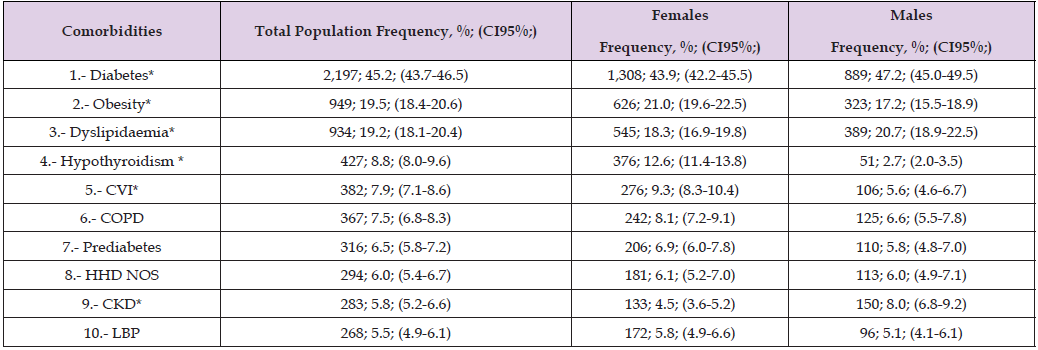
Note: Source: Prepared by the authors using the results from the SIMEF database, January-December, 2022. CVI: chronic venous insufficiency; COPD: chronic obstructive pulmonary disease; HHD NOS: hypertensive heart disease without (congestive) heart failure; CKD: chronic kidney disease: LBP: low back pain. Comparisons between sex were performed using the Yates’ continuity correction chi-square (Yχ²); degree freedom (df). *P values statistically significative. *Diabetes (Yχ²=5.167, df=1, p=0.023); *obesity (Yχ²=10.535, df=1, p=0.001); *dyslipidaemia (Yχ²=4.106, df=1, p=0.043); *hypothyroidism (Yχ²=139.954, df=1, p<0.001); *CVI (Yχ²=20.443, df=1, p<0.001); COPD (Yχ²=3.383, df=1, p=0.066); prediabetes (Yχ²=1.976, df=1, p=0.160); HHD NOS (Yχ²=0.001, df=1, p=0.975); *CKD (Yχ²=25.307, df=1, p<0.001); and LBP (Yχ²=0.862, df=1, p=0.353).
Diabetes was the most frequent comorbidity, and showed a significantly higher prevalence among males than females. Obesity ranked second in overall frequency and was significantly more prevalent among females. Likewise, dyslipidaemia, the third most common condition, exhibited the same sex-based pattern as diabetes, with a higher prevalence among males than females. Hypothyroidism and chronic venous insufficiency were also common comorbidities and exhibited marked sex-differences, both being significantly more prevalent among females. Chronic obstructive pulmonary disease showed no statistically significant sex difference. Prediabetes and hypertensive heart disease without heart failure also demonstrated similar proportions between females and males. Chronic kidney disease was significantly more prevalent among males than females. By contrast, low back pain was no significant sex-based differences. These findings highlight the importance of incorporating sex-specific considerations into the clinical management and prevention strategies for patients with hypertension in primary care.
Table 3 presents the epidemiological distribution and sex-based comparison of the five most prevalent communicable diseases in the study population. Acute pharyngitis was the most frequent infectious condition, and was significantly more prevalent among females than males. Urinary tract infection ranked second in frequency and showed a markedly higher prevalence in females compared with males. COVID-19, acute nasopharyngitis, and acute upper respiratory infection occupied the third, fourth, and fifth positions, respectively, and although more frequent in females than in males, where this difference was not statistically significant. This pattern suggests a differential burden of communicable diseases by sex and highlights the importance of incorporating specific considerations into infectious disease prevention and management strategies in primary care.
Table 3: Epidemiological distribution and sex-based comparison of the five most prevalent communicable diseases in the study population.

Note: Source: Prepared by the authors using the results from the SIMEF database, January-December, 2022. UTI: urinary tract infection; ANP: acute nasopharyngitis [common cold]; AURI: acute upper respiratory infection. Comparisons between sex were performed using the Yates’ continuity correction chi-square (Yχ²); degree freedom (df). *P values statistically significative. Acute pharyngitis (Yχ²=9.869, df=1, p=0.002); *urinary tract infection (Yχ²=31.269, df=1, p<0.001); COVID-19, virus identified (Yχ²=0.295, df=1, p=0.587); acute nasopharyngitis [common cold] (Yχ²=2.126, df=1, p=0.145); and acute upper respiratory infection (Yχ²=1.988, df=1, p=0.159).
Sex- and Age-Stratified Epidemiological Profiles of Non-Communicable Diseases in Patients with Hypertension
Across our study population, a clear and consistent epidemiological profile emerged: diabetes, obesity, and dyslipidaemia were the three most prevalent comorbidities in both sexes and across all age groups; however, this pattern was not observed among older male patients (Table 4). These conditions form the core of a shared cardiometabolic multimorbidity profile, highlighting a substantial burden of non-communicable disease that persists throughout the life course. Except among young males with hypertension, diabetes was the most prevalent non-communicable disease across all age groups and in both sexes. In early adulthood (EA), diabetes ranked first among females, whereas obesity was the leading condition among males. In addition, no statistically significant sex differences were observed in EA for diabetes, obesity, or dyslipidaemia (p>0.05). However, mixed anxiety and depressive disorder showed a significant sex-based difference in this age group (Table 4). In ML, diabetes remained the most frequent condition in both females and males. Obesity was significant more prevalent among females than males. Hypothyroidism was observed exclusively among the five most prevalent conditions in females, whereas prediabetes and chronic kidney disease were more prominent among males.
Table 4: Comparison of age and sex-specific epidemiological profiles of non-communicable diseases in the Study Population.
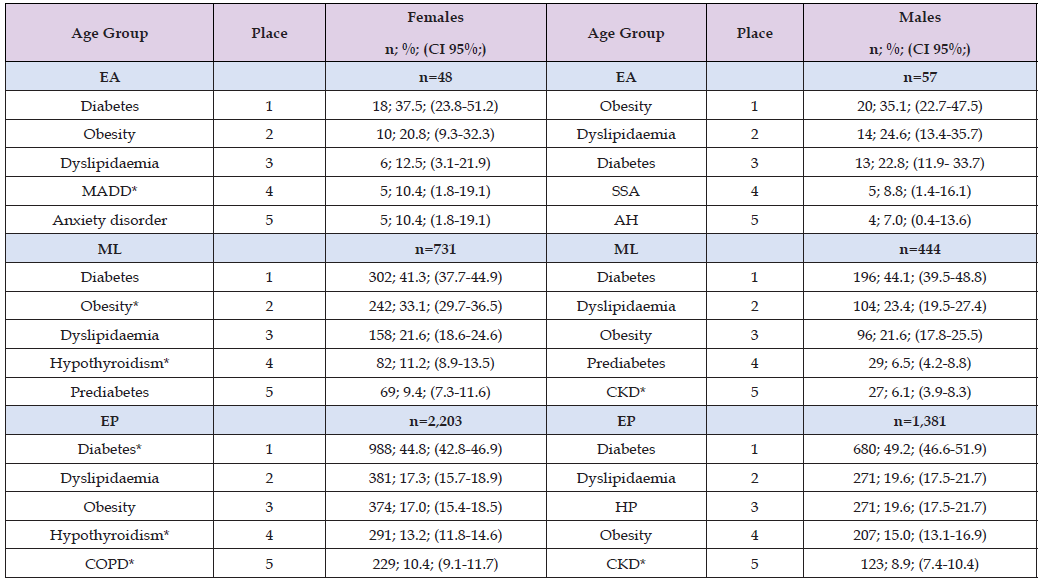
Note: Source: Prepared by the authors using the results from the SIMEF database, January-December, 2022. EA: early adulthood. ML: midlife. EP: elderly population. MADD: mixed anxiety and depressive disorder; SSA: sprain and strain of ankle; AH: asymptomatic hyperuricaemia (hyperuricaemia without signs of inflammatory arthritis and tophaceous disease); CKD: chronic kidney disease, HP: hyperplasia of prostate. Comparisons between sex were performed using the Yates’ continuity correction chi-square (Yχ²), and Fisher exact test, as appropriate; degree freedom (df). *P values statistically significative. Diabetes (EA: Yχ²=2.043; df=1; p=0.153; ML: Yχ²=0.794; df=1; p=0.373; *EP: Yχ²=6.405; df=1; p=0.011); obesity (EA: Yχ²=1.943; df=1; p=0.163; *ML: Yχ²=17.221; df=1; p<0.001; EP: Yχ²=2.325; df=1; p=0.127); dyslipidaemia (EA: Yχ²=1.738; df=1; p=0.187; ML: Yχ²=0.423; df=1; p=0.516; EP: Yχ²=2.939; df=1; p=0.086); mixed anxiety and depressive disorder (*EA: Fisher exact test; p=0.018; *ML: Yχ²=4.263; df=1; p=0.039; *EP: Yχ²=4.108; df=1; p=0.043); anxiety disorder (EA: Fisher exact test; p=0.242; ML: Yχ²=3.176; df=1; p=0.075; *EP: Yχ²=13.863; df=1; p<0.001); sprain and strain of ankle (EA: Fisher exact test; p=0.216; ML: Fisher exact test; p=0.187; EP: Yχ²=0.000; df=1; p=1.000); asymptomatic hyperuricaemia (EA: Fisher exact test; p=0.240; *ML: Yχ²=8.587; df=1; p=0.003; *EP: Yχ²=24.950; df=1; p<0.001); hypothyroidism (EA: Fisher exact test; p=0.330; *ML: Yχ²=26.066; df=1; p<0.001; *EP: Yχ²=110.101; df=1; p<0.001); prediabetes (R730) (EA: Fisher exact test; p=0.372; ML: Yχ²=2.686; df=1; p=0.101; EP: Yχ²=0.441; df=1; p=0.507); chronic kidney disease (EA: Fisher exact test; p=0.457; *ML: Yχ²=9.792; df=1; p=0.002; *EP: Yχ²=18.018; df=1; p<0.001); COPD (EA: not applicable; ML: Yχ²=0.123; df=1; p=0.725; *EP: Yχ²=3.947; df=1; p=0.047); hyperplasia of prostate (EA, ML and EP: not applicable).
Likewise, asymptomatic hyperuricaemia also showed a significant sex-based difference in this group (Yχ²=8.587; p=0.003), as did mixed anxiety and depressive disorder (Yχ²=4.263; p=0.039). In the EP, diabetes remained the most prevalent condition in both females and males, with a significantly higher prevalence in males. Dyslipidaemia ranked second in both sexes, while obesity remained among the three most prevalent conditions, in females. Hypothyroidism and chronic obstructive pulmonary disease (COPD) were characteristic of females, whereas hyperplasia of the prostate and chronic kidney disease were exclusive or more prominent among males. Significant sex-based differences in this group were observed for mixed anxiety and depressive disorder (Yχ²=4.108; p=0.043), anxiety disorder (Yχ²=13.863; p<0.001), asymptomatic hyperuricaemia (Yχ²=24.950; p<0.001), hypothyroidism (Yχ²=110.101; p<0.001), chronic kidney disease (Yχ²=18.018; p<0.001), and COPD (Yχ²=3.947; p=0.047). Overall, while diabetes consistently represented the predominant non-communicable disease across all age groups and both sexes, distinct sex-specific epidemiological patterns emerged with advancing age, particularly for obesity, hypothyroidism, asymptomatic hyperuricaemia, chronic kidney disease, and mental health disorders.
Age- and Sex-Stratified Patterns of Communicable Diseases in Patients with Hypertension
When we analyzed communicable diseases across age groups and sexes, the same three communicable diseases predominated among patients with hypertension, reflecting a consistent age- and sex-specific epidemiological profile. The only deviation from this pattern was observed in males in early adulthood, in whom urinary tract infections were not among the three most frequent communicable diagnoses. In EA, COVID-19 was the leading communicable disease in both females and males, followed by acute pharyngitis. Urinary tract infections ranked third exclusively among females (10.4%; 95% CI: 1.8–19.1 vs 0 cases; Fisher’s exact test p=0.018), indicating a significant sex-based difference. During ML, COVID-19 remained the most prevalent communicable disease in both sexes, while acute pharyngitis and urinary tract infections occupied the second and third positions, respectively. The prevalence of both conditions was significantly higher in females (Table 5).
Table 5: Comparison of age and sex-specific epidemiological profiles of communicable diseases in the Study Population.
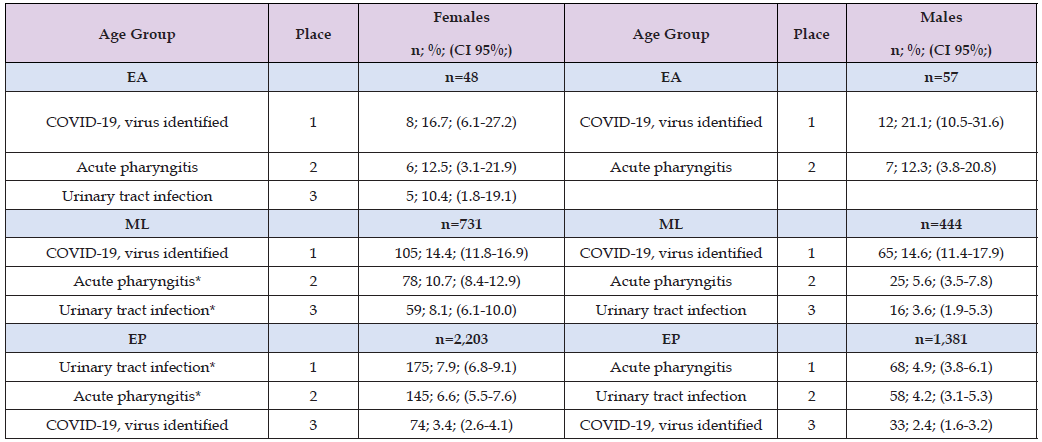
Note: Source: Prepared by the authors using the results from the SIMEF database, January-December, 2022. EA: early adulthood. ML: midlife. EP: elderly population. Comparisons between sex were performed using the Yates’ continuity correction chi-square (Yχ²), and Fisher exact test, as appropriate; degree freedom (df). *P values statistically significative. COVID-19 (EA: Yχ²=0.103; df=1; p=0.748; ML: Yχ²=0.002; df=1; p=0.964; EP: Yχ²=2.430; df=1; p=0.119); acute pharyngitis (EA: Yχ²=0.000; df=1; p=1.000; *ML: Yχ²=8.153; df=1; p=0.004; *EP: Yχ²=3.883; df=1; p=0.049); urinary tract infection (EA: Fisher exact test; p=0.018; *ML: Yχ²=8.494; df=1; p=0.004; EP: *Yχ²=18.963; df=1; p<001).
In the EP, urinary tract infections and acute pharyngitis were the most frequent communicable diseases among females, whereas acute pharyngitis ranked first in males, followed by urinary tract infections; COVID-19 occupied the third position in both sexes. In this age group, the prevalence of acute pharyngitis and urinary tract infections was significantly higher in females than in males. Among the elderly population, urinary tract infections and acute pharyngitis were the most frequent communicable diseases in females, whereas acute pharyngitis ranked first in males, followed by urinary tract infections. COVID-19 ranked third in both sexes. Similarly to the midlife group, both acute pharyngitis and urinary tract infections were more prevalent among females.
The present study provides an epidemiological characterisation of patients with hypertension receiving primary care, revealing clear age- and sex-related patterns in the distribution of both non-communicable and communicable comorbidities, in Mexico. Overall, three major features emerged: the predominance of older adults within the hypertensive population, the higher representation of women among patients receiving care, and a pronounced clustering of cardiometabolic conditions. The age distribution observed in this study reflects the well-established relationship between ageing and hypertension [24,25]. Most patients were concentrated in the elderly population, particularly between the sixth and seventh decades of life, which is consistent with the natural progression of blood pressure elevation across the life course [26,27]. Age-related physiological changes—including arterial stiffening, vascular remodelling, and endothelial dysfunction— contribute to the progressive increase in blood pressure with advancing age [28-31]. Similar age-related patterns have been widely documented in population-based epidemiological studies, which consistently report a substantial rise in hypertension prevalence after midlife and a particularly high burden among older adults [12,32,33]. Consequently, the demographic structure observed in this study aligns with the broader epidemiological transition characterised by increasing life expectancy and a growing prevalence of chronic diseases.
Another notable finding was the predominance of women within the study population. Although hypertension prevalence is often higher among men during early and mid-adulthood, women frequently represent a larger proportion of patients receiving treatment for chronic conditions in clinical settings. Several factors may explain this pattern. Women generally have longer life expectancy, which increases their representation in older age groups where hypertension is more prevalent [34,35]. In addition, women tend to utilise healthcare services more frequently than men [36], which may lead to greater detection and documentation of chronic conditions in primary care. Similar sex distributions have been reported in outpatient and primary care studies in different regions, where female patients constitute many individuals receiving long-term management for chronic cardiometabolic diseases [37,38]. Beyond demographic patterns, the results highlight a clear profile of cardiometabolic multimorbidity among patients with hypertension. Diabetes, obesity, and dyslipidaemia consistently emerged as the most prevalent non-communicable diseases across age groups and sexes. This clustering of conditions reflects the well-described aggregation of cardiometabolic risk factors and suggests the presence of shared pathophysiological mechanisms, including insulin resistance, systemic inflammation, and endothelial dysfunction.
Previous studies have documented similar patterns, emphasising that hypertension frequently coexists with metabolic disorders and that this combination substantially increases the risk of cardiovascular complications such as coronary heart disease, stroke, and chronic kidney disease [39-42]. Therefore, the particularly high prevalence of diabetes observed in this population is consistent with the strong epidemiological association between hypertension and disorders of glucose metabolism [43-45]. These conditions frequently coexist due to shared risk factors, including obesity, physical inactivity, and unhealthy dietary patterns. Moreover, insulin resistance and hyperinsulinaemia contribute to sympathetic nervous system activation and altered renal sodium handling, mechanisms that may promote the development of hypertension [46-48]. Consequently, the coexistence of hypertension and diabetes represents a major clinical and public health concern because it markedly increases the risk of cardiovascular morbidity and mortality. Sex-specific differences in the distribution of comorbidities were also observed across the study population. Conditions such as obesity, hypothyroidism, and chronic venous insufficiency were more prevalent among women, whereas diabetes, dyslipidaemia, and chronic kidney disease showed higher frequencies among men.
Notably, this pattern is not unique to the present analysis but has also been identified in our previous studies examining patients with dyslipidaemia and diabetes, both of which represent major cardiovascular risk conditions [45,49]. The recurrence of this sex-specific distribution suggests the presence of a stable epidemiological pattern in cardiometabolic disease within primary care settings. The consistency of these findings reinforces the importance of incorporating sex-specific approaches in the prevention, early detection, and management of cardiovascular risk factors. Recognising these patterns may contribute to more targeted strategies aimed at reducing the burden of cardiometabolic diseases and their complications in ageing populations. Biological mechanisms likely contribute to these patterns, particularly the influence of sex hormones on fat distribution, lipid metabolism, and vascular function. Women generally accumulate greater proportions of subcutaneous adipose tissue, whereas men more frequently develop visceral adiposity, which is more strongly associated with insulin resistance and metabolic complications [48,50,51]. In addition, hypothyroidism is known to occur more frequently in women, which likely explains its prominence among female patients with hypertension in this study [52].
Moreover, men have been shown to present higher prevalence of metabolic and renal complications [53], which may reflect differences in lifestyle behaviours such as diet, alcohol consumption, tobacco use, and delayed healthcare-seeking behaviour. These findings suggest that behavioural and healthcare utilisation factors may also contribute to the observed sex-related patterns. Another important observation was the evolution of multimorbidity patterns across the life course. Although cardiometabolic conditions predominated in all age groups, the specific configuration of comorbidities varied according to age and sex. In early adulthood, metabolic disorders such as obesity and dyslipidaemia were already among the most frequent conditions, suggesting that cardiometabolic risk accumulation begins relatively early in hypertensive individuals. During midlife, diabetes and obesity became increasingly prominent, reflecting the progressive metabolic deterioration commonly observed during these decades. These patterns are consistent with life-course epidemiological models describing the gradual accumulation of metabolic risk factors that eventually lead to cardiovascular disease [54-56]. Conversely, among older adults, the persistence of diabetes and dyslipidaemia together with the increasing presence of chronic kidney disease and chronic obstructive pulmonary disease indicates a transition toward more complex multimorbidity profiles.
This progression likely reflects the cumulative effects of prolonged exposure to cardiometabolic risk factors and is consistent with evidence indicating that ageing populations experience increasing burdens of interacting chronic diseases [57-60]. Although the primary focus of this study was on non-communicable diseases, the identification of common infectious conditions among hypertensive patients provides additional insight into the clinical complexity of primary care populations. Acute pharyngitis, urinary tract infections, and COVID-19 were the most frequent communicable diseases identified. These findings likely reflect the typical epidemiological profile of infections encountered in outpatient settings rather than a direct causal relationship with hypertension itself. Nevertheless, the higher prevalence of urinary tract infections among women across age groups is consistent. The identification of COVID-19 among the most frequent infectious diagnoses also reflects the epidemiological context of the study period. Patients with chronic conditions such as hypertension were widely recognised as a population at increased risk of adverse outcomes during the pandemic, which explains the frequent coexistence of this infection within clinical populations affected by chronic diseases.
Taken together, these findings reinforce the concept that hypertension rarely occurs as an isolated clinical entity but rather forms part of a broader multimorbidity profile that evolves across the life course. From both clinical and public health perspectives, these results underscore the importance of integrated prevention and management strategies addressing multiple cardiometabolic risk factors simultaneously. Approaches that combine blood pressure control with interventions targeting obesity, metabolic disorders, and lifestyle- related risk factors may therefore play a crucial role in reducing the long-term burden of cardiovascular disease in ageing populations.
This study has several important strengths. First, the large sample size and the detailed stratification by age and sex enabled a robust epidemiological characterization of patients with hypertension across the life course. This level of granularity allowed the identification of sex-specific clinical profiles, age-related multimorbidity patterns, and the clustering of cardiometabolic conditions commonly observed in hypertensive populations. Second, the study provides valuable insight into the burden and distribution of comorbidities among patients with hypertension in primary care. Cross-sectional analyses such as this are particularly useful for population characterization because they offer a comprehensive overview of disease burden, comorbidity distribution, and clinical heterogeneity within healthcare systems. In the context of hypertension, this approach facilitates the identification of cardiometabolic multimorbidity patterns, including the coexistence of diabetes, obesity, dyslipidaemia, and chronic kidney disease—conditions that substantially increase cardiovascular risk. Third, the stratified analysis by age and sex provides an important epidemiological perspective on how multimorbidity evolves across the life course.
Identifying high-burden profiles, particularly among older adults and patients with multiple cardiometabolic conditions, may support the development of targeted screening strategies, personalized cardiovascular risk assessment, and integrated care models in primary care settings. Furthermore, these findings provide baseline epidemiological data that may contribute to surveillance efforts and future longitudinal research on hypertension and multimorbidity. Despite these strengths, several limitations should be acknowledged. The cross-sectional design captures information at a single point in time and therefore does not allow the establishment of temporal relationships or causal pathways between hypertension and its associated comorbidities. Consequently, the directionality of the observed associations cannot be determined. In addition, the use of routinely collected clinical data may introduce potential information biases, including underreporting or misclassification of certain diagnoses. This limitation may particularly affect conditions that rely on clinical diagnosis rather than systematic laboratory confirmation, as well as communicable diseases that may not always be consistently recorded in clinical databases.
Differences in healthcare utilisation, diagnostic practices, or access to medical services across demographic groups may also influence the completeness and accuracy of the recorded information. Besides, another limitation relates to the demographic composition of the study population. The predominance of older adults may limit the generalizability of the findings to younger populations with hypertension, whose risk profiles and disease trajectories may differ. Furthermore, broader contextual factors—including socioeconomic disparities, lifestyle behaviors, and unequal access to preventive healthcare—may influence the distribution of cardiometabolic risk factors and therefore affect the external validity of the findings. Despite these limitations, the findings provide important epidemiological insights into the multimorbidity patterns associated with hypertension in primary care populations. The results highlight the need for integrated clinical approaches that address not only blood pressure control but also the broader constellation of cardiometabolic risk factors frequently present in hypertensive patients. These findings support the development of preventive strategies aimed at early detection of metabolic disorders, improved management of chronic diseases, and reduction of cardiovascular risk in ageing populations. In addition, the study offers a useful epidemiological reference for monitoring trends in multimorbidity and identifying high-risk groups that may benefit from targeted prevention and management strategies.
This study provides a detailed epidemiological characterisation of patients with hypertension receiving primary care, revealing a consistent pattern of cardiometabolic multimorbidity across the life course. Diabetes, obesity, and dyslipidaemia emerged as the most prevalent comorbidities in both sexes and across most age groups, confirming the presence of a core cardiometabolic cluster that frequently accompanies hypertension and substantially increases cardiovascular risk. The analysis also revealed important sex-specific differences. Women showed higher prevalence of obesity, hypothyroidism, and chronic venous insufficiency, whereas men exhibited greater frequencies of diabetes, dyslipidaemia, and chronic kidney disease. These findings highlight the importance of considering biological and sex-related determinants in the clinical evaluation and management of hypertensive patients. Across age groups, the persistence of cardiometabolic conditions from early adulthood to older age reflects the progressive accumulation of metabolic risk factors throughout the life course.
In older adults, the coexistence of multiple chronic diseases underscores the increasing complexity of multimorbidity in ageing populations. Overall, these findings reinforce the concept that hypertension rarely occurs in isolation and should be addressed within a broader cardiometabolic framework. Integrated prevention, early detection of metabolic disorders, and age- and sex-sensitive clinical strategies may play a critical role in reducing the long-term burden of cardiovascular disease in primary care populations.
The authors would like to thank Professor Susana Ortiz Vela, Master in translation, and express their gratitude to the Centro de Investigación y de Educación Continua S.C. for their support in translation.
Authors have declared that no competing interests exist.
All authors contributed to conceptualization (ideas, formulation, or development of research goals and objectives), formal analysis (application of statistical, mathematical, computational, or other formal techniques to analyse or synthesize study data), writing - original draft (preparation, creation, and/or presentation of the published work, specifically writing the initial draft), writing - review and editing (preparation, creation, and/or presentation of the published work by the research group, specifically critical review, commentary, or revisions, including pre- or post-publication stages), and visualization (preparation, creation, and/or presentation of the published work, specifically data visualization/presentation). López Hernández Daniel, in addition to the above, contributed to project administration (responsibility for managing and coordinating the planning and execution of the research activity), investigation (development of a research process, specifically experiments or data collection/testing), methodology (development or design of methodology, creation of models), supervision (responsibility for supervision and leadership in the planning and execution of the research activity, including external mentoring), and validation (verification, whether as part of the activity or separately, of the overall replicability/reproducibility of the results/experiments and other research outcomes).
Authors hereby declare that NO generative AI technologies such as Large Language Models (ChatGPT, COPILOT, etc) and text-to-image generators have been used during writing or editing of manuscripts.
The study was conducted using medical records, and no informed consent was obtained. The handling of the information was approved by the ethics committee, ensuring compliance with the appropriate ethical standards.
The present study was conducted in compliance with the Good Clinical Practice Guidelines, national regulations, and the principles outlined in the Declaration of Helsinki for research involving human subjects. The study protocol received approval from two institutional bodies: the Research Committee and the Research Ethics Committee (approval number MFDN/SM//EZ/315/2024, dated 6 February 2024) of the FMC “División del Norte.”. The Data was treated confidentially. To guarantee confidentiality, only the principal investigators had access to the complete dataset, including identifiable patient information (e.g., names). The patient names were replaced with unique identification numbers. The assigned number allows the data to be linked to a specific individual without revealing the individual’s identity. This approach ensured that all patient data were handled under ethical standards and maintained the highest level of confidentiality throughout the study. This anonymization was conducted before sharing the dataset for statistical analysis with some researchers. After the statistical analysis, only the processed statistical data were made available to the rest of the research team.

International Association of Landscape Archaeology, Czech Glass Society, Czech Republic

Department of Chemistry, Semenov Institute of Chemical Physics, USSR Academy of Sciences, Moscow, Russia

Department of Educational Sciences, Research Centre Qualities of Teachers, School of Education – HAN, Nijmegen, Netherlands

Associate Professor at Department of Breast and Thyorid Surgey, Chongqing General Hospital, China

Neurology, LA BioMed Research Institute, USA





 Abstract
 PDF
PDF