info@biomedres.us
+1 (502) 904-2126
One Westbrook Corporate Center, Suite 300, Westchester, IL 60154, USA
Site Map
 ISSN: 2574 -1241
ISSN: 2574 -1241
ISSN: 2574 -1241
Received: February 02, 2026; Published: February 11, 2026
*Corresponding author: Yibin Fan, Associate researcher, Taiwan Forestry Research Institute, ROC, Former Chairman of Huajiang Wetland Guardian Alliance, Taiwan
DOI: 10.26717/BJSTR.2026.64.010087
Problems with weed control management include non-compliance with ecological principles, lack of economic
efficiency, absence of overall planning, and lack of theoretical basis. This study compiles monitoring results of
plant flowering phenology, insects, butterflies, climatic factors, and tourist activities from 2011 to 2024 to serve
as the basis for weed control management. From 2011 to 2023, 280 species of vascular plants from 58 families
were recorded. The month with the most flowering plant species was April and May. Three rare orchid species:
Spiranthes sinensis, Zeuxine strateumatica and Eulophia graminea, were found only in artificial grasslands, with
their flowering season between March and April. Hexacentrus fuscipes is a rare species, found only in densely
growing grassy areas with Miscanthus floridulus, Cenchrus purpureus, and Phragmites australis, and has never
been found in artificial or short-grass areas. Butterflies are the best indicator organisms for ecological monitoring.
In 2023-24, 1537 butterfly instances of 41 species from 5 families were recorded. The largest number of
instances were Zizeeria maha okinawana and Zizina otis riukuensis (552 instances combined), followed by Pieris
canidia and Pieris rapae (524 instances combined).
Skipper butterfly larvae feed on weedy grasses such as Miscanthus floridulus and Cenchrus purpureus, so weeding
should be avoided during their breeding season. Butterfly numbers are highest in April, and species are most
abundant in May; weeding should be avoided during these months. Do not weed during June to August, when
average temperatures and rainfall are highest, as ground cover plants protect the ground and soil from erosion
and damage caused by heavy rain and high temperatures. The results of this study form the basis for habitat
management and can serve as a reference for monitoring climate change, ecological conservation, and environmental
education.
Keywords: Huajiang Wildduck Natural Park; Weed Control Management; Ecological Monitoring; Monitoring Volunteers
In 2006, a forum at a community café led to the establishment of the Huajiang Wetland Conservation Alliance, a consensus reached among industry, government, and academia. Since January 2008, it has been conducting ecological surveys and monitoring through volunteer- based methods, a practice that continues to this day. The Taipei City Huajiang Wetland Conservation Alliance is a NGO that utilizes volunteers for ecological monitoring. Officially registered in 2014, it has not only established a volunteer-based ecological monitoring model but also pioneered environmental education based on ecological monitoring.
With Huajiang Bridge as the boundary, it is divided into north and south regions, and then divided into artificial grassland, short grass region, and long grass region according to the difference of the flora of the north and south regions, for a total of 6 sample stations. Artificial grassland: There are often human activities and regular artificial weeding. The vegetation is more complex, with low herb plants such as gooseberry, water centipede, and nightshade.
The Taipei Huajiang Wetland Conservation Alliance has been conducting ecological surveys and monitoring since January 2008. These surveys include volunteer-based groups for plants, Moon Pond plants, birds, insects, butterflies, frogs, aquatic invertebrates, and crabs. This ongoing effort demonstrates its commitment to using volunteers for ecological monitoring. Except for the aquatic invertebrate and crab groups, which survey every three months, the plant, Moon Pond plant, bird, butterfly, and frog groups conduct monthly surveys.
Plant Floral Phenology
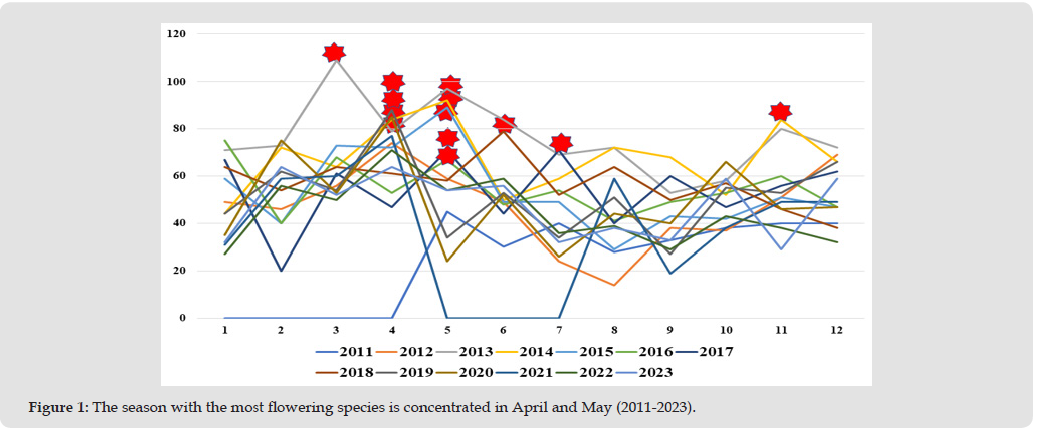
From 2011 to 2024, the plant section recorded 280 species of vascular plants from 58 families, with Poaceae having the most (46 species), followed by Asteraceae (39 species). The month with the most flowering plant species was May for 5 years, April for 5 years, and March, June, and November each for 1 year. The months with the most flowering plant species, April and May, should not be excluded (Figure 1).
Figure 1
Rare and Protected Species
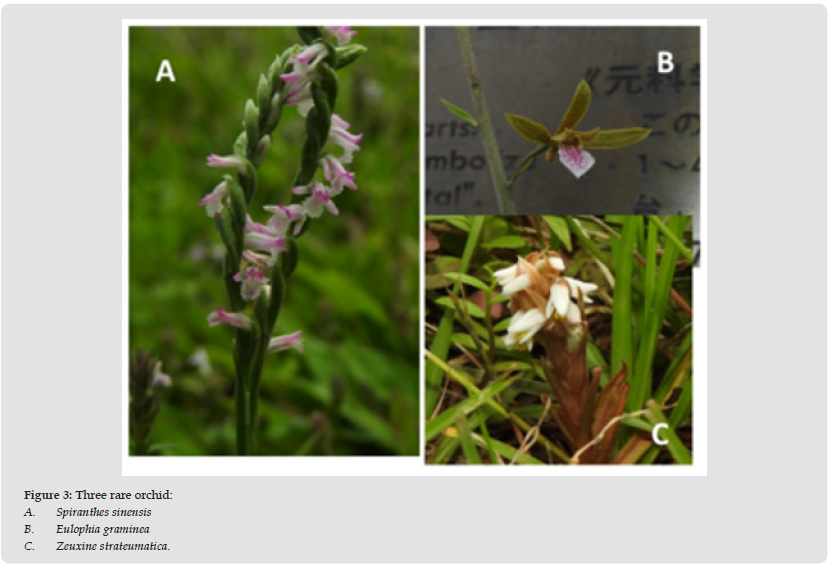
In July 2010, a male Hexacentrus fuscipes was discovered. Although it was first published in 1908, it is quite rare and is listed in the list of “species that should have disappeared or are endangered in Taiwan”. It is the rarest species found in the Taipei metropolitan area. However, it only appears in dense grassy areas such as Miscanthus floridulus, Cenchrus purpureus, and Phragmites australis. It has never been found in artificial grass areas or short grass areas (Figure 2). There are three rare orchid species recorded: Spiranthes sinensis, Zeuxine strateumatica and Eulophia graminea, which are found only in artificial grasslands and bloom between March and April (Figure 3).
Figure 2
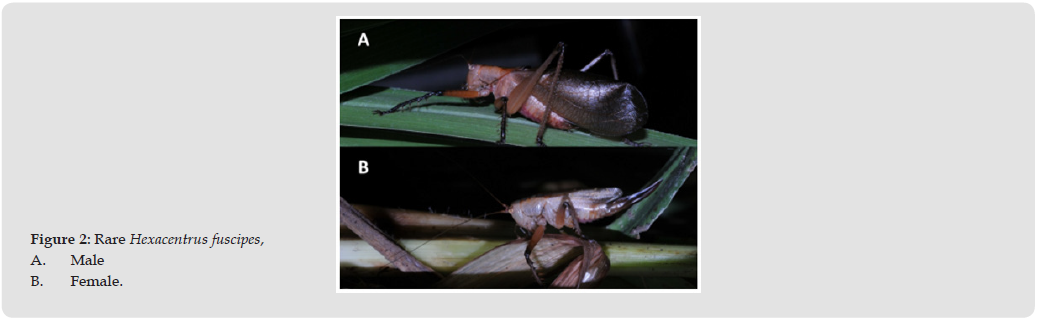
Figure 3
Butterfly Population Dynamics
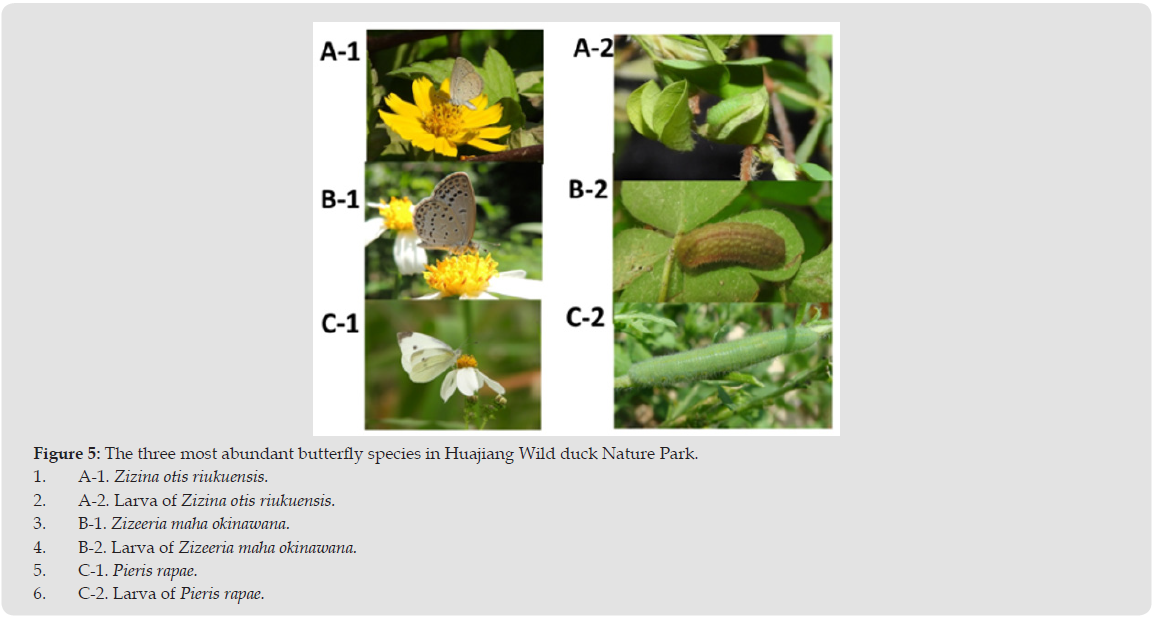
Butterfly survey was conducted monthly from 2023 to 25th between Huajiang Bridge and Zhongxing Bridge, using a cross-line survey method. A total of 1537 butterfly individuals from 44 species across 5 families were recorded. The Nymphalidae family had the most species (19), followed by the Skimmer family (7). The most numerous species were Zizeeria maha okinawana and Zizina otis riukuensis (552 individuals combined), followed by Pieris canidia and Pieris rapae (524 individuals combined) (Figure 4). The nectar sources for butterflies included 20 species from 11 families, with the Asteraceae family having the most (7 species). All other families had only a single species. The most frequently visited flower species were Bidens pilosa var. radiata (21 species from 5 families), followed by Sphagneticola trilobata (9 species from 4 families). Weeding should be avoided during its flowering season. Butterflies primarily feed on low-growing herbaceous plants, typically less than 20cm tall. However, weeding below 10cm in height can endanger the survival of butterfly larvae on these plants. Skipper larvae feed on grasses considered weeds, such as Miscanthus floridulus and Pennisetum purpureum, specifically the tender tips of these leaves. During their breeding season, weeding should be avoided. Weeding is also unnecessary during April, when butterfly populations are highest, and May, when the most diverse species appear (Figure 5).
Figure 4
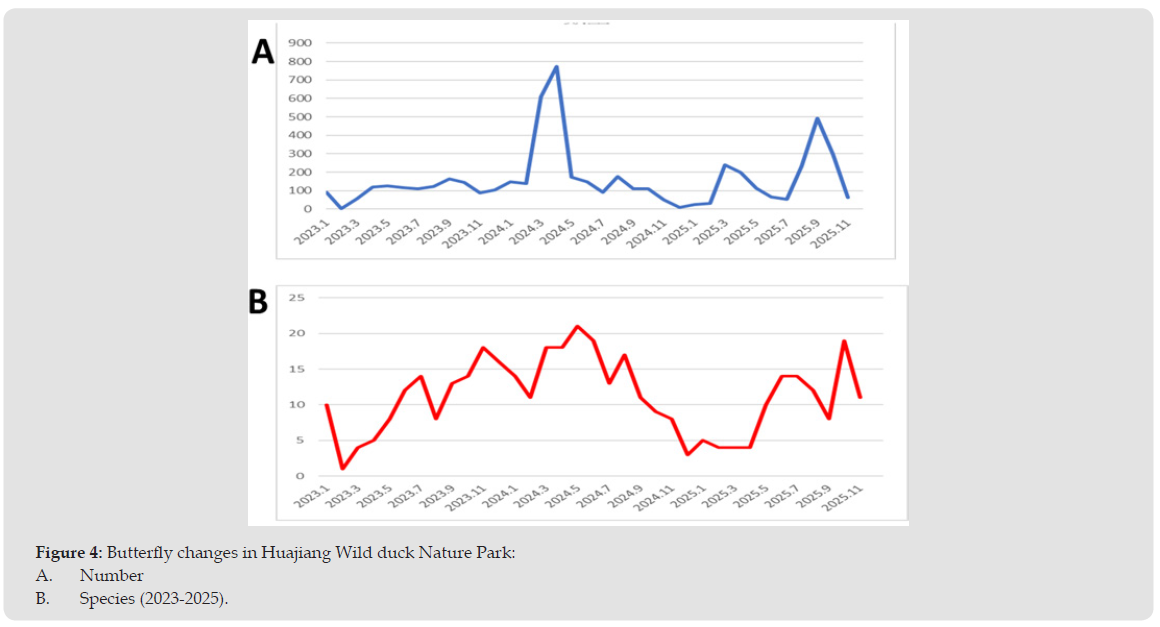
Figure 5
Climate Factors
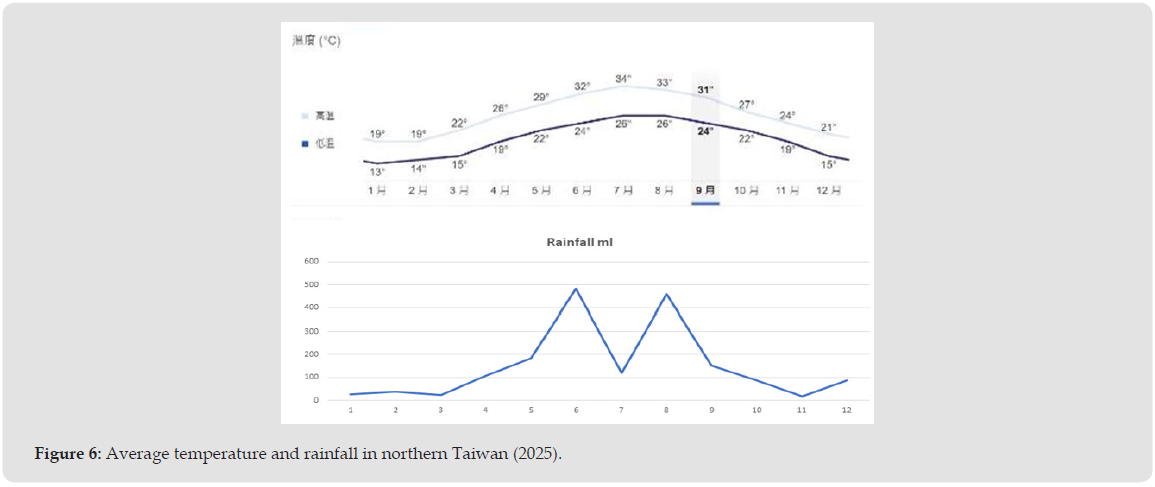
According to data from the Central Weather Administration, weather analysis in northern Taiwan shows that the average annual temperature exceeds 30 degrees Celsius from June to September, with July recording the highest at 34 ̊C, followed by August at 33 ̊C. The average annual rainfall exceeds 400 mm in June and August, with June recording the highest rainfall, followed by August. It is best to avoid weeding during the months with the highest average temperatures and rainfall, as ground cover plants can protect the ground and soil from erosion and damage caused by heavy rain and high temperature (Figure 6).
Figure 6
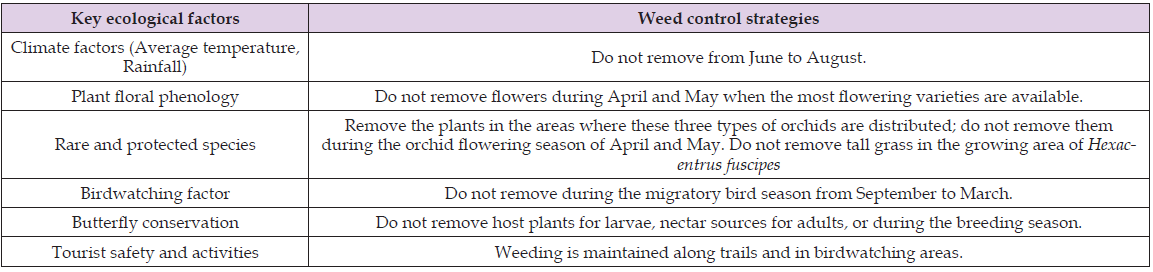
Based on the results of the various monitoring studies above, a comprehensive weed control management strategy is proposed, as shown in the Table 1. Although this article uses Taipei’s Huajiang Wild duck Natural Park as an example, it aims to serve as a starting point, providing a basis for weed control in all parks, green spaces, national parks, school lawns, botanical gardens, forest recreation areas, and other similar venues, ensuring that weed control is ecological, cost-effective, and environmentally sustainable. The model presented in this article can provide a theoretical foundation for habitat management and serve as a reference for monitoring climate change, ecological conservation, and environmental education [1-5].
Table 1: Weed control management strategies based on various monitoring results.
This research report was made possible by the long-term dedication and hard work of the plant and butterfly monitoring volunteers of the Huajiang Wetland Conservation Alliance.

International Association of Landscape Archaeology, Czech Glass Society, Czech Republic

Department of Chemistry, Semenov Institute of Chemical Physics, USSR Academy of Sciences, Moscow, Russia

Associate Professor at Department of Breast and Thyorid Surgey, Chongqing General Hospital, China

Professor of Nuclear Medicine, Faculty of Medicine and Surgery, University of Milan, Milan, Italy

Department of Pharmaceutical Sciences, South University School of Pharmacy, USA





 Abstract
 PDF
PDF