info@biomedres.us
+1 (502) 904-2126
One Westbrook Corporate Center, Suite 300, Westchester, IL 60154, USA
Site Map
 ISSN: 2574 -1241
ISSN: 2574 -1241
ISSN: 2574 -1241
Received: January 20, 2026; Published: January 30, 2026
*Corresponding author: Rizwana Shahid, Associate Professor Community Medicine, Rawalpindi Medical University, Pakistan
DOI: 10.26717/BJSTR.2026.64.010065
Background: Dengue has become a serious public health challenge mainly in endemic countries due to repeated virus circulation and chances to develop secondary infections among children. Its seasonal surges with progression to severe forms of dengue has made this a sweltering issue that entails the need for deliberation of all stakeholders. The present study is therefore aimed to investigate the epidemiological and clinical spectrum of dengue among children coming to a tertiary care hospital during peak dengue transmission season.
Methods: A cross-sectional analytical study was done among 847 pediatric cases who visited dengue OPD of Holy Family Hospital Rawalpindi during October-November 2024 with symptoms. Patients were enrolled in the study through consecutive non-probability sampling. Data was collected from Pediatric department of Holy Family Hospital through with their informed consent. Data was analyzed using SPSS version 27.0. Descriptive statistics were applied. Gender-wise number of children suffering from different types of dengue disease were also isolated.
Results: The mean age of 847 pediatric dengue cases was 8 ± 3.12 years. Around 59.3% of them were males and mostly belonged to age bracket of 10-12 years. 73.9% and 23.8% of the cases belonged to Rawalpindi and Islamabad respectively. 124 were confirmed dengue cases out of which 88 had dengue fever while 31 and 5 had Dengue Hemorrhagic Fever (DHF) and Dengue Shock Syndrome (DSS) respectively. 245 out of 597 suspected cases got admitted and all were discharged in stable condition. None of the reporting cases succumbed to dengue.
Conclusion: There is substantial burden of pediatric dengue cases during peak transmission season predominantly in Rawalpindi district and neighboring regions along with severe dengue cases that should promptly be managed to lessen adverse outcomes.
Keywords: Dengue Fever; Dengue Hemorrhagic Fever (DHF); Dengue Shock Syndrome (DSS); Rawalpindi District; Tertiary Care Hospital
Abbreviations: DHF: Dengue Hemorrhagic Fever; DSS: Dengue Shock Syndrome; WHO: World Health Organization; OPD: Out Patient Department; CDC: Centre for Disease Control & Prevention
Dengue infection is emerging as a public health challenge due to its rapid spread across tropical and subtropical regions of the globe [1]. According to World Health Organization (WHO), approximately half of the global population is at risk of dengue infection and among them children are perceived as highly vulnerable particularly to severe forms of dengue due to immunological and physiological attributes [2]. Dengue infection has been reported predominantly among residents of urban and semi-urban areas [3]. Pediatric dengue presents with broad range of clinical manifestations ranging from dengue fever to severe dengue forms that include Dengue Hemorrhagic Fever (DHF) and Dengue Shock Syndrome (DSS) [4]. Clinico-epidemiological profile of dengue among children up to 14 years of age from South Asia illustrated high burden of this life-threatening infections predominantly among males [5]. Likewise, another study elucidated the progression of minority of pediatric cases to severity [6]. However, this minority is subjected to adverse clinical outcomes in the form of thrombocytopenia, hepatomegaly and raised ALT levels along with resultant complications like hypotension and profuse bleeding that necessitates timely critical care management [7]. Suspected dengue infection among children elucidates substantial global disease burden specifically in endemic zones of Asia and Latin America [8]. Increased hospital admissions of suspected pediatric dengue cases have been reported during peak season that also seems to burden the healthcare system [9].
However, rigorous surveillance of pediatric dengue cases was emphasized during epidemic season to arrest suspected infection in the community [10]. Some children diagnosed as non-dengue may have chikungunya or other bacterial infections caused by streptococcus pneumonia or staphylococcus aureus or Escherichia coli that must also be considered by clinicians on getting negative dengue tests [11]. The suspected dengue cases among children depicts a critical part of dengue epidemiology that directs the stringent need for clinical preparedness predominantly in high transmission regions [12]. Clinicians commonly encounter suspected dengue cases in children, yet the spectrum of disease — from mild, non-specific febrile illness to severe complications such as dengue hemorrhagic fever and shock syndrome and epidemiological distribution differs widely. The present study therefore aims to determine the epidemiological pattern and clinical manifestation in terms of disease severity pertaining to pediatric dengue in Rawalpindi district and the surrounding territories. There is dire need to clearly portray the full epidemiological landscape including suspected cases, diagnostic challenges and clinical outcome to inform hospital-based management resolutions and public health strategies.
A cross-sectional analytical study was done among 847 children who came to dengue OPD of Holy Family Hospital Rawalpindi during October-November 2024 for diagnosis and treatment. Patients were enrolled in the study through consecutive non-probability sampling. Data was garnered from Pediatric department of Holy Family Hospital through proper channel. Epidemiological spectrum of dengue in this study refers to distribution of dengue cases with respect to age, gender and geography. Clinical spectrum of dengue infection is defined here as clinical presentation of dengue patients with dengue fever only (non-severe) and Dengue Hemorrhagic Fever (DHF) and Dengue Shock Syndrome (DSS) both of which are collectively labelled as severe dengue. Other types presented in results were non-dengue and suspected dengue cases. Data was analyzed by means of SPSS version 27.0. Descriptive statistics were applied. Data pertaining to their residence was categorically presented. Number of children suffering from different types of dengue disease were also isolated and categorized as cases of dengue fever, Dengue Hemorrhagic Fever (DHF), Dengue Shock Syndrome (DSS), Non-dengue and suspected dengue cases. Gender stratified results and final outcome of admitted cases were also noted.
Total 847 children presented with clinical manifestation of dengue at Holy Family Hospital Rawalpindi during August – December 2024. Most (59.3%) of them were males. Their mean age was 8 ± 3.12 years. Majority of them was in age bracket of 10-12 years as depicted below in Figure 1. Most of the visiting pediatric cases belonged to Rawalpindi district followed by Islamabad and Attock as shown below in Table 1. Out of 847 cases, 721 (85.1%) were not having any other associated disease. 1 case had hantaviral infection, 1 had malaria and 6 were having typhoid. 118 (13.9%) were diagnosed with hemorrhagic infections that were not linked with dengue fever. Initially subjecting to NS1 testing, only 124 children were found to be suffering from dengue infection including both severe and non-severe dengue as depicted below in Figure 2. Of the 124 confirmed dengue cases, 88 had non-severe dengue infection while rest of the 36 cases diagnosed with DHF and DSS (broadly categorized as severe dengue cases). Gender-wise distribution of all children presenting to Dengue OPD is illustrated below in Table 2. Of the 847 pediatric cases, about 597 got consultation in Out Patient Department (OPD) of Pediatrics at Holy Family Hospital, 245 got admitted in Pediatric ward but later discharged with stable condition. Only 5 left the hospital against medical advice. None of the cases expired.
Figure 1
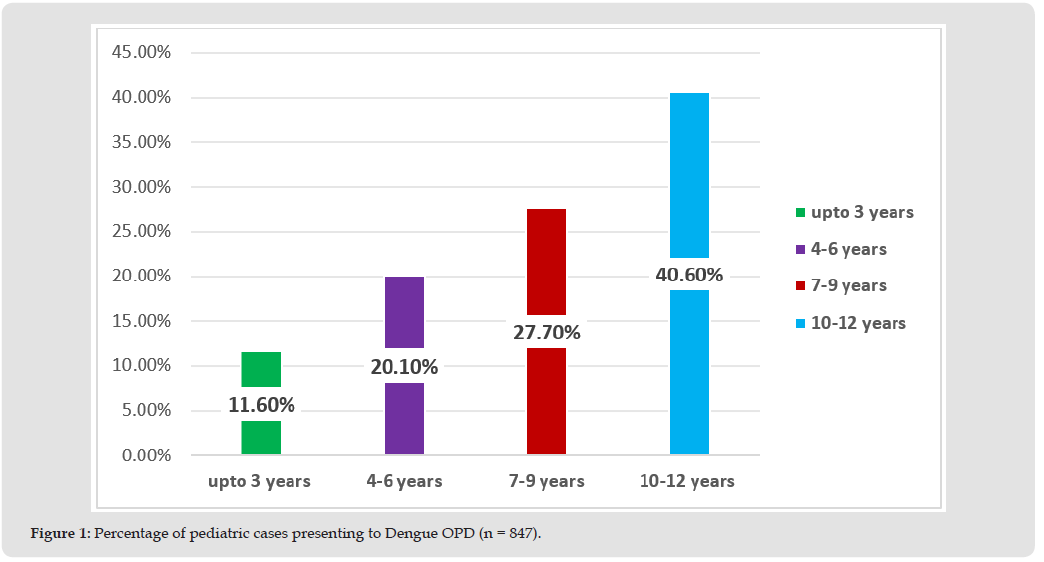
Figure 2
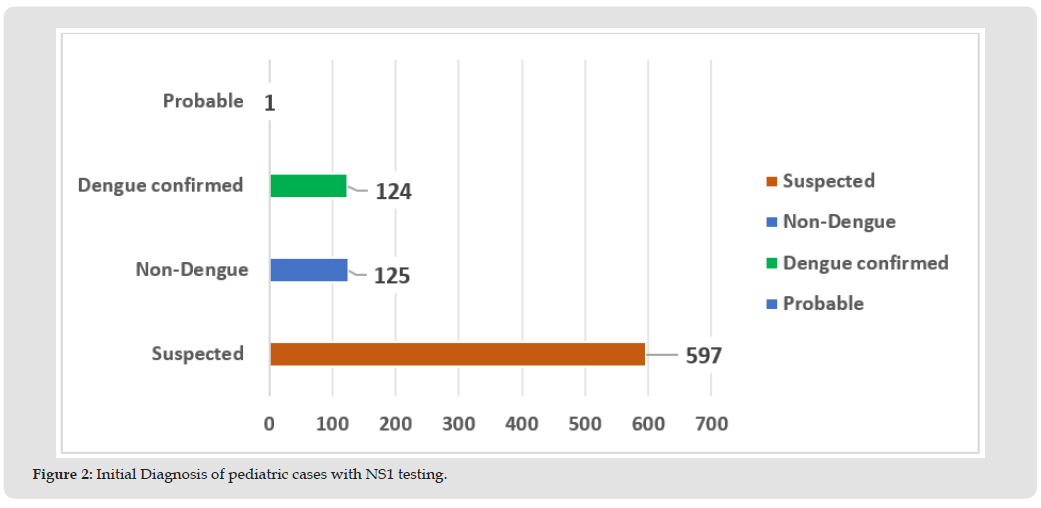
Table 1: Residence of the pediatric cases.
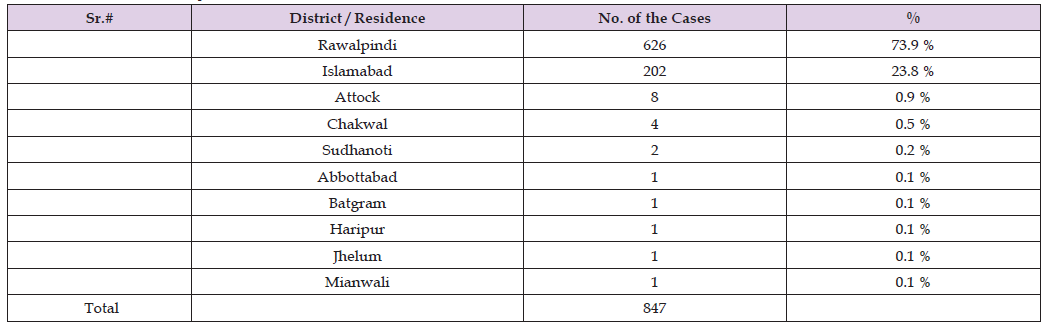
Table 2: Gender stratified distribution of children presenting to dengue OPD.

The mean age of pediatric dengue cases in our study was 8 ± 3.12 years. Most (40.6%) of them were 10-12 years old (Figure 1). Contrary to our results, mean age of the children diagnosed with dengue fever in a tertiary care hospital of Karachi was 5.7 ± 3.07 years with majority (48.4%) of them less than or equal to 5 years of age. However, 43% of the cases were 6-10 years old [13]. Consistent with our findings, a study by Nabi S et al illustrated the mean age of dengue among children to be 8.5 years [14]. These findings are suggestive of increased susceptibility of school going children to dengue infection. Another study from tertiary care facilities of Rawalpindi elucidated the mean age of 8.5 ± 3.2 years among children suffering from dengue [15] while a hospital-based study from Karachi revealed mean age of pediatric dengue cases around 4.58 ± 3.48 years [16]. An epidemiological analysis of dengue cases from Lahore showed increased probability of dengue virus infection among children about 5-12 years old and this likelihood was attributed to increased outdoor activities and risk of increased transmissibility of infection among school going children [17]. The varying age distribution across cities might be suggestive of geographic diversity and outbreak context. Approximately 73.9% of the pediatric dengue cases in our study were residents of Rawalpindi. Although dengue has been endemic in Rawalpindi district for a couple of decades; yet its epidemic has been documented in 2019 when almost 438 dengue cases were verified among children ranging from 1 month to 12 years of age.
That epidemic not only illustrated increased burden on healthcare system due to intensified hospital admissions of children but also emphasized the occurrence of severe dengue [18]. A comprehensive research by Zohra T et al also explored that Rawalpindi district was drastically affected by dengue in 2019 after Federal region and Sindh Province [19]. Dengue predictive modelling done in lieu of dengue outbreak 2019 by using weather data emphasized the need of applying preventive measures in high risk zones of Rawalpindi in order to reduce the incidence of dengue in upcoming years [20]. A study carried out earlier in Rawalpindi city during 2015 also portrayed high risk of dengue virus transmission among children of the city [15]. Increased propensity of pediatric dengue cases in Rawalpindi district can be attributed to dense urban and semi-urban settlements and favorability of climate for propagation of aedes mosquitoes that serve as vector for dengue infectivity. Continuous disease surveillance in high risk areas can prove valuable to mitigate the dengue incidence if purposely carried out well before the arrival of peak season. Of the 847 children presented to Dengue OPD of hospital, 597 were detected as suspected cases as evident from Table 2. According to Centre for Disease Control & Prevention (CDC), suspected dengue cases present with fever and two or more of the clinical manifestations like nausea / vomiting, rash, body aches, headache, myalgia, arthralgia and retro- orbital pain [21].
Hence, delineating suspected dengue cases among children is of paramount significance to reduce the risk of mortality and this aim can markedly be achieved by judicious clinical guidance and epidemiological surveillance [22]. A study by Verhagen LM et al revealed the majority of dengue cases worldwide is comprised of the children under 15 years of age whose clinical manifestations may vary from mild fever to fatal indicators, so their laboratory diagnosis in early stage is of utmost importance instead of relying on clinical presentation alone [12]. A multi-center hospital-based study by Khan AS et al emphasized that fever was a common finding among suspected pediatric dengue cases; however, this may be accompanied by gastrointestinal and atypical neurological manifestations that broaden the clinical suspicion definition [23]. About 245 out of 597 suspected pediatric cases in current study were admitted in hospital for symptomatic management but none of them succumbed to dengue and remained stable. A comprehensive analysis of pediatric dengue cases highlighted the need for early clinical assessment and determination of warning signs as children with secondary infections have increased likelihood of progression to severe dengue [12]. Dengue among children has remarkably been reported in endemic regions of the globe. Millions of the cases are reported that underscore the need for community- based surveillance and subsequent evidence-based decisions [24].
Even asymptomatic dengue cases have been diagnosed among children of Lahore who were either undiagnosed or were exposed previously to dengue viral infection [17]. Consistent with our results, A study by Kumar M et al presented that out of 1026 clinical suspected dengue cases, only 295 were diagnosed as dengue positive [25]. Apart from children, infants are also prone to develop dengue viral infection that is primarily attributed to their under-developed immune system [26]. Targeted community-based healthcare interventions are imperative to reduce the probability of dengue virus transmission and to reduce the propensity of severe dengue.
Suspected dengue, one of the key aspects of dengue has considerably been documented among children of Rawalpindi district and adjacent localities during post monsoon season along with reporting of severe dengue cases. The findings are illustrative of increased risk of dengue virus infection among school-going children. Although none succumbed to dengue infection; yet vigilant surveillance, prompt diagnosis and timely clinical management of the infected cases is an essential step to mitigate the propensity of resultant grave consequences.
The authors declared no conflict of interest.
The author(s) received no financial support for the research, authorship and or publication of this article.

International Association of Landscape Archaeology, Czech Glass Society, Czech Republic

Department of Chemistry, Semenov Institute of Chemical Physics, USSR Academy of Sciences, Moscow, Russia

Associate Professor at Department of Breast and Thyorid Surgey, Chongqing General Hospital, China

Professor of Nuclear Medicine, Faculty of Medicine and Surgery, University of Milan, Milan, Italy

Department of Pharmaceutical Sciences, South University School of Pharmacy, USA





 Abstract
 PDF
PDF