info@biomedres.us
+1 (502) 904-2126
One Westbrook Corporate Center, Suite 300, Westchester, IL 60154, USA
Site Map
 ISSN: 2574 -1241
Received: January 16, 2025; Published: January 21, 2026
*Corresponding author: Diogo Dominguini, Laboratory of Experimental Pathophysiology PostGraduate Program in Health Sciences PostGraduate program in health management Universidade do Extremo Sul Catarinense,1105 Zip Code 88806-000, Criciúma, SC - Brazil
DOI: 10.26717/BJSTR.2026.64.010050
Mental health is a crucial aspect of our lives as it directly affects our ability to cope with daily challenges, maintain
healthy relationships, and enjoy an overall sense of well-being. Unfortunately, many people face mental health
issues at some point in their lives, which can lead to the development of mental disorders. Mental disorders are
conditions that impact a person’s thoughts, mood, and behavior, interfering with their daily functioning and
emotional well-being. Mental health specialty centers (CAPS) play a key role in this process. Therapeutic groups
provide a safe and welcoming environment where participants can express their feelings, receive feedback from
other members, and learn effective coping strategies. This approach has proven to be very helpful for many individuals,
providing a sense of belonging and connection with others. With this in mind, this study aims to evaluate
neurocognition and the quality of life of users participating in group therapies within a CAPS in the Southern
region of Santa Catarina. It involved a quantitative research approach, with a cross-sectional exploratory study
using a sociodemographic questionnaire and evaluative scales for memory and quality of life, developed with
CAPS II users in the South of Santa Catarina. As a result, it highlighted the prevalence of cognitive impairment
among participants, classified into two groups (A and B) with and without this condition. Sociodemographic
analysis revealed the predominance of women, aged between 50 and 59 years, with low education levels.
In terms of health determinants, bipolar affective disorder was prevalent, associated with significant use of neuroleptics,
and suicide attempts were more predominant. The evaluation of cognitive aspects indicated differences
between groups, highlighting the impact of cognitive impairment in all domains assessed by the MoCA. In the
assessment of quality of life, both groups scored high in various domains of functional capacity, limitation due to
physical aspects, social aspects, emotional aspects, mental health, pain, and general health status. Participants’
statements emphasized the importance and perceived benefits of therapeutic groups, highlighting the flexibility
of these spaces to meet various individual needs. In conclusion, the relevance of therapeutic groups as a vital tool
in treatment was observed, recognizing the uniqueness of each user and the need to adapt therapeutic practices
according to their particularities.
Keywords: Treatment Abandonment; CAPS (Psychosocial Care Centers); Mental Health; Cognitive Aspects
Mental health is an essential component of human well-being, extending beyond the mere absence of mental disorders. According to the World Health Organization (WHO) definition, mental health is intrinsically linked to the individual’s complete physical, mental, and social well-being (WHO, 2013). Understanding mental health goes beyond the absence of illnesses, encompassing the ability to face daily challenges and comprehend one’s own abilities. The history of mental health reveals significant advancements, especially in the context of psychiatric reform, which sought to restore citizenship to individuals affected by mental disorders, challenging old care models (FORTUNA, et al. [1]). In the Brazilian context, it is estimated that around 3% of the population, or approximately five million people, require permanent care due to severe mental disorders, while over 20 million, corresponding to 12%, need occasional care for less severe disorders (FORTUNA, et al. [1]). Faced with this reality, the implementation of public policies becomes imperative to promote and prevent issues related to mental health, ensuring comprehensive care and individual well-being. Public mental health policies in Brazil have undergone significant transformations since the 1980s, culminating in the approval of the Psychiatric Reform Law in 2001, which served as the basis for the implementation of the National Mental Health Policy (QUARTIERO, et al. [2]).
However, as Amarante (2006) warns, it is crucial to avoid reducing this process to a mere change in care models, recognizing the social complexity involved. Constant review and updating of public policies are necessary to adapt them to the current context and ensure effectiveness in promoting mental health. In this scenario, Psychosocial Care Centers (CAPS) emerge as fundamental elements in providing mental health services. CAPS, by replacing hospitalization in psychiatric hospitals, seeks to promote clinical monitoring and social reintegration of users, involving family and the community (GOLDBERG, 1972; FERREIRA [3]). Additionally, CAPS plays an essential role in developing integrated and collective activities, promoting autonomy and active user participation in care (Brazil, 2001). Within this context, therapeutic groups stand out as an effective intervention strategy. These groups, held in CAPS, provide a welcoming environment for sharing experiences, promoting important social exchanges, and contributing to individual and collective adaptation improvement (BENEVIDES, et al. [4,5]). Participation in therapeutic groups not only addresses similar problems but also reduces social isolation and the stigma associated with mental disorders (SILVA, et al. [5]). However, the relationship between mental health, public policies, and therapeutic interventions cannot be understood in isolation.
It is crucial to explore the neurocognitive aspects and pathological processes that permeate psychiatric disorders, understanding neurochemical changes and impacts on memory (TROLLOR, et al. [6]). Chronic inflammation, associated with mental disorders, triggers neuroinflammatory processes that directly affect cognition, leading to changes in mitochondrial efficiency, excessive production of reactive oxygen species, and mitochondrial DNA damage (SONG, et al. [7,8]). In this scenario, neurocognitive stimulation through individual or group therapeutic interventions emerges as a promising approach to reduce neurocognitive loss associated with chronic inflammation. Group interaction, a characteristic of CAPS, proves fundamental in promoting hope, information sharing, and interpersonal skill development, contributing to the well-being of participants (ANDRADE, et al. [9,10]). Thus, this article seeks to explore the intersection between mental health, public policies, and therapeutic interventions in groups, considering the complexity of psychiatric disorders and their neurocognitive impacts. Understanding these elements is essential for the development of effective strategies for promoting mental health, ensuring a comprehensive and humanized approach in caring for individuals affected by mental disorders. By exploring the relationship between mental health and neurocognitive processes, we aim to contribute to the improvement of practices in Psychosocial Care Centers, promoting a higher quality of life and well-being for users of these services.
Study Sample: The target audience for this study consisted of users who attend the researched CAPS, having a diagnosis of mental disorders. Users actively participating in group activities were selected for the sample. The selection of samples took into consideration the inclusion and exclusion factors described below. The sample size calculation considered the percentage of users actively participating in therapeutic groups. Therefore, for a confidence level of 95% and a margin of error of 5%, questionnaires were administered to 24 participants.
Inclusion Criteria:
a) Medically confirmed diagnosis of psychiatric disorders and
the preserved capacity to respond to the questionnaire.
b) Aged between 18 and 70 years, of both sexes.
c) Willingness to sign the informed consent form voluntarily
and availability to complete it.
d) Actively participating in the therapeutic group care regimen
for more than 3 months.
Experimental Design
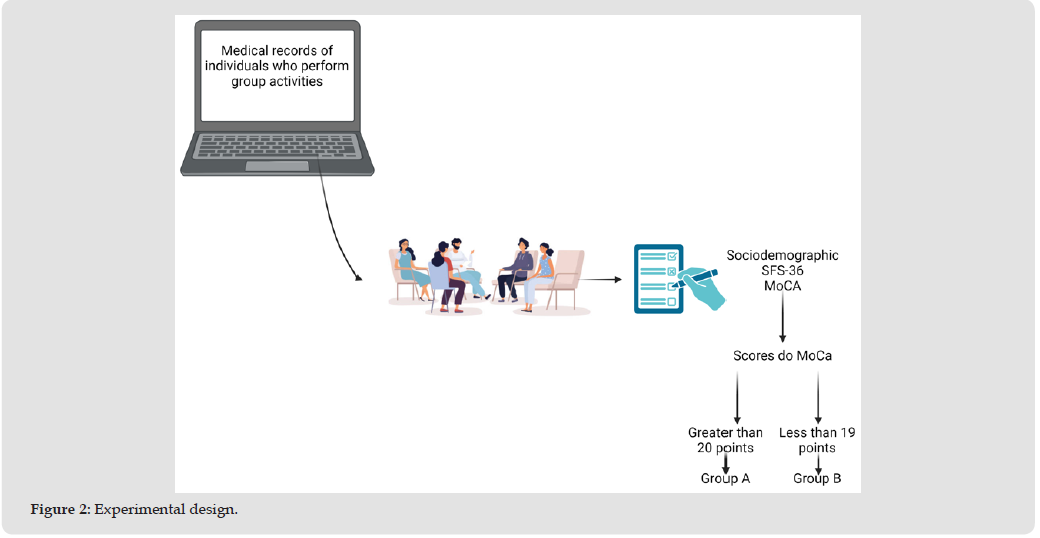
Initially, permissions for conducting the research were obtained from the municipal government of Criciúma, SC, and the local coordinator. Subsequently, the project was submitted to the research ethics committee at UNESC. With approval under number 6,205,971, the research began. A survey was initially conducted to identify the number of individuals actively engaged in group treatments, and participants were selected based on inclusion criteria. Individuals were approached after therapeutic group sessions, where the research and its development were explained. Upon acceptance and signing of the informed consent form (TCLE), individuals were led to a reserved location for the administration of a sociodemographic questionnaire with open-ended questions and the MOCA and SF-36 tests. Each application took 15 to 20 minutes. At the conclusion of the research, data were compiled and analyzed using statistical descriptions. Based on the MoCA test scores, participants were divided into two groups: Group A with scores above 20 points and Group B with scores below 19 points.
Data Collection Instrument
Short-Form Health Survey (SF-36): The Short-Form Health Survey (SF-36) is a generic health and quality of life assessment tool. It consists of 36 questions covering eight components: functional capacity, physical aspects, pain, overall health status, vitality, social aspects, emotional aspects, and mental health, assessed by 35 questions, along with a comparative question between current health and that of one year ago. Ultimately, the instrument generates scores that can evaluate the professional’s quality of life.
MoCA Scale: The Montreal Cognitive Assessment (MoCA) is globally recognized for its screening ability for patients with mild cognitive impairment (Kang, et al. 2018]). It is characterized as one of the primary choices for use in brief screenings and assesses various cognitive functions (such as executive functions, visuospatial skills, naming, memory retrieval, digits, sentence, abstract reasoning, and orientation) (Cecato, et al. 2014; Kang, et al. 2018). According to MoCA Score and Interpretation: Total Points Interpretation ≤19 points Cognitive Impairment ≥20 points No cognitive impairment (Freitas, et al. 2010).
Statistical Analysis: In the data analysis phase, information was quantified using Microsoft Office Excel and presented through quantitative analysis. The Statistical Package for the Social Sciences 22 (SPSS) was used for database construction and statistical calculations. Results of continuous variables are presented as mean ± standard deviation and absolute percentage. Chi-square tests were used for comparisons, with values of p < 0.05 considered statistically significant.
This research employed a quantitative, descriptive, exploratory, and field-based approach. The study involved 24 active users at the CAPS for more than three months. Semi-structured interviews and cognitive and quality of life tests were conducted with these users. To preserve the confidentiality resulting from the interviews, the open-ended survey question utilized the letter “I” for identification, followed by the respective participant number, in accordance with guidelines and regulatory standards governing research with Human Subjects and Vulnerable Groups. In analyzing the individuals served, the MoCA tests were administered, and their final scores were used to classify two groups of individuals. Group A consisted of 5 individuals who showed characteristics of no cognitive impairment, while Group B comprised individuals with alterations in memory, attention, and language, totaling 19 people. Of the 24 individuals interviewed, it was observed that the vast majority exhibited cognitive impairment (Table 1). As observed in Table 2, the majority of participants in the research were female, comprising 66.67%, with 34.34% falling within the age range of 50 to 59 years. It was noted that 29.16% of users have incomplete primary education, 4.16% have special primary education, and 8.34% have completed higher education. Regarding children, 41.67% do not have children, while another 41.67% have one or two children. In this study, it was found that the majority of users were female, similar to findings in other investigations aiming to characterize the profile of CAPS users (BARÃO, et al. 2018; BORBA, et al. 2017).
Table 1: Classification of study groups according to cognitive impairment screened with the MoCA test.
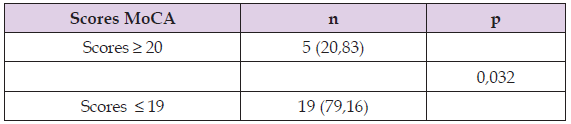
Table 2: Sociodemographic data of individuals interviewed in the research.
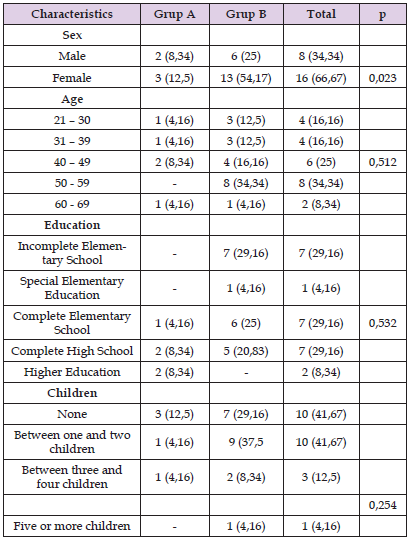
The higher prevalence in females is believed to be related to their vulnerability to hormonal and psychological factors, as well as their greater ability to identify changes in their health status and seek specialized services for treatment BORBA, et al. 2017). The differential prevalence of mental disorders between men and women stands out, with anxiety and depression disorders being more common in the female population, naturally leading to increased utilization of mental health services by women (QUARTIERO, et al. [2]). This disparity is also shaped by cultural factors, where in some societies, women are more inclined to seek help for emotional issues, in contrast to men who may face cultural stigma associated with emotional vulnerability and resist seeking psychological assistance (FERREIRA [3]). According to Araújo, et al. (2015), in a similar study in a CAPS in the interior of Ceará, the predominant age was between 30 and 50 years, justifying this age range as adults are more predisposed to psychosocial disorders, given the many life changes that occur during this phase for both men and women (CABRAL, et al. 2022). Regarding education, it was observed that the majority of users had incomplete elementary education, contrary to what was published by Cruz, et al. 2016, whose research conducted at CAPS II in Candeias-BA showed that the majority of surveyed users had completed high school. However, most users had a low level of education (Borba, et al. 2017). It is inferred that due to their low level of education, unfavorable professional training, and socioeconomic dependence, users face challenges in the job market competition. This results in the devaluation of users regarding their productive capacity, causing distress due to obstacles in developing work and leisure activities (HIANY, et al. 2019).
It was observed that bipolar affective disorder had the highest percentage among diagnoses, accounting for 33.33%, with 29.16% being diagnosed less than a year ago. It was evaluated that 100% of the participants use medications from the antipsychotic class. Regarding suicide, 50% reported attempting suicide in the last three months. Approximately 41.66% of users attend group sessions twice a week (see Table 3). Regarding mental disorders, the majority of users were diagnosed with bipolar affective disorder, consistent with findings by CARVALHAES, et al. [11]), where affective mood disorders, including bipolar affective disorder, were the second most frequent group of diagnoses in their research. Additionally, TREVISAN, et al. [12]) state that mood disorders, including depression and bipolarity, are the leading causes of psychiatric diagnoses in Brazil. As the years go by and the time of diagnosis increases, even if it is not an effective diagnosis or even with a diagnosis but without multidisciplinary follow-up, negative implications may increase (ARAUJO, et al. [13]). The time spent without clarity of an appropriate diagnosis can be extremely distressing for the individual, generating uncertainty, anxiety, and a sense of helplessness (ARAUJO, et al. [13]). It is known that delayed diagnosis can also result in the uncontrolled progression of the psychological condition, exacerbating the situation and increasing the intensity of symptoms, leading to more severe psychiatric changes (TREVISAN, et al. [12]).
Table 3: Health factors of users participating in therapeutic groups at CAPS.
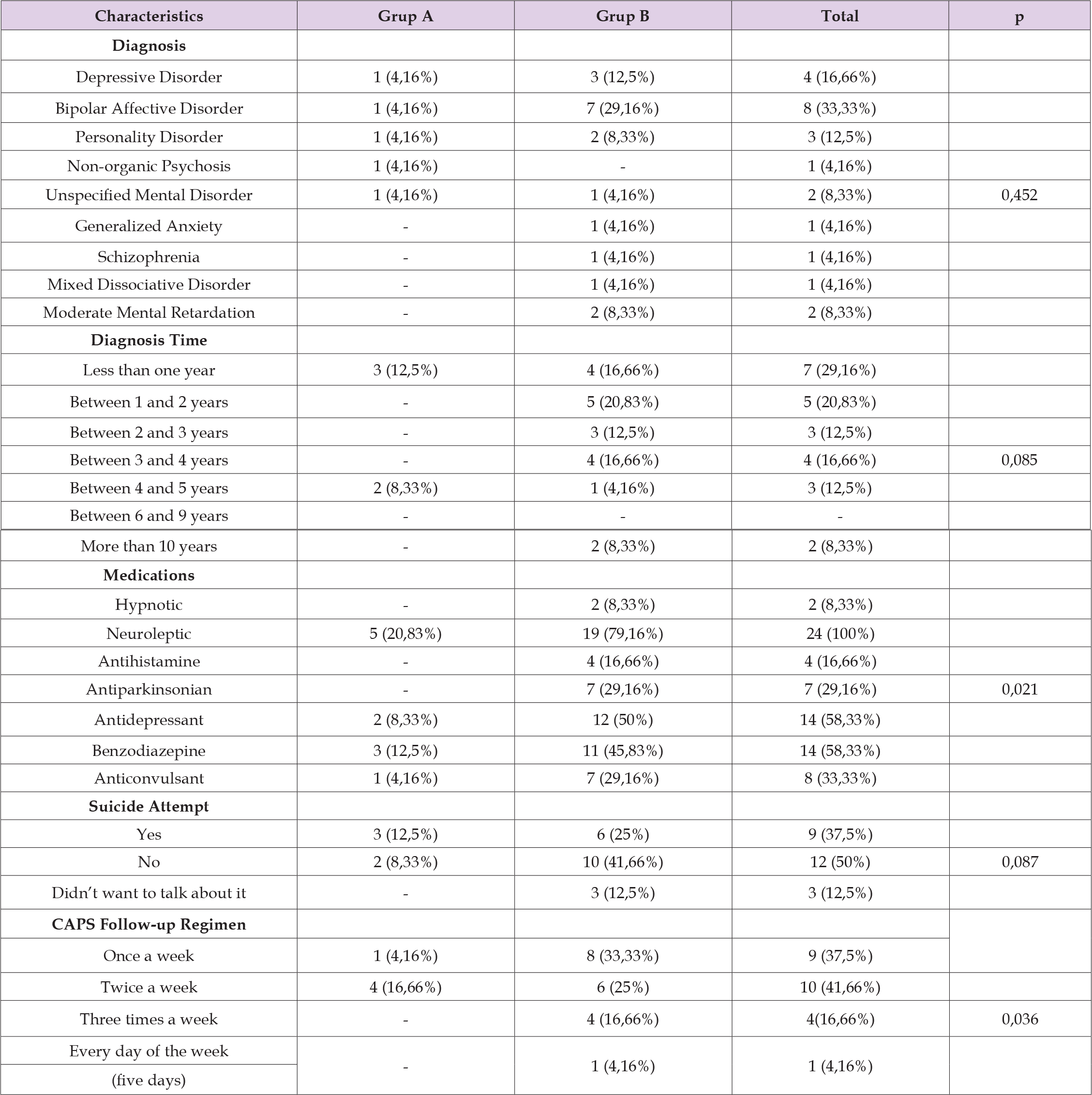
Moreover, the diagnostic time not only compromises the patient’s quality of life but can also result in a cost to the healthcare system and society as a whole due to the need for more intensive and prolonged interventions given cognitive decline (ARAUJO, et al. [13]). Regrettably, in this research, it was observed that all individuals use antipsychotic medications, and it is crucial for good adherence to drug treatment. Despite the crucial importance of medication in managing these conditions, it assists in the improvement process and is more effective when combined with psychotherapy, group activities, and lifestyle changes (HAJDA, et al. 2016). Non-adherence to these medication treatments is believed to lead to serious consequences, such as more frequent crises, hospitalizations, suicide risks, and a greater deterioration in quality of life. This underscores the need for an interdisciplinary approach that involves not only the prescription of medications but also educational strategies, family support, and policies that ensure adequate access to necessary medications, as well as multidisciplinary activities (KANDOLA, et al. [14]). According to Wang, et al. [15]), mental health professionals should carefully consider the demographic, socioeconomic, clinical, and pharmacotherapeutic characteristics of each patient when planning and managing treatment. Additionally, involving the family in the treatment process can play a crucial role in improving adherence and even medication actions, potentially reducing dosage and the number of capsules and tablets ingested by the individual (WANG, et al. [15]).
Regarding suicide, it was observed that half of the users had no attempts in the last three months. In this regard, it can be said that the follow-up regimen is crucial to creating bonds with other users and professionals, linking the team while maintaining the exchange of experiences and information to develop strategies for action in each case and at every step of follow-up, thus managing to prevent some unexpected events (SCHMIDT et al., 2009). The impact of the treatment offered in CAPS on reducing suicide rates is a complex and multifactorial issue. However, the team’s work in suicide cases is related to emotional and therapeutic support over time, helping individuals face challenges and reduce the likelihood of suicidal behaviors (PACHECO et al., 2022). In addition, CAPS implements specific suicide prevention programs, aiming to educate the community, provide support to families, and raise awareness about the importance of proper treatment for mental health problems (SILVA, et al. [16]).
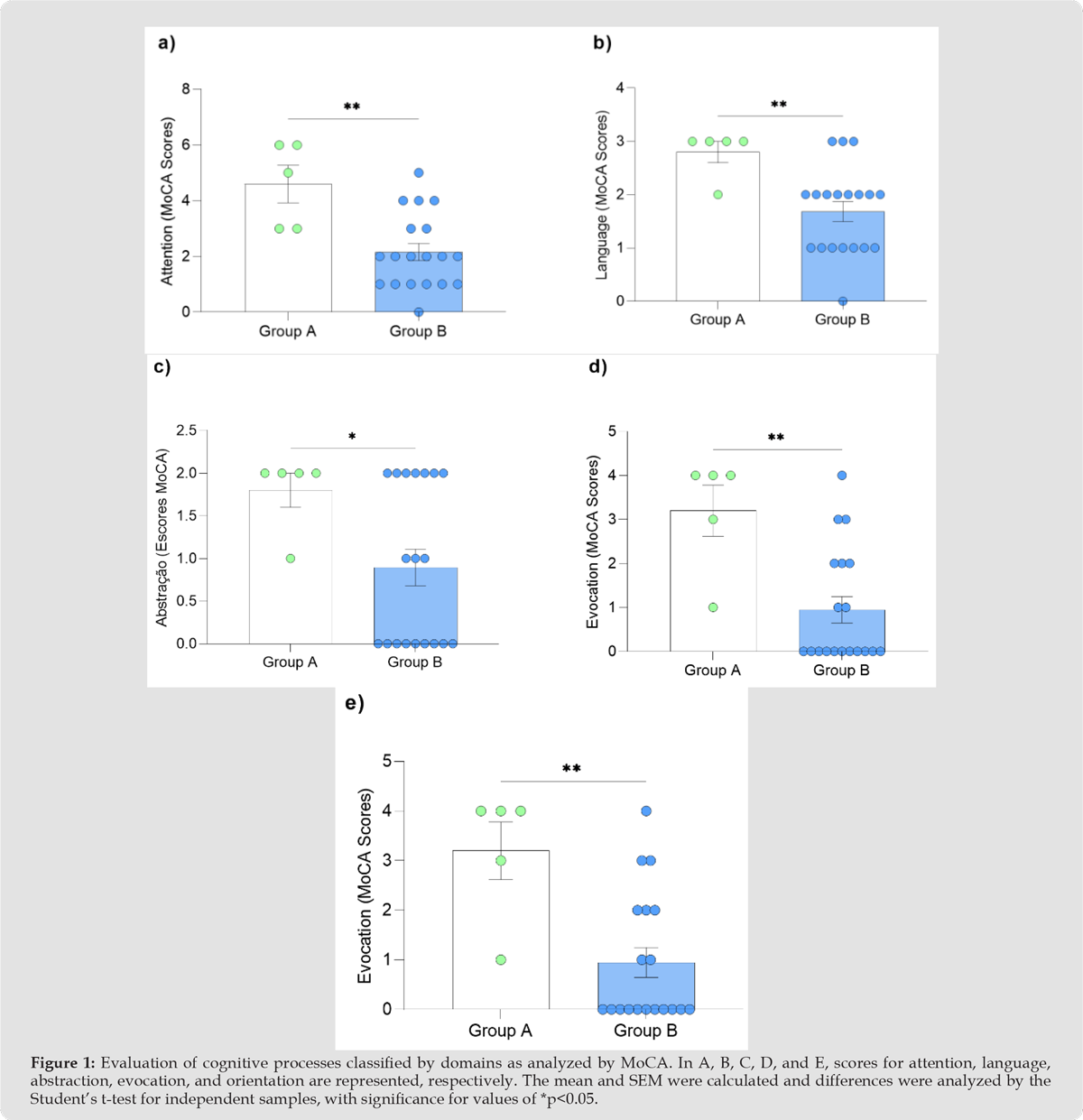
When assessing the performance of groups A and B in attention, language, abstraction, recall, and orientation (Figure 1, A, B, C, D, and E, respectively), it was observed that group B had a lower score compared to group A, which may directly impact the type of group dynamics and activity. It is crucial for professionals who coordinate groups to have knowledge of group dynamics, the group process, and other elements that surround working with groups as spaces of support and care, taking into account the limitations of users (ANDRADE, et al. 2020). With this understanding, professionals can plan group sessions to optimize group dynamics, stimulating the coexistence of these elements and encouraging the development of various psychological functions (PACHECO, et al. 2022). Group interventions are indeed relevant care strategies in mental health. However, for them to be constructive, participant selection should consider attention, memory, orientation, and language processes (SOUSA, et al. [17]). Group activities provide a means of support and sharing experiences, promoting the construction of meaning for individuals facing exclusion and those whose subjectivities are not acknowledged. To achieve this, group activities must be planned according to individual limitations (NUNES, et al. 2020). The limitation can be assessed using MoCA, which, according to ANDRADE, et al. (2020), can be crucial for assisting mental health professionals in screening participants for their groups and monitoring their progress.
Figure 1
Constant application of this tool allows professionals to observe its efficiency and positive impacts on the development of patients throughout group sessions, eventually using the evaluation of basic psychic functions as a method for discharge or reduction of the therapeutic regime (NUNES, et al. 2020) (Figure 2). In a study with users participating in therapeutic groups for depression and bipolar disorder, stimulation of memory, attention, and recall plays a fundamental role in improving mental well-being (BRUNOZI, et al. [18,19]). Mood disorders are often associated with cognitive difficulties such as concentration and memory problems, and exercises aimed at improving attention and memory can help patients cope with these challenges (HELDT, et al. [19]). Therapeutic groups focused on memory, attention, and recall provide a valuable opportunity for social interaction and the sharing of experiences among patients, creating an environment of support and mutual understanding, reducing isolation and loneliness often experienced by people with mental health disorders (HELDT, et al. [19]; ANDRADE, et al. 2020). Users with low cognitive scores need specialized groups to stimulate development and consequent improvement in mental state, providing greater autonomy and quality of life (BRUNOZI, et al. [18]).
Figure 2
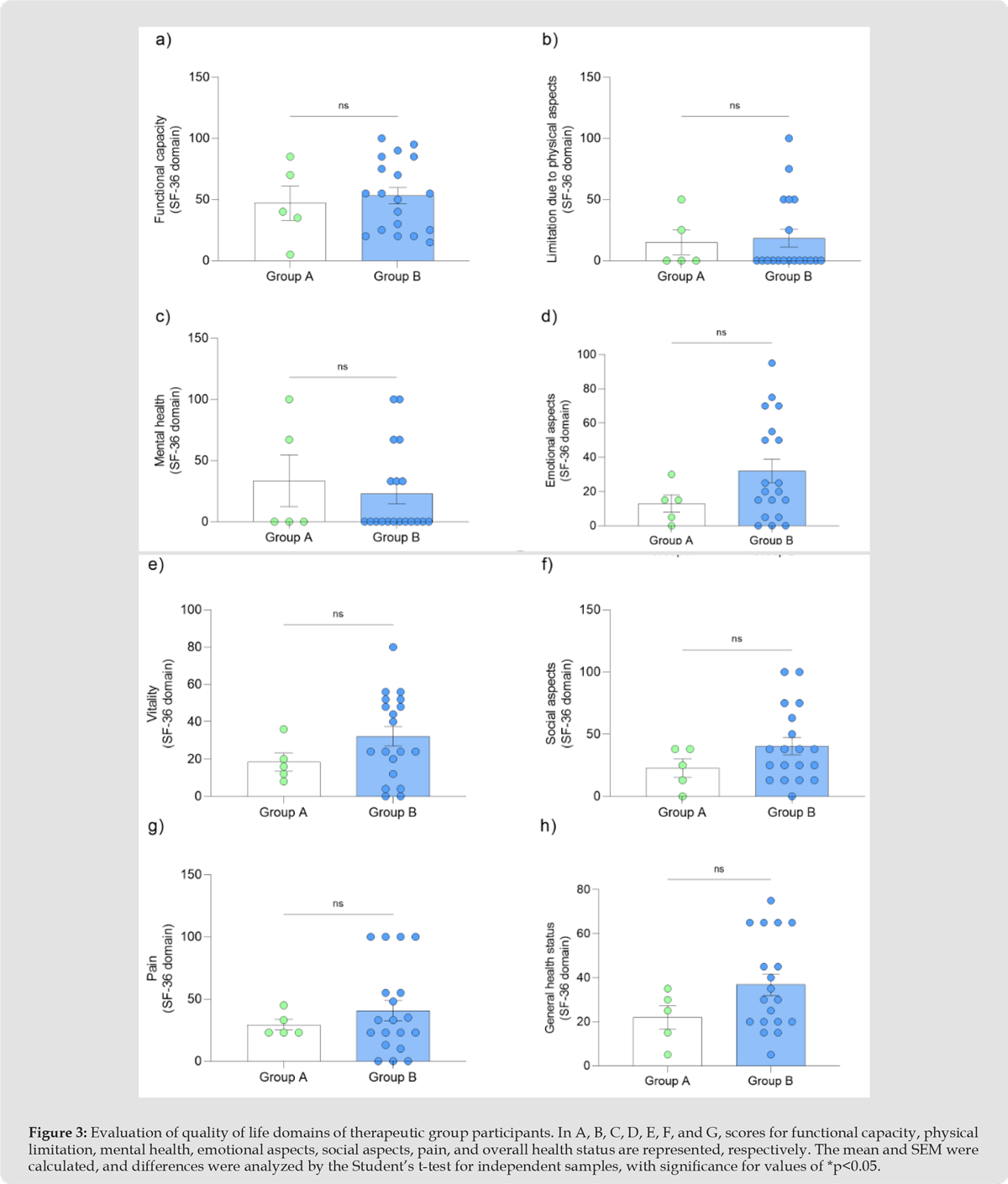
Assessing the health quality of individuals who participated in therapeutic groups over a year, no significant differences were observed in the domains of functional capacity, physical aspects, pain, general health, vitality, social aspects, emotional aspects, and mental health between groups A and B. However, it is noteworthy that both groups had relatively low scores in their respective domains, suggesting the existence of individual deficiencies in these areas (Figure 3). The concept of quality of life has been widely discussed in recent years, ranging from a sociological and objective perspective to a psychosocial perspective, where subjective aspects of well-being and personal satisfaction are emphasized. Analyzing quality of life is essential because it involves individuals in assessing their health status and treatment options (MOREIRA, et al. [20]). Quality of life is related to a person’s living conditions, including mental, psychological, emotional, and physical health, as well as social relationships (KLEIN, et al. 2020). Indeed, one of the goals of CAPS is to improve the quality of life (PACHECO, et al. 2022). Even though no differences were observed in the groups in the present study, it was noticed that many of the interviewees had high scores in all domains, which may characterize low quality of life. According to NACAMURA, et al. [21]), CAPS professionals must be able to understand the lives of participants because their activities should directly impact the quality of life. Thus, their practices should be guided by innovation and creativity, seeking to develop actions according to the needs of individuals, even when these do not fit traditional care.
Figure 3
Functional capacity, which refers to more complex daily activities such as walking, shopping, cleaning the house, doing laundry, driving, and using public transportation, are key points that, when stimulated in therapeutic groups, can guarantee user autonomy (KLEIN, et al. [22]). Despite low scores due to different types of diagnoses and experiences, therapeutic activities are identified as an important instrument for socialization, strengthening bonds, as well as autonomy in social and emotional aspects (KAMMER, et al. 2020).
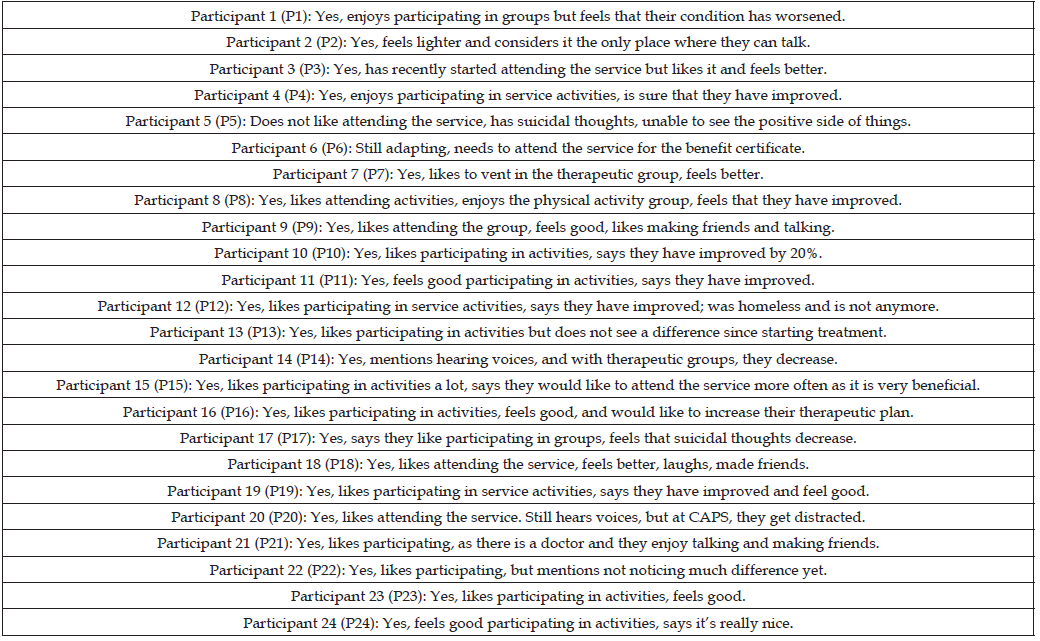
All individuals participate in the therapeutic group, and in their statements, they illustrate that group therapy at CAPS is a valuable therapeutic tool that can yield positive results. However, the experience varies widely from person to person, depending on their situation, symptoms, and expectations. Some individuals believe that group therapy is not helping their mental health, but the majority emphasizes how therapeutic groups aid in expressing emotions and generating dialogue. The following highlighted statements show the flexibility of therapeutic groups to meet diverse individual needs and the exchange of experiences to live better with mental health disorders (Table 4). Group therapy stands out as a crucial care tool and is perceived by users as a welcoming space where they feel safe to share their thoughts and seek help when needed. These settings enhance dialogue, the sharing of experiences, and the improvement in adapting to individual and collective lifestyles, allowing participants to listen and learn from different life experiences (DA SILVA, et al. [23]). Individualized therapeutic plans are crafted, considering each person’s unique history, potentially offering numerous benefits to CAPS users. These include social interaction, the development of protagonism, social inclusion, the expression of subjectivity indirectly (through art and culture), verbal and unconscious expression of ideas and emotions, reduction in medication usage, and improvements in sleep patterns (MORORÓ, et al., [24]). Therapeutic groups serve as a group psychosocial intervention that encourages participation, reducing the need for individualized care and creating an environment where healthcare professionals can identify specific needs and provide crucial interventions for health promotion and prevention of complications (NUNES, et al. [25]).
Table 4: Participants’ speech in the group.
The sociodemographic analysis revealed that the majority of participants were female, predominantly aged between 50 and 59 years, with incomplete primary education and children [26-44]. These results align with previous studies on the profiles of CAPS users. Bipolar affective disorder was the most frequent diagnosis, emphasizing the relevance of using neuroleptics and considerable rates of suicide attempts. Regarding cognitive aspects, the evaluation showed significant differences between Groups A and B, highlighting the importance of strategies to stimulate cognitive functions in users with alterations. Despite relatively low scores, no significant differences were observed in the quality of life between the groups. The participation in therapeutic groups was highly valued by users, highlighting the diversity of experiences. While some reported substantial improvements, others indicated persistent challenges. The therapeutic group was perceived as a safe space for emotional expression, sharing experiences, and mutual support. For many group participants, it is seen as a place of welcome, where they feel comfortable expressing their feelings, sharing life experiences, making friends. On the other hand, some still do not see a difference in treatment but feel at ease participating in activities. In conclusion, the study provided important insights into the profile, diagnosis, health determinants, cognitive aspects, and participation in therapeutic groups of CAPS users. This information is crucial to guide intervention strategies and improve services offered, aiming for a more effective and user-centered approach. Therefore, the importance and continuity of research and studies in the mental health field are necessary to bring improvements in the treatment of users within and outside of psychosocial care services.
All experimental procedures were performed with the approval of the Ethics Committee from Universidade do Extremo Sul Catarinense (Protocol 6,205,971) and conformed to international regulations.
All authors have consent to the publication of the manuscript.
The authors declare that no conflict of interest could be perceived as prejudicing the impartiality of the research reported.
This work was supported by Universidade do Extremo Sul Catarinense (UNESC), National Institute of Science and Technology – Translational Medicine (INCT) and Fundação Amparo a Pesquisa de Santa Catarina (FAPESC).

International Association of Landscape Archaeology, Czech Glass Society, Czech Republic

Department of Chemistry, Semenov Institute of Chemical Physics, USSR Academy of Sciences, Moscow, Russia

Associate Professor at Department of Breast and Thyorid Surgey, Chongqing General Hospital, China

Professor of Nuclear Medicine, Faculty of Medicine and Surgery, University of Milan, Milan, Italy

Department of Pharmaceutical Sciences, South University School of Pharmacy, USA





 Abstract
 PDF