info@biomedres.us
+1 (502) 904-2126
One Westbrook Corporate Center, Suite 300, Westchester, IL 60154, USA
Site Map
 ISSN: 2574 -1241
Received: August 19, 2025; Published: September 02, 2025
*Corresponding author: Dongdong Qiao, Shandong University, Jinan, Shandong, Department of Psychiatry, Shandong Mental Health Center, Shandong University, Jinan, Shandong, China
DOI: 10.26717/BJSTR.2025.63.009847
Background: Previous studies have shown that depression was strongly associated with cardiovascular-kidney-
metabolic (CKM) syndrome components. This study aimed to investigate the prevalence and association of
CKM syndrome stages with depression.
Methods: A total of 7,707 participants were included in the analyses from the National Health and Nutrition
Examination Survey (2011-2018). CKM syndrome stages (stages 0-4) were defined based on risk factors for
cardiovascular disease (CVD), chronic kidney disease (CKD), and metabolic syndrome (MetS). Depression was
diagnosed by the Patient Health Questionnaire (PHQ-9, score ≥ 10). Age-standardized Pearson χ2 tests, multinomial
logistic regression, modified Poisson regression, restricted cubic spline, and mediation analyses were used
for statistical analyses.
Results: The age-standardized prevalence of CKM syndrome stages 0, 1, 2, 3, and 4 was 10.2%, 24.1%, 55.1%,
2.4%, and 8.3%, respectively. Compared with individuals with non-depressed, those with depression had significantly
higher relative risk ratios (RRRs) for CKM stage 1 (1.39 [95% CI, 1.38-1.39]), stage 2 (1.80 [95% CI,
1.79-1.80]), stage 3 (2.29 [95% CI, 2.28-2.30]), and stage 4 (3.31 [95% CI, 3.30-3.32]), advanced CKM syndrome
(stages 3 or 4, 1.06 [95% CI, 1.02-1.09]), CVD (1.70 [95% CI, 1.34-2.16]), CKD (1.03 [95% CI, 1.00-1.06]), MetS
(1.21 [95% CI, 1.09-1.34]). Restricted cubic splines showed that the increased PHQ-9 score was associated with
the higher prevalence of advanced CKM syndrome, CVD, CKD, and MetS. Furthermore, mediation analyses indicated
that albumin had significant mediating effects on the association between depression and advanced CKM
syndrome, and the proportion of mediation was 7.29%.
Conclusion: Depression in US adults is associated with higher CKM syndrome staging, with albumin partly mediating
the association.
Keywords: NHANES; Cardiovascular‐Kidney‐Metabolic; Depression; Patient Health Questionnaire-9; Albumin; Prevalence
Abbreviations: CKM: Cardiovascular-Kidney-Metabolic; CVD: Cardiovascular Disease; CKD: Chronic Kidney Disease; RRRs: Relative Risk Ratios; AHA: American Heart Association; MetS: Metabolic Syndrome; NHANES: National Health and Nutrition Examination Survey; BCP: Bromophenol Purple; SE: Standard Error; CIs: Confidence Intervals; TER: Transcapillary Escape Rate; HPA: Hypothalamic-Pituitary-Adrenal; RNS: Reactive Nitrogen Species; ROS: Reactive Oxygen Species; GED: General Equivalency Diploma; BMI: Body Mass Index; HDL: High Density Lipoprotein Cholesterol; HbA1c: Glycosylated Hemoglobin A1c; PHQ-9: Patient Health Questionnaire-9
Anatomy and Histology of the Cervix
In 2023, the American Heart Association (AHA) proposed the concept of Cardiovascular-kidney-metabolic (CKM). CKM syndrome is a health disorder that results from the interrelationships between cardiovascular disease (CVD, including heart failure, atrial fibrillation, coronary heart disease, stroke, and peripheral artery disease), chronic kidney disease (CKD), and metabolic syndrome (MetS)[1]. The complex interactions between these diseases and their shared pathological mechanisms further exacerbate the burden of disease and mortality risk in humans. The AHA divided CKM syndrome into 5 stages (stages 0-4) according to the risk factors of the disease [1,2]. The risk of CKM syndrome is relatively high among the adult population in US. Almost 90% of US adults meet the criteria for CKM syndrome (stage 1 or higher), and 15% meet the criteria for advanced CKM stages (stages 3 or 4) [3]. Depression is a prevalent mental disorder characterized by an extended duration of a low mood or a diminished sense of pleasure or interest in various activities. It is estimated that in US, about 21 million adults have experienced at least one major depressive episode, which accounts for 8.3% of the adult population in US [4]. Existing studies have shown that depression is closely related to a variety of somatic diseases, especially CKD, CVD, hyperlipidemia and other metabolic syndrome [5-8]. Due to the interrelationships between CVD, CKD, MetS in CKM syndrome, depression may lead to the progression of CKM syndrome.
Albumin, a key biomarker of nutritional status, antioxidant capacity, and anti-inflammatory activity, has long been considered a comprehensive indicator of overall health and the risk of chronic diseases. Hypoalbuminemia is frequently observed in chronic inflammatory conditions and has been associated with a higher risk of cardiovascular events [9], renal dysfunction [10], and metabolic syndrome [11]. Emerging evidence suggests that depressive states may lead to reduced serum albumin levels, either by promoting systemic inflammation or by impairing nutritional intake and metabolic synthesis [12,13]. In turn, lower albumin levels may further exacerbate systemic inflammation and endothelial dysfunction, potentially contributing to the development and progression of CKM syndrome [9,14,15]. These findings point to a possible mediating role of albumin in the relationship between depression and CKM syndrome. However, to date, there is a lack of systematic research examining albumin’s role as a mediator in this pathway. Most existing studies only explore the relationship between depression and a single disease or syndrome, such as CVD, CKD, MetS, and rarely focus on the role of depression in CKM syndrome. We believe it is necessary to investigate the contribution of depression to the staging of CKM syndrome to further promote the screening of depression and place CKM care in the context of clinical practice.
Therefore, we used the data from the National Health and Nutrition Examination Survey (NHANES) to examine the prevalence of CKM stages 0 to 4 or advanced CKM stages (stage 3 or 4) among in US adults with depression. We also explored the association between depression and different CKM stages, as well as the possible mediating role of albumin.
Study Population and Design
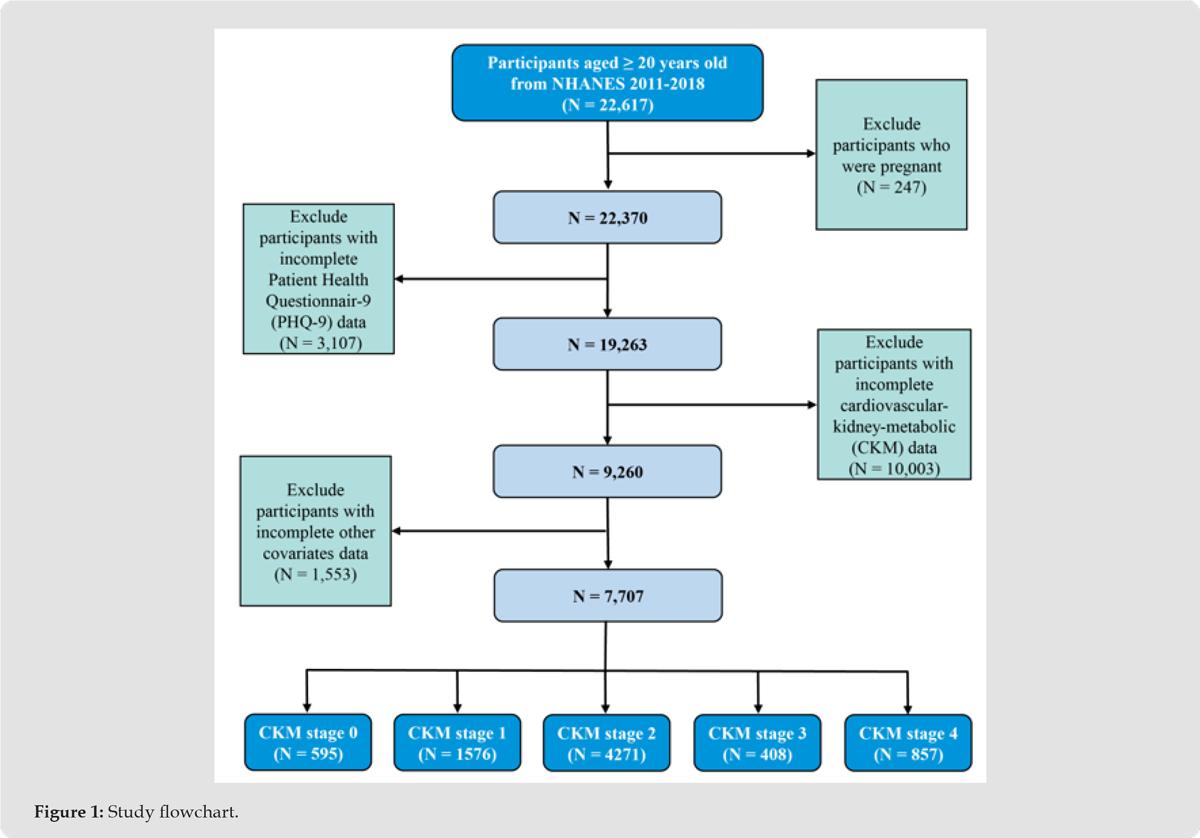
The dataset analyzed in this study was drawn from NHANES 2011–2018, a nationally representative, population-based survey designed to assess the health and nutritional status of noninstitutionalized civilians across the United States. Data from the publicly accessible NHANES database can be freely downloaded from the official website [16]. Ethical approval for the survey was granted by the National Center for Health Statistics Ethics Review Board, and all participants provided written informed consent. Initially, the study included 22,617 participants aged 20 years and older from NHANES 2011–2018. Subsequently, certain groups were excluded based on predefined criteria:
1) Pregnant individuals (N = 247),
2) Those with missing PHQ-9 data (N = 3,107),
3) Participants lacking complete CKM data (N = 10,003), and
4) Those missing data on other covariates (N = 1,553).
After applying these exclusions, the final analysis sample consisted of 7,707 participants. The filtering process is illustrated in Figure 1.
Figure 1
Definition of CKM Syndrome Stages
The CKM syndrome stages were defined based on Aggarwal, et al. [3], with modifications tailored for the NHANES dataset. These stages are as follows: stage 0 represents no CKM risk factors; stage 1 includes excess or dysfunctional adiposity; stage 2 encompasses additional metabolic risk factors or moderate- or high-risk CKD; stage 3 includes individuals with very high-risk CKD or a high predicted 10- year CVD risk; and stage 4 represents diagnosed CVD. Detailed stage definitions can be found in Supplementary file. Stages 3 and 4 were classified as advanced CKM syndrome stages, highlighting individuals who either have established CVD or are at high risk for it.
Definition of Depression
The Patient Health Questionnaire-9 (PHQ-9) is a brief self-report indicator of depressive symptoms in primary care and research settings with well-established factor structure, reliability, and validity [17].The PHQ-9 has a score range of 0 to 27, with higher scores indicating greater severity, and it is recommended that PHQ-9 score ≥10 is recommended as a binary threshold for defining depressive symptoms, with a sensitivity of 88% and specificity of 88% for screening for major depressive symptoms [18].
Measurement of Albumin Concentration
Albumin concentration was determined using the bromophenol purple staining method. The albumin concentration was measured using the DcX800 method with a dual-color digital endpoint method. During the reaction, albumin binds with the bromophenol purple (BCP) reagent to form a complex. Absorbance was measured at a wavelength of 600 nm and monitored as the albumin concentration changed. The change in absorbance was directly proportional to the albumin concentration in the sample.
Ascertainment of Covariates
Detailed covariate information includes age; sex (women or men); ethnicity (non-Hispanic White, non-Hispanic Black, Mexican American, or other); educational attainment (grades 0–12, high school graduate or GED, some college or above); marital status; alcohol consumption; smoking status; and physical activity levels. Smoking status was categorized as follows: individuals were considered smokers if they had smoked at least 100 cigarettes in their lifetime; among these, current smokers were defined as those who were actively smoking, while former smokers were those who were not currently smoking.
Statistical Analyses
All statistical analyses followed NHANES guidelines for data handling and reporting. Baseline characteristics were examined using t-tests for continuous variables (expressed as mean ± standard error (SE)) and Chi-square tests for categorical variables (expressed as percentages). Age-standardized prevalence rates for CKM syndrome were computed via direct standardization and grouped into three age categories: 20–39, 40–64, and 65–80 years. The 2010 US Census was used as the standard reference population [3]. Differences in the prevalence of CKM syndrome stages by depression status were assessed using a survey-weighted and age-standardized Pearson χ2 test. Survey-weighted multinomial logistic regression models were employed to estimate relative risk ratios (RRRs) and 95% confidence intervals (CIs) for the associations between depression and CKM syndrome stage prevalence, with adjustments made for age, sex, ethnicity, education, marital status, alcohol use, smoking status, and physical activity. This method was selected over ordinal logistic regression due to the violation of the proportional odds assumption. In addition, survey- weighted modified Poisson regression models [19], adjusted for the same confounders, were applied to investigate the associations between depression and the prevalence of advanced CKM syndrome stages, as well as CVD, CKD, and MetS. To explore non-linear associations between PHQ-9 scores and advanced CKM syndrome stages, we used restricted cubic splines with three knots placed at the 5th, 50th, and 95th percentiles.
Mediation analyses were performed to determine whether the association between depression and advanced CKM syndrome stages was mediated by albumin levels [20]. Subgroup analyses examined the extent to which these associations differed across various demographic factors, such as age, sex, ethnicity, education level, and marital status. All statistical tests were two-sided, with a significance threshold of P < 0.05. The analyses were conducted using R version 4.3.2.
Population Characteristics
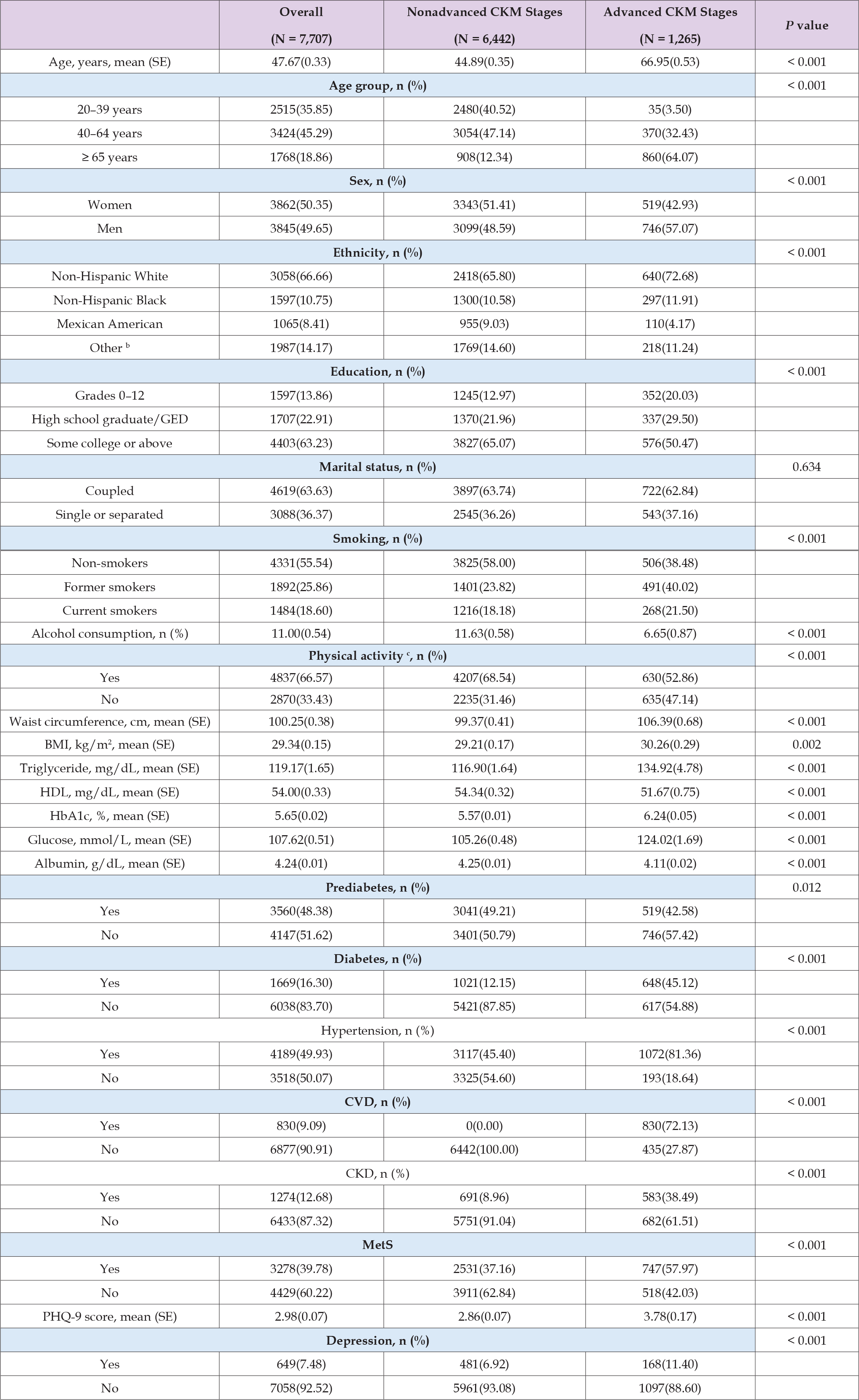
Data from 7,707 participants were analyzed in this study (weighted mean age: 47.67 years, SE: 0.33 years), with 595 participants in CKM syndrome stage 0, 1,576 in CKM syndrome stage 1, 4,271 in CKM syndrome stage 2, 408 in CKM syndrome stage 3, and 857 in CKM syndrome stage 4. Among them, a weighted 50.35% were female and 49.65% were male, and 66.66% as non-Hispanic White, 10.75% as non-Hispanic Black, 8.41% as Mexican American, and 14.17% as other race and ethnicity. Compared to non-advanced CKM stages (stages 0-2) participants, participants with advanced CKM stages (stages 3-4) were more likely to be older, male, non-Hispanic White, smokers, nondrinkers, non-active individuals, and obese, to have diabetes, hypertension, CVD, CKD, MetS, depression, and to have lower education level and serum albumin level (Tables 1 & 2, all P < 0.05).
Table 1: Baseline Characteristics of Participants According to CKM Syndrome Stages, NHANES 2011–2018 a.
a. Differences in baseline characteristics across the 5 CKM syndrome stages were assessed using survey-weighted linear regression for
continuous variables and survey-weighted Pearson χ2 tests for categorical variables (all P < 0.001).
b. Includes other Hispanic or other race, including multiracial and any race other than Black or White.
c. The active participants included those who met the recommended levels of physical activity of ≥ 150 minutes/week according to the
Center for Disease Control and Prevention (CDC) Physical Activity Guidelines for Americans.
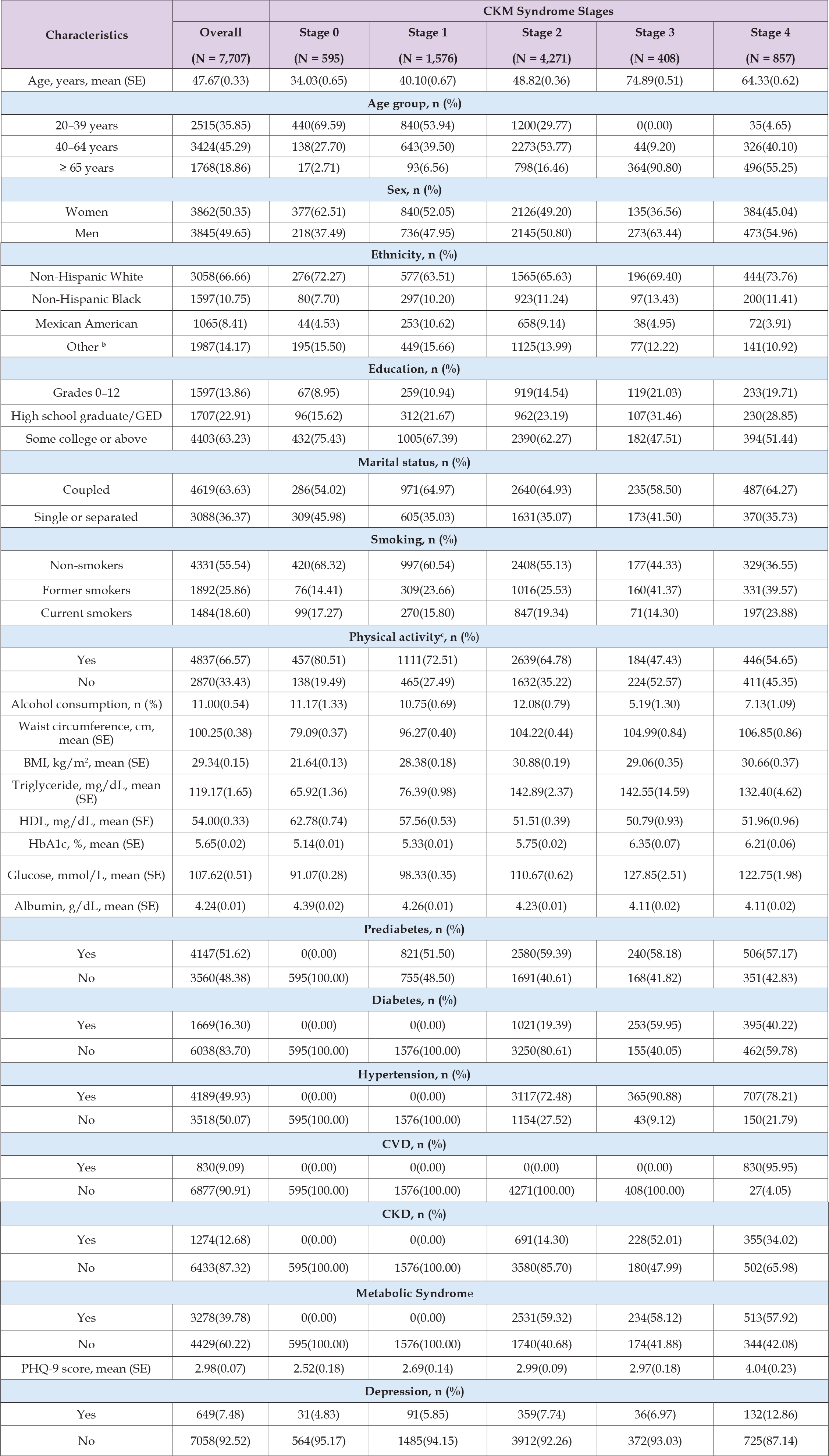
Table 2: Table 2: Baseline Characteristics of Participants According to Advanced CKM Stages, NHANES 2011–2018 a.
a. Differences in baseline characteristics across the advanced CKM syndrome stages were assessed using survey-weighted linear
regression for continuous variables and survey-weighted Pearson χ2 tests for categorical variables.
b. Includes other Hispanic or other race, including multiracial and any race other than Black or White.
c. The active participants included those who met the recommended levels of physical activity of ≥ 150 minutes/week according to
the Center for Disease Control and Prevention (CDC) Physical Activity Guidelines for Americans.
Prevalence of CKM Syndrome Stages, CVD, CKD, and MetS by Depression
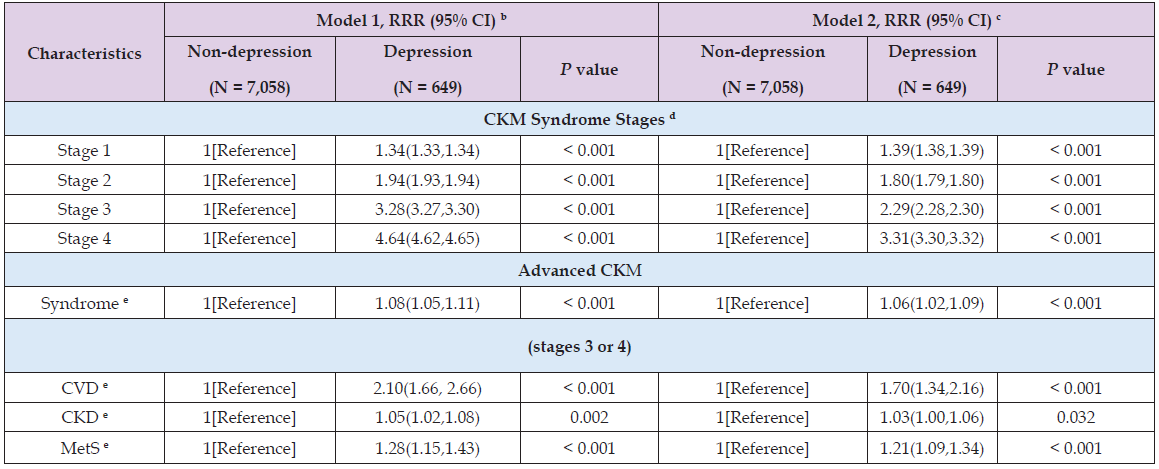
The age-standardized prevalence of CKM syndrome stages 0, 1, 2, 3, and 4 was 10.2% (95% CI, 6.9%-11.2%), 24.1% (95% CI, 20.3%- 27.0%), 55.1% (95% CI, 48.9%-58.5%), 2.4% (95% CI, 2.4%-3.9%), and 8.3% (95% CI, 8.1%-12.9%), respectively. Significant differences in the prevalence of CKM syndrome stages, CVD, CKD, and MetS were observed by depression (Table 3). After adjusting for age group, sex, ethnicity, education level, marital status, alcohol consumption, smoking and physical activity, compared with individuals without depression, individuals with depression had higher RRRs for CKM syndrome stage 1 (1.39 [95% CI, 1.38-1.39]), stage 2 (1.80 [95% CI, 1.79-1.80]), stage 3 (2.29 [95% CI, 2.28-2.30]), and stage 4 (3.31 [95% CI, 3.30- 3.32]). Furthermore, compared with individuals without depression, individuals with depression had higher RRRs for advanced CKM syndrome (1.06 [95% CI, 1.02-1.09]), CVD (1.70 [95% CI, 1.34-2.16]), CKD (1.03 [95% CI, 1.00-1.06]), MetS (1.21 [95% CI, 1.09-1.34]) (Table 4).
Table 3: Prevalence of CKM Syndrome Stages, CVD, CKD, and MetS by Depression a.
a. Data are presented as age-standardized percentages (95% CIs). All estimates accounted for complex survey design.
b. The prevalence was calculated using the direct standardization method, standardized to the 2010 US census population with 3 age
categories of 20 to 39 years, 40 to 64 years, and 65 to 80 years. Differences in the prevalence across characteristics were determined
using survey-weighted and age-standardized Pearson χ2 tests.
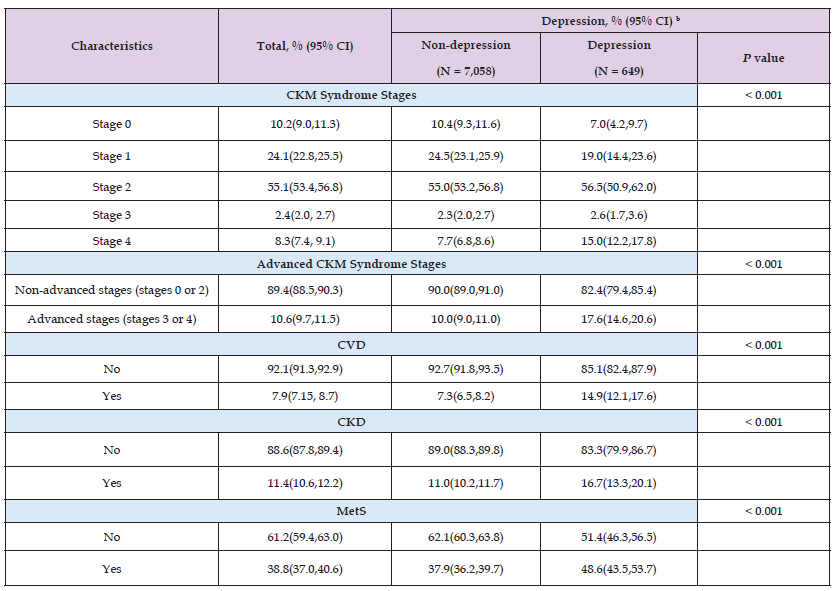
Table 4: Relative Risk Ratio of Advanced CKM Syndrome Stages, CVD, CKD, and Metabolic Syndrome by Depression a.
a. All estimates accounted for complex survey designs.
b. Model 1 was adjusted for age, sex, ethnicity;
c. Model 2 was adjusted for age group, sex, ethnicity, education level, marital status, alcohol consumption, smoking and physical activity.
d. Multinominal logistic regression models were used to estimate RRRs and 95% CIs for associations between depression and the prevalence
of CKM syndrome stages.
e. Survey-weighted modified Poisson regression models were used to estimate RRRs and 95% CIs for associations between depression
and the prevalence of advanced CKM syndrome, CVD, CKD, metabolic syndrome.
Relationships Between PHQ-9 Score and Advanced CKM Syndrome Stages, CVD, CKD, and MetS
Restricted cubic spline curves further visualize the relationships between PHQ-9 score and advanced CKM syndrome stages, CVD, CKD, and MetS (Figure 2). PHQ-9 score was nonlinearly correlated with advanced CKM syndrome stages and CVD (Ps for overall < 0.001, Ps for non-linearity < 0.05, Figures 2A & 2B). The RRRs per 5-point increase in PHQ-9 scores for higher prevalence of advanced CKM syndrome and CVD were 1.03 and 1.28 (P < 0.001), respectively. In addition, a positively linear relationship was observed between PHQ-9 score and CKD, MetS (P for overall < 0.001, P for non-linearity > 0.05, Figures 2C & 2D). The RRRs per 5 scores increase of PHQ-9 for higher prevalence of CKD and MetS were 1.02 and 1.08 (P < 0.05), respectively.
Mediation Analyses
Mediation analyses were performed to evaluate the potential mediation effects of albumin on the correlations between depression and advanced CKM syndrome (Figure 3). Albumin had significant mediating effects on the associations of depression with advanced CKM syndrome, and the proportion of mediation was 7.29% (P < 0.001).
Subgroup Analyses
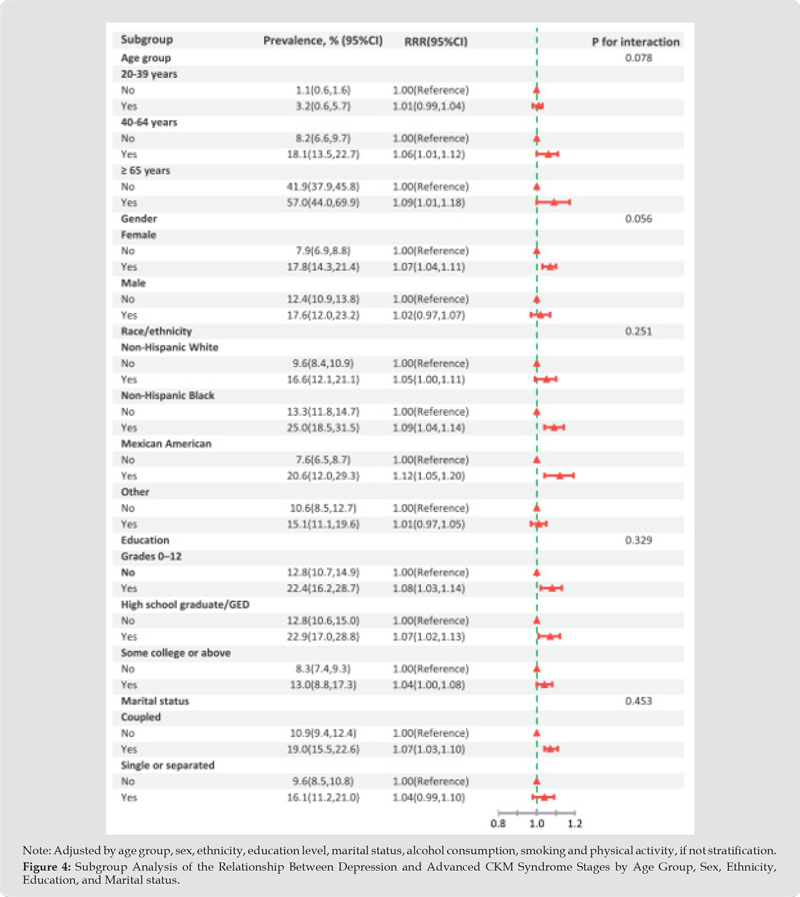
The subgroup analyses showed the prevalence of advanced CKM syndrome stages and the associations between depression and advanced CKM syndrome stages among age group, sex, ethnicity, education, and marital status (Figure 4). Among participants who were 40-80 years group, Female, non-Hispanic White, non-Hispanic Black, Mexican American, and married and living with a partner, and had a high school education or lower, compared with non-depression individuals, we found that a higher prevalence of advanced CKM syndrome stages was observed among depression individuals. No significant interactions were found.
Figure 2
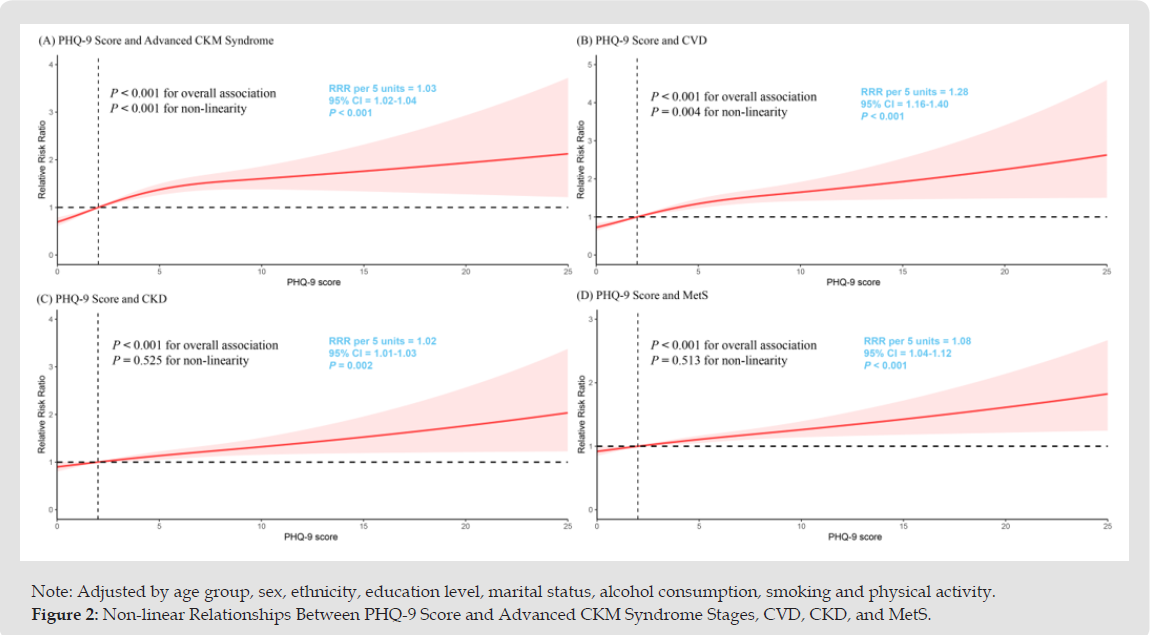
Figure 3
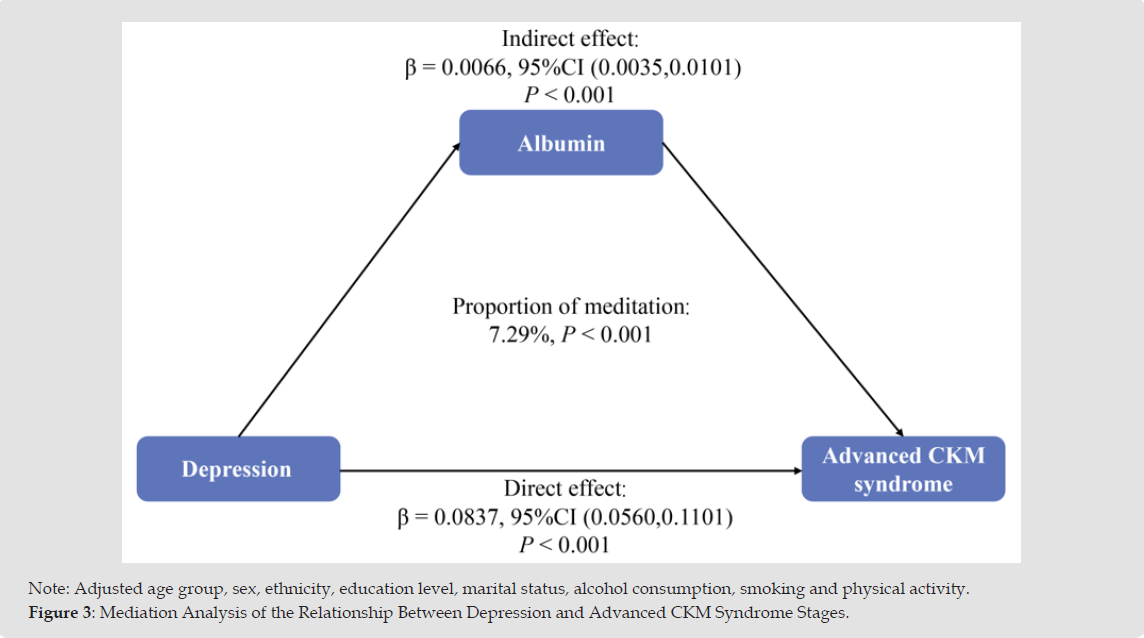
Figure 4
This study showed that individuals with depression were significantly more likely to have CKM syndrome stages 1 to 4, advanced CKM syndrome, CVD, CKD and MetS compared with individuals without depression. Furthermore, restricted cubic spline curves showed that a positively non-linear relationship was observed between PHQ- 9 score and advanced CKM syndrome, CVD. And a positively linear relationship was observed between PHQ-9 score and CKD, MetS. Furthermore, mediation analyses indicated that albumin had significant mediating effects on the associations of depression with advanced CKM syndrome, and the proportion of mediation was 7.29%. No significant interactions were found in subgroup analyses. Although an increasing number of studies have demonstrated the adverse effects of depression on metabolic, cardiovascular, and renal outcomes [5-7], evidence regarding the impact of depression on CKM syndrome and its staging remains limited. A meta-analysis of 26 studies involving 1,957,621 individuals found that depression significantly exacerbates the development and outcomes of CVD [8]. Further research has shown that the severity of depression correlates with CVD risk and prognosis; the more severe the depression, the higher the risk of developing CVD [21-23]. Several meta-analyses have also established a strong association between depression and MetS [24-26]. Moreover, the prevalence of MetS appears to increase with the severity of depression [27,28].
Other studies have indicated that individuals with depression have a significantly higher risk of developing CKD compared to those without depression [29-31]. There seems to be a dose-response relationship between depression and CKD, with patients experiencing more severe depression facing a greater risk of CKD [32,33]. These findings align with our study, which builds upon this foundation by exploring the relationship between depression and CKM syndrome, as well as its various stages. We observed that individuals with depression were more likely to have CKM stages 1-4 and advanced CKM syndrome. Furthermore, using restricted cubic splines, we observed that higher PHQ-9 scores corresponded to a greater likelihood of advanced CKM syndrome, suggesting that patients with more severe depression are at a higher risk of developing advanced CKM syndrome. Furthermore, our study identified albumin as a partial mediator in the relationship between depression and CKM syndrome. Depression appeared to contribute to the development of advanced CKM syndrome by reducing albumin levels. Previous research has already demonstrated significantly lower serum albumin levels in individuals with depression compared to the general population. For instance, a retrospective study conducted in Taiwan revealed that, after accounting for nutrition and liver function, serum albumin levels were substantially lower in patients with severe depression than in the normal control group [12].
Another study that collected blood samples from 24 individuals with major depressive disorder at baseline and after five weeks of antidepressant treatment found that total serum protein and serum albumin concentrations were significantly lower in those with severe or treatment-resistant depression compared to healthy controls [13]. It is well-known that albumin’s transcapillary escape rate (TER) can increase several-fold under inflammatory conditions, suggesting that inflammatory responses may be a critical factor in albumin leakage [34,35]. Depression has been associated with systemic immune activation and inflammation markers [36], and the complex interaction between hyperactivity of the hypothalamic-pituitary-adrenal (HPA) axis and systemic immune stimulation may play a key role in the pathophysiology of depression [37]. Thus, the observed reduction in albumin levels in depressed patients might result from systemic immune and inflammatory activation. In addition, a meta-analysis including 100,520 individuals without prior CVD found a strong independent association between low plasma albumin levels and CVD, with a nearly linear relationship: the lower the plasma albumin level, the higher the combined risk of adverse cardiovascular outcomes [9]. In another cohort study of 899 adults with diverse kidney function levels (median follow-up of 6.3 years), declining serum albumin was linked to a faster loss of kidney function in patients with CKD [14].
A five-year retrospective longitudinal study by Jin et al. (encompassing 63,060 person-years) reported that while higher baseline serum albumin levels were associated with an increased risk of MetS, elevated serum albumin concentrations might also serve as a protective factor against MetS risk [15]. It is well-established that inflammation correlates with lower plasma albumin levels [9]. Given that plasma albumin functions as an endogenous antioxidant capable of scavenging free reactive oxygen species (ROS) and reactive nitrogen species (RNS) [38,39], diminished albumin levels may exacerbate oxidative stress, thereby increasing susceptibility to CVD, CKD, and MetS through underlying mechanisms such as endothelial dysfunction, chronic inflammation, and atherosclerosis [9,14,15]. Building on the evidence above, we propose that depression may contribute to the progression of advanced CKM syndrome by potentiating systemic immune activation and inflammatory responses, which subsequently suppress plasma albumin concentrations. This study has several limitations. First, the cross-sectional design limits our ability to establish causal relationships between depression and CKM stages. Additionally, some CKM indicators are self-reported, which may lead to misclassification and introduce recall bias into our study. Lastly, NHANES does not report other CVD, such as atrial fibrillation and peripheral artery disease, which may result in an underestimation of the prevalence of CKM stage 4.
In conclusion, individuals with depression were associated with higher stages of CKM syndrome, with albumin partially mediating the relationships. These findings highlight the critical need for early screening and management of depression to prevent the progression to advanced CKM syndrome.
All authors read and approved the final manuscript. Chen Yang: Methodology, Study Design, and Writing of Draft; Jia Wang: Software and Data Curation; Bo Li: Statistical analysis, and Validation. Xiaojiao Bi: Formal analysis and Resources. Dongdong Qiao: Conceptualization, Writing-Review, Editing and Supervision.
Human Ethics and Consent to Participate Declarations
The studies involving human participants were reviewed and approved by CDC’s National Center for Health Statistics Institutional Research Ethics Review Board. The patients/participants provided their written informed consent to participate in this study. All our methods followed the guidelines of the Helsinki Declaration. And secondary analysis does not require additional institutional review committee approval.
Consent for Publication
Not applicable.
Conflicts of Interest
There are no conflicts of interests of any of the authors.
Funding Statement
Jinan Municipal Science and Technology Bureau Clinical Medicine Technology Innovation Program.
Publicly available datasets were analyzed in this study. The data can be downloaded here at any time: https://wwwn.cdc.gov/nchs/ nhanes/Default.aspx.

International Association of Landscape Archaeology, Czech Glass Society, Czech Republic

Department of Chemistry, Semenov Institute of Chemical Physics, USSR Academy of Sciences, Moscow, Russia

Neurology, LA BioMed Research Institute, USA

Associate Professor at Department of Breast and Thyorid Surgey, Chongqing General Hospital, China

Professor of Nuclear Medicine, Faculty of Medicine and Surgery, University of Milan, Milan, Italy





 Abstract
 PDF