info@biomedres.us
+1 (502) 904-2126
One Westbrook Corporate Center, Suite 300, Westchester, IL 60154, USA
Site Map
 ISSN: 2574 -1241
ISSN: 2574 -1241
ISSN: 2574 -1241
Received: July 16, 2025; Published: July 28, 2025
*Corresponding author: Manole Cojocaru, Academy of Romanian Scientists, Titu Maiorescu University, Faculty of Medicine, Bucharest, Romania
DOI: 10.26717/BJSTR.2025.62.009795
Background: It is now evident that the gut microbiota has a profound effect on the host immune system. The
interactions between the gut microbiota and inflammatory bowel disease are complex, dynamic and context-dependent.
The gut microbiota and its metabolites have been shown to influence immune homeostasis both locally
and systemically. Bacterial contents such as lipopolysaccharide and bacterial antigens can induce a inflammatory
bowel disease. The biggest question in the field is whether inflammation causes gut dysbiosis or dysbiosis
leads to disease induction or propagation.
Objectives: To demonstrate role of plants in the management of inflammatory bowel disease. The direct modulation
of gut microbiome that could diminish chronic inflammatory responses and ameliorate adaptive immune
responses is major pathway to stabilize inflammatory bowel disease.
Materials and Methods: Recent reports indicate that dysbiosis is increased in inflammatory bowel disease.
Plant modulation of the immune system can also have a role in the inflammatory bowel disease, acting to reduce
or delay the onset of inflammatory bowel disease. Ongoing research in this field will ultimately lead to a better
understanding of the role of diet and plants in chronic inflammation in patients with inflammatory bowel disease.
Results: Plants may restore the composition of the gut microbiome and introduce beneficial functions to gut
microbial communities, resulting in amelioration or prevention inflammatory bowel disease.
Conclusion: The gut microbiota is considered to be a master regulator of inflammatory bowel disease. Besides
modifying the gut microbiota, plants modulates the immune system in patients with inflammatory bowel disease.
Keywords: Inflammatory Bowel Disease; Microbiome; Immunomodulation; Imuniplant
Over the past decade, there has been a rapid increase in the incidence of inflammatory bowel disease. The central role of the gut microbiota in the regulation of health and disease has been convincingly demonstrated. Inflammatory bowel disease is a chronic immune-mediated disease affecting the gastrointestinal tract. Inflammatory bowel diseases include a spectrum of chronic inflammatory disorders of the gastrointestinal tract whose pathogenesis is yet to be elucidated. Inflammatory bowel disease is thought to develop as a result of interactions between environmental, microbial, and immune-mediated factors in a genetically susceptible host. The microbiota of the gastrointestinal tract is frequently proposed as one of the key players in the etiopathogenesis of Inflammatory bowel diseases. Therefore, the dysbiosis of the microbiota is a critical step leading to intestinal mucosal damage and a key factor in the pathogenesis of inflammatory bowel disease [1-3]. Inflammatory bowel disease is a result of chronic inflammation caused, in some part, by dysbiosis of intestinal microbiota, mainly commensal bacteria. Gut dysbiosis can be caused by multiple factors, including abnormal immune responses which might be related to genetic susceptibility, infection, western dietary habits, and administration of antibiotics. It is well established that the gut microbiome has a profound impact on inflammatory bowel diseases pathogenesis [4-6].
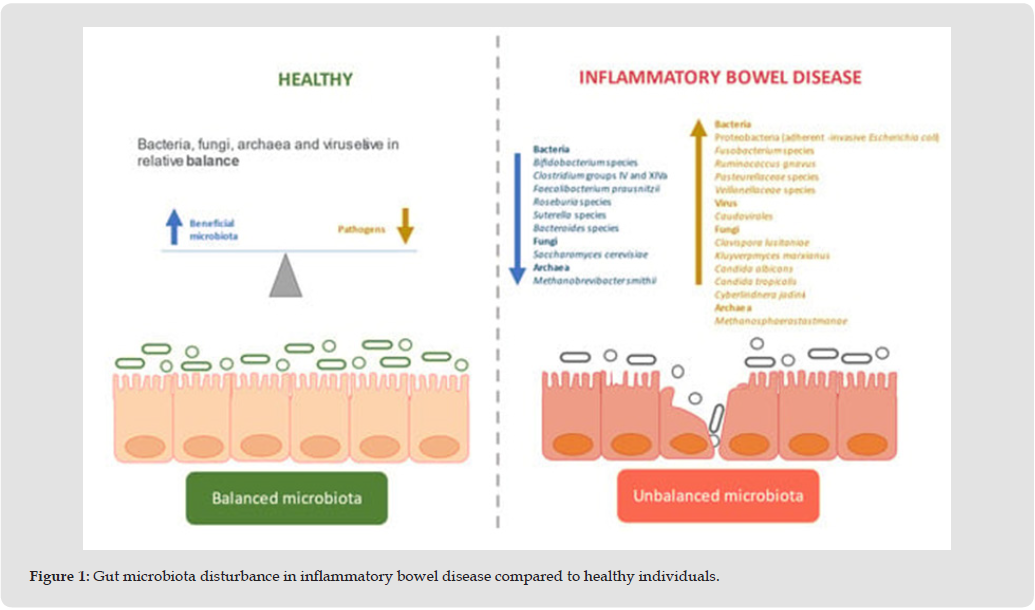
The intestinal microbiota represents the largest reservoir of microorganisms within the human body, comprising thousands of diverse bacteria, fungi and viruses, continually attracting the attention of researchers. The gut microbiome is considered one of the main actors in the development of inflammatory bowel diseases. It is now evident that the gut microbiota has a profound effect on the host immune system. The interactions between the gut microbiota and host immunity are complex, dynamic and context-dependent. It has been postulated that gut microbiota interact with these risk loci resulting in dysbiosis, and this subsequently leads to the development of inflammatory bowel diseases. Typical gut microbiota in inflammatory bowel diseases patients are characterized with decrease in species richness and many of the commensal, and beneficial, fecal bacteria such as Firmicutes and Bacteroidetes and an increase or bloom of Proteobacteria [7-9]. The gut microbiota and its metabolites have been shown to influence immune homeostasis both locally and systemically. Bacterial contents such as lipopolysaccharide and bacterial antigens can induce a systemic inflammatory environment. The biggest question in the field is whether inflammation causes gut dysbiosis or dysbiosis leads to disease induction or propagation.
Major advances have occurred in the knowledge of the pathogenesis of inflammatory bowel disease over the last decade, and perhaps the most major, and clinically advantageous of these advances has been the discovery of the microbiome as a key multifaceted component of inflammation [10]. Gut dysbiosis, characterised by significant changes in the composition and functionality of the gut microbiota, often leads to a reduction in bacterial diversity and anti-inflammatory anaerobic bacteria. At the same time, bacteria with pro-inflammatory potential increase. Several clinical observations suggest a link between the microbiome and the onset of intestinal inflammation [11- 13]. In recent years, several studies have highlighted the role of the microbiome in the pathogenesis of inflammatory bowel disease. Indeed, studies in human subjects have shown that the gut microbiome is different in patients with inflammatory bowel diseases compared with that in healthy control subjects [14]. Altered intestinal microbial composition (dysbiosis) and metabolic products activate aggressive mucosal immune responses that mediate inflammatory bowel diseases. This dysbiosis impairs the function of regulatory immune cells, which normally promote mucosal homeostasis. Normalizing and maintaining regulatory immune cell function by correcting dysbiosis provides a promising approach to treat inflammatory bowel disease patients. Alteration of microbiome ‘dysbiosis’ can induce inflammatory bowel disease in people with certain genetic backgrounds and environmental factors.
The presence of the microbiome and microbial products regulate the development and function of the immune system in the host. Dysbiosis can result from the exposure to various environmental factors, including diet, toxins, drugs and pathogens. There are many mechanisms by which plant foods improve inflammatory bowel disease. Several nutrients found in them have demonstrated a protective and anti-inflammatory effect for inflammatory bowel disease, including polyunsaturated fats and antioxidants [15-17]. The direct modulation of gut microbiome that could diminish chronic inflammatory responses and ameliorate adaptive immune responses is major pathway to stabilize inflammatory bowel disease. Consequently, there has been much interest in the possible benefits of microbiome-modulating interventions, such as probiotics, prebiotics, antibiotics, fecal microbiota transplantation, and gene manipulation in the treatment of inflammatory bowel diseases. In this review we will discuss the role of the gut microbiome in patients with inflammatory bowel diseases. Imuniplant has the most significant influence on shaping gut microbial community. This study discusses recent progress in understanding the dysbiosis of inflammatory bowel diseases and the basis for therapeutic restoration of homeostatic immune function by manipulating an individual patient’s microbiota composition and function. Bacteriotherapies (now called microbiota therapies) and dietary interventions are effective way to modulate gut microbiota (Figure 1).
Figure 1
In order to modulate the aberrant immune response in patients with inflammatory bowel diseases, the authors have developed therapies that target different players in the gut microbiome. The objective of this study was to demonstrate role of Imuniplant in the management of inflammatory bowel disease. The direct modulation of gut microbiome that could diminish inflammatory responses and ameliorate adaptive immune responses is major pathway to stabilize inflammatory bowel disease. Imuniplant modulation of the immune system has applications within the clinical setting, but can also have a role acting to reduce or delay the onset of inflammatory bowel disease. Recent reports indicate that dysbiosis is increased in inflammatory bowel disease. Imuniplant modulation of the immune system can also have a role in the inflammatory bowel disease, acting to reduce or delay the onset of immune-mediated diseases. Ongoing research in this field will ultimately lead to a better understanding of the role of Imuniplant in chronic inflammation in patients with inflammatory bowel disease. Ample evidence suggests that plant-based diets are protective against inflammatory bowel disease, and have the potential to produce improvements in symptoms. Imuniplant has an anti- inflammatory effect by controlling free radicals leading to oxidative stress and pro-inflammatory cytokines involved in the pathogenesis of inflammatory bowel disease.
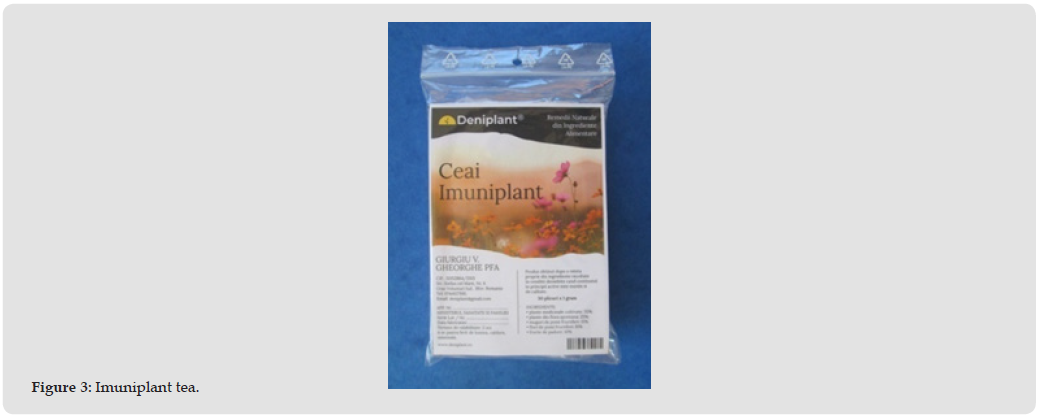
Imuniplant may restore the composition of the gut microbiome and introduce beneficial functions to gut microbial communities, resulting in amelioration or prevention of inflammatory bowel disease. Dysbiosis can disturb the host energy homeostasis and resulting imbalance can promote proinflammatory environment, leading to predisposition/ progression of inflammatory bowel disease. Gut bacteria are separated from the host through a physical barrier such as skin or gut epithelial lining. However, gut dysbiosis can compromise gut barrier integrity, resulting in translocation of bacterial contents across the epithelial barrier (leaky gut) [18-21] (Figure 2). Imuniplant tea for inflammatory bowel disease, and metabolic diseases. Imuniplant tea is a natural genetic immunomodulator of the human microbiome that contributes to the removal of microbiota dysbiosis and thus inflammatory bowel disease, and metabolic diseases can be prevented and removed. Imuniplant contains: cultivated medicinal plants=35%, plant from the spontaneous flora=25%, buds of fruit trees=15%, flowers of fruit trees=15%, berries=10% (Figure 3).
Figure 2
Figure 3
Form of Presentation
Dry and ground powder packed in tea bags of 1 gram each. 30 envelopes/pack.
Properties
Natural genetic immunomodulator, regulates cellular metabolism, regulates the central nervous system, it modulates the activity of important neurotransmitters, physically and mentally energizing, remineralizing, increases resistance to fatigue, natural modulator of the intestinal microbiome.
Indicated In
Inflammatory bowel disease, autoimmune diseases, metabolic disorders, diseases of the internal organs, liver, kidneys, lungs, hyperacidity, metabolic acidosis, metabolic syndrome, microbiome dysbiosis.
Administration
740 ml of tea that is drunk daily.
Duration of Treatment
In relation to the evolution of the disease (2-6 months).
Contraindications
There are not.
Side Effects
They did not appear after long-term use
Terms of Validity
2 years from the date on the prospectus; it is kept in the dark and at a constant temperature
Other Specifications
It can be used in parallel with the allopathic medication established by the attending physician. These data suggest a wide spectrum of positive effects exerted by Imuniplant, with a high potential for a therapeutic use in humans. Increasing evidence shows that Imuniplant has therapeutic effects on inflammatory bowel diseases by regulating the intestinal microbiota. Understanding the composition, dynamics, and stability of a patient’s microbiota and identifying changes that occur during disease onset or progression can aid in the development of personalized microbiota-based therapie [22-24] (Figure 4). As therapies based on the modulation of gut microbiota becomes more common, future studies should include individual gut microbiota differences to develop personalized therapy for inflammatory bowel diseases [25,26] (Figure 5).
Figure 4
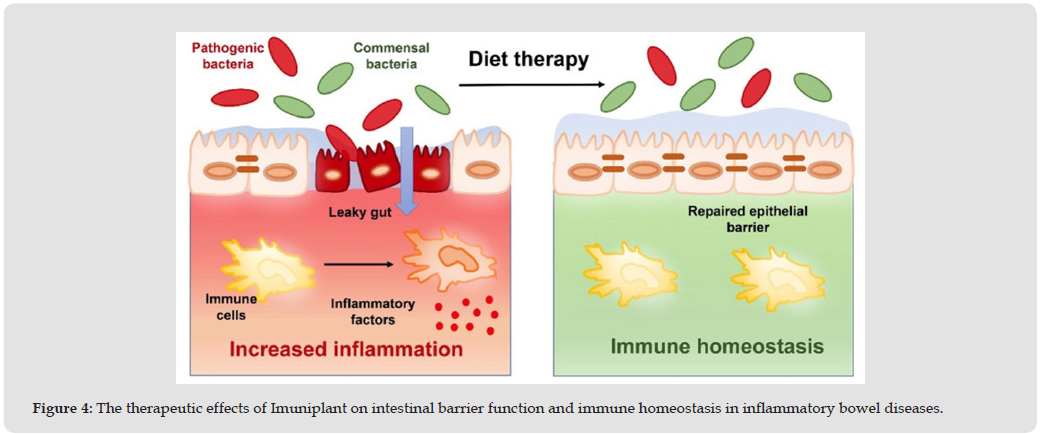
Figure 5

Inflammatory bowel diseases develop via convergence of environmental, microbial, immunological, and genetic factors. Alterations in the gut microbiota have been associated with development and progression of inflammatory bowel diseases. The gut microbiota is considered to be a master regulator of immune homeostasis. Besides modifying the gut microbiota, plants modulates the immune system in patients with inflammatory bowel disease. The utilization of such treatments, in individual or combined regimens, may manipulate the gut microbiota in a way that will prove to be a “game-changer” in modern medicine. A better understanding of the role of the microbiome in health and disease will help us harness the power of commensal bacteria for the development of novel therapeutic agents to treat inflammatory bowel disease.

International Association of Landscape Archaeology, Czech Glass Society, Czech Republic

Department of Chemistry, Semenov Institute of Chemical Physics, USSR Academy of Sciences, Moscow, Russia

Neurology, LA BioMed Research Institute, USA

Associate Professor at Department of Breast and Thyorid Surgey, Chongqing General Hospital, China

Professor of Nuclear Medicine, Faculty of Medicine and Surgery, University of Milan, Milan, Italy





 Abstract
 PDF
PDF



























