info@biomedres.us
+1 (502) 904-2126
One Westbrook Corporate Center, Suite 300, Westchester, IL 60154, USA
Site Map
 ISSN: 2574 -1241
ISSN: 2574 -1241
ISSN: 2574 -1241
Received: July 12, 2025; Published: July 24, 2025
*Corresponding author: José Antonio Velázquez-Domínguez, Department of Basic Disciplinary Sciences, National School of Medicine and Homeopathy, National Polytechnic Institute, Av. Guillermo Massieu Helguera 239, La Escalera, 07320 Mexico City, Mexico
DOI: 10.26717/BJSTR.2025.62.009791
Introduction: Worldwide, in 2022 every 40 seconds a person loses their life due to self-harm, and out of every
10 suicides, 8 correspond to men and 2 to women; In Mexico for 2022, it was the third cause of death in men
between 15 and 29 years of age.
Objective: To analyze the incidence of suicide in Mexico.
Material and Method: The present work is an observational, descriptive, longitudinal and retrospective study,
through a bibliographic review of the natural history of Major Depressive Disorder (MDD), current mental health
regulations and published epidemiological bulletins. The results were analyzed by calculating the mortality rate
grouped by state, sex, and age range.
Results: 72,202 deaths by suicide occurred within the national territory from 2011 to 2021, with a greater
concentration in the Northeast and Northwest mesoregions of the country; The suicide death rate per 100,000
inhabitants increased from 9 to 12 in men and from 1.8 to 2.59 in women; The most commonly used method for
both genders was hanging, and the most commonly chosen site was the home itself.
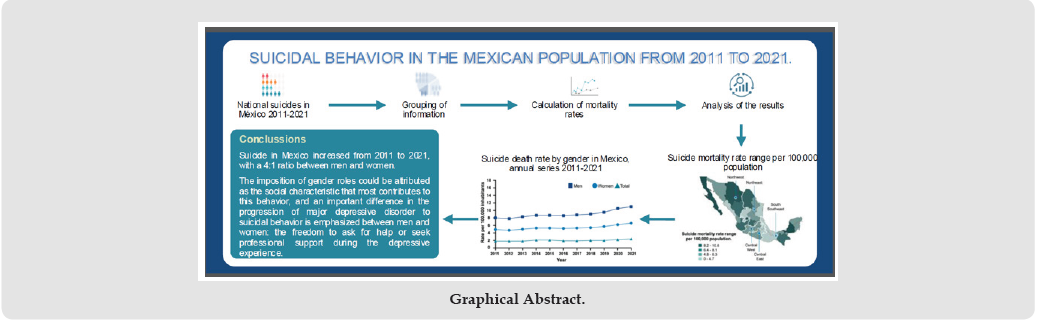
Conclusions: Suicide in Mexico has increased with an incidence of 4:1 men vs. women, probably attributed to
the little social freedom that men have to seek professional help in depressive stages, promoting the evolution of
a major depressive disorder to suicidal behavior (Graphical Abstract).
Keywords: Major Depressive Disorder; Mental Health; Suicidal Context and Suicide
Abbreviations: WHO: World Health Organization; MDD: Major Depressive Disorder; ASD: Are Mood Disorders; DA: Dopamine; NA: Norepinephrine; BDNF: Brain-Derived Neurotrophic Factor; PAHO: Pan American Health Organization
The Seattle Longitudinal Study (SLS), initiated in 1956 by Dr. K. Warner Schaie, is one of the most comprehensive psychological research studies on cognitive aging. It aims to investigate various aspects of psychological development throughout adulthood, defined within the age range of 22 to 70. It focuses on individual differences and differential patterns of change for selected psychometric abilities from young adulthood to midlife to old age. It has determined the magnitude and relative importance of age changes in various cohorts in different skills (About SLS – Seattle longitudinal study, n.d.). The study began with a random sample of 500 adults in Seattle, with their ages ranging from their 20s to their 60s. The study has continued in seven-year intervals since 1956, with each interval inviting an average of 375 new participants (selected from the Group Health Cooperative membership with 400,000 members) (Warner Schaie, et al. [1]). In addition to the main study, siblings of main study participants also participated in studies to determine the extent of family similarity in mental abilities and other psychological characteristics (Seattle longitudinal study – UW department of psychiatry & behavioral sciences, n.d. [2]). The addition of grandchildren to the primary survey in 2002 made SLS the first three-generation study of cognitive abilities ever conducted in the United States. Despite the passing of Dr. Schaie in 2015, the SLS study continues in his legacy.
The cohort-sequential longitudinal study, which examines cognitive and psychosocial change in multiple birth cohorts over the same chronological age, is unique and informative to researchers and the general public. Its findings have been used in legal proceedings on age discrimination in employment and policy discussion regarding mandatory retirement practices in the United States and Canada (Seattle longitudinal study – UW department of psychiatry & behavioral sciences, n.d. [2]).
This narrative review aims to
a) Summarize key findings from the Seattle Longitudinal
Study, including determining to what degree it answered its five
key objectives: ‘whether intelligence changes uniformly throughout
adulthood or if there are different life-course-ability patterns;
at what age and at what magnitude decrement in ability can be
reliably detected; the patterns of individual differences in cognitive
aging; the determinants of individual differences in cognitive
aging; and whether educational interventions can reverse intellectual
decline’ (Seattle longitudinal study – UW department of
psychiatry & behavioral sciences, n.d. [2]). Additionally, this review
aims to
b) Examine its impact on the theories of brain development
and cognitive aging,
c) Identify opposing or conflicting viewpoints from contemporary
studies, and
d) Suggest possible loopholes or distinct fields worthy of further
research. The literature review will then be followed by a
more comprehensive systematic review answering the following
research question: “How have the findings of the Seattle Longitudinal
Study been supported or challenged by subsequent research?”.
Graphical Abstract
Suicide and the Basis of the Emotional Process
Suicide is a universal, timeless phenomenon, with diverse cultural and socio-political conceptions. The World Health Organization (WHO) defines it as “The act with a lethal result, deliberately initiated and carried out by the subject”. It is considered a psychiatric emergency, so it requires a first-hand diagnosis for a quick and effective intervention, aimed at alleviating the immediate situation [1,2]. On the cusp of suicide are mood disorders (ASD), such as major depressive disorder (MDD), whose natural history has a wide range of evolution. To understand depressive disorder, it is necessary to delve into the composition of its origin, starting from the bases of the emotional process: emotion, feeling, mood, and affect [3,4]. Emotions are defined as immediate responses to internal and external stimuli, with adaptive and social functions. On the other hand, feelings are abstract and non-objective sensory states, with a duration that can extend over time, related to the faithful evocation of past experiences. Mood and humor are considered synonymous, characterized by their persistence and subjectivity, while affect arises from primary bonds and is perceived as the interpersonal expression of mood. Mood disorders can cause fluctuations and contribute to the development of behavioral disorders [5]. Healthy people experience a wide variety of moods and display an equally large repertoire of affective expressions.
When a person is faced with alterations in their mood (stressful events, unexpected changes, loss, or aggression), their mood can fluctuate, resulting in a strongly elevated or depressed mood. All of this contributes to the development of various disorders that are reflected in the individual’s behavior [6]. In a depressive state, sadness is perceived without apparent cause or disproportionate in intensity and/ or duration in relation to the reason that triggers it. This pathological sadness can be accompanied by other related feelings and in many cases, patients experience the feeling of “loss of feelings”, losing the ability to: get excited, enjoy things, take an interest in others and relate to others. Negative ideas about themselves, their environment, their past or their future also appear [7]. Being one of the main causes of disability and one of the most prevalent mental disorders worldwide, MDD affects 3.76% of the world’s population [2], presents a condition of variable pathochrony with a predominance of the recurrent pattern, associated with: A deterioration in quality of life, high health and pharmacological costs, a great burden of personal and family suffering, frequent comorbidities, increased risk of suicide, and a high mortality rate [8].
Major Depressive Disorder
Etiopathogenic Theories of MDD: One of the most common models in the etiology of depression is the diathesis-stress model, which states that the development of MDD is the result of the interaction of genetic and environmental factors, establishing that negative thoughts and interpretations of these events can be considered cognitive causes of the development of depression [9,10]. However, having experienced adverse or stressful events does not always lead to depression. For this reason, the transactional model of stress proposes that stressful situations are the result of interactions between the subject and his or her environment, where the impact of the given stressor is mediated by the way the person interprets the event and the psychological, social, and cultural resources they perceive to cope with the situation [11]. It is also associated with a more organic approach, which contemplates the monoaminergic theory (deficiency of neurotransmitters that mediate affective processes) and associated comorbidities such as obesity, terminal illness, diabetes mellitus, generalized anxiety and other SADs [12,13].
Diagnostic Criteria: MDD is characterized by a predominantly depressed mood, decreased interest or pleasure in almost all activities, a change of more than 5% of body weight in less than 1 month, insomnia, or hypersomnia. It can be accompanied by more non-specific symptoms such as fatigue, feeling of worthlessness, difficulty concentrating, among others; all of them present for a minimum period of 2 weeks [14]. The current diagnostic criteria are those established in the Diagnostic and Statistical Manual of Mental Disorders, 5th Edition (DSM-V) and in the International Statistical Classification (ICD-10).
Treatment of MDD: The main objective of antidepressant treatment, whatever its modality, is to achieve total remission of symptoms and allow the recovery of the patient’s functionality.
Non-Pharmacological Treatment: All patients with major depression should be referred to Cognitive Behavioral Therapy (CBT), in 1-hour sessions per week for a period of 8 to 16 sessions and response should be reassessed. CBT can be individual, group, and added to parent/caregiver therapy [15]. Likewise, psychotherapy is recommended when there is a contraindication to pharmacological management, such as in the case of: Pregnancy, breastfeeding, complex medical illness with polypharmacy, presence of interactions with other medications, history of good response to psychotherapy in previous episodes, or history of poor response to pharmacological monotherapy [16].
Pharmacological Treatment: The indications for starting pharmacological treatment with antidepressants are:
1. Diagnosis of moderate or severe depression, and some cases
of mild depression.
2. Mild or moderate depressive symptoms persist despite other
interventions.
3. Mixed depression and anxiety disorder, always in dual therapy
with CBT.
Current antidepressant treatments have proven but limited efficacy, achieving remission rates of around 30% with monotherapy, 60% with monotherapy plus CBT, and subsequently higher as more therapeutic strategies are tried, achieving a remission rate of 67% in supervised treatment with combined drug therapy and CBT [12,17]. To date, the vast majority of drugs used have a common denominator: their action on the monoaminergic system. Regardless of its mechanism of action, the end result is the regulation of one of the following neurotransmitters: serotonin (SERT), dopamine (DA), and norepinephrine (NA). The increased availability of neurotransmitters in the synaptic cleft allows for downregulation of postsynaptic receptors, as well as their desensitization, and these adaptive changes in the receptors result in alterations in the expression of certain genes, including neurotrophic factors such as brain-derived neurotrophic factor (BDNF), allowing synaptogenesis [18]. Side effects usually appear within the first days of starting pharmacological treatment, due to the increase in the neurotransmitters involved, while the clinical effect of improvement of depressive symptoms can take 2 to 4 weeks after the start of treatment, as it requires these adaptive changes in the receptors [19].
Suicidal Ideation
Suicidal ideation is defined as thoughts about taking one’s own life, with varying degrees of intensity and elaboration. It can also include the feeling of being tired of life, the belief that life is not worth living, and the desire not to wake up from sleep. Although different levels of severity are expressed, there is not necessarily a continuity between them [20].
Risk Factors for Suicidal Behaviour
There are multiple aspects that contribute to suicidal behavior (hereditary and traumatic history, substance use, metabolic comorbidities, etc.), and a history of previous suicide attempts is considered the most robust predictor of completed suicide [21]. In clinical populations, depression-anxiety comorbidity has been reported to be the most important risk factor for this behavior, unlike these conditions separately [22]. Trauma is the result of an event that the person does not find meaning in, and that they experience as something insurmountable and unbearable. Suffering physical or sexual interpersonal violence during childhood can generate trauma that alters the cognitive development of the victim, altering the healthy emotional process, which leads to a lack of coping resources throughout life while promoting perspectives of misunderstanding and hopelessness, which contributes to suicidal behavior [23].
Epidemiology of Suicide in Mexico
In the world, every 40 seconds a person loses their life due to self-harm; out of every 10 suicides, 8 belong to men and 2 to women, according to figures from the National Institute of Statistics and Geography [24]. In Mexico, completed suicide rates are below the world average (11.4 vs. 6.5 per 100,000 inhabitants). Even so, it has become a major public health problem, as between 1970 and 2007 rates increased by 175%, to the detriment of young people, among whom it is already the third leading cause of death [25,26]. In 2021, the rate of deaths by suicide registered by state per 100 thousand inhabitants in 2022 was 6.5. The states with the highest rates were: Chihuahua, with 15.1; Yucatán, with 14.5 and Aguascalientes, with 12. The states that presented the lowest rates were: Guerrero, with 1.3; Ignacio de la Llave’s Veracruz, with 3.1 and Baja California, with 3.2 [26].
“Code 100”
As of 2022 in Mexico, there is “Code 100” as one of the actions of PRONAPS, it is a support system in clinical decision-making in suicidal behavior in general hospitals or care centers within the integrated networks of the health system (RISS). This system makes it possible to equate the care of the user of mental health services with the user of public health services, minimizing stigma within the framework of the 4 cross-cutting axes: gender equity, interculturality, life cycle and human rights [27]. Within suicidal behavior interventions, the first level of care is in charge of detection, crisis intervention, care and subsequent referral to the second level, in addition to follow-up of the patient. The second level of medical care is responsible for providing outpatient or inpatient care, referral to specialized units if necessary, and again following up. Finally, at the third level, the referred patient will be attended, given definitive treatment and counter-referral. The patient with suicidal attempt or tendency may be admitted to a hospital unit in 4 ways: Transfer by emergency services, referrals from: ambulatory medical unit, psychiatric unit or by the patient’s or their relatives [27]. Emergency services have progressively assumed important care responsibilities in mental health. In recent years, the care of urgent psychiatric cases has been carried out by general practitioners and other specialties of the emergency services and this continues to be the rule.
Under these conditions, the emergency services staff of general hospitals must be prepared to deal with the demands of care of this nature and, in addition to the challenge of intervening in mental health, the context of the emergency makes the work more complex [28]. Due to the high risk of committing suicide in a repeated attempt, an adequate quality of care in the emergency medical service represents a sometimes unique opportunity to improve the prognosis of these patients.
National Suicide Prevention Program (PRONAPS)
Mexico is the first country in the Region of the Americas where the Government has made available to the general population a public program for the prevention of HIV. nationally approved suicide. It began as a “National Workshop for the Comprehensive Approach to Suicide Prevention” in 2019, in a collaboration of the Federal Ministry of Health with the Pan American Health Organization (PAHO) and the Faculty of Psychology of the National Autonomous University of Mexico. Thus, a document was generated that grew to form the National Suicide Prevention Program (PNPS), which in May 2020 began with the implementation of formal actions [27].
On May 29, 2023, the “Decree creating the National Commission on Mental Health and Addictions as a decentralized administrative body of the Ministry of Health” was published, published in the Official Gazette of the Federation, so that the Technical Secretariat of the National Council of Mental Health (STCONSAME) is part of the now National Commission on Mental Health and Addictions (CONASAMA), modifying the acronym of the program to PRONAPS [29]. The objective of PRONAPS is to establish intersectoral intervention mechanisms to assist persons seeking care for suicidal behaviour and to reduce suicide mortality through prevention, care, postvention and research strategies. In this program, some preventive actions were determined to anticipate suicide:
1. Promote healthy social relationships, communication at
home and observe changes in behavior.
2. Promote healthy lifestyle habits such as sports and/or cultural
activities.
3. Manage stress.
4. Provide young people with specialized contacts in emotional
care, where trained personnel must be available to detect and
act in the face of suicidal risk behavior.
5. Promote emotional health services [30].
Accessibility to Mental Health Services in Mexico Among the resources available in PRONAPS, since 2021, multiple virtual directories of 33 Mental Health Units (Psychiatric Hospitals) distributed in 25 of the 32 states of the Mexican Republic have been available to the general public; About 1,019 Specialized Medical Units, Comprehensive Mental Health Center (UNEMES-CISAME), Community Mental Health Centers and Health Centers with a Mental Health component distributed throughout the country; 8 national mental health hotlines, one of which is available 24 hours a day, 365 days a year, and 8 more hotlines, statewide. Most in-person services are free, some have minimal recovery fees, and all telephone services are free of charge. In addition, a Network of Emotional Support Services for Health Personnel “Let’s take care of who takes care of us” is managed aimed at preserving and attending to the mental health of health professionals in Mexico, with multiple screening and care programs and 1 specialized telephone line, not excluding these professionals from attending services aimed at the general population [31].
This work is an observational, longitudinal and retrospective study of a descriptive nature, carried out through a bibliographic review of the natural history of MDDs reported in our country. The main legal regulations on mental health and suicide in Mexico, in force in 2021, were considered. The data were compiled based on the annual reports of the INEGI; of the National Epidemiological Surveillance System (SINAVE), the National Population Council (CONAPO) and the Unified Information System for Epidemiological Surveillance (SUIVE), in the decade 2011-2021. Suicides by men and women, regardless of age, within Mexican territory in the period from January 2011 to December 2021 were included. 163 self-harming deaths in which the sex of the deceased person, the state of the event or that were carried out abroad were not recorded. The information was concentrated in a database which was grouped by: year, state, sex and age range.
Subsequently, the suicide mortality figures in men and women were grouped according to the state into five mesoregions, with a similar number of inhabitants; The mesoregions were organized by the National Development Plan 2001-2006 and updated in 2017 by the Federal Electoral Institute because they are also federal multi-member electoral districts, which are: Northwest: Baja California, Baja California Sur, Chihuahua, Durango, Jalisco, Nayarit, Sinaloa and Sonora; Northeast: Aguascalientes, Coahuila de Zaragoza, Guanajuato, Nuevo León, Querétaro, San Luis, Tamaulipas and Zacatecas; Central West: Colima, Hidalgo, State of Mexico and Michoacán de Ocampo; Central East: CDMX, Guerrero, Morelos, Puebla and Tlaxcala; Southeast: Campeche, Chiapas, Oaxaca, Quintana Roo, Tabasco, Veracruz Ignacio de la Llave and Yucatán [32,33]. The characteristics of the people who died by suicide that were considered were: the method of self-harm, the place of occurrence, marital status, occupation and level of education. The characteristics of the event that are published in the INEGI bulletins have not been continuously monitored and are not available in all the annual bulletins published in the period studied; However, the results and analysis of those available are shown, specifying the year or years published for each case.
The calculation of the suicide mortality rate and by gender in each state of the Mexican Republic was carried out, with the support of the data referred to in CONAPO, for a subsequent annual monitoring of the suicide death rate per 100 thousand inhabitants of: the total population; by gender and finally the age range of the young population from 15 to 29 years old was considered, from which the rate ratio was calculated because it was the most susceptible. The results are shown in histogram graphs that allow proportionality to be appreciated with a ratio scale adjusted to the limit of each graph, which allows a better observation and appreciation of the data.
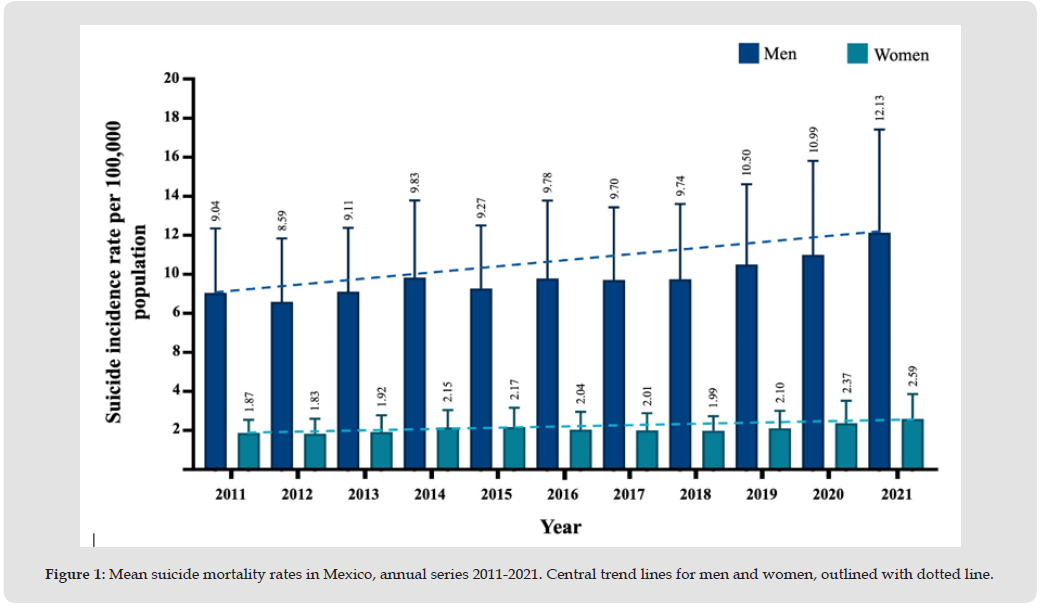
72,202 deaths by suicide occurred in the national territory. Temporarily, an annual upward trend is observed with 5,718 deaths due to self-harm in 2011, which amounted to 8,432 cases registered in 2021. Of the total contemplated, 59,389 suicides were carried out by men and 13,792 by women. There are 45 deaths due to self-harm in which the gender was not specified and are not shown in the graphs because they represent only 0.6% of the total. As part of the statistical analysis, the annual averages of suicide mortality incidence rates, distributed by sex, are shown (Figure 1). The large proportion of men who died by suicide compared to the proportion of women is visible. However, the suicide mortality rate increased more in women than in men (38.3% and 34.23% respectively) throughout the decade. The annual suicide mortality rate per 100,000 inhabitants shows an increasing trend in the decade 2011-2021. In the total population, the mortality rate from self-harm in 2011 was 4.9 (Figure 2A); Until 2019 it had a constant average increase of 0.1 per year; However, in 2020 the rate increased by 0.5 (from 5.7 to 6.2 per 100,000 inhabitants) and rose by 0.4 (6.6) at the end of 2021. In the period 2014-2015, the rate in the total population, as well as the rate by sex, remained unchanged.
Figure 1
In the male population, the mortality rate due to self-harm in 2011 was 8.0; The increase in the average suicide mortality rate was 0.3 per year in the decade studied; with a suicide death rate of 11 at the end of 2021. The rate of suicides carried out by women had a more variable evolution, but of less intensity. In 2011, a rate of 1.8 was reported; Its largest increase was in 2014, which increased by 0.3 (2.1); decreased by 0.2 in 2016 (1.9) and increased by 0.1 in 2018 (2.0). By 2020, the rate was 2.2 and finally rose to 2.4 in 2021. This gives us an increase in the average suicide mortality rate in women of 0.06 per year, which is 5 times lower than in men (Figure 2A). Within the age ranges reported, the population of adolescents and young people aged 15 to 29 of both sexes was the age group most affected by this entity in the period studied, with a suicide rate registered per 100,000 inhabitants from 7.3 in 2011 that increased to 10.4 in 2021. This evolution occurred with a constant increase each year, maintaining the same value only in the period 2015-2016 (rate of 8.1), with an increase in the rate of deaths by suicide in young people aged 15 to 29 years on average of 0.31 per year.
Figure 2
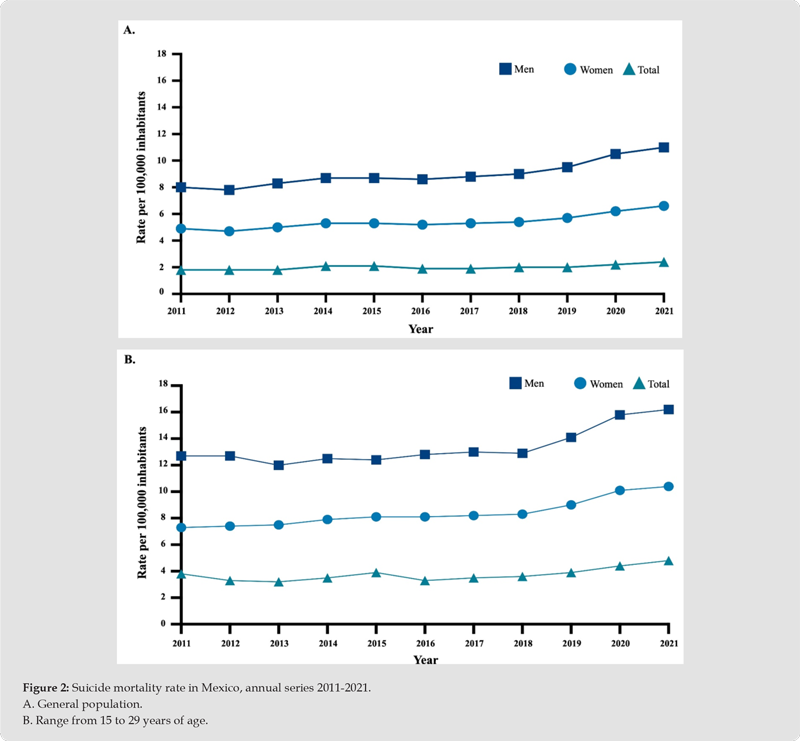
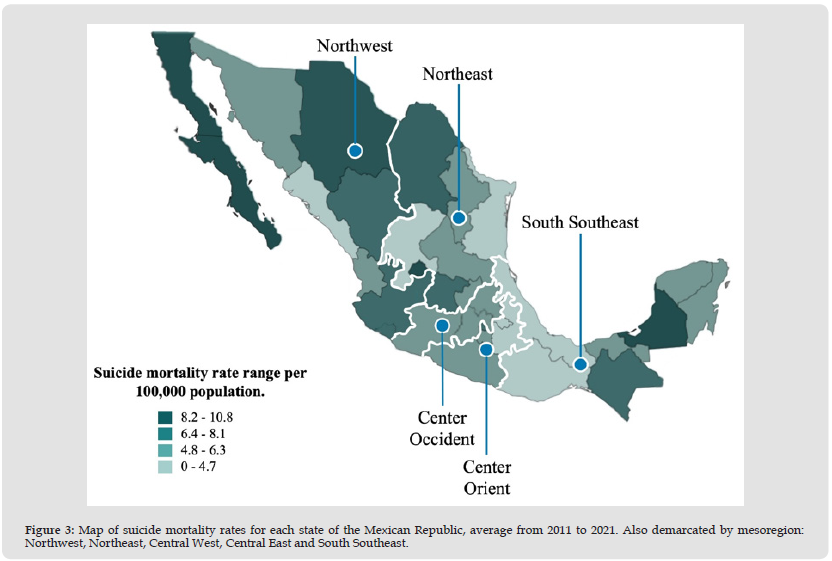
The rate in young men increased by 3.5 in this decade (12.7 to 16.2) and the rate in women only increased by 1 (3.8 to 4.8) per 100,000 inhabitants. In addition, in this age range the proportion of deaths by suicide in women versus men increases compared to the general population, with 1:3 suicides in women versus men (Figure 2B). Of the 72,202 suicides that occurred in the Mexican Republic in the decade 2011-2021: 19,144 occurred in the Northwest; 18,207 in the Northeast; 13,650 in the Southeast mesoregion; 11,756 in the Midwest and finally 9,445 in the Midwest, (Figure 3) schematizes the average suicide mortality rate at the end of the decade, by state, in ranges of 0-4.7, 4.8-6.3, 6.4-8.1 and 8.2-10.8. The states with the highest incidence of suicides were: Aguascalientes, Campeche, Baja California Sur, Baja California and Chihuahua; followed by Colima, Coahuila de Zaragoza and Chiapas. This denotes a higher concentration of suicides in the northwest and northeast of the country. Male suicides have an average incidence in the decade 2011-2021 of: 1,436 in the Northwest; 1,373 in the Northeast; 835 in the Center-West; 661 in the Central East region and 1,011 in the South-Southeast mesoregion of the country. While suicides committed by women closed with an average of: 302 in the Northwest mesoregion; 281 Northeast; 233 in the Center-West; 196 in the Central East and 229 in the Southeast.
Figure 3
In addition, the lethality methods used were analyzed: hanging, strangulation or asphyxiation; shot; Poisoning by: gases, vapors, alcohol, medications, drugs, biological substances or pesticides and other causes such as: jumping from a high place, on transport routes or injuries with a sharp object. The method most used by the general population was hanging, 48,716 cases carried out by men. Of the remaining 10,673 deaths, shooting remains the second most used lethal method (5,367 cases). In women, 10,341 of the suicides were carried out by hanging or suffocation; Poisoning is the second most used method (2,362 deaths), followed by other causes and, finally, the shooting method with 43 suicides on average per year (Figure 4A). INEGI collected information on people who died by suicide in the 2011-2021 annual series: Site of occurrence of the suicidal event, marital status, occupation and education. The place of occurrence of the suicides registered in 2012 and 2013 was mostly in the private home of the deceased with 72.3 and 76.8% each year; 6 and 9.3% occurred on the street or on the road; 8.8 and 6.2% in another site and unspecified site, 8.2 and 6.6% in 2012 and 2013, respectively.
Figure 4
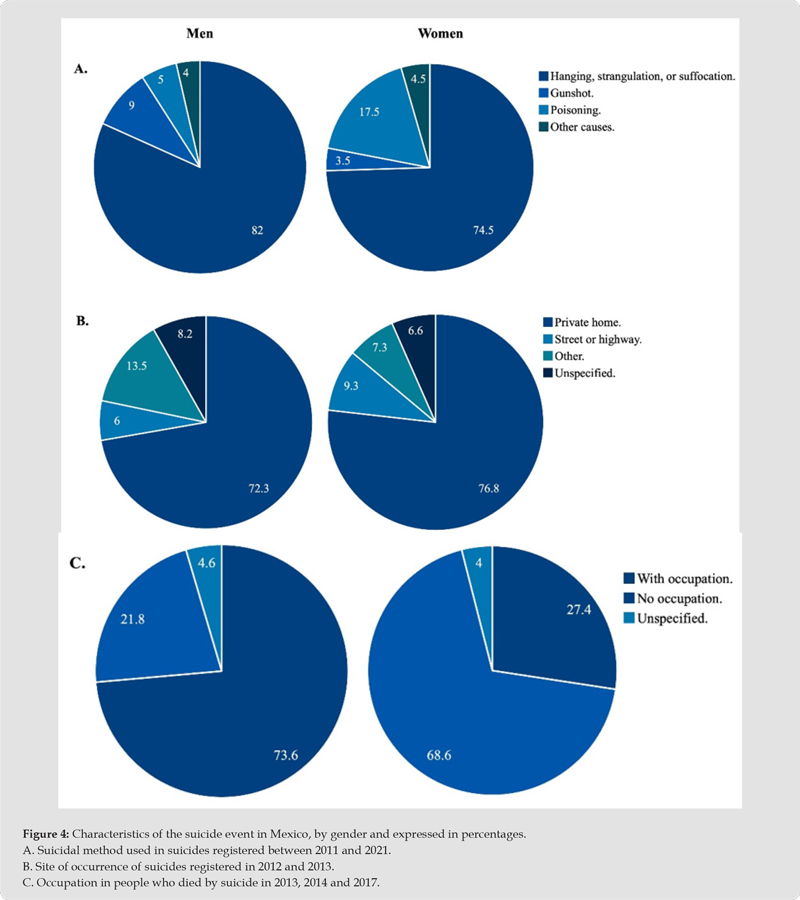
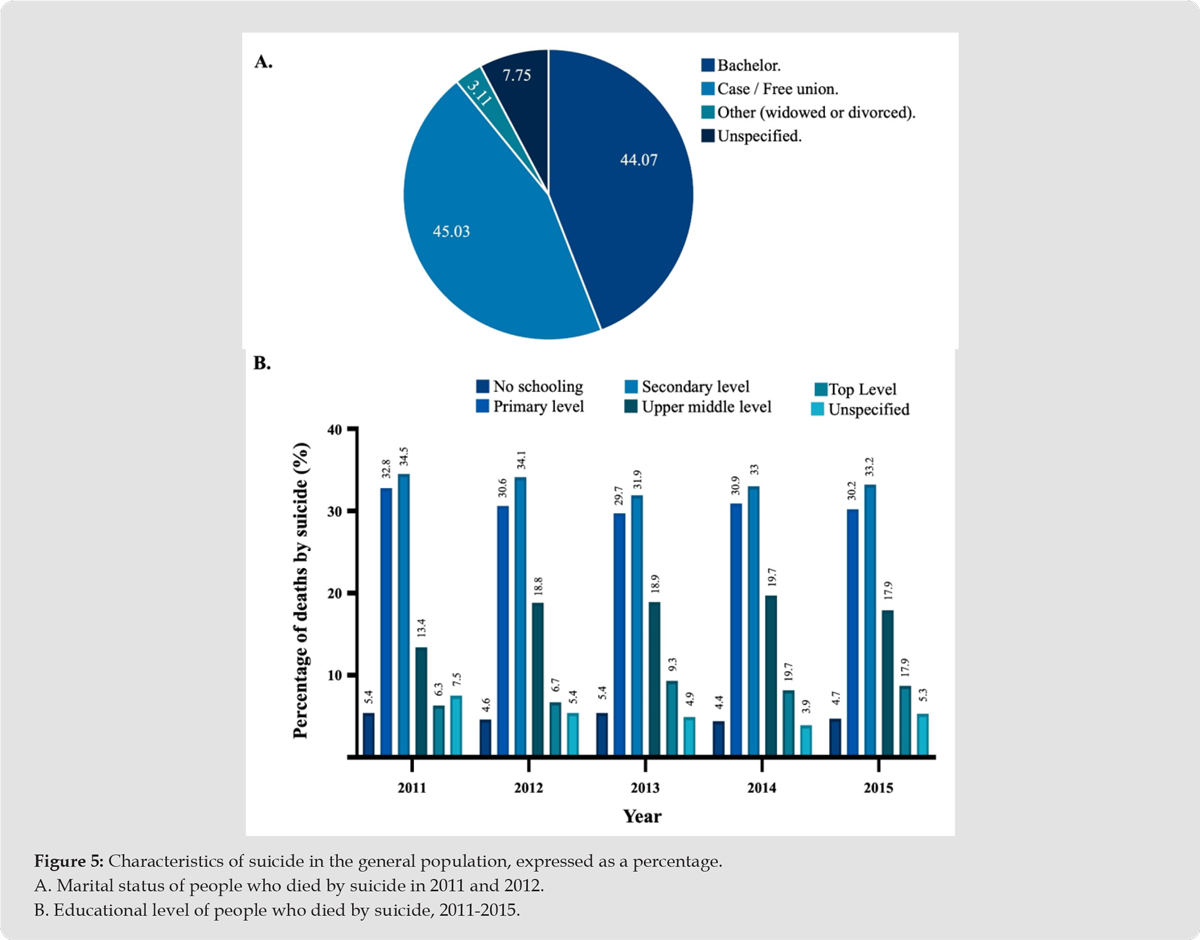
In 2011, 3% of suicides occurred on farms and 1.8% in sports, commercial, or service and industrial areas (Figure 4B). The employment situation of people who died by suicide was recorded only for the years 2013, 2014 and 2017, grouped into: The percentage of suicides with occupation, which decreased 10.7% in men and 43.4% in women from 2012 to 2017; The proportion of unemployed suicides was not specified, which remained at an average of 21.83% in men and 68.63% in women in the period 2013-2017, and the employment status of 7.2% of men and 10% of women who died by suicide in the same period (Figure 4C). The marital status of the inhabitants who committed suicide in those over 12 years of age was considered, occurring only in 2011 and 2012. The proportion of people who were married or in a common-law union in those 2 years was 45.8 and 44.3% respectively; singles 44.3 and 43.95%; unspecified marital status 3.7% and 11.8% and other marital statuses 6.2% in 2011 (Figure 5A). The educational level of people who died by suicide in the decade studied was recorded only between 2011 and 2015.
On average, 4.9% of the people who died by suicide in this period had no educational level at the time of their death; 30.83% had some type of primary education; 33.33% had completed some type of secondary education; 17.71% had some degree of secondary or preparatory education; 7.83% had a professional degree or higher and in 5.40% of the cases the level of schooling was not specified. Throughout this five-year period, the percentage of people who died by suicide without schooling, with some degree of primary school and with some degree of secondary school decreased: 0.7%, 2.6% and 1.3% respectively. The proportion of suicides with some secondary or preparatory education increased by 4.5%, as did the proportion of suicides with a professional degree or higher, which increased by 2.4% (Figure 5B).
Figure 5
The existence of an underreporting of suicide mortality due to the lack of social acceptance due to the high cultural sensitivity of this problem and deaths caused by aggression by third parties, registered as self-harming deaths, is not ruled out. However, all the data available in official sources of the Mexican epidemiological and statistical systems were considered. The suicide ratio between men and women in Mexico between 2011 and 2021 was 4:1, which coincides with the gender ratio published by the WHO worldwide [2]. Failure to recognize depression as a mental illness, resistance to asking for help, and emotional repression are the most important pillars of the progression of MDD to suicide attempt in men. As Barroso [34] explains: In the case of women, suicide constitutes a way out of suffering mainly due to various types of violence (physical, sexual, psychological, economic) associated with the invisibility of their domestic work; However, despite these elements, a protective factor for women is the fact that they tend to seek and ask for help more frequently. Of the lethal method used in the 73,226 deaths by suicide recorded between 2011 and 2021, hanging includes 80.7% (59,087) of the total population, a proportion consistent with the publication of Borges, et al. [35], where of 3,614 deaths by suicide in 2007, 2,794 (77%) were carried out by hanging. The selection of the suicide method used coincides with that obtained in the research of Puentes-Rosas, et al. [36] demonstrating that the trend of the method used warns:
The availability of the necessary resources for this method. Easy access to firearms, drugs and other medicines, as well as little or no supervision of adolescents, are conditions that favor suicide attempts.
Acceptability on the part of the suicide. The irresponsible dissemination of suicidal methods and the social context by the media generates a misperception of this phenomenon, considering it as an act of courage by expressing it with a positive connotation such as “successful suicide” or with precise and sometimes graphic descriptions, which promote retaliation.
The lethality of the method. Since patients with suicidal ideation could consider non-lethal complications of the selected suicide method; That women consider more those methods that damage their image less, such as poisoning, as well as the mental state of the patient at the time of the psychiatric emergency.
The spatial distribution of suicide mortality in Mexico from 2011 to 2021 is grouped with greater concentration in the Northwest, Northeast, and South-Southeast areas of the country. In addition, the states with the highest incidence of suicide mortality prevail over time. The suicide mortality rate per 100 thousand inhabitants had its largest increase from 2019 to 2020 (0.5), attributed to the first records of suicides committed during the COVID-19 pandemic, the impact it had on mental health was a balance between adaptive and maladaptive mechanisms such as eating disorders, sleep, mood and drug addiction. Although the Mexican population showed high levels of resilience in the face of the COVID-19 pandemic, it was observed that patients who had not been diagnosed with anxiety or depression before confinement presented higher scores for clinical manifestations, compared to those who already had a previous diagnosis. This can be explained by the possibility that previously diagnosed patients were already under some psychotherapeutic and/or pharmacological treatment that would allow them to better cope with the psychosocial consequences of the pandemic, related to the difficult access to mental health services in person in that period of time [37]. This fully corresponds to the significant increase in suicide mortality rates for the general population, men, women, and adolescents across the country.
Despite the fact that women have many more cultural barriers to their personal development and security, it is men who still have the idea of weakness or shame in the face of emotional difficulties, which represses their emotional process, truncates the development of their feelings and finally alters their mood more often than in women. Therefore, an ASD can progress to a suicide attempt without having asked for help. In addition, the adolescent population is the most affected by the cycle of violence in their current life course and in their childhood; Lacking emotional intelligence and management strategies, they intensify more rapidly in the natural history of MDD. The educational level most associated with suicide deaths was some secondary school grade (33%), and the least reported level was professional or higher (7.83%). This indicates that the higher the level of education, the lower the suicidal tendency; Added to this is the fact that intellectual development promotes conflict resolution and increases understanding of mood disorders, which could favor the search for interpersonal or professional help. Most of the suicides committed by men in the four-year period reviewed corresponded to people with occupations (73.6%).
While those committed by women were mostly people without occupations (68.6%), which can be explained by the gender role: In our Mexican culture, a social model still prevails where men play the role of provider, in which they are likely not to be able to meet economic demands and therefore develop a disturbed emotional state that leads them to suicidal ideation and attempts; On the other hand, being an “unemployed” woman who is dedicated to the home can mean in many cases exposure to domestic violence of any kind, including economic violence, as well as dissatisfaction with personal development, circumstances that can escalate to depressive disorders, suicidal thoughts and attempts. The results obtained in the research by Dávila, Ochoa, and Casique [38] contrast with those obtained in this research regarding the marital status of people who died by suicide. In the analysis of the data recorded between 2000 and 2012, it was pointed out as a risk factor for suicidal behavior not being married or living in a common-law union, concluding that conjugal relations play an important “protective” role; Likewise, Gaxiola- Robles, et al. [39], mention that Durkheim (1858-1917), conceived of the family as a responsibility with a high coefficient of social integration, where married people enjoy what he called a high “coefficient of conservation”, since married life provides a sense of cohesion and support, which is not within the reach of people with a marital status other than marriage.
However, 45 percent of people who died by suicide in 2011 and 2012 were married or in a domestic partnership, and 44 percent were single. Suicidal behavior is more common among married people than among widows or divorcees, and being married or single poses the same risk of self-harm. The fact that most of the suicides that occurred were committed in the home (regardless of sex or age) is consistent with what was reported by Jiménez-Ornelas and Cardiel-Téllez [40], who mentioned that 72% of the 5,718 suicides were carried out in the private home of the deceased. This is explained by the ease with which the act is committed, and the symbolic representation of the emotional charge that the home itself carries. The data obtained on the average suicide mortality rate per 100,000 inhabitants show a range of 8.5-12.1 for the male population and 1.8-2.6 for the female population. Although both populations have increased over the decade studied, concern about the high suicide mortality rates in men is reaffirmed. With an average mortality rate of 9.64 in men, the annual SD ranged from 3.2-5.2 (3.78 on average); while in women the average mortality rate was 2.04, with an annual SD between 0.6-1.2 (0.88 on average). The population concentration by gender at the national level was 48.95% of the male population and 51.05% of women in an average calculation of ten years, that is, throughout the decade there were more women than men in the Mexican Republic.
Both populations had a very equal linear population growth during the period, however, each year more men die than women: of the ten-year average of male mortality (56.4%), 1.28% corresponds to suicides; while of the ten-year average of female mortality (43.5%) only 0.39% corresponds to deaths due to self-harm. There are 0.7% of deaths in which the sex of the deceased was not recorded, throughout the decade. According to the data published in the population pyramids, from 2011 to 2021 an equal proportion was maintained between men and women of the different age ranges, regardless of the variability of the distribution of age groups each year [41]. The background and its coincidence with the present research expose the urgent need to implement really effective prevention and detection measures, as well as a more in-depth study of this problem, since it is important to consider that by this method of study it is not possible to demonstrate a clear relationship between the causes of the suicidal event and its mortality. this, together with the lack of data on psychiatric diagnosis or treatment history, events prior to suicide, shows the need to study and consider in epidemiological bulletins or death certificates of self-injurious deaths in Mexico, whether or not there was a history of: MDD, suicidal ideation, suicide attempt or previous or current therapeutic schemes at the time of death.
In Mexico, suicide is an entity that has increased over time. This research highlights the great gender problem in the suicide context, with a suicide mortality rate of 4:1 among men and women at the end of each year studied and a pronounced increase in suicides in the general population during the COVID-19 pandemic; as well as its accentuated presence in the Northwest and Northeast regions of the country. An average suicide mortality rate per 100 thousand inhabitants of 5.91 was obtained in the decade from 2011 to 2021, and over time a greater susceptibility to this behavior was observed in increasingly younger age ranges, with adolescents aged 15 to 29 years being the most vulnerable population group. with a ten-year average mortality rate of 8.39. Given that men are the gender with the highest incidence of suicides, the imposition of the gender role could be attributed as the social characteristic that contributes most to this behavior, through the duty to fulfill the support function in their relationships and family nuclei, under the stereotype that men experience emotions with less intensity than women or that they do not demand to be heard; This context makes the emotional needs of men invisible, accentuating an important difference in the course of an ASD with respect to the suicidal behavior of men and women: the freedom to ask for help or seek professional support during the depressive experience.
Finally, the choice of the private home as the place of occurrence has prevailed, highlighting the emotional importance of the family nucleus; In contrast to marital status, which suggests that the partner has lost influence in making suicidal decisions over time.

International Association of Landscape Archaeology, Czech Glass Society, Czech Republic

Department of Chemistry, Semenov Institute of Chemical Physics, USSR Academy of Sciences, Moscow, Russia

Neurology, LA BioMed Research Institute, USA

Associate Professor at Department of Breast and Thyorid Surgey, Chongqing General Hospital, China

Professor of Nuclear Medicine, Faculty of Medicine and Surgery, University of Milan, Milan, Italy





 Abstract
 PDF
PDF



























