info@biomedres.us
+1 (502) 904-2126
One Westbrook Corporate Center, Suite 300, Westchester, IL 60154, USA
Site Map
 ISSN: 2574 -1241
ISSN: 2574 -1241
ISSN: 2574 -1241
Received: June 09, 2025; Published: July 01, 2025
*Corresponding author: S M Mahmudur Rahman, Daffodil International University (DIU), Daffodil Smart City (DSC), Birulia, Savar, Dhaka – 1216, Bangladesh
DOI: 10.26717/BJSTR.2025.62.009748
This cross-sectional study was conducted in Hanarchar Union of Chandpur district to determine the incidence of diarrhoeal disease and to identify factors associated for higher incidence of diarrhoea among the children up to 2 years age. The data were collected during the period of May 2021 to May 2022. Four hundred families having children up to 2 years age, were selected using systematic random sampling method for interview. Above 30% of the respondents are illiterate and 86.8% of the respondents use sanitary latrine. All the respondents practiced hand washing after throwing their child’s stool, before taking a meal and after defecation. The occurrence of watery diarrhoea among the children was 54.1% last month and 98.2% of the respondents used ORS for treatment. Diarrhoeal incidence was 37.5% among the children whose feeding bottles were cleaned by boiled water and soap and incidence was 32.1% among children whose mother washed hands with soap and water after throwing their child’s stool and after defecation. Use of soap as hand washing agent reduces the incidence of diarrhoea. Higher educational level of mothers reduces the proportion of indiscriminate disposal of child’s stool and majority of the respondents’ disposed excreta in sanitary latrine having no clear concept on benefit of it. All the children were exclusively breast fed and started bottle feeding after 5 months of child’s age. Cleaning feeding bottle with tube well or boiled water with soap reduced diarrhoea among children.
Keywords: Diarrhoea; Hygiene; Sanitation; Incidence; Water; Hanarchar
Though diarrhoeal disease is preventable and treatable; it is a leading cause of mortality and morbidity for children of low-income countries [1-4]. Each year, an estimated 2.5 billion cases of diarrhoea occur among children. Incidence is highest in the first two years of life and declines as a child grows older [5]. Bangladesh is a river basin country. Hanarchar Union is surrounded by rivers and people of this area are habituated to use river water for household work. Children are sensitive to diarrhoeal disease, therefore children up to 2 years age of the study area are vulnerable to be affected by diarrhoea. This study was designed to identify the incidence of diarrhoea among children up to 2 years and to assess the association of diarrhoeal incidence with safe drinking water, safe excreta disposal and hygiene practices.
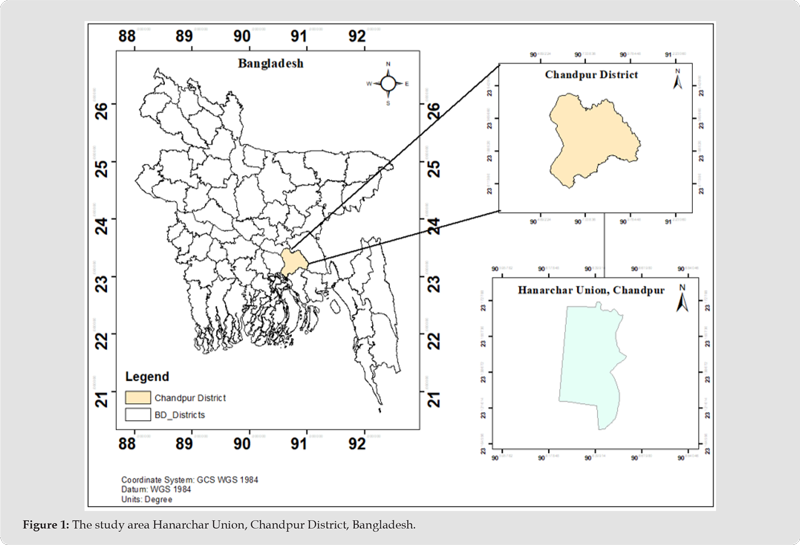
This was a cross-sectional descriptive study. Hanarchar Union, Chandpur Sadar Upazilla of Chandpur District (Figure 1) was selected purposely. The area of Hanarchar union is 3.49 km2 and there are 1869 households. According to the UP-registration office there are 781 house hold with up to 2 years children in Hanrchar Union. The peoples of the study area are deprived from most of the basic facilities including safe drinking water and proper sanitation.
Figure 1
Sampling Technique and Sample Size
The study collected a list of house hold having children up to 2 years from the local Union Parishad (UP) Office. According to the UP-registration office there are 781 household with up to 2 years children in Hanrchar Union. The sample size of respondent was calculated using the following formula considering 27% incidence [6].
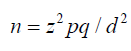
Where,
n = desired sample size
p = 0.27, incidence rate of childhood diarrhoea is 27% [6].
q = 1 - p = 1- 0.27 = 0.73.
d = degree of error (absolute precision of the study assumed 0.05).
z = 1.96 from standard normal distribution at 95% Confidence
Interval.
Here,
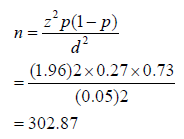
Thus, the required sample size was 303. Considering 12% non-response error (303+37) or 340 individuals were selected for sample. The selection procedure of the respondents where probability proportionate to size where the age group (≤6 months, 6-12 months, 13-18 months and 19-24 months) of the up to 2 years children were consider as strata. For selection of study samples, survey started from the nearest house hold of UP office. Decided direction of continuation by lottery (random) method, started visiting the households in the list successively and enlisted exclusive breast-fed children until the study reached the survey target of 340 sample size. Addresses of the enlisted households were noted and housel hold entries were marked with markers. After completion of sample size survey, the study conduct visit to the selected house holds for data collection. All the selected mothers were interviewed face to face for data collection. For this purpose, a pre-tested –close ended questions were used. Seriously sick mothers and those gave history of malnutrition, inadequate micronutrient supplementation and non-breastfed were excluded from the study. Data were collected using pre-designed questions to achieve objectives of the study. Ethical approval was taken from the appropriate authority. For validation of information, some of the questions were repeated and cross checked. Data were analyzed using the SPSS and MS Excel. Frequency distribution table and Chi square for association test were used as analytical tools.
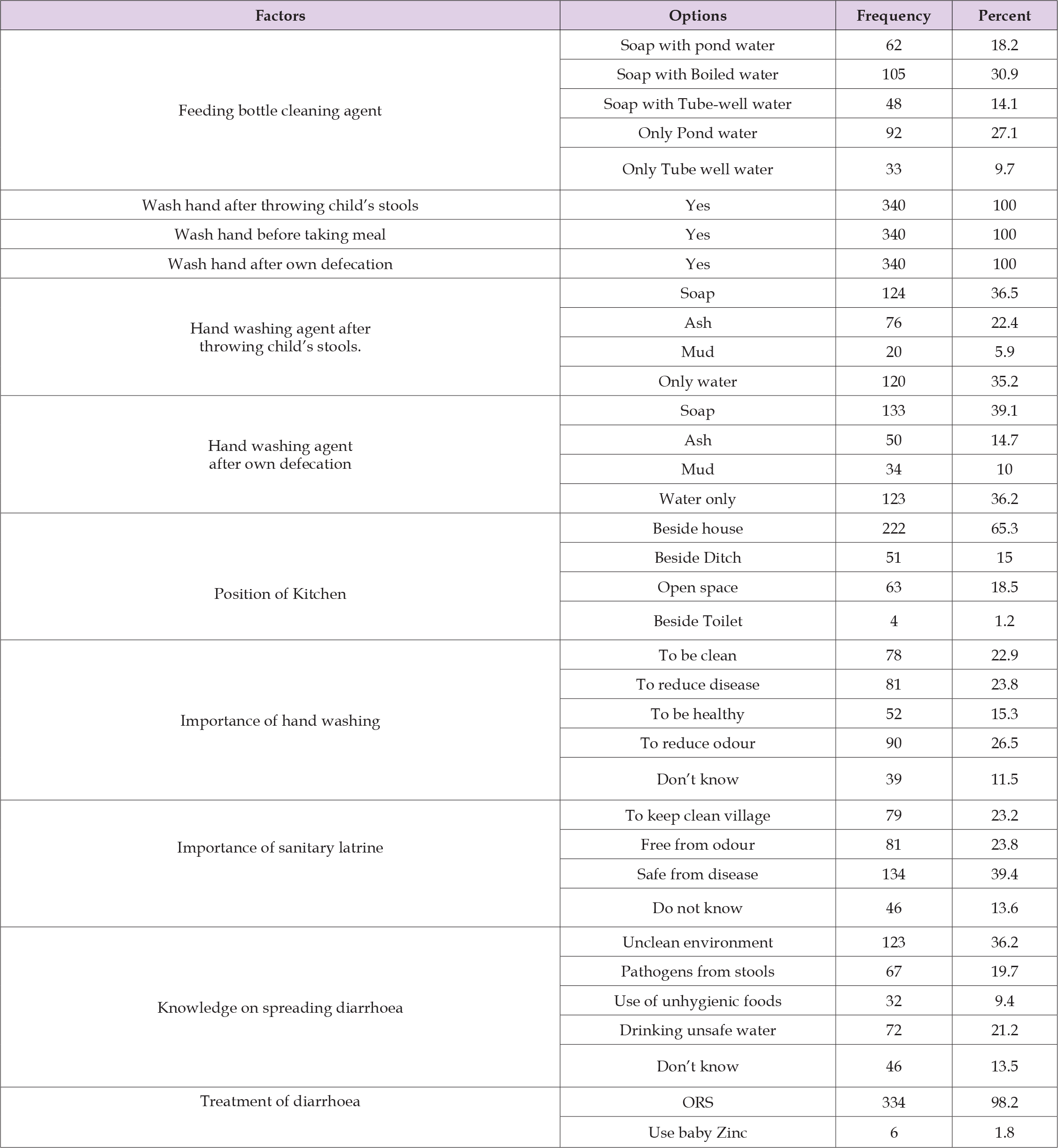
In this study, 14.1%, 36.8%, 26.2% and 22.9% children were from the age group of 6 months, 7-11 months, 13-18 months and 19-24 months respectively, and 55.3% children were male and 44.7% were female. More than 54% of the children were suffering from Diarrhoea in last one month. Tube-well was drinking water source of all interviewed families. More than 54% respondent mother’s education level is primary level or below. Above 95% of the respondents were housewives. About 5% of respondents needed more than 15 minutes to collect drinking water and the rest of the respondents needed 15 minutes or less than 15 minutes to collect safe drinking water. More than 86% of respondents had sanitary latrine (Table 1). Table 2 shows that about 31% mothers washed feeding bottles with soap and boiled water, while more than 36% mothers used only water. All the mothers wash their hands after throwing the child’s stool, after self-defecation and before taking a meal. About 37% and 39% mothers used soap as cleaning agent for hand washing after throwing child’s stool and after self-defecation respectively, whereas 35% and 36% mothers used only water respectively. The Rest of the mothers used ash and mud for cleaning hands after throwing children’s stool and own defecation.
Table 1: Socio-demographic characteristics of the study sample.
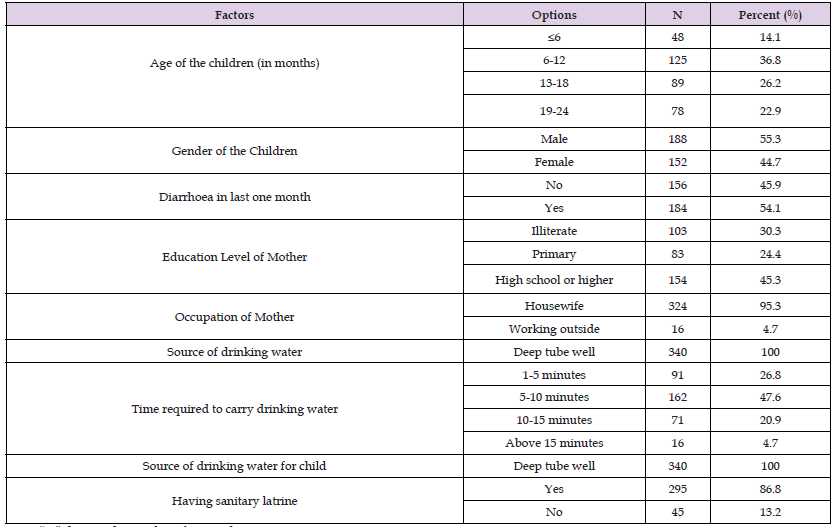
Note: “N” denotes the number of respondents.
Table 2: Hygienic knowledge and practices among the mother of under 2 children.
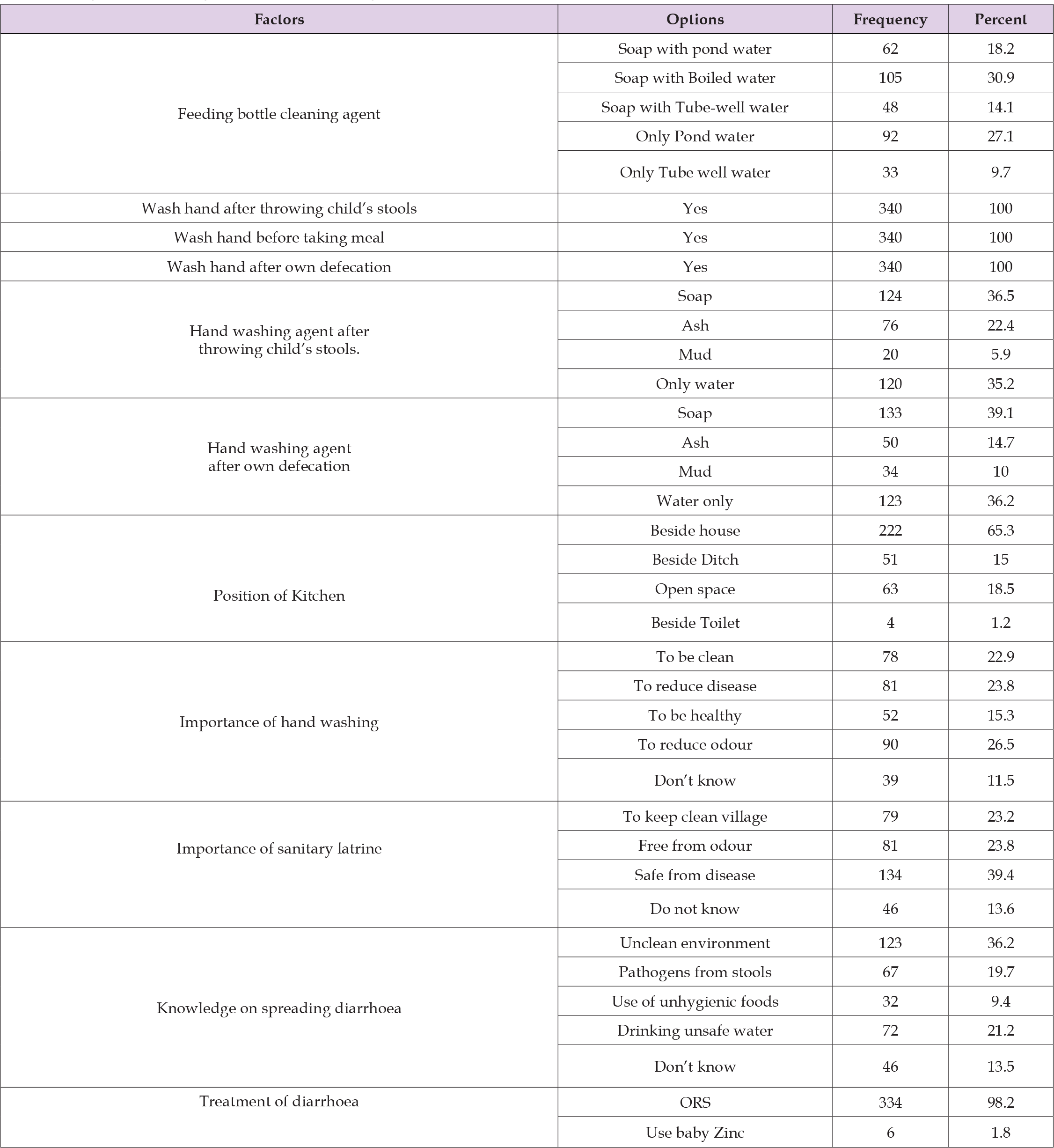
About 26% of mothers reported that the importance of hand washing is to reduce odour, only 15% mothers wash hands to be healthy, however, 11.5% don’t know about the importance of hand washing. Similarly, 13.6% do not know about the importance of sanitary latrine. About 40% of mothers give importance to sanitary latrine to keep family safe from disease. Above 65.0 % of the respondents have kitchen beside their house, however 18.5% use open space for cooking, 15.0% have kitchen beside ditch and 1.2% have kitchen beside toilet. About 36% mothers are aware that unclean environment may spread diarrhoea, 19.7%, 9.4% and 21.2% mothers reported that pathogens from stools, use of unhygienic foods and drinking unsafe water respectively spread diarrhoea. More than 98% mothers used oral rehydration salts as treatment of diarrhoea and rest of the mothers used baby zinc. The incidence of diarrhoea among the children of up to 2 years age was 54.1%. While incidence of diarrhoea was 35.5% among the children of ≤ 6 month’s age and diarrhoeal incidence was above 50% among all other age group of children up to 2 years age (Table 3). The association between incidence of diarrhoea and age of child is significantly associated at 5% level of significance.
Table 3: Associated factors of Incidence of diarrhoea among Under 2 Children.
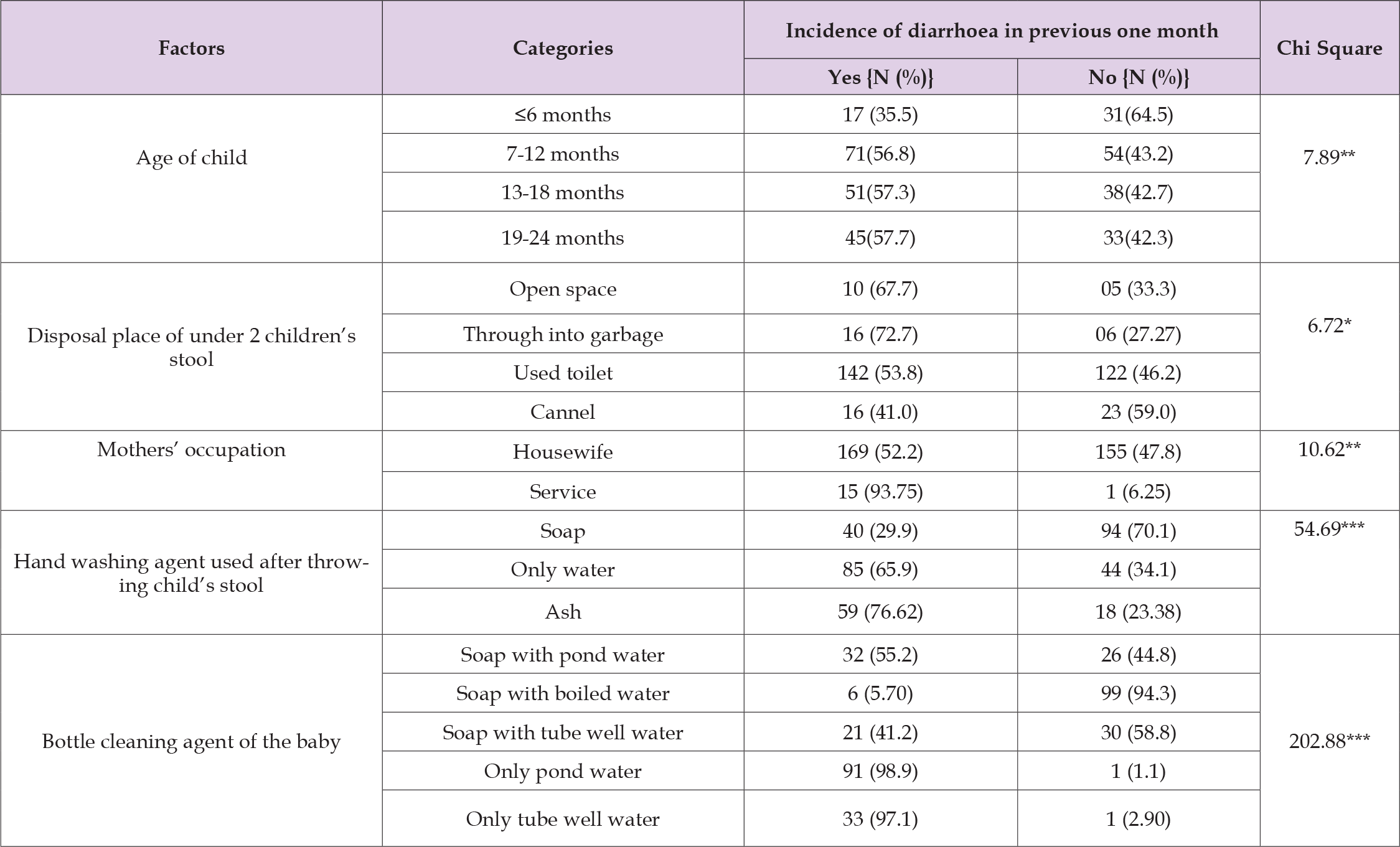
Note: “N” denotes the number of respondents, ***, ** and * denotes 1%, 5% and 10% level of significance respectively.
The incidence of diarrhoea was higher among the children whose stool was disposed into garbage (72.7%), while incidence was 41% among the children whose stool was disposed into the cannel. The association was found significant at 10% level between disposal place of stool and incidence of diarrhoea among under two children. The association between mothers’ occupation and incidence of diarrhoea among children up to two years was significant at 5% level. About 93% children whose mothers worked outside suffered from diarrhoea. The association between hand washing agent used after throwing children’s stool and incidence of diarrhoea was significant at 1% level. Mothers who washed their hands with only water or ash diarrhoeal incidence of their children were 66% and 76.6% respectively. Bottle cleaning agent of the baby and the incidence of diarrhoea was highly associated at 1% level of significance. The incidence rate was only 5.7% when bottle cleaning agent was soap and boiled water, however, the incidence was above 97% when bottle cleaning agent was only pond or tube well water. About 43% of illiterate respondents used toilets to dispose of their child’s stool while 84.3% of primary level educated respondents and 99.8% higher educated respondents used toilets to dispose of their child’s stool respectively. The association between mother’s educational level and disposal place of their child’s stool was significant at 1% level of significance (Table 4).
Table 4: Association between mother’s educational level and disposal place of child’s stool.
Note: “N” denotes the number of respondents.
The incidence of diarrhoea among children up to 2 years of Hanarchar Union was 54.1% in November 2016 which is 9 times higher than that of Chittagong division [7]. The incidence of diarrhoea was higher among the male children and children between 7 months to 24 months age were at higher risk than the children of age up to 6 months age. Bangladesh Demographic and Health Surveys [7] showed similar result. All respondents of the study used tube well water for drinking purposes which was almost similar to the report of Bangladesh Bureau of statistics [8]. All the mothers had access to safe drinking water within a short period of time which is a positive factor for this community. When water is freely available at close range, hand-washing becomes more frequent [9]. Hand washing practices among respondent mothers was common but perception about the importance of sanitary latrine was not clear. Alam [10] suggested that hand-washing lowered the incidence of diarrhoea. Pinfold and Horan [11] found a significant reduction in hand contamination and in diarrhoeal disease from an intervention to promote hand-washing and dishwashing. Peterson [12] reveals that the presence of soap in households in a refugee camp in Malawi was associated with 27% fewer episodes of diarrhoea.
A study in Bangladesh has shown that hand washing with soap and water reduced the incidence of secondary cases of shigellosis 7-fold in households where a case of shigellosis had been detected [13]. The highest percentage (67.9%) of children up to 2 years age was safe from diarrhoea whose mothers used soap with water to wash hands after throwing their child’s stool and after their own defecation. Hand washing promotion study [14] and Shahid [15] reported that through provision of soap for hand washing before eating or handling food diarrhoeal incidence could be reduced almost two thirds. The importance of hand washing was not much developed among the study population of this research area. The study found that the respondents whose kitchen was nearest to toilet had a higher incidence of diarrhoea compared to the people whose kitchen was far from the toilet. Study reveals that unhealthy environment has been the main factor for causation of diarrhoeal diseases in several resources‐limited countries. Indiscriminate defecation near the home or in living areas/kitchen area was found to be associated with an increased incidence of diarrhoea [16]. Baltazar and Solon [17] found a 64% increase in pathogen positive diarrhoea in families where children’s stools were inadequately disposed of. Most of the respondents of the study disposed stool of their children in open space or in cannel that may be the cause of high incidence of diarrhoea.
All the children were exclusively breastfed and supplementary food was given by bottle after 5-month age. A meta-analysis of three observational studies shows that breastfed children under age 6 months are 6.1 times less likely to die of diarrhoea than infants who are not breastfed [18]. Another report showed that bottle-feeding might be a major risk factor for diarrhoeal disease [19]. The studies of Mihrshahi [20] reveals that infants who are exclusively breastfed are less likely to be exposed to unhygienic foods and liquids and this led to the reduction of the incidence and severity of infectious diseases [21]. The study found a strong association between the bottle cleaning agent and diarrhoeal incidence among children up to 2 years. This study found a positive association between diarrhoeal incidence among the children of up to 2 years and level of education of respondent mothers. According to a study by Mahalanabis [22], in Bangladesh, schooling of seven years or more of the mothers reduced 55% risk of a child being attacked by a severe disease resulting from diarrhoea. Majumder [23] studied in Bangladesh shows that the child survival index moves up from .764 to .811 with the increase of education from no schooling to 5 years of schooling and the difference between child survival indexes rises from 0.764 to 0.882 with the difference of no schooling to ten or more years of schooling.
Higher educational level reduces the probability of occurring to dispose of the stools of children into open space and cannel. The study found a positive relationship between reduced incidence of diarrhoea and disposal of child’s stool into sanitary latrine. Merten [24] reported that unsafe stool disposal was associated with a 54% higher diarrhoeal risk in Sri Lanka and deduced that 12% diarrhoeal episodes could be prevented if such practices were reduced. They also concluded that reduction of diarrhoea was associated with safe stool disposal practice but not the ownership of latrine. A case-control study of in children under three in Burkina Faso Traore [25] reported that the unsafe disposal of child stools was associated with a 50% increase in the risk of hospitalization with diarrhoea and the risk of hospitalization with diarrhoea among children in the compound where human stools were found in open ground was about a third higher.
This study found that indiscriminate disposal of child’s faces is inversely associated with level of mother’s educational level and many of the respondents’ disposed excreta in sanitary latrine having no clear concept on benefit of it. All respondents washed hand after throwing the child’s stool, before taking a meal and after their own defecation but used different cleaning agent like soap, ash, mud and only water. Use of soap as hand washing agent reduces the incidence of diarrhoea. All the children were exclusively breast fed and started bottle feeding after 5 months of child’s age. Cleaning feeding bottle with tube well or boiled water with soap reduced possibility of diarrhoea among children. The Use of ORS concept among the respondents is recognized for the treatment of diarrhoea. Further research with larger sample size may be carried out to draw the conclusive statement.
Conceptualization, MMHC and SK; methodology, MMHC; data analysis, MMHC, MAHC and MKH; data validation, MMHC, SK, MAHC and MKH; formal analysis, MAHC and MKH; data curation, MMHC; writing—original draft preparation, MMHC, MAHC and SMMR; writing— review and editing, MMHC, MAHC and SMMR; supervision, SK and MKH. All authors have read and agreed to the published version of the manuscript.
We are acknowledging the students from the Department of Environmental Science and Disaster Management (ESDM) of the Daffodil International University (DIU) to support the study through their help in the data collection process.
The authors declare no conflict of interest.


 Abstract
 PDF
PDF






























