info@biomedres.us
+1 (502) 904-2126
One Westbrook Corporate Center, Suite 300, Westchester, IL 60154, USA
Site Map
 ISSN: 2574 -1241
ISSN: 2574 -1241
ISSN: 2574 -1241
Received: May 15, 2025; Published: May 28, 2025
*Corresponding author: Ashraf M Rajab, University of Benghazi Faculty of Medicine, Libya
DOI: 10.26717/BJSTR.2025.62.009696
Introduction: Irritable bowel syndrome (IBS) is a common functional gastrointestinal disorder. Despite being
non-life threatening, it can significantly impact life satisfaction and self-confidence. Since doctors experience
more stress, it is hypothesized that a higher prevalence of IBS will be found among them. This study aimed to
determine how common IBS is among emergency physicians in Libya.
Method: Between June 2023 and December 2023, a cross-sectional study was carried out at Benghazi Medical
Center (BMC), the biggest hospital in eastern Libya. We recruited 173 emergency physicians. The participants
completed an independent questionnaire, including lifestyle, clinical, and sociodemographic aspects. Irritable
bowel syndrome (IBS) was diagnosed using a self-completed questionnaire using the Rome IV criteria. The prevalence
of IBS among physicians was the primary outcome. Investigating the impact of age, gender, marital status,
job hours, smoking, and the presence of chronic diseases on the prevalence of IBS was one of the secondary
results.
Results: Among the 173 emergency doctors participating in the present study, the total prevalence was 31.2%.
The mean age of the total study population was 32.91+3.80 years. The percentage of females is greater than
that of males (67% vs. 33%). Chronic illness and patients with a poor lifestyle were significantly linked to the
prevalence of irritable bowel syndrome, with p values of (P = 0.030) and (P = 0.041), respectively. Differences in
gender, marital status, or education level were not correlated with the prevalence of IBS.
Conclusion: The prevalence of IBS among Libyan doctors has been examined for the first time in this study. The
prevalence of IBS was high among emergency physicians.
Keywords: Doctors; IBS; Libya; Prevalence; Tertiary Center
Functional gastrointestinal disease is a term used to describe any disorder unrelated to anatomical or biological abnormalities that can be measured by routine diagnostic means; therefore, diagnosis is based merely on history, excluding other mimicking diagnoses. This spectrum of illnesses covers a variety of disorders, including irritable bowel syndrome (IBS). Despite its non-lethal or life-threatening nature, IBS has a significant impact on the quality of life (QOL) of patients. It’s a quality-of-life-threatening condition rather than a life-threatening condition. The impact of the condition on quality of life (QOL) is comparable to other chronic diseases, such as diabetes mellitus and hepatitis [1]. The prevalence of IBS is estimated to be 11.2% worldwide [2]. Although worldwide prevalence rates vary from 1.1% in some countries to approaching 45% in other countries [3]. is probably due to the variable prevalence of organic diseases and psychological disorders predisposing to IBS.
There is a lack of research on the prevalence of IBS in North African countries, including Libya, where a recent study was conducted in a public clinic in the eastern part of the country. According to the study, IBS affects at least 12 out of every 100 individuals [4]. Since workers in the health sector are classified as having higher work pressures than the general public, it is assumed that IBS is more common among them than others, as shown in some studies [5,6]. Generally speaking, it appears that shift work, regardless of the profession, is associated with a higher IBS, particularly overnight calls [5-7]. In Libya, doctors represent a significant portion of society that is worth studying carefully. Given that they have an extra level of complexity due to a decade or more of political unrest, that has led to a scarcity of medical resources. Our study is the first to examine the prevalence of IBS among Libyan doctors, as far as we are aware (Figures 1 & 2).
Figure 1
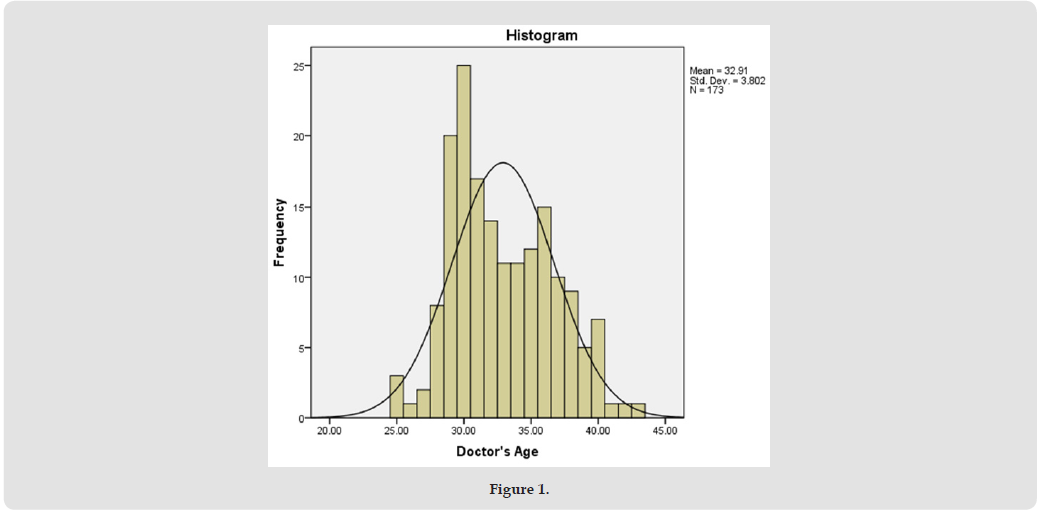
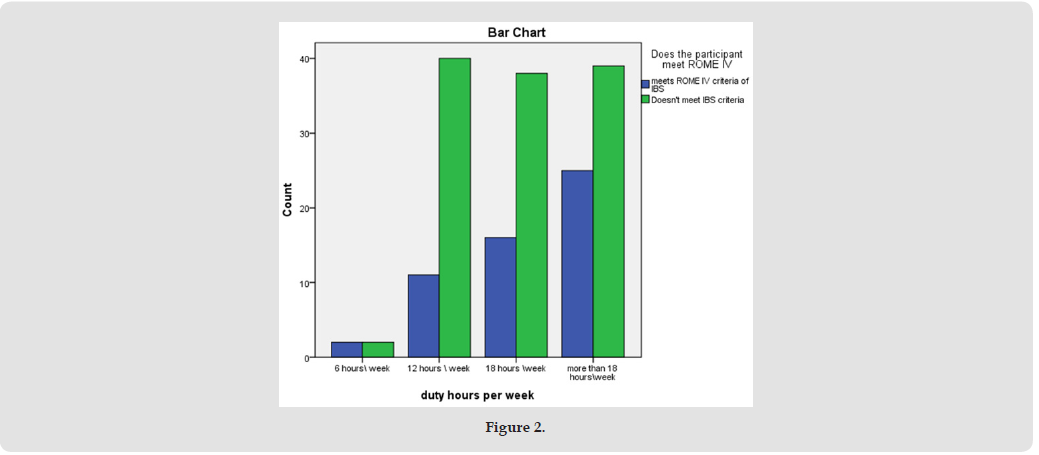
Figure 2
Study Setting
This study was carried out at Benghazi Medical Center (BMC), the largest hospital in the east of Libya that is meant to be a tertiary center to serve Benghazi city and its suburbs. BMC is designed to contain 1200 patient beds; however, the center hasn’t yet achieved its maximum serving capacity due to a shortage of staff and facilities. The number of employed doctors increases annually, and yet the number of doctors covering emergency calls reached 250. The doctors participating in this sample do not work in specialty clinics, as the BMC’s ER system involves non-board-certified doctors to cover the shifts; therefore, draining a correlation between IBS and the subspecialty service was impossible.
Design and Data Gathering
Between June 2023 and December 2023, we conducted a cross-sectional prospective study design to determine the IBS prevalence among BMC physicians. The participants are resident doctors.
They were met in the hospital, and the questionnaire-based survey was distributed to them. They were asked through the questionnaire about the following:
Demographic data, Also the information about hours of shift work and whether the IBS was diagnosed before or not; if not, the ROME IV criteria questions were demonstrated to see if they meet IBS diagnostic criteria or not, lastly, the participants’ chronic illnesses and smoking status as well as their perception of their health status. To ensure our questionnaire’s consistency, accuracy, and validity, a pilot study was done on ten doctors before data collection; and the results of that pilot study were not included in the final analysis.
Inclusion Criteria
All of the participants who work at BMC on emergency medicine duty and agreed to participate in the study were enrolled.
Analysis and Statistical Processing
Data obtained from participants were processed by the statistical software: Statistical Program of Social Science (SPSS) version 18.0 using χ2 testing to infer correlation between variables. P value’s upper limit of significance was set at 0.05.
Ethical Approval
The ethical approval was obtained from the Libyan board committee of research approval, and the medical affairs in BMC’s department of medicine.
Aims of the Study
I. To study the prevalence of IBS among BMC emergency doctors.
II. To compare the prevalence of IBS in Libyan doctors with
that of doctors in other countries.
Demographic Data of Study Participants
A total of 173 emergency doctors participated in this study. The research population ages were skewed towards the early thirties, with a mean age (32.91+3.80) with a higher proportion of women than men (67% vs. 33%, respectively). The demographic, lifestyle, and clinical features of the research population are displayed in Tables 1 & 2.
Table 1: Demographic, lifestyle, and clinical characteristics of the study population (N = 173).
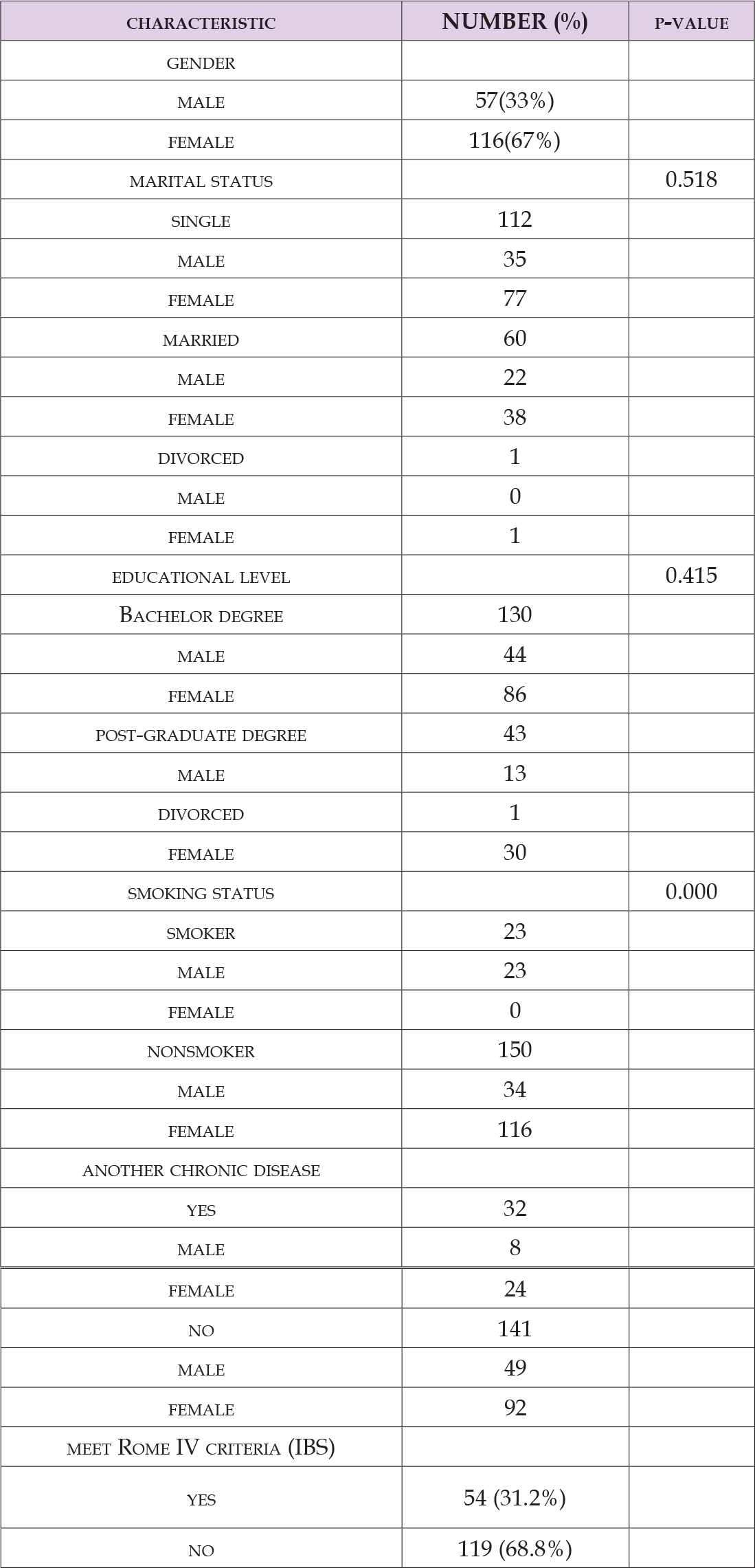
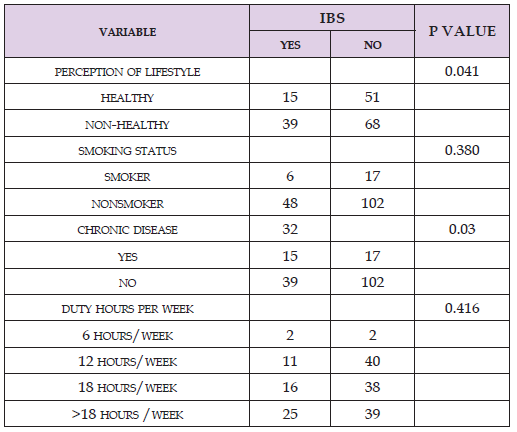
Table 2: Cross-tabulation of demographic and lifestyle factors associated with IBS among medical students (N = 173).
Prevalence of Irritable Bowel Syndrome
The overall prevalence of IBS was 31.2%. As shown in the table, the majority of demographic variables did not have a significant correlation with IBS.
Association of Irritable Bowel Syndrome
In our study, Doctors with IBS had no significant difference in gender, marital status, or education level.
In regards to duty hours, there was an increase in the prevalence of IBS among longer shift workers, but it was not statistically significant (P value 0.416). Participants with chronic illnesses were statistically associated with IBS (P = 0.030). In addition, participants who perceived their lifestyle as non-healthy were more likely to have IBS (P value 0.041). The chronic illnesses that doctors have are as follows: Thyroidal illness in eleven participants, and three of them were diabetic; anemia patients were eight. Four patients with chronic anxiety disorder, two hypertensive patients, and one fatty liver disease. The other three didn’t specify their chronic illnesses.
It is not hidden nowadays that IBS is predisposed to by both psychological and mental health stressors. [8-10] IBS, psychological, and mental health are circles that overlap and need attention due to their mutual impact, particularly in the case of emergency doctors. The prevalence of IBS among emergency room doctors is 31.2%, which exceeds the expectation! Institutional intervention is necessary and urgently needed to evaluate the risks for such a high prevalence and to support Libyan doctors’ health. Even in the developed world, it has been well-observed that a high prevalence of IBS is associated with shift work, whether in the healthcare sector or other professions [7,11]; however, when you add stressful work like emergency medicine, it will be more prevalent!
There have been two prior studies that examined the incidence of IBS among resident doctors in another country [5,12]. The prevalence results were between 16% and 19%, which is markedly lower than our result.
Perhaps our study found that IBS was more prevalent among ER doctors for the following reasons:
1. Evaluation by self-completed questionnaires appears to magnify the IBS prevalence, as shown in previous studies [2,12], however it seems that our result in terms of IBS prevalence is considered high by all standards.
2. IBS symptoms are not specific but sensitive, which could be a reflection of organic mimicry diseases like lactose intolerance, celiac disease, hyperthyroidism and inflammatory bowel disease. In our study, IBS is correlated significantly with the presence of chronic illnesses such as thyroidal illnesses and diabetes (p = 0.030), and this may indicate undiagnosed similar diagnoses.
3. Libyan doctors are a part of the nation that has experienced two civil wars in recent history, and this high IBS prevalence could reflect post-traumatic disorders.
4. The ER participants were relatively young, as their mean age was 32 ±3 SD. This age had a higher chance of having pronounceable IBS than those who were one decade older, as IBS preferentially common in younger adults [12,13]
The prevalence among doctors differed greatly from that of Libyan patients. This may support the idea that the majority of the increase in IBS prevalence among ER doctors is due to stressful lifestyles, and it is well known that psychological and mental stress can worsen IBS. [7-10]
It was good news to know that smokers represented only a negligible minority among the participating doctors. This is probably due to the predominance of female participants who don’t usually smoke, according to Libyan culture. Despite this, the statistical comparison between smokers with non-smoking doctors would not be conclusive or valid because of the very small number of smokers. In a study conducted by the Kingdom of Saudi Arabia, IBS is less likely to occur in smokers compared to non-smokers [12]. Also, the same result was observed in a similar study on IBS among nurses [6].
Female doctors were not different from their male counterparts, but female participants were more numerous in our study. This result may reflect the gender composition of physicians in the BMC. Our study participants differed from the community in that women in the Libyan community have a higher prevalence of IBS. [4]
Regarding marital status, it was not associated with a statistically significant higher prevalence of IBS. Although it is quite hard to infer robust conclusions given that the majority of participants were single. Marital status and IBS relationship is a bit complex and controversial, perhaps the relation is based on the success of the marital life that creates the marriage’s biopsychological atmosphere i.e a happy marital life can be a relieving factor for IBS and vice is probably versa. [14] The stressful nature of ER doctors’ careers could have affected their perception of their health negatively even in the absence of chronic illnesses, as doctors with IBS tended to have lower health esteem than those without IBS (P = 0.041). Mental health is an aspect that has never been explored among Libyan doctors. In developed countries today, the mental health of doctors represents one of the biggest challenges of occupational health. A multifaceted approach that includes organizational and policy-level interventions is necessary to address doctors’ health and the prevalence of burnout, as well as individual self-care and support [15].


 Abstract
 PDF
PDF






























