info@biomedres.us
+1 (502) 904-2126
One Westbrook Corporate Center, Suite 300, Westchester, IL 60154, USA
Site Map
 ISSN: 2574 -1241
ISSN: 2574 -1241
ISSN: 2574 -1241
Received: February 17, 2025; Published: February 26, 2025
*Corresponding author: Tirso Javier Hernandez Gracia, Autonomous University of the State of Hidalgo, Pachuca, Mexico
DOI: 10.26717/BJSTR.2025.60.009499
The relationship between migration and entrepreneurship is established and consolidated in the context of nearshoring. In this sense, the objective of this work was to contrast the theory with an observable model. A cross-sectional, correlational and psychometric study was carried out with a sample of 100 students selected for their institution’s commitment to the formation of intellectual and entrepreneurial capital. The results confirm a three-dimensional structure related to migration, entrepreneurship and nearshoring. In relation to the state of the art where opportunism is highlighted as a factor of innovation, this work warns of the prevalence of the dimension related to nearshoring as a factor that explains the highest percentage of explained variance.
Keywords: Analysis Factorial Confirmatory; Migration; Entrepreneurship; Model Observed; Model Theorist
Broadly speaking, migratory flows refer to a process of passage, stay and return that has been explained by three epistemic foundations:
a) Acculturation
b) Selectivity and
c) Identity.
It is a multidimensional process in which each phase and each dimension reveals the differences between rulers and governed in terms of sustainable, human and local development policies, and mainly explains the asymmetries between migratory flows and native areas (García [1]).The concept of migration is multidimensional, but studies related to migrant cultures with respect to native cultures have focused on a generalizing concept of rupture, crossing, stay and return in the economic and occupational order. Many occupational studies, which emphasize the dependence, conformism and obedience of migrant cultures with respect to the native culture, are aimed at human, local and regional development only with the cooperation of migrants in services or agro-industrial activities (Sánchez, et al. [2]). The phenomenon of migration has been addressed from an ethnocentric, polycultural or multicultural approach, focusing on the adjustment of migrant cultures with respect to the laws, values and norms of native cultures (Cruz [3]). In that sense, substantial justice from multiculturalism is the integration of social justice and cultural justice, or the concatenation of economic, political and social rights with respect to cultural differences and self-determination.
From these approaches, migration has been understood as a process of acculturation, assimilation, adaptation and selectivity of talents with respect to an internal labor market that demands the environment and the capabilities required to carry out local development, through the distribution of the labor force in strategic sectors such as agroindustry or services. The selectivity of talents that moved from emerging countries to developed ones is only possible in the cases of the so-called economy 4.0 (González, et al. [4]). This is because migration perspectives have considered native cultures as active and vital in the development process while migrant cultures are passive or collaborative in the endogenous development of native cultures, together with substantive justice, as an antecedent of interculturalism, concepts of impartiality such as the granting of rights to minorities, self-government or political and legal autonomy, poliethics or guarantees of dissemination of equality among members of a group, as well as cultural specificity and legitimacy embodied in dialogue, negotiation and co-responsibility subscribe to the construction of a new society. model for the study of migrant cultures in relation to native cultures (Cruz [3]). In this sense, the notion of social justice was linked to the consequences of immigration as it warned about asymmetries in terms of rights and obligations, opportunities and capabilities, as well as between commitments and responsibilities between migrant cultures and native cultures (Tena [5]).
The study of migratory flows, no longer as passive entities dependent on native cultures, is based on the work of entrepreneurship and innovation that distinguishes this new wave from its predecessors focused on compliance and obedience, now observed in migrations as active and innovative entities. These are migratory flows with civic virtues oriented to the sense of identity and belonging to a universal community, observed by their degree of empathy, commitment, altruism, solidarity, satisfaction and happiness (Tena [5]). The theoretical, conceptual, empirical and hypothetical frameworks regarding business migration flows are grouped into
1) Acculturation, assimilation and adaptation
2) Selectivity and human capital
3) Identity, spheres, networks and multi and intercultural flows
The acculturative, assimilative or adaptive perspective distinguishes migrants and natives not only by their place of origin, their habits and customs but also by their objectives, tasks and goals. It is a logic of benefit and utility as a predominant and determining factor in the relations between migratory flows and natives. In this sense, development policies with such an approach highlight the achievements and scope of programs based on sustainable development rather than on human or local development, since it is assumed that the labor market will generate and disseminate the bases to establish the quality of life and subjective well-being. -Be related to health, education and employment. These are sectoral programs and strategies in which the support and incentives, as well as the financing, have the objective of containing migratory flows according to the needs of the labor market (Carreón [6]).
In this way, business migration flows are limited to the inclusion and social protection policies that the host State implements to promote the development of the industrial and service production economy. Migrants are considered a qualified and specialized workforce, a fundamental part of the machinery of the productive and service sectors. The State is supposed to protect the interests of natives by postponing the stay of migrants and promoting their capacities; knowledge and skills from and with the corresponding occupational health (Sánchez, et al. [7]). The selectivity approach considers that development will be generated through policies to promote business and open markets. Regionalism and multilateralism are essential to promote sustained development and, immediately, human and local development. The objective is to promote policies to evaluate, accredit and certify the quality of the processes and achievements of institutions and organizations sponsored by business development policies, as well as market opening policies. In this selectivity process, migratory flows are evaluated by their degree of intellectual capital in relation to the requirements of the labor market (Carreón, et al. [8]). The implementation of migratory flows is considered a phase or instance after the implementation of business promotion policies, but above all, as a result of health, educational and labor policies with emphasis on the evaluation, accreditation and certification of institutional and organizational objectives, tasks and goals, since it is precisely in these instances where the asymmetries between natives and migrants are resolved in favor of sustainable, human and local development. It is considered that the selection of the best talents, intellectual capital, skills and knowledge will build a culture of entrepreneurship, innovation and success (García, et al. [9]).
The identity paradigm, unlike acculturation and selectivity, warns that the asymmetries between migrants and natives are due to the establishment of spheres, networks and flows, since migrants establish relationships of empathy and commitment by virtue of their capabilities and natives are organized rather in terms of a culture of domination. Among other differences, migratory customs and practices are oriented and tolerated by natives from their consensual diversity, that is, migrants are considered different in their traditions, but at the same time, indispensable for the development of the country. A receiver as an economy that expels those (Carreón, et al. [8]). Therefore, policies implemented from this approach recognize the differences between migrants and natives that will determine sustained, human and local development. That is, programs and strategies do not seek to dilute asymmetries, but rather to increase them in favor of the recognition, admiration and respect of personal attributes, organizational innovations, state integrity and national competitive advantages (Carreón, et al. [10]). This is how development policies are adequately structured based on the differences between migrants and natives, but the approach distances and brings groups together according to programs and strategies implemented at different levels: sustainable, human and local (Rodríguez [11]).From a theoretical point of view, the study of migration undoubtedly involves the establishment of an agenda, based on an exhaustive review of the literature (i.e. the state of the art, the state of the art or the state of knowledge), in reference to the topic of migration. In fact, based on an epistemological criterion, two large groups of approaches to theoretical discussion are established (Carreón, et al. [12]). As it is social work, it was thought that “intervention” would be privileged; however, the concept of intervention has been questioned and even replaced by the term intercession. In fact, in the past with the Welfare State, social work should contribute to economic and social development. However, now paradoxically, with neoliberalism in the middle, society is becoming more involved; however, the work of social work is to promote dialogue, management and evaluation. In other words: intercession, mediation between the State and organizations. Social work will mediate the communication between the different actors in civil society. This is your future (García, et al. [9]).
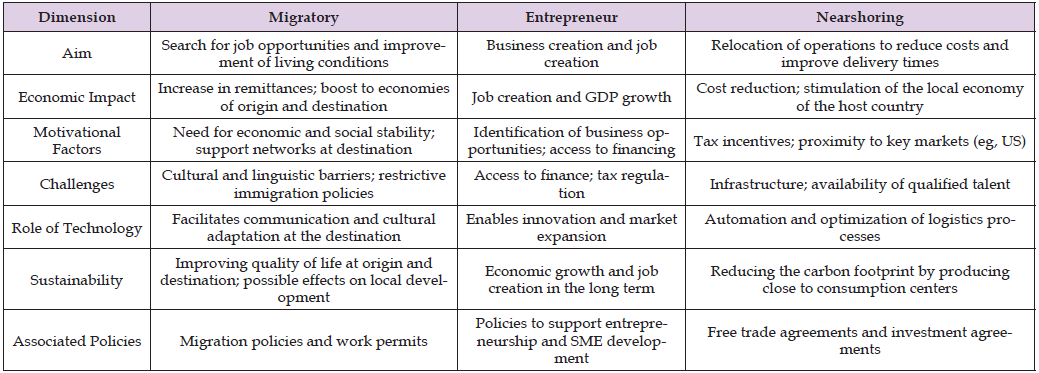
Entrepreneurship consists of enhancing opportunities (including the generation of one’s own opportunities); as well as optimizing resources and strengthening capabilities (García [13]). Entrepreneurship is also a historical process in which development levels are reflected according to migratory flows. Therefore, entrepreneurial learning is, without a doubt, an indicator of development (Albert, et al. [14]). In this sense, social work has generated models for the study of entrepreneurship, understood as the learning of the actors involved in the journey and stay with an entrepreneurial culture so that, upon returning, with the use of certain capitals, learning, knowledge and skills, have a favorable impact, in this case, on the commercialization of a product (organic coffee). Studies related to knowledge networks, also known as neural networks, have established associations between different variables, such as beliefs, attitudes, intentions and behaviors; to demonstrate the learning of a node (group) with respect to a neuron (or network system).The degree of entrepreneurship is considered as a node in a particular network of migrants returning to their place of origin, provided with resources, skills, knowledge and experience; all of this oriented towards investment in the local economy (Campillo [15]). However, studies on migratory flows have focused their interest on the dominant native cultures by proposing ethnocentric, polycultural or multicultural laws, values and norms that, although they limit the entrepreneurial capacities of migratory flows, can adapt, assimilate the dominant lifestyles and be selected based on their skills and knowledge to achieve their insertion in society (Table 1). However, migration and entrepreneurial dimensions have not been observed in the light of nearshoring . Therefore, the objective of this work was to explore the relationships between the dimensions reported in the literature from 2020 to 2024 with respect to the responses of a sample of students. Are there significant differences between the migration and entrepreneurial dimensions of nearshoring compared to the dimensions observed in a sample of students?. The hypothesis to be demonstrated is that there are differences because the literature tends to romanticize nearshoring as a development opportunity per se without considering the formation of intellectual capital, training and specialization.
Table 1: Comparison of migratory and entrepreneurial categories.
A cross-sectional, exploratory and confirmatory study was conducted with a sample of 100 students from a public university selected for their institution’s commitment to the formation of intellectual capital through the incubation of talents. The Migrant Entrepreneurship Scale (Annexes A & B) was used. It includes:
1) Expected Mobility,
2) Multicultural Experience,
3) Perceived Benefits,
4) Work Adaptation,
5) Attitude towards Entrepreneurship,
6) Perception of Opportunities,
7) Entrepreneurial Resources,
8) Entrepreneurial Skills,
9) Talent Attraction.
The overall reliability reached a value of 0.789 and that of the dimensions ranged between 0.762 and 0.793. Sphericity and adequacy were higher than the minimum required and significant. Validity was established between 0.345 and 0.672. Respondents were contacted via institutional email, informing them about the objectives and responsibilities of the project, in order to request their collaboration without remuneration. The data were captured in Excel and processed in Google Colab. The values of the parameters of reliability, adequacy, sphericity, validity, adjustment and residual were assumed as evidence if their values were close to one.
The analysis of residual variances suggests the variation of the observed values with respect to predictors and such relationship defines the precision of the model, with its proximity to zero being a better fit (Table 2). The results show values close to zero, so a moderate fit model is recognized. The intercept analysis suggests the value of migration, entrepreneurship and nearshoring when their predictors are equal to zero (Table 3). The values are close to unity so it is assumed that the predictor variables are relevant in their relationship with the constructs. Misfit analysis suggests the fit of the observed model with respect to the theory (Figure 1). Values close to zero are assumed to be evidence of fit. The findings demonstrate the prevalence of relationships close to zero, although some are close to unity. It is recommended to adjust the model in those relationships that are far from zero. The analysis of the model suggests the confirmed factor structure (Figure 2). The results indicate three factors related to migration, entrepreneurship and nearshoring, although the first factor can only consider one indicator. Regarding entrepreneurship and nearshoring, both include indicators that reflect their structure. The analysis of the fit parameter indicates the relationship and correspondence between the observed model and the theory (see Table 4). The chi-square value is significant, although the parameter is sensitive to the sample and tends to be significant. The analysis of the fit parameter indicates the relationship and correspondence between the observed model and the theory (see Table 4). The chi-square value is significant, although the parameter is sensitive to the sample and tends to be significant (Table 5).
Figure 1
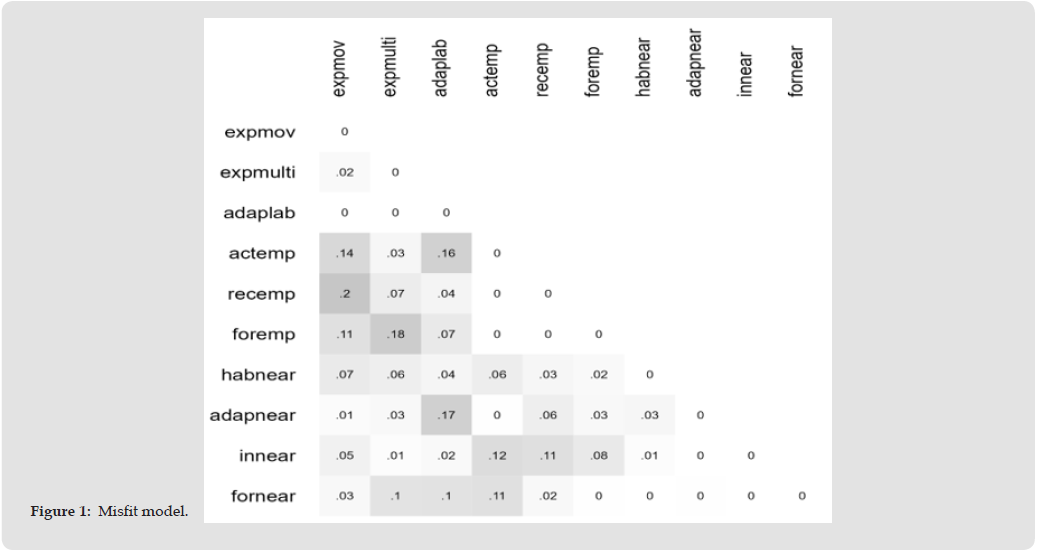
Figure 2
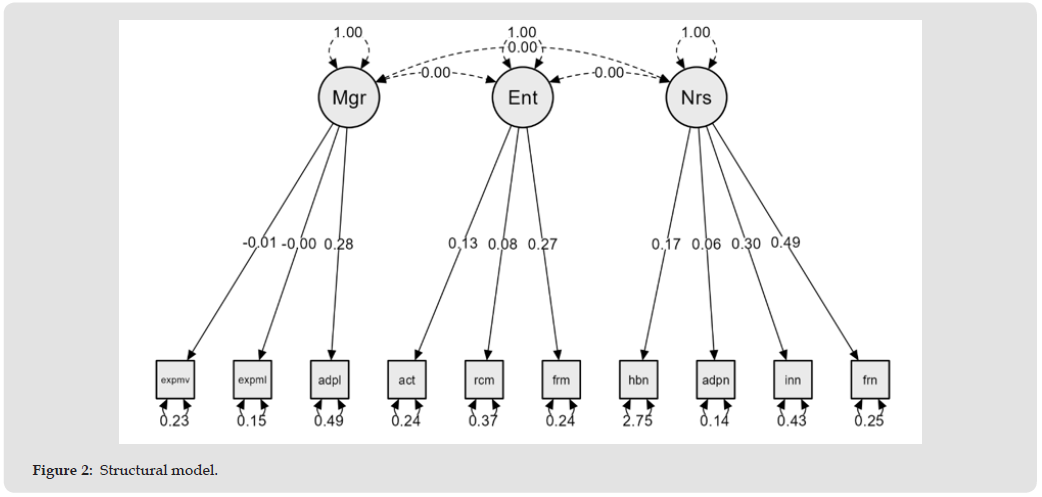
Table 2: Residual variances.
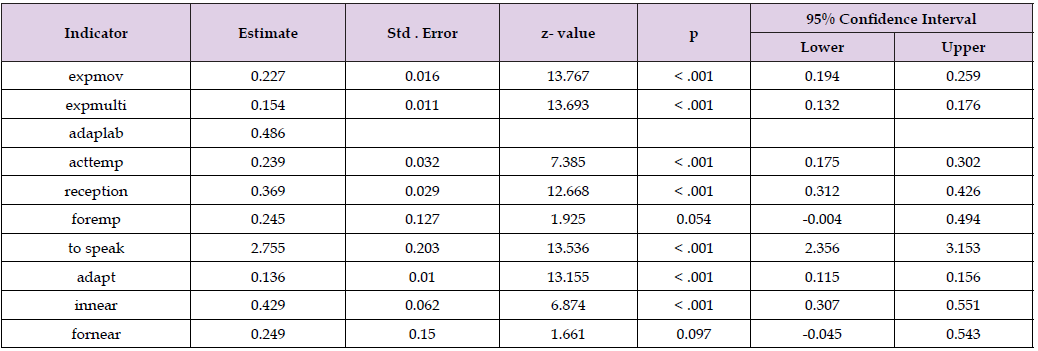
Table 3: Intercepts.
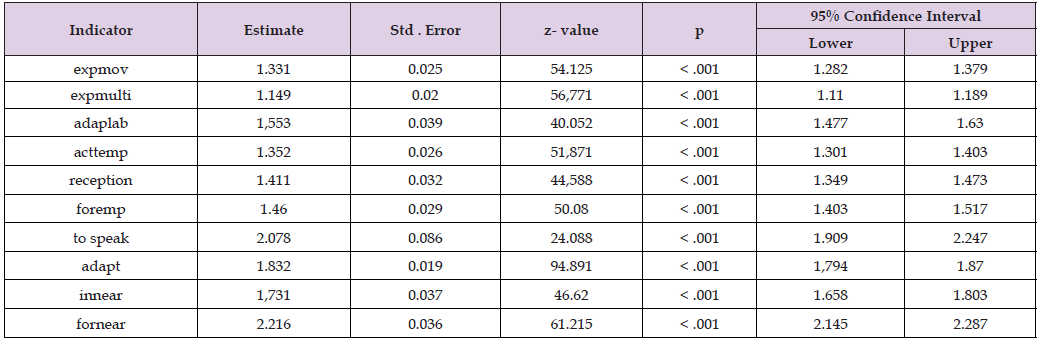
Table 4: Chi- square test.

Note. The estimator is ML.
Table 5: Other fit measures.

Within the framework of male and female gender relations focused on work opportunities and capabilities, the discussion on the similarities and differences between the concepts of human, sustainable and local development can be located in two indicators of social development:
1) The dignity of life and
2) The quality of life (Sojo [16]), as well as at the institutional level in terms of its lack of coordination at the different levels of government, federal, state and municipal (Robles [17]).
The dignity of life refers to human and social rights as mediators of public action and social need (Sojo [16]). That is, it is assumed from the social development approach that the differences in rights between men and women arise after both identities, male and female, are victims of a melting pot of violations of their rights. This is because, although they are different in their opportunities and capabilities, they share common problems and development strategies.
This is the case of the quality of life, which refers to health; nutrition, housing, education, environment, culture and longevity (Sojo [16]). These are opportunities and capabilities of access and utility of each of these privileges, once again circumscribed between the recognition and the ignorance of the female identity and the male identity. In this way, social development is the product of public and private actions, programs and strategies aimed at dignity and health, reflected in quality of life, but at the same time it is part of a vicious circle of similarity (shared problem) and differentiation (development privileges). Therefore, it is necessary to have state leadership (Robles [17]). From this definition of social development it will be possible to derive the differences and similarities between human, sustainable and local development. It will be essential to establish the definitions, objectives, instruments and goals that distinguish them, since the scarcity or lack of dignity and quality of life is the common denominator (Carreón, et al. [18]). However, it is necessary to consider that the differences related to work opportunities and capabilities between men and women are limited to the imperfections of the labour market (Sojo [16]). Therefore, tax collection and redistribution policies will be essential to clarify the solidarity that characterises male and female identities, mainly cooperation aimed at their development (Carreón, et al. [19]). From a matrix around the sustainable, human and local dimensions, it is possible to note differences and similarities if the diagnosis is considered in terms of absence or scarcity of rights, objectives, instruments and goals (Sojo [16,17]). In this way, sustainable development refers to an area in which the State generates opportunities and contributes to the capacities of civil society to reduce inequalities between cultures, localities, communities, families and individuals (Fuentes, et al. [20]). If sustainable development guides social equality to overcome poverty in the most excluded sectors, then human development will focus on the promotion of health, education and labour rights to establish a development of capacities that culminate in the area of dignity and quality of life (García [21]). In this way, human needs and expectations will correspond to policies to strengthen human capital through social care in general and education in particular, generating the desired social well-being (Gutiérrez [22]).
However, abandoning the welfare-based paternalism of state leadership requires local policies focused on rebuilding the social fabric and regaining citizen trust through the promotion of supportive and cooperative relationships, social and economic compensation, marked by labor and pay equity (García, et al. [23]). In each of the dimensions of sustained, human and local development, the effectiveness, efficiency and validity of rights is the central issue on the state and civil agenda, leading to cultures, races, gender identities, ages, education levels and income (Larga [24]). The differences and similarities between sustainable, human and local development allow us to observe the inequality between men and women, among other items. This is so because the problems, objectives, instruments and goals seem to disfavor the feminine identity over the masculine one, not only as evidenced by the poor numbers, but also in the opportunities generated by institutions and companies, which favor a logic of competition centered on the conviction of success, an essential attribute of the masculine identity, and to the detriment of the ethics of conservation, a fundamental feature of the feminine identity (Rentería [25]). In this way, sustainable, human and local development policies, focusing their emphasis on competition rather than solidarity, will favour male identity, but at the same time they not only exclude female identity in the areas of health, education or work, but they also confine male identity to these areas, ignoring family issues such as paternity rights (Yepes [26]). The phenomenon of male youth migration flows can be understood from the asymmetries and similarities between the processes of social inclusion and protection, considering that human rights are the instrument of universal and comprehensive implementation (Martínez, et al. [27,28]).That is to say, social inclusion, being an ethic, a vocation and a discourse of equality, not only implies the exercise of rights in the foundation of programs and strategies, but is also aimed at reducing the barriers that inhibit the construction of citizenship, cohesion, belonging and democratic life through administrative decentralization, social recognition, social pact, negotiation of conflicts and the expansion of rights for their social redistribution (Rodríguez [29]).
If social inclusion is reflected in social protection as a synonym for social assistance, then masculinities in their youth and migratory flows would have ample possibilities of being included and protected, but this last issue implies a social assistance related to progressiveness, equality, comprehensiveness, institutionality, participation, transparency, accessibility and accountability (Yangion [30]). In other words, social and economic rights should not only be guaranteed by the State, but should be inserted in a policy, program and strategy aimed at eradicating inequalities, indicated by their regression in terms of opacity of resources and inaccessibility to information (Amujo, et al. [31]). In this way, the similarities and differences between inclusion and social protection are central issues on the political and civil agenda, mainly in relation to a diagnosis of inequality and social exclusion, as well as in the objectives, instruments and goals aimed at the inclusion of protection (Ariza [32]). Roughly speaking, social inclusion is the effect of social protection understood as a comprehensive policy, programme and strategy for managing demands and redistributing resources in order to regulate:
1) Social assistance,
2) Social security and
3) The labour market (Martínez, et al. [27,28]).
That is to say, social exclusion, indicated by social inequality and determined by the regression of economic and social rights, is reflected in illegality and informality in employment, multidimensional poverty, differentiated needs and directly impacts single-parent families headed by women; It supposes a lack of municipal technical and operational coordination fuelled by an absence of information transparency and accountability, justifies social protection (Trimano, et al. [33]). In this sense, social protection is the implementation of assistance, security and labour market strategies and mechanisms as part of universal, comprehensive policies, verticality in their elaboration and horizontality in their implementation. It implies a transversal sectorial condition; institutional coordination in covering needs and control of conflicts between political and civil actors (Ferreiro [34]). Understood as a strategy of assistance, security and labour regulation, the differences and similarities between social inclusion as an ethic derived from social protection show that:
1) Migratory flows have a place in the integration of social protection through the demographic bonus; however,
2) The masculine identities of migrants would only be a priority while they are in a productive age;
3) Both migratory flows and masculine identities are more prone to state exclusion, since it prioritizes the sectors of the future (García, et al. [35]).
From the social work intercession model, which proposes the impact of contextual repertoires in narratives and discourses, fifteen ex-migrants settled in Xilitla, SLP, in the Huasteca. Potosina, were interviewed in order to interpret and establish the influence they had throughout their trip, stay and return, all this in the face of acculturation, selectivity, identity and governance; as well as rationality: economic, multicultural, intercultural and ethnocentric, having as an evident antecedent the entrepreneurial culture of the EU (Sandoval, et al. [36]). The former migrant organic coffee merchants had a business apprenticeship based on the transparency of their microenterprise management. Each peso was used for the development of their business. The merchants without experience in migration had a business apprenticeship based on the specificity of their sales. Each peso must be invested in a single product. A specification refers to the establishment of axes, trajectories, relationships and hypotheses around a process in which the variables reviewed in the state of knowledge reflect a particular context or scenario, but their expected relationships anticipate conflicts and changes. In this way, a preponderant axis: the comprehensiveness of public policies in the other nodes; diversity, security, activism and co-responsibility. Each path of dependency relationship between each of the five factors allows for the establishment of hypotheses that can be contrasted in the immediate future if the theoretical, conceptual and empirical frameworks reviewed in the state of knowledge are met. The model proposes the study of business migration flows based on the leadership of the State through the comprehensiveness of social policies, as well as the diversification of public social protection and security, although in another aspect, social security movements propose co-responsibility in the management and administration of public services in the field of social entrepreneurship. It is a model delimited by two political and social actors around the establishment of a business promotion system that is distinguished by its degree of social protection, comprehensive strategies, local security and openness to social demands, as well as the construction of a co-government or governance indicated by its degree of co-responsibility. However, the co-governance scheme also involves the inclusion of other public and private sectors and actors, such as corporations and cooperative societies. This means that the model is limited to two actors who, although they are the predominant axes of co-governance, whose management and administration capacity is regulated by civil organizations and government institutions.
Finally, in relation to the work of Carreón, et al. [14,19]), in which entrepreneurship has its origin in local identity, regional roots, attachment to the place and the sense of community as a substantial part of the uses and customs oriented towards profit and gain. This work rather considers that it is the interdependence between migrant and native cultures that generates a business hybrid, and that, although local identity is its foundation, the work expectations that drive the crossing, stay and return of migrants are also a determining factor in the work cycle of a migrant. It is recommended to:
Carry out intensive processing of the information in other repositories. a) Adopt other content analysis techniques.
b) Generate comprehensive models, which include business migratory flows and business areas.
c) As well as the discussion between the historical identity of the place of origin with respect to the work expectations of the migrant’s receiving context [37-47].
A structure of relationships between predominant categories was observed in which collaborative and consensual learning was established, although the research design limits the findings to the sample. These results demonstrate the specification of a model to anticipate scenarios of exclusion or inclusion between migratory flows and native communities, as well as the relevance of entrepreneurship in the local development of both groups. The establishment of assumptions that explain factors used in the state of the art and specified in a model to address business migration flows. It involves the construction of a system of co-management and co-administration of public resources and services related to social entrepreneurship, business development, microfinance or microcredit focused on localities receiving or driving migration flows. The discussion on social entrepreneurship, as a process of state management or administration, or through citizen participation in self-management and self-organization, is rethought towards models of co-government, co-management, co-administration and co-administration. responsibility, which indicate a rapprochement of public administration with organized civil society, but in terms of social protection, policies, strategies and programs are disjointed. Therefore, opening the debate is necessary to establish a comprehensive system of social entrepreneurship, at least between rulers and governed.


 Abstract
 PDF
PDF






























