info@biomedres.us
+1 (502) 904-2126
One Westbrook Corporate Center, Suite 300, Westchester, IL 60154, USA
Site Map
 ISSN: 2574 -1241
ISSN: 2574 -1241
ISSN: 2574 -1241
Received: January 30, 2024; Published: February 06, 2025
*Corresponding author: Irami Araújo Filho, Postgraduate Program in Biotechnology at Potiguar University/ UnP. Full Professor Department of Surgery, Federal University of Rio Grande do Norte. Full Professor, Department of Surgery, Potiguar University. Ph.D. in Health Science/ Natal-RN, Brazil
DOI: 10.26717/BJSTR.2025.60.009459
Integrating artificial intelligence (AI) into experimental surgery represents a transformative shift in biomedical research, offering innovative alternatives to traditional animal-based preclinical models. AI-driven methodologies, including computerized models and surgical simulations, enhance precision, reproducibility, and ethical compliance while reducing reliance on in vivo experimentation. This review systematically explores the role of AI in optimizing surgical procedures, operative techniques, and biomedical technology, analyzing its impact on surgical decision-making, predictive modeling, and training simulations. A comprehensive search was conducted across PubMed, Embase, Scopus, Web of Science, and SciELO, identifying studies on AI-enhanced surgical strategies, in silico models, and experimental validation techniques. The findings highlight AI’s potential to replace animal testing, refine surgical training, and improve preclinical research accuracy. However, challenges remain, including data standardization, regulatory adaptation, and ethical considerations related to AI-driven surgical methodologies. Addressing these challenges requires interdisciplinary collaboration and the development of validated AI frameworks to support widespread implementation in experimental surgery. Future research should focus on standardizing AI applications, ensuring methodological transparency, and integrating AI models into clinical translation pathways. This review underscores AI’s revolutionary role in shaping the future of surgical research, offering a path to more ethical, precise, and innovative experimental surgery.
Keywords: Artificial Intelligence; Surgical Procedures; Operative; Computer Simulation; Computerized Models; Biomedical Technology
Abbreviations: AI: Artificial Intelligence; FDA: Food and Drug Administration; EMA: European Medicines Agency; VR: Virtual Reality; AR: Augmented Reality; RCTs: Randomized Controlled Trials; WHO: World Health Organization
Artificial intelligence (AI) has become essential in advancing numerous scientific disciplines, significantly influencing fields that require data-driven decision-making, complex modeling, and predictive analytics [1-3]. One of the most profound transformations is in experimental surgery, where AI is increasingly utilized to enhance precision, efficiency, and ethical responsibility [4]. The historical reliance on animal models for surgical research has been foundational in advancing medical knowledge, yet it presents considerable ethical, scientific, and logistical challenges. Ethical concerns regarding the welfare of experimental animals, coupled with the translational gap between animal models and human applications, have driven the need for alternative methodologies [5-8]. Animal-based research’s financial and temporal costs further complicate its viability as a sustainable approach. These limitations have led to an urgent search for more effective, ethical, and scientifically robust alternatives, with AI-driven in silico models emerging as a promising solution [9-12]. The evolution of AI in experimental surgery has been fueled by rapid advancements in computational power, machine learning algorithms, and the availability of extensive biomedical datasets. Human physiology can now be replicated with unprecedented accuracy in silico models, which simulate biological processes using AI [13-16]. These models leverage deep learning, neural networks, and advanced imaging techniques to construct highly detailed virtual representations of surgical scenarios.
By enabling researchers to test hypotheses and refine surgical techniques without the need for live animal experimentation, AI-driven simulations provide a more ethical and scalable alternative to traditional methods [17-20]. Furthermore, these technologies allow for real-time adjustments, dynamic modeling, and enhanced predictive analytics, ensuring that experimental results are more reliable and applicable to human clinical settings [21-23]. Ethical concerns surrounding animal testing have gained increasing global attention, leading to shifts in regulatory frameworks and scientific policies that encourage the development of alternative testing methods [24-26]. Organizations advocating for ethical research and regulatory bodies have emphasized the need for compliance with the 3Rs principle-Reduction, Refinement, and Replacement, which seeks to minimize the use of animals in scientific studies [27-30]. AI technologies align seamlessly with these principles by offering highly accurate predictive models that can either supplement or entirely replace traditional animal-based methodologies [31-33]. Notably, initiatives such as the ONTOX project and other AI-driven research programs in toxicology have demonstrated that computational approaches can provide superior predictive accuracy while adhering to ethical research standards. This has created momentum for adopting AI-based in silico approaches in toxicological studies, surgical research, and procedural simulations [34-37]. Beyond ethical considerations, the technological advantages of AI in experimental surgery extend to practical applications that improve research efficiency and reproducibility.
Traditional experimental methodologies often suffer from inconsistencies due to biological variability in animal models, differences in experimental conditions, and human interpretation bias [38-41]. In contrast, AI-powered simulations provide highly standardized and reproducible conditions, ensuring that experimental variables remain controlled and precisely monitored. These models are particularly beneficial for complex surgical procedures that require high levels of precision, as AI can process vast datasets in real time, identify potential complications, and optimize surgical techniques with minimal error margins. By leveraging AI, researchers can conduct virtual surgeries to assess the impact of specific interventions, model post-operative healing trajectories, and predict patient-specific outcomes before clinical application [42-45]. Integrating multimodal data sources into computational models is one of the most significant breakthroughs in AI-driven surgical research. AI systems can process and analyze diverse datasets, including medical imaging (CT, MRI, ultrasound), genomic data, and patient-specific clinical parameters, to create highly detailed, personalized surgical simulations [46-48]. This integration enables a patient-centric approach to experimental surgery, where AI models can simulate procedures tailored to individual anatomical and physiological characteristics [49-51].
This level of personalization enhances the translational applicability of research findings, bridging the gap between preclinical studies and real-world clinical interventions. AI-driven digital twin virtual replicas of human organs or full-body simulations-allow researchers to refine surgical techniques and test novel interventions with unparalleled precision [52-55]. Despite these advancements, implementing AI in experimental surgery is not without challenges. One major hurdle is the quality and availability of training data, as AI models require extensive datasets to learn and refine predictive capabilities. Inconsistencies in data collection, variations in imaging quality, and differences in annotation methodologies can affect the accuracy and reliability of AI-driven models [56-59]. The black-box nature of some deep learning algorithms presents interpretability issues, raising concerns about how AI reaches its conclusions. This is particularly critical in surgical research, where decision-making must be transparent and justifiable. Addressing these challenges requires the development of explainable AI (XAI) models that offer transparent and interpretable outputs, enabling researchers and clinicians to trust and validate AI-generated predictions [60-63]. Adopting AI-driven in silico models in experimental surgery also necessitates adjustments in regulatory policies and validation protocols. Regulatory bodies, including the U.S. Food and Drug Administration (FDA) and the European Medicines Agency (EMA), increasingly recognize AI-based methodologies as viable alternatives to traditional preclinical testing [64-66].
However, standardization of AI validation protocols is essential to ensure the widespread acceptance of these models in scientific and clinical research. Establishing guidelines for AI training, performance evaluation, and ethical considerations will be crucial in promoting the credibility and reliability of silico models in experimental surgery. Moreover, interdisciplinary collaboration between computer scientists, biomedical engineers, and surgeons is essential to refine AI applications and align them with existing research standards [67-70]. AI also revolutionizes surgical training and skill acquisition through immersive simulation platforms that enhance medical education. Integrated with AI-powered surgical models, virtual reality (VR) and augmented reality (AR) systems allow trainees to practice complex procedures in realistic environments. These platforms provide real- time feedback, assess surgical performance, and enable iterative learning without the ethical and practical limitations of using live subjects [71-73]. As AI technology continues to evolve, robotic-assisted surgery is another frontier where AI-driven algorithms are employed to enhance surgical precision, automate repetitive tasks, and optimize workflow efficiency in operating rooms. The synergy between AI, robotics, and silico modeling is poised to redefine the future of surgical innovation [74-76]. Despite AI’s transformative potential, its integration into experimental surgery must be cautiously approached.
Ethical concerns related to data privacy, algorithmic biases, and patient safety must be rigorously addressed to ensure responsible AI deployment. The future of AI in surgical research will depend on continuous innovation, regulatory adaptation, and multidisciplinary collaboration to refine methodologies and expand their applicability. While AI-driven in silico models offer a promising alternative to animal testing, ongoing research is needed to enhance their accuracy, interpretability, and clinical relevance [77-79]. The current state of AI in experimental surgery underscores a critical transition from traditional animal-based methodologies to ethically responsible, technology- driven research paradigms. AI has the potential to accelerate surgical innovation, optimize training protocols, and improve patient outcomes, all while addressing ethical imperatives in biomedical research [80-82]. By advancing silico models, integrating multimodal data, and refining AI-driven predictive analytics, experimental surgery can move toward a future where precision, ethics, and innovation converge seamlessly. This review aims to comprehensively examine the transformative role of AI in experimental surgery, focusing on its implications for ethical research, technological advancements, and future directions in preclinical surgical modeling [83-85]. Through an in-depth exploration of current trends, challenges, and prospects, this study highlights AI’s role in reshaping experimental surgery as a discipline that prioritizes scientific rigor and ethical responsibility (Figures 1-3).
Figure 1
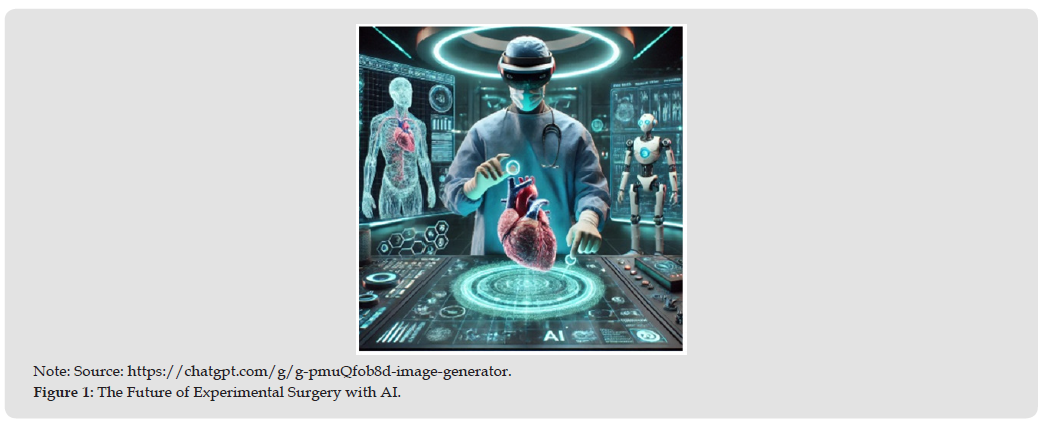
Figure 2

Figure 3

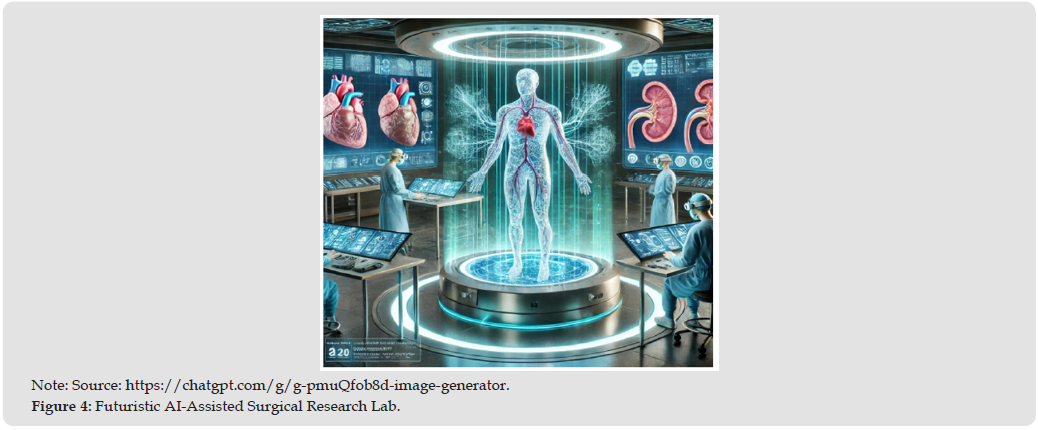
This review explored the role of artificial intelligence (AI) in experimental surgery, focusing on surgical procedures, operative techniques, computer simulation, computerized models, and biomedical technology as innovative alternatives to traditional animal-based experimental models. A systematic and comprehensive search was conducted across major scientific databases, including PubMed, Embase, Scopus, Web of Science, and SciELO, with additional sources identified through gray literature searches on Google Scholar. The search included studies published up to the present date to ensure a thorough assessment of the most recent and relevant evidence available (Figure 4). The search strategy was designed using a combination of keywords and MeSH terms tailored to the primary focus areas of this review. The selected terms included “Artificial Intelligence,” “Surgical Procedures, Operative,” “Computer Simulation,” “Computerized Models,” and “Biomedical Technology.” Boolean operators (AND, OR) were used to construct precise and efficient search strings, including a broad spectrum of relevant studies while maintaining specificity. Eligibility criteria were predefined to include various study designs, such as randomized controlled trials (RCTs), cohort studies, case-control studies, cross-sectional studies, systematic reviews, and meta- analyses. Studies were selected based on whether they provided data on AI applications in optimizing surgical techniques, replacing traditional animal models, improving surgical decision-making, or advancing biomedical technology in experimental surgery.
Figure 4
Articles were excluded if they did not directly investigate AI’s role in experimental surgery, lacked methodological rigor, or presented only theoretical perspectives without empirical validation. No restrictions were applied regarding the type of surgical specialty or experimental setting, provided the study contained relevant information on AI-driven approaches in preclinical and experimental surgical research. The selection process was conducted by two independent reviewers who assessed the titles and abstracts of retrieved studies to identify potentially relevant articles. Discrepancies were resolved through discussion, and a third reviewer was consulted in cases of disagreement to achieve consensus. To minimize selection bias, reviewers remained blind to the authorship and institutional affiliations of the included studies. Full-text articles that met the inclusion criteria were retrieved and systematically evaluated for relevance to the review’s objectives. Data extraction followed a standardized protocol to ensure consistency and reproducibility. Extracted data included study design, sample size, experimental model characteristics, AI methodologies applied, surgical techniques assessed, simulation models utilized, and AI’s impact on experimental surgical outcomes. Thematic analysis categorized findings into key areas, including AI-enhanced surgical precision, the replacement of animal models, predictive modeling in surgical research, and AI-based medical simulation technologies.
A critical evaluation of methodological quality was performed, emphasizing potential biases, limitations in study design, and inconsistencies in AI applications across different experimental surgical settings. Particular attention was given to identifying research gaps, including the lack of standardized protocols for AI integration in experimental surgery, variations in AI model validation, and limited comparative studies between AI-driven and conventional surgical techniques. Additionally, issues related to variability in machine learning algorithms, dataset availability, and potential biases in AIbased decision-making were systematically analyzed. The review also proposed future research directions, including the need for robust validation frameworks for AI applications in surgery, ethical considerations in AI-driven experimental research, the standardization of AI-based preclinical models, and interdisciplinary collaborations among surgeons, computational scientists, and regulatory agencies. By synthesizing current knowledge on AI applications in experimental surgery, this review highlights the transformative potential of AI-driven methodologies in replacing animal models, optimizing surgical techniques, and advancing biomedical technology. These insights guide future innovations in AI-assisted surgical research, ensuring methodological rigor, ethical compliance, and translational relevance to clinical practice.
Integrating artificial intelligence into experimental surgery represents a profound transformation in biomedical research, offering an alternative to traditional animal models while dramatically improving the precision, reproducibility, and ethical integrity of preclinical testing. For decades, animal models have been the cornerstone of experimental surgery, serving as essential tools for refining surgical techniques, studying pathophysiological mechanisms, and evaluating the efficacy of new therapeutic approaches (Table 1) [86-88]. However, these models come with intrinsic limitations, including interspecies biological discrepancies, substantial translational gaps, and ethical concerns regarding the welfare of laboratory animals. The development and implementation of AI-driven in silico models have emerged as a groundbreaking alternative capable of overcoming these challenges while providing superior accuracy and predictive capability [20-22]. By leveraging deep learning algorithms, computational modeling, and machine learning techniques, AI-driven approaches are revolutionizing surgical research, offering an unprecedented level of precision and adaptability that was previously unattainable [89]. Artificial intelligence has evolved from a computational tool to an essential force in redefining experimental surgery. Modern AI systems can analyze vast datasets, integrating multimodal sources such as medical imaging, intraoperative sensor data, genomic profiles, and patient-specific physiological parameters to optimize surgical outcomes.
Table 1: AI-Based Experimental Surgical Models Replacing Animal Use.

Note: Source: Authors.
Unlike conventional methods that rely on static data points, AIbased platforms operate as dynamic learning systems, continuously refining experimental methodologies based on real-time input [90-92]. AI-powered models facilitate the automation of complex decision-making processes, reducing human error and ensuring the standardization of experimental procedures. By utilizing predictive analytics, these systems allow for the real-time assessment of potential surgical complications, enabling preemptive adjustments to mitigate adverse outcomes before they manifest. This shift from empirical, animal-dependent experimentation to AI-enhanced simulations signifies a fundamental reconfiguration of surgical research, ushering in a new era of precision-driven, data-informed experimentation [93-95]. One of the most transformative applications of AI in experimental surgery is the development of high-fidelity in silico models. Unlike animal models, which often fail to accurately replicate human physiology, AI-driven simulations can generate precise virtual representations of human anatomy, tissue behavior, and pathological progression. These computational models can simulate intricate surgical procedures with remarkable accuracy, allowing researchers to test and refine techniques in a controlled, reproducible environment [96- 98]. AI-powered in silico models have already demonstrated their efficacy in complex surgical fields, including liver resection, vascular anastomoses, robotic-assisted surgery, and oncologic interventions.
By integrating computational fluid dynamics, biomechanical modeling, and AI-driven decision-support systems, these models allow for iterative refinements of surgical protocols before they are implemented in clinical practice [99,100]. The ability to conduct virtual surgical trials without exposing patients or laboratory animals to risk represents a paradigm shift in preclinical research, significantly enhancing experimental surgery’s ethical and scientific rigor. Despite the immense potential of AI in experimental surgery, its widespread adoption faces regulatory and ethical challenges that must be addressed to ensure its integration into mainstream research methodologies [100-102]. The current regulatory landscape remains centered mainly on traditional experimental models, creating obstacles to the validation and approval of AI-driven methodologies. Organizations such as the Food and Drug Administration (FDA), the European Medicines Agency (EMA), and the World Health Organization (WHO) have yet to establish comprehensive guidelines for AI-based surgical simulations, leading to inconsistencies in acceptance across different research institutions [84-87]. Implementing AI-driven experimental models requires new regulatory frameworks that prioritize transparency in algorithmic decision-making, the standardization of machine learning training datasets, and the mitigation of predictive biases that could affect the reliability of results. Without explicit regulatory pathways, the transition from conventional animal-based preclinical research to AI-powered alternatives remains hindered, slowing the progression of this innovative approach [15-18].
The ethical implications of AI-based experimental models extend beyond eliminating animal testing. While AI significantly reduces ethical concerns associated with laboratory animal use, it introduces new challenges related to algorithmic bias, data privacy, and the interpretability of AI-generated findings. Biases in AI models can arise from disparities in training datasets, leading to inequitable predictions that disproportionately affect specific patient populations [26-29]. Additionally, AI-driven decision-making in surgical experimentation must be designed to ensure fairness, accountability, and transparency. Establishing ethical frameworks that regulate the use of AI in experimental surgery is critical for maintaining the integrity of preclinical research and ensuring that these models align with the highest standards of medical ethics [34-37]. An auspicious advancement in AI-driven experimental surgery is digital twin technology, which involves the creation of real-time, AI-enhanced virtual replicas of biological systems. Digital twins incorporate patient-specific data, continuously updated through real-time monitoring, enabling researchers and clinicians to simulate surgical interventions with unprecedented precision [41-44]. These models have been successfully applied in transplantation surgery to predict immune responses and assess graft viability, reducing the reliance on large-scale animal transplantation studies. In oncology, AI-powered digital twins are used to model tumor growth, determine optimal resection margins, and evaluate the impact of neoadjuvant therapies, demonstrating far greater predictive accuracy than traditional experimental models.
The ability to conduct multiple patient-specific simulations before performing an actual surgical procedure represents a revolutionary advancement in precision medicine, transforming surgical research into a data-driven, patient-centered discipline [55-58]. The convergence of artificial intelligence and nanotechnology is another area poised to redefine experimental surgery. AI-driven nanorobotics has enabled the development of minimally invasive procedures at a molecular level, facilitating targeted drug delivery, nanoscale tissue repair, and the creation of bioengineered tissues that can replace damaged structures [60-63]. AI-powered nanoparticle modeling is being used to predict the biocompatibility of new materials, eliminating the need for extensive animal testing in biomaterial research. Furthermore, AI-enhanced nanosurgical simulations provide valuable insights into the interactions between biomaterials and living tissues, accelerating the development of next-generation surgical tools and implants. AI has also revolutionized experimental neurosurgery, particularly in developing brain-computer interfaces and neural network modeling [74-77]. AI-driven neural simulations have replaced primate-based neurophysiology studies, allowing for detailed cortical mapping, synaptic plasticity analysis, and neuroregeneration modeling. The use of AI in deep brain stimulation has enabled the creation of highly precise, individualized neuroprosthetics, significantly improving outcomes in conditions such as epilepsy, Parkinson’s disease, and traumatic brain injuries [82-85].
By harnessing AI-driven predictive modeling, researchers can optimize neurosurgical interventions with unprecedented accuracy, eliminating the variability and ethical concerns associated with traditional animal-based neurosurgical experimentation [89]. The future of experimental surgery is inextricably linked to AI-driven innovations. As computational power advances, regulatory agencies refine their approaches to AI-based methodologies, and interdisciplinary collaborations strengthen, AI-driven surgical models will become the global standard for preclinical research [88-90]. The continued refinement of AI methodologies, the development of real-time adaptive deep learning algorithms, and the optimization of digital twin technology will solidify the transition from traditional experimental surgery to a fully AI-driven research paradigm. The ability of AI to integrate and analyze vast datasets, optimize surgical decision-making, and simulate complex biological processes with unprecedented accuracy is ushering in a new era of surgical experimentation that is fundamentally transforming the way research is conducted [94-97]. By embracing these technological advancements, the scientific community is moving toward a future in which experimental surgery is characterized by unparalleled precision, reproducibility, and ethical responsibility [10]. The transition from animal-based models to AI-driven methodologies represents a scientific revolution and a moral imperative, ensuring that surgical research is conducted with the highest level of integrity while advancing medical knowledge in previously unimaginable ways [101-103].
The next decade will accelerate AI-driven experimental surgery as regulatory frameworks evolve, computational capabilities expand, and AI methodologies fully integrate into surgical research. The goal is to establish AI as the foundation of a new paradigm in experimental surgery, where data-driven decision-making, ethical responsibility, and scientific excellence converge to reshape the future of preclinical research [104,105].
Artificial intelligence has emerged as a transformative force in experimental surgery, fundamentally reshaping preclinical research methodologies and ethical frameworks. By leveraging computerized models, surgical simulations, and machine learning algorithms, AI enhances precision, reproducibility, and translational applicability, effectively addressing the limitations of traditional animal-based models. Implementing AI-driven approaches allows researchers to optimize surgical techniques, improve predictive modeling, and develop high-fidelity in silico simulations. This reduces the ethical and methodological concerns associated with in vivo experimentation. Despite its significant advancements, integrating AI into experimental surgery presents challenges, including data standardization, regulatory validation, and algorithmic transparency. The absence of universally accepted guidelines for AI applications in preclinical research demands interdisciplinary collaboration among surgeons, computational scientists, and regulatory bodies to ensure methodological rigor and ethical compliance. The development of standardized AI frameworks, real-time adaptive learning systems, and digital twin technology will further enhance AI’s role in preclinical validation, surgical training, and clinical translation. Future research should prioritize refining AI-driven experimental models, harmonizing regulatory standards, and ethically overseeing AI-generated surgical simulations. By embracing AI innovations, the scientific community will advance experimental surgery toward a more ethical, precise, and technologically sophisticated era, ultimately improving patient outcomes and translational research efficiency.
The authors thank the Federal University of Rio Grande do Norte, Potiguar University, and Liga Contra o Cancer for supporting this study.
The authors declare that there is no conflict of interest.

International Association of Landscape Archaeology, Czech Glass Society, Czech Republic

Department of Chemistry, Semenov Institute of Chemical Physics, USSR Academy of Sciences, Moscow, Russia

Pharmaco-kinetics, dynamics and Drug Metabolism, Touro College of Pharmacy, USA

Professor of Nuclear Medicine, Faculty of Medicine and Surgery, University of Milan, Milan, Italy

Clinical Radiologist (MD) - Department of RADIOLOGY, Cosenza Hospital, Cosenza, Italy





 Abstract
 PDF
PDF