info@biomedres.us
+1 (502) 904-2126
One Westbrook Corporate Center, Suite 300, Westchester, IL 60154, USA
Site Map
 ISSN: 2574 -1241
ISSN: 2574 -1241
ISSN: 2574 -1241
Received: July 01, 2025; Published: July 08, 2025
*Corresponding author: Töysä T, Licentiate of Medicine, Specialty General Practice, Retired, Student of Eastern Finland, Finland
DOI: 10.26717/BJSTR.2025.62.009750
Environmental factors influence on foodstuff quality. Because pigs and humans eat the same foodstuffs, we could expect that their health indicators could covariate. This assessment contains autopsy material of the National Veterinary Institute including 21,146 pig autopsies in 1954-91, 1,833 of them with “plain CVD”, [less Myocardial degeneration (MyCD)] and 1,433 cases labeled “Antioxidant deficiency” diseases (AoxD) [(MyCD, Hepatosis diaetica (HeD) or Skeletal muscle degeneration (SMuD)]. Autopsy cases are assessed by number (N), their proportions of all pig autopsies (A-%) and proportions of pig number (1/100,000) with human CHD (“CHD”) and soil magnesium, superficially with nCHD [non-CHD: total minus CHD] mortality. CVD development is categorized into five subgroups: MyCD, MAP (microangipathy), Carditides, Stress, and Others.
Results: In 1954-91 proportion of CVD subtypes varied and a new stress diagnosis emerged. Variation of CHD mortaIity showed similarity with CVD and its subtypes. In 1961-91 Soil Mg explained Human CHD ca 90 %. CVD subtypes strengthened this association. The reduction of AoxD occurred at a faster rate compared to CVD. An inverse variation between MAP and Carditides was noted, although no explanation was provided. Comparisons have been made with the data in veterinary reports for evaluation of the reliability of the mortality density. Detection and determination of Mg deficiency and its association with S-lactate and most of CHD risk factors are discussed.
Conclusions: Pig CVD, best MAP, complied with human CHD variation. Heart diseases of pigs and humans can be seen as indicators of Mg deficiency as the most CHD risk factors.
Abbreviations: 3ym: Average of Three Years; A: Autopsy (-ies); A-%: Proportion of an Autopsy dg per A’s Total; AoxD: “Antioxidant Disease”: Separately or sum of HeD, SMuD and MyCD; CVD: Cardiovascular Disease (here: pig.CVD); CHD: Coronary Heart Disease (here: Human CHD); dg: Diagnosis; F: Female; FM: Human; HeD: (pig) Hepatosis Diaetica (Nutritional Liver Necrosis, Toxic Liver Dystrophy, etc.); M: Male; MAP: “Enzootisch. Herztot” (1954–62), Dietetic Microangiopathy (“Mulberry Heart”) & “Trombocytopenia Purpura” (1963–); “MyDC”: (pig) Myodegeneratio Cordis; nCHD: Non-CHD: (TOT - CHD); (pig) PSE: (“Pale Soft Exudative” Meat, caused by Stress Prior Slaughter); PSS: Porcine Stress Syndrome, Malignant Hyperthermia Caused by Stress; SMuD (Skeletal Muscle Dystrophy), TOT: Age Standardized Total Mortality, Aged 35-65, Amongst Population (FM) of 100, 000, by using the Means of Male (M) and Female (F) TOT Values: FM.CHD+FM.nCHD.
In epidemiological studies foodstuff composition tables can be misleading [1] as suggested in [2]. Pigs eat the same foodstuffs (cereals, potatoes and dairy products) as humans and are free from socio- economic diversity and behavioral risks. The life span of slaughter pigs is six months and at last humans eat the pigs. That’s why the environmental changes can be seen in pigs and humans about simultaneously. The aim of this paper is to analyze compliance of human CHD and non-CHD (Total mortality minus CHD) with pig CVD mortality and soil magnesium status. Development of CVD subtypes is represented visually by (N), by their proportions of pig autopsies (A-%), by their proportions of pig number (1/100,000) and visually by proportion of CVD (%) and proportions of [CVD.less. MyCD]. (MyCD: Myocardial degeneration). Assessed are the changes in the proportion of CVD cases in veterinarians annual reports. These pig data and their explanatory factors — soil, fertilization, weather, and technological changes affecting grain quality — have been presented previously [3]. This is mainly a statistical assessment of the given diagnoses, numbers of autopsies and pigs. Biochemical questions are discussed.
This study is assessing 2,131 CVD cases, by their 5 subtypes, based on 21,146 autopsies (A) in Finnish National Veterinary Institution, 1954–91. (All data included in this study is collected in Table 1). In addition to the CVD group, 1019 HeD and 180 SMuD cases from the AoxD group were assessed. The annual diagnostic data of pigs with number of total pig autopsies is provided by Evira (now Finnish Food Safety Authority) Information services [4]. Mostly the data have been treated by 3-year means (3ym) by periods “1955–90” and “1961–90”).
Annual data on number of pigs (collected once a year) are provided by Statistics Finland [5]. The given annual number of pigs varied in 1954–91 between 432,000 and 1,501,000, by increasing trend. Because the proportion of pigs aged 0–6 months, approximated by a few samples of [5], was trend like increasing between 1955 and 1983 from 0.79 (1955) to 0.87 (1983), (this classification was available in Statistical Yearbooks of Finland for 1955–83 [5]), the number of annual deaths was higher than the given number of pigs, approximately 1.7-fold. Because pigs die without death certificates, the amount of the number of disease groups have been monitored even by summaries of the (monthly collected) “reports of the veterinarians concerning the amounts of animals treated for diseases” (like “Morbi Organorum cirkulationis”), e.g. for 1954–70 [6,7], (Table1), more precisely determined in 1968–72 [8].
Table 1: Shows Number of pigs with CVD diagnoses: Myocardial degeneration (MyCD), Microangiopathy (MAP), Carditides, Stress syndrome (PSE & PSS), Others (mainly cardiac failure et similes) and CVD total, additionally cases with Hepatopathia diaetica (HeD) and Skeletal muscle degeneration (SMuD), Number of pigs (N.B. text), Annual number of CVD cases per 10,000 veterinarian reports, human (FM) mortality from CHD and soil Mg content.

Data in 1973–75 [8] is incomplete and after 1976 “reports of the veterinarians” were given by visits to farms (not indicating precisely the number of cases), but they showed continuous declining after 1975. On the other side the exact determination of a specific diagnosis, e.g. HeD, was impossible, because symptoms can overlap, as e.g. HeD patients can have same time muscle degeneration and/or MAP [9,10]. Co-temporal picture of occurrence of diseases was possible by asking the owners of the biggest piggeries [9]. Human (FM) CHD (coronary heart disease) mortality (age-standardized, aged 35-64, 1/100,000) is provided originally from Statistics Finland, edited by Valkonen, 1990 [11] and evaluated to figures in [12]. Soil magnesium (Mg) data, by 5-year means, for 1961-95 are from Viljavuuspalvelu Oy (now Eurofins Viljavuuspalvelu Oy) [13]. Values for 1961–89 are are used as such, but for 1990 is given the mean of 1989-91 values. Collected data are in Table 1.
Calculations are executed by Exel or IBM SPSS 29.0.2.0 (20). In calculations diagnoses are treated by their Numbers (N) or (“3ym” by treating 3-year means), proportions of autopsies by percents (A-%) or by proportions of pig number (1/100,000). Combined regressions are calculated even e.g. together by (A-%) and (1/100,000) factors. CVD sub diagnoses are presented visually by these three methods and by their proportions of CVD (or CVD.less.MyCD).
Human CHD variation was explained 51.1% by [MAP.3ym (A-%)] 50.8% by [MAP.3ym (1/100,000)] and 75 % by [MAP.3ym].
Figure 1
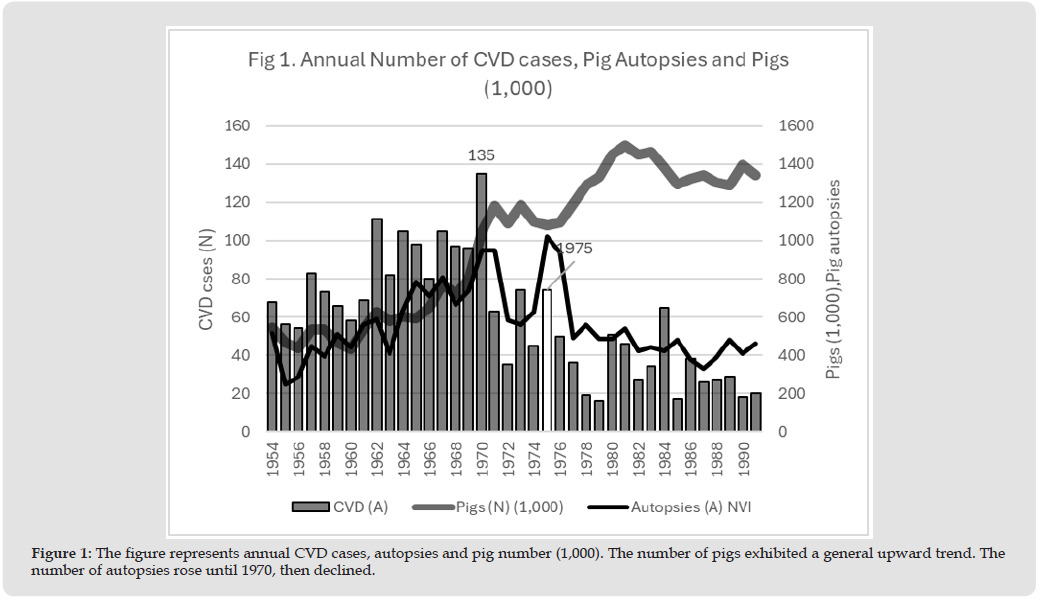
Figure 2
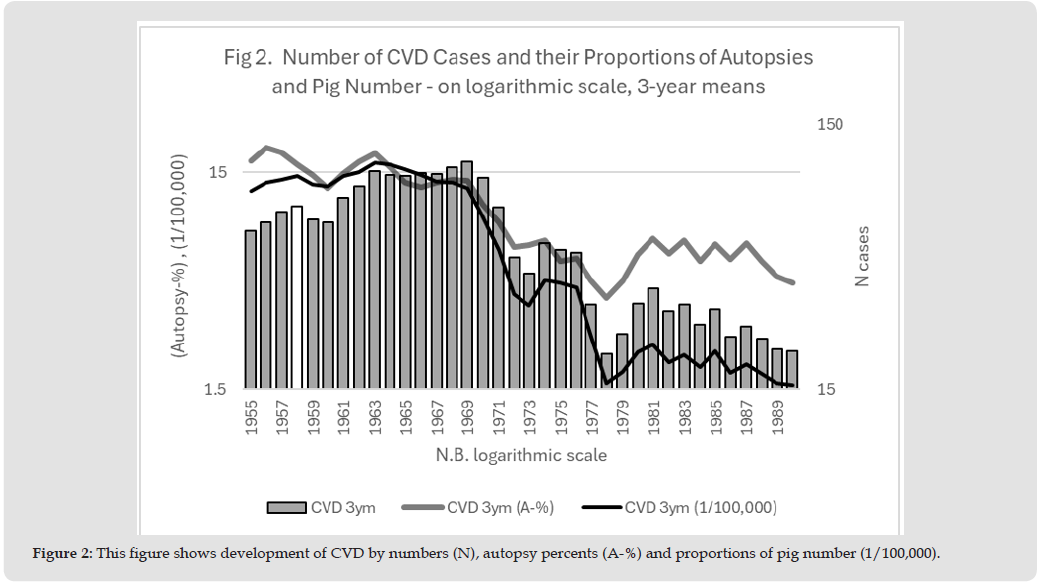
Figure 3
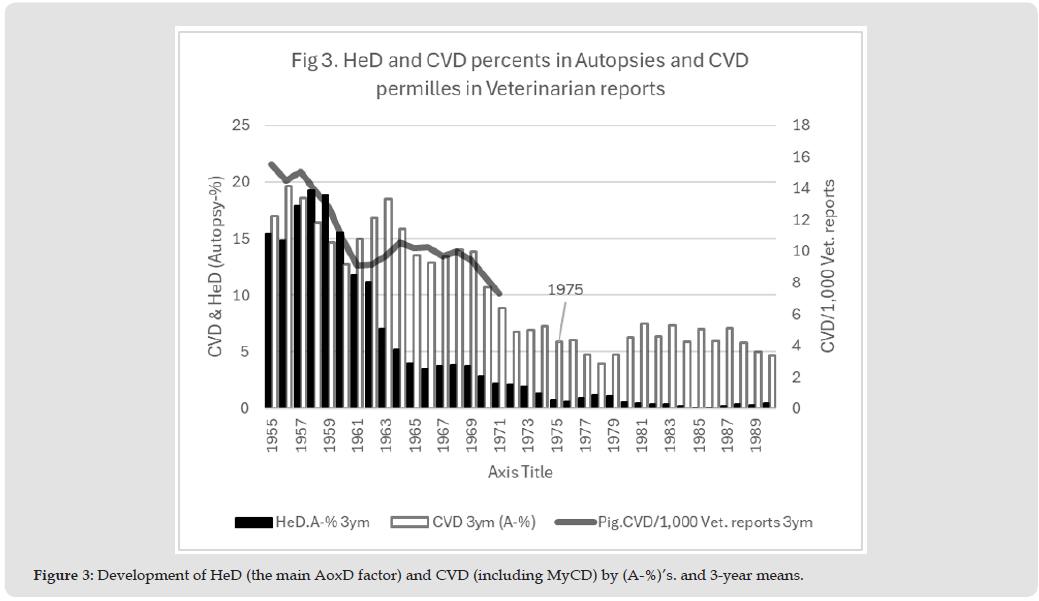
Figure 4
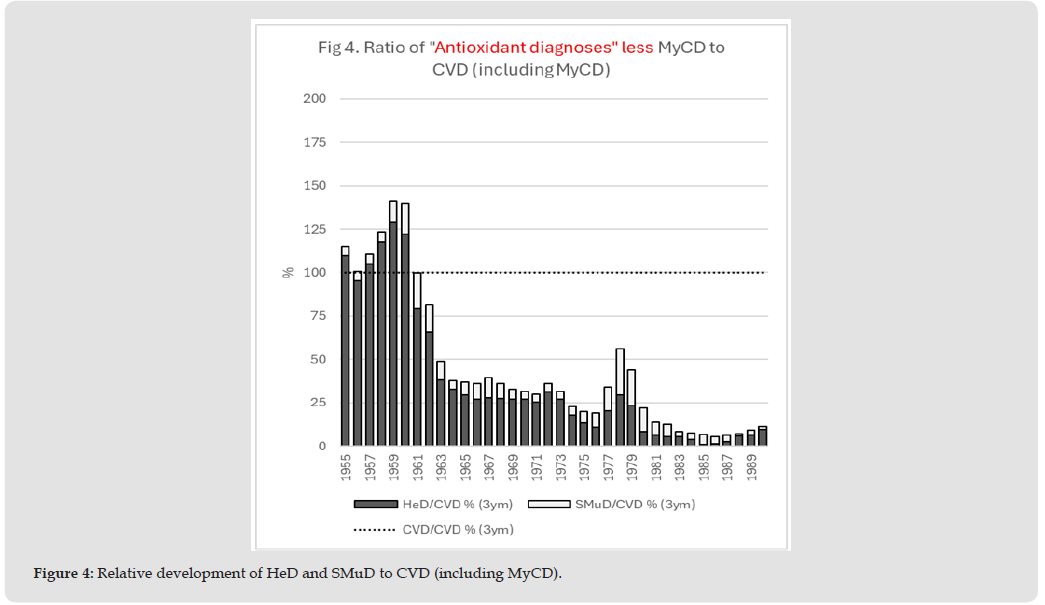
Figure 5
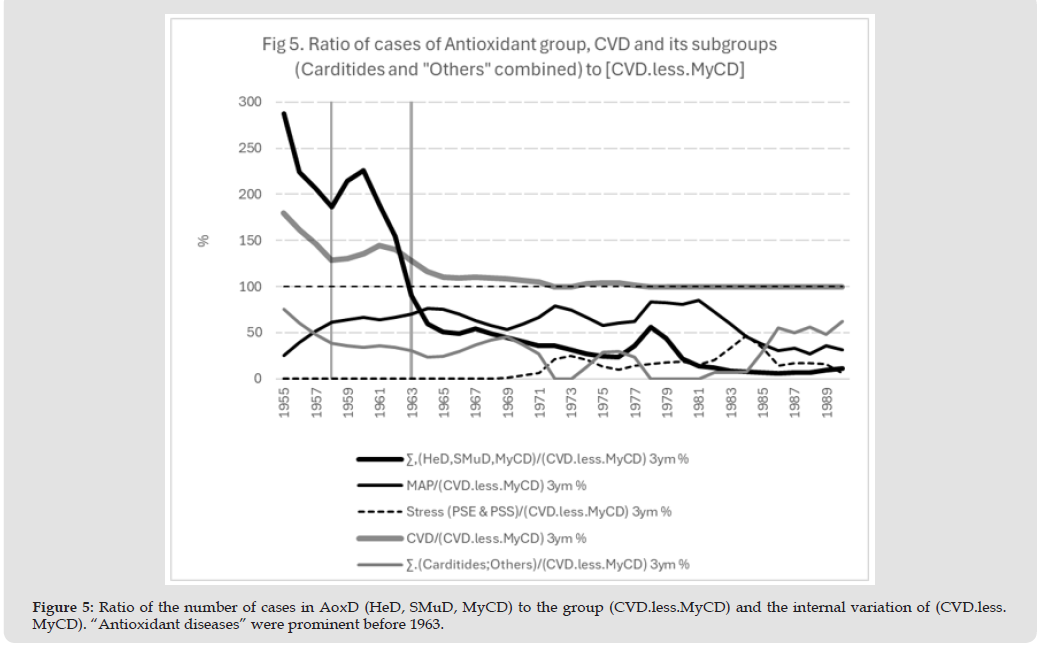
Figure 6

Figure 7

Figure 8

Figure 9

Figure 10

Figure 11
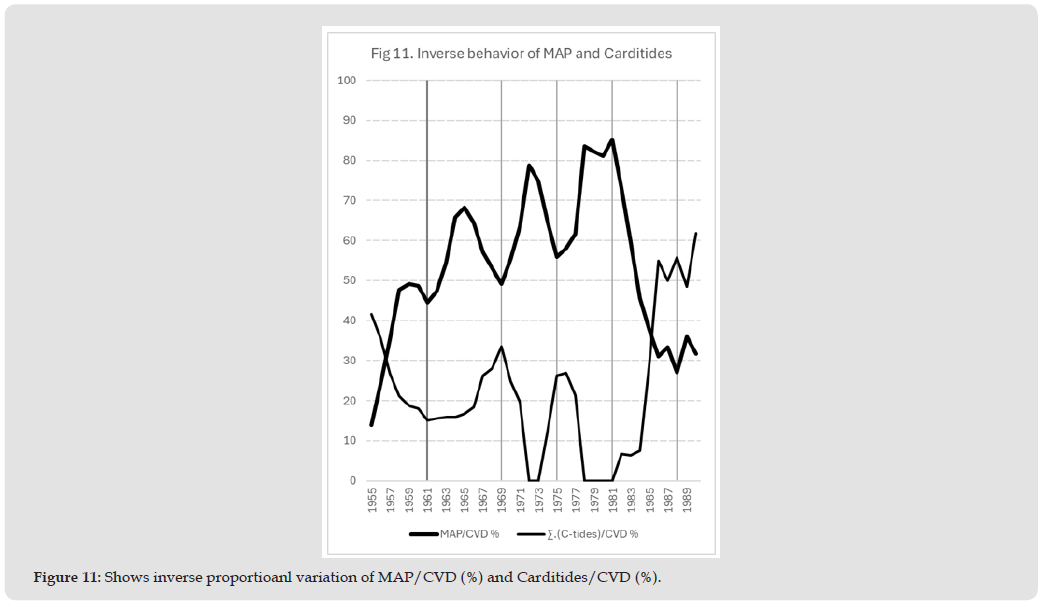
Figure 12

Figure 13

Figure 14

Figure 15

Figure 16
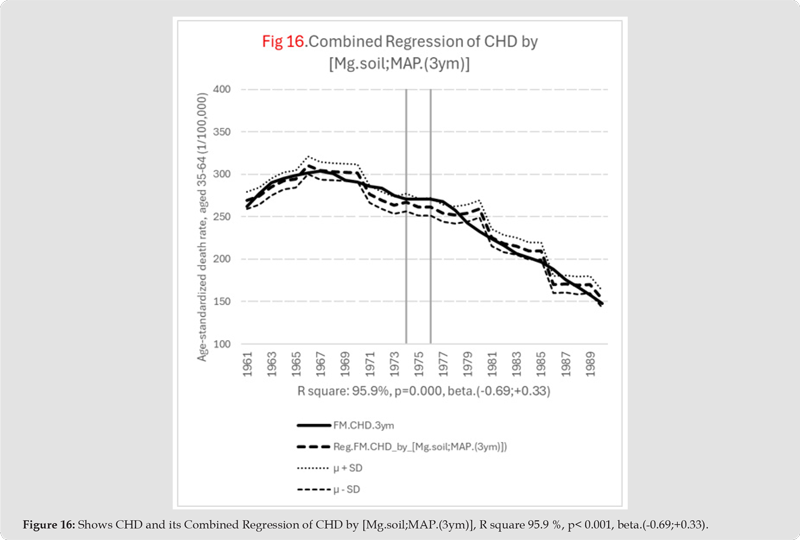
About pig mortality and its causes has been written earlier [14]. The article [14] included all Finnish autopsy data of pigs. Because of the abrupt increase of autopsies in Seinäjoki after 1989 (in 1990-91 more than 50 % of all samples), after considering data of Seinäjoki and Kuopio (i.e 11 % of total data) were excluded. Because mortality data (e.g. in Fig. 14-16) was given by 3year means, even soil Mg of 1990 was slightly modified: it was replaced by the mean of 1989,1990 and 1991 (Table 1). (discussable). By annual CHD values and 5 year means of Mg (Table 1), R square of the regression of CHD and Mg soil in 1961-91 was 89 %.
Role of environmental factors (grain production shift northwards, rain, frost), changing weather and grain harvesting and drying procedures (which violated grain), grain fats, peroxides and beginning of selenium supplementation, additionally to [3,9], was discussed in [14] (Note: The first Se experiments took place in 1958. [9]). It told about the history of selenium (Se) treatments [15,16] administrative decisions of Se contents in commercial fodders and fodder salt mixtures [17] and Se fertilization [18]. “Selenium supplementation substantially enhanced the effects previously achieved through recycling and the use of “soil improvement” materials, such as peat and clay soil, during the 1950s [19].” The imported grain caused fluctuation in Se availability [20]. The exact time of liberation of ‘Se – vitamin E’ fodder salt complex to free access is not known, but it was between Nov 1962 and Oct 1963, so it had possibility to decrease AoxD mortality since the beginning of 1963 (Figures 4-6). The study period selected (1954-1984) in reference [14] resulted in a higher association of cardiovascular disease (CVD) in pigs with coronary heart disease (CHD) in females compared to males during the years 1961-1990.
Microangiopathy of pigs (MAP, mulberry heat disease) is characterized by acute heart failure and sudden death, due to hyaline microthrombi and myocardial haemorrhage. MAP can be associated with myocardial scarring (i.e. with recurrent episodes). Histological examination reveals partial or total occlusion of capillaries and arterioles due to PAS-positive material present within the capillaries and subendothelially in both arterioles and capillaries [10]. It seems to be quite different to human infarcts, but they have much in common [21]. “MAP pigs were well-nourished; previously, heart attack in humans was called a “disease of affluence.” According to Blumgart et al. (1940, 1941) hearts of angina pectoris patients invariably revealed occlusions of small arterial branches [22]. Experimental dietary Mg deficiency increases lactate production (S-lactate level) [23]. Myocardial lactate production in the coronary circulation during acetylcholine provocation test is associated with myocardial ischemia [24], (prolonged ischemia is death). LADH and ASAT were the first indicators of heart infarct [25]. MAP (by its all variables) associated highly significantly (p < 0.001) with CHD (Table 2). Correlations of Other CVD’s were slightly weaker with deceasing order, depending on their association of MAP [lower association with CVD’s than in (CVD.less. MyCD)’s].
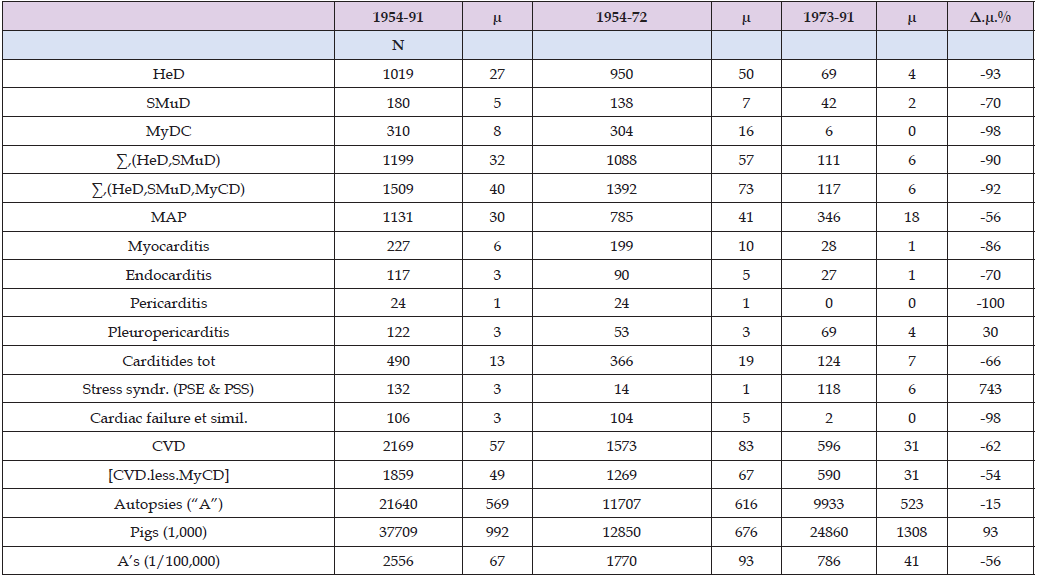
Table 2: Shows the number of cases by diagnoses and by diagnose groups in periods 1954-91, 1954-72 and 1973-91, their annual means (μ) and the change between periods in percents.
Importance of lactate (and lactate production) and Mg were higher if we can suppose that general risk factors: “elevated cholesterol”, “low HDL-cholesterol”, “high S-triglycerides”, “diabetes mellitus”and “elevated blood pressure, BP” [26] are not real independent entities in the heaven of diagnoses. Experiment [23] indicates that S-triglycerides link to a low-Mg diet (p < 0.01). Specifically, Figure 7 in [23] suggests that elevated triglycerides may be one of the earliest indicators of Mg deficiency. Magnesium (like statins) inhibit the rate-limiting reaction in “cholesterol” synthesis: the enzymatic conversion of HMG CoA to mevalonate via HMG CoA [27]. Mg is also necessary for the activity of lecithin cholesterol acyl transferase (LCAT), which lowers LDL-Cholesterol and triglyceride levels and raises HDL-Cholesterol levels [27,28], i.e. Mg increases “total cholesterol:HDL-cholesterol ratio” [26]. Mg-dependent desaturase catalyzes the first step in conversion of essential fatty acids (omega-3 linoleic acid and omega-6 linolenic acid) into prostaglandins, important in cardiovascular and overall health [27]. Managed desaturation reduces risk of ROS formation. Mg can reduce “BP” [26] and arrhythmias, provoked by adrenalin (so it can have alfa-adrenergic antagonistic function) [29]. Magnesium deficiency is correlated with platelet-dependent thrombosis [30]. Magnesium supplements help maintain proper glucose metabolism [31,26]. Muscle magnesium levels and magnesium retention tests have been linked to heart infarction [32].
According to an old Textbook of Biochemistry (first edition in 1954, fourth edition in 1968) normal serum Mg was 1.8 to 2.5 meq/l (0.9 – 1.25 mmol/l) [33]. Nowadays normal P-Mg (≈ S-Mg) is 0.71 to 0.94 mmol/l [34]. In 2010, statistical data indicated that the lower limit of the normal range for P-Mg could be raised to 0.85 mmol/L [35]. Body magnesium’s long half-life (1,000 hours) [35] complicates Mg-studies compared to those with furosemide. According to Table 2 in [23], S-Mg was a less consistent indicator of magnesium deficiency compared to the duration (weeks) on a low-Mg diet in young pigs. In the British Isles Mg content of vegetables has been reduced by 35 % between the 1930’s and the 1980’s [1]. It means that the supplementation of industrial pig foods by “considerable amount of Mg” [23], so that Mg content increased by 20-30 % [36] was obviously not overcompensation.
Table 3: CHD, non-CHD and Mg.soil correlations with Pig Mortality parameters in 1961-90 (decimals after commas, without zero).

Table 4: For normally distributed variables these are the significance levels of the product moment correlation coefficient ® for N pairs of observations.

Association of CVD’s [CVD and (CVD.less. MyCD] with CHD is dependent on parameter selection: associations get usually stronger in this order: (A-%) < (1/100,000) < N (or 3ym). A slight exception: CHD association with MAP. (A-%) was 60.9% and with MAP. (1/100,000) 59.9 %. Figure 8 (as here represented) shows that there was no decrease in CVD cases (by number, percentage (A-%), or per 100,000) between 1977 and 1990. Figure 9. shows similar elevation in MAP in 1977-84, but there are no remarkable elevations in “Summary of the reports of the veterinarians concerning the amounts of animals treated for diseases in SVT XXXIV Serie concerning years 1976-90 (as [6,7]). The reported number of MAP cases (by “visits to farms”) decreased by 80 % in 1977–90 (not represented here). SVT XXXIV does not give other clinical heart diagnoses, obviously in autopsies the diagnoses have been changed. Anyhow SVT XXXIV shows a strongly decreasing trend. That’s why 1/100,000 values seem not to be less descriptive (reliable, apt) than (A-%) variables. Fig 17 indicates that in 1955–69 (the number of) CVD’s increased and in general trend (the sum of) (CVD+AoxD’s), i.e. Σ.(HeD,SMuD,CVD), decreased. In 1964-69 Σ.(HeD,SMuD,CVD) and CVD’s behaved similarly, increased. In general trend the reduction in CVD’s and AoxD’s was rapid in 1969–90, faster than in autopsy density [A.3ym.(1/100,000)], i.e. their relative importance was reduced.
In cases with 2 or more diagnoses in one patient, selection of primary diagnosis can have a role. Figure 6 can suggest that HeD could have been favored in selecting primary diagnosis, but not verify. Fig 18 suggests favoring of AoxD group [Σ.(HeD,SMuD,MyCD] in total, instead of CVD’s between 1956 and 1963, even number of MyCD’s seems to be underestimated. In 1960 an approximated incidence of HeD in Finland [9] was 10 %, i.e. ca 50,000 cases annually in Finland and number of HeD in autopsies 54. In one district [9] the number of HeD cases dropped to 2% in two years. The success of the treatments has been reported in [15], too. Numerous measures and environmental factors that enhanced grain quality [3] contributed positively to the same direction. In 1971 and 1974 veterinarian Nuoranne [36,37] wrote about experiments and results with magnesium against pig diseases and observed that low Mg content in soil and grain associated with pig morbidity. Mg supplementation reduced significantly e.g. cases of sudden deaths and “splay legs” (flaccid paraparesis), as well as bruxism. Historically it seemed that avoiding polyunsaturated fats, especially fish oils or fish meal could be enough [10]: In 1958 Goodwin did remark pig deaths commencing when fish meal was fed in increasing amounts and ceasing with the removal of fish meal from the ration ([10], p. 10). Selenium could prevent MAP and HeD, but not SMuD nor “yellow fat” ([10], p. 47). There are two explanations: deficiency of methods to prevent rancidification of PUFA’s (e.g. fish oils) before feeding (during transport and storing) or deficiency of Mg, i.e. deficiency of Mg-dependent desaturases to produce beneficial prostaglandins [27]. During reduction of Mg availability (Figures 14–16) the LCAT and desaturase function declined, which could increase in CHD and MAP. In some new studies have been discovered MAP cases without Se or vitamin E deficiency [38]. It seems possible to be explained by magnesium [36, 26-32], possibly supported by other (structural?) factors working in capillaries and pre-capillaries (silicon [39])?
This study material cannot prove exact quantitative changes in pig mortality, but better relative changes. A glance at Figures 6-11 by 3 parameters is the best description of them. MyCD has been presented. MAP is interesting because it has its maximum correlation with human CHD. Stress syndromes were obviously determined during the last half of the period. Carditides were most distributed. A small group “Others” (mainly cardiac failure disappeared nearly totally after 1971. Interesting is the mutual variation of MAP and Carditides (a puzzle for pathologists, without comments). Interesting is the high MAP proportion of CVD in 1978-81 (Figure 15), during the import of Se-rich grain [20]. Anyhow the MAP change was not remarkable on scale (1/100,000), according to Figure 9 and was reduced by 80 % during the preceding 10 years in veterinarian reports [annual SVT 34 series], faster than CHD reduction. The import of selenium-rich grain was a sign of adverse weather conditions and subpar food and fodder quality, which was offset by the import. Imported grain consisted primarily of bread grains intended for human consumption. Its yield was largely influenced by winter conditions, which affected the quantity rather than the quality of the grain. This can explain its more beneficial effect on humans than on livestock in 1978-81. Korpela, employed at the National Veterinary Institute, showed the same NVI data from 1969-84 made distinction between HeD and MAP, observed in their monthly incidence rates [40]. He did not address the representativeness of NVI data by [6,7] or Serie SVT XXXIV]. During 1955–69 the proportion of the three AoxD’s, (Sum of HeD, SMuD and MyCD) in the complex AoxD + CVD decreased from 74 to 30% (Figure 16). Most rapidly disappeared MyCD (Figure 8 & Table 2). The raw data (N or 3ym) showed the highest correlations with CHD, as the biases in representativeness differences offset each other.. Supposedly the data analyzed in this study was not as fully randomly collected. There were obviously several factors working: not only the supply by farmers and demand for samples by (researcher’s), but e.g. budget, etc. One explanation for regulation of supply of pigs to autopsies could be veterinary reports [6-8] (frequency of CVD cases met by veterinarians): veterinarians sent, what they saw. Between 1961 and 1971 CVD proportion in Veterinarian reports and total Autopsies per 100,000 pigs correlated (Figure 20).
The stagnation in CHD reduction in 1974–76 is associated with soil Mg content and so with other Mg-dependent variables [23-31]. The stagnation in the CHD mortality decline during 1973–77 [41] was obviously independent on the North Karelia Project (Figures 14 & 15). S-Lactate can be an early indicator of total body Mg deficiency [23]. Magnesium can work nowadays (during this Mg deficiency era) as a general pain killer [42]. Mg deficiency can amplify anginous pain and trigger heart attacks. S-Mg content by Mg supplemented pigs at about 1978-79 [23] was from 0.75 to 0.9 mmol/L, but in 1995 S-Mg of pigs was evaluated to be 1.21 +/- 0.24 mmol/l [43]. Mg studies without Mg retention test or without muscle or bone biopsy [32,35] seem not to be reliable. “Non-fat theory” in atherosclerosis is supported even by the discovery, that pyridoxine deficiency through violating linoleic acid metabolism can result in “formation of atheromas indistinguisable from those found in human arteries” [44], as well as the very low fat content of pig food (32 g/kg) [23].
“Thrombocytopenia purpura” was added to MAP, because Grant [10] (p. 100) wrote: “The vascular lesions of MAP, their episodic nature, and their association with haemolysis and possibly even with thrombocytopenia, resemble characteristic features of … “thrombotic thrombocytopenic purpura”. Both diagnoses were occasionally given in the same years. Possibly because platelet measurements before or after death were obviously rare.
Pig CVD, best MAP, complied with human CHD variation. Heart diseases of pigs and humans can be seen as indicators of Mg deficiency as the most CHD risk factors.
I am grateful to Professor Osmo Hänninen and veterinary surgeon Seppo Haaranen for several discussions.

International Association of Landscape Archaeology, Czech Glass Society, Czech Republic

Department of Chemistry, Semenov Institute of Chemical Physics, USSR Academy of Sciences, Moscow, Russia

Neurology, LA BioMed Research Institute, USA

Associate Professor at Department of Breast and Thyorid Surgey, Chongqing General Hospital, China

Professor of Nuclear Medicine, Faculty of Medicine and Surgery, University of Milan, Milan, Italy





 Abstract
 PDF
PDF



























