info@biomedres.us
+1 (502) 904-2126
One Westbrook Corporate Center, Suite 300, Westchester, IL 60154, USA
Site Map
 ISSN: 2574 -1241
ISSN: 2574 -1241
ISSN: 2574 -1241
Received: April 01, 2026; Published: May 04, 2026
*Corresponding author: Dr. Dicky Arianto, M.Si.Med., Sp.B, FINACS, Telogorejo Hospital, Semarang, Central Java, Indonesia
DOI: 10.26717/BJSTR.2026.65.010201
Wound healing is a complex process, physiologically involves cascaded phases. Under compromised physiological state like diabetes, it’s a challenging task for physician and dreadful experience for the patients. Infections by drug-resistant strains and increased inflammation make the wound non-healing. Although there are plenty of treatments currently used, new drugs are always needed for patients’ betterment. Silver in various forms is used for wound healing since antiquity. Star-Ag®, a formulation containing Colloidal Nano Silver – SilverSol®, is a breakthrough among the currently available advanced wound-healing technologies. It acts through its remarkable antimicrobial, anti-inflammatory and wound healing properties. The clinical efficacy of SilverSol® products has been proven in wounds of varied etiology, including diabetic wound. Current paper describes case reports, wherein, Star-Ag® was used along with standard wound-healing strategy. Conclusion Star-Ag® demonstrated efficacy as antimicrobial agen, prevent necrotic tissue from increasing, and optimize wound closure and healing outcome.
Keywords: Pollution; Environmentalization; Behaviors
Diabetes, a chronic condition with persistent high blood sugar due to lack of insulin, is associated with several pathological changes that contribute to poor wound healing. Wounds in diabetic patients have a complex pathophysiology that is attributed to a triad of neuropathies, trauma with secondary infection, and arterial occlusive disease [1]. Collectively these pathological processes make diabetic wounds non-healing due to excessive inflammation, secondary infections with resistant bacteria, decreased angiogenesis, disrupted keratinocyte migration, and decreased fibroblast proliferation [2]. The standard of care for diabetic wounds involves debridement, controlling blood glucose and infections, patient education, and various other treatments to aid wound healing. Although there are plenty of treatments currently used, new drugs are always needed for patients’ betterment.
Under normal physiological conditions, the body follows the damage repair cascade - involving
1. cell migration and proliferation,
2. extracellular matrix deposition, and
3. remodelling, which leads to wound healing.
Under such normal physiological conditions, therapeutic management of wounds includes supportive drug/non-drug modalities to enhance the natural process. Various wound dressings and treatments have evolved considerably to handle such conditions. However, in case of impaired physiological conditions, such as in diabetes, their management is a foremost challenge. Wounds tend to become chronic, infectious, and non-healing, making patients suffer for a longer period. Infection of wounds is a major concern that complicates, and delays wound management. In turn, wounds that take longer to heal are more prone to infections. β-haemolytic Streptococcus pyogenes and Streptococcus agalactiae, Staphylococcus aureus, Proteus, Klebsiella, Pseudomonas, Escherichia coli, Stenotrophomonas, Acinetobacter, and Xanthomonas are common pathogens that can infect wounds [3,4]. Infections with the resistant strains of these microbes is an additional challenge in wound care.
The use of silver in wound healing has a long history. Hippocrates (400 BC) highlighted the ability of silver in tissue repair and wound healing and applied silver preparations for the treatment of ulcers. Since then, silver has been used in different forms in different eras for wounds and ulcers. Fine silver wires to close fistula after surgical repair, silver foils for treating wound infections etc., were used. Silver nitrate used to be most popular thereafter for oral and topical applications for wound care. 5 The first record of applying colloidal silver on the wound as an antiseptic was found in 18916 Star-Ag®, a formulation containing Colloidal Nano Silver – SilverSol®, is a breakthrough among the currently available advanced wound-healing technologies. It offers a next- generation therapy for the treatment and management of severe, chronic, and infectious wounds that are difficult to manage. It acts through its remarkable antimicrobial, anti-inflammatory and wound healing properties. The clinical efficacy of SilverSol® products has been proven in wounds of varied etiology, such as acute and traumatic wounds, lacerations, diabetic-, pressure-, and venousulcers, infectious wounds, third-degree burns, MRSA-and VRE- infected wounds [5], [7-9] Star-Ag® can be applied locally on the wound alone or with wound dressings like Macfoam® (Nimbus® Technology, Barrier foam dressing). It is a highly absorbent polyurethane foam, that can absorb fluid, while maintaining moisture in wound environment. It has been shown that barrier foam accelerates would healing through increasing granulation, pain reduction, absorption, and reduction of wound exudate, decrease in wound size and improvement in peri-wound skin condition [10]. In the present case report, we demonstrate wound-healing effect of Star – Ag in patients of Type 2 diabetes.
Patients visiting Surgery Clinic at Telogorejo Hospital Semarang, with diabetic wounds were treated with the standard TIME approach that involves T—Tissue, removal of devitalized tissue; I— Inflammation/ Infection and its prevention & control; M—Moisture Management; and E—Edge Protection [11]. The patients were known diabetics with the chief complaint of a swollen, reddish lesion on the leg, with pain, and in some cases, fever. Besides standard antibiotic treatment, diabetes correction was employed for all the patients.
Star-Ag® was applied alone or with Macfoam®, depending on the wound severity. Macfoam® was used for a severe deep wound to fill the cavity and optimize the contact of the antimicrobial agent with the wound surface. Star-Ag® was used to control infection and inflammation, thereby enhancing would healing. In some cases, hydrophobic bacteria binding wound dressing was used [6].
Case 1 Mrs. TS
A 58-years-old female outpatient, known diabetic & obesity reported the hospital/clinic on 14th January 2025. Her left lower leg was swollen, reddish, painful, for 2 weeks and it became bluish and colder three days before reporting the hospital. The patient was weak & had a fever. The initial trigger/injury for this went unnoticed, instead, a sudden development of swelling that spreading up to calf was seen. The patient has been treated at another hospital, only given antibiotics, which worsen the condition (Table 1), (Figure 1).
Table 1: Management Strategy: Patient was hospitalized and standard wound management procedures with systemic antibiotic therapy, diabetes correction was initiated. An intense wound cleaning and care employed as above.
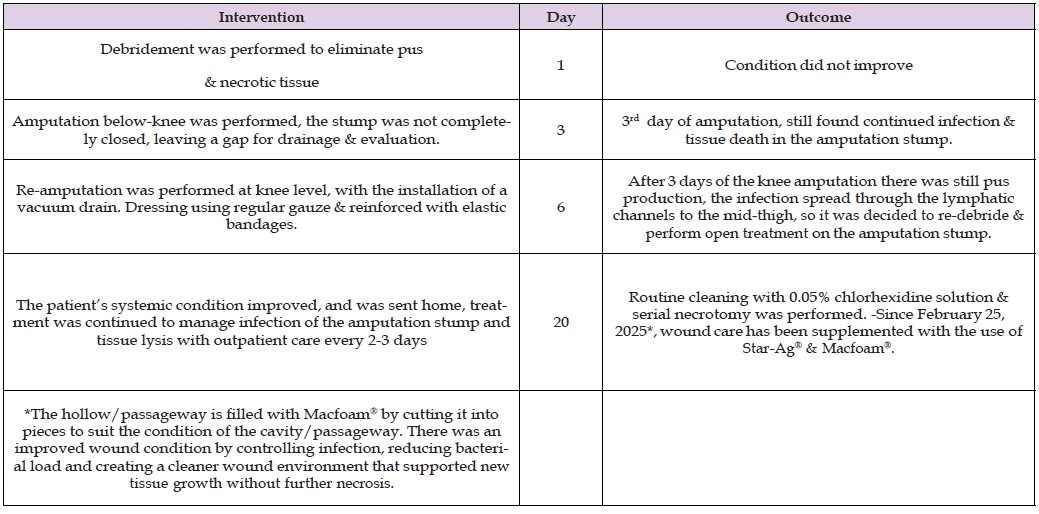
Figure 1
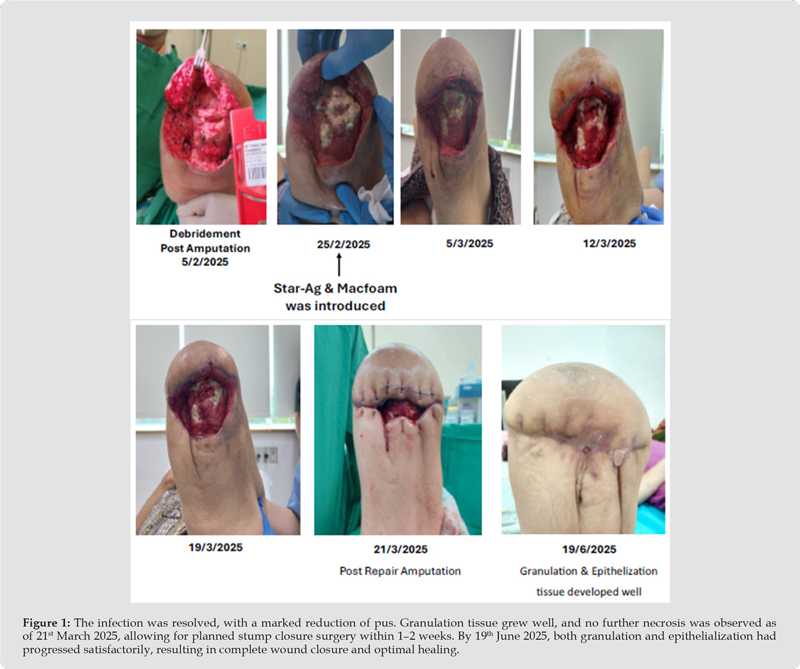
Case 2 Mrs. LH
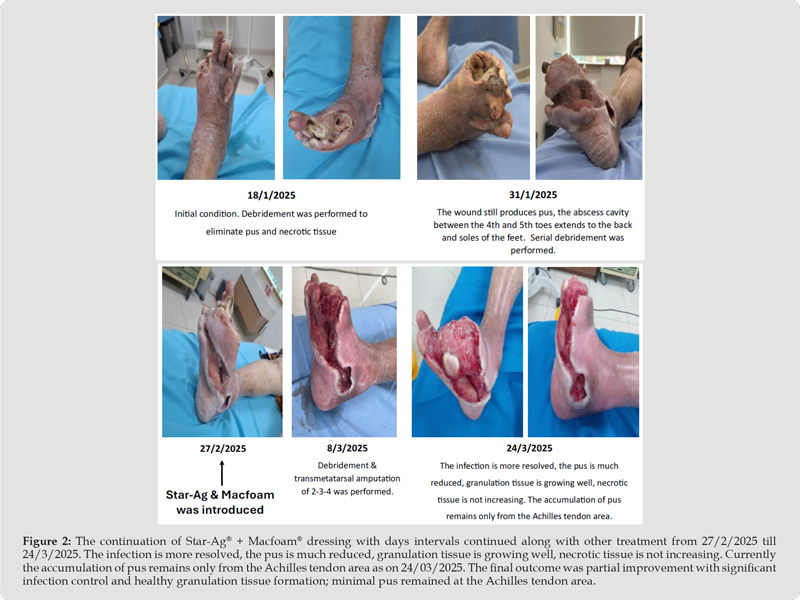
A 65-year-old female outpatient reported to the clinic of the hospital with swelling and redness of the right foot for 4 days on 2nd December 2024. The patient was afebrile and in generally good condition. She had a history of diabetes with obesity and had developed neuropathy and blockage of arteries in both lower legs. No treatment was taken before reporting to the clinic (Table 2), (Figure 2). The final outcome was partial improvement with significant infection control and healthy granulation tissue formation; minimal pus remained at the Achilles tendon area.
Table 2: Management Strategy: Patient was hospitalized and standard wound management procedures with systemic antibiotic therapy, diabetes correction was initiated. An intense wound cleaning and care employed as above.
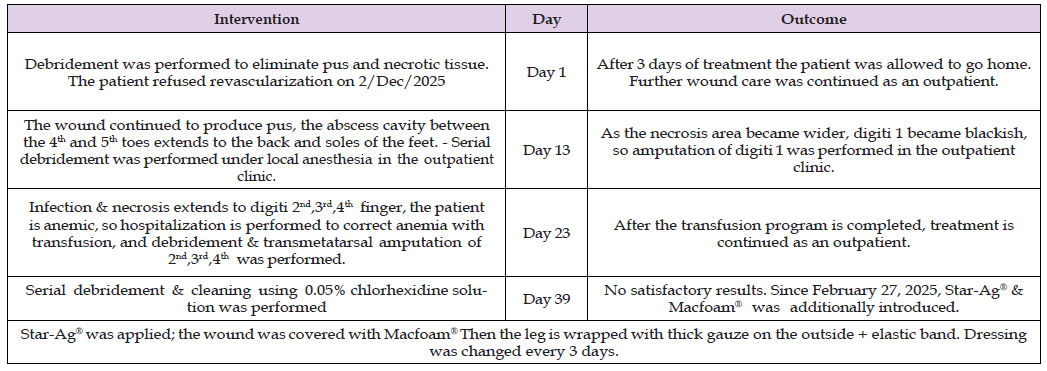
Figure 2
Case Mrs. SU
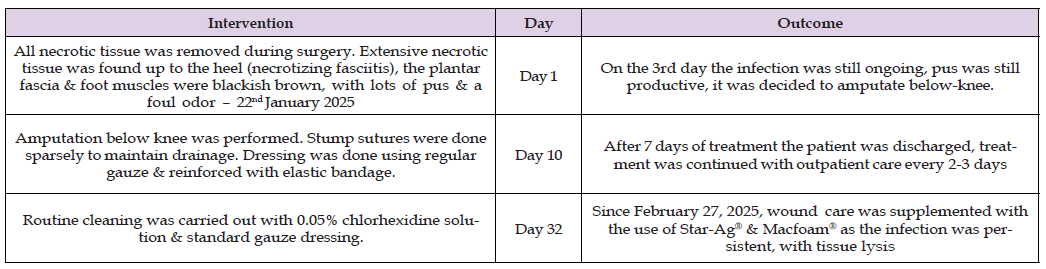
A 45-year-old female outpatient reported to the clinic of hospital with swelling, redness, and pain of the left lower leg on 22nd January 2025, with the main complaint of left lower leg being swollen, reddish, and painful for 1 week before admission to the hospital. She had history of diabetes and she was obese. The patient has been treated at another hospital and underwent debridement surgery once. On examination, a wound was found at the base of the first toe, with foot massage, pus started coming out of the wound, the base of the wound is blackish, emitting a foul odor (Table 3), (Figure 3).
Figure 3
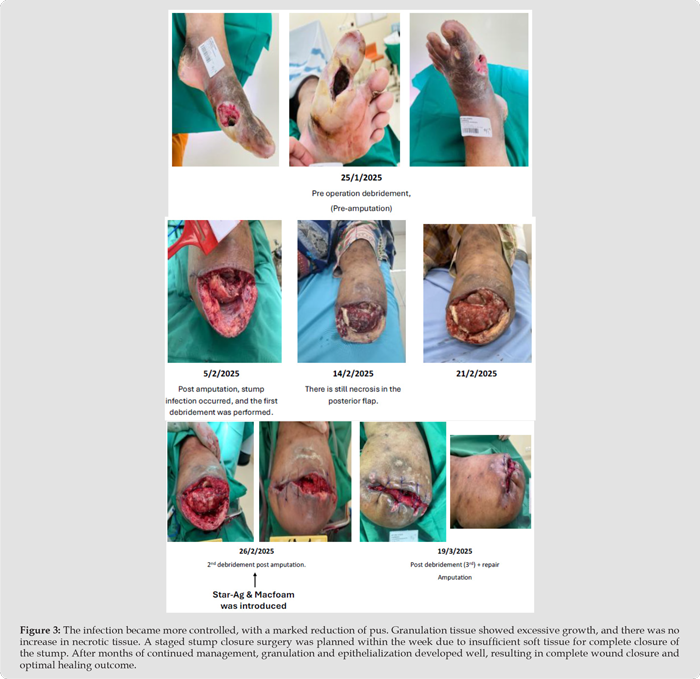
Table 3: Management Strategy: The patient was hospitalized. Debridement was performed to eliminate pus and necrotic tissue. Systemic antibiotic therapy, diabetes correction initiated. An intense wound cleaning and care employed as above.
Case 4 Mr. OKT
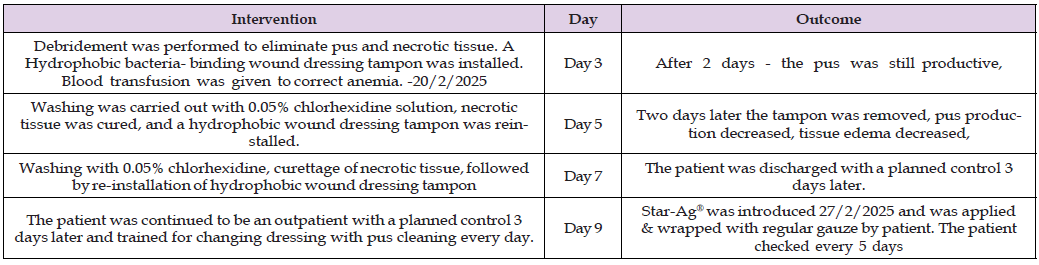
A 51-year-old male outpatient reported to the clinic of hospital with an ulcer on the right ankle on 18th February 2025, with the main complaint of Ulcer with 4-5 cm diameter, on the right ankle for 2 weeks ago. One week before admission, the swelling started spreading to the back of the foot & ankle with a lot of cloudy brown pus, foul odor discharge with reddish & swollen ulcer edge. At the base of ulcer, granulated & necrotic tissue was found. The patient was pale, complaining of feeling cold. He had of history of diabetes. The patient had been treated at another hospital, given antibiotics, and had the wound cleaned, but the condition did not improve (Table 4), (Figure 4).
Figure 4
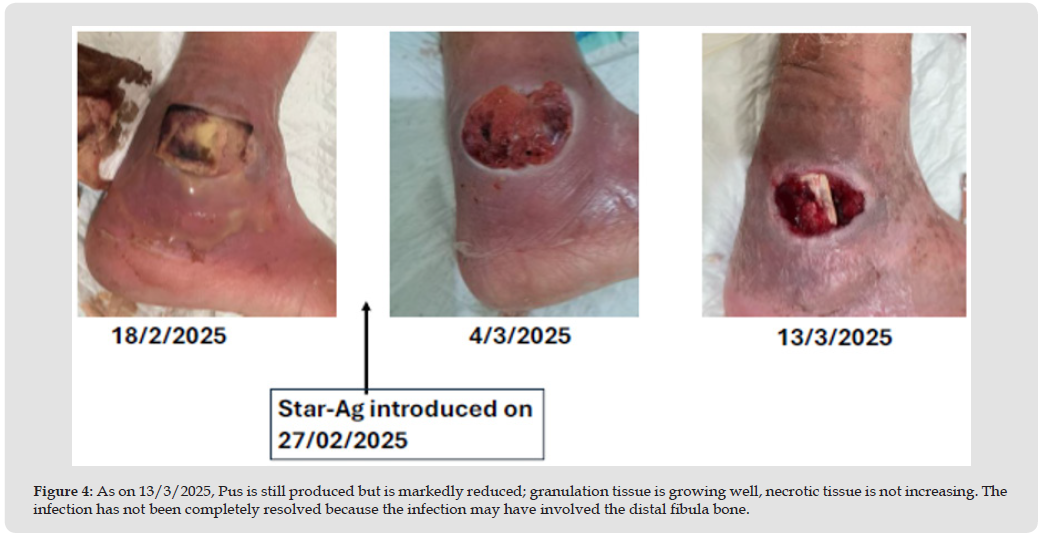
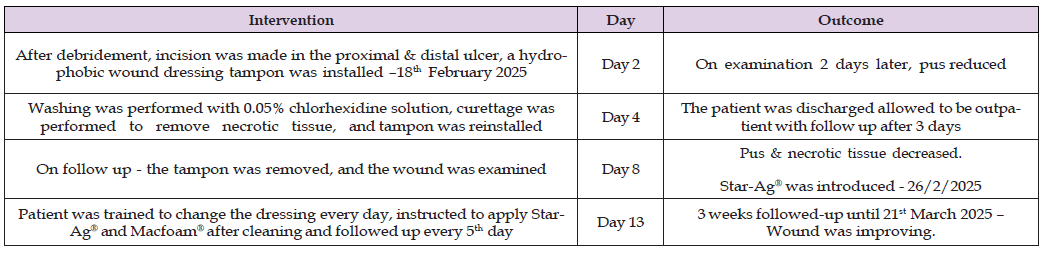
Table 4: Management Strategy: - The patient was hospitalized. Debridement was performed (22/2/2025) to eliminate pus & necrotic tissue. Systemic antibiotic therapy, diabetes correction with intense wound care initiated.
Case 5 Mr. SR
A 71-year-old male outpatient reported to the clinic hospital on 21st February 2025, with the main complaint of swollen right leg for 1 week before the examination, fluid started coming out for 1 day before the examination. The ulcer is 1 cm in diameter, produces a lot of cloudy yellow pus, the edges of the ulcer are red & swollen. The patient is in pain & subfebrile fever. He had of history of diabetes. The patient did not receive any treatment till the date of reporting (Table 5), (Figure 5).
Figure 5
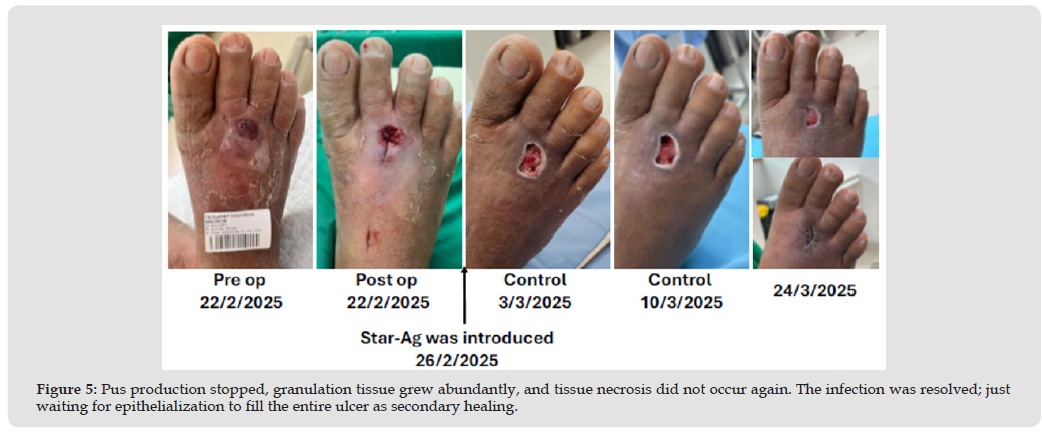
Table 5: Management Strategy: The patient was hospitalized. Debridement was performed (22/2/2025) to eliminate pus & necrotic tissue. Systemic antibiotic therapy, diabetes correction initiated. An intense wound cleaning and care employed as above.
Star-Ag®, a formulation containing Colloidal Nano Silver – SilverSol ®, is a breakthrough among the currently available advanced wound-healing technologies. In 5 different cases, Star-Ag® demonstrated efficacy as antimicrobial agent, prevented necrotic tissue from increasing, and optimize wound closure and healing outcome. However controlled studies in larger population will help in comparing efficacy and probably establishing superiority of Star-Ag® for wound management in comparison with presently available drug eluting dressings.

International Association of Landscape Archaeology, Czech Glass Society, Czech Republic

Department of Chemistry, Semenov Institute of Chemical Physics, USSR Academy of Sciences, Moscow, Russia

Associate Professor at Department of Breast and Thyorid Surgey, Chongqing General Hospital, China

Professor of Nuclear Medicine, Faculty of Medicine and Surgery, University of Milan, Milan, Italy

Department of Pharmaceutical Sciences, South University School of Pharmacy, USA





 Abstract
 PDF
PDF



























