info@biomedres.us
+1 (502) 904-2126
One Westbrook Corporate Center, Suite 300, Westchester, IL 60154, USA
Site Map
 ISSN: 2574 -1241
ISSN: 2574 -1241
ISSN: 2574 -1241
Received: April 23, 2026; Published: May 07, 2026
*Corresponding author: Yibin Fan, Associate researcher, Taiwan Forestry Research Institute, Taiwan, ROC, Taiwan
DOI: 10.26717/BJSTR.2026.65.010210
Barringtonia racemosa (Barringtoniaceae), also known as the water basilica, is distributed in Taiwan, including the 52-jia wetland in Yilan, Turtle Island in the north, and the Hengchun Peninsula in the south. This study investigated its flowering biology in its native habitat (52-jia wetland in Yilan), the Hengchun Tropical Botanical Garden, and the artificially cultivated Taipei Botanical Garden from 2019 to 2024. The flowers begin to bloom around 5 pm, with a strong fragrance. The peak flowering time is approximately 8-9 pm. Stamens begin to fall off as early as 5 am, with the largest shedding period after 7 am, and almost all stamens have fallen by 9 am. The natural fruit set rates were 0.74% (15 fruits/2016 flowers) at the Taipei Botanical Garden, 7.3% (171 fruits/2300 flowers) at the 52-jia wetland in Yilan, and 3.2% (fruit/flower) at the Hengchun Tropical Botanical Garden, confirming that Barringtonia racemosa is a cross-pollinated plant.
A total of 56 species of insects from 5 orders were surveyed visiting flowers: 37 species of Lepidoptera, 11 species of Hymenoptera, 5 species of Diptera, 2 species of Coleoptera, and 1 species of Blattodea. During the day, Hymenoptera bees, Dipteran flies, and Lepidoptera butterflies, along with coleoptera leaf beetles, were the main flower-visiting insects.
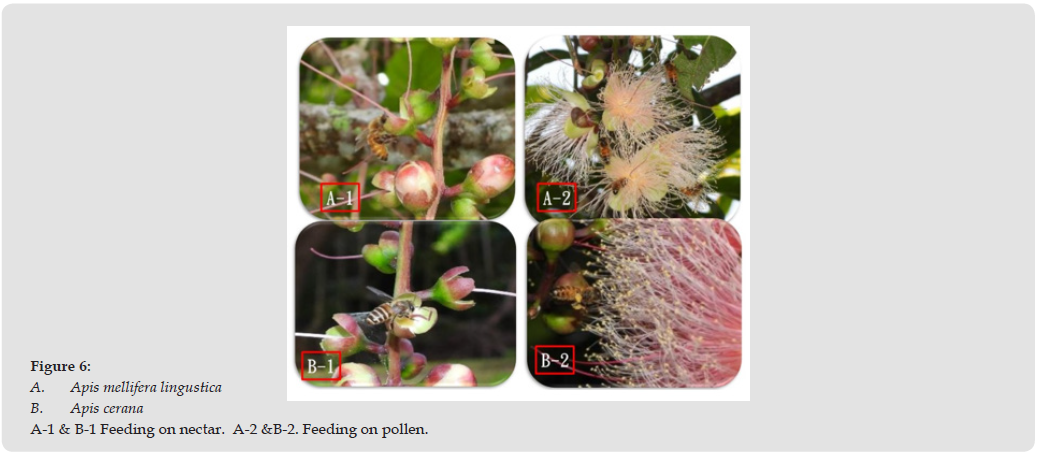
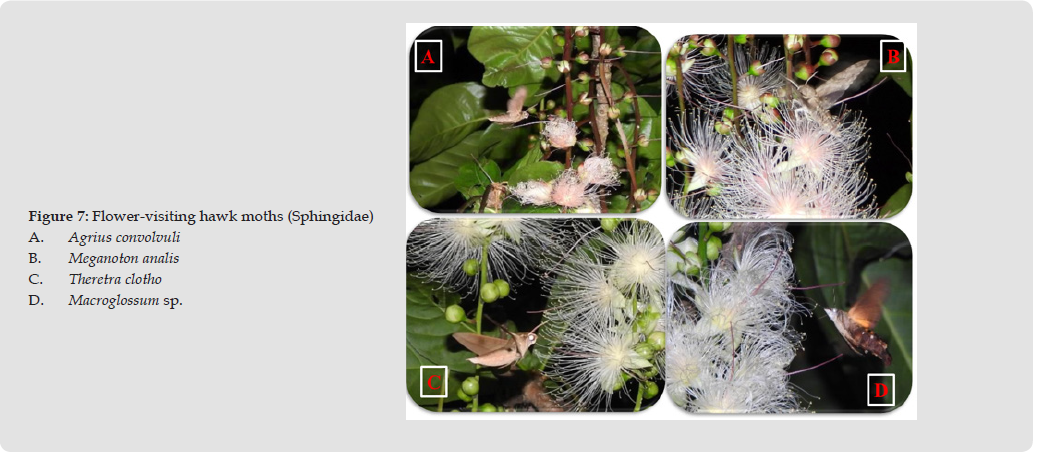
At night, Lepidoptera moths were the primary visitors, along with Blattodea cockroaches and Coleoptera scarabs. Those feeding on nectar include Lepidoptera butterflies and moths, Coleoptera leaf beetles, Dipteran flies, and Hymenoptera bees. Those feeding on pollen include Hymenoptera wasps and burrowing wasps, and Blattodea cockroaches. Two honeybee species, Apis mellifera lingustica and Apis cerana, were the main pollen and nectar feeders. Fifteen species of large hawk moths (Lepidoptera) were recorded. They visit flowers at dusk, night, and dawn, with a frequency of 6-12 flowers per minute, and are the main pollinators of checkerboard-shaped spike flowers.
Keywords: Barringtonia Racemosa; Floral Phenology; Flower Visitor; Fruit Setting Rate; Hawk Moth
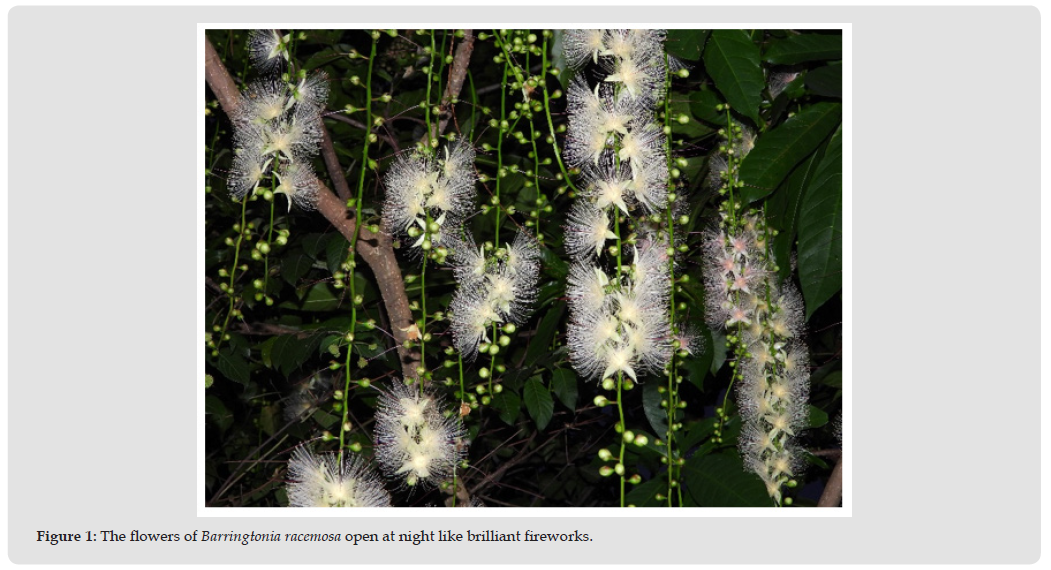
Barringtonia racemosa, belonging to the Barringtoniaceae and also known as water jasmine, is naturally distributed in the 52-jia wetlands of Yilan in northern Taiwan, and the mouths of the Mudan River and Gangkou River on the Hengchun Peninsula in southern Taiwan. Besides Taiwan, it is widely distributed in Asia, Africa, Oceania, and parts of Guangdong, Guangxi, and Hainan Island in mainland China. Due to its wind and salt tolerance, it is often planted in coastal areas as a windbreak. Because of its beautiful and fragrant inflorescence, it is also commonly used as a garden tree and street tree (Figure 1).
Figure 1
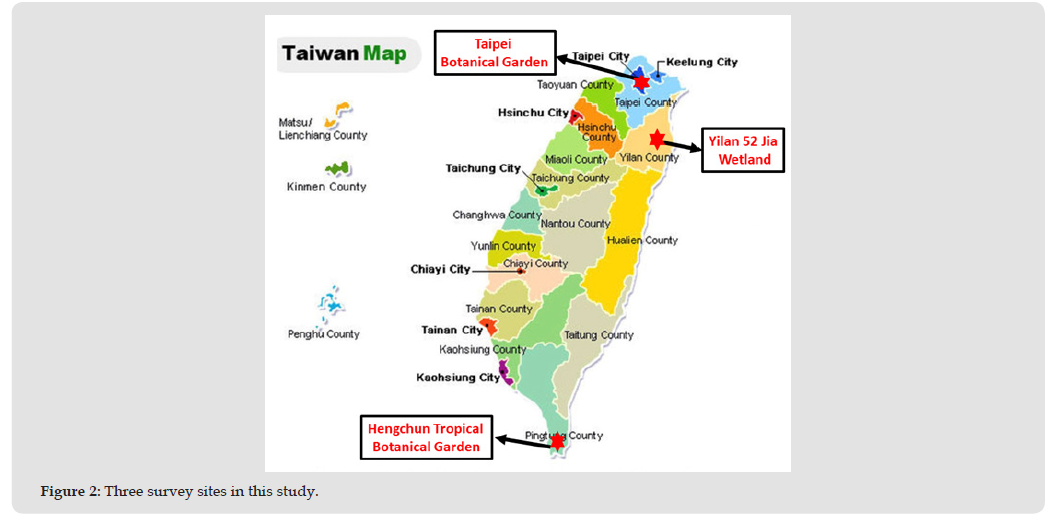
The survey sites selected were the native habitat of Barringtonia racemosa, the 52-jia wetland in Yilan in the north, the Hengchun Tropical Botanical Garden in the south, and the artificially cultivated Taipei Botanical Garden as control and comparison sites (Figure 2).
Figure 2
Flowering Phenology Survey
Record the process from flowering to withering and fruit setting.
Natural Fruit Setting Rate Survey
Investigate the growth sites of three spikelet patterns, counting the number of flowers and fruits on 50 inflorescences at each site, and calculate the fruit setting rate.
Flower-Visitor Ecological Survey
During the peak flowering period, investigate the species of flower- visiting insects, their flower-visiting behavior, whether they visit flowers during the day or night, and whether they feed on pollen or nectar.
Flowering Phenology Survey
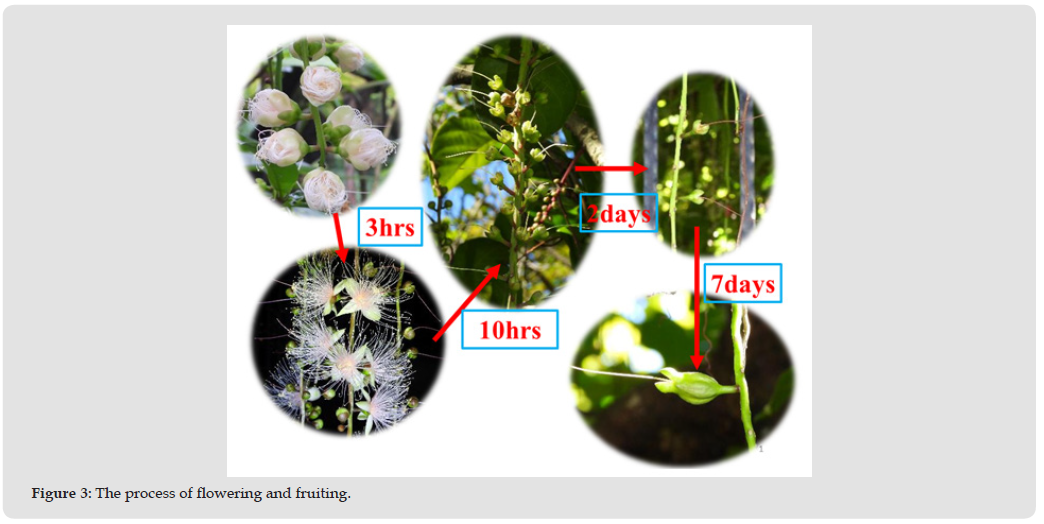
The flowers begin to bloom around 5 pm, emitting a strong fragrance. The peak blooming time is around 8-9 pm. Stamens begin to fall off as early as 5 am, with the largest shedding occurring after 7 am. By 9 am, almost all stamens have fallen off. The pollinated stigma and ovary remain on the flower stalk, and the ovary gradually swells to form the fruit (Figure 3).
Figure 3
Natural Fruit Setting Rate Survey
Taipei Botanical Garden: 0.74% (15 fruits/2016 flowers), Yilan 52Jia Wetland: 7.3% (171 fruits/2300 flowers), Hengchun Tropical Botanical Garden: 3.2% (fruit/flower). The natural fruit set rates at both native locations were above 1%, with Yilan 52Jia Wetland having the highest at 7.3%, while the non-native Taipei Botanical Garden had the lowest at less than 1%, at only 0.74%.
Flower-Visitor Ecological Survey
The survey of flower-visiting insects included 56 species from 5 orders: 37 species of Lepidoptera, 11 species of Hymenoptera, 5 species of Diptera, 2 species of Coleoptera, and 1 species of Blazingoptera. During the day, flower-visiting insects included bees, hornets, long-legged wasps, bumblebees, flower bees (Hymenoptera), flies (Diptera), butterflies (Lepidoptera), and leaf beetles (Coleoptera); at night, flower-visiting insects included 34 species of moths (Lepidoptera), cockroaches (Blazing Bladders), and scarab beetles (Coleoptera). Bees that feed on nectar include butterflies and moths (Lepidoptera), leaf beetles (Coleoptera), flies (Diptera), hornets (Hymenoptera), long-legged wasps, bumblebees, and flower bees (Hymenoptera). Bees that feed on pollen include reed wasps and tunnel wasps (Hymenoptera), and cockroaches (Blazingoptera). Apis mellifera lingustica and Apis cerana feed on both pollen and nectar (Figures 4-6).
Figure 4
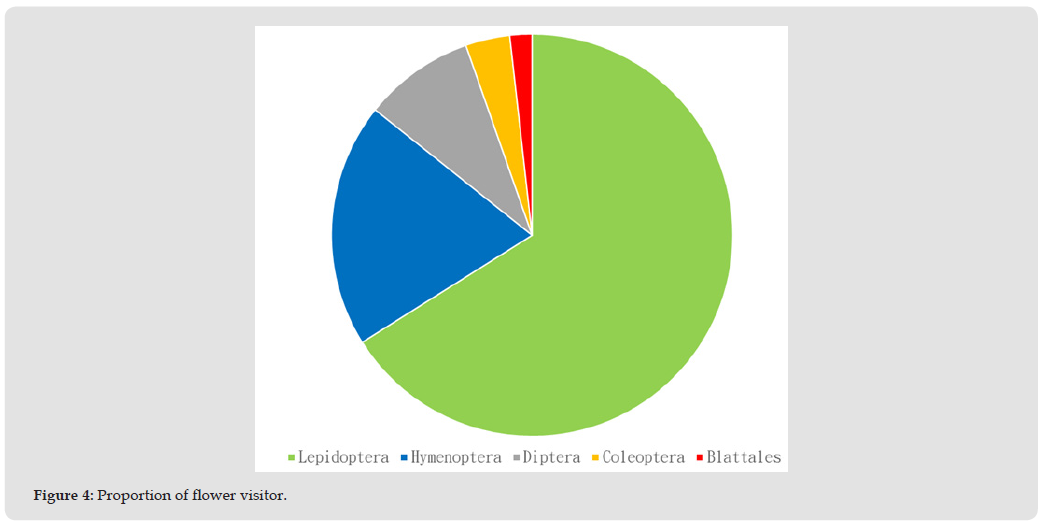
Figure 5
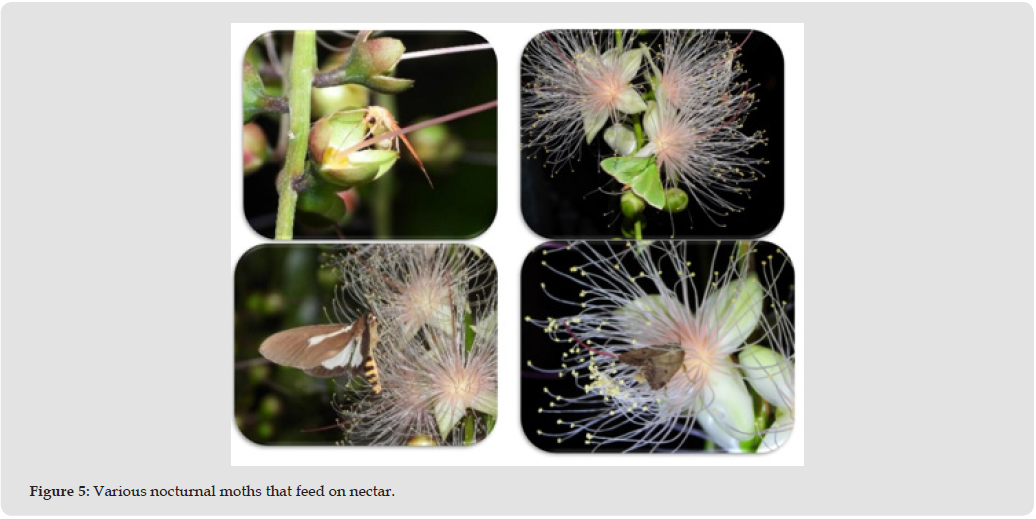
Figure 6
Although Barringtonia racemosa blooms at dusk and its flowers fall the following morning, a variety of insects visit the flowers, mainly nocturnal moths. However, various hymenopteran bees and lepidopteran butterflies also visit the flowers in the early morning and during the day. To determine the most likely pollinating insects, we need to look at the flower morphology. Its stamens are 4.5-5.0 cm long and its pistils are 5.5-6.0 cm long. Smaller insects are unlikely to touch the stigma, and only larger insects can achieve pollination. Among them, two most numerous and prevalent bee species, the Italian bee and the Eastern bee, are those that feed on pollen and nectar. However, due to their small size, they have difficulty touching the stigma, and although they were found in all three survey locations, no fruit was produced. The Sphingidae moths visit the flowers at dusk, night, and dawn, and have the highest probability of contacting the stamens and stigma. Their pollination efficiency is 6-12 flowers per minute, which is the highest among all insects. They have been found in three locations, with a total of 15 species recorded [1-4]. Therefore, they are the main pollinators of Barringtonia racemosa (Figure 7).
Figure 7
This research was made possible thanks to the assistance of Professor Chen Tzu-ying from the former National Ilan University, Hung Chou-hsuan and Cheng Cheng-yi from the Hengchun Research Center of the Forestry Research Institute.

International Association of Landscape Archaeology, Czech Glass Society, Czech Republic

Department of Chemistry, Semenov Institute of Chemical Physics, USSR Academy of Sciences, Moscow, Russia

Associate Professor at Department of Breast and Thyorid Surgey, Chongqing General Hospital, China

Professor of Nuclear Medicine, Faculty of Medicine and Surgery, University of Milan, Milan, Italy

Department of Pharmaceutical Sciences, South University School of Pharmacy, USA





 Abstract
 PDF
PDF



























