info@biomedres.us
+1 (502) 904-2126
One Westbrook Corporate Center, Suite 300, Westchester, IL 60154, USA
Site Map
 ISSN: 2574 -1241
ISSN: 2574 -1241
ISSN: 2574 -1241
Received: March 13, 2026; Published: April 06, 2026
*Corresponding author: Owonaro Peter A, Dept of Clinical Pharmacy, Niger Delta University, Wilberforce Island, Bayelsa State, Nigeria
DOI: 10.26717/BJSTR.2026.65.010164
Aphrodisiacs are substances ranging from foods, herbs, plants, and traditional preparations to synthetic pharmaceuticals that are believed to increase sexual desire (libido), enhance sexual attraction, improve sexual performance, or heighten sexual pleasure and behavior, derived from the Greek goddess of love, beauty, and sexuality. They have been used historically and contemporarily, though many lack robust scientific evidence for efficacy and carry potential health risks when misused. This descriptive cross-sectional study investigated the prevalence, patterns, and associated factors of aphrodisiac use among students of Niger Delta University (NDU), Bayelsa State, Nigeria. A structured questionnaire was administered to 370 students selected via systematic random sampling. Data were analyzed using SPSS version 27, employing descriptive statistics, and presented in frequencies and percentages. Findings revealed a high awareness level (89.2%) and substantial direct or indirect experience (71.0%) with aphrodisiac use among respondents. Herbal concoctions were most commonly used (47.6%), followed by pharmaceuticals like sildenafil (41.4%). Primary sources of procurement were pharmacies/ chemists (41.1%) and friends/peers (36.2%). Key motivations included enhancing sexual performance (39.2%) and increasing libido (32.4%), with use predominantly occurring before sexual activity (66.5%) and in partnered contexts (60.8%).
Concerning risk patterns, including non-prescription use (32.7%) and combining aphrodisiacs with other substances like alcohol (24.6%). A significant proportion reported first use at or before 21 years of age. While only half of the respondents (52.7%) believed aphrodisiacs were effective, there was overwhelming support (91.1%) for university-led sexual health education programs. The study concludes that aphrodisiac use is a notable health concern among NDU students, characterized by risky practices and knowledge gaps despite high awareness. It recommends the development of comprehensive, multi-level interventions including institutional policy formulation, integrated sexual health education, enhanced health services, and targeted peer-led initiatives to address misuse and promote safe practices.
Keywords: Aphrodisiac; Sexual Enhancement; Students; Niger Delta; Substance Use; Bayelsa State
Abbreviations: NDU: Niger Delta University; SPSS: Statistical Package for the Social Sciences; NAFDAC: National Agency for Food and Drug Administration and Control; FMOH: Federal Ministry of Health; UNFPA: United Nations Population Fund; WHO: World Health Organization
Aphrodisiacs, substances believed to enhance sexual desire, performance, or pleasure, have been used across cultures for centuries [1]. These substances range from natural herbs and foods to synthetic drugs and supplements, often marketed for their purported ability to improve sexual health. In recent years, the use of aphrodisiacs has gained attention among young adults, including university students, due to social, cultural, and psychological influences [2]. In Nigeria, particularly in the Niger Delta region, the use of aphrodisiacs among students is an emerging phenomenon, driven by factors such as peer influence, media exposure, cultural beliefs, and accessibility to both traditional and modern aphrodisiac products [3]. The Niger Delta, a socio-economically diverse region, is home to several tertiary institutions where students are exposed to a variety of lifestyles and behaviors. The increasing availability of over-the-counter aphrodisiac products, coupled with traditional herbal concoctions, has raised concerns about their prevalence and patterns of use among students [4]. While some students may use aphrodisiacs to enhance sexual performance or address perceived inadequacies, others may engage in their use due to curiosity, societal pressure, or misinformation. However, the misuse or overuse of these substances, especially synthetic ones, may pose health risks, including adverse physiological and psychological effects [5].
Despite the growing popularity of aphrodisiacs, there is limited empirical research on their prevalence and usage patterns among university students in the Niger Delta. Studies in other Nigerian regions have reported prevalence rates ranging from 25% to 35% among undergraduates, with herbal concoctions and pharmaceutical products being most common [6,7]. Globally, research has documented similar trends, with college students in various countries reporting use of both traditional and modern sexual enhancement products [8]. Understanding the extent of aphrodisiac use, the types of substances consumed, and the factors driving their use is critical for addressing potential public health implications in this population.
This study aimed to investigate the prevalence and patterns of aphrodisiac use among students of Niger Delta University, Amassoma, Bayelsa State. The specific objectives were to: determine the prevalence of aphrodisiac use; identify the types of aphrodisiacs commonly used; examine the patterns of use including frequency, sources, and modes of administration; explore the socio-cultural and psychological factors influencing use; assess student’s knowledge and perceptions regarding safety and efficacy; and identify potential health risks associated with use.
Study Population
The study population comprised all students of Niger Delta University, Bayelsa State, Nigeria. The university has an estimated total student population of approximately 21,000 across 13 faculties.
Study Setting
The study was conducted at the Niger Delta University campus, Wilberforce Island, Amassoma, Bayelsa State. Amassoma is part of the Southern Ijaw Local Government Area. The university campus and environs are home to thousands of students from all parts of the country, with diverse socio-economic, cultural, and health statuses.
Study Design
This was a descriptive cross-sectional observational study.
Sample Size Determination
Sample size was determined using the Yamane Taro equation:
n = N / [1 + N(e)²]
Where n = sample size, N = population size (21,000), and e = level
of precision (0.05)
n = 21000 / [1 + 21000(0.05)²]
n = 21000 / [1 + 52.5]
n = 21000 / 53.5
n = 392.5 ≈ 393
Research Instrument
A well-designed, validated, and pretested structured self-report questionnaire was used to obtain relevant information, which included: socio-demographic data of participants, prevalence of aphrodisiac use, types of aphrodisiacs used, sources and accessibility, reasons and motivations, knowledge and perceptions regarding safety and efficacy, and patterns of use. This followed written informed consent from participants.
Data Collection
The questionnaires were administered to students of Niger Delta University using a systematic random sampling technique. Students who expressed willingness to participate and signed the written informed consent form were included. Administration was done by the researcher. English language was used as all respondents were literates.
Data Analysis
Data generated were analyzed using Statistical Package for the Social Sciences (SPSS) version 27 and Microsoft Excel. Results were presented using descriptive statistics and expressed as simple percentages and frequencies.
Validity and Pilot Study
Prior to data collection, the questionnaire was scrutinized and validated by the research supervisor, and appropriate corrections and adjustments were made. The questionnaire was pretested on 20 students of Niger Delta University to assess its appropriateness, content, clarity, and comprehensiveness. Thereafter, necessary modifications were made. Respondents who participated in the pilot study were excluded from the actual study.
Ethical Consideration
Ethical approval was obtained from the Ethics Committee of the Dean of Students Affairs, Niger Delta University, Bayelsa State. Written informed consent was obtained from all respondents prior to commencement of the study. Confidentiality of information provided by respondents was strictly ensured.
The study reported participation of 370 respondents out of 393 administered questionnaires, representing a high retrieval rate of 94.0%. Most respondents were within the age range of 24-27 years (48.4%), followed by 20-23 years (33.2%). Males constituted 54.6% of respondents, while females were 44.9%. Regarding academic level, 200-level students formed the largest group (30.8%), followed by 400-level (29.5%). The Faculty of Social Sciences had the highest representation (23.0%), followed by Sciences (20.8%). Most respondents were in a relationship (57.8%) and resided on-campus (66.0%). Table 1 below contains information on the demographic details. The study reported high awareness of aphrodisiacs, with 89.2% of respondents having heard of them. Substantial direct or indirect experience was reported, with 71.0% indicating they or someone they know had used aphrodisiacs. Regarding frequency, occasional use was most common (32.7%), followed by weekly use (21.4%). Notably, 19.2% reported first use below 18 years, while 44.3% initiated use between 18-21 years. Table 2 presents these findings. Table 3 The study revealed that herbal or natural aphrodisiacs were the most commonly used type, reported by 47.6% of respondents. This was closely followed by pharmaceutical aphrodisiacs such as Viagra, reported by 41.4%. Food and drink-based aphrodisiacs were the least common, reported by only 11.0%.
Table 1: Demographic Characteristics of Respondents (N=370).
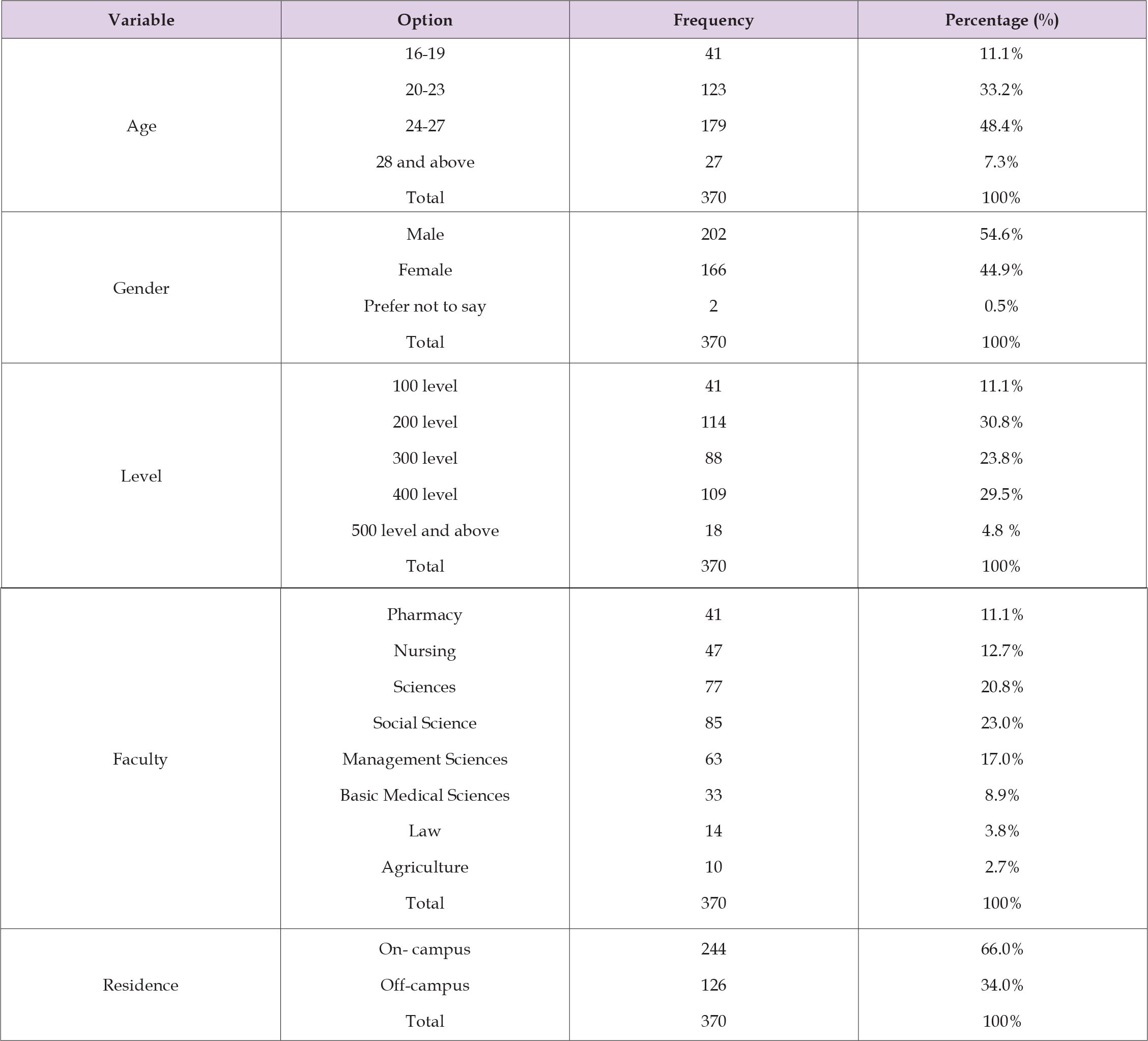
Table 2: Prevalence of Aphrodisiac Use (N=370).
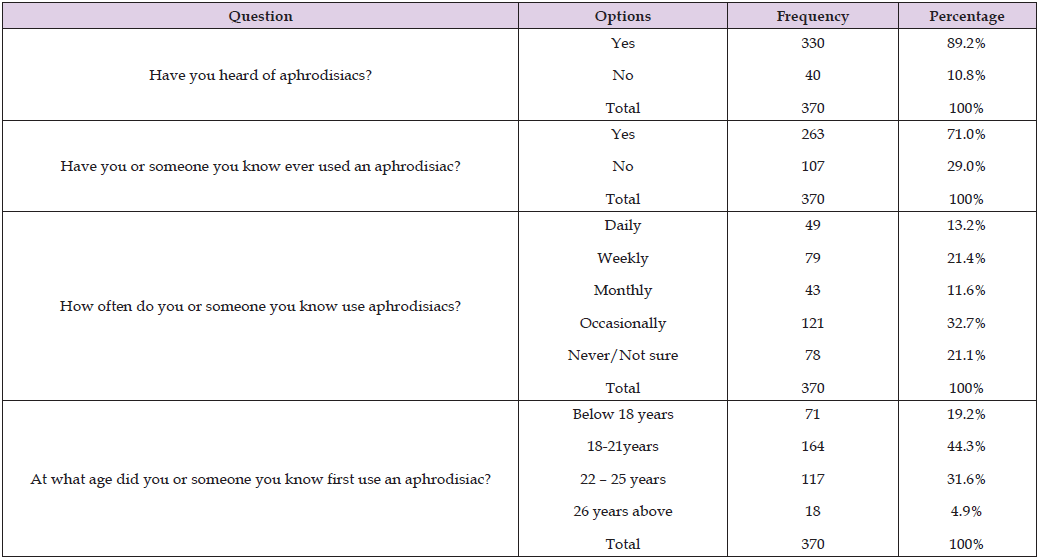
Table 3: Types of Aphrodisiacs Used.

Table 4 The most common source of aphrodisiacs was pharmacies or chemists (41.1%), followed closely by friends or peers (36.2%). Local markets/herbalists accounted for 12.2%, while online vendors represented the least common source (10.5%). Regarding accessibility, 43.0% perceived access as very difficult, while 31.9% considered it difficult. Notably, 32.7% reported non-prescription use. Table 5 The primary motivation for using aphrodisiacs was to enhance sexual performance (39.2%), followed by increasing sexual desire (32.4%) and boosting confidence (22.2%). Peer influence accounted for only 6.2%. Friends/peers were the most influential factor in decision-making (35.7%), followed by romantic partners (32.4%) and social media/ internet (25.9%). Health professionals had minimal influence (6.0%). Most respondents used aphrodisiacs before sexual activity (66.5%) and with a partner (60.8%). A concerning 24.6% reported combining aphrodisiacs with other substances such as alcohol or medications. Table 6 Age was perceived as the most influential socio-demographic factor affecting aphrodisiac use, with 66.5% of respondents indicating that age affects use patterns. In contrast, gender was largely perceived as having limited influence (35.1%), and academic faculty was not considered a major determinant (32.7%) Table 7.
Table 4: Sources and Accessibility of Aphrodisiacs.
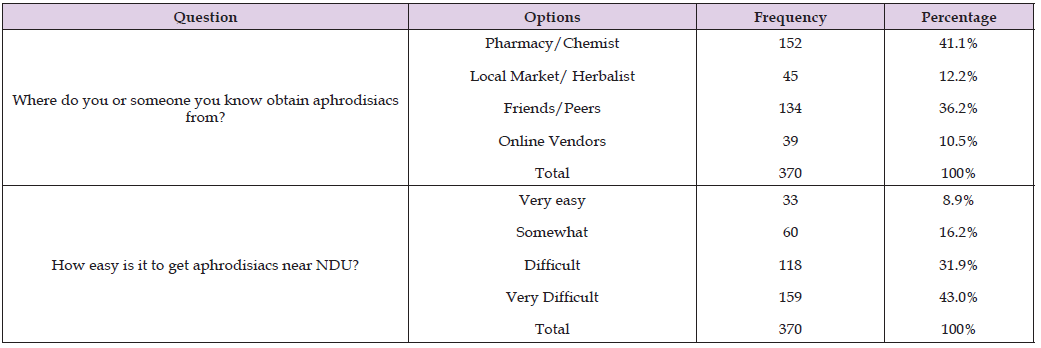
Table 5: Reasons and Motivations for Aphrodisiac Use.
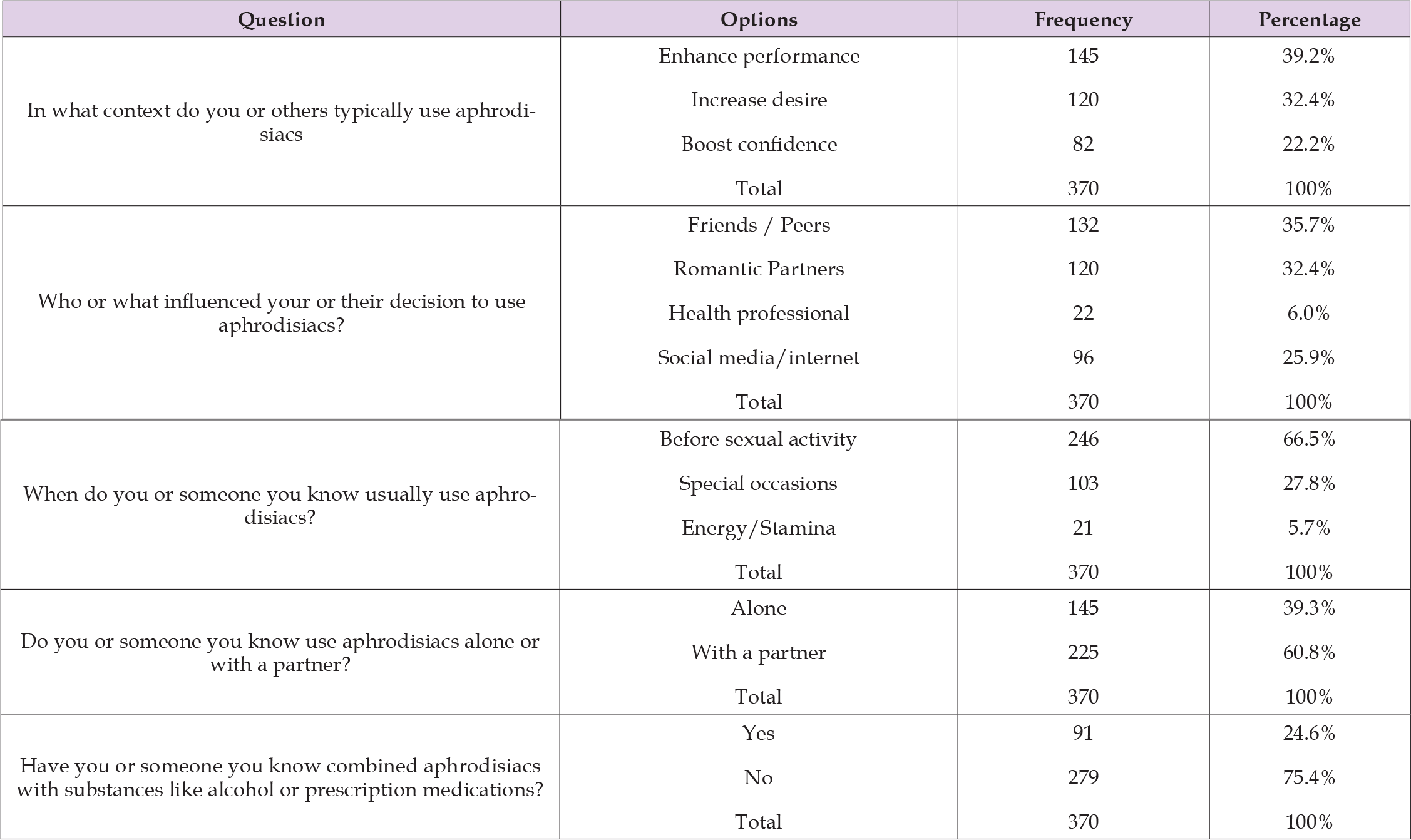
Table 6: Socio-Demographic Factors Influencing Aphrodisiac Use.
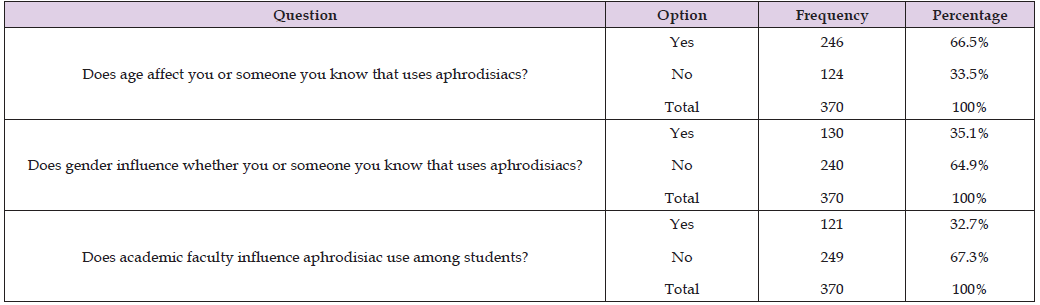
Table 7: Knowledge and Perceptions Regarding Aphrodisiacs.

Slightly more than half of respondents (52.7%) believed aphrodisiacs are effective, while 23.5% thought they are not, and 23.8% were uncertain. Regarding perceived benefits, 46.2% associated aphrodisiacs with enhanced sexual performance, 29.2% with increased libido, and 17.0% with pleasure. Notably, 42.2% reported experiencing or knowing someone who experienced side effects. While 54.3% had received some education about aphrodisiacs, 45.7% had not. Only 26.4% viewed aphrodisiac use as common among NDU students. Overwhelmingly, 91.1% supported university programs on safe aphrodisiac use or sexual health education.
This study investigated the prevalence and patterns of aphrodisiac use among students of Niger Delta University, revealing multifaceted findings that collectively paint a complex portrait of substance use behaviors within a Nigerian tertiary institution context. The study demonstrates that while aphrodisiac use is not perceived as ubiquitously prevalent across the entire student population, it represents a significant and concerning pattern within specific social networks and demographic subgroups. The high awareness level (89.2%) coupled with substantial direct and indirect experience (71.0%) suggests a normalization of aphrodisiac discourse and potentially of use itself within intimate peer circles, even as public perception underestimates its commonality. This finding aligns with studies by Adebayo, et al. [6] in southwestern Nigeria, which reported 32.5% prevalence among undergraduates, and Shiffman, et al. [8] in the United States, which documented 25% use among college students. The higher exposure rate in the current study may reflect increased accessibility and changing social norms in the Niger Delta context. A critical finding is the dissociation between knowledge acquisition pathways and safety considerations. Students primarily learn about aphrodisiacs through informal channels—peers (35.7%), romantic partners (32.4%), and digital media (25.9%)—rather than through professional health education (6.0%). This informational ecology, devoid of medical oversight and evidence-based content, creates an environment where misconceptions about safety and efficacy can proliferate unchecked [9].
The moderate confidence in aphrodisiac efficacy (52.7% believing they are effective) alongside significant uncertainty (23.8% unsure) and outright skepticism (23.5% believing they are ineffective) reflects this fragmented knowledge landscape. The patterns of use reveal concerning risk behaviors that demand institutional attention. The substantial proportion of non-prescription use (32.7%) indicates either deliberate circumvention of medical guidance or inadequate access to professional consultation. This finding is consistent with studies by Okafor and Eze [10], who reported similar patterns of non-prescription use among Nigerian undergraduates. More alarmingly, the combination of aphrodisiacs with other substances like alcohol or prescription medications (24.6%) represents a dangerous practice with potentially severe physiological and psychological consequences [11]. This behavior pattern suggests either ignorance of pharmacological interactions or a deliberate risk-taking orientation among a significant minority of users. Equally concerning is the early initiation pattern, with 19.2% reporting first use below 18 years and 44.3% between 18-21 years. This developmental timing coincides with critical periods of sexual identity formation and the establishment of longterm behavioral patterns, potentially normalizing pharmacological enhancement as an integral component of sexual expression [12].
The predominance of performance enhancement motivations (39.2%) over relational or pleasure-focused reasons further suggests that aphrodisiac use may be intertwined with performance anxiety and potentially unrealistic expectations about sexual functioning. The preference for herbal/natural aphrodisiacs (47.6%) reflects multiple intersecting factors: cultural familiarity with traditional medicine, perceived safety of “natural” products, easier access through informal markets, and possibly lower cost compared to pharmaceutical options [13]. This preference may also reflect a broader skepticism toward Western medicine or a belief in the superior harmony of natural remedies with the body. Studies by Afolayan and Yakubu [14] evaluating herbal aphrodisiac safety found that while some herbs showed potential benefits, many unregulated products contained harmful additives, leading to adverse effects including hypertension and insomnia. The substantial use of pharmaceutical aphrodisiacs (41.4%) indicates either greater trust in scientifically developed products, desire for more potent effects, or influence of globalized pharmaceutical marketing [15]. Paradoxically, while accessibility is perceived as difficult (74.9% reporting difficult or very difficult access), procurement still occurs predominantly through pharmacies (41.1%) and friends (36.2%).
This contradiction suggests either that students are resourceful in overcoming access barriers or that perceptions of difficulty reflect normative judgments rather than actual procurement challenges. The dual procurement pathways reveal both formal and informal distribution networks. Pharmacy access suggests either legitimate prescriptions (contradicted by the non-prescription use data) or illicit sales without prescription. Friend-mediated distribution creates a peer economy that may circumvent regulatory controls while reinforcing social norms around use [16]. The study’s findings on knowledge and perceptions are particularly significant. The substantial acknowledgment of side effects (42.2% reporting direct or indirect experience) indicates that risk awareness exists within the student population, though this awareness may be incomplete or inadequately preventive. The nearly even split between those who have received education (54.3%) and those who have not (45.7%) reveals significant inequities in sexual health information access. Given the strong support for university programs (91.1%), this educational gap represents both a current vulnerability and an opportunity for intervention [17]. The disjunction between high personal exposure (71.0%) and low perceived commonality (only 26.4% viewing use as common or very common) suggests either that students underestimate broader usage patterns or that use is concentrated within specific networks not visible to outsiders. This perception gap could reduce the perceived need for institutional response if decision-makers interpret the data as indicating limited rather than concentrated prevalence [18].
This comprehensive investigation into aphrodisiac use among Niger Delta University students reveals a complex behavioral landscape characterized by high awareness (89.2%), moderate prevalence, concentrated distribution within specific social networks, and concerning risk patterns including non-prescription use (32.7%) and substance combination (24.6%). The study demonstrates that aphrodisiac use at NDU is not a marginal behavior but a significant health concern affecting substantial portions of the student population, particularly those in their mid-twenties, in relationships, and embedded in specific social networks. The study reported that herbal/natural aphrodisiacs (47.6%) and pharmaceutical products (41.4%) were the most commonly used types, obtained primarily from pharmacies/ chemists (41.1%) and friends/peers (36.2%). Key motivations included enhancing sexual performance (39.2%) and increasing libido (32.4%), with use predominantly occurring before sexual activity (66.5%) and in partnered contexts (60.8%). A significant proportion reported first use at or before 21 years (63.5%), indicating early initiation patterns that coincide with critical developmental transitions. The study illuminates the knowledge environment surrounding aphrodisiac use, revealing fragmented information sources, inconsistent efficacy beliefs (52.7% believing they are effective), and concerning gaps in safety awareness despite 42.2% reporting knowledge of side effects. Despite these knowledge deficits, students show overwhelming support for institutional intervention (91.1%), creating a favorable context for responsive action.
The identification of early initiation patterns and risky combination practices underscores the urgent need for interventions that address not only current university students but also secondary school populations who will eventually enter tertiary education. The research reveals important paradoxes, particularly the disjunction between perceived accessibility challenges and successful procurement through informal networks, suggesting that supply-side interventions alone will be insufficient without complementary demand reduction and harm reduction approaches. The overwhelming student endorsement of university-led educational programs represents a valuable opportunity for Niger Delta University to position itself as a leader in student sexual health promotion within the Nigerian tertiary education sector.
Based on the comprehensive analysis of findings, the following evidence-based recommendations are proposed for Niger Delta University and similar tertiary institutions:
1. Institutional Policy Development:
a. Develop a comprehensive substance use policy that specifically
addresses aphrodisiacs, clearly defining prohibited behaviors
including non-prescription use and combination with other
substances.
b. Establish reporting mechanisms for adverse effects with
supportive rather than punitive responses.
c. Create a University Task Force on Student Sexual Health
with representation from health services, counseling, academic
departments, and student government.
2. Educational Interventions:
a. Integrate comprehensive sexual health education into the
university curriculum through mandatory first-year orientation
modules.
b. Develop digital learning modules accessible through the
university’s learning management system.
c. Implement peer education programs training influential
students within high-risk networks.
d. Conduct awareness campaigns addressing misconceptions
about natural product safety.
3. Health Service Enhancements:
a. Strengthen university health services to address aphrodisiac-
related concerns through staff training.
b. Establish confidential consultation services specifically for
sexual health and substance use.
c. Implement routine screening and brief intervention in
health service encounters.
d. Develop referral pathways for specialized care when needed.
4. Environmental and Structural Interventions:
a. Regulate campus and periphery sales through memoranda
of understanding with local pharmacies prohibiting non-prescription
sales to students.
b. Monitor informal markets and vendors near campus.
c. Collaborate with regulatory agencies like NAFDAC for enforcement.
d. Create healthy alternatives and recreational activities addressing
underlying drivers of substance use.
5. Partnership Development:
a. Forge strategic partnerships with Bayelsa State Ministry of
Health, professional associations, and community organizations
addressing youth sexual health.
b. Engage student leadership as genuine partners in program
design, implementation, and evaluation.
6. Research and Monitoring:
a. Establish a research agenda for ongoing monitoring of aphrodisiac
use patterns and intervention effectiveness.
b. Conduct qualitative research exploring motivations and experiences
of users.
c. Evaluate campus-based interventions through pre- and
post-implementation assessments.
d. Track trends over time to identify emerging patterns and
evolving needs.
Implementation of these recommendations has the potential
not only to reduce aphrodisiac-related harms but also to contribute
to broader cultural shifts around sexual health, substance use, and
student wellness at NDU and potentially other Nigerian universities
facing similar challenges.
The researchers appreciate the statistician, all study participants, and the research team for their time and contributions. There was no conflict of interest among the authors.
The researchers declare that there was no conflict of interest.

International Association of Landscape Archaeology, Czech Glass Society, Czech Republic

Department of Chemistry, Semenov Institute of Chemical Physics, USSR Academy of Sciences, Moscow, Russia

Department of Educational Sciences, Research Centre Qualities of Teachers, School of Education – HAN, Nijmegen, Netherlands

Associate Professor at Department of Breast and Thyorid Surgey, Chongqing General Hospital, China

Neurology, LA BioMed Research Institute, USA





 Abstract
 PDF
PDF



























