info@biomedres.us
+1 (502) 904-2126
One Westbrook Corporate Center, Suite 300, Westchester, IL 60154, USA
Site Map
 ISSN: 2574 -1241
ISSN: 2574 -1241
ISSN: 2574 -1241
Received: March 03, 2026; Published: March 18, 2026
*Corresponding author: Luiz Eduardo Imbelloni, Av. Epitácio Pessoa, 2356/203Lagoa 22411-072- Rio de Janeiro, RJ - Brazil
DOI: 10.26717/BJSTR.2026.65.010137
Background: Patients with hip fractures in the fourth-age represent a special challenge in perioperative care
and are prone to various complications. The goal of this study was to analyze, through a questionnaire including
four stages of treatment in a perioperative acceleration project for these patients, to evaluate the quality and
satisfaction.
Methods: Two hundred and seventy-four elderly patients of both sexes with hip fractures, divided according to
each decade: 80-89 years, 90-99 years, and patients 100 years or older, receiving spinal anesthesia and lumbar
plexus block for postoperative analgesia. The quality and satisfaction of a perioperative acceleration project
were evaluated through a questionnaire (yes/no) during four stages: the pre-anesthetic visit, arrival at the OR,
arrival at the PACU, and at the ward.
Results: All patients received spinal anesthesia for surgery and anterior or posterior lumbar plexus block with
neurostimulator for postoperative analgesia. Of the 461 fourth-age patients studied, only 274 patients completed
the questionnaire, with a predominance of females (74%). Regarding the seven questions asked during
the pre-anesthetic visit, there was no significant difference between the groups. Upon arrival at the OR all 274
patients did not report thirst, while only 35 (12.7%) patients reported hunger. During the PACU stay, there was
no significant difference in responses among all patients. In the ward 28 patients (10%) were not satisfied with
the treatment, which was explained by the presence of PONV and inadequate analgesia. The average duration
of analgesia was 22.6 hours with lumbar plexus block. All patients were able to be discharged to their homes on
the first postoperative day.
Conclusion: This study, involving 274 patients over the age of 80, showed that a four-stage assessment of femur
fracture treatment resulted in increased quality of life and patient satisfaction.
Keywords: Elderly Patient; Hip Fracture; Fourth Age Patients; Spinal Anesthesia; Satisfaction; Postoperative Analgesia; Quality Treatment; Questionnaire
Abbreviations: OR: Operating Room; PACU: Postanesthetic Care Unit; SUS: Unified Health System; FFI: Fried Frailty Index; CDD: Delirium and Dementia; VAS: Visual Analogue Scale; NRS: Numeric Rating Scale
In 2010, I decided to leave my private practice in Rio de Janeiro to work and do research at a hospital within the Brazilian Public Health System (SUS) in João Pessoa, Paraíba. Right from my first contact, I realized that the number of ICU beds was insufficient to accommodate elderly patients with hip fractures. We implemented a process to accelerate postoperative recovery in 105 patients over 60 years of age with femur fractures, comparing it with the usual hospital procedures. The project showed that the use of the project reduced fasting time, length of hospital stays, improved duration of analgesia with the use of peripheral nerve blocks, eliminated the need for a urinary catheter and ICU admission, and resulted in faster hospital discharge in elderly patients with femur fractures [1]. There is an increase in the study of the degree of patient satisfaction during their hospital stay, which is becoming part of the assessment of the quality of their care [2]. Assessing satisfaction in elderly patients undergoing surgery for hip fracture requires a multidimensional approach, because satisfaction in this population is influenced not only by pain relief, but also by functional recovery, communication, expectations, and perioperative care [3]. A study with patients with femur fractures and older than 60 years, applying a questionnaire in four stages: at the pre-anesthetic visit, upon arrival at the operating room (OR), in the postanesthetic care unit (PACU) and in the ward, showed that the relationship with the anesthesiologist, the reduction in fasting time, the quality of analgesia with peripheral nerve block and early discharge substantially increased the degree of satisfaction of the patient and family [4].
Fourth-age patients present health problems, the most wellknown being: loss of cognitive potential and ability to learn; increased symptoms of chronic stress; high prevalence of senile dementia, becoming more pronounced from the age of 90 years and high level of frailty due to the combination of multiple motor, chronic and degenerative diseases [5]. The proportion of persons aged 80 and over, the so-called “oldest old”, is increasing dramatically worldwide [6]. The Brazilian population, according to IBGE in 2025, was 213,421,037 people; the fourth age group, with patients over 80 years old, numbered approximately 4.16 million, that’s 104,660 people in the state of Paraíba. [7]. The project was applied and published on fourth-age patients aged 80 to 99 [8] and later centenarians, naming Paraíba as a possible Blue Zone [9]. To assess the satisfaction and quality of care offered to elderly patients, the questionnaire we will use was designed to be simple, repeatable, with a low cognitive load, and applied at standardized times (four stages). Another important piece of data was the presence of a family member during the visit, who confirmed that the patient had led a practically normal life up to the time of the fracture. Two hundred and seventy-four elderly patients of both sexes, starting from the fourth-age group, ASA physical status I-III, with hip fractures scheduled for repair surgery and submitted to spinal anesthesia and analgesia with lumbar plexus block for the surgical procedure were included in this study. All patients were hospitalized in the SUS (Brazilian Public Health System). The study aimed to evaluate the levels of satisfaction and quality of anesthesia services through a four-stage questionnaire: during the pre-anesthetic visit, upon admission to the OR, after surgery in the PACU, and finally in the ward. It was also evaluated after hospital discharge.
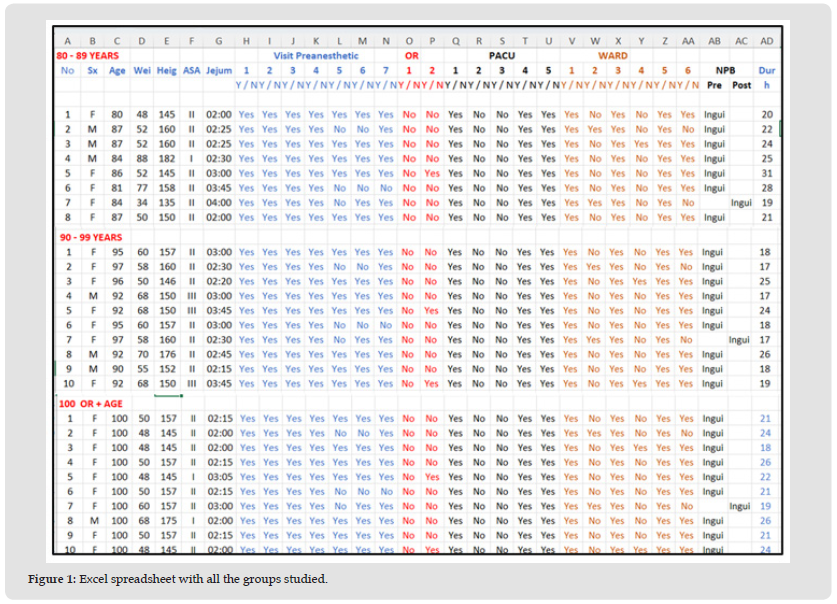
According to CNS Resolution 196/96, the Research Ethics Committee approved the project postoperative acceleration in fracture of femur surgeries, number 76/11 and CAAE 0075.0.351.000-11, and all patients were informed and agreed to participate in the program and signed the free and informed consent form. All patients in the fourthage group (80 or older) of both sexes, with ASA I-III physical status and femur fracture to be operated on under spinal anesthesia, with analgesia using local anesthetic in the lumbar plexus (anterior or posterior) in a hospital covered by the Unified Health System (SUS) were recorded in an Excel spreadsheet (Figure 1) to be studied in relation to quality and satisfaction with the accelerated postoperative treatment, through a questionnaire with yes or no answers (Appendix). During the pre-anesthetic visit the project was detailed, explained to the patient and family, and they gave permission for publication in medical journals. According to previous studies with the same type of patient and the same perioperative acceleration project, the inclusion criteria were: normal blood volume, absence of pre-existing neurological disease, absence of coagulation disorders, absence of infection at the puncture site, absence of agitation, mental confusion and/or delirium, absence of use of indwelling urinary catheters, hemoglobin level greater than 10 g/dL, and that the patient was not hospitalized in the ICU. As part of the project, all patients were evaluated in the four stages of the project by the same anesthesiologist, always accompanied by an anesthesiology resident. The project to evaluate the quality and satisfaction of patients in relation to treatment was recorded in four stages of hospitalization: the first during the pre-anesthetic visit by the researcher and resident; the second upon entering the OR before surgery; the third during their stay in the PACU; and the last stage in the ward until hospital discharge.
Figure 1
Appendix: Questionnaire in the four stages with Yes or No answers.

The questionnaire used for all patients assessed the following items: hunger, thirst, agitation, without the use of a bladder catheter, without being hospitalized in an ICU, postoperative nausea and vomiting, satisfaction, and postoperative analgesia. All perceptions were classified as yes or no. After the pre-anesthetic visit, patients were informed that they would receive 200mL of 12.5% dextrin maltose 2 to 4 hours before being referred to the OR, and the time of fasting and the presence of thirst and hunger were noted, and whether they could be woken up if they were the first patient to be referred to the OR. As part of the study, no drugs were used as premedication. In the OR, continuous ECG, non-invasive blood pressure, heart rate, pulse oximetry, and capnography were monitored. After venous cannulation with a 20G or 18G catheter in the hand or forearm, an infusion of Ringer’s lactate was started in parallel with hydroxyethyl starch 130/0.4% at 6% in 0.9% sodium chloride solution. At the beginning of monitoring, cefazolin 2g and dexamethasone 10mg were administered intravenously. After sedation with intravenous dextrocetamine (0.1 mg/kg) and midazolam (0.5-1 mg), skin cleansing with 0.5% alcoholic chlorhexidine or 70% alcohol and waiting for it to dry, lumbar puncture was performed with the patient seated or in lateral decubitus, through the median intervertebral spaces L3-L4, using a 26G or 27G Quincke needle.
After observing the CSF and confirming the correct needle placement, 7.5 to 15 mg of 0.5% isobaric bupivacaine without adjuvants were administered at a rate of 1 mL/15 s. Patients were immediately placed in the supine position for surgery, and at the end referred to PACU for the second stage of quality and satisfaction assessment. The postoperative analgesia was performed through the anterior lumbar plexus block (inguinal) or posterior (psoas compartment), that was performed before (2% lidocaine=20 ml + 0.5% levobupicaine (S75:R25) =20ml) or after the surgical procedure (0.5% levobupicaine (S75:R25) =40ml) and recorded. Blocking was performed with 50 mm needle (inguinal) or 100 mm (psoas) (B. Braun Melsungen AG) connected to a peripheral nerve stimulator (Stimuplex ®, B.Braun Melsungen AG) set to release a pulsatile square 0.5 mA, with a frequency of 2 Hz, seeking contraction of the quadriceps muscle. After the surgery, patients were referred to PACU where various parameters of the questionnaire were evaluated. After hospital discharge, the fourth stage of the questionnaire was assessed the following morning, and patients were then released to go home.
Statistical analyses were performed to compare variables across age groups (80–89 years, 90–99 years, and ≥100 years). Continuous variables (e.g., fasting time, height, weight, and procedure duration) were summarized using descriptive measures (median, interquartile range, and/or mean ± standard deviation, as appropriate). Because normality could not be assumed for all continuous outcomes, comparisons among age groups were conducted using the Kruskal–Wallis test. Categorical variables (including binary variables such as pre-anesthetic visit, OR, PACU, and W indicators) were summarized as absolute frequencies and percentages. Associations between categorical variables and age group were assessed using the chi-square test of independence. A two-sided p-value < 0.05 was considered statistically significant. Analyses were performed in R (R Foundation for Statistical Computing, Vienna, Austria).
Of the 461 fourth-age patients studied, only 274 patients completed the questionnaire for evaluation, and for this reason 214 patients were excluded from the study according to the consort flow chart (Figure 2). There was no exclusion among centenarian patients, as they received constant treatment from the researcher, residents, and other professionals, and were not referred to the ICU. All patients received spinal anesthesia for surgery and anterior and posterior lumbar plexus block with neurostimulator for postoperative analgesia. During the implementation of the acceleration project, numerous studies were published, but only one showed that reducing fasting increased patient satisfaction. Data from patients in the fourth age group showed that 74% of patients arriving and living in this age range are female (Table 1). A comparison between the average ages of the three groups is not possible, as they were divided according to the decade of each stage of life. Regarding weight and height, the results show significant difference (Table 1). Before the femur fracture occurred, all the patients were living at home; dividing the patients into the “no” or “yes” physical status categories showed a no significant difference (Table 1).
Table 1: Demographics dates of patients.

Note: *Test Kruskal-Wallis; **Chi-square test.
Figure 2

Of the 461 fourth-age patients studied, only 274 patients completed the questionnaire for evaluation, and for this reason 214 patients were excluded from the study (Figure 2). There was no exclusion among centenarian patients, as they received constant treatment from the researcher, residents, and other professionals, and were not referred to the ICU. Regarding the seven questions assessed during the pre-anesthetic visit, the results showed without significant difference (Table 2). Upon entering the surgical center, the 274 patients did not report thirst, while only 35 (12.7%) patients reported hunger, explained by the delay in referral to the OR. The data evaluated at this stage did not show a significant difference between the three groups of fourth-age patients (Table 3). In the five questions asked during the PACU stay, there was no significant difference among all patients (Table 4). All operations were performed under spinal anesthesia, without the need for supplemental general anesthesia. Regarding the assessments carried out in the ward, there was no significant difference between the three groups (Table 5). However, when questioned about the reason, 28 patients (10%) were not satisfied with the treatment, which was explained by the presence of PONV and inadequate analgesia (Table 5). No significant difference was observed in relation to the duration of fasting with the administration of carbohydrates, averaging 2:49 hours (Table 6). Similarly, there was no difference whether the lumbar plexus block was performed before the procedure (203 times) and after surgery (71 times), with no difference between the three groups, resulting in the same average analgesia of 22.6 hours (Table 7).
Table 2: Response to the questionnaire during the pre-anesthetic visit.
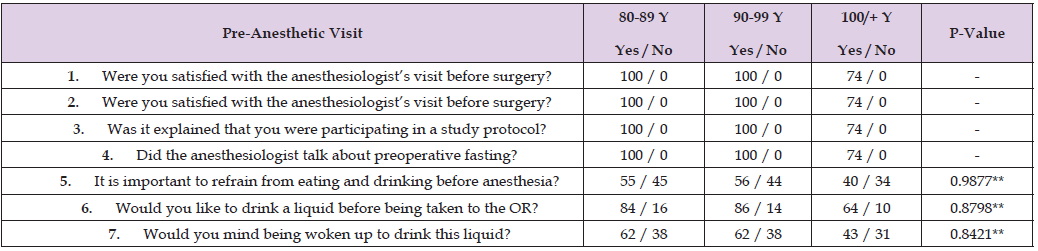
Table 3: Answering the questionnaire upon arrival at OR.

Table 4: Response to the questionnaire during your stay at PACU.
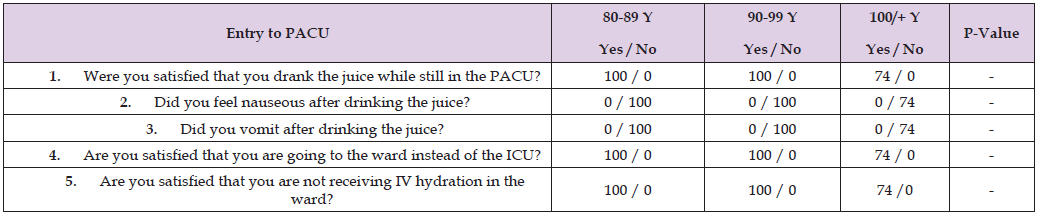
Table 5: Response to the questionnaire during your stay in the ward.

Table 6: Evaluation of fasting duration, peripheral nerve block used before or after surgery, and duration of analgesia in the three groups.

This study with fourth-age patients operated on for femur fractures clearly confirms that patients follow-up by the anesthesiology service with the same group of professionals, in four distinct stages, resulted in decreased thirst and hunger, better monitoring during transfer to the OR during the surgical procedure, with a shorter stay in the PACU, monitoring in the ward, with increased quality of analgesia resulting in patient satisfaction and early discharge to the hospital. A recent qualitative systematic review reported evidence-based recommendations for the treatment, care, and rehabilitation of patients with hip fractures, including recommendations on mobilization strategies, optimal timing for surgery, pain management, postoperative prevention, rehabilitation programs, and patient information [10]. Our study to verify the quality and satisfaction of fourth-age patients showed that the implementation of a project to accelerate perioperative procedures in four stages resulted in increased quality of anesthesiologic treatment and satisfaction for patients and their families. In a retrospective cohort study of geriatric trauma patients, including 71 patients aged ≥ 70 years with femur fracture, several parameters were used, including the fried frailty index (FFI), delirium and dementia (CDD), nutrition, and complication prevention. The study concluded that the FFI, CDD, and nutritional assessment tools are associated with the development of complications in these patients [11]. Our study did not evaluate parameters such as FFI, CDD, and nutritional status; however, patients were only included if they had a normal life up to the day of the femur trauma and admission to the SUS hospital. Using the patient satisfaction instrument adapted and validated in Brazil with the objective of measuring patient satisfaction with nursing care with 102 hospitalized elderly patients showed good consistency contributing to the evaluation of the nursing team [12].
Unlike the study that evaluated nursing care in elderly patients without surgery, our study, which assessed four stages of care for fourth-age patients with surgery femur fractures, showed that the implementation of the project improved the quality of care and the satisfaction of patients and their families, with early discharge to their homes and without the use of an ICU. A recent study showed that anxiety and depression are prevalent in elderly people after hip fracture surgery and are associated with impaired functional recovery, increased pain, and reduced quality of life [13]. A study with 152 elderly patients with hip fractures showed that, in addition to pain, thirst, hunger, and anxiety were important sources of discomfort in the perioperative period [14]. In our study, the ingestion of a 200 mL beverage with carbohydrates before surgery not only reduced preoperative thirst and hunger but also provided greater patient satisfaction. Using the same volume of the same beverage in the PACU, the incidence of PONV nausea was low, increasing satisfaction in all patients and feeding in the ward. The questionnaire used to assess the quality and satisfaction with the new treatment was duly explained to the fourth-age patients and their families.
However, an important point regarding the shortening of the fasting period was that many patients said they preferred to follow the doctor’s orders to avoid having their surgery postponed, but it was explained that the anesthesiologist and the resident would be the same ones from the pre-anesthetic visit; everyone contributed to the success of the new project. Studying 65,974 patients aged 60 to 99 years with femur fracture using annual hospital HCAHPS satisfaction scores suggests that subjective quality is associated with the objective quality of these patients [15]. The same questionnaire used to assess satisfaction with shortening the fasting period [4] showed that the subjective data from the questions resulted in responses to the new treatment modality for these patients. Comparing the visual analogue scale (VAS) and numeric rating scale (NRS) in elderly patients over 65 years of age showed a low correlation between the two scales [16]. Reason for terms used for pain assessment by the numerical scale, showing that the duration of analgesia was similar in the three age groups. The quality of analgesia in elderly patients undergoing femur surgery is fundamental to patient quality and satisfaction. Various regional anesthesia techniques are used in this setting, including the pericapsular nerve group block, fascia iliaca compartment block, femoral nerve block, and quadratus lumborum block, yet optimal strategies remain debated [17]. Due to the lack of ultrasound equipment at the public hospital where the study was conducted, and given the author’s extensive experience with neuromuscular blocking, the anterior or posterior lumbar plexus block technique was used, with an average duration of 22.6 hours.
Hip fracture is associated with moderate-to-severe postoperative pain, which can influence postoperative recovery and length of stay. Satisfaction is defined as a pleasant sensation resulting from the fulfillment of expectations, being the result of psychological processes that involve comparing the perceived performance of a given treatment to the patient’s initial expectations. The main objective of this study was to develop a questionnaire to assess the quality and satisfaction of patients with femur fractures at four stages of treatment: pre-anesthetic visit, admission to the operating room, stay in the intensive care unit, and in the ward until hospital discharge, involving 274 patients over the age of 80, showed that a four-stage assessment of femur fracture treatment resulted in increased quality of life and patient satisfaction
No.
No.
No.
No.

International Association of Landscape Archaeology, Czech Glass Society, Czech Republic

Department of Chemistry, Semenov Institute of Chemical Physics, USSR Academy of Sciences, Moscow, Russia

Neurology, LA BioMed Research Institute, USA

Associate Professor at Department of Breast and Thyorid Surgey, Chongqing General Hospital, China
Professor of Nuclear Medicine, Faculty of Medicine and Surgery, University of Milan, Milan, Italy





 Abstract
 PDF
PDF