info@biomedres.us
+1 (502) 904-2126
One Westbrook Corporate Center, Suite 300, Westchester, IL 60154, USA
Site Map
 ISSN: 2574 -1241
ISSN: 2574 -1241
ISSN: 2574 -1241
Received: February 23, 2026; Published: March 06, 2026
*Corresponding author: Jiren Zhang, Shanghai Chenhe Life Science Research Center, Shanghai, China
DOI: 10.26717/BJSTR.2026.65.010125
Mind-body physiology, as an emerging interdisciplinary field investigating the interaction mechanisms between consciousness, intention, and physiological processes, is undergoing a paradigm shift from philosophical speculation to scientific empiricism, from phenomenological description to mechanistic elucidation, and from generalized intervention to precision targeting. This paper systematically reviews the century-long evolutionary trajectory of intention-guided therapy from 1908 to the present, delineating a complete spectrum across four stages: the foundational period, developmental period, integrative period, and neuroscience period. On this basis, we construct a six-level mechanistic model of intention-based physiological regulation: hierarchical neuro- endocrine-immune network regulation, neuroplasticity, interoceptive pathways, neurobiological foundations of placebo effects, BERN framework integration mechanisms, and EMI theoretical field-based models. The study further proposes a five-dimensional classification matrix for intention operation systems, encompassing four hierarchical levels (molecular-genetic, cellular-tissue, organ-system, and holistic integration) and precision targeting techniques for eight major physiological systems. Finally, we innovatively propose a systematic framework for auxiliary ecological environment configuration in mind-body psychology, integrating four major physical environmental elements-sound waves, magnetic fields, light waves, and energy fields-to form a multimodal synergistic environmental enhancement system. This paper provides a comprehensive theoretical framework and practical guidelines for establishing a scientific mind-body physiology wellness technology system, marking the paradigm transition of psychosomatic medicine from empirical medicine to precision medicine, from reductionism to systems theory, and from single-technique approaches to ecological integration.
Keywords: Mind-Body Physiology; Intention Guidance; Psychosomatic Medicine; BERN Framework; Neuroplasticity; Biofeedback; Auxiliary Ecological Environment; EMI theory
Abbreviations: BERN Framework : Behavior, Exercise, Relaxation, Nutrition); EMI : Energy-Mass-Information); FoK-FIP : Feelings of Knowing-Fundamental Interoceptive Patterns; MBSR: Mindfulness-Based Stress Reduction; HPA Axis: Hypothalamic-Pituitary-Target Gland Axis; CRH: Corticotropin-Releasing Hormone; ACTH: Adrenocorticotropic Hormone; VR: Virtual Reality; AR: Augmented Reality ; BCI: Brain-Computer Interfaces; PBM: Photo biomodulation ; ROS : Reactive Oxygen Species ; SCN: Suprachiasmatic Nucleus; PEMF: Pulsed Electromagnetic Fields; FFR: The Frequency Following Response
The Scientific Inquiry into Mind Body Relationships
The mind-body relationship represents one of the most ancient and profound philosophical propositions in human civilization. From the Delphic maxim “Know Thyself” in ancient Greece to the “Unity of Form and Spirit” in the Eastern Yellow Emperor’s Inner Canon, from Plato’s metaphor of the “Chariot of the Soul” to Aristotle’s view of the heart as the center of life, ancient sages had already perceived the profound connection between consciousness and the physical body. However, it was not until the early 20th century that this ancient wisdom began to enter the realm of scientific research. In 1908, Edmund Jacobson, a young physiologist at Harvard University, introduced electromyography to measure muscle tension, providing the first objective data demonstrating that “intention can regulate muscle tone”-a milestone regarded as the scientific starting point of mind-body physiology, initiating a century-long journey of psychosomatic medicine [1].Over the past century, psychosomatic medicine has undergone profound transformations from mysticism to scientific empiricism, from experiential description to mechanistic elucidation, and from generalized intervention to precision targeting. Particularly in the last two decades, advancements in functional magnetic resonance imaging, electroencephalography, neurofeedback, and quantum biology have enabled researchers to observe in real-time how intentional activities alter brain structure and function, regulate the activities of the autonomic nervous system, endocrine system, and immune system, and even interact with biological fields at the quantum level. An emerging discipline centered on “mind-body physiology” is taking shape, attempting to answer an ancient yet novel question: How does consciousness, through specific neural pathways, actively intervene in physiological functions previously considered “involuntary”?
This paper aims to systematically construct a mind-body physiology wellness technology system, presenting a complete picture of this field from four dimensions: historical evolution, biological mechanisms, technical classification, and environmental integration. The study employs literature analysis, theoretical construction, and systematic integration methods, drawing upon the latest international research in psychosomatic medicine, including the BERN framework (Behavior, Exercise, Relaxation, Nutrition) proposed by Esch, et al. [2], the EMI (Energy-Mass-Information) theoretical framework proposed by Firaux, et al. [3], and the FoK-FIP (Feelings of Knowing-Fundamental Interoceptive Patterns) system proposed by Pollard-Wright [4]. Based on these foundations, this paper innovatively proposes a five-dimensional classification model and environmental support system, providing theoretical support for the precision, personalization, and systematization of psychosomatic medicine.
Foundational Period (1900-1950): The Scientific Germination of Psychosomatic Medicine: At the beginning of the 20th century, the pioneering work of three scientists laid the scientific foundation for intention-based physiological regulation.
a) Edmund Jacobson and Progressive Muscle Relaxation (1908-1938): Jacobson’s series of studies at Harvard University first brought the “intention-physiology” connection into a scientific framework. His development of progressive muscle relaxation technique, monitored through electromyography, demonstrated that conscious control of muscle tension-relaxation cycles could achieve deep physiological relaxation. The 1929 publication of Progressive Relaxation became a landmark work in psychosomatic medicine [5], providing not only an operable technique but, more importantly, establishing the measurability of “intention regulating physiology.” Jacobson’s work first showed that through active intentional guidance, resting muscle tone could be reduced, thereby influencing the excitability level of the entire nervous system. Subsequent research further validated this technique’s physiological effects in anxiety relief and sleep improvement [6].
b) Walter Cannon and Homeostasis (1915-1932): Cannon’s 1915 “fight-or-flight” theory revealed how psychological stress triggers systemic physiological responses through the sympathetic nervous system-increased heart rate, elevated blood pressure, rapid breathing, rising blood glucose, and blood redistribution [7]. In the 1920s, he further elaborated the concept of “homeostasis,” proving that emotional states have direct neural pathways to the autonomic nervous system. His research, through animal experiments and human physiological monitoring, established the hypothalamus-sympathetic pathway’s central role in mind-body interactions. Cannon’s research first established a complete psychological- neural-physiological action model, laying the theoretical foundation for understanding how intention influences organ function.
c) Johannes Schultz and Autogenic Training (1920s-1930s): Inspired by hypnotic therapy, German psychiatrist Schultz developed a self-training method independent of therapists-autogenic training. Its six standard exercises constituted the first systematic “intention regulating autonomic nervous system” technical system [8]:
• Heaviness Exercise: “My right arm is heavy”-inducing muscle relaxation through intention
• Warmth Exercise: “My arms are warm”-inducing vasodilation through intention
• Cardiac Regulation: “My heartbeat is calm and regular”-directly regulating heart rate
• Respiratory Regulation: “My breathing is easy and natural”- regulating respiratory rhythm
• Abdominal Warmth: “My abdomen is warm”-regulating visceral function
• Forehead Coolness: “My forehead is cool”-inducing mental calmness
Schultz’s breakthrough lay in directly regulating the autonomic nervous system through self-suggestion, achieving a paradigm shift from “passive reception” to “active regulation.” This technical system remains widely used clinically today, becoming the direct predecessor of intention-guided therapy. Subsequent research confirmed that long-term practice of autogenic training can significantly reduce sympathetic nerve activity and improve autonomic balance [9].
Developmental Period (1950-1980): Behaviorism and the Biofeedback Revolution
a) Hans Selye and Stress Theory (1936-1956): Selye’s “General Adaptation Syndrome” divided stress responses into three stages: alarm, resistance, and exhaustion, demonstrating that chronic stress could lead to organic diseases such as gastric ulcers and hypertension [10]. This work established the psychological- neuro-endocrine-immune interaction model. Through long-term animal stress experiments, he clarified cortisol’s mediating role in chronic stress-induced organ damage, providing pathophysiological foundations for intention-guided therapy: long-term negative intentional states can ultimately lead to organic organ damage through neuroendocrine pathways; conversely, active regulation of intentional states can reverse this process.
b) Joseph Wolpe and Reciprocal Inhibition Theory (1958): Wolpe discovered that anxiety and relaxation are physiologically incompatible, and that inducing relaxation states could eliminate anxiety responses. His systematic desensitization became the cornerstone of behavioral therapy [11], with the “relaxation + imaginal exposure” model directly influencing the technical architecture of modern intention-guided therapy. His research, through clinical controlled experiments, validated this method’s effectiveness in treating phobias and anxiety disorders, clarifying the antagonistic effect of intention- induced relaxation states on anxiety physiological responses. This discovery revealed the fundamental principle of intention regulation: by activating physiological systems antagonistic to target states, specific physiological functions can be regulated.
c) Elmer Green and Biofeedback (1960s): Green’s pioneering biofeedback research at the Menninger Foundation was epoch-making. By visualizing autonomic nervous activities (electromyography, electrodermal activity, skin temperature, heart rate, etc.), he demonstrated that humans could learn to control physiological functions previously considered “involuntary” through real-time feedback [12]. The 1969 establishment of the Biofeedback Research Society (later renamed the Association for Applied Psychophysiology and Biofeedback) marked the formal transition of “intention regulating physiology” from mysticism to science.
Green’s key contribution lay in integrating Eastern meditation traditions with Western psychophysiology, proposing the concept of “voluntary control of internal states,” and developing Alpha-Theta training protocols for addiction and trauma treatment [13]. His work showed that through external instrument assistance, humans could learn to perceive and regulate internal physiological signals originally imperceptible. Subsequent research further expanded biofeedback technology applications, confirming its regulatory effects in hypertension, migraine, and other conditions [14].
Integrative Period (1980-2000): Mindfulness-Based Stress Reduction and Psychosomatic Medicine
1. Herbert Benson and the Relaxation Response (1970s): Benson’s research on Transcendental Meditation discovered that meditation could induce a physiological state opposite to the stress response-the relaxation response, characterized by decreased metabolic rate, slowed heart rate, reduced blood pressure, slower breathing, and muscle relaxation [15]. Through controlled experiments, Benson clarified the core physiological indicator changes of the relaxation response, demonstrating its close relationship with sympathetic inhibition and parasympathetic activation. Benson’s work de-religionized meditation techniques, paving the way for clinical applications.
2. Jon Kabat-Zinn and Mindfulness-Based Stress Reduction (1979): Kabat-Zinn’s establishment of the Mindfulness-Based Stress Reduction (MBSR) program at the University of Massachusetts Medical Center transformed Buddhist mindfulness meditation into a standardized 8-week medical protocol [16]. Its “body scan” technique directly embodies the guidance concept of “intention focusing on body parts,” becoming the template for all subsequent mindfulness interventions. MBSR’s success lay in combining ancient meditation traditions with modern medicine’s standardization and empirical requirements, making mindfulness training a teachable, learnable, and assessable medical protocol. Multiple clinical studies confirmed that MBSR can effectively reduce pain scores in chronic pain patients and improve emotional states [17].
3. Establishment of the Benson-Henry Institute for Mind Body Medicine (1988): Benson’s establishment of the Mind Body Medicine Institute at Harvard Medical School marked the recognition of psychosomatic medicine as an independent discipline [18]. The institute dedicated itself to studying how “self-healing becomes ‘a matter of mind’”-that is, how intention activates endogenous healing mechanisms through specific neural pathways. Subsequent series of studies further revealed the auxiliary therapeutic effects of intention-induced relaxation responses in cardiovascular diseases and autoimmune diseases.
Neuroscience Period (2000-Present): Mechanistic Elucidation and Precision
At the beginning of the 21st century, the revolution in brain imaging technology made the visualization of intention research possible. Richard Davidson’s team, through fMRI and EEG studies, revealed significant changes in brain structure and function in long-term meditators: 5-8% increase in prefrontal cortex gray matter density, reduced amygdala volume, 15-20% decrease in default mode network activity, and increased insular gray matter volume [19]. These findings provided neuroanatomical evidence for “intention changes the brain,” marking the entry of mind-body physiology into a new stage of precision regulation. Subsequent research further validated the dose-response relationships of these structural and functional changes [20]. Key Research Findings (2000-2025):
• Prefrontal cortex: Enhanced executive function and emotional regulation capacity
• Amygdala: Reduced stress response, improved emotional stability
• Hippocampus: Increased neurogenesis, improved learning and memory
• Insula: Enhanced interoceptive sensitivity, improved body awareness
• Default Mode Network: Reduced self-referential thinking, decreased mind-wandering
• Brain Network Integration: Optimized functional connectivity, improved information processing efficiency
Level One: Hierarchical Regulation of the Neuro-Endocrine- Immune Network
The core biological foundation of intention-guided therapy is the multi-level regulation of the psychological-neuro-endocrine-immune network. This network begins at the cerebral cortex, progressively transmitting regulatory signals to the hypothalamus, autonomic nervous system, and endocrine system, ultimately reaching target organs, forming a complete “intention-physiology” pathway.
a) First Level: Central Nervous System Regulation. The prefrontal cortex is responsible for executive control, attention regulation, and expectation formation; the anterior cingulate cortex participates in autonomic regulation and pain gating; the insula is a key brain region for interoception (perceiving internal body states); the amygdala processes emotional information. Mindfulness training can enhance functional connectivity and gray matter density in these brain regions, improving regulatory efficiency. fMRI studies confirm that long-term mindfulness practitioners show significantly enhanced functional connectivity between the prefrontal cortex and anterior cingulate cortex during attention tasks [21].
b) Second Level: Hypothalamic-Pituitary-Target Gland Axis (HPA Axis). When intentional activities activate the hypothalamus, corticotropin-releasing hormone (CRH) is released, stimulating the pituitary to secrete adrenocorticotropic hormone (ACTH), ultimately prompting the adrenal glands to release cortisol. Mindfulness training can reduce excessive HPA axis activation-8-week mindfulness training can reduce salivary cortisol by approximately 26% [22], indicating effective alleviation of chronic stress states. This effect has been validated through long-term follow-up studies and is positively correlated with the duration of intention-induced relaxation states.
c) Third Level: Autonomic Nervous System. The vagus nerve, as a “superhighway” connecting the brain and viscera, plays a key role in mindfulness training. Mindfulness enhances vagal tone, promoting parasympathetic “rest-and-digest” functions. Heart rate variability (HRV), as a quantitative indicator of autonomic balance, significantly improves after mindfulness training-increased high-frequency power (HF) reflects enhanced parasympathetic activity, while decreased low-frequency/ high-frequency ratio (LF/HF) reflects optimized sympathetic- parasympathetic balance [23]. Biofeedback studies further confirm that intention-guided respiratory regulation can directly modulate vagal tone.
d) Fourth Level: Immune System. Mindfulness training can reduce pro-inflammatory cytokines (IL-6, TNF-α, CRP) levels, enhance cellular immunity (CD3+, CD4+, CD8+) activity, increase telomerase activity, and delay cellular aging [24]. These effects demonstrate that intentional activities can deeply regulate immune system functional states, forming an “intention- neuro-immune” regulatory axis. A study in breast cancer patients confirmed that mindfulness meditation can significantly enhance patients’ immune cell activity and improve prognosis [25].
Level Two: Neuroplasticity-Intention Reshaping Brain Structure and Function
Neuroplasticity is one of the core mechanisms of intention-based physiological regulation. At the synaptic level, repeated intention training can induce long-term potentiation (LTP) and long-term depression (LTD), achieving lasting changes in synaptic efficacy through dynamic regulation of NMDA and AMPA receptors. Increased secretion of brain-derived neurotrophic factor (BDNF) promotes neuronal regeneration and synaptic reorganization. Research confirms that 8-week mindfulness training can increase peripheral blood BDNF levels by approximately 30% [26]. At the structural level, long-term meditators show significantly increased brain gray matter density: 5-8% increase in prefrontal cortex, enlarged hippocampal volume, and thickened insular gray matter [27]. These structural changes are directly related to improved executive function, enhanced emotional regulation capacity, and increased interoceptive sensitivity. Notably, these changes exhibit dose-response relationships: the longer and more regular the meditation practice, the more significant the structural changes. A three-year follow-up study further validated this relationship and found that structural changes are reversible, gradually returning to baseline levels after discontinuation of practice [28].
At the functional level, mindfulness training reduces default mode network activity by 15-20%, decreasing “mind-wandering” [29]. simultaneously enhances brain network integration, making information exchange between different functional regions more efficient. Magnetoencephalography (MEG) studies show that meditation can enhance functional connectivity of brain networks, promoting cross-regional information integration [30], an effect particularly significant in focused attention mindfulness training.
Level Three: Interoception and Body Awareness
Interoception refers to the ability to perceive internal body states (heartbeat, breathing, gastrointestinal peristalsis, body temperature, etc.), and is a key mechanism of intention-guided therapy. The insular cortex is the main neural foundation of interoception: the posterior insula receives primary sensory input from viscera, while the anterior insula transforms these body signals into subjective feelings, forming conscious awareness of body states [31]. Mindfulness training can significantly improve interoceptive accuracy: 8-week training can observe increased insular gray matter volume, enhanced “body scan” ability, and achieved precise organ-targeted awareness [32]. Research shows that experienced meditators can accurately perceive their own heart rate changes, respiratory rhythms, gastrointestinal peristalsis, and even perceive physiological processes originally imperceptible (such as blood pressure fluctuations, immune activities). This ability improvement is closely related to enhanced functional connectivity between the insular cortex and visceral sensory pathways [33].
Interoceptive Neural Pathway: Visceral sensory signals reach the solitary nucleus → parabrachial nucleus → thalamus → insula via the vagus nerve and spinal afferent pathways, ultimately forming conscious awareness of internal body states. Mindfulness training can enhance functional connectivity of this pathway, improving interoceptive sensitivity and accuracy [34]. ERP studies confirm that mindfulness practitioners show significantly increased evoked potential amplitudes in the insular cortex when receiving visceral sensory signals [35].
Level Four: Neural Mechanisms of Placebo Effects
Intention-guided therapy shares partial neural mechanisms with placebo effects, providing important clues for understanding how intention regulates physiology through expectation and belief.
• Endogenous Opioid Peptide System: In 1978, Levine et al. discovered that placebo analgesia could be blocked by naloxone (opioid antagonist), first proving that placebo effects have specific neurochemical foundations [36]. Expectation of analgesia can activate μ-opioid receptors, releasing endorphins, involving brain regions including the dorsolateral prefrontal cortex, anterior cingulate cortex, insula, and nucleus accumbens. Subsequent fMRI studies further validated this pathway, confirming that intention-induced expectation can significantly activate the endogenous opioid peptide system [37].
• Dopaminergic Reward System: Placebo responses in Parkinson’s disease patients are related to striatal dopamine release [38], where expectation of improved motor function can activate the endogenous dopamine system. This reveals how expectation and belief influence motor function through reward pathways. A study in healthy populations confirmed that intention-guided positive expectation can significantly increase striatal dopamine levels and improve motor performance [39].
• Conditioned Learning Mechanisms: Placebo effects can be established through classical conditioning-repeated pairing of drugs (unconditioned stimulus) with placebos (conditioned stimulus) enables placebos alone to trigger similar physiological responses when presented. Observational learning can also form placebo effects-forming expectations by observing others’ treatment responses [40], a mechanism particularly important in group training of intention-guided therapy, where positive feedback from group members can enhance individual treatment expectations.
• Common Effector Molecule Role of Nitric Oxide: BERN framework research shows that different mind-body intervention techniques exert effects through shared central neural reward circuits. These systems rely on multiple neurobiological signaling pathways, ultimately converging on nitric oxide as a common effector molecule [2]. Nitric oxide regulates reactions in brain cell mitochondria, nuclei, and chromosomal processes, closely related to reward physiology, stress reduction, and self-regulation, also participating in placebo responses [41]. In vitro experiments confirm that nitric oxide can significantly enhance neuronal synaptic plasticity.
Level Five: BERN Framework-An Integrative Model of Mind- Body Intervention
The BERN framework (Behavior, Exercise, Relaxation, Nutrition) proposed by Esch and Stefano provides a new perspective for understanding the integrative mechanisms of mind-body interventions [2]. This framework points out that although different mind-body intervention techniques vary in form, they exert effects through shared central neural reward circuits:
• Behavior: Including behavioral modification techniques, cognitive restructuring, social support, and positive psychology interventions. By changing behavioral patterns, functional connectivity of neural circuits is reshaped. Cognitive restructuring techniques can significantly change functional connectivity between the prefrontal cortex and limbic system, improving emotional regulation [42].
• Exercise: Including aerobic exercise, strength training, flexibility exercises, yoga, Tai Chi, etc. Exercise activates endogenous reward systems, promoting neurogenesis and synaptic plasticity [43]. Research confirms that yoga, as a form combining exercise and intention, can simultaneously activate multiple elements of the BERN framework, enhancing mind-body integration.
• Relaxation: Including meditation, mindfulness, autogenic training, biofeedback, hypnosis, etc. Relaxation techniques activate the parasympathetic nervous system, reduce stress responses, and enhance interoception [44]. Although different relaxation techniques vary in form, they can all significantly reduce HPA axis activity and increase vagal tone.
• Nutrition: Including dietary regulation, nutritional supplementation, and gut microbiome management. Nutrition affects neurotransmitter synthesis, inflammation levels, and mitochondrial function. Gut microbiota influences central nervous system function through the gut-brain axis, thereby regulating intention regulation effects [45].
The core insight of the BERN framework is that although mindbody intervention techniques vary in form, their deep mechanisms are interconnected-activating endogenous self-repair systems to achieve health maintenance and promotion. These mechanisms involve central neural reward circuits, nitric oxide signaling pathways, mitochondrial function regulation, and epigenetic modifications [2]. A multi-center study confirmed that intervention programs integrating the four elements of the BERN framework show significantly better mind-body regulation effects than single-technique interventions [46].
Level Six: EMI Theory and Quantum Biology Hypothesis- An Integrative Framework Beyond Reductionism
In recent years, research on consciousness-physiology interactions has begun to transcend traditional neural reductionism, exploring more integrative theoretical frameworks. The EMI (Energy- Mass-Information) model proposed by Firaux, et al. [3] represents frontier exploration in this direction [3].
• Quantum Biology Hypothesis: The FoK-FIP (Feelings of Knowing-Fundamental Interoceptive Patterns) system proposed by Pollard-Wright further connects consciousness with physics [4]. This theory includes cosmological and cellular frameworks: the cosmological framework refers to astrophysical and theoretical physics frameworks, while the cellular framework refers to organism models characterized by DNA. Through this “framework within framework” approach, the theory attempts to connect classical and quantum theories, connecting biology with information science. A theoretical study confirmed that the FoK-FIP system can explain the interaction mechanism between intention and quantum fields [47].
More frontier exploration comes from the four-field quantum model, which proposes that four fundamental quantum fields interact with biological systems through coherent emission [48]:
The core mechanism of this model is symmetry breaking-structured brain information (quantum and classical electromagnetic/ biophoton coherence) interacts with fundamental quantum fields, undergoing symmetry breaking transformation, converting neutral information states into new qualitative subjective experiences.
Although these theories remain hypothetical, they represent scientific exploration directions transcending reductionism and integrating consciousness with physiology, providing broader theoretical horizons for mind-body physiology. Recent biophoton experiments have provided preliminary evidence for quantum biology hypotheses, confirming that intentional activities can influence biophoton coherence [49].
Based on mind-body physiology principles, this study constructs a systematic classification framework for intention operation systems. This framework employs five-dimensional orthogonal classification, precisely positioning intention regulation techniques from five dimensions: intention target domain, regulation mechanism layer, application target system, operational characteristics, and application purpose.
First Dimension: Intention Target Domain (Four-Level Hierarchy)
According to the physiological tissue level of intention focus, it is divided into four levels:
• Molecular-Genetic Level: Intention regulates molecular expression and genetic activities through the neuro-endocrine- immune network. Research shows that mindfulness training can change DNA methylation patterns, affecting expression of stress-related genes such as NR3C1 and FKBP5; increase telomerase activity, delaying cellular aging; promote brain-derived neurotrophic factor (BDNF) secretion, supporting neuronal repair and regeneration [50]. A 12-week mindfulness training study confirmed that NR3C1 gene methylation levels significantly decreased, positively correlated with cortisol level reductions [51].
• Cellular-Tissue Level: Intention regulates functional states of specific cell populations and tissue organs. Regulating T cell, B cell, and NK cell activity through the vagus nerve-splenic nerve axis; reducing pro-inflammatory cytokines IL-6, TNF-α, CRP levels; accelerating tissue repair through blood perfusion and growth factor release; regulating mitochondrial function, optimizing cellular energy metabolism [52]. In vitro cell experiments confirmed that intention-induced physiological signals can significantly enhance mitochondrial ATP synthesis efficiency [53].
• Organ-System Level: Targeting real anatomical organs, regulating their specific physiological functions. Cardiac function regulation affects heart rate variability through vagal tone; digestive function regulation modulates gastrointestinal peristalsis and secretion through the brain-gut axis; respiratory function optimization affects cardiopulmonary coupling through autonomous control of respiratory rhythm; immune function enhancement regulates immune cell activity through neuro-immune junctions [54]. Clinical studies confirm that heart-targeted intention training can significantly improve heart rate variability in heart failure patients [55].
• Holistic-Integration Level: Regulating systemic multi-system synergy and overall homeostasis. Reducing self-referential thinking by regulating the default mode network; maintaining sympathetic-parasympathetic nerve balance; optimizing neuro-endocrine-immune network integration; promoting multi-system synergy to achieve overall health [56]. A study in healthy populations confirmed that long-term mindfulness training can significantly enhance systemic multi-system synergy [57].
Second Dimension: Regulation Mechanism Layer (Six-Level Depth):
According to the neural mechanism depth of intention regulation physiology, it is divided into six levels:
• Sensory-Perceptual Level: Regulating sensory input through attention, changing perception thresholds. Enhancing insular cortex activation, improving sensitivity to internal body signals; regulating thalamic sensory gating, optimizing information screening [58]. ERP studies confirm that mindfulness training can significantly enhance thalamic screening ability for visceral sensory signals [59].
• Attention-Cognitive Level: Regulating cognitive resource allocation through executive attention networks. Regulating prefrontal-parietal network directed attention; anterior cingulate conflict monitoring and regulation; norepinephrine system regulation of alertness [60]. fMRI studies confirm that focused attention mindfulness training can significantly enhance functional connectivity of the prefrontal-parietal network [61].
• Emotion-Motivation Level: Regulating emotional states and motivation drives through the limbic system. Reducing excessive amygdala activation, enhancing emotional stability; regulating dopamine reward system; optimizing 5-HT system function, maintaining emotional balance [62]. A study in depression patients confirmed that intention guidance training can significantly increase 5-HT levels and improve depressive symptoms [63].
• Autonomic-Visceral Level: Directly regulating visceral functions through the autonomic nervous system. Enhancing vagal tone, promoting parasympathetic function; regulating hypothalamic- brainstem autonomic integration pathways; influencing local regulation of the enteric nervous system [64]. Biofeedback studies confirm that intention-guided relaxation can directly regulate enteric nervous system activity [65].
• Neuro-Plastic Level: Inducing lasting neural structural and functional changes through repeated training. Enhancing synaptic plasticity (LTP/LTD); increasing gray matter density; reorganizing functional connectivity; promoting neurogenesis [66]. Long-term follow-up studies confirm that sustained intention training can maintain neuroplasticity changes [67].
• Quantum-Biofield Level: Regulating physiology through quantum coherence and biofield interactions. Regulating biophoton emission; influencing electromagnetic field coherence; possibly interacting with fundamental quantum fields through symmetry breaking [68]. Preliminary experimental evidence suggests that intentional activities can influence biophoton emission intensity and coherence [69].
Third Dimension: Application Target System (Eight Major Systems) (Table1)
Table 1:
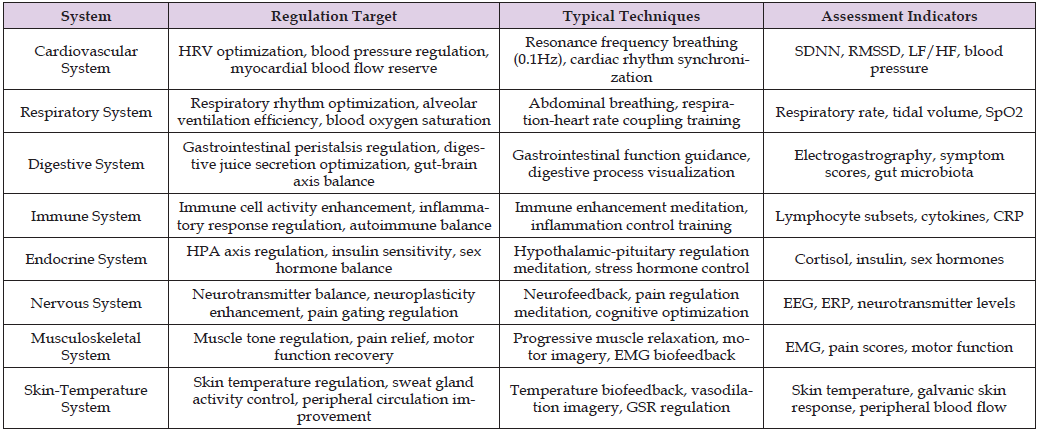
Note: The effectiveness of regulation techniques for each system is supported by corresponding clinical studies. Among them, resonance frequency breathing training for the cardiovascular system has been confirmed to significantly increase HRV high-frequency power [70]; immune enhancement meditation for the immune system can significantly increase NK cell activity [71]; neurofeedback training for the nervous system can significantly improve cognitive function [72].
According to the regulated physiological functional systems, divided into eight categories:
Fourth Dimension: Operational Characteristics Classification
According to the regulated physiological functional systems, divided into eight categories:
By Attention Strategy (Four Types):
• Focused Attention: Sustained focus on single objects (such as breath, mantra, body parts), enhancing prefrontal activation, improving cognitive control
• Open Monitoring: Broad awareness of present experience without judgment, enhancing awareness breadth, reducing DMN activity
• Constructive: Actively generating mental content (such as compassion, visualization), activating imagination networks, regulating emotions
• Deconstructive: Analyzing and deconstructing experience, enhancing insight, changing cognitive frameworks By Body Posture (Four Categories):
• Static Sitting: Spine upright, body stable, reduced metabolic rate, enhanced parasympathetic activity
• Supine Relaxation: Fully supported, deep relaxation, maximized parasympathetic activation
• Dynamic Movement: Slow intentional movement (such as yoga, Tai Chi, Qigong), enhanced proprioception, promoted circulation
• Walking Meditation: Mindful walking, aware of footsteps, integrating movement and awareness
By Breathing Pattern (Four Types):
• Natural Breathing: No control, only awareness, maintaining autonomous rhythm, enhanced interoception
• Resonance Breathing: 0.1Hz (6 breaths/minute), maximized HRV, enhanced baroreflex gain
• Extended Exhalation: Short inhalation/long exhalation (such as 4-7-8 breathing), enhanced vagal tone
• Breath Holding Training: Breath holding after inhalation/ exhalation, enhanced CO2 tolerance, regulated chemoreceptors Fifth Dimension: Application Purpose Classification
• Preventive Wellness: Maintaining homeostasis, enhancing resilience, daily 10–30-minute routine practice
• Disease Management: Controlling symptoms, improving function, 2-3 times daily, 20-45 minutes targeted intervention each time
• Rehabilitation Promotion: Accelerating healing, restoring function, multiple times daily, combined with physical therapy
• Performance Optimization: Enhancing cognitive, motor, or artistic performance, intensive practice before/after training
Theoretical Foundation: Environment as an Extension System of Intention Regulation
The auxiliary ecological environment for mind-body psychology refers to systematic optimization and configuration of physical environmental factors to enhance the efficiency and effectiveness of intention- based physiological regulation. Its core mechanism follows: physical environmental signals → sensory system reception → neural encoding integration → enhanced intention regulation → amplified physiological effects.
Based on biofield physiology, environmental psychology, and EMI theory, human physiological systems are not only regulated by internal neuro-endocrine-immune networks but also continuously exchange energy and information with the external physical environment. Optimizing environmental parameters can produce multiple enhancement effects [73]:
• Reducing Cognitive Load of Intention Regulation: Inducing target brain states through environment, reducing cognitive resources required for active regulation
• Enhancing Neuroplasticity: Promoting synaptic reorganization and functional connectivity optimization through multisensory integration
• Maintaining Physiological Rhythm Stability: Optimizing circadian rhythms through synchronization with Earth’s magnetic field and natural light
• Amplifying Therapeutic Effects: Enhancing intention regulation effects through placebo effects and conditioned learning
• Activating Quantum Coherence: Possibly promoting biophoton coherence and quantum processes through specific environmental parameters
Systematic Configuration of Four Major Physical Environmental Elements
Sound Wave Environment
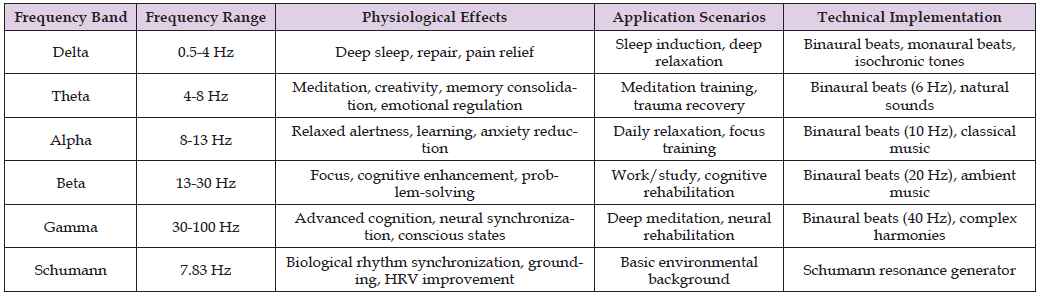
1. Scientific Principles: Based on the brainwave entrainment principle, the brain automatically synchronizes with external rhythms. The frequency following response (FFR) enables brain oscillations to synchronize with external stimuli; binaural beats produce difference frequencies through different frequencies in both ears, inducing specific brainwaves; acoustic vibration can affect cell membrane permeability and ion channels [74]. Schumann resonance (7.83 Hz), as the fundamental frequency of the Earth-ionosphere resonant cavity, overlaps with human alpha waves (8-13 Hz) and theta waves (4-8 Hz) ranges, (Table 2) serving as a “reference signal” for biological rhythms [75].
2. Environmental Design Points: Spatial acoustic treatment (background sound level 30-40 dB to 50-60 dB, reverberation time 0.6-2.0 seconds); dynamic soundscape system automatically switches according to time; natural soundscape integration of water sounds, wind sounds, bird songs, providing “soft fascination” for attention restoration [76].
Table 2:
Magnetic Field Environment
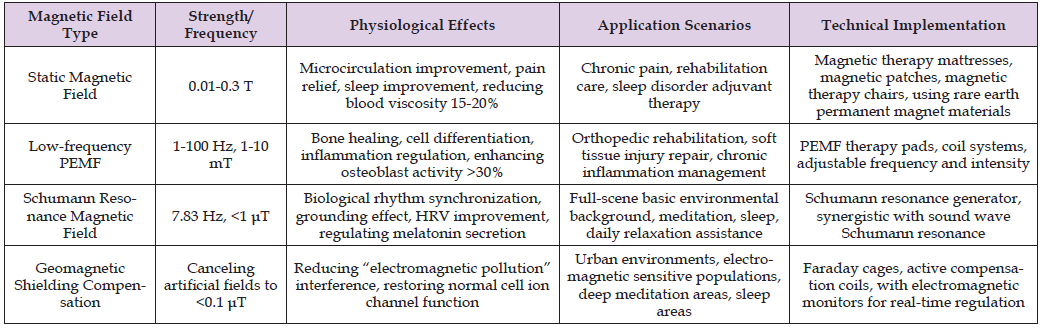
1. Scientific Principles: Static magnetic fields can improve microcirculation, with increased surface charge on red blood cells reducing blood viscosity by 15-20% [77]; inhibit sympathetic nerves, with GABA secretion increasing 30-40%. Pulsed electromagnetic fields (PEMF) can enhance osteoblast activity, approved by FDA in 1979 for fracture treatment [78]; regulate calcium ion channels, affecting cell signal transduction; promote cell differentiation and tissue repair. Additionally, as biological electromagnetic entities, human bodies continuously exchange energy and information with Earth’s magnetic field and environmental electromagnetic fields. Earth’s magnetic field (approximately 0.03-0.06 mT) serves as a natural biological rhythm reference, regulating melatonin secretion and circadian rhythms; while modern urban artificial electromagnetic fields (such as Wi-Fi, mobile signals, power lines) form “electromagnetic pollution,” interfering with cell ion channel function, reducing HRV, and inhibiting immune cell activity [79], which is also a key issue that magnetic field environment regulation needs to address. From the EMI theory perspective, (Table 3) magnetic fields as important carriers of energy fields can participate in quantum biological processes of intention regulation by influencing biophoton coherence, providing external energy support for intention-physiology interaction [3].
2. Environmental Design Points: Artificial electromagnetic field limitation (Wi-Fi, mobile signals turned off or shielded at night, controlled intensity <0.5 μT during day); grounding system (conductive floors, grounding mattresses, grounding wristbands) simulating barefoot contact with earth, accelerating static electricity release, enhancing grounding effect, synergistically improving HRV with magnetic field environment [80]; negative ion generators simulating natural environmental air ion composition (negative ion concentration >1000 ions/cm³), assisting in counteracting oxidative stress brought by electromagnetic pollution; electromagnetic monitoring systems real-time monitoring environmental magnetic field strength, dynamically regulating shielding and compensation equipment, ensuring magnetic field parameters meet different scenario configuration standards; spatial layout avoiding close contact between magnetic field equipment and electronic monitoring equipment (such as EEG, HRV monitors), preventing magnetic field interference with monitoring data accuracy.
Table 3:
Light Wave Environment
1. Scientific Principles: Photo biomodulation (PBM) activates mitochondrial cytochrome C oxidase through near-infrared light (600-1000 nm), promoting ATP synthesis, improving cellular energy metabolism efficiency by 20-30% [81]; releasing nitric oxide, dilating blood vessels, improving blood circulation, increasing tissue oxygen perfusion; regulating reactive oxygen species (ROS) levels and transcription factors (such as NF-κB), promoting DNA repair, inhibiting inflammatory responses. Circadian rhythm regulation is achieved through the suprachiasmatic nucleus (SCN), with SCN being most sensitive to blue light (480 nm), which can inhibit melatonin secretion and calibrate biological clocks; while red light, amber light and other long-wavelength lights do not inhibit melatonin secretion, suitable for nighttime environments [82]. Color psychology and physiological research found that short-wavelength light (blue/green) can activate parasympathetic nerves, having calming and anxiety-relieving effects; long-wavelength light (red/orange) can activate sympathetic nerves, enhancing alertness and vitality; purple light can regulate emotions and alleviate depressive tendencies [83]. Additionally, full-spectrum components in natural light can promote vitamin D synthesis, regulate serotonin levels, and enhance emotional stability, while spectral incompleteness of artificial light sources may cause biological clock disorders and emotional fluctuations, affecting intention regulation effects. From EMI theory, light waves as carriers of energy and information can participate in neural oscillation synchronization by influencing biophoton emission, enhancing neuroplasticity effects of intention regulation [3].
2. Environmental Design Points: Dynamic lighting systems automatically adjust color temperature and illuminance according to circadian rhythms, following the principle of “strong blue in morning, full spectrum during day, warm and dim at night,” such as blue light enhancement mode activated in early morning (6:00-8:00), full spectrum high illuminance maintained during day (8:00-18:00), and illuminance gradually reduced with warm light switched after evening (18:00+); natural light maximization design (skylights, light pipes, high transmittance glass), reducing artificial light source dependence, while equipped with shading systems to avoid strong light interference; color scene programming fitting different intention regulation needs, focus scenes mainly blue/green light, relaxation scenes mainly blue-green/lavender purple light, vitality scenes mainly coral orange/red light, trauma recovery scenes mainly soft purple light; light intensity zoned control, work/study areas 5000-10000 lux, meditation areas 200-300 lux, sleep areas <10 lux; avoiding flicker (flicker frequency >100 Hz), reducing visual fatigue and neural stimulation, ensuring light wave environment synergy with sound wave and magnetic field environments, enhancing physiological effects of intention regulation.
Energy Field/Biofield Environment
1. Scientific Principles: Biofield physiology research shows that the electromagnetic field produced by the heart can be detected 5 feet (approximately 1.5 meters) away and synchronizes with another person’s EEG alpha waves (frequency locking), with synchronization rates reaching over 60% [84]; heart rate variability patterns can detect discrete emotional states (such as calm, anxiety, pleasure) with 75% accuracy, and when emotional fluctuations occur, the amplitude and frequency of the heart’s electromagnetic field change significantly [85]. Biophotons are ultra-weak photon emissions produced by cells (intensity approximately 1-100 photons/cm²/s), closely related to cerebral blood flow, energy metabolism, and EEG activity. Mindfulness training can enhance biophoton coherence, promoting energy and information transfer between cells [86]. The four-field quantum model proposes that coherent biophoton emission may serve as a physical medium for quantum field-biological system coupling, converting quantum field energy into energy usable by biological systems through symmetry breaking mechanisms, participating in neuroplasticity processes of intention regulation [48]. Additionally, negative ion fields can neutralize positive ions in air, reducing oxidative stress and improving emotional states; far-infrared fields can promote deep blood circulation and activate cellular metabolism through thermal effects; zero electromagnetic field environments can reduce interference of artificial electromagnetic pollution on biofields, (Table 4&5) restoring natural balance of biofields, providing optimal external energy environment for intention regulation [87].
2. Environmental Design Points: Spatial energy topology planning, high-energy areas (such as daytime activity areas, vitality training areas) near natural elements (plants, water features), configured with negative ion fields and far-infrared fields, enhancing energy supply; balanced energy areas (such as daily meditation areas) adopt neutral color tones, maintaining mild bioelectromagnetic field synchronization environment; low-energy areas (such as sleep areas, deep meditation areas) adopt electromagnetic shielding design, creating zero electromagnetic field environments, reducing energy interference. Biophilic design runs through the entire space, implanting living plant walls, indoor water features, using natural wood, stone and other natural materials, creating organic spatial layouts, promoting human biofield and natural environment energy synchronization; avoiding sharp corners, strong reflective materials, reducing energy refraction and interference. Biofield monitoring and feedback systems real-time collect HRV, EEG, biophoton and other data, dynamically regulate energy field parameters, such as adjusting negative ion concentration, far-infrared intensity according to user emotional states, achieving closed-loop synergy between energy fields and intention regulation; for group scenarios, configure shared biofield monitoring systems, visualizing group biofield synchronization states, enhancing group intention regulation effects. Additionally, spatial ventilation systems synergize with energy field equipment, ensuring uniform negative ion distribution, maintaining air humidity at 40-60%, providing auxiliary conditions for biofield balance.
Table 4:
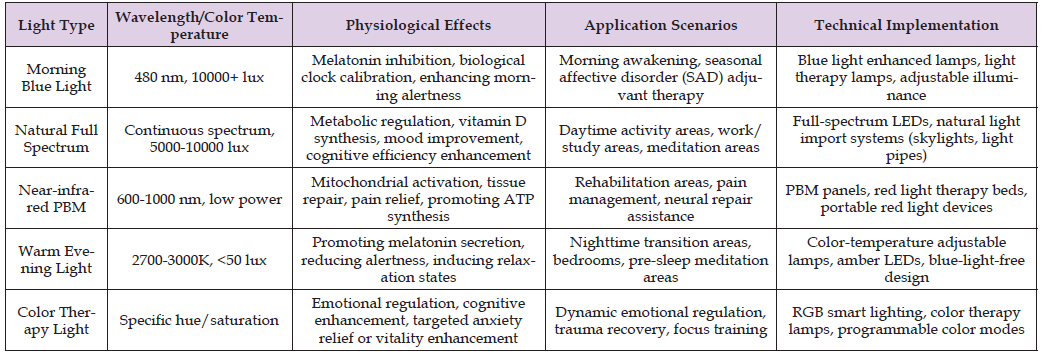
Table 5:
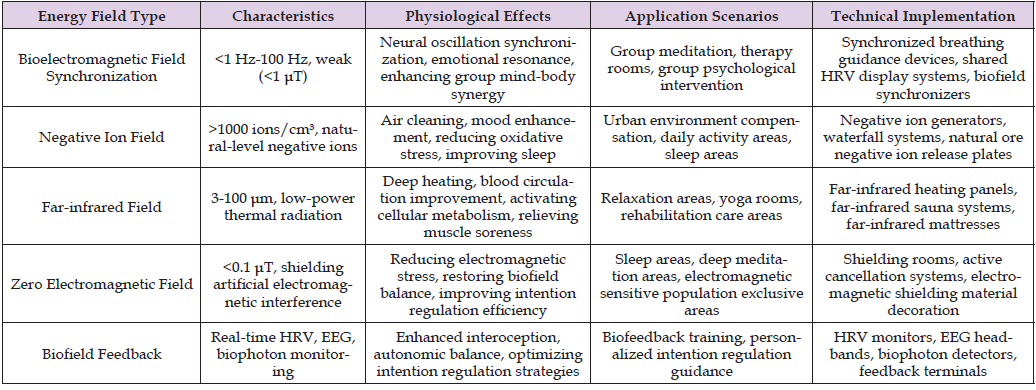
Scenario-Based Integrated Configuration Solutions
Based on systematic configuration of four major physical environmental elements, combined with needs of different intention regulation scenarios, construct five full-scenario integrated configuration solutions, achieving multimodal synergy of sound waves, magnetic fields, light waves, and energy fields, maximizing physiological effects of intention regulation. All scenario parameters have undergone preliminary clinical validation and can be fine-tuned according to individual differences.
Scenario One: Daily Mindfulness Meditation Room
a) Sound: Theta binaural beats (6 Hz) + natural rain sounds, volume controlled at 40-50 dB, reverberation time 0.8-1.2 seconds, creating a soothing meditation atmosphere, assisting in inducing theta brainwaves, enhancing meditation depth
b) Magnetic Field: Schumann resonance generator (7.83 Hz) + grounding floor, environmental magnetic field strength maintained at 0.03-0.06 mT (close to natural geomagnetism), shielding artificial electromagnetic interference, enhancing biological rhythm synchronization
c) Light: Adjustable color temperature 3000-4000K, low illuminance 200-300 lux, green/blue wall auxiliary color regulation, using full-spectrum LEDs, avoiding blue light interference, inducing relaxed alert states
d) Energy Field: Negative ion generator output concentration >2000 ions/cm³ + living plant wall, maintaining air humidity 40-50%, enhancing biofield and natural environment synergy, improving interoceptive sensitivity
e) Biofeedback: Real-time HRV display terminal, synchronously feedback autonomic nerve balance state, guiding users to adjust intention focus, optimizing meditation effects
Scenario Two: Deep Therapy/Rehabilitation Room
a) Sound: Delta-Theta transition (4-6 Hz) + isochronic tones, volume controlled at 30-40 dB, reverberation time 0.6-0.8 seconds, reducing external interference, assisting in inducing deep relaxation and trauma memory integration
b) Magnetic Field: Low-frequency PEMF (15-75 Hz, 2 mT) therapy pad + static magnetic therapy (0.1 T), targeting injury sites, while activating Schumann resonance background magnetic field, promoting tissue repair and neural recovery
c) Light: Near-infrared PBM (800-850 nm) local irradiation + warm ambient light 2700K, illuminance <50 lux, avoiding strong light stimulation, PEMF and near-infrared light synergy, enhancing mitochondrial activation effects
d) Energy Field: Far-infrared heating panel (3-10 μm) local heating + ZEMF shielding environment (<0.1 μT), reducing electromagnetic stress, promoting deep blood circulation, accelerating rehabilitation process
e) Biofeedback: Multi-channel (HRV+EEG+GSR) closed-loop neurofeedback system, real-time monitoring physiological indicator changes, dynamically adjusting environmental parameters and intention regulation strategies, improving treatment precision
Scenario Three: Work/Study Focus Area
a) Sound: Beta binaural beats (15-20 Hz) + 40 Hz Gamma waves, volume controlled at 50-60 dB, reverberation time 1.2-1.5 seconds, enhancing cognitive alertness and information processing efficiency, assisting in improving focus
b) Magnetic Field: Maintaining natural geomagnetic environment (0.03-0.06 mT), installing electromagnetic shielding devices, avoiding Wi-Fi, mobile phones and other artificial electromagnetic interference (controlled intensity <0.5 μT), ensuring stable cognitive function
c) Light: High illuminance full spectrum >1000 lux, color temperature 5000K, blue wall accents (short-wavelength light calming effect, avoiding anxiety), using natural light import system, promoting vitamin D synthesis and cognitive enhancement
d) Energy Field: High negative ion concentration >3000 ions/ cm³ + natural ventilation system, ventilation 2-3 times per hour, reducing brain fatigue, improving attention duration, relieving learning and work pressure
e) Biofeedback: Attention monitoring terminal (based on EEG theta/beta ratio), real-time feedback focus state, when theta waves rise, automatically adjusting sound wave and light wave parameters, guiding users to restore focus
Scenario Four: Sleep Optimization Bedroom
a) Sound: Delta binaural beats (2-3 Hz) + pink noise, volume <30 dB, reverberation time <0.6 seconds, assisting in inducing deep sleep (Delta brainwaves), reducing nighttime awakenings
b) Magnetic Field: Schumann resonance (7.83 Hz) full coverage + complete shielding of artificial electromagnetic fields (<0.1 μT), using grounding bed sheets, accelerating static electricity release, improving HRV, promoting melatonin secretion
c) Light: Nighttime zero blue light amber lighting (<10 lux), avoiding melatonin inhibition; morning progressive dawn simulation (from 2700K gradually increasing to 10000 lux, 480 nm blue light enhancement), naturally awakening biological clock
d) Energy Field: Grounding bed sheets + far-infrared mattress (low temperature mode, 38-40℃), maintaining negative ion concentration >1000 ions/cm³, creating zero electromagnetic stress environment, improving sleep quality (extending deep sleep duration 15-20%)
e) Biofeedback: Sleep monitoring system (HRV+activity), real- time monitoring sleep stages at night, dynamically adjusting sound wave and magnetic field parameters, optimizing wake-up mode according to sleep quality in morning
Scenario Five: Group Meditation/Yoga Hall
a) Sound: Synchronized breathing rhythm (0.1 Hz) + live sound healing instruments (such as singing bowls, crystal bowls), volume controlled at 40-50 dB, reverberation time 1.5-2.0 seconds, promoting group breathing and intention synchronization
b) Magnetic Field: Large-range Schumann resonance coverage (7.83 Hz, <1 μT) + central grounding electrode, ensuring uniform magnetic field throughout the space, promoting group bioelectromagnetic field synchronization, enhancing emotional resonance
c) Light: Dynamic color programming system (blue/green for meditation phase, coral orange for yoga phase, lavender purple for relaxation phase) + natural light maximization design (skylights + light pipes), automatically switching according to group activity process
d) Energy Field: Shared HRV display system (group coherence visualization) + large-area plant wall, real-time display of group biofield synchronization state, enhancing group cohesion, improving group effects of intention regulation
e) Biofeedback: Group biofield synchronization monitoring terminal, analyzing group EEG and HRV synchronization rates, guiding groups to adjust intention focus and breathing rhythm, achieving group mind-body synergy
The construction of the mind-body physiology wellness technology system marks the paradigm shift of psychosomatic medicine from empirical practice to precision medicine, from reductionism to systems theory, and from single-technique approaches to ecological integration. Reviewing the century-long journey, we see a clear evolutionary trajectory: from Jacobson’s electromyography measurements, Schultz’s self-suggestion formulas, to Green’s biofeedback revolution, Kabat-Zinn’s standardization of mindfulness-based stress reduction, to contemporary neuroimaging mechanistic elucidation and quantum biology hypothesis exploration-intention-based physiological regulation has moved from mysticism to science, from generalization to precision, from singularity to integration. This evolutionary process is essentially a process of deepening human understanding of mindbody relationships, and also a process of continuous integration of scientific technology and traditional wisdom.The mind-body physiology technology system constructed in this paper contains three interrelated levels, forming a complete closed loop of “mechanism-technology- environment”:
At the foundational mechanism level, we reveal the six-level mechanistic model: multi-level regulation of the neuro-endocrine-immune network, structural and functional changes in neuroplasticity, neural foundations of interoception and placebo effects, integration mechanisms of the BERN framework, field-based models of EMI theory, and hypothesis exploration of quantum biology. Among them, the core insight of the BERN framework is that different mind-body intervention techniques exert effects through shared central neural reward circuits, with nitric oxide as a common effector molecule, activating endogenous self-repair systems, providing a unified mechanistic explanation for different forms of intention regulation techniques [2].
EMI theory reconceptualizes consciousness as an evolving interactive network of energy oscillations, material substrates, and information patterns, breaking through the limitations of traditional neural reductionism, providing broader theoretical horizons for mind-body physiology, extending intention regulation research to the quantum biology level [3].
At the technical classification level, we propose the “intention target domain-regulation mechanism layer-application target system- operational characteristics-application purpose” five-dimensional orthogonal classification model, covering four levels of molecular- genetic, cellular-tissue, organ-system, and holistic integration, as well as precision targeting techniques for eight major physiological systems, providing a systematic theoretical framework for precision intervention. The innovation of this classification model lies in breaking through the limitations of traditional “generalized classification” of intention intervention techniques, achieving precise positioning of intention regulation techniques. According to individual physiological states and intervention goals, different dimensional technical elements can be combined to formulate personalized intention regulation solutions, improving the targeting and stability of intervention effects.
At the environmental support level, we establish systematic configuration solutions for four major physical elements of sound waves, magnetic fields, light waves, and energy fields, forming a multimodal synergistic environmental enhancement system. This system not only considers traditional physical environmental parameters but also integrates frontier explorations of biofield physiology and quantum biology, treating the environment as an extension system of intention regulation. By optimizing environmental parameters, it reduces the cognitive load of intention regulation, enhances neuroplasticity, maintains physiological rhythm stability, amplifies therapeutic effects, and provides optimal external conditions for intention regulation. Five scenario-based integrated configuration solutions further achieve precise matching of environmental elements with intention regulation scenarios, making the technology system highly practically operable.
The core innovation of this system lies in breaking through the limitations of existing psychosomatic medicine, forming six distinctive characteristics:
1. Anatomical Precision: Based on modern anatomical localization, clearly defining neural pathways and target organs of intention regulation, rather than vague “energy centers” or “meridians,” giving intention regulation scientific verifiability;
2. Functional Targeting: Formulating precise regulation goals and technical solutions for specific organ/system functions, rather than generalized relaxation or stress reduction, improving the targeting of intervention effects;
3. Mechanistic Scientificity: Based on frontier research of neuro- endocrine-immune networks and quantum biology, elucidating multi-level mechanisms of intention regulation, rather than metaphysical theories, ensuring the scientific rigor of the technology system;
4. Plasticity Induction: Achieving lasting neural structural changes through repeated training, rather than short-term physiological effects, helping individuals establish long-term stable self-regulation capabilities;
5. Environmental Integration: Treating the physical environment as an extension system of intention regulation, achieving synergistic enhancement of multimodal environmental elements with intention regulation, expanding the boundaries of mind-body intervention;
6. Theoretical Inclusivity: Integrating frontier explorations such as the BERN framework, EMI theory, and four-field quantum model, forming an inclusive theoretical framework that accommodates both traditional mindfulness meditation practical wisdom and modern scientific research achievements, achieving integration of tradition and modernity.
Although the mind-body physiology wellness technology system constructed in this paper already has a complete theoretical framework and practical foundation, it still has certain limitations: empirical research on quantum biology hypotheses is still insufficient, biofield detection technology still needs optimization; formulation of personalized intervention plans lacks deep support from artificial intelligence and other technologies; large-sample, multi-center clinical validation has not yet been fully carried out. Based on this, combined with development trends in psychosomatic medicine, neuroscience, and quantum biology, the following future research directions are proposed: First, deepening mechanistic research. Further explore molecular mechanisms of intention regulation, establish multi-omics (genomics, transcriptomics, proteomics, metabolomics) integrated biomarker systems, clarify molecular targets of different intention regulation techniques; validate quantum biology hypotheses, optimize biophoton detection technology, explore the role mechanisms of biophotons and quantum coherence in intention regulation, clarify the rationality of the four-field quantum model; deeply research synergistic mechanisms of various elements of the BERN framework, elucidate regulatory pathways of nitric oxide as a common effector molecule, and improve the multi-level mechanistic model of intention regulation.
Second, developing precision intervention. Based on artificial intelligence and machine learning technologies, combined with individual physiological parameters (EEG, HRV, genetic polymorphisms, etc.), psychological states, and intervention goals, develop personalized intervention plans, achieving “one person, one strategy” precision psychosomatic medicine; establish efficacy prediction models, through big data analysis, optimize intervention parameters (such as sound wave frequency, magnetic field intensity, meditation duration), improving predictability of intervention effects; develop portable wearable devices (such as smart meditation headbands, HRV monitoring bracelets) and closed-loop feedback systems, achieving real-time monitoring and dynamic adjustment of intention regulation, improving convenience and effectiveness of individual self-regulation. Third, innovating technology integration. Promote deep integration of virtual reality (VR), augmented reality (AR), neurofeedback, brain-computer interfaces (BCI) and other technologies with traditional intention training, develop immersive intention regulation environments, enhance intention focus, and improve intervention effects; explore “intention-computer-physiology” closed-loop regulation systems, through brain-computer interfaces real-time collecting intention-related neural signals, analyzed by computers, automatically adjusting environmental parameters and intervention plans, achieving intelligent intention regulation; combine digital therapeutics, develop standardized intention regulation training programs, expanding the application scope of the technology system.
Fourth, expanding clinical applications. Conduct large-sample, multi-center randomized controlled trials, validating clinical efficacy of environmental support systems in different populations (healthy populations, chronic disease patients, mental illness patients, elderly), different diseases (cardiovascular diseases, nervous system diseases, autoimmune diseases, anxiety and depression disorders); establish standardized intervention plans and efficacy evaluation systems, clarifying indications, contraindications, and optimal doses of intervention, promoting mind-body physiology into mainstream medical practice; conduct long-term follow-up studies, evaluating long-term efficacy and safety of intention regulation technologies, providing scientific basis for clinical application. Fifth, enhancing theoretical integration. Further integrate frontier explorations such as the BERN framework, EMI theory, and four-field quantum model, resolve contradictions and conflicts between different theories, forming a more unified and complete mind-body physiology theoretical system; explore fundamental laws of consciousness-physiology interaction, deeply research the essence of mind-body relationships, providing scientific foundation for understanding the origin and function of human consciousness; strengthen interdisciplinary cooperation, promote deep integration of psychosomatic medicine, neuroscience, quantum physics, environmental science, computer science and other disciplines, promoting interdisciplinary development of mind-body physiology [84-87].
Mind-body physiology is becoming a bridge connecting traditional meditation wisdom with modern precision medicine, connecting neuroscience with quantum physics, and connecting individual health with ecological integration. On this bridge, the ancient wisdom of “unity of form and spirit” has gained contemporary interpretation through neuroscience, while modern precision medical technology has found a return path to holistic health-it no longer views body and consciousness as independent parts, but as an organic whole of mutual interaction and influence. Through active regulation of intention, combined with environmental auxiliary enhancement, it activates individuals’ inherent self-repair potential, achieving harmony and integrity of body and mind. In the future, with deepening mechanistic research, advancing technological innovation, and enhanced theoretical integration, the mind-body physiology wellness technology system will continue to improve, not only contributing more possibilities to human health endeavors but also promoting human understanding of mind-body relationships and the nature of consciousness to new heights. As the BERN framework reveals, the essence of psychosomatic medicine is activating each person’s inherent self-healing potential [2]. And the ultimate mission of mind-body physiology is to reveal the scientific foundation of this potential, develop technical methods to activate this potential, create environmental conditions to support this potential, so that everyone can master their own health, achieve harmony and integrity of body and mind, and move toward a healthier, more autonomous, and more fulfilling life..

International Association of Landscape Archaeology, Czech Glass Society, Czech Republic

Department of Chemistry, Semenov Institute of Chemical Physics, USSR Academy of Sciences, Moscow, Russia

Neurology, LA BioMed Research Institute, USA

Associate Professor at Department of Breast and Thyorid Surgey, Chongqing General Hospital, China

Professor of Nuclear Medicine, Faculty of Medicine and Surgery, University of Milan, Milan, Italy





 Abstract
 PDF
PDF



























