info@biomedres.us
+1 (502) 904-2126
One Westbrook Corporate Center, Suite 300, Westchester, IL 60154, USA
Site Map
 ISSN: 2574 -1241
ISSN: 2574 -1241
ISSN: 2574 -1241
Received: February 09, 2026; Published: February 18, 2026
*Corresponding author: SM Czop, OssDsign, Inc. Columbia MD 21044, USA
DOI: 10.26717/BJSTR.2026.64.010097
Lisfranc fractures present unique challenges to surgeons due to the complex anatomy and small irregular bone structures where fracture reduction and realignment must be precise to achieve an optimal result for the patient. The choice of surgical technique, internal fixation used, and choice of bone graft (if fusion is required) are key aspects to consider for successful treatment. The following case describes a complicated Lisfranc fracture in a morbidly obese women where TMT fusion and ORIF were achieved with plate and screw fixation and a latest generation silicated calcium phosphate bone graft. The surgery resulted in complete pain relief, anatomical fracture reduction, and correction of alignment in the Lisfranc complex.
Keywords: Lisfranc Fracture; Synthetic Bone Graft; Catalyst, Foot and Ankle; Fusion; Silicated Calcium Phosphate
Abbreviations: BMI: Body Mass Index; TMT: Tarsometatarsal; TMTJ: Tarsometatarsal Joint; ORIF: Open Reduction and Internal Fixation; PACU: Post Anesthesia Care Unit; ROM: Range of Motion; NWB: Non-Weight Bearing; MTP: Metatarsophalangeal
One of the more challenging acute injuries facing foot and ankle surgeons are Lisfranc fractures (injuries to the tarsometatarsal [TMT] joint complex). This cluster of small joints between the metatarsals and cuneiforms/cuboid are responsible for the transfer of body weight during walking, running, or push-off (e.g., climbing stairs) [1]. Treatments can vary significantly depending on the nature of the injury and the general health of the patient [2-4]. When surgery is indicated, some of the difficulties involved include very thin soft tissue coverage (limited surgical exposure, higher risk of wound complications, infection, nerve injury), and fixation challenges due to the small irregularly shaped bones, which require precise placement and alignment of instrumentation to achieve the best long-term outcome for the patient [5,6]. There is limited data to demonstrate the superiority of any given fixation system, however most reported successful case series include plate and screw fixation which provide greater stability and anatomically correct reduction [1,5-7]. Should the surgeon determine that TMT fusion is required to achieve or enhance precise anatomic alignment, the use of bone grafting has been shown to significantly reduce the rate of non-union [7,8]. Revision Lisfranc fracture surgery can be quite complicated due to need to both undo previous surgical efforts and then restore proper alignment and function [1,5]. New developments in synthetic bone grafts may provide the surgeon a better alternative to either harvested autograft or commercially available allografts [9]. The synthetic bone graft used in this case (OssDsign Catalyst® Bone Graft) was selected specifically for its ease of handling during this demanding and precise surgery as well as performance characteristics specifically designed to stimulate bone growth in challenging environments [10-13].
The patient is a 34-year-old morbidly obese female (height 65 in, weight 372 lbs., BMI-61) presenting with disabling right foot pain resulting from a fall (stumbling while stepping down off a porch), where she was taken to the ER and received pain medication which the patient claimed did not provide adequate relief. The surgeon saw her the following day, and X-rays showed a comminuted fracture of the second metatarsal base with intra-articular involvement and slight malalignment of the medial cuneiform with the first metatarsal base. There were also comminuted fractures involving the medial cuneiform, lateral cuneiform, and the cuboid bones, consistent with Lisfranc fracture. Other than morbid obesity, the patient history did not reveal any other significant co-morbidities. The risks and benefits of the surgery and length of recovery were discussed at length with the patient and the surgery was scheduled. The surgery consisted of TMT fusion of the first, second, and third TMTJ, and open reduction and internal fixation (ORIF) of the cuboid bone. At all times during the surgery particular care was used to avoid any damage to neurovascular structures. The first TMTJ was prepared by distraction and fenestration to allow for the placement of Catalyst Bone Graft substitute to promote fusion at the site and a Paragon 28 Lisfranc plate (Zimmer Biomet, Warsaw, IN) was inserted over the fusion site with both locking and non-locking screws.
The position and correct placement of the construct was confirmed using fluoroscopy. The second TMTJ joint was prepared using a separate incision however the second metatarsal base was in severe comminution and required a cannulated “home run” screw (provides axial compression across a joint) from the second metatarsal to the medial cuneiform. The medial and intermediate cuneiform surface was prepped for fusion and both Catalyst bone graft and a Paragon 28 Lisfranc plate were again used to secure the construct. The third TMTJ was similarly prepared with Catalyst used to promote fusion at the site. In this case a Paragon 15mm staple was used to complete the construct with adequate compression. The first and second TMTJ fusions were performed through separate incisions with the third using the same incision as the second. A separate incision was made for the ORIF of the cuboid bone where any hematoma or unwanted debris were cleared, the fracture was then reduced and held temporarily with a K-wire until a Paragon 28 cuboid fracture plate was placed on the dorsal aspect of the cuboid and accompanying screws were placed using standard lag technique. Intraoperative fluoroscopy showed adequate reduction and proper placement of all internal fixation. Both deep and subcutaneous wounds were closed, and the patient tolerated the procedure well. The procedure took approximately 3 hours with blood loss of only 100 ml.
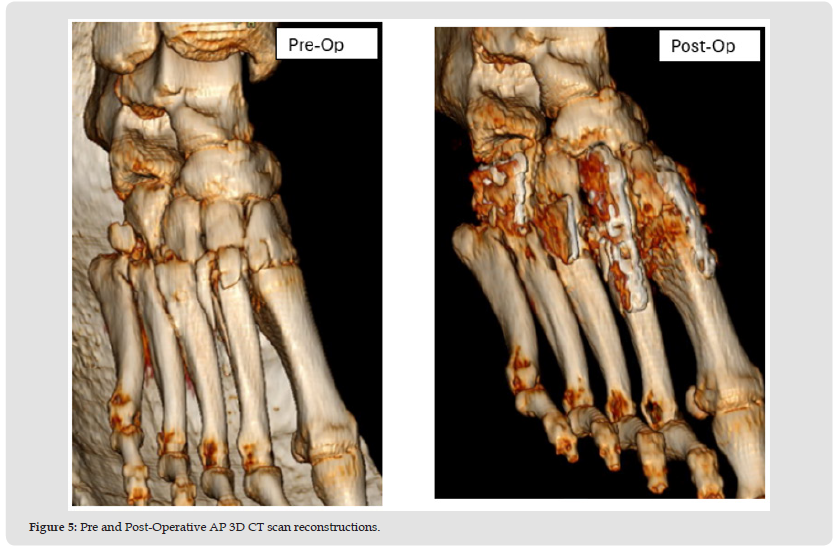
After a brief period in PACU the patient was discharged from the hospital and returned home. The patient was followed closely post-operatively. Pain, swelling, and ROM continuously improved at each visit while the patient was NWB. At the two-month follow-up some early consolidation of the bone graft was observed at the TMTJ grafted sites as evidenced on X-ray, with no pain following ROM of the mid-tarsal joint. At this point, the patient was instructed to begin partial weight bearing with her boot and a walker. Narcotic pain medication was no longer needed by the patient and discontinued by 10 weeks. At 12 weeks a CT scan showed bony bridging at the arthrodesis sites along with appropriate reduction of the Lisfranc complex. At 14 weeks the patient had transitioned to weight bearing in a regular shoe and reports no pain on physical examination. From this point the patient will return for follow-up only if needed.
A high degree of planning and surgical skill are required to treat complex Lisfranc fractures, particularly in morbidly obese individuals [3]. The surgical technique and precise use of the appropriate internal fixation must ensure necessary stabilization to maintain the desired realignment post-operatively, especially when bony fusion is needed within the construct [3,5,6]. The use of Catalyst Bone Graft in this complex surgery was advantageous to both the surgeon and the patient. In addition to its ease of handling, its mechanism of action combines surface characteristics similar to natural bone surface geometry, and chemical enhancement (silicate substituted calcium phosphate in optimal concentration) allow for both endochondral and intramembranous ossification pathways [10]. This dual pathway mechanism, particularly endochondral ossification, is particularly helpful when rapid bone formation, vascularization, and mechanical strength are needed [10,13].
Early bone graft consolidation was noted in this patient as early as 8 weeks post-operatively and was complete as evidenced on CT scan by 12 weeks. The early graft consolidation in this case is both interesting and encouraging. This case sets the stage for further research with long term follow-up using Catalyst Bone Graft for any foot and ankle procedure where bone graft is required for predictable and rapid healing (Figures 1-5).
Figure 1
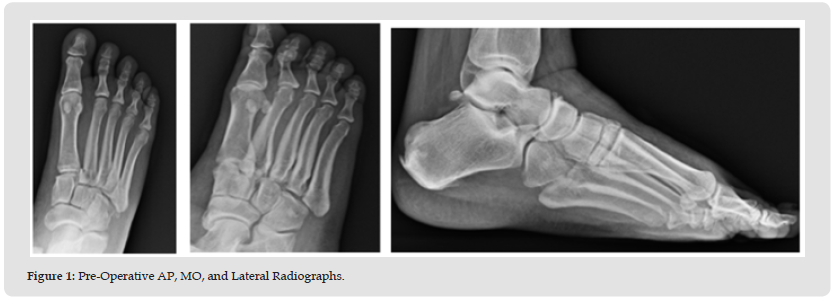
Figure 2
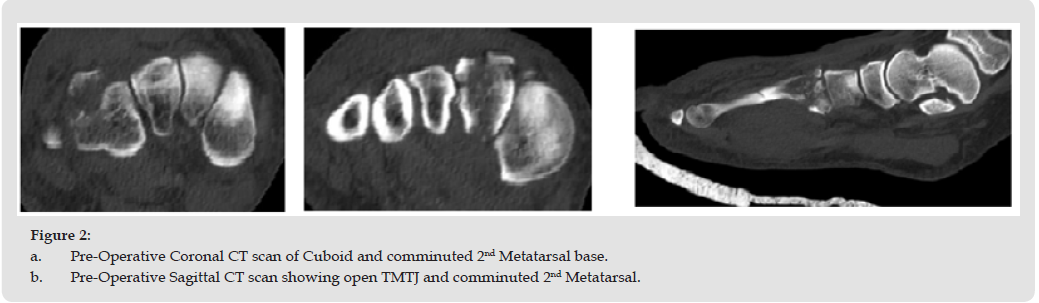
Figure 3
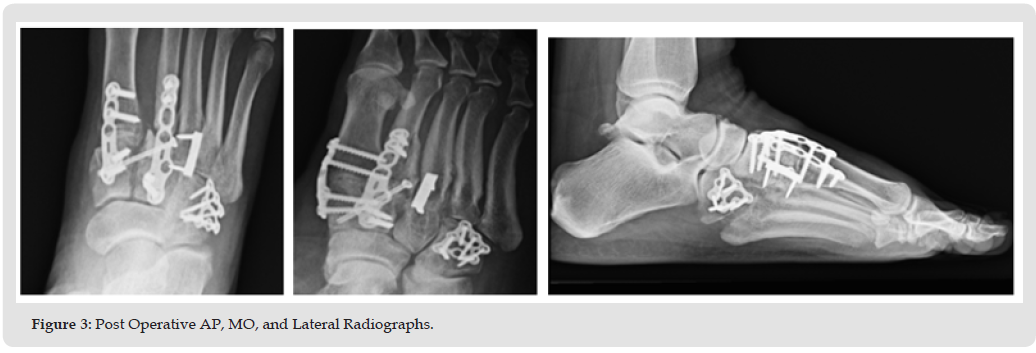
Figure 4
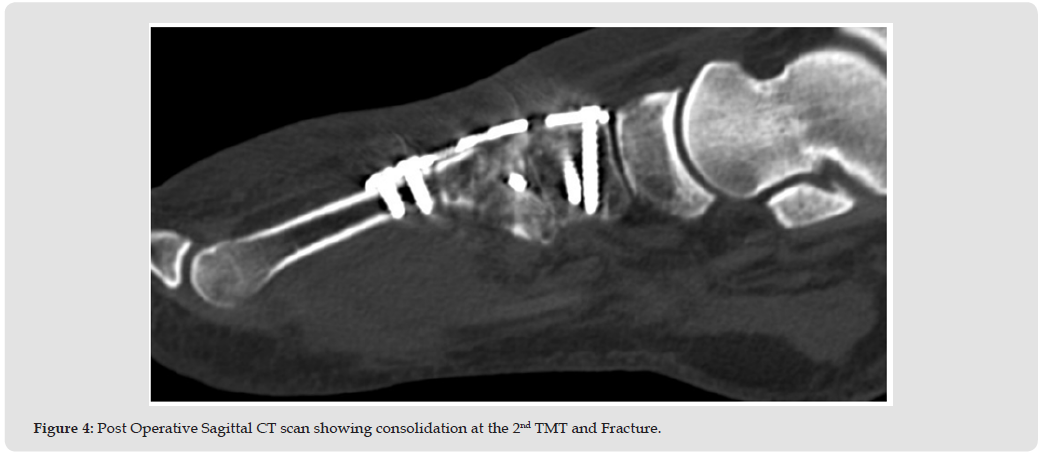
Figure 5

International Association of Landscape Archaeology, Czech Glass Society, Czech Republic

Department of Chemistry, Semenov Institute of Chemical Physics, USSR Academy of Sciences, Moscow, Russia

Associate Professor at Department of Breast and Thyorid Surgey, Chongqing General Hospital, China

Professor of Nuclear Medicine, Faculty of Medicine and Surgery, University of Milan, Milan, Italy

Department of Pharmaceutical Sciences, South University School of Pharmacy, USA





 Abstract
 PDF
PDF



























