info@biomedres.us
+1 (502) 904-2126
One Westbrook Corporate Center, Suite 300, Westchester, IL 60154, USA
Site Map
 ISSN: 2574 -1241
ISSN: 2574 -1241
ISSN: 2574 -1241
Received: February 02, 2026; Published: February 16, 2026
*Corresponding author: Tomáš Hájek, Expert consultant of the Guild of Tinsmiths, Roofers and Carpenters of the CR, International Association of Landscape Archaeology, Czech Glass Society, Czech Republic
DOI: 10.26717/BJSTR.2026.64.010091
Solar power engineering technology is currently regularly applied in renovation or transformation of monuments. Synergies between solar power engineering and monument care principles outweigh conflicts. However, mass development of photovoltaics is a phenomenon of a quite different category. Compared to the traditional, longterm use of solar power in architecture of historical environment, mass development of photovoltaics is far more offensive from the perspective of the pressure on overall transformation of the character of historical environment of settlements. In addition, it is expressed in almost mass construction of solar parks in a cultural landscape.
Great numbers of monuments in urbanized environments are specific to Europe and European landscape is characterized by its long historical development and many cultural layers. Renewable sources in relation to the historical environment in general are increasingly described and discussed in a wide body of scientific literature. Naturally, this happens in the European context, but the trend towards expansion to the global scale can be observed [1]. When it comes to solar power engineering with special focus on photovoltaics, the character of scientific literature reflects the character of this multifaceted topic from the developmental, as well as horizontal perspective. In order to capture the basic outlines of the complex system of synergies and conflicts between development of solar power engineering, in particular the mass development of photovoltaics, and the principles of monument care, one has to proceed methodically, following individual steps:
A. Understanding solar power engineering as a complex should be the first step; this includes measures in creative architecture, in construction and technical sciences, as well as measures in other fields. From the evolutionary perspective, photovoltaics then may be viewed differently from a natural part of solar power engineering.
B. The second step must involve comparison of solar power engineering against wind power engineering. Both, solar power engineering and wind power engineering may contribute significantly to decarbonization targets, as gradually determined by global communities. However, major differences can be identified between these two complexes.
C. In the third step, the study focuses on the current mass development of photovoltaics, which seems to escape the boundaries of the traditional solar complex, and the relationship of this mass development and monument values of historical environments. The mass development of photovoltaics will be discussed in two aspects:
• As mass development of photovoltaics in an urbanized historical environment;
• As mass development of solar parks in a cultural landscape.
This study draws on the following materials:
a. Tomáš Hájek (2024) On the Topic of Use and Transformation of Historic Monuments. Open Access Journal of Archaeology & Anthropology, Iris Publishers, DOI: 10.33552/OAJAA. 2024.05.00062, Volume 5 - Issue 5, October, 2024; Reprint.
b. Tomáš Hájek (2025) On Mutual Relationships Between Medical Sciences and Cultural Heritage Care. Biomedical Journal of Scientific & Technical Research, DOI: 10.26717/ BJSTR.2025.61.009556, Online Booklet Edition, March, 2025 + Reprint Copies.
c. Tomáš Hájek (2025) Level of Monument Protection and Degree of Conflict in Relationship between Wind Energy and Monument Care. Biomedical Journal of Scientific & Technical Research, DOI: 10.26717/BJSTR.2025.62.009698, Online Booklet Edition, Juni, 2025 + Reprint Copies.
d. Literature research entitled: “Renewable Energy Sources and Monument Care (Conflicts and Interactions between Development of Solar Power Engineering and Monument Care)” has been completed; this research was carried out in Czech, English, German and Italian; the period covered by the research is 2001- 2025.
e. Literature research entitled: “Solar Park in Landscape and its Potential Disruptive Impact on Landscaping Character of Cultural Landscape” has been completed; this research was carried out in Czech, English, German and Italian; the period covered by the research is 2000-2025.
Table 1: Selected components of the solar complex [2].
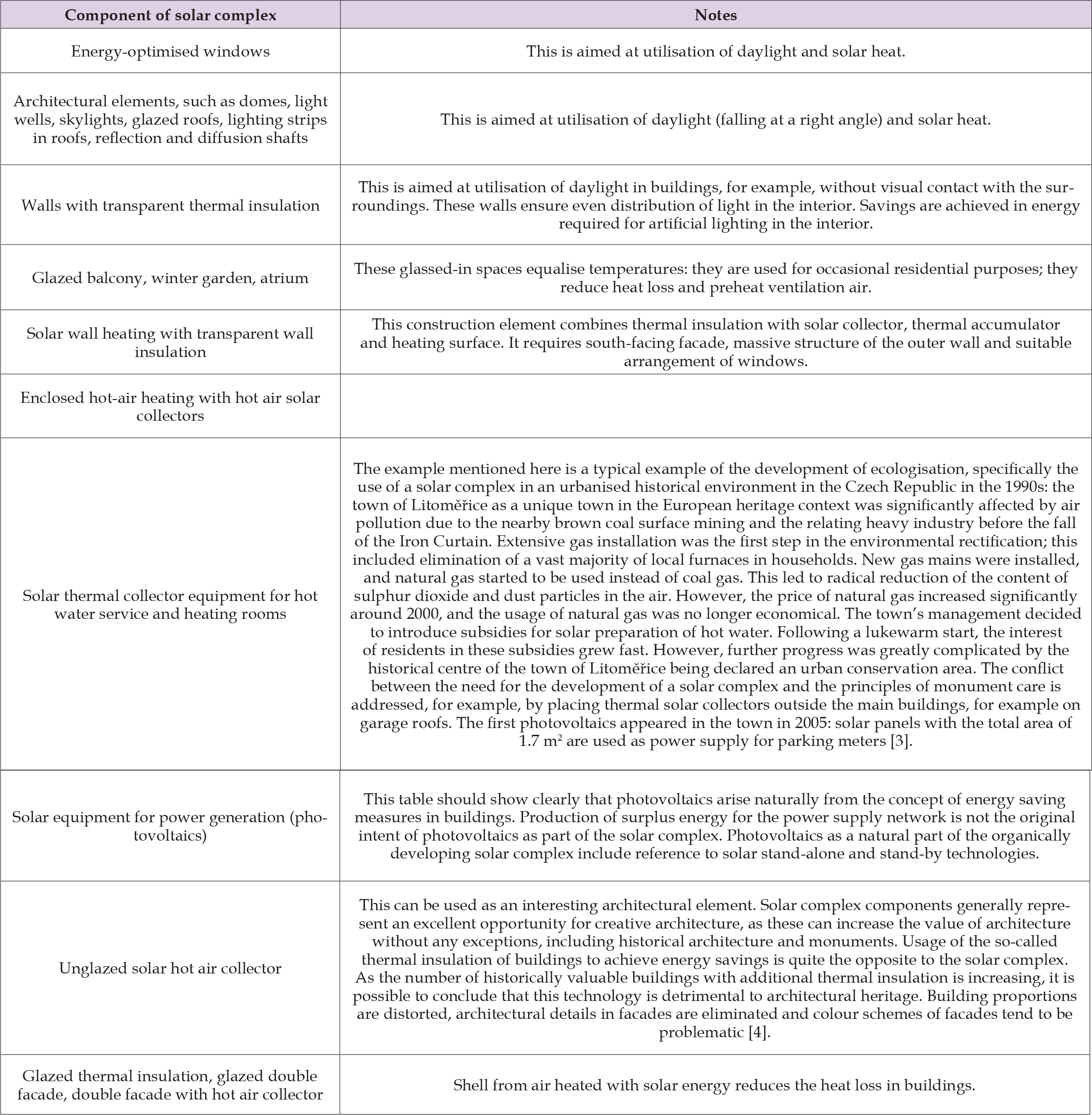
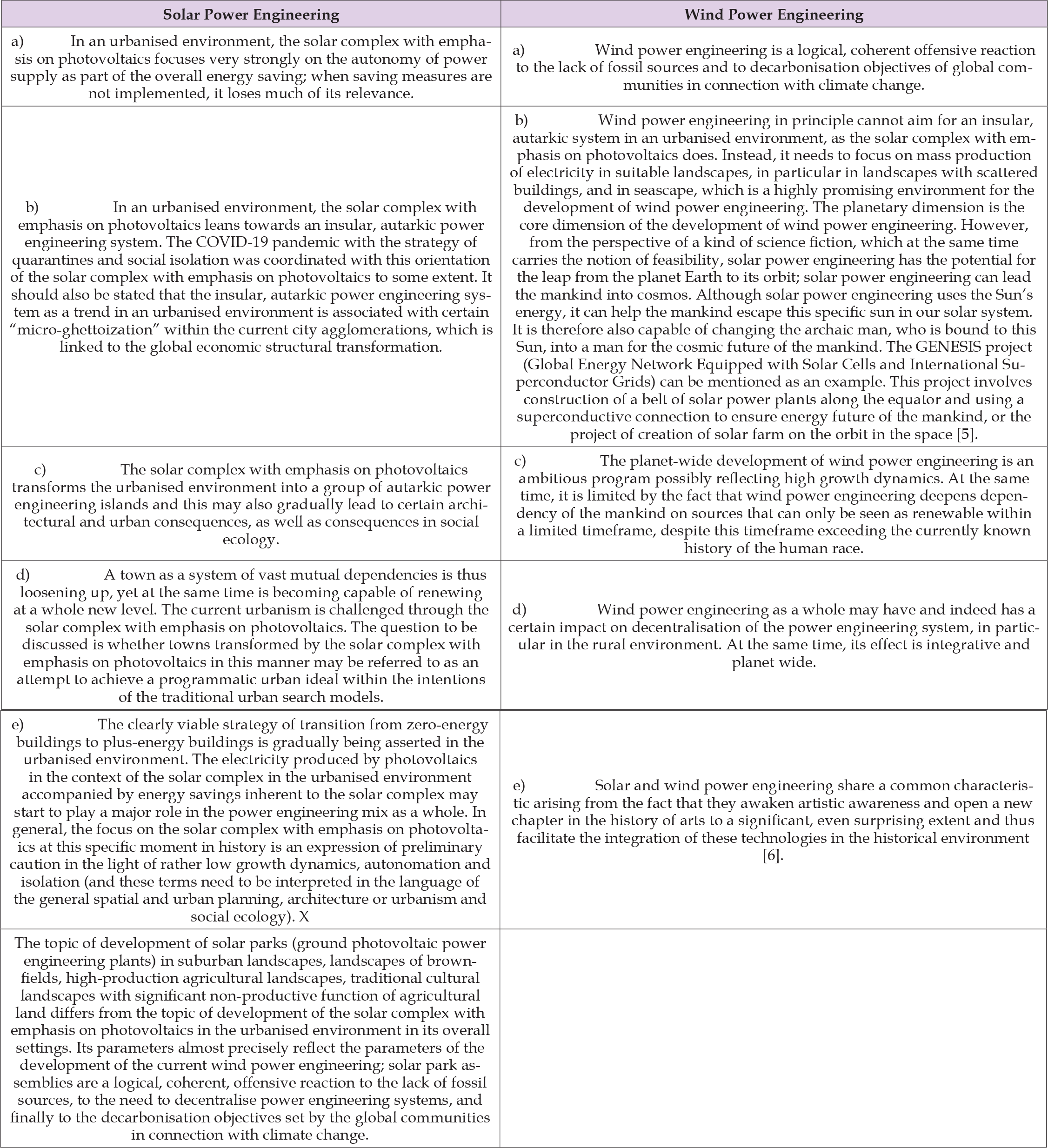
Table 2: Comparison of solar power engineering with wind power engineering. The table characterised solar power engineering as the solar complex with emphasis on photovoltaics. The table is therefore chronologically placed in the emergence of the current mass development of photovoltaics and thus connects with the overall objectives of this study.
2020s represent a critical period.
Firstly, to quote a study by Stefania Di Medici entitled Italian Architectural Heritage and Photovoltaic Systems. Matching Style with Sustainability: “Regarding the built heritage, in particular, the Green Deal highlights the need to launch a renovation wave of public and private buildings, whereas the current annual renovation rate in the Member States varies only between 0.4 and 1.2%. Strengthening the rehabilitation goal of the building stock is enshrined in the Commission’s October 2020 Communication entitled “A Renovation Wave for Europe-greening our buildings, creating jobs, improving lives.” It targets a doubling of annual energy renovation rates over the next ten years, improving people’s quality of life, enhancing their living spaces, reducing Europe’s Greenhouse Gas Emissions (GHG), and generating an extra 160,000 green jobs in the construction industry. The Communication highlights how the COVID-19 pandemic is changing our lifestyles and future prospects. Home became our primary living environment, revealing its inadequacy to meet today’s needs. Millions of Europeans are using their homes as offices for those teleworking, schools for children and teens, university classrooms, spaces for leisure, reading, playing, and even online shopping [7].”
Secondly, this study should include a direct testimony showing how significantly the public interest in production of energy from renewable sources is starting to be preferred in the European Union over other interests, including the public interest in the protection of cultural heritage: “What a small earthquake was triggered by Regulation of the Council (EU) 2022/2577, which determines the framework for accelerating the introduction of energy from renewable sources, when Article 3 of the Regulation introduced a disprovable assumption of the prevailing public interest in equipment for the production of energy from renewable sources (despite the legal doctrine traditionally stating that legal regulation must never allow for any of the balanced public interests to prevail) [8].”
Thirdly, the study presents a quote from the Annual Report of the Solar Association operating in the Czech Republic: “…year 2022 was a turning point not only for us, but for the power engineering industry as such. The geopolitical events along with the high volatility of electricity prices confirmed our long-term warnings that the power engineering industry in its current form was not sustainable or safe. This period represented a turning point for Czech photovoltaics, with the sector growing at a multiple rate compared to 2021 and with almost 34,000 new solar power plants being connected to the network. The general public realised the options presented by having one’s own source of clean electricity and the government with the parliament finally began to support solar systems not only on roofs of family houses openly. The Solar Association achieved a major success in asserting an amendment to the legal regulations, according to which photovoltaics over 1 MW were included in public interest and public technical infrastructure, which will translate into significantly easier construction of these systems [9].”
Table 3: Analysis of synergies and conflicts between mass development of photovoltaics in the urbanised historical environment and monument care principles.
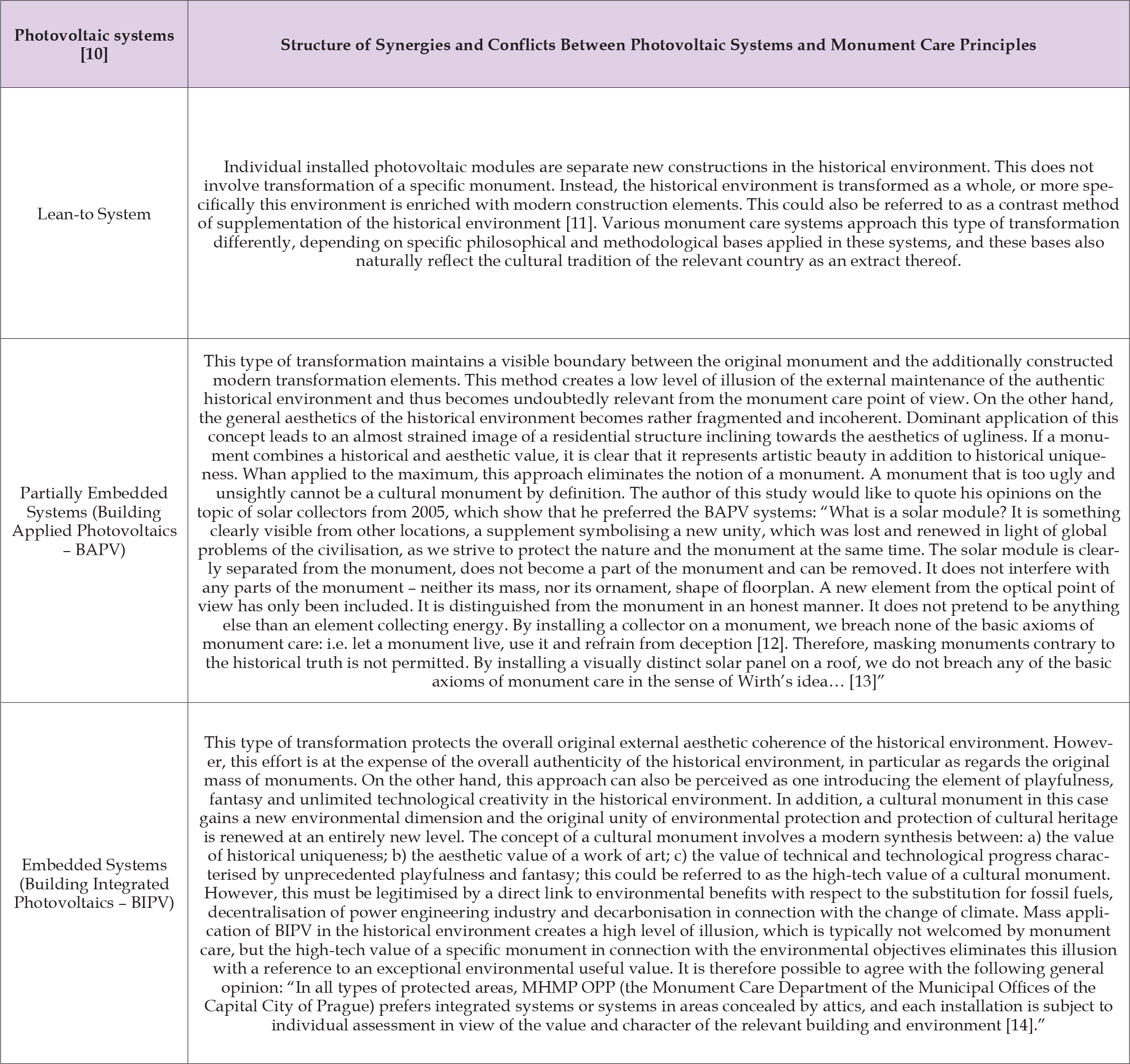
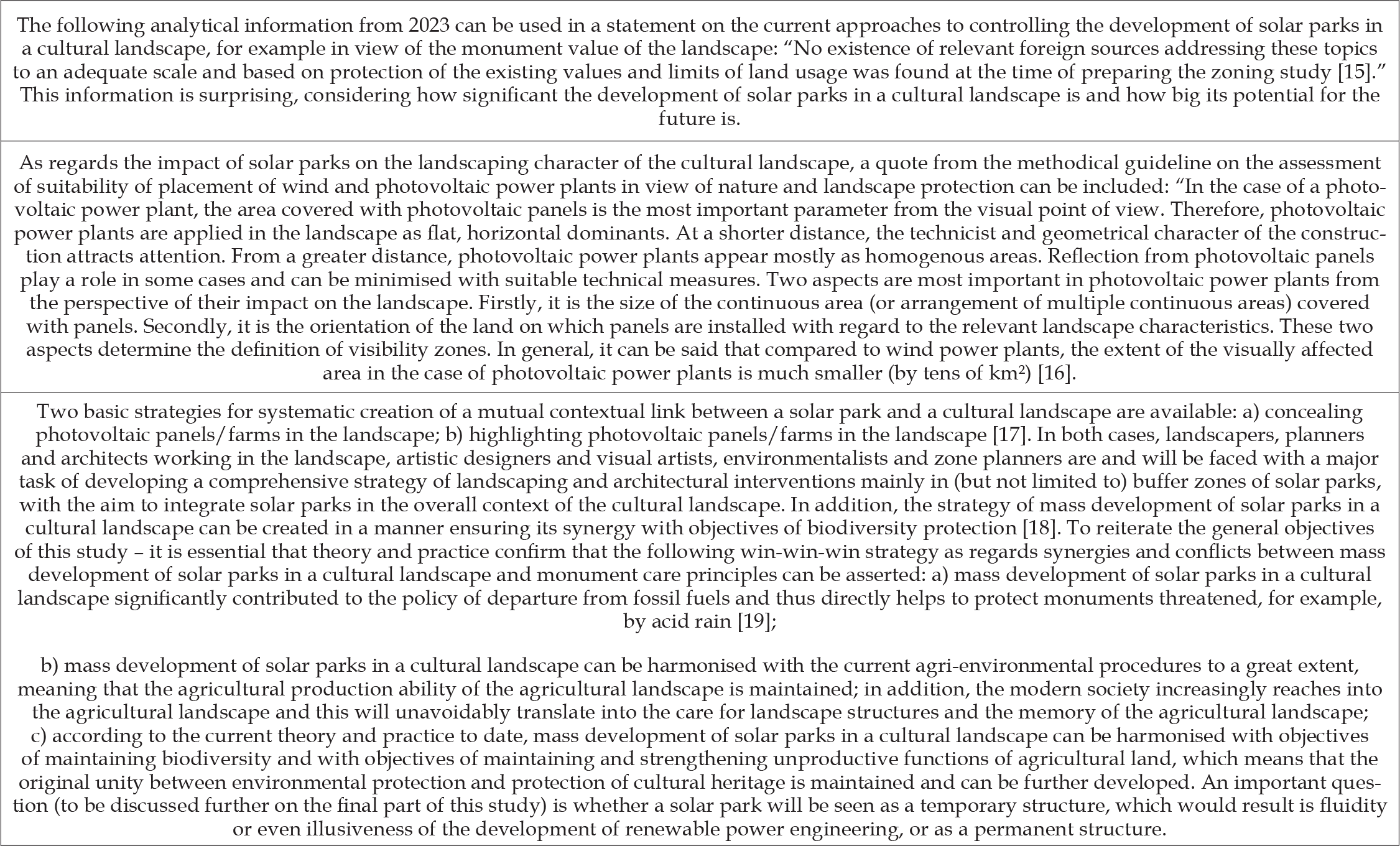
Table 4: Analysis of synergies and conflicts between mass development of solar parks (ground photovoltaic power plants) in .a cultural landscape and monument care principles.
A. Technological accessories of photovoltaic panels are rather large: voltage converters, electric meters, accumulators, cables, batteries. This means that when photovoltaic systems are installed within monuments, this undoubtedly involves transformation or a major change of the relevant monument, at least in terms of its mass and to a certain extent also in terms of its function. In addition, this also involves transformation of the entire historical environment, including the urbanized environment. While transformation of monuments always comes with a significant potential for conflict, monuments benefit from the usage of renewable energy sources owing to the synergic effect, i.e. owing to a better condition of entire sets of monuments. When comparing synergies against conflicts, it is essential that monument care authorities proceed in line with the so-called test of proportionality when assessing suitability of installation of photovoltaics within monuments (or buildings in valuable historical environments) while respecting the fact that installation of photovoltaics is becoming a public interest [20]. In practice, this means individual assessment of specific cases of installation while refraining from absolutization of any of the public interests.
B. The mass character of the development of photovoltaics in the urbanized environment, which intensifies in the 2020s, gradually also influences opinions in monument care. While monument care is and has to be conservative by principle, it is starting to lean towards more flexible approach. Mass development of photovoltaics in the urbanized environment in particular in Europe undoubtedly poses a rather major threat to monument values, when this phenomenon is viewed from the perspective of the traditional monument care, in particular in the central European region. The imminent total replacement of material in the authentic roof covering in the historical residential structure with highly advanced BIPV leads to the phenomenon of total imitation, which is foreign or even hostile to the ideas of monument care. On the other hand, it is possible to state that the climate change increases the dynamics of cultural and art development. This may lead to a new concept of the overall value of a cultural monument, which may newly comprise of three values:
1. The value of historical uniqueness;
2. The aesthetic value of the work of art;
3. The high-tech value of the unlimited technical and technological creativity linked to achieving environmental objectives beneficial for the planet. A cultural monument always reflects the eternity in some ways; the high-tech value of a monument comes with an almost endless potential for further development. The so-called Window Integrated Photovoltaics (WIPV) can be mentioned as an example and further development in nanotechnologies continues. As Flavio Rosa stated: “Third generation solar cells (tandem, perovskite, dye-sensitized, organic, new concepts…) account for a broad spectrum of concepts, ranging from low-cost low-efficiency systems (dye-sensitized, organic solar cells) to high-cost high-efficiency systems (III-V multifunction), with various purposes from building integration to space application [21].”
C. Deepening urbanization of the human race has been subject to criticism for decades. The Fossil City concept is one of these critical concepts and the Solar City concept is described in contrast as an ideal city of its kind. It is important to point out that the theory of ideal cities has been pursued throughout the thousand-year-old history of urbanism. As the urbanist Jiří Hrůza points out: “Modelling in urbanism gained its essential place in urbanism long time ago. Each urbanist project, each draft, each scheme of future development of a town and its parts – all these are essentially models. Spectacular models are images of future cities described by utopians, similarly to Howard’s Garden City, Le Corbusier’s Shining City, Milyutin’s Linear City or Ladovsky’s City-Rocket [33].” The adverse situation of the Fossil City or the Fossil Megapolis stems from the ongoing concentration and centralization of power engineering based on fossil sources; this cannot be changed even by the functional reform of the Fossil City attempted by Le Corbusier. This study will not attempt a discussion of how far power engineering decentralization in the current globalized human society can go and to what extent it may work as a universal cure. On the other hand, the study will not discuss the topic of centralization of renewable sources either. However, it is clear that the climate change is a horizon requiring a major reform of a city with energy balance based on fossil fuels. Reforming the concepts of a city, agglomeration, megapolis and suburbs in times of climate change is a framework delivering clear meaning to the mass development of photovoltaics in an urbanized environment. Only then the discussion on balancing environmental interests and interests of cultural heritage protection can be conducted with true understanding and thus can lead to a rational consensus.
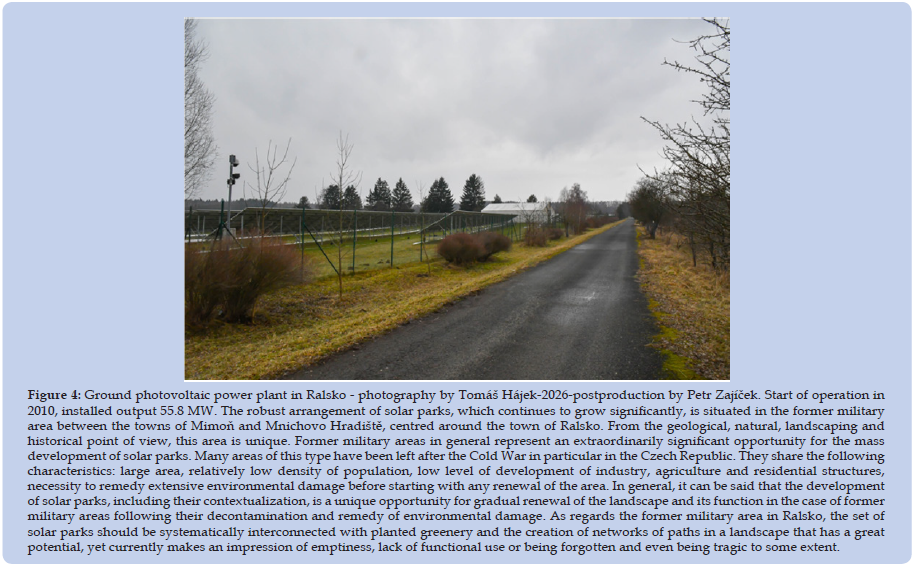
D. Landscaping contextualization of a solar park is a major challenge touched by this study merely in identifying this challenge. However, the following should be pointed out: landscaping contextualization requires extensive plant and land modification and establishment of non-provisional network of routes. Planting needs to be planned from a long-term perspective; the character of the planting scheme must have the same characteristics of an environmental approach as the existence of a solar park. A high-quality network of routes also needs to be of a long-term character. For the planting scheme and routes being conceived as long-term, a solar park should have the character of a permanent structure, rather than a temporary one, as is the case in the Czech Republic. A solar park should be conceived as a permanent structure, in which the park of photovoltaic panels is replaced, for example, every 25 years. In the case of a permanent structure, zone planning, landscape planning, architecture and urbanism will approach the task with greater creative enthusiasm than in the case of a temporary structure. A solar park can then be associated with landscaping work of a deeper and more permanent character, with the creation of bio-corridors, biocentres and line greenery in broader landscape plans. Synergy between a solar park and development of greenery in an urbanized environment noteworthy from the perspective of urbanism and landscape planning can be created. To recollect past issues, the study quotes from the report of the Program for the Care of Greenery in Urbanized Environment from the beginning of the millennium, which mentions greenery in industrial and suburban landscapes as a major problem: “An urban landscape phenomenon entirely new for our country has also appeared – spontaneous, mass, large-scale, loosely regulated commercial and industrial construction along busy roads and around larger towns, which remains without any response from the socially economic, urban, architectural, aesthetic or landscaping perspective [23].” If a solar park is considered a permanent structure, the regularity of distribution of installations will be considered more carefully at the national and regional level to pay attention to brownfields, suburban roof landscapes, recultivated post-mining areas and large natural or artificial bodies of water, and to reduce the burden on landscapes with high agricultural production or landscapes with a traditional mix of natural and cultural elements with major non-productive functions of agricultural land.
Table 5: Two basic options for balancing synergies and conflicts in an urbanised environment between mass development of photovoltaics and monument care principles.

Figure 1:
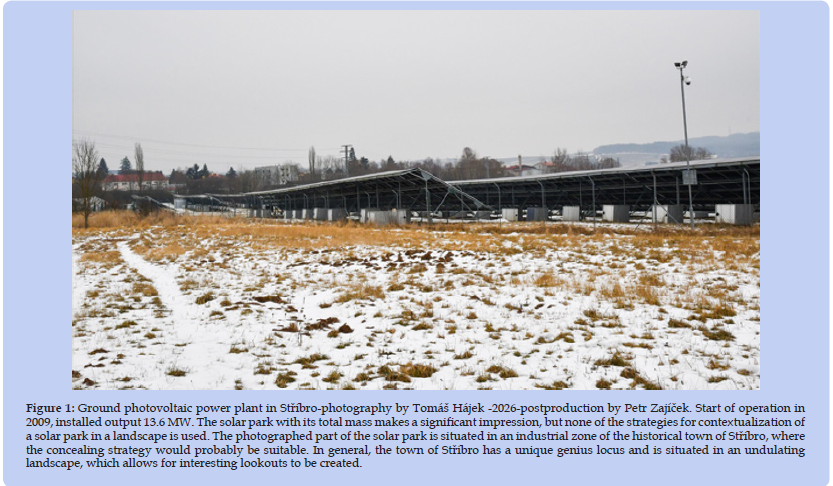
Figure 2:
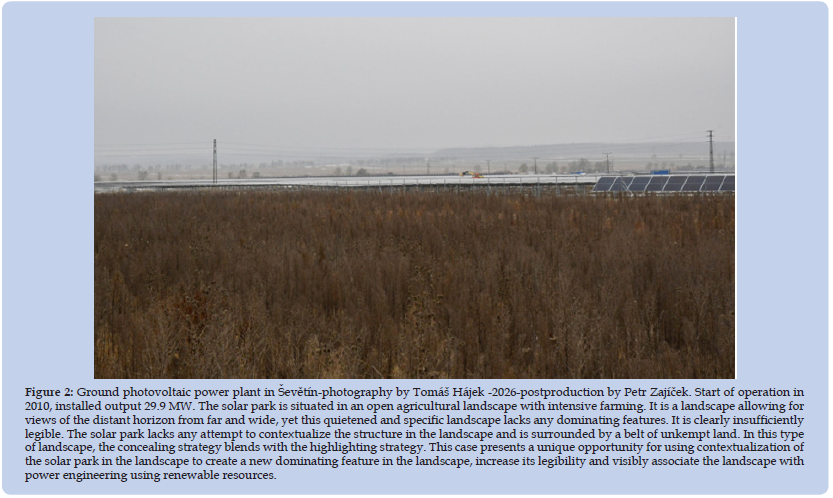
Figure 3:
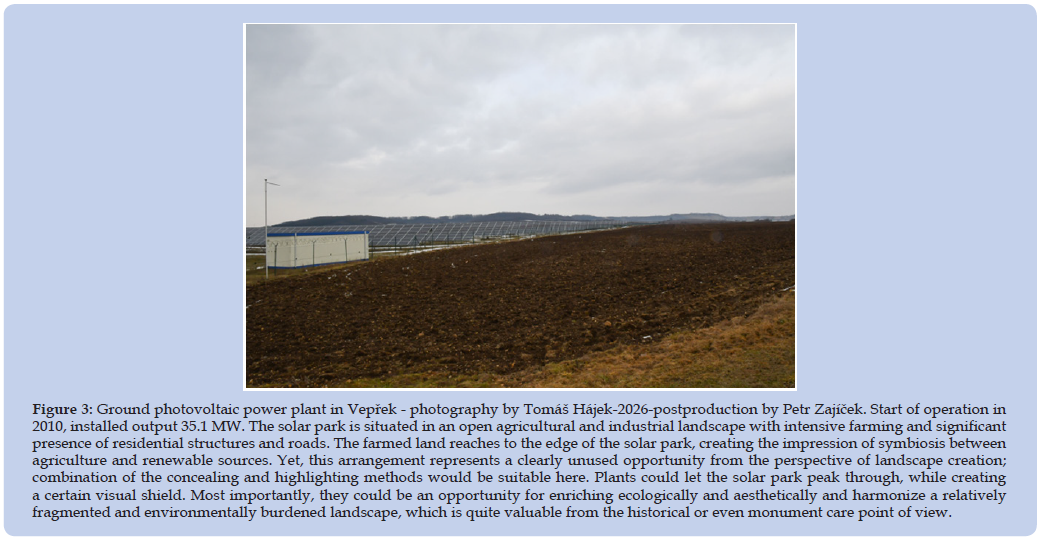
Figure 4:
The author would like to thank the Study and Scientific Library of the Plzeň Region for their help with researching the topic. The author would like to thank Jitka Feit, a specialist in monument care and environmental protection, Bamberg, Germany for her help in working on the topic.
No conflict of interest

International Association of Landscape Archaeology, Czech Glass Society, Czech Republic

Department of Chemistry, Semenov Institute of Chemical Physics, USSR Academy of Sciences, Moscow, Russia

Associate Professor at Department of Breast and Thyorid Surgey, Chongqing General Hospital, China
Professor of Nuclear Medicine, Faculty of Medicine and Surgery, University of Milan, Milan, Italy

Department of Pharmaceutical Sciences, South University School of Pharmacy, USA





 Abstract
 PDF
PDF



























