info@biomedres.us
+1 (502) 904-2126
One Westbrook Corporate Center, Suite 300, Westchester, IL 60154, USA
Site Map
 ISSN: 2574 -1241
ISSN: 2574 -1241
ISSN: 2574 -1241
Received: January 21, 2025; Published: January 30, 2026
*Corresponding author: Rosalyn Archer, Mom Incubators Ltd, Newstead House, Pelham Road, Nottingham, Nottinghamshire, NG5 1AP, UK
DOI: 10.26717/BJSTR.2026.64.010063
A Prospective, multi-site, quality improvement evaluation in five UK hospitals spanning labour and delivery, operating theatre recovery, postnatal wards, and transitional care, to evaluate the effectiveness, acceptability, and economic impact of a portable neonatal warming device (mOm Essential) across neonatal settings in the United Kingdom (UK). The evaluation included late-preterm and term neonates (<6 kg) presenting with mild to moderate hypothermia with the primary objective to achieve normothermia. Secondary outcomes included:
1. Time spent warming,
2. Avoidance of neonatal intensive care admission,
3. Staff satisfaction and
4. Cost savings.
Across the five sites, 107 infants were included. The median gestational age for included infants was 37 + 6
weeks (range 35+2 to 41+2), and median birth weight of 2.74 kg (range 1.85–3.97 kg; n = 87). Mean starting temperature
was 36.2 °C with 94.4% (101/107) mildly hypothermic (35.9–36.4 °C). Within 60 minutes of incubator
use, 93.5% (100/107) achieved normothermia. An economic model, based on a cost-consequence approach
estimated annual savings of ~£62,313 for a site delivering 5,000 infants per year. The mOm Essential incubator
restored thermal stability within 1 hour of use, was associated with reduced hypothermia-related neonatal unit
admissions, and supported families and their infants to remain together during the immediate postnatal period.
Our findings suggest that wider adoption could complement existing thermal care protocols, reduce avoidable
admissions, and provide a family-centred option for managing newborn hypothermia.
Keywords: Infant Warming; Hypothermia; Incubator; Neonate; Transitional Care
Abbreviations: NICU: Increasing Neonatal Intensive Care Unit; NHS: National Health Service; CHEERS: Consolidated Health Economic Evaluation Reporting Standards; NNU: Neonatal Unit
Thermoregulation in newborns and neonatal hypothermia is a universal challenge even in well-resourced settings [1]. Preterm and low birth weight neonates are susceptible due to their high surface area-to-weight ratio, reduced fat stores, immature skin, and poor vascular control [2,3]. Globally, hospital-based admission estimates document between 32% and 85% of newborns may present with suboptimal body temperature (< 36.5 °C) [4], the risk spanning high- and low-income environments [4-6]. Ambient cold stress is an important and preventable contributor to neonatal morbidity and mortality. One study reported each 1 °C drop in a newborn’s temperature resulting in ~80% increase in mortality risk [7], underscoring the need for rigorous thermal-environment management [4,8]. Neonatal hypothermia can be averted with simple, well-established interventions. Thermal management of newborns immediately after birth, significantly improves outcomes. Standardised practices including immediately drying the infant, providing skin-to-skin contact (kangaroo care), using pre-warmed linens, and warming the delivery room to 23 °C, have all shown reductions in hypothermia incidence [9,10]. However, gaps in thermal care and inconsistencies in implementation persist in both low [11,12] and high-income settings [5]; with increases in caesarean births [13] delaying skin-to-skin contact. Radiant warmers are widely used to minimise neonatal hypothermia [14-16].
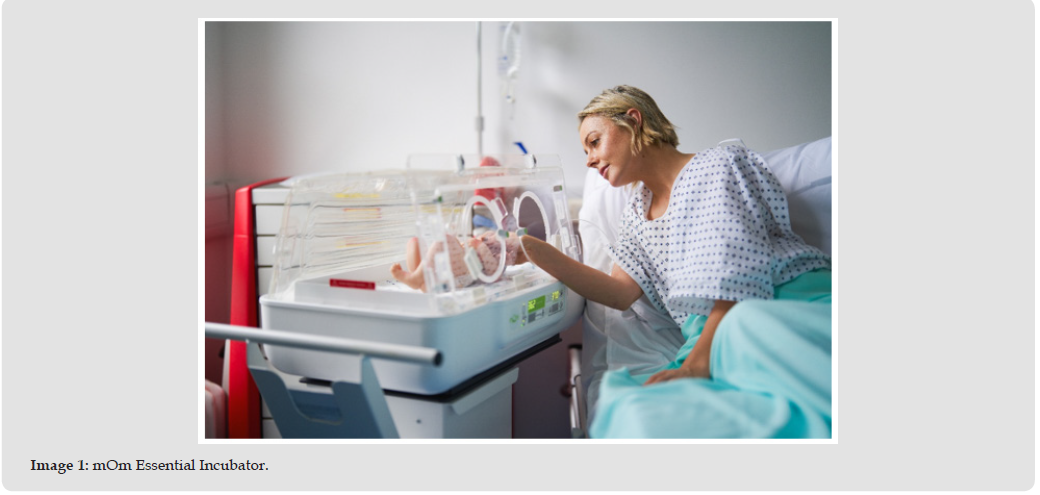
Systematic reviews indicate they are effective in maintaining thermal stability but may increase insensible water loss and oxygen consumption compared with incubators, potentially elevating dehydration and infection risks in preterm or low-birthweight infants [15,16]. Moreover, they physically separate the infant from the mother preventing immediate skin-to-skin contact and early breastfeeding [17]. Increasing neonatal intensive care unit (NICU) admissions, rising by around 20 % over the past decade in the UK [18] places pressure on capacity, staffing, and family-centred care, contributing to parental stress [19], reduced bonding opportunities, and higher healthcare costs. The mOm Essential incubator (mOm) represents a novel response to these challenges: a lightweight, portable, and thermally regulated device designed to maintain neonatal normothermia [20] while remaining beside or over the mother’s bed (Image 1). The aim of this evaluation was to assess the real-world use and cost-effectiveness of the mOm when implemented across multiple UK neonatal sites. The study sought to determine whether routine use of the mOm can improve newborn thermal outcomes, reduce complications and NICU admissions and deliver resource efficiencies.
Image 1
A multi-site evaluation of the mOm was conducted as a quality improvement initiative. The design was quasi-interventional and observational: all eligible infants received thermal care with the device as part of routine care. The aim was to assess effectiveness and acceptability under real conditions of use. The evaluation was implemented at five hospitals in England and Scotland, representing a mix of neonatal units (Special Care Unit, Local Neonatal Unit, or Neonatal Intensive Care Unit), to capture a wide range of use-cases and populations. The incubator was deployed in labour and delivery suites, operating theatre recovery areas, postnatal wards, and transitional care units. Each site appointed a clinical lead (midwife and/or neonatologist) to coordinate local engagement, training, protocol implementation and data collection.
Participants and Recruitment
Eligible infants were late-preterm or term infants, with a body weight under 6 kg, who developed axillary temperatures <36.5 °C, and who did not require humidification. The evaluation was embedded in routine care as a quality improvement initiative at participating sites, where midwives and neonatal staff were trained to identify eligible infants and initiate use of the incubator. Parents received an information leaflet outlining the rationale for use. Inclusion was implicit once an infant was placed in the incubator. Data collection extended across all five sites between December 2024 and March 2025, during the Winter period when the risk of neonatal hypothermia is greatest [4,21].
Participating Sites
1. Royal Hospital for Children, Glasgow (Queen Elizabeth Maternity Unit): >5,000 births/year; labour and delivery; prevention of term hypothermia.
2. Royal Infirmary of Edinburgh: >8,000 births/year; theatre recovery and postnatal care; prevention of hypothermia and part of the “red hat” hypoglycaemia protocol.
3. University Hospital Crosshouse: ~3,500 births/year; theatre recovery and postnatal care; prevention of hypothermia.
4. Liverpool Women’s NHS Foundation Trust: >8,000 births/ year; labour suite; hypothermia management with focus on preventing respiratory distress.
5. Royal Preston Hospital: ~4,000 births/year; multiple settings; prevention of hypothermia.
Data Collection, Training, and Retrospective Data
At each site, staff completed a data collection form whenever the incubator was used. Data captured were infant demographics, baseline and subsequent temperature measurements, duration of incubator use, and outcomes including neonatal unit admission. Comprehensive training was delivered to staff on safe operation of the incubator, eligibility criteria, and documentation requirements. A CPD-accredited quiz reinforced learning, requiring a pass mark of 90% prior to usage. Each site appointed a “champion” midwife to act as a local advocate, encourage use of the device, and provide ongoing peer support [22,23]. Staff were invited to complete an online survey relating to
1. Their experiences prior to, and during, the introduction of the mOm and
2. Their experiences using them.
Participation in the surveys was voluntary with the survey accessible via QR code provided on staff room notice boards. Semi-structured interviews were also undertaken to gain staff experience. No incentives were offered to complete the survey or attend the drop-in clinics. Due to the nature of real-world data collection, if more than one key datapoint was absent (including starting, final, or change in temperature), the infant was omitted from the final analysis, resulting in complete-case reporting. The exception was where a normothermic reading at 30 minutes justified removal from the incubator, in which case the 30-minute value was assumed to remain stable at one hour if no subsequent measurements were taken. As a baseline for the economic analysis estimates, site-specific retrospective data were collected for the 12 months prior to the evaluation. Medical records and electronic patient databases were reviewed to identify late-preterm and term infants who developed hypothermia and required management. Extracted variables included the number of infants admitted to NICU for hypothermia, length of stay, and resource utilisation, such as additional treatments initiated due to cold stress. Definitions were aligned with those used in the prospective evaluation to ensure comparability. All retrospective data were aggregated, de-identified and collated under local information governance approvals by clinical staff as part of audit processes.
Outcomes
Outcome selection was guided by clinical relevance, stakeholder priorities, and the feasibility of collection as part of routine care, with input from midwives, neonatologists, managers, and parent representatives ensuring outcomes were meaningful. Definitions aligned with National Health Service (NHS) neonatal quality indicators [24] and WHO hypothermia thresholds [25] to allow benchmarking with prior studies and audits. The primary outcome was achievement of normothermia (36.5-37.5 °C) without escalation of care. Secondary outcomes included clinical measures, temperature trajectory, ability to sustain normothermia, avoidance of neonatal intensive care admission for hypothermia, and economic measures including estimated savings from avoided NICU admissions. The primary health economic endpoint was a modelled net cost or savings estimate per hospital and is reported using the Consolidated Health Economic Evaluation Reporting Standards (CHEERS) framework [26]. The perceived barriers to delivering high quality care prior to the and experiences before and after using the mOm were assessed from staff feedback.
Statistical Analysis
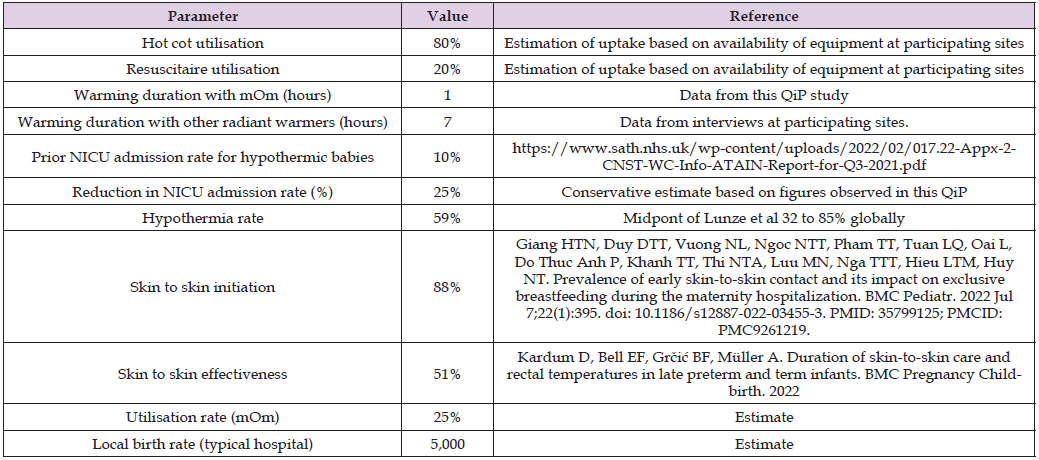
Analyses were primarily descriptive in nature data summarised using means, medians, and proportions. Key themes were identified from analysis of staff surveys and interviews and summarised using illustrative quotes. The health economic component was conducted within a cost-consequence framework, applying a 28-day time horizon without discounting costs or benefits. Where prospective data were incomplete, plausible estimates were derived from retrospective site records and semi-structured interviews with staff. Parameters were subjected to stress-testing through deterministic sensitivity analyses. All assumptions for the economic analysis are provided in Supplementary Table 1. Subgroup analyses were undertaken to compare outcomes across sites with sample size determined pragmatically by the evaluation period rather than by formal power calculation. All analyses were conducted using established statistical software (Microsoft Excel®, Redmond, WA; and Stata 14).
Supplementary Table 1.
Cohort Characteristics
A total of 107 infants were managed with the mOm across the five sites. Gestational age data were collected for 81/107 infants, with median gestational age equal to 37 + 6 weeks (range 35 + 2 to 41 + 2 weeks) and median birth weight was 2.74kg (range 1.85 kg to 3.97 kg, n=87/107). 94.4% of infants, (101/107) were mildly hypothermic on first assessment (35.9-36.4 °C). Three infants presented with moderate hypothermia (35.0-35.8 °C), and three were normothermic but considered high-risk and placed in the incubator prophylactically. Mean and median starting temperature were both 36.2 °C (range 35.0-36.8 °C). Recruitment was well distributed: Site 1, n=22; Site 2, n=13; Site 3 and 4, n=23; Site 5, n=23.
The Challenge of Hypothermia: Before the introduction of the mOm, staff highlighted four recurring challenges: the excessive time needed to warm babies (reported as a problem or serious problem by 67.4% (29/43), frequent NICU admissions due to cold stress (48.9%, 21/43), and separation of infants from parents during warming (46.5%, 20/43)), with 37.2% (16/43) also noting difficulties keeping infants warm during routine care. These factors often delayed discharges, disrupted workflows, and caused avoidable stress for families; illustrated by the clinician comment: “Before the mOm… the time it took to warm a baby both took away from other tasks… but also could trigger a ‘cascade’ of conditions” (Site 5). Other staff linked inadequate warming to admissions: “Hypothermic / respiratory issues when used a hot cot, as didn’t warm them quick enough” (Site 1). The emotional impact of separation was also emphasised: “It’s quite distressing for a mum to be separated from their baby, especially if they had an emergency C-section” (Site 2). Of the 107 infants, 100 (93.5%) achieved normothermia after use of the mOm. The seven who did not, all came from Site 4, where no standard protocols for use were implemented, which differed from the other sites. Temperature trajectories were available for 69/107 (64.5%) and are shown in Table 1. No infant experienced a reduction in temperature in the incubator. Mean temperature increased by 0.4 °C (median 0.5 °C) after 30 minutes. At one hour (n = 69), the mean increase was 0.7 °C. The median time spent in the incubator was 1.09 hours (range <1-22 hours), though the distribution was skewed due to some site protocols permitting infants at to remain in the mOm for longer periods for prolonged comfort, rather than the need for ongoing active warming (Table 1).
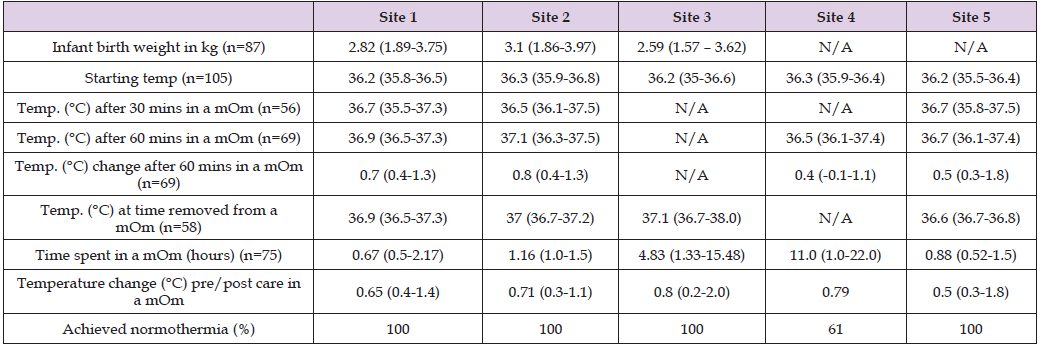
Subgroup Analysis of Median Values: Comparing data from the five sites, the mOm showed consistent benefits for thermoregulation, though effects varied. Starting temperatures were similar (median 36.2-36.3 °C). After 60 minutes, median temperatures ranged from 36.5 °C to 37.1 °C, Table 2. Overall median pre/post warming changes were 0.5 to 0.7 °C and by 30-60 minutes, most infants (93.5%) were within the normothermic range. Staff feedback indicated a perception that the incubator use was associated with improved temperature gain: “I have found the mOm warms babies faster” (Site 3); “It is better for the babies when they heat up faster” (Site 5). Table 2 shows a summary of the sub-group analyses (Table 2).
Table 1: Distribution of temperature measurements.
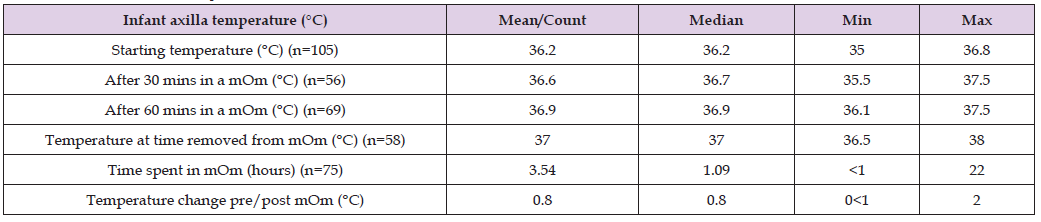
Table 2: Subgroup outcomes by site (median, min-max).
NICU Admissions
Among 87 infants for whom NICU admission data were available, nine (10.3% (9/87)) were admitted following use of the mOm. All infants were normothermic at NICU admission, apart from one infant with temperature instability. Other reasons included hypoglycaemia, suspected sepsis, cardiac anomalies, and transitional care ward capacity constraints. At Site 4, retrospective ATAIN data [27] indicated 34 NICU admissions for hypothermia in the 12 months prior to implementation, compared with zero during the 59-day evaluation period.
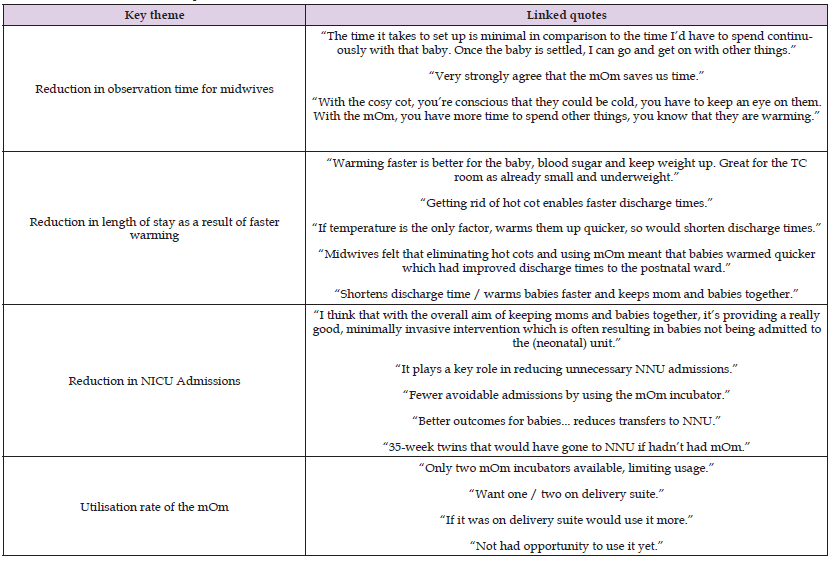
Staff Feedback: The feedback obtained from 43 midwifery and neonatal staff indicated consistent, positive impacts associated with use of the mOm (Table 3). Key themes identified included a reduction in observation time, noting that once infants were settled in the mOm, they had confidence in attending to other duties. Of neonatal staff surveyed (29/43, 67.4%) reported that excessive time to warm babies had previously been a significant problem in clinical practice. Faster warming, compared to previous existing practices, was widely perceived to improve infant outcomes, supporting better thermoregulation, stabilising blood sugar and weight, and enabling earlier discharge from transitional care to the postnatal ward. Several participants linked these improvements directly to shorter lengths of stay and fewer delays caused by temperature-related discharge criteria. Staff also observed a reduction in avoidable neonatal unit (NNU) admissions, with the mOm providing a minimally invasive means to keep mothers and babies together while avoiding escalation of care (Table 3).
Table 3: Staff feedback from drop-in clinics.
Economic Saving Per Infant: An exploratory cost-consequence model to estimate the likely economic impact of the mOm was developed, the assumptions for which are provided in Supplementary Table 1. It was estimated that if the mOm was embedded into existing care pathways in a hospital with 5,000 live births per year, the savings approximate £62,313 per annum, constituted of £1,032 from 27 hours of midwife time, £31,494 from prevention of 2,060 hours in length of stay avoided through earlier warming and discharge, equivalent to approximately 86 bed days per year, and £29,118 from the prevention of 11 neonatal unit admissions per year on grounds of hypothermia. This resulted in a per child saving of £84.49.
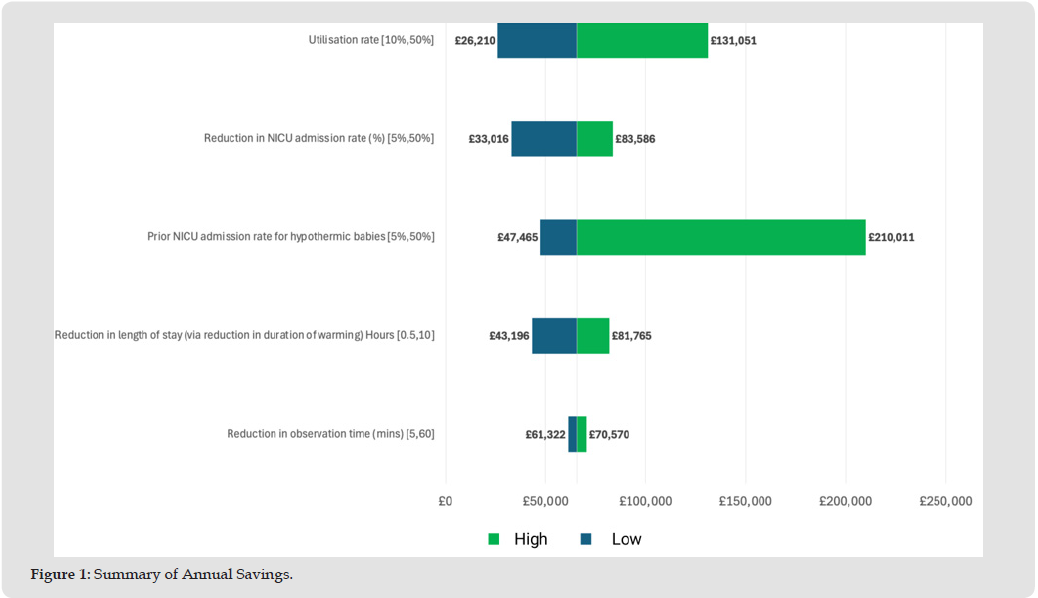
Deterministic Sensitivity Analysis: The main factors influencing the economic value of the mOm were the baseline rate of NICU admissions for hypothermia and the extent of device utilisation. Expanding use from 25% to 50% of hypothermic infants could yield savings of around £124,626 per unit annually, whereas the model suggested that reductions in use to 10% would lower annual savings to approximately £24,925. Even under a conservative assumption that only 5% of hypothermic infants would previously have required NICU admission, the device still generated an estimated £47,719 in yearly savings. Deterministic sensitivity analysis as demonstrated in Figure 1, confirmed that while the scale of savings varied, the model consistently indicated positive economic value under all plausible scenarios (Figure 1).
Figure 1
This multi-site quality improvement evaluation observed that use of the mOm Essential incubator restored normothermia in most late-preterm and term neonates presenting with mild or moderate hypothermia in delivery room and postnatal ward settings (93.5% (100/107) within 60 minutes). Use of the device was associated with reduced neonatal unit admissions reduced mother-infant separation, faster warming, and improved workflows. Economic modelling indicated a high probability of cost savings, with deterministic sensitivity analyses suggesting robust financial viability across a range of assumptions. Together, these findings suggest that a compact, portable incubator can provide a pragmatic addition to established thermal care strategies within maternity and neonatal services. Hypothermia remains a persistent challenge even in high-income settings. In UK audits, up to 30% of babies admitted to neonatal intensive care are reported to have suboptimal temperature at admission [28]. Internationally, prevalence rates as high as 85% have been documented in low- and middle-income countries, where resources and infrastructure are more limited [4]. These data reinforce the importance of both preventive and responsive measures to maintain thermal stability.
Traditional interventions such as skin-to-skin care, pre-warmed linens, radiant warmers, and warmed delivery environments remain cornerstones of practice. Skin-to-skin, in particular, has demonstrated effectiveness in reducing hypothermia and improving bonding [17]. Yet implementation is often inconsistent: room temperatures may be suboptimal in operating theatres, mothers may be unable to provide skin-to-skin after caesarean sections, and hot cots or radiant warmers may be slow to achieve thermal stability [29]. The current evaluation suggests that the mOm Essential incubator provides an additional option in these specific scenarios, enabling infants to be kept normothermic without separation from their mothers.
Few prior studies have evaluated portable incubators in high-income settings [20]. A recent trial of a low-cost device for low-resource environments demonstrated feasibility of rapid deployment and improved neonatal thermal stability [30]. The observed reduction in hypothermia-related neonatal unit admissions mirrors prior improvement projects integrating thermoregulation bundles; for example, implementation of thermal care protocols in neonatal networks reduced hypothermia prevalence from 30% to below 20% [31]. The present evaluation indicates that targeted technology deployment may produce comparable benefits where bundles alone have not fully addressed the problem. A benefit of this intervention is the preservation of neonatal unit capacity for sicker newborns. Each neonatal admission avoided for rewarming effectively frees specialised cots, clinical staff, and equipment for infants requiring intensive support, an increasingly important consideration in pressured neonatal networks. The ATAIN programme [27] has long emphasised that unnecessary admissions can fragment family care and strain limited resources, advocating instead for safe management of at-risk term infants alongside their mothers wherever possible. By supporting bedside thermal stabilisation, the mOm supports this principle, keeping mothers and babies together at a time when rising caesarean rates and high-dependency recoveries often impede early bonding. Whilst difficult to express in monetary terms, evidence suggests that enabling proximity and parental participation improves both emotional wellbeing and breastfeeding outcomes [32]. Qualitative findings emphasise not only clinical but experiential benefits. Staff reported reduced stress in managing hypothermic infants, time released for other tasks, and greater parental reassurance when babies could remain bedside. Health economic implications are also notable. Previous analyses have highlighted the cost burden of neonatal unit admissions, estimating daily costs of £1,000-2,000 per cot [33]. Avoiding even a small number of admissions may therefore translate into meaningful savings. Our modelling suggested a per-infant saving of £84.49, which scales substantially across birth cohorts.
Strengths and Limitations
This evaluation’s strengths lie in its pragmatic, multi-site design, reflecting real-world settings and in its mixed-methods approach combining quantitative outcomes with staff and parent perspectives. While retrospective data provided comparators, data completeness varied, with some data points missing. Site-level variation in protocols also influenced results. The economic model relied partly on assumptions and retrospective estimates; while sensitivity analyses supported robustness, further prospective health economic evaluation is warranted.
This evaluation demonstrated that a portable neonatal incubator, the mOm Essential, restored normothermia in the majority of infants. The device reduced neonatal unit admissions, had strong staff and parental acceptability, and favourable economic modelling, suggesting that this incubator may complement existing thermal care practices where conventional methods are constrained.
We thank the midwidery, nursing and medical teams, patients and families who contributed to this evaluation. We are grateful to the clinical champions at each site for their leadership, and to the NHS governance and medical physics teams for facilitating implementation.

International Association of Landscape Archaeology, Czech Glass Society, Czech Republic

Department of Chemistry, Semenov Institute of Chemical Physics, USSR Academy of Sciences, Moscow, Russia

Associate Professor at Department of Breast and Thyorid Surgey, Chongqing General Hospital, China

Professor of Nuclear Medicine, Faculty of Medicine and Surgery, University of Milan, Milan, Italy

Department of Pharmaceutical Sciences, South University School of Pharmacy, USA





 Abstract
 PDF
PDF



























