info@biomedres.us
+1 (502) 904-2126
One Westbrook Corporate Center, Suite 300, Westchester, IL 60154, USA
Site Map
 ISSN: 2574 -1241
ISSN: 2574 -1241
ISSN: 2574 -1241
Received: December 19, 2025; Published: January 07, 2026
*Corresponding author: Ahmed Jamil, Environmental Research Center, Bahria University Karachi Campus, Pakistan
DOI: 10.26717/BJSTR.2026.64.010032
Salinity is a major problem of soil that is affecting all types of agricultural activity. The practice of lack of drainage and improper irrigation increases the accumulation of salts in the soil that are harmful to the production of crops. Soil salinity is described by a high amount of Ca, Mg, Na and K ions. In nature, NaCl typically creates salt stress due to high salt levels in the soil eventually cause plants to absorb fewer nutrients. This has an adverse effect on soil fertility. Therefore, various salt affected soil samples x03 from rice field (in Mid of May-June 2022), similarly salt affected soil samples x03 wheat field (in Mid of Nov-February 2023-24) those are supposed to be treated by humic acid (HA) and among them 01 blank sample retain (as without treatment of HA) for this study from Thatta District, Sindh, Pakistan which lies at around 24.752307, 67.929768. The present study investigates the impact of (12% humic acid) application to rehabilitation of soil quality for nutrient availability across varying soil depths. Soil samples were collected from three distinct depths: as surface, subsoil, and deep soil. These samples were analyzed for both macro- and micronutrients as calcium (Ca), magnesium (Mg), potassium (K), sodium (Na), nitrogen (N), and phosphorus (P) including pH, Salinity, electrical conductivity (EC). Humic acid was applied in certain ratio to assess its effectiveness in enhancing nutrient uptake and mitigating salinity, particularly in soils with elevated EC levels. Thus, study highlights the potential of humic acid as a natural soil conditioner and surfactant for improving soil fertility and reducing salinity stress in saline soils. The analyses of soil samples were compared before and after applying Humic Acid. The outcome indicated that humic acid has great potential and is highly effective for soil conditioners, which synergistically improve soil quality to enhance crop yield and quality.
Keywords: Saline Soil; Humic Acid; Remediation; Rice Crops; Wheat Crops; Physicochemical Properties
Abbreviations: HA: Humic Acid; Ca: Calcium; Mg: Magnesium; EC: Electrical Conductivity; SSWFT: Soil Sample of Wheat Field-Thatta; SSRFT: Soil Sample of Rice Field Thatta
The improvement of soil qualities, which is the primary factor to raise the production of crops, is also a concern for the development and advancements in agriculture. These factors include novel hybrid seeds and mechanization. Inappropriate soil conditions for plant growth typically result from a deficiency of organic matter in the soil. Generally, plants are treated with various salt contents such as calcium, magnesium, sodium, nitrogen, phosphorus and potassium (Priori, et al. [1]). These salt contents are the main source of salinity in the soil. A physiological drought effect is the term used to describe how salt in soil affects plants as a whole. High salt concentration lowers the osmotic potential of soil water, which bounds the amount of soil water that is available to plants (Alam [2]). In short, the water uptake by the root of plants is restricted by high amounts of Na and Cl. Ultimately, an increased amount of concentration of salt in the soil decreases the absorption of plant nutrients. Thus, it adversely affects soil fertility (EL Sabagh, et al. [3]). In various portions of the world, soil productivity has declined due to the excess of salt in the soil around the root zone of the plant. Salts can come from natural and anthropogenic sources. Soil salinity causes soil erosion and reduces crop productivity worldwide. Lack of drainage and improper irrigation practices lead to increased salinity in the soil, which is detrimental to crop production. About 120 million tons of salt is poured into the ground each year from salt water and canal water, which decreases crop growth (Stavi, et al. [4]).
Agricultural Importance in Pakistan (as Cash Crops)
Agriculture is the backbone of Pakistan and constitutes the largest sector of our economy. In Pakistan, sustainable agricultural expansion is essential for rural development and food security (PES [5]). Under salt stress, crops exhibit a spectrum of reactions. In Pakistan, a high salt concentration results in the annual loss of around 40.000 hectares of arable land (Ashraf, et al. [6]). 20% of all irrigated lands have soils that are impacted by one or more salt types (Pitman, et al. [7]). High salt content is one key challenge facing Pakistan’s agriculture sector, among many others (Hassan, et al. [8]). Crop production is being negatively impacted by salinity, which also has an impact on the soil’s physicochemical makeup and ecological environment. The influences of salinity create a low economic return, low agricultural productivity and soil erosion. The effects of salinity are a complex outcome of the interaction between physiological, morphological and biochemical routes, containing germination, seeds, growth of plants and uptake of water and nutrients (Akbarimogadam, et al. [9]). Salinity distresses all phases of plant growth such as germination, development of vegetation growth and reproduction. Soil salinity enforces osmotic pressure, ion toxicity, and deficiency of nutrients (N, Ca, K, P, and Mg) causing oxidative stress and limiting the percentage of water from the soil (Shrivastava, et al. [10]).
The Phenomena of Humic Acid
Humic acid, a comparatively stable residue of degraded organic matter that subsequently gathered in ecological systems, stimulates plant growth by chelating inaccessible nutrients. A very successful strategy for increasing crop yield and repairing the degraded features of salt-affected soils is the application of inorganic and organic amendments (Saqib, et al. [11]). In addition to increasing crop output, humic acid also enhanced the physical (soil moisture content, aeration, and aggregation) and chemical qualities of the soil (Khan, et al. [12]).
Interrelation of Humic Acid and Soil
Humic acid enhance soil water retention, making them popular for use in organic farming (Cimrin, et al. [13-15]). Humic compounds may have a variety of roles in enhancing the nutritional status and soil health of salt-affected soils. Turhan [16] assessed the effects of humic acid at 0, 1, and 2 g kg-1 of soil on the physiological and yield constituents of cauliflower in a saline environment. They indicated that 2 g of humic acid per kilogram of soil considerably boosted cauliflower yield and curd weight and had a positive influence on low to moderate salt levels. There is consensus, according to a different study (Liu, et al. [17,18]), that new agricultural techniques or approaches are required to improve the quality of damaged soils. Recent studies have suggested and documented the use of soil supplements, such as synthetic (such as potassium poly-acrylate and poly-acrylamide) and natural (such as manure, biochar, and humic acid) amendment materials, to enhance soil qualities and boost crop production.
Due to the excessive uptake of potentially harmful ions, salt-affected soils have lower plant development and yield (Grattan, et al. [19]). Humic acid @ 2 kg ha-1 and micronutrients like Cu and Zn considerably boosted the yield constituents of wheat underneath saline circumstances, according to Manzoor, et al. [20]. Rendering to Asik, et al. [21], wheat crops cultivated under 15 and 60 mM salinity stressors received 0, 1, and 2 g of humic acid per kilogram of soil. Humic acid was also sprayed at 0, 0.1, and 0.2% twenty and thirty-five days following the seedling appearance. The results demonstrated that foliar spray improved Zn, K, and P uptake whereas humic acid use in soil reduced the negative impacts of salinity and enhanced nitrogen uptake. Salt strain is one of the abiotic elements that is always a production barrier for sustainable agriculture. Exploring the potential of salt-affected soils that are now underutilized is essential for increasing agricultural production (Saqib, et al. [11]). In order to recover salty soil and its effects on nutrients and their availability as soil samples of rice and wheat crops. It’s also aimed to examine the physicochemical characteristics of barren saline soil samples with humic acid treatment to see how they affected soil salinity and nutrients ratios.
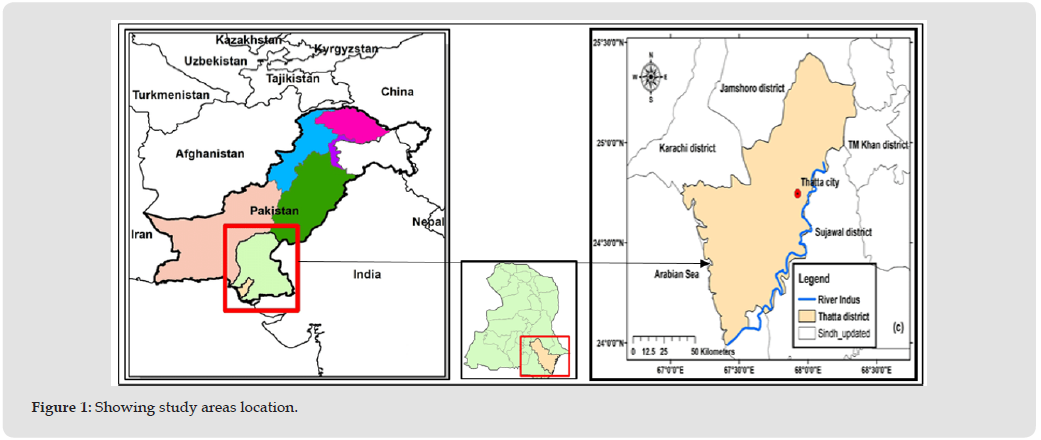
The study was conducted in 2022 to 2024 and research area (Thatta) is situated in the province of Sindh in Pakistan as 24.752307, 67.929768. The study area according to the given maps based on Thatta (Figure 1) which are widely saline area (Solangi, et al. [22]).
Figure 1
Sample Collection and Experimental Design
A total of one humic acid (HA) sample was analyzed to assess its physicochemical characteristics and nutrient composition. To investigate the effect of humic acid on different soil types, nine soil samples were collected. These were derived from three soil depths—surface, subsoil, and deep soil—across three distinct land use types: 01x blank soil sample, a rice cultivation field, and a wheat cultivation field. This resulted in:
• 3 soil depths × 3 field types = 9 initial soil samples Each of these 9 soil samples were then divided into two sub-samples:
1. Before humic acid application
2. After humic acid application
These soil samples were used to assess the impact of humic acid on the soil’s physicochemical and nutrient profile under different land use conditions. Separately, a single humic acid sample was characterized to assess its physicochemical properties. All soil samples were collected in clean, sealed plastic lock bags and immediately stored to preserve their integrity. Sampling and subsequent analyses were conducted following standard protocols outlined by the USDA [23], the U.S. Salinity Laboratory Staff [24], and the APHA [25]. Laboratory analysis was performed at the Environmental Research Center, Bahria University Karachi Campus. To evaluate the relationship between humic acid and soil salinity, all soil samples were treated with humic acid at a known and uniform concentration (Table 1). Each main sample as (Rice and Wheat) contains 3 sub-samples:
a. Surface,
b. Sub-soil, and
c. Deep soil.
Table 1: Experimental Design Table: Humic Acid Application on Saline Soils (Wheat & Rice).
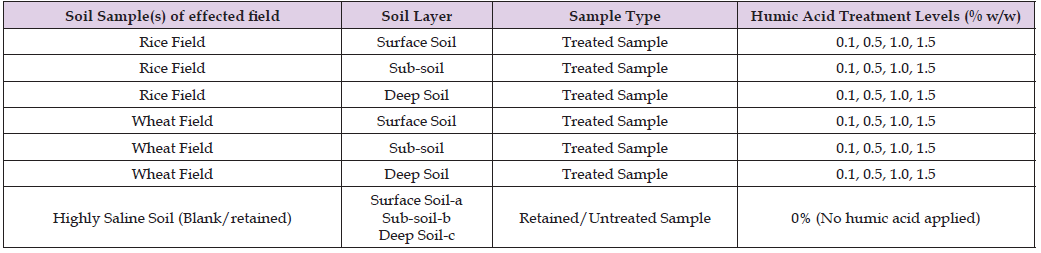
04 treatment levels of humic acid applied to each sub-sample: 0.1%, 0.5%, 1.0%, 1.5%, and 01 blank/retained sample was collected retained untreated with humic acid for baseline comparison. After analyzing soil properties, including Salinity, pH, EC, Na, K, Mg, Ca, Nitrogen and Phosphorus, different percentages of humic acid as 0.1 %, 0.5 %, 1% and 1.5 were applied on prepared highly affected soil samples to evaluate impacts of various ratios of humic acid on soil salinity. After applying humic acid focused on nutrients availability to certain crops such as rice and wheat. At that moment, soil samples were collected for further analysis against all above-mentioned parameters to assess the impacts or any improvement in soil by the applications of humic acid also impacts on plant growth and soil salinity. All the results of the soil samples are discussed and compared analyses of soil samples with gradually increasing ratios of humic acid applications, respectively.
Rice Field (Thatta)
Assessment:
• EC and salinity percentage both confirm a strongly to very strongly saline classification.
• pH slightly alkaline (~8.4) — expected for coastal/saline soils.
• Ca2+, Mg2+, and Na+ values follow logical ionic ratios (Na > Mg ≈ Ca in highly saline soil).
• Nutrient levels (K, P, TN) are within typical ranges before humic acid treatment.
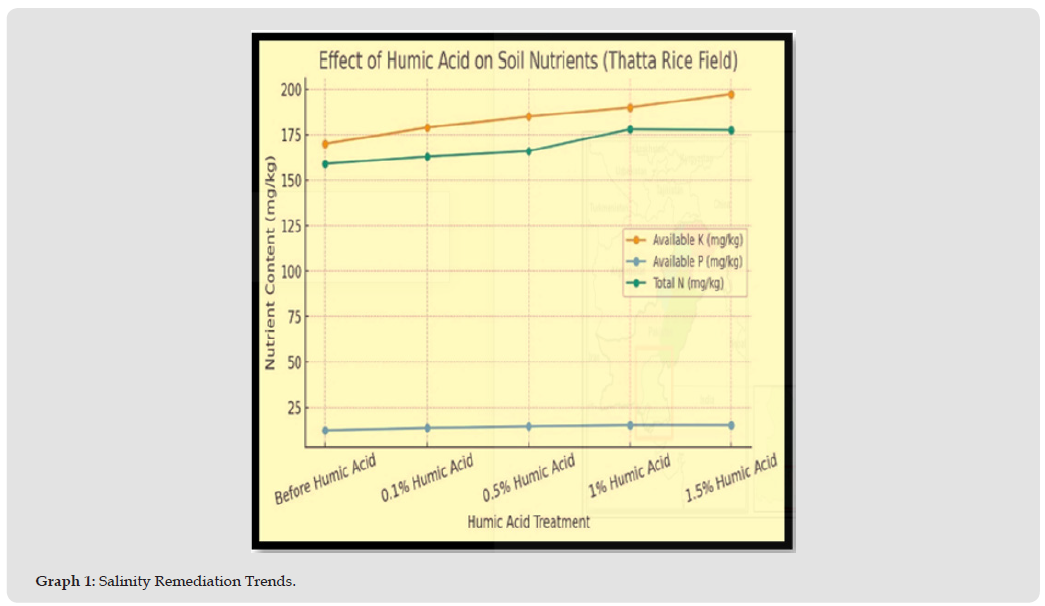
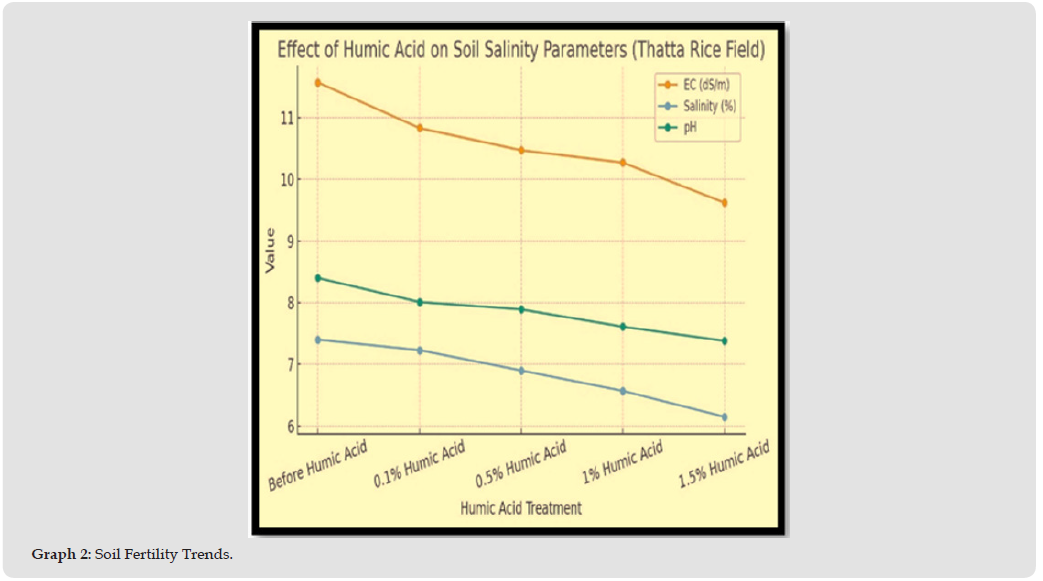
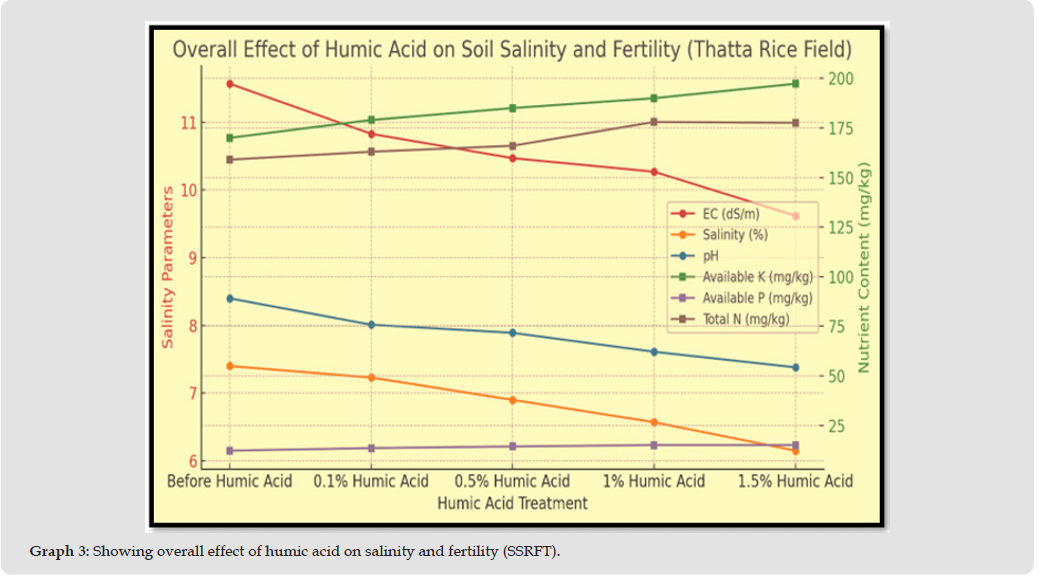
Tables 2-6 show the results of the effect of varying concentrations of humic acid on affected soil samples of rice field. The results indicated that the blank soil sample taken from rice field having chemical properties of highly saline soil according to its analytical results certainly EC and salinity; also unavailability and destabilize condition of nutrients as mentioned in Table 2 as BLANK or “before applying humic acid” soil sample. As compared to the results of all 04 treated samples with 0.1 %, 0.5 %, 1%, and 1.5% humic acid with the blank or untreated soil sample then it could be observed that as the percentage of humic acid increases there is a substantial decrease in the EC as well as soil salinity. Similarly, the amount of available nutrients like NPK, calcium and magnesium increases significantly. In contrast Na concentration slightly decreased showing remedying from salinity through a proper use of humic acid (HA). This tremendous changes are almost occurred in all depths of soil samples as subsoil and deep soil. The addition of humic materials causes the plants to take up more mineral elements since their roots are more fully formed.
Table 2: Analysis of Soil Sample of Rice Field-Thatta (SSRFT) as before applying humic acid showing high salinity.
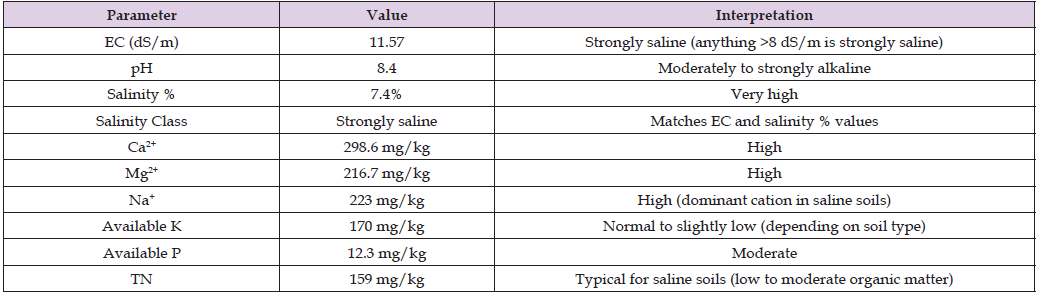
Table 3: Analysis of Soil Sample of Rice Field-Thatta (SSRFT) after applying 0.1% humic acid.
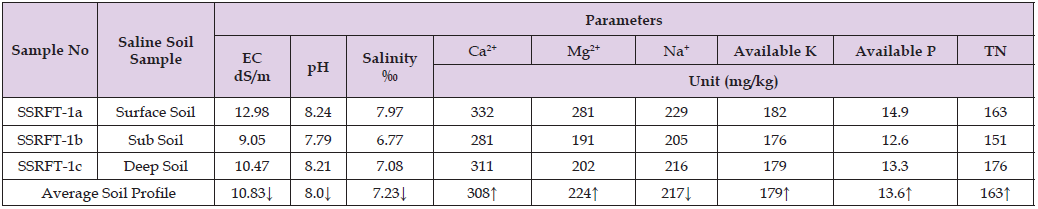
Table 4: Analysis of Soil Sample of Rice Field-Thatta (SSRFT) after applying 0.5% humic acid.

Table 5: Analysis of Soil Sample of Rice Field-Thatta (SSRFT) after applying 1% humic acid.

Table 6: Analysis of Soil Sample of Rice Field-Thatta (SSRFT) after applying 1.5 % humic acid.

Salinity Remediation Trends (Graph 1)
• EC (dS/m) decreased from 11.57 → 9.62, showing a 16.9%
reduction — clear evidence of improved soil desalination.
• Salinity (%) dropped from 7.4 → 6.15, also confirming humic
acid’s positive effect.
• pH declined from 8.4 → 7.38, moving toward neutral, which
is beneficial for nutrient uptake.
• This confirms effective salinity and alkalinity remediation
with increasing humic acid concentration.
Soil Fertility Trends (Graph 2)
• Available K increased from 170 → 197 mg/kg;
• Available P improved from 12.3 → 15.1 mg/kg;
• Total Nitrogen (TN) rose from 159 → 178 mg/kg;
• These steady nutrient increases indicate that humic acid enhances
cation exchange capacity (CEC) and nutrient retention.
(Graph 3)
Graph 1
Graph 2
Graph 3
Wheat Field (Thatta)
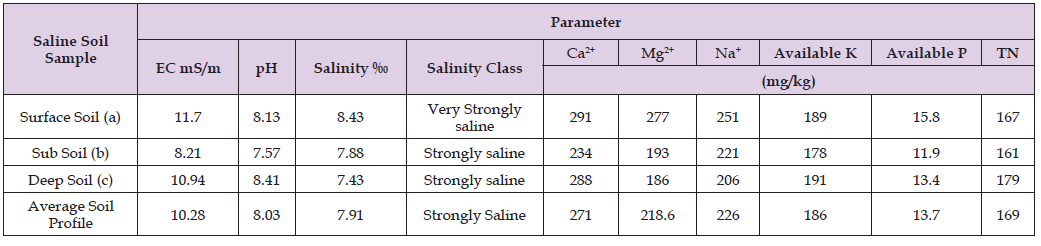
(Table 7).
Table 7: Analysis of Soil Sample of Wheat Field-Thatta (SSWFT) as before applying humic acid showing high salinity.
Analysis
• EC values are very high (greater than 4 mS/m), indicating a strong saline condition.
• Salinity % values (7.43 to 8.43) fall in a range typical of strongly saline soils.
• Salinity Class correctly indicates “Very strongly saline” and “Strongly saline,” consistent with the EC and salinity percentages.
• pH values range between 7.57 and 8.41, which is slightly alkaline and common for saline soils.
• High Na⁺ values confirm the presence of significant sodium in the soil, which can affect soil structure.
Tables 8-11 illustrates the results of the effect of varying concentration of humic acid on Soil Sample of Wheat Field-Thatta (SSWFT). Results show that as the concentration of humic acid increases there is a gradually decreasing salinity in the soil. As well as the amount of available nutrients like calcium, magnesium, potassium and nitrogen increases significantly. According to (Chohan, et al. [26]), almost soil properties of study areas (Thatta) as having very low organic matter and very low availability of macronutrients as NPK to plants growth as nature of soil texture. Nutrients availability also depends on water holding capacity of soil and decreases of salinity. As results this favorable condition has been produces during application of humic acid. As gradually increased the percent of humic acid on soil samples similarly nutrient values are increased. It also showing the water holding capacity to retain nutrients for plants and crops growth. Soil pH also has been controlled by the application of humic acid. This application showing adding of cations and anions to soil quality and help in improving water holding capacity (Graph 4).
Graph 4
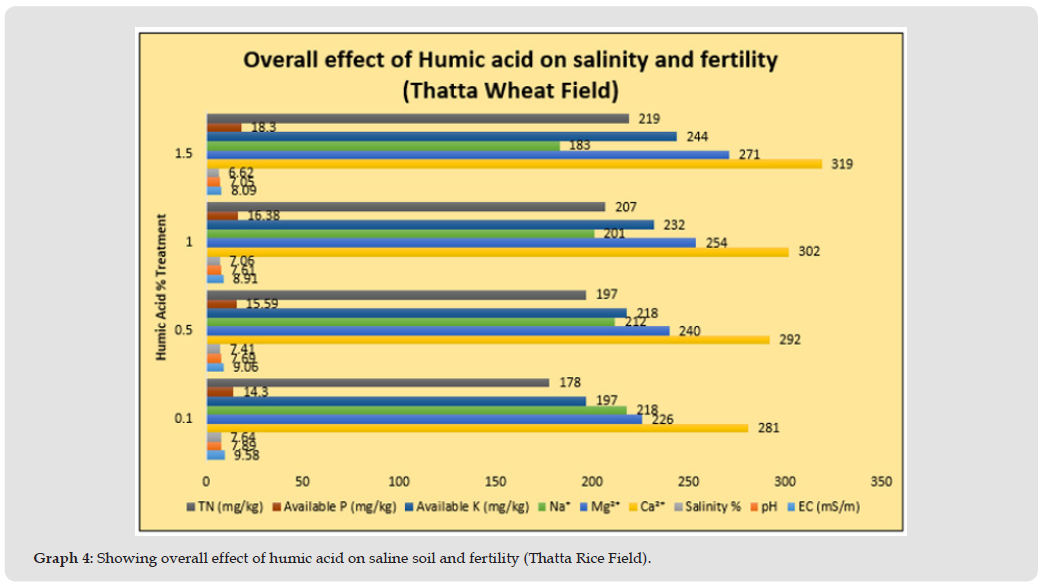
Table 8: Analysis of Soil Sample of Wheat Field-Thatta (SSWFT) after applying 1.0 % humic acid.

Table 9: Analysis of Soil Sample of Wheat Field-Thatta (SSWFT) after applying 0.5 % humic acid.

Table 10: Analysis of Soil Sample of Wheat Field-Thatta (SSWFT) after applying 1.0 % humic acid.

Table 11: Analysis of Soil Sample of Wheat Field-Thatta (SSWFT) after applying 1.5 % humic acid.

Mainly, contamination of soil is a complex process and it generally depends upon the pH, electrical conductivity and ionic characteristics of the soil. First, humic acid alters the soil’s nutrient composition, which increases the amount of accessible nitrogen, phosphorous, and potassium as well as the total nitrogen, phosphorus, and potassium (known as NPK) content of the soil, allowing plants to absorb more nutrients. In addition, it increases the amount of organic matter in the soil, which is beneficial for long-term sustainable soil use. Humic acid alters the microbial community structure in the soil, promoting bacteria that are good for plant growth due to the high abundance of NPK in the outcomes. The high values of NPK mean that the maximum process of photosynthesis, uptaking of nutrients, and soil-water- plant relation is happening, with morally positive impacts shown on soil fertility and remediation of salinity. Humic acid increases the soil quality for continuous cropping of diverse plants and enhances nutrient utilization since soil is a complex ecosystem, and as a result, numerous components interact and have synergistic effects. Due to these variations, yield and quality of crop would have positive impacts.
The authors would like to give special recognition to Environmental Research Center, Bahria University Karachi Campus Pakistan, for providing the facilities of Labs for this research work.
The authors declare no conflict of interest.

International Association of Landscape Archaeology, Czech Glass Society, Czech Republic

Department of Chemistry, Semenov Institute of Chemical Physics, USSR Academy of Sciences, Moscow, Russia

Associate Professor at Department of Breast and Thyorid Surgey, Chongqing General Hospital, China

Professor of Nuclear Medicine, Faculty of Medicine and Surgery, University of Milan, Milan, Italy

Department of Pharmaceutical Sciences, South University School of Pharmacy, USA





 Abstract
 PDF
PDF



























