info@biomedres.us
+1 (502) 904-2126
One Westbrook Corporate Center, Suite 300, Westchester, IL 60154, USA
Site Map
 ISSN: 2574 -1241
ISSN: 2574 -1241
ISSN: 2574 -1241
Received: December 16, 2025; Published: December 22, 2025
*Corresponding author: García Palomeque Jesús Carlos, Histology Area, Department Anatomy and Embriology, School of Medicine, University Cádiz, Cádiz, Spain
DOI: 10.26717/BJSTR.2025.64.010026
Natriuretic peptides (NPs)—ANP, BNP, and CNP—constitute a key hormonal axis in cardiovascular regulation. Their well-established functions in natriuresis, diuresis, and vasodilation are complemented by an increasingly recognized role in cardiac remodeling and fibrosis. [1-3] In parallel, intracellular calcium (Ca²⁺) signaling has emerged as a central regulator of fibroblast activation and differentiation into myofibroblasts, influencing proliferation, migration, and extracellular matrix synthesis. [3,4] However, the specific interplay between NP signaling and Ca²⁺ handling in cardiac fibroblasts and myofibroblasts—particularly in human models such as the AC16 cell line—remains poorly defined. [4-6] This mini-review summarizes the principal components of the NP system and the distribution of NP receptors in the heart, outlines major Ca²⁺ signaling mechanisms in cardiac fibroblasts and myofibroblasts, reviews available evidence on NP-mediated modulation of Ca²⁺ in cardiomyocytes and fibroblasts (with emphasis on CNP and NPR-C), and discusses key knowledge gaps in human myofibroblasts and AC16 cells, proposing concrete experimental strategies to address them [1-6].
Keywords: Natriuretic Peptide; ANP; BNP; CNP; Cardiac Fibroblast; Myofibroblast; AC16 Cardiomyocytes; Calcium Signaling; cGMP; NPR-C; Cardiac Remodeling
Abbreviations: NPs: Natriuretic Peptides; ER: Endoplasmic Reticulum; α-SMA: α-Smooth Muscle Actin; MERCs: Mitochondria–ER Contacts; ANP: Atrial Natriuretic Peptide; TGF-β: Transforming Growth Factor-β; NPR-A: Natriuretic Peptide Receptor-A
Structural remodeling of the heart in heart failure and following diverse insults (ischemia, hypertension, drug-induced cardiotoxicity) involves coordinated changes in cardiomyocytes, the extracellular matrix, and stromal cell populations, among which fibroblasts and myofibroblasts play a central role. [3,7] Expansion of the fibroblast compartment and differentiation into myofibroblasts contribute to excessive collagen deposition, increased ventricular stiffness, and diastolic dysfunction; these cells are now recognized as active drivers of pathology rather than passive “scaffolding.” [7,8] Cardiac fibroblasts and myofibroblasts respond to a broad repertoire of neurohumoral mediators (angiotensin II, endothelin-1, catecholamines, TGF-β1) and to mechanical cues related to wall stress. [7,9] Within this network, NPs have shifted from being viewed solely as biomarkers of hemodynamic stress to being understood as autocrine/paracrine factors with antihypertrophic and antifibrotic effects that directly modulate cardiomyocyte and fibroblast biology. [1,2,10] Concurrently, the classical view of Ca²⁺ as a signal confined to excitation–contraction coupling in cardiomyocytes has expanded to include fibroblasts: these cells exhibit intracellular Ca²⁺ oscillations that regulate proliferation, migration, myofibroblast transition, and extracellular matrix synthesis. [4,5] Thus, NPs and Ca²⁺ converge in the cardiac fibroblast as two potentially interconnected regulatory systems, whose precise interaction— especially in human models such as AC16—constitutes a major knowledge gap [4-6,11].
The classical NPs—ANP, BNP, and CNP—are produced in distinct cardiovascular compartments: ANP predominantly in atria, BNP mainly in ventricles under wall stress, and CNP in endothelium, neurons, and cardiac fibroblasts, among other tissues. [1,2,10] ANP and BNP are stored in secretory granules and released primarily in response to stretch, whereas CNP appears to respond more to inflammatory or local stress stimuli, suggesting more modulatory and paracrine than hemodynamic functions. [1,6,10] NP signaling is mediated through three receptors: NPR-A (GC-A) and NPR-B (GC-B), which have membrane guanylyl cyclase activity, and NPR-C, initially considered a clearance receptor but now also recognized as a Gi-coupled signaling receptor. [1,2,6] ANP and BNP preferentially activate NPR-A, whereas CNP has higher affinity for NPR-B; activation of these receptors generates cGMP and activates PKG, thereby modulating ion channels, contractile proteins, and Ca²⁺ transporters, among other targets. [1,2,10] NPR-C is significantly expressed in the interstitial compartment and, in addition to mediating NP uptake and degradation, can modulate adenylyl cyclase activity and non-selective cation currents via Gi proteins, broadening the diversity of cellular responses. [6,12] Both cardiomyocytes and fibroblasts express NPR-A and NPR-B, while NPR-C is especially abundant in interstitial cells, providing a molecular basis for direct NP effects on cardiac fibroblasts. [9,12,13] Overall, activation of the NP–receptor–cGMP axis is associated with antihypertrophic effects in cardiomyocytes and antifibrotic effects in fibroblasts, and is therefore considered an endogenous cardioprotective pathway against adverse remodeling [2,3,10].
Cardiac fibroblasts are not electrically inert; they express multiple ion channels (K⁺ channels, non-selective cation channels, TRP family members) and components of store-operated Ca²⁺ entry (SOCE: STIM and Orai), which support intracellular Ca²⁺ oscillations driven by mechanical and chemical stimuli. [4,5,14] These oscillations can arise from Ca²⁺ release from the endoplasmic reticulum (ER) via IP₃ receptors or ryanodine receptors, and from Ca²⁺ entry across the plasma membrane when ER stores are depleted. [4,14] Profibrotic agonists such as angiotensin II, endothelin-1, and TGF-β1 induce increases in intracellular Ca²⁺ concentration ([Ca²⁺]ᵢ) that activate Ca²⁺-dependent signaling pathways including calcineurin–NFAT, CaMKII, and RhoA/ROCK, thereby impacting gene expression and cytoskeletal organization. [4,5,9] The fibroblast-to-myofibroblast transition— characterized by α-smooth muscle actin (α-SMA) expression and enhanced contractile capacity—is associated with durable changes in Ca²⁺ patterns that appear to favor more sustained oscillations and chronic activation of profibrotic transcriptional programs. [8,9,14] Thus, Ca²⁺ signaling in fibroblasts and myofibroblasts is not geared toward rhythmic contraction as in cardiomyocytes, but rather toward transcriptional regulation, matrix remodeling, and migratory behavior; consequently, any modulator that alters the pattern of Ca²⁺ entry or release may significantly influence fibrosis progression [4,5,8].
The AC16 cell line originates from fusion of human ventricular cardiomyocytes with SV40-immortalized fibroblasts, yielding proliferative cells that retain expression of sarcomeric genes, connexin 43, and specific cardiomyocyte ion channels. [11] This makes AC16 a hybrid model useful for studying human cardiomyocyte processes in a relatively stable, genetically tractable system. [11,15] With respect to Ca²⁺, AC16 has been used to investigate relationships between ER Ca²⁺, ER stress, and the unfolded protein response, as well as the role of mitochondrial Ca²⁺ and mitochondria–ER contacts (MERCs) in susceptibility to anthracycline-induced cardiotoxicity. [15-17] These studies indicate that both mitochondrial Ca²⁺ overload and ER Ca²⁺ depletion can elicit adaptive stress responses or trigger cell death, underscoring AC16 sensitivity to perturbations in Ca²⁺ homeostasis. [15-17] From the NP perspective, AC16 has been used to study regulation of BNP expression and secretion under hypoxia and other stressors, showing that this line reasonably reproduces the natriuretic response of human cardiomyocytes to hypoxia. [11,18] However, to the extent that the literature is available, studies applying exogenous ANP, BNP, or CNP to AC16 while directly monitoring cytosolic, mitochondrial, or ER Ca²⁺ are lacking, leaving unresolved how AC16 responds to NP stimulation in terms of Ca²⁺ signaling [6,11,18].
Most knowledge on NP–Ca²⁺ relationships comes from cardiomyocyte studies, where ANP, BNP, and CNP modulate Ca²⁺ entry via L-type Ca²⁺ channels, Ca²⁺ reuptake by the sarcoplasmic reticulum, and crosstalk between cGMP and cAMP signaling. [1,2,10,19] Activation of NPR-A/B increases cGMP and PKG activity, which can lead to phosphorylation of phospholamban, troponin I, and other components of the contractile machinery, thereby modulating both amplitude and kinetics of Ca²⁺ transients. [1,2,19] CNP in particular has shown variable effects on contractility and L-type Ca²⁺ current (I_Ca, L), enhancing contractility in some models while producing inhibitory effects in others, depending on species, cardiomyocyte type (atrial vs ventricular), and β-adrenergic activation context. [10,19] Additionally, NPR-C activation can exert further effects on I_Ca, L and membrane depolarization, illustrating the complexity of NP-driven Ca²⁺ regulation even within a single cell type. [12,19] Furthermore, cGMP– cAMP interactions mediated by specific phosphodiesterases allow PKG activation to attenuate β-adrenergic signaling through cAMP degradation, limiting Ca²⁺ overload and cellular stress. [1,2,19] These mechanisms, well described in cardiomyocytes, provide a conceptual framework for hypothesizing that NPs may also modulate Ca²⁺ channels and transporters in fibroblasts and myofibroblasts, albeit with functional outputs oriented toward gene regulation rather than contraction [4-6,10].
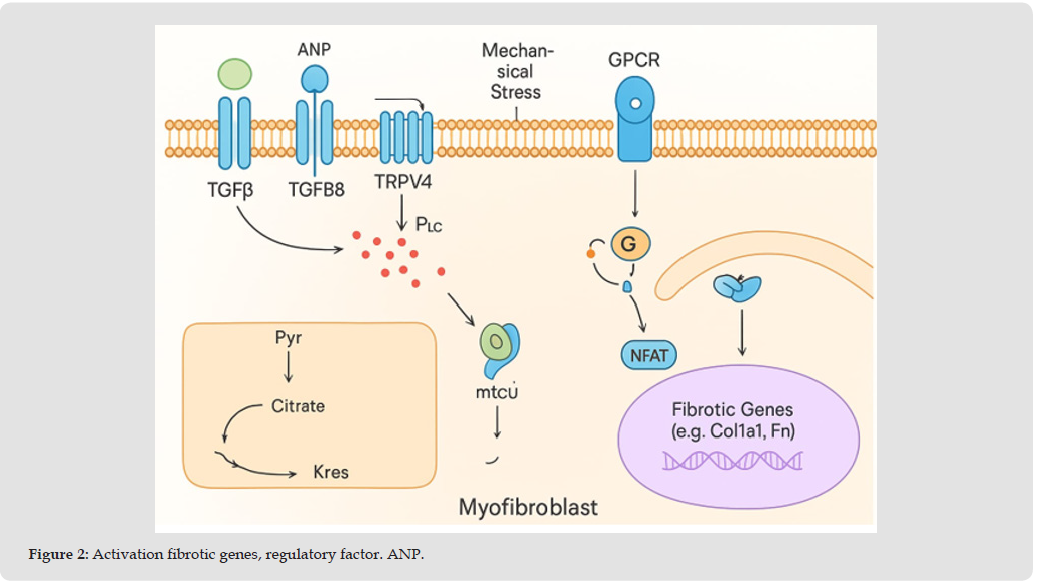
Direct evidence for NP effects on Ca²⁺ in cardiac fibroblasts is limited but informative. A key study demonstrated that CNP activates a non-selective cation current in rat cardiac fibroblasts, mediated primarily by NPR-C and permeable to Na⁺ and Ca²⁺, leading to membrane depolarization. [6,12] Although this work did not focus on detailed characterization of intracellular Ca²⁺ transients, it provided clear evidence that CNP can acutely modify cation entry, including Ca²⁺, in fibroblasts. [6,12] Other studies have emphasized the antifibrotic effects of CNP in fibroblasts, showing robust stimulation of cGMP production and inhibition of proliferation and collagen synthesis— effects that appear more pronounced than those of ANP or BNP in this cell type. [6,20] These findings have strengthened the concept of CNP as a local modulator of fibrosis and have led to the proposal of an autocrine loop in which fibroblasts secrete CNP in response to profibrotic stimuli, exerting an endogenous braking function. [6,20] Natriuretic peptides, such as atrial natriuretic peptide (ANP), play a significant role in the regulation of calcium homeostasis in mesenchymal cells. Recent studies have highlighted that ANP can interact with vimentin, an intermediate filament protein, to modulate calcium release from intracellular compartments like endosomes and lysosomes. This interaction is crucial in the process of calcification, as vimentin acts as a mediator that facilitates the deposition of calcium in the extracellular matrix (Figure 1). Although the precise relationship between these antifibrotic effects and Ca²⁺ signaling has not been dissected, it is plausible that cGMP elevation and PKG activation indirectly shape Ca²⁺ pathways through regulation of TRP channels, SOCE components, or ER transporters, and that depolarization induced by non-selective cation currents alters the driving force for Ca²⁺ entry. [4-6,14] In the absence of direct Ca²⁺ imaging data under NP stimulation in human fibroblasts and myofibroblasts, these hypotheses remain grounded extrapolations from related systems. [4-6,14]. Cardiac fibrosis is a complex and multifactorial process characterized by the activation, proliferation, and differentiation of fibroblasts into myofibroblasts, leading to excessive extracellular matrix deposition. Several stimuli contribute to this process, including mechanical stress, profibrotic cytokines such as transforming growth factor-β (TGF-β), calcium-dependent signaling pathways, and mechano-sensitive channels such as TRPV4. These pathways converge on transcriptional programs that promote cytoskeletal remodeling, increased contractility, and enhanced collagen synthesis, ultimately driving fibrotic tissue remodeling, as schematically represented in Figure 2. Atrial natriuretic peptide (ANP), traditionally regarded as a cardioprotective hormone, has emerged as an important modulator of fibroblast behavior under both physiological and pathological conditions. ANP signals primarily through natriuretic peptide receptor-A (NPR-A), leading to cyclic GMP (cGMP) production and activation of downstream signaling cascades that intersect with calcium homeostasis, cytoskeletal dynamics, and mechanotransduction. In the context of fibrosis, ANP has been shown to interact with stress-induced signaling networks, potentially influencing fibroblast proliferation, myofibroblast activation, and matrix remodeling in a context-dependent manner. Notably, the literature presents divergent and sometimes contradictory findings regarding the role of ANP in fibrotic regulation. Several studies report anti-fibrotic effects of ANP, demonstrating inhibition of cardiac fibroblast proliferation, reduced collagen synthesis, and suppression of TGF-β– driven myofibroblast differentiation via cGMP-dependent mechanisms [1]. In contrast, other investigations suggest that under certain experimental conditions—such as chronic stimulation, specific tissue contexts, or inflammatory microenvironments—ANP or related natriuretic peptides may exert pro-fibrotic effects, including enhanced fibroblast activation, altered matrix metalloproteinase expression, and promotion of fibrotic remodeling [15,16]. These discrepancies likely reflect differences in experimental models, peptide concentration and exposure time, fibroblast origin (atrial vs ventricular, species-specific differences), and the presence of mechanical or inflammatory co-stimuli. Collectively, current evidence indicates that ANP does not exert a uniformly pro- or anti-fibrotic role but rather functions as a context-dependent modulator of fibrosis, integrating biochemical and mechanical signals within the fibrotic niche. Further studies are required to clarify the conditions under which ANP signaling shifts between protective and maladaptive.
Figure 1
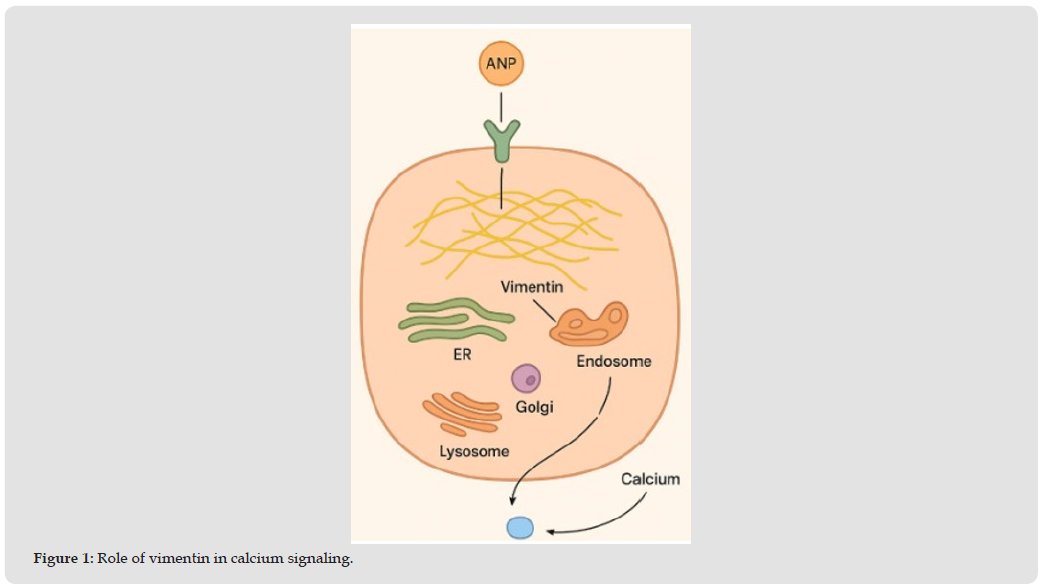
Figure 2
In human models, available information on NP–Ca²⁺ interactions in fibroblasts and myofibroblasts is even more scarce. Human cardiac fibroblasts obtained from biopsies or surgical tissue can differentiate into myofibroblasts in culture, and CNP expression and upregulation in response to profibrotic stimuli have been described, but most studies have focused on proliferation markers, extracellular matrix endpoints, and gene expression rather than detailed Ca²⁺ dynamics. [3,7,9] Consequently, direct data on how ANP, BNP, or CNP modulate Ca²⁺ oscillations in human myofibroblasts are limited. [3,4,7] In AC16, research has primarily addressed BNP regulation and stress responses (e.g., hypoxia or anthracycline cardiotoxicity), with particular interest in mitochondrial and ER Ca²⁺ involvement. [11,15-18] Nevertheless, studies applying exogenous NPs to AC16 while simultaneously measuring cytosolic, ER, or mitochondrial Ca²⁺ are lacking, and systematic characterization of NPR-A/B/C expression in this line remains incomplete. [6,11,18] This absence of direct evidence positions AC16 as a promising platform for future exploration rather than a source of definitive conclusions at present [11,15-18].
Based on available evidence, a working model can be proposed
in which CNP plays a central role in regulating Ca²⁺ in cardiac myofibroblasts:
fibroblasts exposed to TGF-β1, endothelin-1, or other profibrotic
stimuli would increase CNP production, which would act in
an autocrine/paracrine fashion on NPR-B and NPR-C, elevating cGMP
and activating non-selective cation currents. [6,9,20] The combination
of these effects could alter Ca²⁺ entry, membrane potential, and
ER Ca²⁺ release, thereby reshaping Ca²⁺ oscillations that govern myofibroblast
transition and extracellular matrix synthesis. [4-6,14,20]
Testing and refining this model will require studies that integrate NP
pharmacology, cGMP measurements, and Ca²⁺ imaging in fibroblasts,
human myofibroblasts, and AC16 cells. [4-6,11,14] Particularly attractive
approaches include:
1. Acute and chronic exposure to ANP, BNP, and CNP in the presence
of selective NPR-A/B/C antagonism;
2. Use of fluorescent or genetically encoded Ca²⁺ indicators
alongside cGMP probes [21,22];
3. Genetic manipulation of receptors and channels (NPR-A/
B/C, STIM/Orai, relevant TRP channels); and
4. AC16–fibroblast co-culture models to capture paracrine signaling
mediated by endogenously produced NPs [4-6,11,14-
18].
Natriuretic peptides represent an endogenous cardioprotective pathway against adverse remodeling, with well-documented antihypertrophic and antifibrotic effects in experimental models and clinical contexts. [1-3,10] In cardiomyocytes, NP–cGMP–Ca²⁺ interactions have been studied in depth, revealing complex regulation of L-type Ca²⁺ current, sarcoplasmic reticulum Ca²⁺ reuptake, and crosstalk with cAMP signaling. [1,2,10,19] In cardiac fibroblasts and myofibroblasts, evidence supports a prominent role for CNP, which exerts potent antifibrotic effects and can activate NPR-C–dependent non-selective cation currents with likely implications for Ca²⁺ handling. [6,12,20] Nonetheless, direct measurements of NP-induced Ca²⁺ dynamics in human myofibroblasts or in AC16 cells are largely absent, constituting a major gap in current knowledge. [4-6,11,18] Integrating modern Ca²⁺ imaging tools, cGMP sensors, and genetic manipulation in human fibroblast/myofibroblast models and AC16 cells could clarify how NPs reshape Ca²⁺ signaling within the cardiac interstitium, with potential to identify new antifibrotic therapeutic targets and optimize the use of NP analogs or cGMP–PKG pathway modulators in clinical practice [4-6,11,14-20].

International Association of Landscape Archaeology, Czech Glass Society, Czech Republic

Department of Chemistry, Semenov Institute of Chemical Physics, USSR Academy of Sciences, Moscow, Russia

Department of Educational Sciences, Research Centre Qualities of Teachers, School of Education – HAN, Nijmegen, Netherlands

Associate Professor at Department of Breast and Thyorid Surgey, Chongqing General Hospital, China

Neurology, LA BioMed Research Institute, USA





 Abstract
 PDF
PDF



























