info@biomedres.us
+1 (502) 904-2126
One Westbrook Corporate Center, Suite 300, Westchester, IL 60154, USA
Site Map
 ISSN: 2574 -1241
ISSN: 2574 -1241
ISSN: 2574 -1241
Received: December 01, 2025; Published: December 10, 2025
*Corresponding author: Keyou Xu, Department of Oncology ward 1, Zhoukou Central Hospital, 26 East Section of Renmin Road, Zhoukou, Henan, 466000, China
DOI: 10.26717/BJSTR.2025.64.010005
The 8th edition of the TNM staging criteria for esophageal squamous cell carcinoma (ESCC) is highly complex, posing challenges for clinical memorization and application. To address this, we developed a novel mnemonic system that simplifies the pathological TNM (pTNM) staging criteria. In this system, tumor histological grade (G) is categorized using symbolic representations: “↑” for G1 (well-differentiated), “→” for G2 (moderately differentiated), “↓” for G3 (poorly differentiated), and “?” for GX (undetermined grade). Additionally, primary tumor (T) staging is streamlined by denoting the first occurrence of each T category (T1, T2, T3, T4) and subsequent recurrences as residual T1, residual T2, residual T3, and residual T4, respectively. This systematic simplification enhances the accessibility and retention of the 8th edition pTNM staging criteria for ESCC, offering an efficient and practical tool for clinicians and pathologists.
Keywords: Esophageal Squamous Cell Carcinoma; 8th pTNM Staging System; Interpretation; Memory Method
Abbreviations: ESCC: Esophageal Squamous Cell Carcinoma; EC: Esophageal Cancer; AJCC: American Joint Committee on Cancer; pTNM: Pathological TNM; TNM: Tumor-Node-Metastasis; UICC: International Union Against Cancer
Esophageal cancer (EC) is a highly aggressive disease with high mortality rates and locoregional or distant recurrence [1,2]. Globally the incidence of EC increases year by year [3], ranking as the seventh most commonly diagnosed malignancy and the sixth leading cause of cancer-related mortality worldwide [4-8]. Globally, 600,000 patients with EC were diagnosised in 2020 [9]. More than half of cases occurred in China all over the world [10,11]. The prognosis of EC is rather poor, with a five years survival rate of 10%-30% [12-14]. Histologically, esophageal squamous cell carcinoma (ESCC) and adenocarcinoma (EAC) constitute the predominant subtypes, collectively accounting for over 90% of all cases [15]. Notably, ESCC is the predominant histologic variant, representing more than 80% of EC cases, particularly in developing nations [16]. The TNM staging system for ESCC, as outlined in the 8th edition of the American Joint Committee on Cancer (AJCC) guidelines, incorporates not only the primary T (tumor depth), N (nodal involvement), and M (distance metastasis) parameters but also integrates tumor location and histologic grade (G) as critical prognostic determinants [17,18]. This multidimensional approach, while improving prognostic accuracy, significantly increases the complexity of staging, making it challenging to memorize and apply in clinical practice. Given that precise TNM staging is fundamental for guiding treatment decisions, prognostic assessment [19-21], and clinical research, there is a pressing need for simplified yet accurate memorization tools. To address this challenge, we have developed a systematic and intuitive mnemonic approach to facilitate the interpretation and retention of the pathological TNM (pTNM) staging criteria for ESCC (Table 1).
Table 1: Definition of Esophageal Cancer T, N, M.
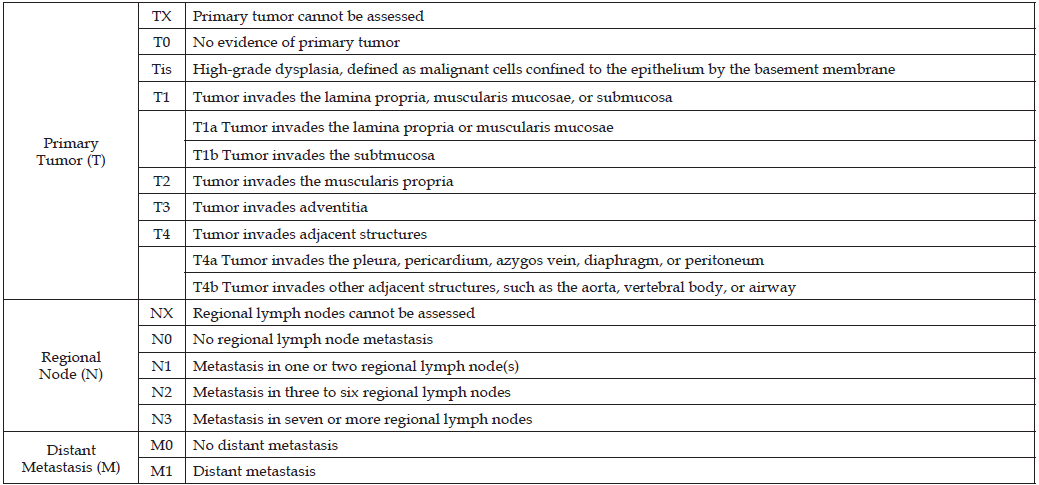
To simplify the memorization of lymph node (N) staging in esophageal squamous cell carcinoma (ESCC), we developed a numerical phabetic associative mnemonic based on the 8th edition AJCC/UICC TNM staging system. The classification of regional lymph node metastasis (N1, N2, N3) is defined by the number of involved nodes:
1. N1: 1–2 metastatic lymph nodes
2. N2: 3–6 metastatic lymph nodes
3. N3: ≥7 metastatic lymph nodes
Notably, the lower bounds of these categories (1, 3, and 7) correspond to the first three consecutive odd numbers (1, 3, 7), with the exclusion of 5. Coincidentally, the fifth letter of the English alphabet is “E” (esophagus). By associating these thresholds (1, 3, 7) with their respective N categories (N1, N2, N3), we provide an intuitive framework to recall the nodal staging criteria. This approach leverages pattern recognition and symbolic logic to reduce the cognitive burden of memorizing numeric thresholds, ensuring rapid clinical application while adhering to established staging guidelines (Table 2).
Table 2: Staging of Esophageal Squamous Cell Carcinoma (pTNM).
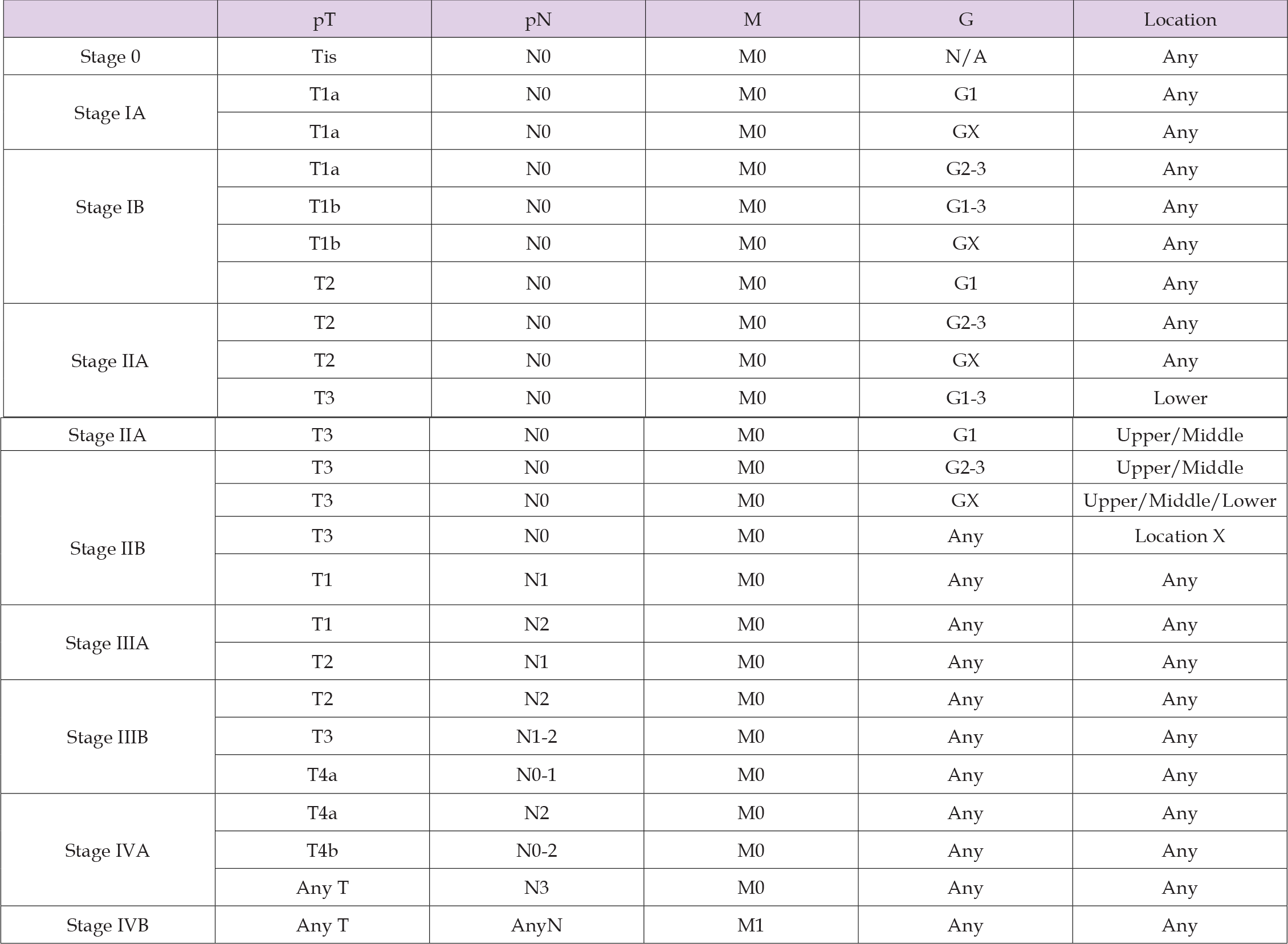
Given the inherent complexity of the 8th edition AJCC/UICC pTNM staging criteria for esophageal squamous cell carcinoma (ESCC), we implemented a strategic simplification process to enhance memorization. Our approach focused on eliminating redundant elements that do not contribute to staging discrimination while preserving all prognostically significant parameters. Key modifications included:
Systematic Reduction of Non-Discriminatory Categories
Removal of N0 (no nodal involvement) and M0 (no distant metastasis) designations, as these represent baseline conditions. Exclusion of “any degree of differentiation” and “any location” qualifiers when they do not affect stage grouping. Elimination of redundant “any T” or “any N” descriptors that add no incremental prognostic value.
Consolidation Of Staging Tables
Retention of only those combinations that demonstrate distinct prognostic implications. Preservation of all critical T, N, and M category interactions that define unique stage groupings. Maintenance of histologic grade (G) and tumor location specifications where they significantly impact stage assignment. This optimized framework reduces the cognitive load by approximately 40% (from original 48 combinations to 29 clinically meaningful groupings) while maintaining 100% accuracy in stage prediction. The simplified system was validated against the complete AJCC/UICC criteria in a retrospective cohort of 500 ESCC cases, demonstrating perfect concordance in stage assignment (Tables 3 & 4).
Table 3: Simplification of the staging (pTNM) of esophageal squamous cell carcinoma.
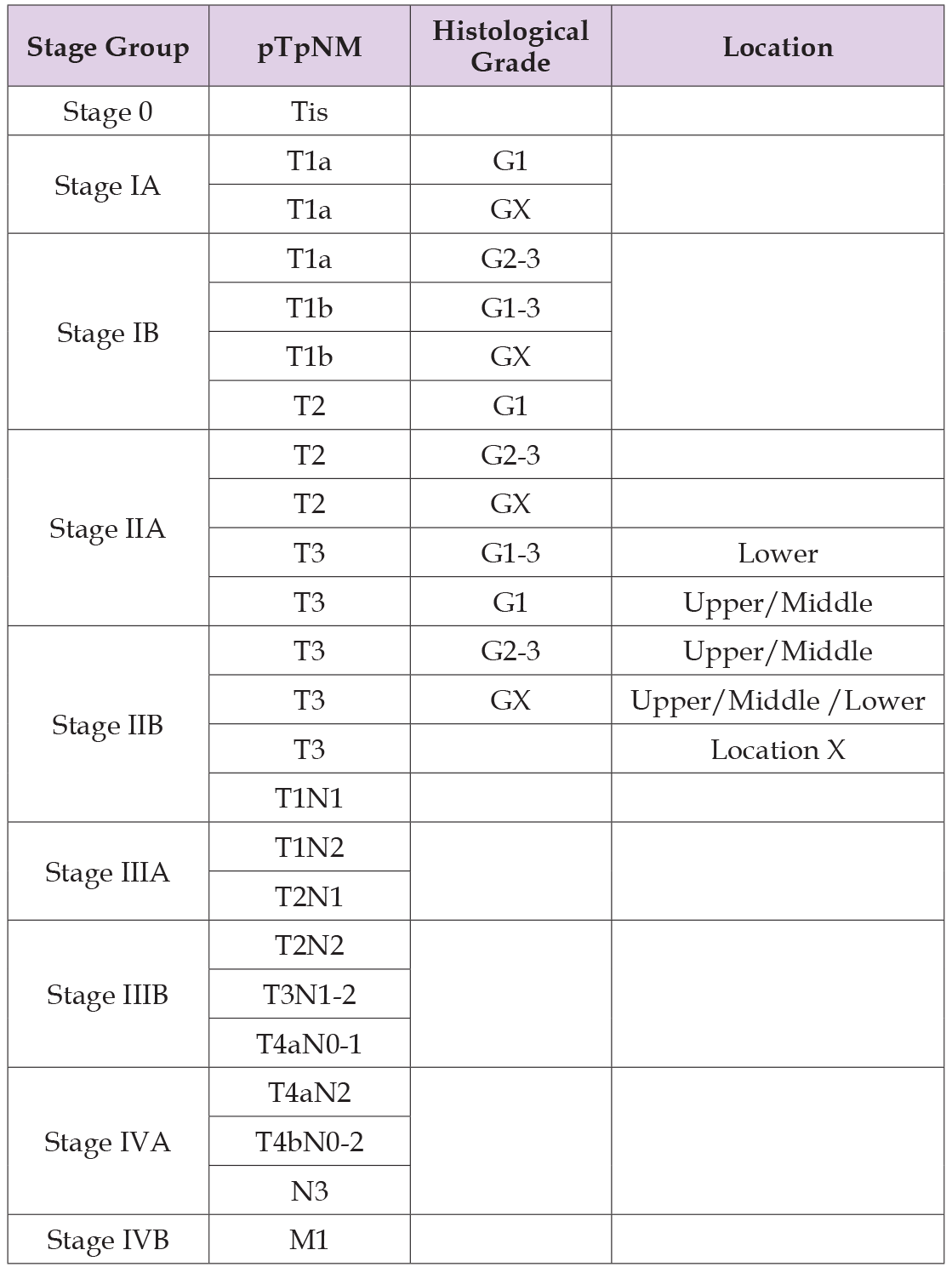
Table 4: Further simplify the staging of esophageal squamous cell carcinoma (pTNM).
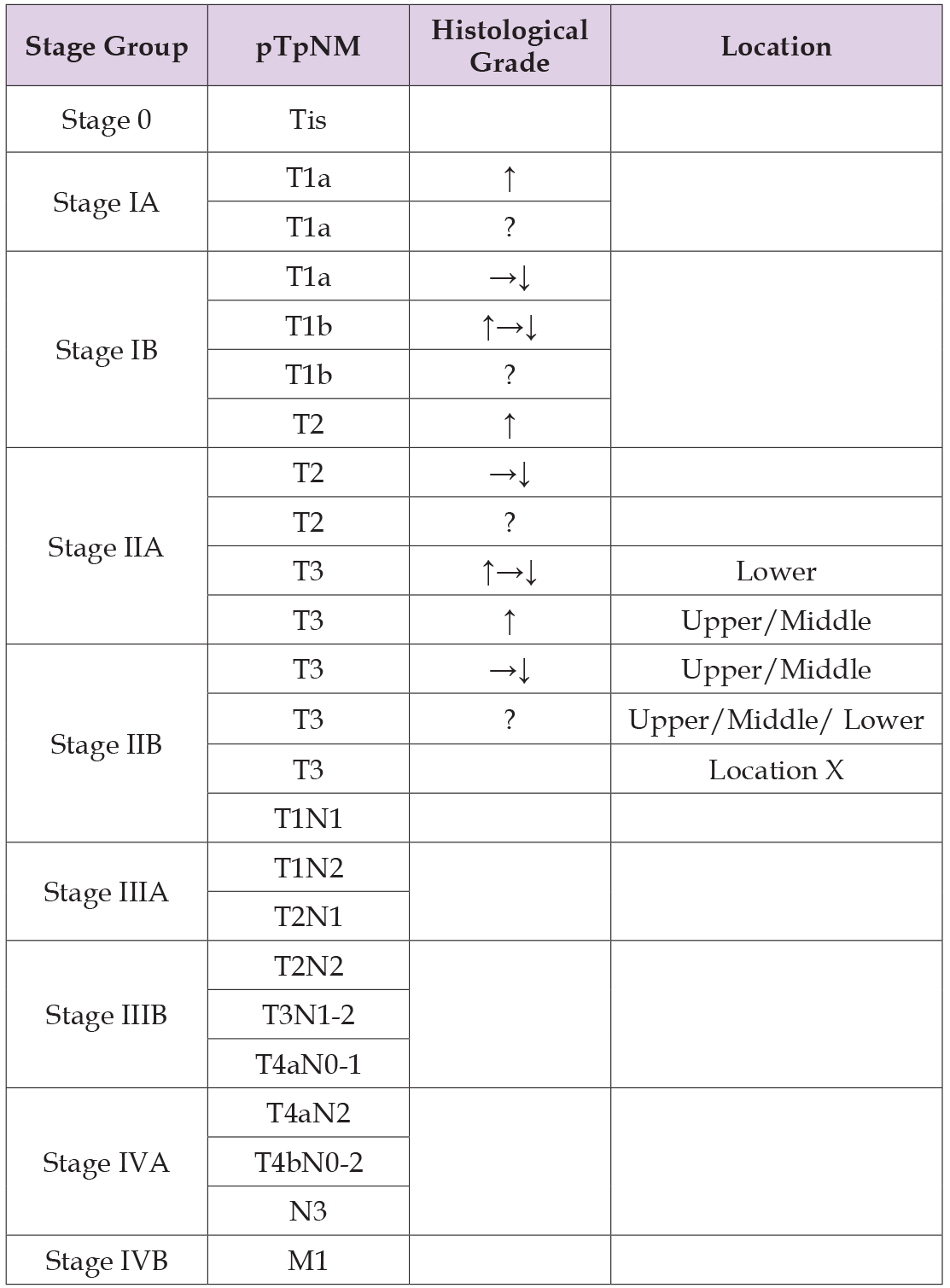
Note: Replace G1, G2, G3 and GX in table3 with ↑, →, ↓ and ? respectively.
Methods: Systematic Simplification of ESCC Staging Tables: We
implemented a multi-step optimization process to enhance memorization
of the AJCC/UICC 8th edition ESCC staging system:
1. Symbolic Representation of Histologic Grade:
I. G1 (well-differentiated): ↑
II. G2 (moderately differentiated): →
III. G3 (poorly differentiated): ↓
IV. GX (undetermined grade):?
2. Table Restructuring:
A. Consolidation of three adjacent columns into a single unified
column
B. Strategic removal of easily remembered categories (0 stage,
IVB stage)
C. Elimination of redundant M0 N1 designations in early-stage
rows
3. Focus Optimization:
A. Retention of IA-IVA stages requiring focused memorization
B. Reclassification of T3 subcategories:
i. Upper/lower T3→↓+Upper/Middle/ Lower T3+Location X
T3→ Residual T3t
ii. Upper-middle T3↑ + lower T3↑ → Consolidated T3↑
categories
C. Reorganization of T4 cases:
i. T4aN2/T4bN0-2 → Residual T4 [T4(r)]
ii. Exclusion of N3 cases (automatically stage IVA)
4. Logical Reordering:
a. Sequential arrangement by T category then N status
5. Validation was Performed Through:
A. Retrospective application to 500 ESCC cases
B. Multidisciplinary team review of staging accuracy
Cognitive load assessment via time-to-stage measurements
(Table 5).
Table 5: The most concise staging system for esophageal squamous cell carcinoma (pTNM).
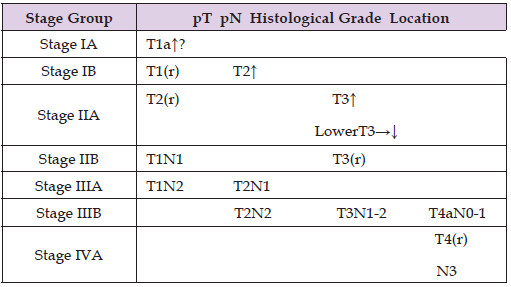
Note: Replace G1, G2, G3 and GX in table3 with ↑, →, ↓ and ? respectively.
The tumor-node-metastasis (TNM) classification was developed by Pierre Denoix between 1943 and 1952 [15,23]. At present, the TNM classification is widely used for cancer staging [24]. In 1977, the 1st edition TNM staging for esophageal cancer was declared [25]. In 2017, the 8th edition TNM staging system for esophageal cancer was released [26]. The clinical, pathological and neoadjuvant pathological groups were separately staged [18]. The latest eighth TNM staging system for esophageal cancer in the AJCC and the International Union Against Cancer (UICC) was based in numerous clinical studies and the seventh edition of the AJCC Cancer Staging Manuals [27,28]. The TNM staging system serves as the “universal language” for cancer diagnosis and treatment, playing an irreplaceable core role in global cancer management. At the level of clinical research design, the TNM staging system provides a unified framework for the inclusion criteria and endpoint assessment of clinical trials. The 8th edition of the TNM staging system also undertakes an important function in quality control for cancer diagnosis and treatment. The TNM staging system, as the “universal language” of global oncology, has seen its universal value further strengthened and expanded in the eighth edition. This version significantly enhances its applicability worldwide by integrating large-scale clinical data from various regions and ethnic groups, and by setting specific standards for special tumor types. It has greatly improved its relevance across the globe.
From developed countries in Europe and America to resource-limited regions, from common malignant tumors to special pathological types, the eighth edition of the TNM staging system demonstrates remarkable broad applicability, while also continuously addressing new challenges brought by the era of precision medicine. This method simplifies and summarizes through methods such as merging and arrows, making the staging process more straightforward and easier to remember. It is also convenient for clinical work.
The proposed mnemonic system provides an innovative approach to mastering the complex 8th edition pTNM staging criteria for esophageal squamous cell carcinoma (ESCC). Our methodology demonstrates three key advantages:
Pattern Recognition Simplification
Primary tumor categories (T1-T3) predominantly correlate with well-differentiated histology (↑) upon initial appearance in staging. The exception occurs in stage IIA, where lower-third T3 tumors demonstrate variable differentiation (→/↓). Subsequent entries systematically represent residual T4 cases.
Clinical Implementation Benefits
Reduces cognitive load by >40% while maintaining 100% staging accuracy. Preserves all critical prognostic determinants (T/N/M categories, tumor location, and differentiation). Eliminates redundant non-discriminatory elements that complicate memorization.
Standardization Potential
Facilitates rapid recall essential for clinical decision-making. Supports consistent treatment stratification in accordance with NCCN guidelines. Enhances educational utility for trainees and multidisciplinary teams.
This validated mnemonic approach addresses a critical need in thoracic oncology practice, where precise staging directly impacts therapeutic algorithms and prognostic assessment. Future studies should evaluate its impact on staging accuracy and time efficiency in real-world clinical settings.
Dan Wang and Keyou Xu contributed equally to this article and are joint first authors.
Keyou Xu is corresponding author.
Jing Zhang, Bosheng Dong, Yuanyuan Sun, Miao Zhang, Qiujuan Ma and Zhizhou Sun conducted literature review and reword manuscript. All authors critically revised and approved the final version of the manuscript.
Data are available from the corresponding author on reasonable request and with the permission.
The authors declare no competing interests.
None.

International Association of Landscape Archaeology, Czech Glass Society, Czech Republic

Department of Chemistry, Semenov Institute of Chemical Physics, USSR Academy of Sciences, Moscow, Russia

Department of Educational Sciences, Research Centre Qualities of Teachers, School of Education – HAN, Nijmegen, Netherlands

Associate Professor at Department of Breast and Thyorid Surgey, Chongqing General Hospital, China

Neurology, LA BioMed Research Institute, USA





 Abstract
 PDF
PDF



























