info@biomedres.us
+1 (502) 904-2126
One Westbrook Corporate Center, Suite 300, Westchester, IL 60154, USA
Site Map
 ISSN: 2574 -1241
ISSN: 2574 -1241
ISSN: 2574 -1241
Received: November 17, 2025; Published: December 01, 2025
*Corresponding author: Mergenov AE, Department of Family Medicine of Pre-graduate and Postgraduate Education, Kyrgyz State Medical Academy named after I.K. Akhunbaev. I.K. Akhunbaev, Kyrgyzstan
DOI: 10.26717/BJSTR.2025.64.009983
In the Kyrgyz Republic, kidney diseases remain a pressing public health issue, with six main nosological forms
registered in official statistics. Chronic pyelonephritis is most prevalent: 916.28 per 100,000 in adults and
531.89 in children under 14. Acute and chronic glomerulonephritis occur at rates of 111.66 (adults) and 67.69
(children), while kidney and ureter stones are recorded at 102.84 and 67.57 per 100,000, respectively. Mortality
in the southern region is 19.7 per 1,000 and in the northern region — 30.6 per 1,000, with significantly higher female
mortality in the north — 34.2 per 1,000 (equivalent to 342 deaths per 100,000 women annually). To assess
exogenous risk factors, drinking water quality was analyzed: from 2019–2023, national deviation from standards
averaged 1.3%, peaking in Osh (3.3%) and Batken (2.7%) regions. Food composition was also studied; for
example, kurut is consumed by 80.1% of schoolchildren (southern regions — 87.3%, highland — 80.6%, northern
— 72.5%). All tested kurut samples contained salt levels 2.5 to 5 times above recommended daily limits.
Objectives: To study the structure, dynamics of renal pathology in Kyrgyzstan and to determine the predictors
of its formation.
Methods: Descriptive statistics and quantitative characterization of morbidity data, water supply, nutritional
characteristics and climatic conditions in the Kyrgyz Republic.
Results: Chronic pyelonephritis accounts for the largest proportion of 31.7% (95% CI 31.6%-31.8%), chronic
renal failure is 0.58% (95% CI 0.57%-0.60%) and acute renal failure 0.05% (95% CI 0.05%-0.06%) in the structure
of renal morbidity. There is a prevalence of this pathology in the northern climate-geographic regions of the
country and in rural areas, where there is inadequate access to clean drinking water and quality health care due
to low socioeconomic status.
Conclusion: in the structure of the registered morbidity of the population of the republic. on the level of prevalence
of kidney disease occupies the fourth place Nature of water supply peculiarities of nutrition and climate-
geographical, socio-economic conditions play a role in the formation of renal pathology.
Keywords: Kidney Pathology; Chronic Pyelonephritis; Acute Renal Failure; Chronic Renal Failure; Water Supply; Nutrition
Kidney disease is an important public health problem affecting more than 750 million people worldwide (Kassebaum NJ [1]). The structure, prevalence, dynamics of kidney diseases, as well as their diagnosis and treatment vary considerably from country to country. The significance and consequences of kidney disease are best studied in developed countries, but recently there has been increasing evidence of a similar or even higher prevalence of kidney disease in developing countries (Al Shdaifat EA [2]). In recent decades, data have been obtained on the association of numerous environmental, socioeconomic and clinical factors with the risk of kidney disease. It has been found that in most countries of the world, the prevalence of kidney disease in the population correlates with socially important factors. (Bikbov B, et al. [3]). In high-income countries, where among racial/ethnic minorities and persons with low socioeconomic status, the burden of disease is much higher. Numerous data show that racial and ethnic minorities (e.g., African Americans in the USA, Aboriginal people in Canada and Australia, Indo-Asians in the UK, etc.) have a disproportionately more severe and progressive course of kidney disease (Bailey J, et al. [4-6]). Associations between socioeconomic status and the risk of progression of chronic kidney disease and the development of eventual renal failure have been well described, with the lower the socioeconomic status, the greater the disease burden (Crews DC, et al. [7]).
Climate change is increasingly recognized as an important public health factor, and its impact extends to the prevalence and severity of various diseases, including kidney pathology (Tang H, et al. [8]). Rising global temperatures, changing precipitation patterns, and extreme weather events can worsen water scarcity, degrade its quality, and disrupt food systems — all of these are critical exogenous factors affecting kidney health (Tang H, et al. [8]). In the Kyrgyz Republic, where access to clean drinking water and nutritious food is already a problem, climate change may further deplete these resources, potentially increasing the burden of kidney disease. This article explores the role of exogenous factors such as water quality and nutrition in the formation of kidney pathology, as well as the broader effects of climate change on these determinants. By integrating climate change into the analysis, we aim to provide a more complete understanding of the environmental and socio-economic factors of kidney disease in the region (Guo W, et al. [9]). Socioeconomic status significantly affects lifestyle and nutrition. In recent years, it has been shown that a healthy diet is associated with favorable outcomes of CKD (Banerjee T, et al. [10]), but low-income individuals often cannot adhere to a healthy diet, which contributes to an increased risk of kidney disease (Banerjee T, et al. [10-12]). Individuals with low socioeconomic status often have nutritional malnutrition, which is a risk factor for the development of CKD (Crews DC, et al. [13]) and progression of renal failure (Banerjee T, et al. [14]).
In low-income countries, nutritional malnutrition can lead to malnutrition and starvation with unfavorable consequences. In particular, in women of childbearing age, it can lead to the birth of children with low body weight and in the future - to the development of remote complications, including CKD (Piccoli GB, et al. [15]). In countries such as Haiti, Namibia and Zambia, 35% of the population and more are undernourished (Food and Agriculture Organization of the United Nations. The FAO hunger map 2015 [16]). However, in high-income countries, nutritional insecurity is associated with overeating, and individuals with nutritional insecurity have an increased risk of developing overweight and obesity (Shariff ZM, et al. [17,18]). Moreover, food insecurity is associated with a number of diseases directly related to nutrition, including diabetes mellitus and arterial hypertension. Studies of purely epidemiologic plan to study the social and economic burden of kidney disease, peculiarities of epidemiology, identification of predictors of exacerbation as an epidemiologic situation and development of complications have not been conducted, so the purpose of our study is to identify the structure, dynamics of registered renal diseases in order to determine the leading risk factors for the development of renal pathology to prevent the growth of morbidity and prevention. Purpose Analysis of the structure of kidney diseases in the Kyrgyz Republic and possible predictors of their development.
Descriptive statistics of morbidity data https://stat.gov.kg/ru/ water supply data https://dgsen.kg/, nutritional characteristics https://dgsen.kg/
Statistical.
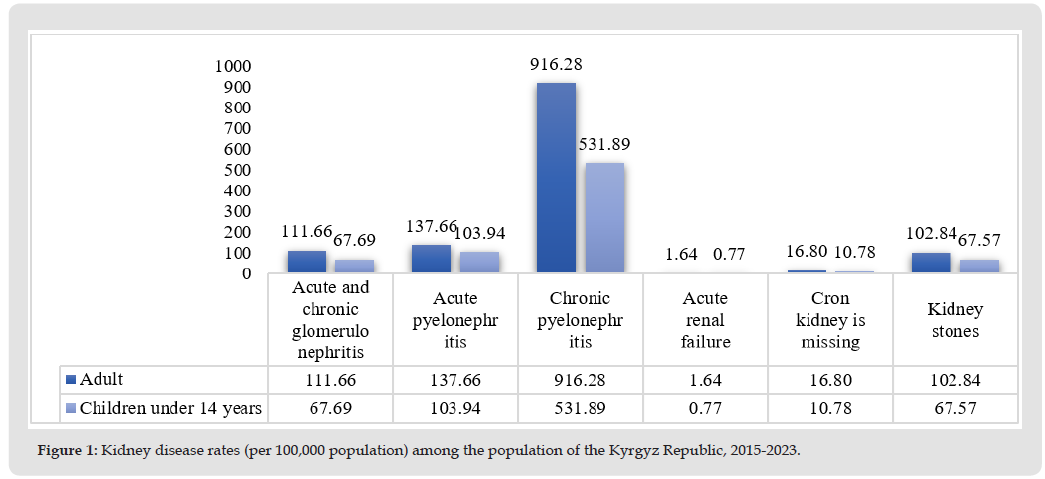
In the state reporting form on morbidity in the Kyrgyz Republic, the structure of kidney diseases includes 6 nosological forms, of which the first place in terms of prevalence is occupied by chronic pyelonephritis with an incidence rate of 916,280/0000 in adults and 531,890/0000 in children under 14 years of age. The incidence rate of acute pyelonephritis is 137,660/0000 in adults and 103,940/0000 in children under 14 years of age. Acute and chronic glomerulonephritis among adults is - 111.66 and in children under 14 years is 67.690/0000, the same incidence rates of “kidney and ureter stones” at 102.840/0000 and 67.570/0000 are observed in adults and children under 14 years respectively. The incidence rate of chronic kidney diseases - 16,800/0000 in adults and 10,780/0000 in children under 14 years of age and occupies a special place among chronic non-communicable diseases as it leads to drastic deterioration in quality of life, high mortality and in terminal stage, the need for expensive methods of replacement therapy - dialysis and kidney transplantation. Detailed data on kidney diseases are presented in Figure 1. According to the study Global Burden of Disease 2010, diseases of the genitourinary system, including chronic kidney disease ranked 27th in the list of causes of total number of deaths in the world in 1990, that is, the age-standardized annual mortality rate was 15.70/0000, but in 2010 the annual mortality rate was 16.30/0000 taking the 18th place, that is, the degree of movement up the list is second only to HIV and AIDS (Jha V, et al. [19])].
Figure 1
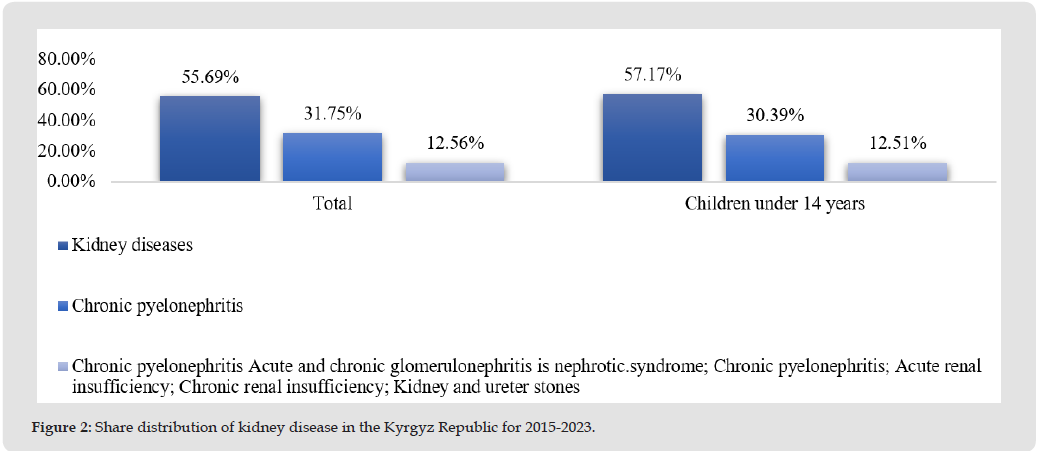
Taking into account the global trend of increasing relevance of kidney pathologies, we carried out a comparative calculation of the mortality rate from this pathology in general. The results of our calculations showed relatively high mortality rates for the country, totaling 19.70/00 for the Southern region and 30.60/00 for the Northern region. A summary of the comparative mortality rates is presented in Table 1. The data presented in Table 1 show that there are significantly more deaths among women in the northern region compared to the southern region - the mortality rate is 21.2, amounting to 34.20/00, when recalculated per 100,000 inhabitants, this figure would be 342 deaths among the female population per year. In the northern part of the country, the mortality rate from Burden of Group A Streptococcus is 1.5 times higher than in the southern region, which in turn determines a high level of social burden of this pathology. The data in Figure 2 show that despite the relatively low level of registered cases of chronic kidney pathologies - 12.6%, when recalculated per 1000 us. – 1260/00, the mortality rate is significantly high, averaging 25.20/00, which in turn exceeds global mortality rates in general. Table 2 shows that the comparative analysis of kidney disease indicators of the population of the southern and northern regions of the republic shows that acute and chronic glomerulonephritis is 1.3 times more registered in the southern region amounting to 119.20/0000 against 88.80/0000 in the north. The identical picture is observed with acute and chronic pyelonephritis the index of which is 1.8 and 1.1 respectively higher than in the northern region.
Table 1: Comparative mortality rates (per 1000 population) by territorial and gender distribution of patients with diseases of the genitourinary system, Kyrgyz Republic, 2015-2023.
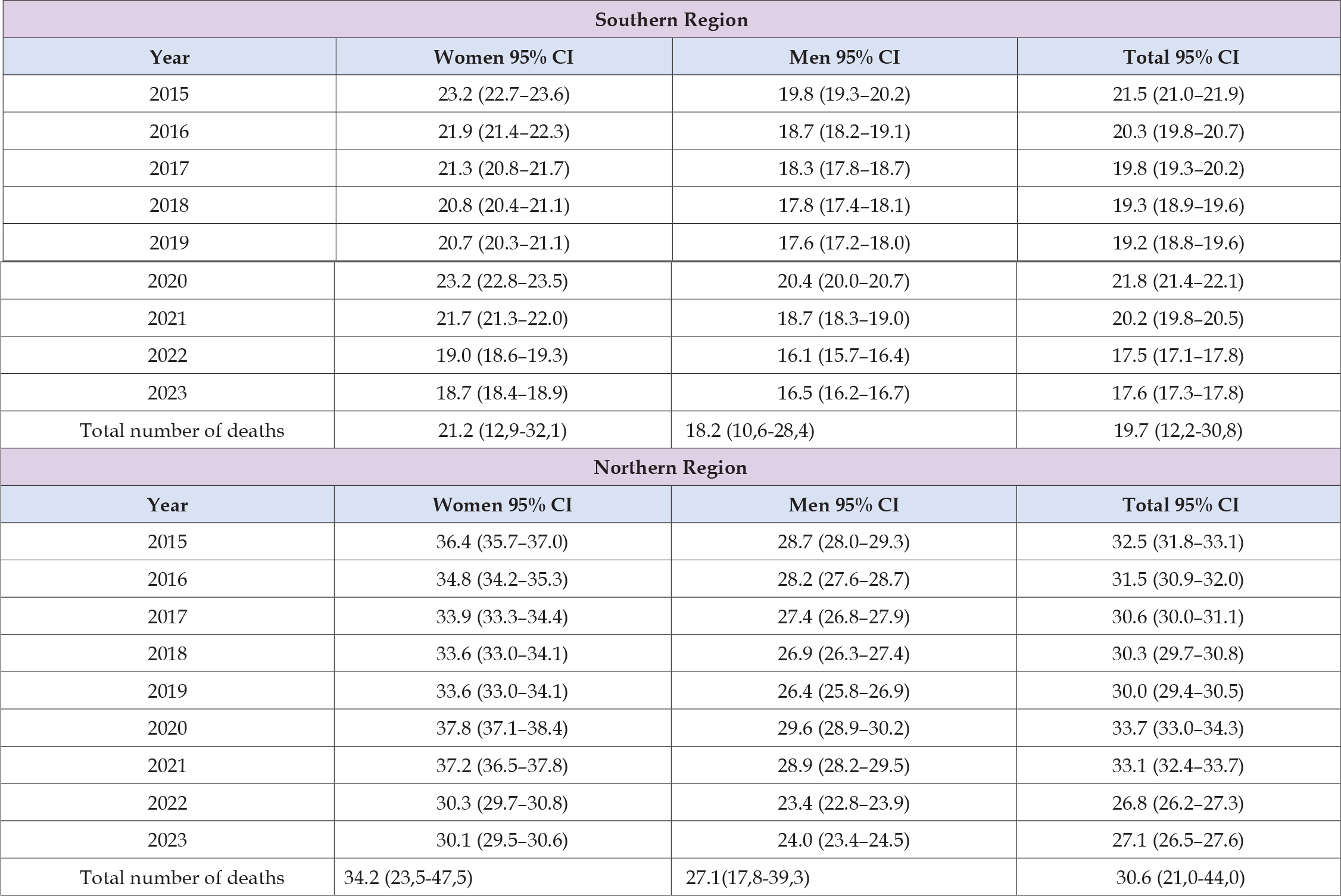
Table 2: Comparative distribution of kidney disease (100,000 population) by regions of the Kyrgyz Republic, 2015-2023.
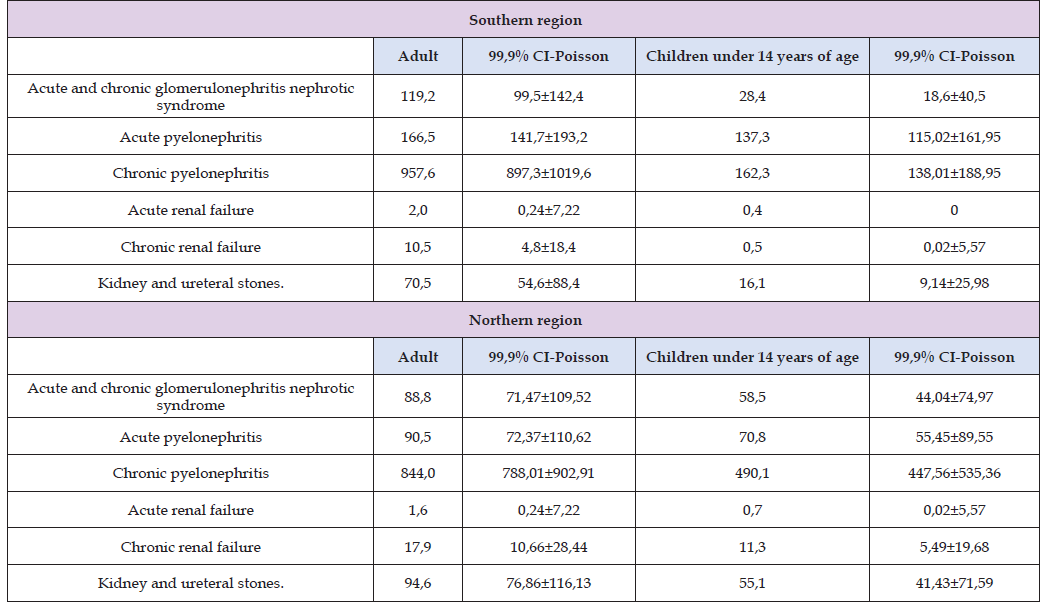
Figure 2
The incidence of chronic renal failure is 1.7 times higher in the northern region than in the southern region at -17.90/0000 vs. -10.50/0000. The diagnosis of kidney and ureteral stones is 1.3 times more frequent among the residents of the northern region - 94.60/0000 vs. 70.50/0000.In modern conditions, the amount of chemicals of inorganic and organic nature contaminating drinking water is constantly growing and there is a lot of evidence of causeand- effect relationships between water quality and the state of public health. Drinking water should be considered as a potential risk factor for negative changes in public health. Possible reasons for the lack of quality drinking water and the presence of various chemical substances in it in different regions may include: peculiarities of natural water composition, contamination of water supply sources, insufficient control over compliance with sanitary and epidemiological regime in the territory of sanitary protection zones of water sources, inefficient operation of water treatment plants, use of unsafe reagents, chlorination or ozonation of water and its contamination with transformation products, deterioration of water quality in pipelines. Another problem of drinking water supply is the fact that every year new industrial and agricultural chemicals appear, the release of which is associated with the risk of harmful waste entering water sources, and the existing water treatment technologies are not designed to remove these contaminants from water. (Karimov TK, 2024) The population of the republic is supplied from 1183 centralized household and drinking water supply systems, which receive water from 1407 sources.
Of these, 179 (13%) are surface water: rivers, ponds, canals, 429 (30%) do not meet the requirements of sanitary norms and rules. Water disinfection is not carried out at 70% of facilities, 28% do not comply with the sanitary protection zone and 44.5% do not have a water treatment system. The quality of drinking water in water distribution networks by physical and chemical indicators for 2019-2023 in the republic on average had deviations - 1.3%. And the highest indicators were observed in Osh region - 3.3%, Batken - 2.7%, in Issyk-Kul region they amounted to 1.1%, Chui - 1% and in Jalal-Abad - 0.6%, Talas - 0.4% and Naryn - 0.3%. For microbiological indicators, the share of deviations was much higher. In the republic it amounted to 7.7%, the highest proportion of deviations was found in Batken and Issyk-Kul oblasts - 14% and 13.7% respectively. In Chui oblast this indicator amounted to -11.8%, in Jalal-Abad oblast -10.8%, in Osh and Talas oblasts - 6.1%, in Naryn oblast - 4.2% and only water in Bishkek city had a low deviation indicator - 0.1%. (Жээналиев М, [20]). The development of kidney disease is influenced by nutritional conditions, an increase in the number of unfavorable social and environmental factors, and hypodynamia of the population. Hypodynamia in conjunction with monotonous diet led to a violation of phosphorus-calcium and purine metabolism. Research conducted by Kochkorova FA, et al. [21], 2021 year to study the use of kurut as a food additive among schoolchildren of the republic shows that the number of schoolchildren consuming kurut averaged 80.1% (in southern regions - 87.3%, highland regions - 80.6%, northern regions - 72.5%, Kochkorova FA, et al. [21]).
Adolescents indicated that they purchase kurut from the trade network, private traders at markets and other available outlets. The mass fraction of protein in the studied kurut samples averaged 14.6±0.1% (the normative indicator is not less than 16.0%), which covers the daily requirement in protein by 16.9% on average, and the mass fraction of fat - 1.8±0.1% (the normative indicator is 1.0-26.0%) and covered the daily requirement in fat by 2.05% on average. Macro- and microelement composition of kurut practically corresponds to the composition of dairy products, but the content of table salt was increased, especially in “home” kurut (3.5 times) from the established norms (2-3%). In industrial kuruts “Kinder” and ‘Baatyr’ the content of table salt is almost 2 times lower than in “home” kurut, amounting to 5.8-5.9%. Of macronutrients the highest in quantity was noted the content of phosphorus daily requirement of the organism in which 100 g of kurut covers 29.8%, and the content of magnesium in kurut corresponds to 14.9% of the physiological need of adolescents 14-18 years, potassium and calcium about 9%. A relatively high content of iron copper and manganese was noted, covering the need for these trace elements respectively by more than 40% and 20%, and the amount of zinc covers the daily requirement of adolescents by 10.7%. The content of mineral substances in kurut and the percentage of the daily requirement in them are presented in Table 3. The salt in kuruts varied from 5.77% (kinder kurut) to 10.4% (kurut “home”), which corresponds to 2273.4 and 4097.6 mg of sodium in 100 g of the product, with the recommended physiological norm of 1300 mg/day and is 174.9-315.2% of the recommended daily requirement.
Excessive salt consumption may cause fluid retention in the body, the development of urolithiasis, the occurrence of cardiovascular disease. In children aged 2-16 years, a direct correlation between the amount of fluid intake and the content of table salt in the diet has been found. A study in Australia shows that each additional 1 g of salt increases fluid intake by 46 g/day. (p <0.001), and also the amount of salt in a child’s diet can increase appetite, thereby contributing to passive ingestion of dietary fat, increasing energy intake by 11% which increases the risk of overweight and obesity in childhood. (Kochkorova FA, et al. [21]) All manufacturers contain salt ranging from 2.5 to 5 times the recommended daily dose of salt (Тыналиев МТ, [22]). Currently, the incidence of abdominal obesity has more than doubled worldwide. Factors such as alcohol abuse, smoking, high-calorie diet, and hypodynamia not only lead to the development of obesity, hypertension, and diabetes mellitus, but also cause renal dysfunction Studies conducted by “STEPS” on surveillance of risk factors for non-communicable diseases in the Kyrgyz Republic (2015) indicate that among the surveyed persons 76.2% of respondents lack active rest, 44.8% consume alcohol and 48.2% smoke (Миррахимов ММ, [23]).
The results of this study emphasize the significant role of water quality and nutrition [6] in the prevalence of kidney pathologies in the Kyrgyz Republic. In the Kyrgyz Republic, studies on clinical problems of kidney disease were conducted by: (Жээналиев М, et al. [20,22-25]). However, these factors are increasingly influenced by climate change. For example, degradation of water sources due to rising temperatures and reduced rainfall may lead to higher concentrations of harmful chemicals and pathogens in drinking water, exacerbating the risk of kidney disease. In addition, climate-induced disruptions in agricultural productivity can limit access to nutritious foods, further exacerbating the risk of malnutrition and associated renal complications. Climate change has led to significant rise of 0.8°C-0.9°C in global mean temperature over the last century and has been linked with significant increases in the frequency and severity of heat waves (extreme heat events). Climate change has also been increasingly connected to detrimental human health. One of the consequences of climate- related extreme heat exposure is dehydration and volume loss, leading to acute mortality from exacerbations of pre-existing chronic disease (Jason G, 2016) orthern regions, which already have higher mortality rates from kidney disease, may be particularly vulnerable to these climate-related changes due to their dependence on surface water sources and limited infrastructure. As climate change continues to alter environmental conditions, it is critical to consider its impact on exogenous factors causing renal pathology and to develop adaptive strategies to mitigate these effects (Tang H, et al. [8]).
In the Kyrgyz Republic, kidney diseases are an urgent problem leading to deterioration of the quality of life, high mortality and in the terminal stage - to the need for expensive methods of substitution therapy - dialysis and kidney transplantation. The leading prevalence of chronic pyelonephritis with (916,280/0000 in adults and 531,890/0000 in children under 14 years), acute and chronic glomerulonephritis among adults is - 111,66 and in children under 14 years - 67,690/0000, as well as kidney and ureteral stones and the chronic kidney disease are 102,840/0000 and 67,570/0000 and - 16,800/0000and 10,780/0000 respectively. The mortality rates for the southern region were -19.70/00 and for the northern region 30.60/00, significantly more deaths are observed in the female population in the northern region compared to the southern region-mortality rate of 21.2, amounting to 34.20/00, when recalculated per 100,000 population, this rate would be 342 deaths among the female population per year. In the northern part of the country, the social burden of this pathology is 1.5 times higher than in the south. Despite the relatively low level of registered cases of chronic kidney pathologies - 12.6%, per 1000 us. - 1260/00, there is a significantly high mortality rate, averaging 25.20/00, which in turn exceeds global mortality rates in general. Comparative analysis of kidney disease indicators of the population of the southern and northern regions of the republic shows that acute and chronic glomerulonephritis in 1, 3 and acute and chronic pyelonephritis in 1.8 and 1.1 times more than in the southern region.
In the northern region, the incidence of chronic renal failure is 1.7 times higher than in the southern region, and the diagnosis of kidney and ureteral stones is 1.3 times more common among residents of the northern region. Currently, 13% of the population of the republic get water from surface water bodies, 30% of drinking water does not meet the requirements of sanitary norms and rules. According to physical and chemical indicators for 2019-2023, the quality of drinking water in water distribution networks in the republic on average had deviations - 1.3% and high in Osh region - 3.3%, Batken region - 2.7%. For microbiological indicators, the share of deviations in the republic amounted to 7.7%, and in Batken and Issyk-Kul, Chui and Jalal-Abad oblasts - 14%, 13.7%, 11.8% and 10.8% respectively. On average, schoolchildren of the republic consume kurut as a food supplement - 80.1% (in southern regions - 87.3%, highland regions - 80.6%, northern regions - 72.5%). Mass fraction of protein in the studied samples of kurut averaged 14.6±0.1% (normative indicator not less than 16.0%), which covers the daily requirement in protein on average by 16.9%, and the mass fraction of fat - 1.8±0.1% (normative indicator 1.0-26.0%) and covered the daily requirement in fat on average by 2.05%. Kurut of all producers contained salt ranging from 2.5 to 5 times the recommended daily dose of salt. In conclusion, kidney diseases in Kyrgyzstan depend on a complex interaction of exogenous factors, including water quality, nutrition and socio-economic conditions.
Climate change is an emerging and critical factor that exacerbates these determinants, especially through its impact on water resources and food security. Northern regions with their higher mortality rates and dependence on vulnerable water sources are likely to face increased challenges as climate change progresses (Ali A [26]). Addressing the growing burden of renal disease in Kyrgyzstan will require not only improved health infrastructure and access to clean water, but also proactive climate change mitigation measures. Future research should focus on the specific ways in which climate change affects renal health, allowing targeted interventions to be developed to protect vulnerable populations (Batsford SR, et al. [27-31]).

International Association of Landscape Archaeology, Czech Glass Society, Czech Republic

Department of Chemistry, Semenov Institute of Chemical Physics, USSR Academy of Sciences, Moscow, Russia

Neurology, LA BioMed Research Institute, USA

Associate Professor at Department of Breast and Thyorid Surgey, Chongqing General Hospital, China

Professor of Nuclear Medicine, Faculty of Medicine and Surgery, University of Milan, Milan, Italy





 Abstract
 PDF
PDF



























