info@biomedres.us
+1 (502) 904-2126
One Westbrook Corporate Center, Suite 300, Westchester, IL 60154, USA
Site Map
 ISSN: 2574 -1241
ISSN: 2574 -1241
ISSN: 2574 -1241
Received: October 06, 2025; Published: November 26, 2025
*Corresponding author: Dr. Malav Bhimpuria, GP Principal and Clinical Lead, Older People’s Mental Health, Cambridgeshire and Peterborough Integrated Care System, England
DOI: 10.26717/BJSTR.2025.64.009981
Rett Syndrome (RTT) is a rare, neurodevelopmental disorder which, up until now, lacks curative treatment. Toxoplasma gondii is an infectious parasite responsible for the prevalent infection Toxoplasmosis within humans, and is notable for its ability to cross the blood-brain barrier and establish latent cerebral infection. This essay evaluates the current, most promising treatments being investigated to treat RTT, which are Trofinetide, gene therapy and cholesterol therapy, through comparison in terms of tolerability, efficacy and translational potential. I evaluate the extent to which T. Gondii could revolutionize RTT treatment by overcoming limitations involved in investigated treatments. Ultimately, while T. Gondii shows promising early results as a novel biological mechanism with specifically adapted machinery to deliver functional proteins to the brain, I explore the distinctive challenges this form of treatment also faces, including but not limited to specificity, long-term viability and safety. Finally, I conclude that, although treatment using T. Gondii presents a radical change from investigated therapies, it does not yet constitute a successful or clinically transformative solution, suggesting that further investigation to discover specific dosage requirements of the therapeutic protein is required, in order to fully target the necessary patient populations and address their unmet needs.
Abbreviations: AAV: Adeno-Associated Virus; BBB: Blood Brain Barrier; CNS: Central Nervous System; GPE: Glypromate; IGF1: Insulin-like Growth Factor 1; MeCP2: Methyl CpG-Binding Protein 2; RTT: Rett Syndrome; TEAE: Treatment Emergent Adverse Event
Even though approximately 300 million people worldwide live with rare diseases [1], many needs of those living with these diseases remain unmet, placing high emotional and financial burdens on their families. This challenge is exemplified when examining Rett Syndrome (RTT), the second most common cause of intellectual disability in young girls [2]. Named after the Austrian pediatrician Andreas Rett, this disorder can be characterized by a relatively normal postnatal period, followed by a ‘rapid destructive period’ [3] involving the onset of ‘intense stereotypic midline hand movements’ [4], a plateau and lastly deterioration in movement, where symptoms such as muscle weakness, spasticity and scoliosis persist [5]. Over time, RTT can progress into severe physical and mental disability (this progression can be pictured in Figure 1), requiring a multi- disciplinary approach to life-long care [6].
Figure 1
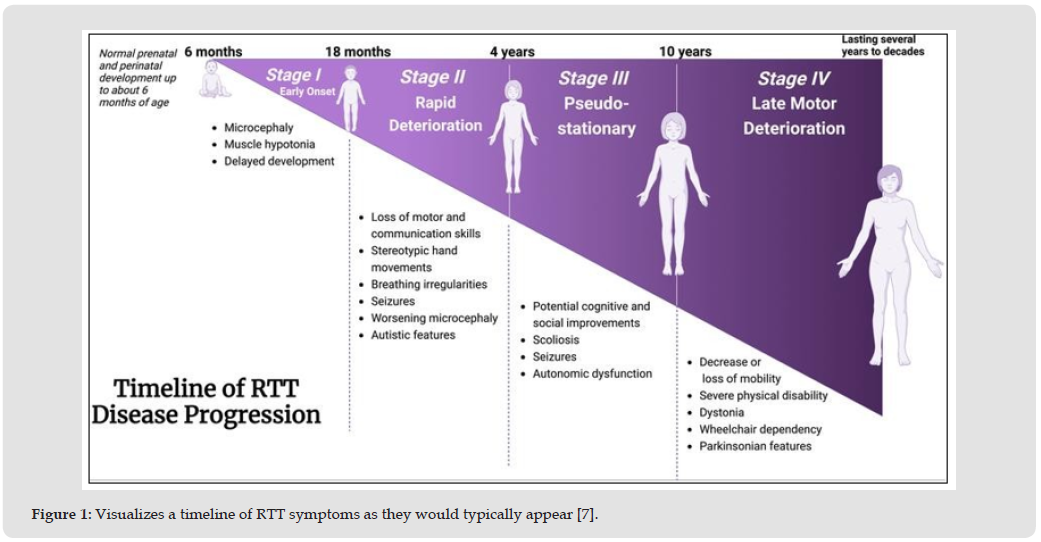
Although RTT was discovered more than 50 years ago, researchers are still yet to find a cure. Consequently, current treatment remains limited to ‘supportive and symptomatic therapies’ [6], such as speech therapy to address the associated speech impairment. There have been many promising approaches to treatment, including the first FDA approved drug for Rett syndrome, Trofinetide, however, each have their own shortcomings, hence necessitating an urgent requirement for innovative approaches that move beyond symptom management and towards curative treatment. Within this context, a ‘revolutionary’ treatment would not only address the core symptoms of RTT, but also fundamentally alter its progression or underlying cause - a threshold that current symptomatic treatments have not yet managed to cross.
One unconventional, yet intriguing approach under current investigation involves leveraging Toxoplasma gondii, a parasite, to deliver therapeutically useful proteins to the brain, avoiding difficulties present in navigating the blood-brain barrier (BBB) from other potential treatments [7]. By circumventing some of the these challenges, this novel approach may have the potential to revolutionize the treatment of the syndrome. However, the extent of this potential is still yet to be addressed, with questions regarding its safety, feasibility and longterm impacts needing to be answered. Given the limitations of existing therapies and the profound impact of RTT on affected individuals and their families, it is vital that innovative, novel approaches such as this are investigated to address this unmet medical challenge.
“Imagine the symptoms of Autism, Cerebral Palsy, Parkinson’s Disease, Epilepsy and Anxiety Disorder…all in one little child”- Rett Syndrome Research Trust (2024) [8]. An in-depth examination of the molecular causes of RTT is necessary to explore potential treatment options. RTT is characterised, at a molecular level, by mutation of the Methyl-CpG binding protein 2 gene (MeCP2), found on the X chromosome [9]. It is a dominant disorder, meaning that only one copy of the mutated gene is required to be expressed for the RTT phenotype (characteristic) to be exhibited. Due to locus of the gene on the X chromosome, one copy of the gene may be ‘silenced’ (i.e. not expressed), which could be either the mutated or unaffected gene, hence resulting in ‘diverse and complex consequences’ [10]. As a result, Rett syndrome can be described as a spectrum, since clinical presentation is different across patients [9].
This makes it harder to find a successful treatment that across multiple individuals with RTT. The MeCP2 gene, coding for the MeCP2 protein, has an integral role in epigenetic regulation of gene expression in neurons. While research from some studies have postulated that this may be through activating gene translation and repressing transcription [11], other research using human embryonic stem cells have demonstrated how MeCP2 expression seems to activate transcription, with transcription repressor activity typically being found in mature neurons [12]. This duality may explain the seemingly delayed onset of RTT, as symptoms begin to significantly deteriorate at a later age of 6 to 18 months, suggesting there is still hope for treatments targeting MeCP2 dysfunction in patients with earlier stages of RTT. MeCP2 dysfunction can also be linked an imbalance between excitatory and inhibitory neuronal activity [13]. Considering this imbalance is also shared with other neurodevelopmental disorders such as autism and Parkinson’s disease [14,15] this convergence in pathophysiology could explain the convergence in the social and motoric symptoms seen in patients with all three diseases, reinforcing the similarity introduced in the quote earlier. Furthermore, it is posited that absence of a functional MeCP2 gene may offer explanation to some of the cognitive symptoms associated with RTT. This is because MeCP2 dysfunction can be linked to the downregulation (lower production) of the gene GRID1 14, causing GRID-1 null mice to display atypical social and emotional behaviors [16]. This is important because it provides a link between mutation and phenotype of RTT patients, establishing the MeCP2 gene as a potential putative target for treating RTT.
In summary, while MeCP2 dysfunction is recognized as the leading cause of RTT symptom manifestation, not all MeCP2 mutations result in RTT, and a minority of clinically diagnosed atypical RTT patients lack detectable MeCP2 mutations [17]. This underscores the genetic diversity of the disorder, exemplifying the necessity for more collaborative research to address persistent gaps in understanding RTT pathophysiology. In particular, the causal pathways linking gene dysfunction and motor symptoms such as seizures and scoliosis remain poorly misunderstood [13], increasing the difficulty to develop RTT treatment that targets these features.
As to date, there have been four UK clinical trials for potential treatments for Rett syndrome, and, based off a recent PubMed search (24/03/25) using the World Health Organization International Clinical Trials Registry Platform, 105 current clinical trials worldwide exploring different therapeutic approaches. This essay aims to evaluate the major breakthroughs in the respective fields of gene therapy, cholesterol therapy and non-curative treatments such as Trofinetide.
Trofinetide
As the first FDA-approved drug to treat RTT, Trofinetide (brand name: Daybue) has received widespread support with many charitable organizations and families of those afflicted optimistic about its use in treatment.
Glypromate (GPE) is a small fragment of the hormone insulin-like growth factor-1 (IGF1), formed when IGF1 is naturally broken down in the brain [18]. Research conducted using mice have shown that GPE can significantly enhance behavior and survival rates [19]. However, its therapeutic application is limited by rapid enzymatic degradation, resulting in low bioavailability [20]. In order to address this, Trofinetide has emerged as a synthetic analogue of GPE, aiming to be more resistant to degradation and thus more suitable for therapeutic use [21]. While the precise mechanism of action for Trofinetide is poorly understood, many potential mechanisms have been suggested. This includes stimulating synaptic maturation and function through restoring ‘dendritic morphology, neuronal signaling and synaptic protein synthesis’ [22]. These processes, which ‘are all essential for healthy neuronal function’ [22], are similarly impaired during MeCP2 dysfunction in RTT due to their role in maintaining neuronal homeostasis. Trofinetide has performed with moderate success in trials.
For example, a study conducted by Neul, et al. [23] demonstrated how treatment with twice-daily oral Trofinetide compared to placebo resulted in improvements in the Rett Syndrome Behaviour Questionnaire (by a 3.1-point decrease) and similar clinician-rated global measures. While the researchers have described this as a ‘statistically significant’ change, causing improvements in RTT core symptoms, this has been deemed ‘moderate’ by other researchers [24]. This is because the effect size (Cohen’s d = 0.37) raises questions about the clinical meaningfulness of these improvements - a 3.1-point reduction on a 90- point scale would only represent a 3.4% improvement. Therefore, these marginal changes may not be translatable to tangible and perceptible differences in daily functioning. Despite these improvements, Trofinetide’s tolerability presents significant challenges. In the same trial, 80.6% of participants experienced diarrhea, with side effects deemed ‘responsible for the majority of discontinuations due to TEAEs’ (Treatment Emergent Adverse Events).
While this was framed by the researchers as ‘issues of tolerability, not safety’ [23], as the TEAEs could be mitigated with anti-diarrhoea medication and changes in diet, it is important to consider that the trial only lasted 12 weeks. This is significant as for a chronic condition like RTT, short-term studies may fail to accurately represent the longterm impact of ongoing side effects. While in the short term, TEAEs may be tolerable, the requirement for twice-daily administration in patients who often have preexisting gastrointestinal issues [24] could reduce overall tolerability, increasing the risk of treatment discontinuation. Furthermore, a study conducted by Mohammed, et al. [22] has also reported that the positive effects of Trofinetide seemed to diminish following cessation of treatment, underscoring the necessity of continuous, long-term treatment with this medication, which, as discussed previously, can potentially exacerbate tolerability challenges over time.
Gene Therapy
Moving forth, while Trofinetide offers symptomatic relief to patients afflicted with RTT, gene therapy represents a fundamentally different approach: targeting the underlying cause of RTT. Considering numerous studies have shown that RTT is not a neurodegenerative disorder, but one that is reversible, [25,26] gene therapy has therefore gained traction as a curative strategy.A major development in this field was the proof-of-principle demonstration that restoration of the dysfunctional MeCP2 gene can cause, in mice, reversal of advanced Rett-like symptoms seen through normal breathing and mobility [27]. This has shown that there is potential for rectification of the genetic cause of the disorder, and although there are numerous avenues of attack within this particular field, usage of AAVs (adeno-associated viruses) are possibly the most prominent.
Gene Replacement Using AAVs: Adeno-associated virus (AAV)-mediated gene therapy is one of the most extensively researched potential treatments for RTT. This involves loading an inactivated viral vector with recombinant DNA, containing the MeCP2 gene and the viral DNA together in one strand, and using a trojan-horse mechanism where the gene is carried past the blood-brain barrier (BBB) to neurons of the brain where successful secretion can occur, therefore providing therapeutic benefit. During treatment, there have been many studies using different ages of mice, injection methods (i.e. direct brain injection, peripheral intravascular injection or injection into the cerebrospinal fluid 28). While this makes it difficult to compare results between studies, typically vectors based on the genome of the AAV serotype 2 (AAV2) are used [29], due to their extensive use in broader gene therapy with limited adverse effects [30]. Numerous studies have shown that delivery of the MeCP2 gene using AAV-derived vectors is an effective form of treatment. For instance, a study conducted by Gadalla, et al. [29] demonstrated improvements in both ‘survival and phenotypic severity’, with reversal of RTT-like symptoms in mice. However, these effects were only ‘partial’ as particular symptoms such as breathing irregularities were still persistent [29]. This is concerning, considering AAV9 vectors were used, which, having been specifically engineered to cross the BBB more easily, should have had a high transduction efficacy (ability to inject recombinant material into the host cell), however only 2-4% of neurons were targeted, which may in part explain the ‘modest’ therapeutic effect. Moreover, these findings highlight two barriers to the success of gene therapy. Firstly, there are difficulties crossing the BBB – a commonly encountered issue during investigation of therapies for other neurological disorders [31]. These prevent the majority of viral vectors from accessing the brain in the first place. Secondly, even if the vectors do reach the brain, their limited payload capacity – at 4.7 kb for AAV vectors [32] – prevents the delivery of large material.
A further complication in RTT gene therapy arises from X-chromosome inactivation in females. This results in cellular mosaicism – while some cells express the healthy MeCP2 allele (as the mutated copy is ‘silenced’), others may express the mutated copy (as the healthy allele is ‘silenced’). This intercellular variability provides new challenges due to the ‘Goldilocks principle’, which emphasises how both overexpression and under expression of MeCP2 delivery lead to devastating neurological consequences; while insufficient MeCP2 leads to RTT, excessive expression risks MeCP2 duplication syndrome, characterised by intellectual disability and developmental delays [33]. Delivering additional MeCP2 indiscriminately may therefore risk adverse outcomes in cells already producing the functional protein. This issue was noted by Gadalla, et al. [29] during their experiments, who proposed to use ‘an appropriate vector and promoter system’ to avoid associated toxicity, however this idea has yet to be implemented in clinical trials with successful results.
Cholesterol-Based Therapies
Although not as extensively researched as gene therapy for RTT, growing evidence from both clinical and nonclinical studies point towards the relevance of metabolic changes in RTT pathophysiology and treatment. This importance can be seen through misclassification of RTT as a metabolic disorder during initial disease discovery as cerebral atrophic hyperammonaemia in 1966 [34]. Cholesterol homeostasis is believed to be altered within patients of RTT. For example, a study conducted by Buchovecky, et al. [35] demonstrates how, in an untreated state, mice with RTT symptoms have an excessive cholesterol accumulation and impaired lipid regulation, highlighting the importance of potential therapies that target factors driving cholesterol synthesis.
Given this cholesterol dysfunction, statin drugs are currently being investigated for treatment of RTT. Figure 2 visualises their mechanism of action which involves firstly inhibiting the enzyme HMGCR (the rate-limiting enzyme involved in cholesterol synthesis). Considering typically, HMGCR functions to convert HMG-CoA to Mevalonate, a precursor to cholesterol during the mevalonate pathway, statins therefore aid in reversing RTT symptoms by lowering the synthesis of cholesterol, thus reducing associated imbalances and inflammation [36].
Figure 2
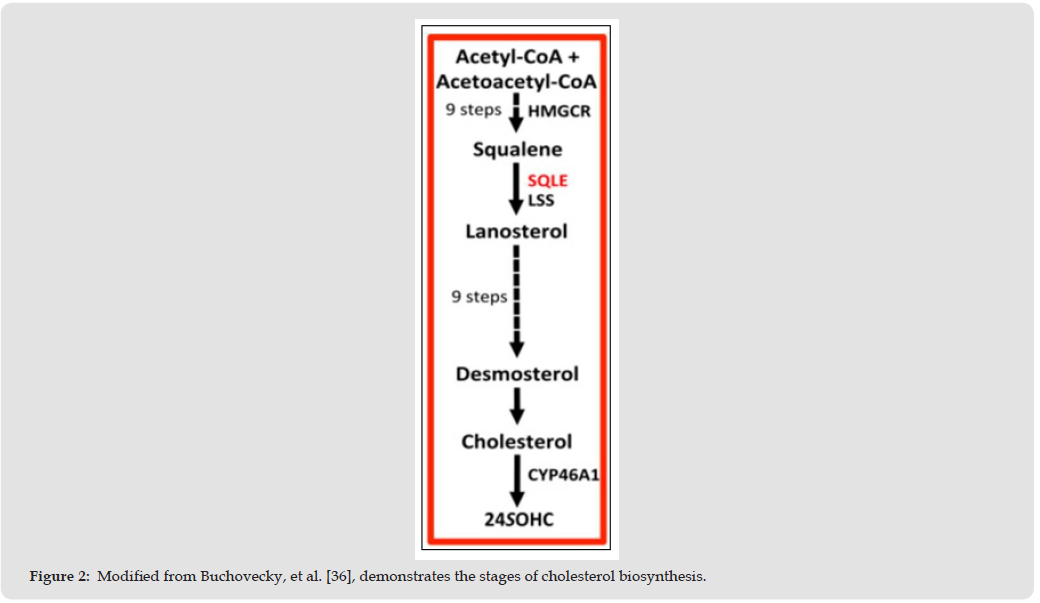
Furthermore, statins which reduce cholesterol synthesis have shown some promise in preclinical studies. For instance, Buchovecky, et al. [35] demonstrated that use of Lovastatin and Fluvastatin to change brain cholesterol metabolism was shown to be ‘essential to the improvements in motor function and longevity’, supporting the notion that controlling cholesterol synthesis can improve core symptoms. However, these findings were not universally shared. This is evidenced by how Carli, et al. [37] discovered that the efficacy of statin therapy was dependent on the genetic background of the mice, with some strains improving in their motor symptoms and having prolonged survival, compared to others who experienced no such changes.
The findings from these studies may suggest that, while statin therapy may have the potential to provide some success when treating RTT core symptoms, individual variations in genetic makeup can limit this efficacy within the RTT population as a whole. This is due to cellular mosaicism that leads to diverse symptom presentation that differs from patient to patient, providing a challenge to researchers investigating this therapy. Additionally, this study used genetically uniform mouse strains, allowing for more controllable comparisons of statin efficacy. However, considering humans with RTT have a much higher phenotypic and genetic diversity (from X- chromosome inactivation), it is likely that the variability in statin response observed by Carli, et al. [37] would be even greater in a human sample. This highlights the need for an personalised approach to treatment and improved patient stratification in future clinical trials, as statin therapy may only be capable of benefiting a small subset of individuals with RTT.
Initial cholesterol levels are also variable between patient to patient. For example, the discovery that cholesterol levels are already impaired in some patients with RTT, as seen through the discovery of lower levels of potential biomarker 24S-hydroxycholesterol (24S-OHC) [38], a brain cholesterol metabolite, would contradict mice studies indicating cholesterol accumulation in patients with RTT [35]. In these patients, using statins to reduce the rate of cholesterol synthesis may lead to unwanted adverse effects, such as an increased risk of cognitive impairment and neurodegenerative disease [39]. Additionally, statin therapy use is also associated with a range of side effects, such as rhabdomyolysis (muscle pain) and headache [40], highlighting the need for treatment to be individualised on a case-bycase basis.
Beyond these conventional pharmaceutical approaches to treatment, researchers have also recently been investigating more unconventional approaches to treatment. While often associated with latent infections within humans, one such unconventional approach involves the use of the parasite Toxoplasma Gondii as a novel treatment for RTT. This section will explore the mechanisms by which T. Gondii can affect neurological function, alongside an examination of its mechanism of action.
Effects of T. Gondii on the Brain
As a protozoan, T. Gondii is notable for its ability to ‘…infect, survive, and replicate in nearly all mammalian cells’ [41], with an estimated one-third of the global human population infected with this parasite [42]. While most human infections are often mild or asymptomatic, within immunocompromised individuals, Toxoplasmosis, infection due to T. Gondii, can result in life- threatening disease. Owing to its prevalence, T. Gondii has evolved sophisticated mechanisms by which it can bypass the host immune system and effectively invade host cells. Upon infection, cytokine production is stimulated by phagocytes, inducing pro-inflammatory molecules including IL-12 [43]. However, these immune responses can be mitigated by the parasite as it secretes effector proteins from specialised organelles directly into the host cells [41]. For example, a study using human foreskin fibroblasts found that T. Gondii was able to block the expression of all 127 genes involved in IFN-y (a key pathway involved in anti-parasitic immunity) [41]. Therefore it is this highly effective secretion system that can be used in protein therapy to deliver proteins, intracellularly.
Furthermore, the reason why the parasite’s invasion of the immune system could be attributed to its delayed impact on cell apoptosis [44] - considering a regular cell would undergo programmed cell death following invasion of pathogens; by inhibiting this process, the parasite can effectively evade detection by the body’s antibody-based defences and protect itself. This strategy has a crucial role in establishing chronic infection and allowing the parasite to persist in host cells. During acute infection, T. Gondii will disseminate throughout the host as a fast-replicating tachyzoite, enabling widespread invasion and persistence, while during chronic infection the parasite will gradually transition to a bradyzoite, which is much more slowly replicating and encysts within host tissue, the process of which is thought to allow the bradyzoite escape detection by the immune system [45], explaining why the parasite is so successful at both chronic and latent infection within a wide range of hosts. For any microbe to infect the CNS, it is necessary to evade the Blood-Brain-Barrier (BBB). This is a highly selective partially permeable barrier that is composed of wedged endothelial cells which line the interior of blood vessels reaching the brain, to form extensive tight junctions that impede the flow of macromolecules, such as proteins and 98% of small molecule drugs [46]. However, T. Gondii is able to cross the BBB through three mechanisms [47], all of which can be pictured below in Figure 3:
Figure 3
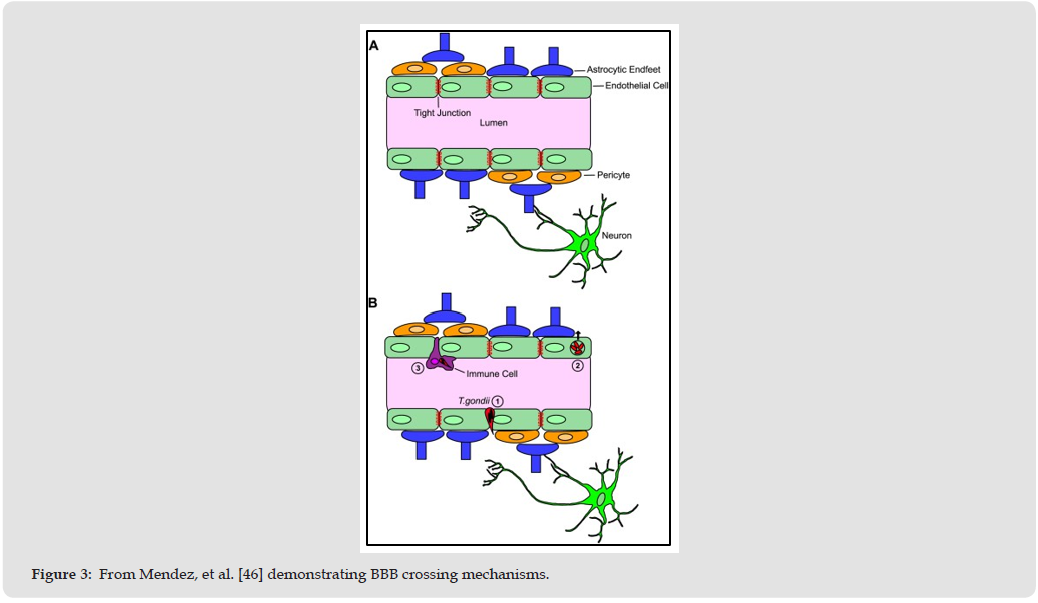
Firstly, paracellular crossing can occur, visualised in Figure 3 by route 1 in structure B, where the parasite passes across the epithelium of the BBB by passing through intercellular space between the cells. As discussed by Mendez et al., 46 even though the parasite lacks any cilia or flagella, through use of actin-myosin motor proteins, T. Gondii can propel itself generating ‘gliding motility’ [48]. Secondly, transcellular migration occurs, seen on Figure 3 from route 2 in structure B, initially by adhesion to the host cell membrane, with this process being mediated by surface proteins on the parasite interacting with host cell receptors. Following this, the T. Gondii invades the host cell, actively proliferating within the cell and eventually egresses from the cell, from the basolateral side [49]. Lastly, the final mechanism for entry of the parasite into the CNS is via the “Trojan horse” mechanism which includes infecting immune cells which and utilising their ‘increased motility’ and capability to cross endothelial barriers. This mechanism was seen during a study including intravenous inoculation of mice with infected immune cells (namely macrophages) which resulted in a faster appearance of the parasite in the CNS compared to inoculation with free parasites, suggesting that using this “Trojan horse” mechanism can help in BBB crossing speeds [45]. This method of entry can be seen further in Route 3 in Figure 3, seeming to be the most efficient by hijacking the host’s immune system. Despite current knowledge gaps relating to which approaches are most preferred during certain circumstances and the reasons for this [45], principal research has still been conducted experimenting the efficacy of T. Gondii as a treatment for RTT.
Treating RTT with T. Gondii
T. Gondii’s natural mechanisms to infiltrate the CNS has positioned it to be a novel candidate for RTT treatment. Bracha, et al. [49] recently investigated potential in the intracellular delivery of functional copies of the MeCP2 gene following intraperitoneal (abdominal) administration using genetically engineered T. Gondii as a vehicle for this. The experiment involved utilising two of the three main secretion systems of the parasite; rhoptries, which were utilised to secrete proteins into the host cytosol before cell evasion, and dense granules, which were used to secrete the therapeutic proteins after invasion, continuously into the parasitophorus vacuole (PV), a protective vacuole formed during invasion preventing it from being damaged by immune cells, This allowed it to continuously secrete the functional proteins post-invasion.
Overall, T. Gondii was effective at delivering MeCP2 to the brain. Functional MeCP2 copies were fused to the endogenous expressed naturally GRA16, and the results were successful in finding that 24 hours after inoculation, MeCP2 deliver in knockout mice reached 58% of wild- type MeCP2 levels. This was described among values ‘comparable’ to levels achieved from studies of MeCP2 reactivation and viral gene therapy, according to Bracha, et al. 49. This situates T. Gondii as a successful alternative to other treatments. A central limitation of using this approach to treat RTT is that it does not address the root cause of the disease - it has now been explained in this essay that mutations in the gene encoding the for MeCP2 protein is considered to be a de novo cause of RTT, protein therapy would not correct these underlying mutations. Although multiple studies have shown that delivery of the functional protein can lead to reversibility in RTTlike symptoms [28,29] these findings do not eliminate the need for repeated dosing, especially given the shot half-life of proteins [50] and the chronic nature of RTT. While the parasite does possess an effective delivery system; such as a large packing capacity (88-110 kDa) 49 allowing it to secrete multiple large proteins, and the ability to exploit both its rhoptry and dense granule secretion pathways, this versatility has limitations, too. This is because it increases the risk of accumulation of exogenous (externally produced) proteins within the host cytosol, which are highly immunogenic and capable of triggering pathological immune responses [51]. Consequently, this introduces clinical safety risks, which have not yet been mitigated from current research. This is because exploration of effective methods of parasite attenuation are yet to be perfected. Despite this, inspiration could be drawn from similar biological therapies that maximise safety by disrupting key virulence (harm-causing) genes [52]. Furthermore, T. Gondii infections also have the possibility to cause adverse effects even in immunocompetent individuals. Considering RTT syndrome is potentially associated with humoral and cell-mediated immunity abnormalities [53], ensuring the safety of patients infected with T. Gondii is a major necessity for researchers moving forth. Given the infancy of research into using T. Gondii-mediated protein therapy to treat RTT, addressing these safety concerns hinges on identifying and targeting specific virulence genes.
In order to evaluate whether T. Gondii-based protein therapy could be considered “revolutionary” for treating RTT, it is first necessary to define the meaning of “revolutionary” within this context. If the term is used implies a fundamental change – shifting from symptom management to curative change at the genetic level – then T. Gondii falls short. Unlike gene therapy, it does not correct the de novo MeCP2 mutations assumed to drive RTT pathophysiology, meaning that the root cause of RTT is not fully addressed. However, a revolution in treatment may also be interpreted as a radical delivery which overcomes existing challenges to treatment. Currently, a key limitation of both gene therapy and cholesterol therapy is the lack of patient-specific interventions. The ‘Goldilocks principle’ necessitates a requirement for specific MeCP2 dosage precision: too little risks RTT, too much risks MeCP2 duplication syndrome. Cellular mosaicism further complicates this, as genetic and phenotypic variation both between and within patients narrows the applicability of gene therapy to wider patient populations. Similarly, variation in cholesterol levels amongst patients may reduce the effectiveness of generalised statin-based interventions.
Meanwhile, Bracha, et al. [49] largely overlooks the implications of the Goldilocks principle within T. Gondii protein therapy. While MeCP2 expression in infected neurons is 44% of natural/wild-type falls within a ‘range compatible with therapeutic benefit’, arguably, this alone may not rule out the risk of overexpression. As a foundational study, there is the possibility that future research may reveal higher or more variable protein expression levels. With no regulation for protein expression yet identified, T. Gondii risks reinforcing the same lack of patient-specificity consistent with gene and cholesterol therapies, limiting its revolutionary potential.
Nevertheless, it is important to acknowledge the limitations within this research. Firstly, it is assumes that MeCP2 dysfunction in neurons is the sole driver in RTT pathogenesis, however it has been demonstrated that astrocytes (another key type of brain cell) may be equally, if not more, impaired than neurons [54]. Additionally, 70% of individuals with atypical RTT do not possess a MeCP2 mutation [55], rendering many of the MeCP2-targeted therapies discussed earlier, inadequate. Secondly, this literature review was selective, and not exhaustive. There are many clinical trials currently ongoing, such as for esketamine and different branches of gene therapy which weren’t explored in detail, which may offer unique and alternative perspectives in the future as they are developed further. Finally, while this discussion has mainly focussed on MeCP2 restoration, it is important to emphasise that, for individuals in later or more severe phenotypes – particularly males-the status quo of symptom management through palliative care may remain the more appropriate option. These limitations should be considered when interpreting the following conclusions drawn.
In summary, while Toxoplasma gondii–based therapy may not radically transform the treatment landscape for RTT in the method that gene therapy aims to, its success may lie not in its curative ability but rather in creative usage of innate biological mechanisms. Moreover, these promising qualities – low immunogenicity and targeted CNS delivery – are those which biotech firms are striving to engineer with viral vectors. Perhaps, then, the more meaningful question is not whether a treatment is revolutionary, but whether it is effective and safe. In this respect, T. gondii–derived approaches offer a compelling, albeit imperfect, path forward. Nevertheless, like existing therapies, they still share the same overarching limitation: a lack of patient-specific targeting. As our understanding of RTT’s heterogeneity grows, it is necessary that future treatments – revolutionary or otherwise – must prioritise a more personalised approach to ensure that treatments remain assessable for all individuals affected by the disorder, rather than a select few.
Thank you so much to Mr Couper-Marsh for his invaluable support and advice throughout the entire research process – this essay would be of a far poorer quality were it not for his guidance. I would also like to express my gratitude to Mrs Knight, who has similarly helped me to develop my research skills. Lastly, I am deeply inspired by the strength and resilience of those living with Rett Syndrome on a daily basis, especially my family friend’s daughter, whose journey motivated me to explore this topic at a greater depth.

International Association of Landscape Archaeology, Czech Glass Society, Czech Republic

Department of Chemistry, Semenov Institute of Chemical Physics, USSR Academy of Sciences, Moscow, Russia

Neurology, LA BioMed Research Institute, USA

Associate Professor at Department of Breast and Thyorid Surgey, Chongqing General Hospital, China

Professor of Nuclear Medicine, Faculty of Medicine and Surgery, University of Milan, Milan, Italy





 Abstract
 PDF
PDF



























