info@biomedres.us
+1 (502) 904-2126
One Westbrook Corporate Center, Suite 300, Westchester, IL 60154, USA
Site Map
 ISSN: 2574 -1241
ISSN: 2574 -1241
ISSN: 2574 -1241
Received: October 25, 2025; Published: November 14, 2025
*Corresponding author: Urmanova Yu M, Alfraganus University, Department of Internal Medicine, Republican Specialized Scientific and Practical Medical Center of Endocrinology named after Academician E.Kh. Turakulov, Republic of Uzbekistan, 100190, Tashkent, Yunusabad district, st. Yukori Karakamysh, 2A, building C, floor 3, Uzbekistan
DOI: 10.26717/BJSTR.2025.63.009959
The aim of the study is to perform a comparative analysis of immunocytochemistry (IHC) data from groups of
patients with macro- and giant inactive pituitary adenomas.
Material and Methods of Research: We studied 20 patients with non-functional pituitary adenomas – NFPA-
(Group 1 - 10 pituitary macroadenomas and Group 2 - 10 giant pituitary adenomas) who underwent transnasal
pituitary adenomectomy. All patients underwent examinations, including examination of the fundus, measurement
of visual fields every 3 months, studies of the levels of STH, IGF-1, LH FSH, ACTH, TSH, prolactin, free thyroxine,
cortisol, as well as immunohistochemical studies of operated patients with determination of the levels
of expression of Ki67, p53.
Research Results: It was found that the presence of aggressive NFPA increases by 8.2 times (p < 0.001) when
there is an invasive nature of growth (sensitivity 86%, specificity 53%, Youden index 0.45, accuracy 66%). The
coefficient is 5.2 (p < 0.001) per percentage point of Ki67-positive tumor cell nuclei, and 3.1 (p < 0.001) per
percentage point of p53-immunopositive nuclei.
Conclusion:
1. We identified significant cutoff values for p53 (≥2%; CI: 0.94). The most reliable individual marker for differentiating
macro-NFPA from giant- NFPA was the Ki-67 labeling index ≥ 4% (CI: 0.98).
2. The most reliable individual marker for differentiating macro- NFPA and giant- NFPA was the Ki-67 labeling
index ≥ 4% (CI: 0.98). Tumors with immunoexpression of at least 2 markers were observed in 54% of the
cohort and were assessed as aggressive adenomas: for p53 - 4 patients in group 1 and 5 patients in group
2, for Ki 67 - 5patients in group 1 and 6 patients for group 2, in total 11 patients out of 20 IHC examined
had a risk of growth relapse.
Keywords: NFPA; IHC; Proliferation Markers
Patients with NFPA have a lower chance of remission than patients with functioning pituitary adenomas [1]. NFPAs can progress after surgical treatment, with regrowth rates of 15–66% in NFPA patients treated with surgery alone and 2–28% in patients treated with surgery and radiotherapy [2-4]. Therefore, long-term radiographic surveillance after NFPA treatment is recommended. The recurrence rate of NFPA peaks between 1 and 5 years after surgery and declines after 10 years. Therefore, 10 or more years of postoperative imaging is indicated, and some studies suggest lifelong monitoring, particularly in patients with tumor remnants [5]. Convincing prognostic factors for pituitary tumor recurrence have not yet been identified. Clinical factors such as age, gender, tumor size, and tumor invasion have been shown to have limited prognostic value for tumor progression. On the other hand, Ki-67 has been described as an independent cellular marker of tumor progression and recurrence [5]. Recently, Raverot G, et al. [6] proposed classifying pituitary tumors into five grades that can be used by clinicians to predict tumor behavior after surgery. This classification system is based on predictor factors such as tumor invasion on MRI, immunohistochemical profile, mitotic index, Ki-67, and p53 positivity, which can be used to identify patients at high risk of tumor recurrence or progression [6].
According to the recent WHO classification, asymptomatic corticotroph tumors (e.g., approximately 15% of all NFPA s) and sparsely granulated somatotroph tumors (e.g., approximately 2% of all NFPAs) are generally more aggressive because they tend to have invasive growth and a high recurrence rate. Furthermore, Li et al. showed that the extent of resection and adjuvant treatment are independent prognostic factors for progression-free survival [7]. Another study found that combined treatment with surgery and radiotherapy is more effective than surgery alone in preventing tumor recurrence [8]. However, there are concerns about long-term complications of radiation therapy (eg, hypopituitarism, radiation-induced optic neuropathy, increased risk of cerebrovascular events and secondary brain tumors). The aim of the study is to perform a comparative analysis of immunocytochemistry data from groups of patients with macro- and giant NFPA.
We studied 20 patients with NFPA (Group 1 - 10 pituitary macroadenomas and Group 2 - 10 giant pituitary adenomas) who underwent transnasal pituitary adenomectomy. The pituitary neurosurgery department of the Republican Specialized Scientific and Practical Medical Center of Endocrinology enrolled 12 patients between 2020 and 2022. Of these, 12 were men (60%) and 8 were women (40%). The average age of men was 48.12 years, while that of women was 46.15 years. The control group consisted of 10 healthy individuals with normal pituitary tissue. The maximum mean tumor diameter determined by MRI diagnostics was 44.7±13.6 mm in 10 patients with giant NFPA s, and macroadenomas > 30 mm were present in 10 patients. All patients underwent examinations, including fundus examination, visual field measurements every 3 months, studies of the levels of STH, IGF-1, LH, FSH, ACTH, TSH, prolactin, free thyroxine, cortisol, as well as immunohistochemical studies of operated patients with the determination of the expression levels of Ki67, p53. In addition, the AKU scale (2022) was introduced for the first time to predict the degree of tumor removal in the preoperative period. Immunohistochemical studies (IHC) were performed under a contract at the pathomorphology laboratory of IPSUM Pathology LLC (1 Bogiston Street, Tashkent).
The study was performed under a contract at the IHC laboratory at the Tashkent City Oncology Clinic. Prepared paraffin blocks with confirmed diagnoses of pituitary adenoma were used. Serial 3-μmthick sections were deparaffinized, dehydrated, and undetected. Antigen staining was performed using a specialized automated Ventana Benchmark XT system (Roche, Switzerland). The study was performed with ki-67 (30-9) and P53 (Bp53-11) antibodies. Ki67. IHC assessment of sections: the proliferative activity of tumor cells in the nuclear compartment was assessed. P53. IHC assessment of sections: To verify abnormal (mutant) p53 expression, expression in more than 75% of cells in the affected area was considered. Negative expression or weak staining of the nuclear locus in up to 70% of cells was interpreted as the natural (wild) type.
The obtained data were processed using Microsoft Excel and STATISTICA- 6 software. The significance of differences in quantitative indicators (n>12) was determined using the Wilcoxon signed-rank test for unrelated ranges; the nonparametric Fisher component randomization test for independent samples was used to determine the significance of small samples (n<12); and the Fisher-Irvine exact test was used for qualitative values. Differences between groups were considered statistically significant at P<0.05, correlation analysis was carried out using the nonparametric Spearman rank correlation method.
The next step of our research was to analyze the results of the ICC studies. We aimed to obtain reliable threshold values for both p53, and for the mitotic index. In addition, we analyzed the influence of all individual parameters (invasiveness, Ki67 index, p53) on the selectivity of adenoma subtype differentiation. Table 1 provides the immunohistochemical characteristics of the study groups. Table 2 shows the statistical values of the main IHC indicators in group 1 of patients with macroadenomas. Table 3 shows the statistical values of the main IHC parameters in group 2 of patients with giant NFPA. As can be seen from Tables 2 and 3, the very high specificity value (95%/93%) proves that p53 protein expression ≥2%/≥2% (Youden index 0.87/0.92) is an extremely useful and important parameter. However, even a completely negative staining result does not exclude the possibility of aggressive/invasive tumor growth, as indicated by the relatively low sensitivity [1]. Next, we performed a correlation analysis of the relationship between MRI and immunohistochemistry indicators. Maximum tumor diameter was associated with stronger immunostaining for Ki-67 (p = 0.009), but no significant association was found for p53 (p = 0.062). Parasellar invasion was present in more than 80% of cases; however, invasion was not associated with proliferative markers.
Table 1: Immunohistochemical characteristics of the study groups.
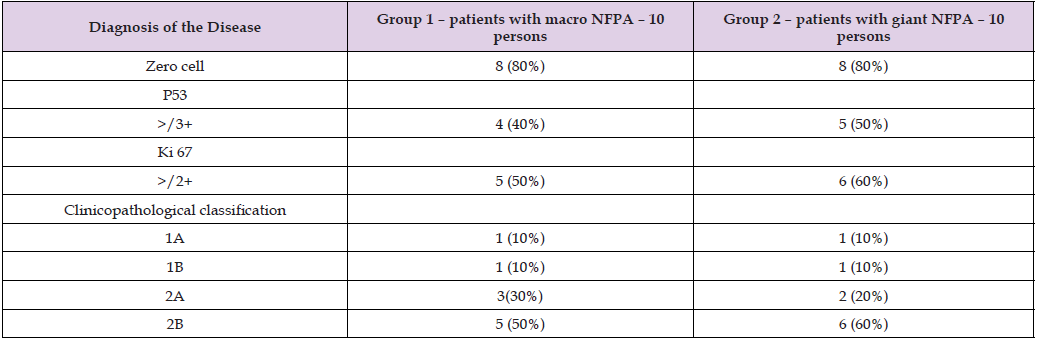
Table 2: Statistical values of the main IHC indicators in group 1, n=10.

Note: PV – threshold values, p – significance criterion, S – sensitivity, Sp – specificity, R – correlation with invasiveness, OR – odds ratio, CI – confidence interval, PV – threshold value
Table 3: Statistical values of the main IHC indicators in group 2, n=10.

Note: TS – threshold values, p – significance criterion, S – sensitivity, SP – specificity, R – correlation with invasiveness, OR – odds ratio, CI – confidence interval
In conclusion, our results showed that in all patients with giant pituitary adenomas, the absence of parasellar invasion was associated with a higher rate of tumor stability after treatment (p = 0.0389; Pearson residual = +3). However, parasellar invasion was not associated with the outcomes of tumor regrowth/recurrence and cure/ shrinkage. Infrasellar invasion and suprasellar extension were not considered good prognostic markers of clinical outcome. However, there was a tendency to associate the absence of extension into the third ventricle with a higher likelihood of tumor stability after treatment. Proliferative tumors, but mainly those classified as grade 2B (invasive-proliferative), showed a significant association with the rate of tumor regrowth/recurrence (p = 0.0127), confirming that these lesions should be considered as highly suspicious for neoplastic proliferation. Giant NFPA are often accompanied by invasive growth into surrounding anatomical structures (more than 80% of cases), which is the main factor limiting the radicality of surgical intervention and increasing the number of relapses. Thus, it can be said that the presence of aggressive NFPA increases by 8.2 times (p < 0.001) when an invasive growth pattern is present (sensitivity 86%, specificity 53%, Youden index 0.45, accuracy 66%). The coefficient is 5.2 (p < 0.001) per percentage point of Ki67-positive tumor cell nuclei, and 3.1 (p < 0.001) for each percentage point of p53-immunopositive nuclei.
In all patients with giant pituitary adenomas, the absence of parasellar invasion was found to be associated with a higher rate of tumor stability after treatment (p = 0.0389; Pearson residual = +3). It has been established that the greatest value for prognosticating tumor recurrence in NFPA are the Ki-67 labeling index ≥4% (OR = 3.67), brain invasion (3.34), suprasellar invasion (OR = 3.24), and disease duration (3.18). Genetic predisposition plays a significant role in the development of tumor recurrence. The frequency of the hereditary factor in NFPA is 78.78% (OR = 2.51).
1. We identified significant cutoff values for p53 (≥2%; CI:
0.94). The most reliable individual marker for differentiating macro-
NFPA from giant- NFPA was the Ki-67 labeling index ≥ 4% (CI: 0.98).
2. The most reliable individual marker for differentiating macro-
NFPA and giant NFPA was the Ki-67 labeling index ≥ 4% (CI: 0.98).
Tumors with immunoexpression of at least 2 markers were observed
in 54% of the cohort and were assessed as aggressive adenomas: for
p53 - 4 patients in group 1 and 5 patients in group 2, for Ki 67 - 5patients
in group 1 and 6 patients for group 2, in total 11 patients out of
20 IHC examined had a risk of growth relapse.

International Association of Landscape Archaeology, Czech Glass Society, Czech Republic

Department of Chemistry, Semenov Institute of Chemical Physics, USSR Academy of Sciences, Moscow, Russia

Associate Professor at Department of Breast and Thyorid Surgey, Chongqing General Hospital, China

Professor of Nuclear Medicine, Faculty of Medicine and Surgery, University of Milan, Milan, Italy

Department of Pharmaceutical Sciences, South University School of Pharmacy, USA





 Abstract
 PDF
PDF



























