info@biomedres.us
+1 (502) 904-2126
One Westbrook Corporate Center, Suite 300, Westchester, IL 60154, USA
Site Map
 ISSN: 2574 -1241
ISSN: 2574 -1241
ISSN: 2574 -1241
Received: October 24, 2025; Published: November 06, 2025
*Corresponding author: Konstantinos Fousekis, Physiotherapy Department, School of Health Rehabilitation Sciences, University of Patras, 26504 Patras, Greece
DOI: 10.26717/BJSTR.2025.63.009945
One of the most debilitating symptoms of Parkinson’s disease (PD) is postural instability and impaired balance. This leads to significant risks of falling, restricted activity levels, and a lower quality of life, despite treatment with traditional physical therapy. Conventional physiotherapy remains a mainstay of PD rehabilitation. However, recent years have seen the emergence of posture correction equipment and technology-assisted interventions as promising adjuncts to improve postural control and functional performance. This systematic review aimed to evaluate posture correction equipment used in treating Parkinson’s disease (PD) for its effect on postural alignment, balance, gait, and general functional ability. We made a systematic search of PubMed, Scopus, Web of Science, and the CENTRAL databases for studies published between January 2000 and September 2025. In randomised controlled trials and experimental studies, the use of posture correction equipment, such as biofeedback systems, orthotic supports, body weight-supported treadmills, robotic gait trainers, and wearable vibration feedback devices, was examined for its effectiveness. Eight studies met the inclusion criteria, totalling 217 subjects with mild to moderate PD. Although the benefits of most interventions may be readily seen in improved balance (BBS scores), gait performance (10MWT, TUG) and postural hygiene, other valuable findings came up. These included fatigue reduction and improved quality of life.
However, methodological diversity, small sample sizes, and short intervention periods all limit the ability of any findings to be generalized. Posture correction equipment appears to be a valuable adjunct to physiotherapy in treating Parkinson’s disease. Therefore, future high-quality randomized controlled trials employing standardized protocols and extended follow-up periods are required not only to validate these findings but also to establish clinical guidelines on how such technologies can be most effectively integrated into the rehabilitation of individuals with Parkinson’s disease.
Parkinson’s disease (PD) is a chronic and progressive neurodegenerative disorder that mainly affects the extrapyramidal motor system. The result is a gradual degradation of the dopaminergic cells in the substantia nigra nigra pars compacta, and so dopamine levels in the striatum are markedly reduced. This neurochemical imbalance upsets the normal regulation of movement. Thus, the cardinal signs of the disease are movement symptoms-bradykinesia, tremor, muscular rigidity (excess muscle tone) and loss of balance. In addition, various non-motor manifestations such as declining cognition, altered mood states, and autonomic failure compound the complexity and burden of PD disease on patients and healthcare systems worldwide [1,2]. Postural control is one of the biggest challenges in the management of Parkinson’s disease. As the disease progresses, PD patients typically develop a narrow stance or one foot in front of the other, loss of horizontal rotation and reduced reflexes. These abnormal patterns emerge because of muscle stiffness coupled with forward shift (an atlantoaxial subluxation), abnormal feedback from sensory organs and their nervous system connections becoming jumbled. This misalignment affects balance and makes it more likely to fall, one of the significant causes of morbidity and loss of independence among those with PD. Furthermore, such postural faults lead to secondary musculoskeletal pain, increased joint stiffness, and a dragging sense of fatigue, as well as reduced functional capabilities for patients [3,4].
Thus, the correction and management of postural deviations have increasingly been made into key treatment goals in modern (rehabilitation) practice setups for Parkinson’s disease [5,6]. Conventional physiotherapy and exercise programs play a crucial part in maintaining mobility and combating rigidity; however, recent advances have revealed the potential benefits of using specialized postural correction equipment. These can take the form of orthotic (back) supports, wearable exoskeletons, biofeedback or sensor-based systems, smart garments which aim to realign the body’s shape and so target active muscle groups in addition to giving users real-time tips on how well they are doing. These technologies strive to recover balance, restore postural symmetry, and promote greater functional independence in activities of daily life [7,8]. Given the multifactorial nature of postural dysfunction in Parkinson’s disease and the broad range of available therapeutic approaches, it is essential to develop a comprehensive understanding of the effectiveness of posture correction devices in improving functional outcomes. This review aims to assess all existing research work that has investigated the use of postural devices and related interventions in individuals suffering from Parkinson’s disease, with an eye on determining their regional effects on posture- aligned balance stability or general movement efficiency.
In line with the PRISMA guidelines, this systematic review was planned and carried out methodologically in terms of intervention research. The Cochrane Handbook for Clinical Trials of Interventions was referred to ensure the transparency, reproducibility, and methodological rigor of this project. Our methods were established and documented as a formal study protocol. Prior to the initiation of data collection, a detailed plan outlining the procedures for literature searching, study selection, quality assessment, and data synthesis was developed and implemented [8,9]. We performed comprehensive research in PubMed, Scopus, web of science, and CENTRAL databases [10,11]. The search aimed to identify all studies in English-language journals which were peer-reviewed and investigated the use of postural correction equipment in people who had Parkinson’s disease. We developed the search strategy using a combination of Medical Subject Headings (MeSH) and free-text terms. We used the following keywords: “Parkinson’s disease” OR “Parkinsonism” AND “postural correction” OR “back support” OR “postural training” OR “wearable device” OR “orthosis” OR “exoskeleton” OR “biofeedback” OR “balance rehabilitation.” Reference lists of papers included, and existing systematic reviews were also screened by hand. This was done to identify any possible further relevant publications.
The final criteria were dependent on the PICO pattern research frame. The experimental group consisted of adults who have idiopathic Parkinson’s disease at any stage of its development. Interventions were provided by therapy, such as posture correction equipment of any type. Comparison groups were available in conventional physiotherapy through exercise therapy, and no intervention was necessary. The improvements in postural alignment, balance stability and overall functional performance were assessed as the primary outcomes, whereas secondary outcomes included changes in postural data from different equipment. Studies examining patients with neuronal or neuromuscular diseases other than Parkinson’s disease were excluded from the selection process. Two reviewers completed the study selection process independently, and discrepancies were resolved through discussion or by contacting a third reviewer. Data extraction was independently carried out by two reviewers using a standardized data collection form. Extracted information consisted of study design, sample size, participant characteristics, intervention type, duration and frequency of the intervention, outcome measure and key findings. To minimize possible bias, all included studies were evaluated according to the criteria outlined in the Cochrane Handbook for Systematic Reviews of Interventions.
Methodological quality was evaluated primarily by randomization quality, allocation concealment, blinding of participants and assessors, completeness of outcome data, selective reporting and other potential sources of bias. Accordingly, the study was considered of good quality when all eight criteria received low risk (+) ratings and satisfactory when a single criterion was scored as high risk (−) or two were at unclear risk (?) and at the same time were not accounted for in the results. In contrast, a study was deemed of poor quality when it contained two or more high-risk (−) ratings or multiple unclear (?) criteria that could compromise the validity of its findings. (?) (Table 1).
Table 1: Criteria for evaluating the methodological quality of the research studies [7].
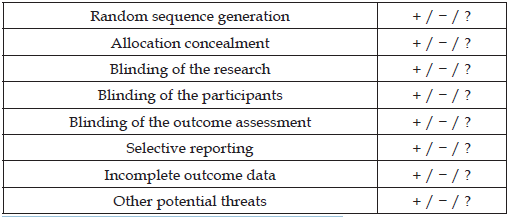
Note: += low risk, − = high risk, = unspecified risk
The first search in this database yielded 213 potentially relevant studies (Figure 1). Following removal of duplicates and the title and abstract-based screening, a total of 38 papers were found suitable for full-text assessment owing to their relevance to posture correction interventions in persons with Parkinson’s disease. Studies that did not involve a particular posture correction device or focused on interventions irrelevant to the management of posture were excluded. By applying these inclusion and exclusion criteria, eight studies made it through the screening process and were incorporated into this systematic review. All the included studies were designed to examine the effectiveness of posture correction related equipment in Parkingson’s patients or technology mediated intervention through improvement postural balance and walking ability as it might be called in effect. These studies included devices that provided feedback, body-weight support walkers, orthotics and portable support devices, proprioceptive stimulation and muscle strengthening programs.
Figure 1

Characteristics of the Included Studies
All eight studies (Table 2) were experimental or randomised clinical trials [12-19], conducted between 2000 and 2025. Together, they involved 217 participants diagnosed with Parkinson’s disease at any severity. The therapies were, however, many and various, both in what sort of equipment was used, and for how long: one week (Stuart, et al. [19]) to six weeks (Atan, et al. [15,17,18]), two to five sessions per week. Carpinella, et al. [12] evaluated a Gamepad system with biofeedback, using wearable inertial sensors to provide real-time visual and auditory cues in gait and balance training. Compared with the conventional physical therapy model, which continues at any time interval during all processing paths, statistically significant improvement from one month to six months was observed even when no exercise was given. Lee, et al. [13] studied a conservative intervention program for camptocormia patients that combined extensor strengthening of the back, stretching, and weight relief by hanging heavy loads in backpacks. Such an approach significantly improved trunk flexion angle, Unified Parkinson’s Disease Rating Scale (UPDRS) motor scores, and activities of daily living (ADL), showing that non-invasive correction of posture holds promise in PD.
Table 2: Summary of Studies Included in the Review.
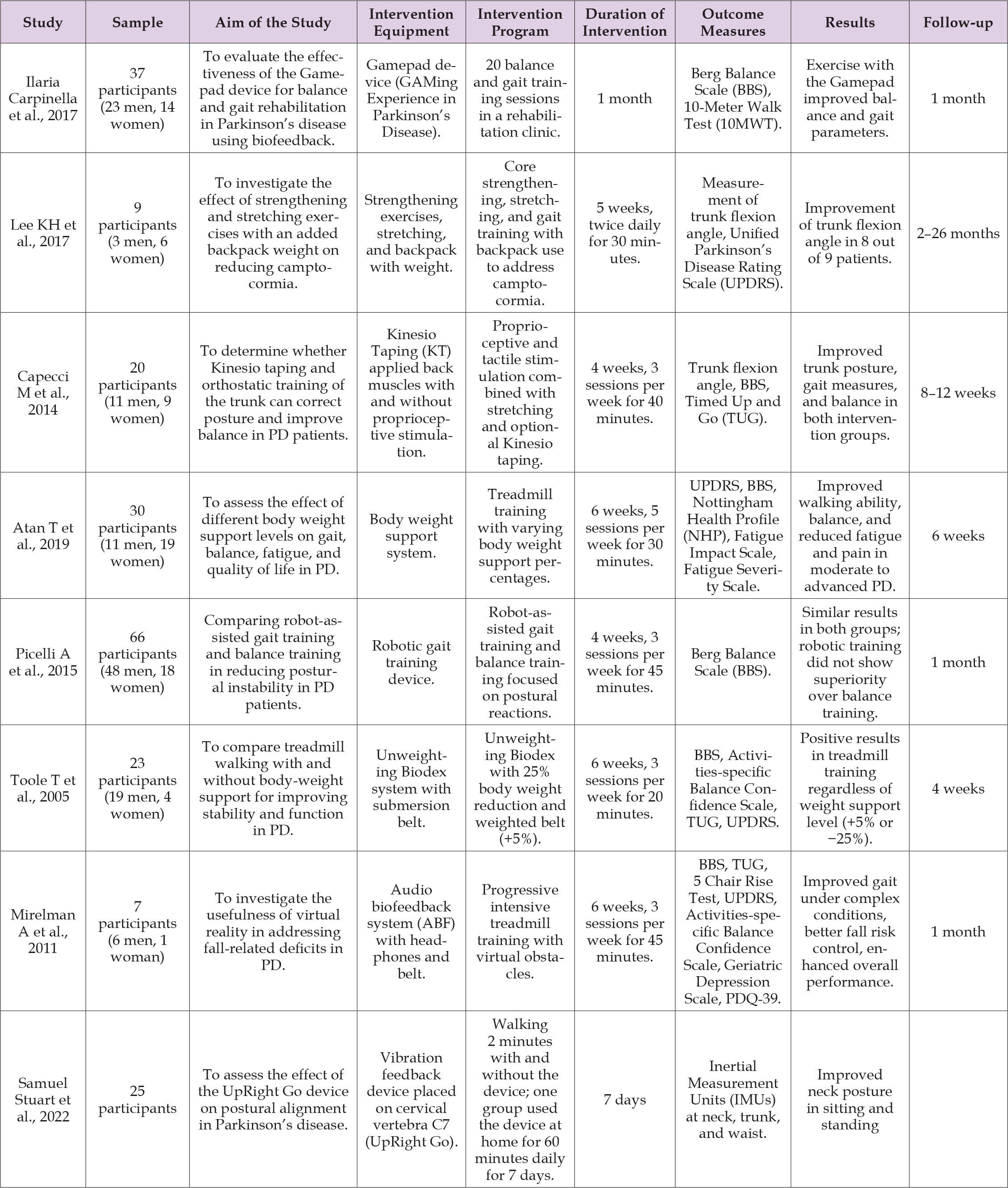
In Capecci, et al. [14], the authors compared trunk asymmetry of PD patients receiving postural rehabilitation with or without kinesiotape application (KT) and intensive tactile-kinesthetic cues. They observed that trunk alignment at sit-to-stand output and the different Balance Scorecard measures improved significantly because of an intervention which included proprioceptive and tactile stimulation, stretching exercises for promotion of flexibility, as well as instruction in good postural habits. The beneficial effects persisted through 30 days after completion. What was more, the addition of KT did not produce any extra gain. Atan, et al. [15] studied the effects of different body-weight-support treadmill training (BWSTT) on gait, balance, fatigue, and quality of life. The 10% and 20% body weight support groups both showed improvement in 6MWD, UPDRS motor performance scores, BBS, and fatigue measures. The 20% BWSTT group showed the greatest improvement in balance and fatigue reduction. Picelli, et al. [16] compared robot-assisted walking exercise with traditional balance training for patients with PD. Both treatments significantly improved balance and mobility, but there were no significant differences between groups, suggesting that robotic gait training was no better than conventional balance practices for reducing postural instability.
In Toole, et al. [17], treadmill training was tested under three conditions: weight-shifted (unweighted), weighted (+5%), and control. All three groups improved in dynamic post urography (indicating an improvement in postural control ability), UPDRS motor scores, and performance on the Berg balance scale, which serves as an indirect measure of balance quality. Regardless of the load condition, therefore, both assisted and resisted treadmill training can help improve neuromuscular control and balance in PD.
Mirelman, et al. [18] analysed audio-biofeedback (ABF) training, in which auditory cues guided posture and balance exercises. Participants showed significant gains in balance (BBS) and a positive trend toward mobility (Timed Up and Go), as well as psychosocial gains as reflected in PDQ-39 and depression scores, testimony to the feasibility and acceptability of abf-based training by patients. Finally, Stuart, et al. [19] studied the effects of an Upright Go wearable vibro-tactile feedback device on postural alignment. The study found significant improvement of neck posture during sitting and standing with this device, but no change in trunk alignment. Most participants saw the device as feasible and beneficial, especially for short-term use in controlled and home environments.
Altogether, posture correction equipment and biofeedback-based interventions showed a clear positive reflection on both balance, ability to stand or move without injury (postural control), and functional mobility scores for people who have Parkinson’s disease. There is evidence to suggest, however, that these technologies, if incorporated into physiotherapy programs, could act as adjuvants to help rehabilitate postural instability and gait failure.
Methodological Quality Assessment
The criteria examined for the quality assessment of included research determined the potential for systematic error (bias). The total number of criteria evaluated ranged from five to eight; the lower the score, the greater the chance of bias. All studies were randomized (Table 3). Only three of them [12,15,16] described in the methodology their random sequence generation process perfectly well or clearly indicated it; the rest did not specify at all, or their allocation methods were ambiguous (Table 2). None of the included research presented sufficient information for allocation concealment, suggesting the possibility of selection bias. As for blinding, five studies [12,14,15,16,19] implemented blinding either the assessor or the participants or both, while the remaining [13,17,18] did not clearly define a blinding degree or had no commendable blinding method. Most of the reports about blinding of participants were satisfactory. All studies met the basic requirements of modern biostatistics; only in particular cases did participant blinding need to be checked with caution, although this was unusual. Also, for the older participants in Toole, et al. [17] and Atan, et al3. [15], participant blinding may not have been complete. For outcome assessment, blinding was done in Carpinella, et al. [12], Atan, et al. [15], and Toole, et al. [17]; however, blinding was unclear or absent in the other reports, a methodological weakness.
Table 3: Methodological Quality Assessment of Included Studies.
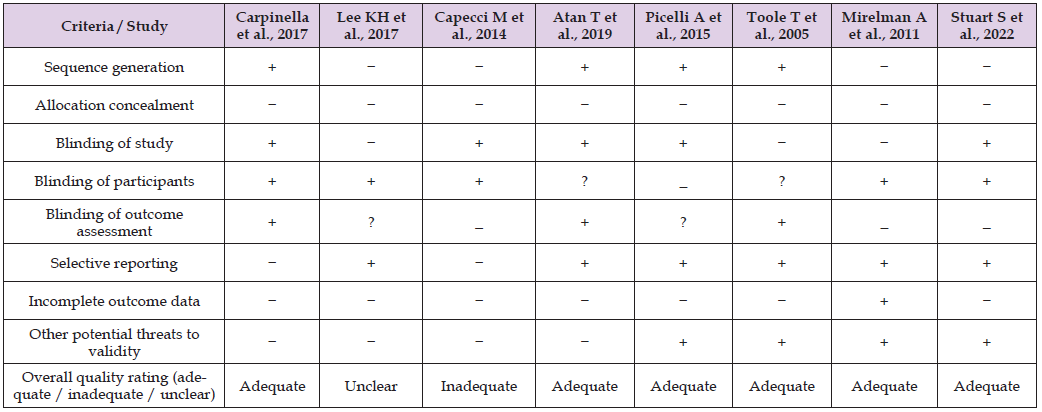
Selectivity bias was controlled in most studies examined, and seven of eight studies were at low risk in terms of selective reporting bias. The authors proposed that the reader adopt this criterion rather than the previous one as a determining factor in making recommendations. Only Carpinella, et al. [12] and Capecci, et al. [14] had the potential for selective reporting problems. Somewhat incomplete outcome data were a problem in a few of the studies, particularly in Lee, et al. [13], Capecci, et al. [14], and Toole et al. [17], which suggests a possible attrition bias. Other potential threats to validity, such as small sample sizes and lack of standardized protocols, were reported in four studies [16-19]. Despite these limitations, the overall methodological quality of most studies was acceptable. In this respect, the final assessment of quality found that six studies met entirely acceptable standards [12,15-19]; one did not [14]; and for one study, the evaluation could not be given because it was unclear [13]. Overall, the methodological quality of the included studies was generally good. The two common shortcomings were that the reporting of allocation concealment is relatively poor, and treatment procedures are inconsistently conducted.
Future research should describe such methods with increased clarity and provide more rigorous randomization and blinding procedures to minimize the chance of this bias. Posture correction equipment can improve balance, postural alignment, gait performance, and functional mobility for people with Parkinson’s disease, as this study gathered findings of earlier research (Table 4). For details, Carpinella, et al. [12] reported significant balance improvements following biofeedback-guided gait and balancing training using the Gamepad system compared to conventional physiotherapy. Improvements in the Berg balance scale (BBS) and stabilometric indices showed that postural stability had risen temporarily, at one-month follow-up, although it persisted. In rehabilitation, some form of real-time feedback is justifiably applicable. In the study by Lee, et al. [13], conservative treatment combining strengthening exercises for the back extensor muscles, stretching and backpack use helped patients with camptocormia to reduce their degree of trunk flexion. The intervention also improved the motor scores of the Unified Parkinson’s Disease Rating Scale (UPDRS) and activities of daily living, providing evidence that noninvasive postural re-education may alleviate axial symptoms. Capecci, et al. [14] investigated whether Kinesio taping plus postural rehabilitation is superior to exercise only for patients with trunk asymmetry. After four weeks of training, both groups saw significant improvements in trunk alignment, balance, and gait performance.
Table 4: Summary of Study Findings and Outcomes.
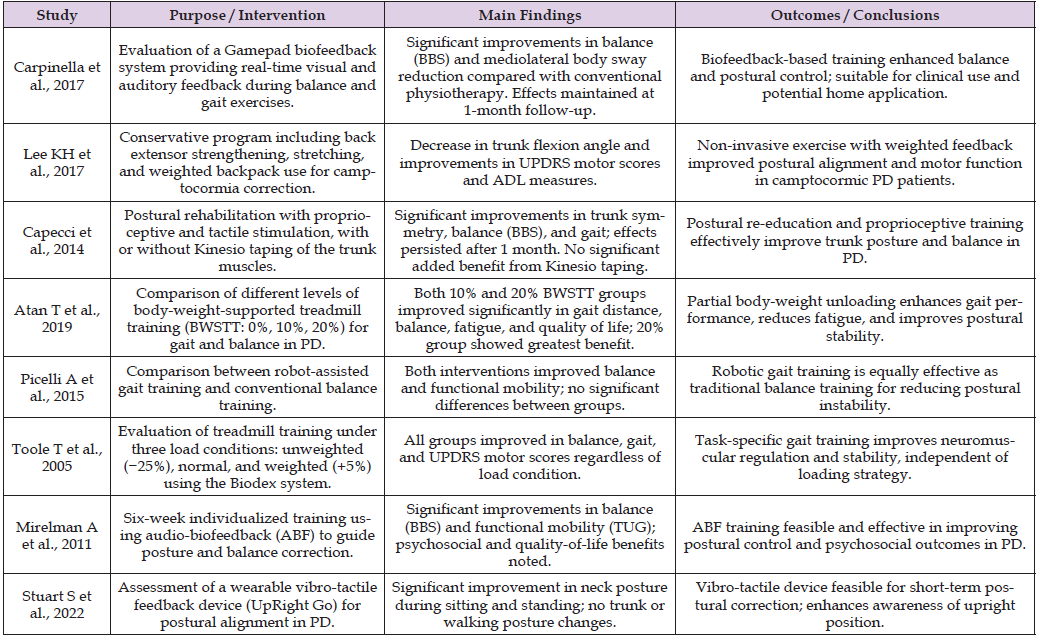
These benefits remained at one-month follow-up, the added Kinesio taping did not significantly elevate results, and terms like proprioceptive as well as pure tactile stimulation mentioned just above (when seen in isolation) were enough to achieve postural improvement The randomized controlled trial by Atan, et al. [15] discovered that body-weight-supported treadmill training (BWSTT) using 10% or 20% support levels brought better HDRD scores, shorter walking distance, diminished fatigue and improved quality of life compared with treadmilling w/out any support. The 20% BWSTT cohort made the most impressive gains in BBS scores, together with reductions in fatigue- these findings show that mild unweighting positively affects postural equilibrium. For example, Picelli, et al. [16] compared robot-assisted gait training with conventional balance training. They found that both interventions improved postural stability and balance confidence, but no significant differences were found between groups. These results suggest that robotic systems may be an effective alternative to standard balance rehabilitation, but not necessarily a superior tool. However, Toole, et al. [17] reported that after the Unweighting Biodex system was applied to treadmill training under different load conditions, all participants showed significant improvement in UPDRS motor scores, dynamic posturography, and gait parameters.
It did not seem to matter whether your intervention involved weight support or additional load—this means that repetitive, task-specific gait training alone can indeed enhance neuromuscular control and stability in Parkinson’s disease. In a pilot study, Mirelman, et al. [18] demonstrated that audio-biofeedback training significantly improved balance and functional mobility, as evaluated by BBS and Timed Up-and-Go test results. Participants also reported enhanced psychosocial well-being and reduced depressive symptoms, reflecting the holistic benefits of biofeedback-based postural training. Finally, Stuart, et al. [19] evaluated the use of a wearable vibro-tactile feedback device (UpRight Go) and observed a significant reduction in neck flexion during sitting and standing. Although no significant changes were seen in trunk posture or during walking, the majority of participants gave the device a thumbs up: it is feasible and comfortable. It improves day-to-day awareness of upright posture. Overall, study results offer hopeful prospects for adding postural correction equipment to movement therapy using the rehabilitation robot. Across all studies, balance, postural stability, and practical performance improved in Parkinson’s disease. The most consistent benefits were balance-related outcomes (BBS, TUG), followed by gait function. Some studies also reported secondary gains in fatigue, pain, and quality of life.
This systematic review conducted an extensive literature search and critical evaluation to analyze and evaluate studies on the effectiveness of posture correction equipment in PD. We recorded the characteristics of the studies included in our review and contrasted them with respect to how methodologically valid they could be or whether their findings could be considered complete and convincing. The present evidence supports the growing need to investigate therapy devices that correct posture and their possible benefits for postural control, balance, and functional mobility in PD. In all the studies included, posture correction equipment was combined into a regimen of physiotherapy or walking exercises common to all participants within any given study. This approach is consistent with the clinical reality that these kinds of aids are mostly seen not as individual treatments but as supplements to regular care. The most frequently used equipment included biofeedback devices worn on the body, robot-assisted gait systems, body-weight-supported treadmill systems and orthotic or taping-based sagittal plane support devices. With vibration feedback systems, there has been a recent rapid increase in this kind of technology also being used for rehabilitation. Whilst both the types and durations of the interventions varied between studies, they were all designed to enhance balance, postural stability and function of the gait in PD patients.
The synthesis of this review collectively illustrates that with posture harnessing gears, there is an improvement in upper and lower limb compensation balance, leg muscle strength, stride length and gait speed. Some studies also reported secondary benefits in fatigue and quality of life. Specifically, Carpinella, et al. [12] and Mirelman, et al. [18] showed that biofeedback-based training programs can significantly enhance postural control and mobility. According to Lee, et al. [13] and Capecci, et al. [14], spinal re-education and proprioceptive stimulation significantly improve trunk alignment, reducing flexion deformity. Stuart, et al. [18] reported that wearable feedback devices can enhance postural awareness; however, they do not appear to produce significant improvements in cervical alignment. The positive effects across studies are likely due to several neuromechanical and neurophysiological mechanisms. Functionally, posture alignment correction devices are suitable for sensory feedback and user input and increasing one’s sense of well-being through muscle tone correction. These external stimuli probably facilitate learning and cortical re-arrangement in specific patient groups with PD, inducing compensatory functional recovery in brain systems involved with motion and balance. In addition, biofeedback and vibration-based systems may influence the supraspinal control centers, like the cerebellum and basal ganglia, to coordinate posture reflexes.
Likewise, robotics help strengthen neural integrity, while promoting specific modes of action when it comes to control. Although the results are promising, the evidence base is still limited, with little experimentation, small groups, and short intervention times. Few studies provided evidence of outcomes beyond one month, and postural gains were difficult to sustain. Additionally, blinding and allocation concealment were often insufficiently reported, thus raising the probability of bias. Since some of the assistive devices were visible, it was often impossible to have blind reviewers and operators. Also, most studies lacked standardized protocols for assessing postural outcomes, making it difficult to compare different interventions directly. A further problem is the variety of equipment used. The devices used in the reviewed studies are of many types (biofeedback systems, orthoses, exoskeletons, etc.), and the level of postural correction is thus influenced by the technology used. This diversity makes it impossible to generalize results or clinically compare between devices. In addition, the small sample sizes of studies such as Mirelman, et al. [18] and Stuart, et al. [19] lead to low power in statistical analysis and increased systematic errors. Furthermore, environmental and individual factors may also have influenced these results. For example, there are differences in therapist expertise, therapists’ training environment, and participant compliance. As Parkinson’s disease is a progressive neurodegenerative disorder, differences in disease stage and medication timing may affect responsiveness to postural training.
Finally, only studies published in English were included. This may mean relevant international research was excluded. Future studies should focus on large-scale randomised controlled trials with extended follow-up periods and protocols for standardising interventions and quantitative measures to assess postural stability and motor performance that incorporate sensor-based assessment tools (e.g., inertial measurement units) or wearable monitoring technologies. With all these limits heaped up together, the present critical review supports an ever-expanding body of findings that correcting posture devices could be a useful extra crutch to hold on to when undergoing physiotherapy improvement, postural control and balance in persons with Parkinson’s disease. These interventions could improve motor symptoms and those not directly connected to movement; they might lead to a generally more comfortable life for people and let them save some independence.
The present systematic review indicates that, in the short term, the use of posture correction devices may improve postural balance, coordination, and functional mobility in individuals with Parkinson’s disease. Although the evidence points to some positive effects, the overall methodological quality of the included studies was generally moderate. These limitations highlight the need for future large-scale, long-term randomized controlled trials to confirm the sustained benefits of posture correction equipment and to establish evidence-based clinical guidelines for their effective implementation in rehabilitation practice.

International Association of Landscape Archaeology, Czech Glass Society, Czech Republic

Department of Chemistry, Semenov Institute of Chemical Physics, USSR Academy of Sciences, Moscow, Russia

Associate Professor at Department of Breast and Thyorid Surgey, Chongqing General Hospital, China

Professor of Nuclear Medicine, Faculty of Medicine and Surgery, University of Milan, Milan, Italy

Department of Pharmaceutical Sciences, South University School of Pharmacy, USA





 Abstract
 PDF
PDF



























