info@biomedres.us
+1 (502) 904-2126
One Westbrook Corporate Center, Suite 300, Westchester, IL 60154, USA
Site Map
 ISSN: 2574 -1241
ISSN: 2574 -1241
ISSN: 2574 -1241
Received: October 21, 2025; Published: October 28, 2025
*Corresponding author: Ravinder Kumar Prajapati, Pacific TAFE, University of the South Pacific, Suva, Fiji
DOI: 10.26717/BJSTR.2025.63.009931
The quick digital changeover in the Pacific Islands is a double-edged sword for mental health. This article goes through the global and regional research with the aim of studying the case of Fiji and other Pacific Island Countries (PICs) and how media consumption affects mental health. A mixed-methods literature review was conducted across several databases such as PubMed, PsycINFO, Web of Science, Google Scholar, and local repositories. This covered studies published from 2010 to 2023, which investigated digital media consumption, social media, or online gaming in terms of psychological outcomes. Out of the 45 studies included, 15 were specifically related to Pacific contexts. The synthesis revealed three recurring themes. Firstly, digital platforms facilitate social connection, cultural continuity, and health information access, thus creating new paths for community support and reducing stigma. Secondly, the lifestyle that revolves around or the not-so-critical engagement with media feeds anxiety, social comparison, cyberbullying, and misinformation especially among young users who do not have strong media literacy skills. Thirdly, the Pacific cultural values—community, faith, and respect—act as a buffering factor against these negative effects due to the fact that they empower the people with resilience and coping mechanism.
However, the regional disparity in internet access and the socio-economic limitation, among other things, restrict the poor people’s access to digital wellbeing initiatives. The paper ends by stating that the liberation of the Pacific digital landscape for effective mental health promotion will hinge on culturally centered media literacy education, online engagement campaigns, and research partnerships that tie both traditional and modern support systems. By the development of technology that complements the strengths of the culture, Fiji and its Pacific neighbors will be able to utilize digital media as a catalyst for better mental health as opposed to a cause of psychological danger.
Keywords: Media; Mental Health; Pacific Islands; Fiji; Social Media; Mental Health Promotion
Abbreviations: PICs: Pacific Island Countries; FoMO: Fear of Missing Out; JBI: Joanna Briggs Institute
The digital age has profoundly reshaped global communication and information access, significantly influencing mental health outcomes worldwide. This study investigates the dynamic relationship between media use and mental wellbeing within Fiji and the broader Pacific Islands region. By synthesizing current research and considering the unique sociocultural context of Pacific Island communities, this paper explores the potential benefits and risks associated with social media engagement, digital information consumption, and online gaming. It underscores the necessity for culturally tailored interventions and awareness campaigns to promote healthy digital behaviors and mitigate potential adverse impacts on mental health. With rapid advancements in digital technologies and widespread internet accessibility, our ways of connecting, consuming information, and interacting with the world have fundamentally evolved. Social media platforms offer unprecedented opportunities for social connection and cultural expression, particularly significant in geographically dispersed Pacific Island communities. However, they also introduce risks such as cyberbullying, social comparison, and exposure to idealized lifestyles that can negatively impact self-esteem and mental wellbeing (Przybylski, et al. [1]). Moreover, the Pacific Islands region is experiencing a digital transformation marked by increased internet penetration and a demographic predominantly composed of young people.
This demographic is particularly susceptible to the influences of digital media, which can both facilitate community building and exacerbate social pressures and mental health challenges. Research has highlighted the dual role of digital platforms in Pacific Island societies, serving as tools for preserving cultural practices while simultaneously exposing users to globalized influences. In addition to social media, digital information consumption and online gaming are integral parts of contemporary Pacific Islander lifestyles. While digital information provides unprecedented access to knowledge and resources, information overload can contribute to stress and anxiety, especially in populations with limited media literacy (Van der Linden, et al. [2]). Likewise, online gaming offers recreational benefits but can lead to addictive behaviors and social isolation if not managed responsibly (Gentile, et al. [3,4]). Given these complexities, there is an urgent need for culturally sensitive interventions and educational campaigns tailored to the Pacific Islands context. Such initiatives can help foster positive digital behaviors, empower users to navigate digital spaces safely, and promote mental health resilience. By addressing these issues, this study aims to contribute to a deeper understanding of how digital technologies can be harnessed to enhance, rather than undermine, mental wellbeing in Pacific Island communities.
Media consumption and its effects on mental health have been the most widely debated topics in public health in the digital age. Digital media is now a basic feature of everyday life, and its impacts reach far beyond the communication and entertainment areas to the formation of identity, emotional regulation, and psychological wellbeing. Recognizing this interplay is of great importance for small island settings like Fiji and other Countries of the Pacific Islands (PICs), where rapid digitalization is changing social structures and ways of interaction.
Global Evidence: Dual Impacts of Digital Media
The use of digital media was found to have both positive and negative effects on mental health simultaneously through research carried out in various countries. On the positive side, social media and online communities can lead to the creation of social capital, belonging, and emotional support (Nesi, et al. [5,6]). Similarly, some research indicates that online participation allows individuals to access health information and support networks that in turn reduce stigma surrounding mental illness (Naslund, et al. [7]). On the other hand, screen time has been associated with the increase of anxiety, depressive symptoms, and loneliness (Twenge, et al. [8,9]). Social comparison, cyberbullying, and fear of missing out (FoMO) are some of the mechanisms that are often identified as mediators (Przybylski, et al. [1,10]). Young people and young adults appear to be the most susceptible due to the high intensity of their social media use and their developmental need for peer validation (Coyne, et al. [11]). Meta-analyses indicate that while light-to-moderate social media use can enhance wellbeing through social connectedness, excess or passive consumption tends to be associated with negative affect and decreased life satisfaction (Berryman, et al. [12,13]). The findings from different parts of the world create a theoretical framework for the analysis of the impact of digital media on mental health. However, they also necessitate the use of context-sensitive interpretations in areas that have different cultures and infrastructure.
Media and Mental Health in Small Island and Developing Contexts
Newly developing research from small-island states and developing countries has revealed that socio-economic and cultural factors play a key role in determining the psychological effects of digital media. In the Caribbean, for example, Henry-Waring, et al. [14] indicate that young people are using social media to navigate their identities across both diaspora and island cultures, thus resulting in both empowerment and anxiety. Likewise, research from Africa and Southeast Asia point out that digital inclusion tends to create or reproduce inequalities among the lower class — the youths receive the new ideas through exposure, but at the same time, they suffer from online bullying and misinformation (Mossberger, et al. [15]). Low- and middle-income countries often deal with an exacerbated stress scenario resulting from incongruous online information due to the combination of limited digital literacy and weak health communication systems (Islam, et al. [16]). Nonetheless, digital media has also facilitated the creation of new community support models such as peer-based online counseling and WhatsApp-driven mental health awareness programs (Bode, et al. [17]). The similarities as well as the differences provide very useful comparative insights for the Pacific Islands, which are also grappling with the issue of limited connectivity, cultural collectivism, and small populations.
The Pacific Context: Emerging Digital Mental Health Landscape
The Pacific Islands are going through a phase of rapid digitalization and this can be seen through the internet penetration rates in Fiji (88%), Samoa (78%), and Tonga (72%) which are even among the highest in the region (World Bank [18]). Facebook and TikTok are the most used social media platforms and these are the main sites where cultural identity is expressed and information is disseminated in the Pacific Islands (Latu, et al. [19]). Still, there is a gap in research regarding the mental health effects of these novel digital environments. Qualitative research carried out in Fiji, Samoa, and Papua New Guinea indicates that young people use social media mainly for the purposes of family bonding, creativity, and social movements participation (Varea, et al. [20]). Nevertheless, they have also been reporting higher occurrences of online bullying, body image issues, and disrupted sleep (Kaidonis, et al. [21]). Unlike some other places, Pacific communities integrate the digital wellbeing discourse into their collective morality— mental distress is more often dealt with in a community than an individual manner, and emotional expression is interlinked with cultural identity (Tiatia-Seath, [22]). In addition, the cultural resources of the Pacific region—community (vanua), spirituality (lotu), and respect for personal relationships (veiwekani)—provide fresh avenues for resilience against the digital stressors. Some of the projects that are blending the above-mentioned values, like USP’s Pacific Digital Wellbeing workshops and WHO’s Mental Health in the Pacific Framework (2022-2027), highlight the increasing acceptance of applying media literacy programs that are culturally adapted.
Gaps and Directions in Pacific Research
The research done in the Pacific regarding digital media and mental health has been somewhat scattered and mainly descriptive. The majority of the studies dealt with internet access and youth behavior, but psychological outcomes were not to come out of those studies. There is a great need for longitudinal or intervention-based research to quantify the impact of the media on wellbeing indicators such as stress, self-esteem, or community connectedness. Moreover, the studies done in the region often do not touch the subject of positive digital engagement—for example, how Pacific youths utilize online spaces for causes, education, or cultural preservation. To overcome these gaps it is necessary to have multidisciplinary cooperation that mingles public health, psychology, and media studies with indigenous knowledge systems. Future research is expected to use mixed-methods and participatory designs co-created with the local communities in order to ensure that research is culturally appropriate and has practical relevance. The existing literature supports the notion of the existence of a clear relationship between the use of digital media and mental health, with psychosocial mechanisms such as social comparison, aggression online, and information overload acting as mediators. In the case of the Pacific, cultural collectivism, inadequate infrastructure, and the gradual acquisition of digital skills are factors that shape the dynamics described above. The review emphasizes the necessity of culturally-grounded, evidence-based approaches that draw from Pacific values in the area of digital mental health promotion. Such models could change the role of digital media from a potential stressor to a source of resilience, inclusion, and empowerment not only in Fiji but also in the Pacific region at large.
Research Design
The method employed in this study is a systematic literature review design, which aims to study the relationship between the use of media and mental health in Fiji and other Pacific Island Countries (PICs). To achieve a proper selection and synthesis of sources, the Preferred Reporting Items for Systematic Reviews and Meta-Analyses (PRISMA) framework was the main guide in this approach. The review contains both quantitative and qualitative data, which gives a rich understanding of the cultural and contextual factors that influence the use of modern media and its relationship with mental health in the Pacific.
Search Strategy
A well-structured search was made over the most important international and local databases—e.g., PubMed, PsycINFO, Web of Science, Google Scholar, ProQuest Dissertations and Theses, with regional sites like the University of the South Pacific’s institutional repository and the Pacific Health Dialog archive. This search covered the years 2010 to 2023, which corresponds with the time of social media and mobile technologies explosion in the region. Searches were based on combining Boolean operators with thematic keywords like “media use”, “social media”, “digital platforms”, “online gaming”, “mental health”, “wellbeing”, “Fiji”, and “Pacific Islands.” The reference lists of the most important articles were also checked for further relevant studies (snowballing method).
Inclusion criteria
1) Articles published in peer-reviewed journals, book chapters,
and recognized reports from institutions or non-governmental
organizations;
2) Articles published in English from 2010 to 2023;
3) Studies that linked social networking, online gaming, or digital
information consumption to mental health; and
4) Studies that had been conducted in or were explicitly relevant
to Fiji or other Pacific island countries.
Exclusion criteria
1) Articles that were either empirically or conceptually irrelevant
to mental wellbeing;
2) Non-academic essays lacking methodological detail and
commentaries; and
3) Studies that were not fully text accessible or that were not
focused on human beings as participants.
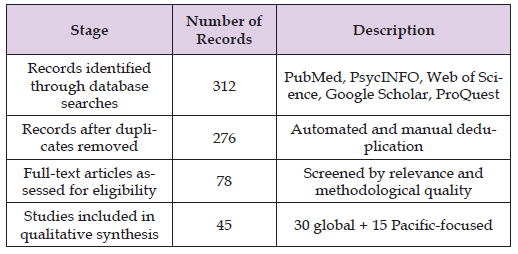
Initially, 312 records were identified. Then, after duplicates had been removed and inclusion criteria applied, the eligibility of 78 fulltext papers was assessed. In the end, 45 studies were included in the synthesis, consisting of 30 from international sources and 15 that focus on the Pacific. Figure 1 (PRISMA diagram) gives a summary of the selection process (Table 1).
Figure 1
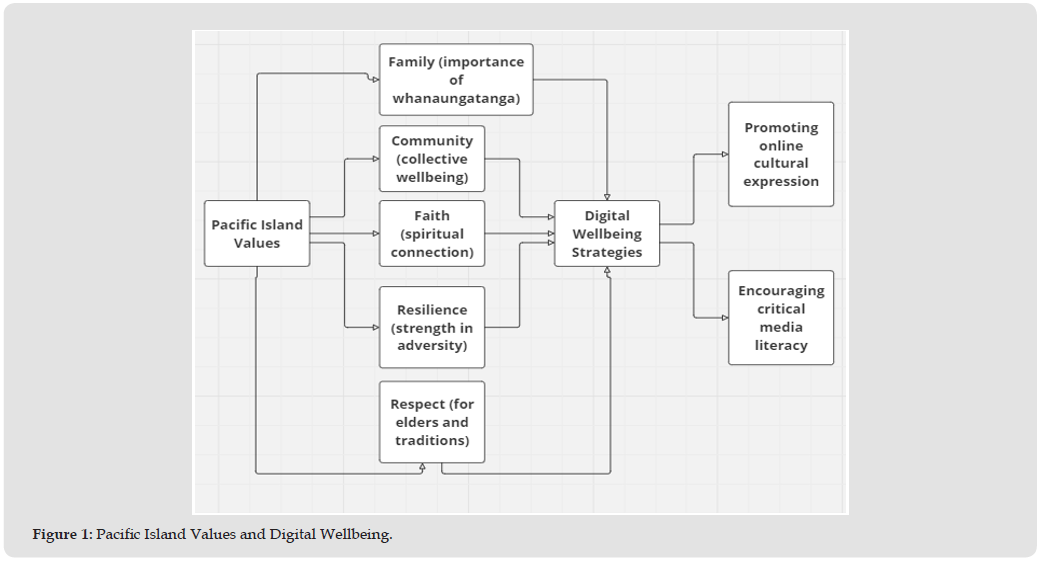
Table 1: CT Exam Protocol.
Each study was coded using a standardized data extraction sheet capturing the following variables:
• Author(s), publication year, and country/region
• Study design and participant demographics
• Type of media platform studied
• Reported mental-health outcomes (e.g., anxiety, wellbeing,
social connectedness)
• Cultural or contextual observations relevant to Pacific communities
Methodological quality was appraised using the Joanna Briggs
Institute (JBI) Critical Appraisal Checklists for quantitative and qualitative
studies.
Findings were synthesized through thematic analysis, identifying recurrent patterns and contradictions across the literature. Three core thematic domains emerged:
1. Benefits of media use — enhancing social connection, identity
expression, and access to health information.
2. Risks of media exposure — including cyberbullying, social
comparison, and information overload.
3. Cultural resilience factors — such as communalism, faith,
and family networks moderating negative effects.
Pacific studies were given analytical priority in the synthesis to
emphasize contextual relevance and inform culturally responsive
strategies.
While this systematic review followed PRISMA-aligned protocols, several limitations should be acknowledged. First, the limited availability of Pacific-specific empirical data constrained the depth of regional comparisons. Second, most regional studies were cross-sectional, restricting causal inference between media use and mental health outcomes. Third, grey literature and non-English studies may have been excluded due to accessibility and language limitations, potentially omitting locally grounded perspectives. Finally, publication bias may have favoured studies reporting significant associations. Despite these limitations, the synthesis provides valuable insights into the emerging digital–mental health interface in Fiji and the acific, offering a strong foundation for future regionally focused, mixed-method research.
The synthesis of reviewed literature points out a multifaceted and context-dependent relationship between the use of digital media and mental health in Fiji and other Pacific Island countries (PICs). Even though the digital platforms have improved the flow of information and connectivity relating to mental health, they have also opened up the Pacific Islands to new psychosocial stressors. One of the points made is that the media’s effect on mental health is conditioned by the cultural and technological aspects as well as the socio-economic status of the region (Figures 2&3) (Tables 2-4).
Figure 2
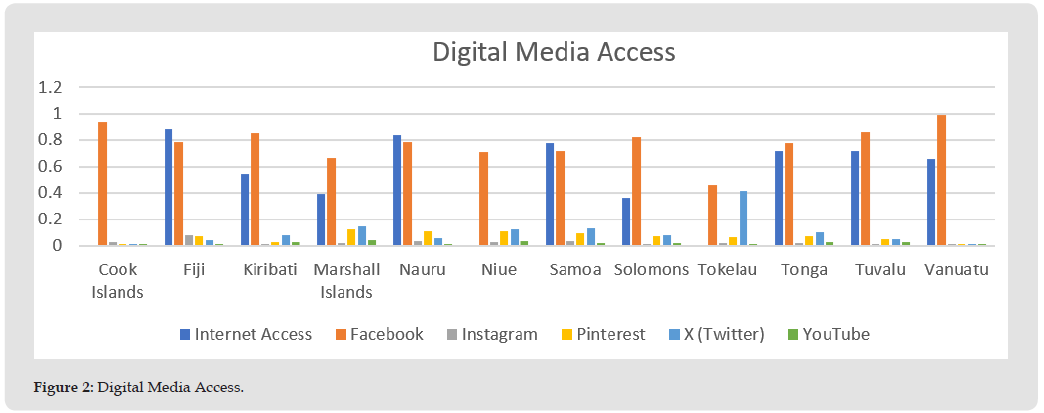
Figure 3
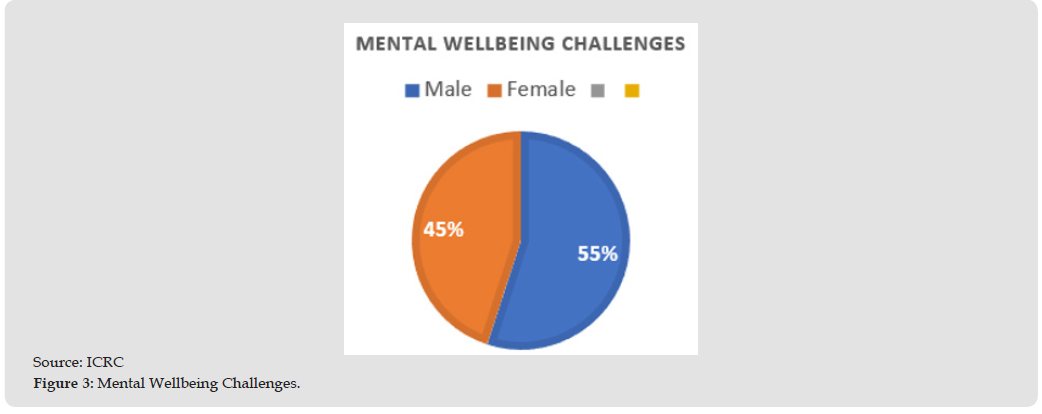
Table 2: Internet Access Statistics for the Pacific.
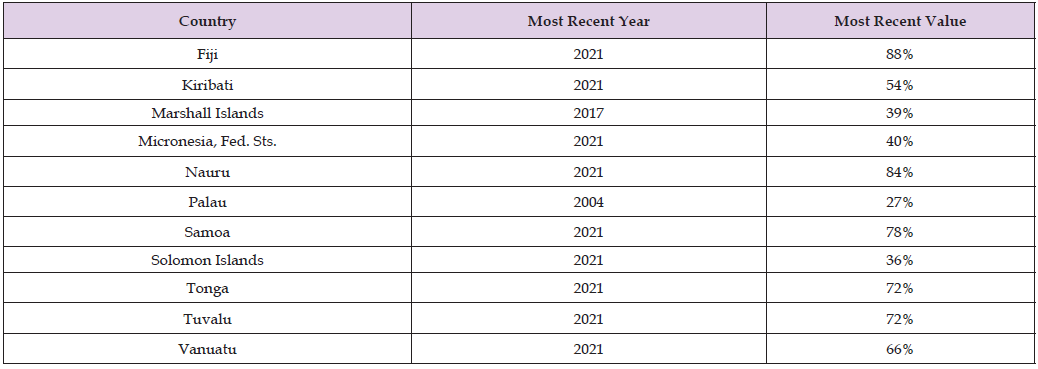
Sources: World Bank Data.
Table 3: Social Media Stats for the Pacific 2023 – 2020.
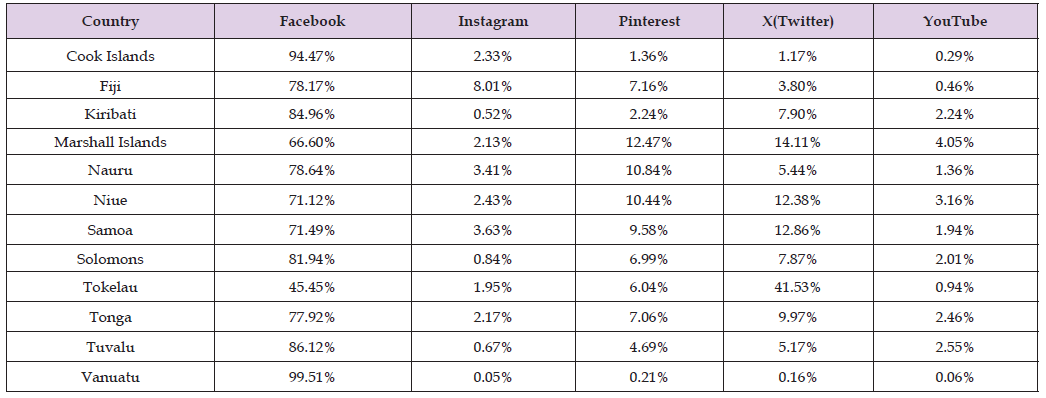
Source: StatCount.
Table 4: Mental Health Stats - International Committee of the Red Cross.

Source: ICRC
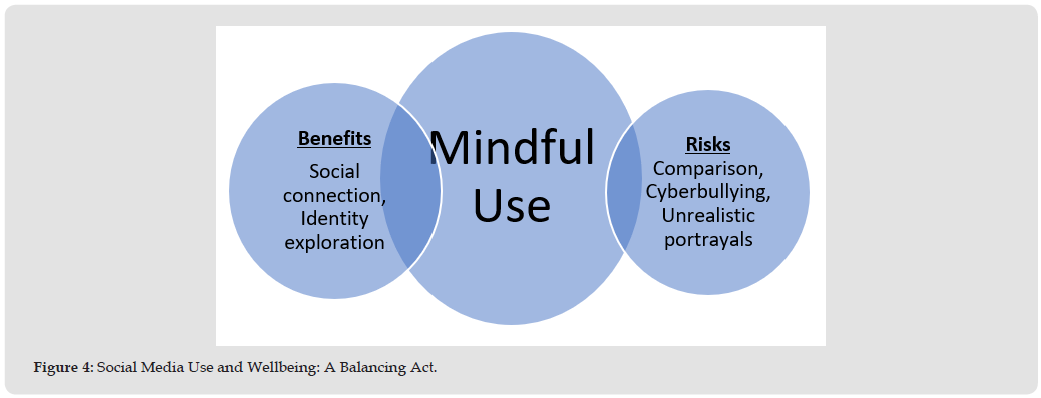
The Pacific Islands are among the most rapidly digitizing regions in the world, with Fiji (88%) and Tonga (72%) being the leading countries with high internet penetration while other countries like the Solomon Islands (36%) and the Marshall Islands (39%) are still lagging. This difference in access creates a digital divide that affects the degree of media-related mental health risks and opportunities that people are exposed to in different countries. In countries with a high level of connectivity, the pros of engaging with the internet are quite evident including community formation, peer support, and mental health awareness. However, these same settings are also the ones with a higher presence of negative aspects like cyberbullying, social comparison, and anxiety, especially among the young people who spend more time on social media (Przybylski, et al. [1,20]). On the other hand, areas with little or no internet access suffer from a different form of exclusion; they are less exposed to mental health resources and telehealth initiatives. The two sides of the coin show that both the digital world and the non-digital world have an effect on the mental health of the people (Figure 4).
Figure 4
Pacific communities share values of togetherness which can be expressed through the terms vanua, lotu, and veiwekani that refer to land, faith, and kinship respectively. These values serve as health-giving sources which lessen the harmful effects of digital exposure. Research indicates that people with community-oriented relationships are more resilient to loneliness and online stressors which is in line with the Pacific mental health framework that prioritizes collective wellbeing over individual therapy. Nonetheless, the cultural shift from face-to-face communication to online communication among young people who socialize through social media rather than in person poses a challenge for maintaining these traditional buffers. The literature indicates that media literacy and wellbeing campaigns that incorporate cultural narratives and Pacific languages might have an added advantage of making digital interventions more relevant and effective.
The global scholars have had different opinions on the digital media effects with the emphasis on the psychological outcome depending on the intensity, motivation, and context of use (Orben, et al [9,8]). The Pacific data supports this trend but at the same time adds a unique sociocultural aspect to it. For example, while global studies give concentration to individual self-presentation and comparison, Pacific users regard digital identity as family, community pride, and collective representation. Such a discrepancy suggests that mental health interventions imported from the West, which are typically based on individualistic assumptions that are characterized by self-reliance and independence, may not be appropriate for Pacific contexts. Therefore, it becomes necessary for the development of regional strategies to incorporate indigenous concepts of wellbeing such as talanoa (open dialogue) and lotu (spirituality) based mental resilience programs that are culturally congruous.
The use of internet connectivity and social media penetration data has added an in-depth understanding of how digital infrastructure interacts with mental wellbeing. For instance, the high engagement of the Fijians on Facebook (78%) has led to the creation of both online communities with positive vibes as well as negative ones involving cyberbullying. The implication of this is that policy interventions should not work towards limiting the use of digital platforms, but firstly, to teach users how to engage critically—that is to teach users how to identify misinformation, balance their screen time, and use online spaces positively for peer support and knowledge sharing. Moreover, online gaming is not always a black-and-white business as it comes across mainly as a double-edged sword. Gaming in moderation can develop social relationships and serve as a stress reliever but excessive use can lead to disturbances in sleeping patterns and withdrawal from society (Gentile, et al. [3,4]). Programs that promote family-based digital literacy and gaming moderation may be useful to mitigate these risks.
In order to reap the positive side of digital engagement while minimizing the psychological downside, Pacific nations and their educational institutions should:
a) Add media literacy modules to school programs focusing on responsible internet use, online empathy, and cyber-resilience.
b) Provide funding to cover the telehealth and e-counseling initiatives that target rural and remote areas.
c) Encourage collaboration between the health, education, and ICT sectors to come up with digital wellbeing frameworks that reflect local cultures.
d) Work with regional organizations (WHO, SPC, USP) to keep track of digital mental health trends and develop local research capacity.
Even though the literature on this topic is advancing, empirical studies in the Pacific region are still very few. Most of the currently available research is cross-sectional, small-scale, devoid of gender- disaggregated data, or lacks longitudinal follow-up. The following is a pressing need for:
a) Quantitative studies to be conducted measuring the psychological impacts of media exposure in selected Pacific populations.
b) Participatory research that involves communities in co-designing digital wellbeing programs.
c) Regional comparative studies linking mental health outcomes with indicators of access to internet, education, and cultural participation.
Such studies would allow the discipline to move from a mere descriptive approach to one that is through scientific-based interventions that are founded on Pacific epistemologies. To put it simply, the Pacific Islands are digitizing and this process of transformation presents both possibilities and risks. The use of media may lead to more connections, strengthening of cultural identity, and increased awareness but at the same time, unregulated digital use may lead to increased anxiety and social fragmentation. The problem lies in the fact that Pacific cultures have to change not only the digital transformation but also the transition to digital communication through the values of the Pacific—thus ensuring that the digital development and psychological wellbeing go hand in hand. The most promising way of helping the mental health of the people in Fiji and in the rest of the Pacific is through promoting media use that is balanced, culturally grounded, and critically informed [23-36].
The digital age is changing the way Pacific Island people interact, talk to each other, and take care of their mental health. The review indicates that the use of media in Fiji and other Pacific Island Countries (PICs) has an impact on mental health which is both good and bad, and these effects are largely determined by local culture, accessibility, and socioeconomic factors. Digital means have been made to be the most important ways of connecting, expressing oneself, and getting access to mental health resources, and all this is largely true for areas with dispersed islands. However, the same means can also cause psychological suffering through social comparisons, misinformation, and online bullying if the engagement is done without guidance or critical literacy. The synthesis reveals that Pacific cultural values—like communalism, spirituality, and respect—act as important protective factors that can shield individuals from the negative impacts of the internet exposure. To utilize these strengths, digital engagement in mental health promotion the pacific should be coupled with the use of traditional communication methods like talanoa and faith-based outreach. The findings point out several practical imperatives. Governments, educators, and health professionals should, as a matter of priority, take media literacy education to the school level and help the youth develop resilience against online risks. Access to telehealth and digital counseling facilities should be increased in rural and maritime communities. A cross-sectoral approach that connects public health, education, and telecommunication (ICT) is necessary to create a unified and coherent regional framework for digital wellness.
This review reflects its drawbacks: lack of empirical data specific to the Pacific region, the prevalence of cross-sectional studies, and insufficient representation of the elderly segment of the population. Future studies are called to employ longitudinal and mixed-method designs, conduct intervention outcome evaluations, and formulate contextual models of digital mental health that are based on Pacific epistemologies and lived experiences. Eventually, the issue for Fiji and its Pacific neighbors lies not in the media restrictions but in the cultural wisdom to reconfiguration of digital participation. The Pacific Islands region can turn the digital media from a possible source of disturbance to a platform for collective resilience and wellness by rooting Pacific values in digital literacy, empowering critical participation, and guaranteeing equal access.

International Association of Landscape Archaeology, Czech Glass Society, Czech Republic

Department of Chemistry, Semenov Institute of Chemical Physics, USSR Academy of Sciences, Moscow, Russia

Associate Professor at Department of Breast and Thyorid Surgey, Chongqing General Hospital, China

Professor of Nuclear Medicine, Faculty of Medicine and Surgery, University of Milan, Milan, Italy

Department of Pharmaceutical Sciences, South University School of Pharmacy, USA





 Abstract
 PDF
PDF



























